Tag: Pharande Spaces

The Future of Indian Housing

Akash Pharande,

By  Mr. Akash Pharande, Managing Director – Pharande Spaces

India’s urban population explosion is causing its bigger cities to burst at the seams. Overcrowding, pollution, traffic congestion, and deteriorating infrastructure are the ‘new normal’ – a state of affairs that we have begun to accept as inevitable.

According to the United Nations, about 40% of the Indian population will live in urban areas by 2030. The pressure this puts on housing, transportation, and basic amenities in our cities is immense. Because of these urban ‘growing pains’, many citizens have become disillusioned with their cities and are even considering moving to smaller, less crowded, and less expensive tier 2 and tier 3 cities.

However, there are two catches to this way of thinking – one, most employment opportunities are in our larger cities. Two, the hammer of development is bound to catch up even in the smaller cities. Is there a way for citizens to regain a wholesome, uncluttered lifestyle without abandoning their cities of choice? There is. Integrated townships are a viable solution. But before we get into that, let’s first examine the real-time challenges that our cities increasingly face.

Traffic Congestion

India’s cities are notorious for their traffic woes. In cities like Mumbai, Delhi, and Bengaluru, residents spend hours in gridlocked traffic every day. According to a 2021 report by TomTom, Bengaluru ranked as the sixth-most congested city in the world, with commuters spending an average of 71% extra travel time during rush hour. This congestion takes a toll not only on the economy but also on the well-being of urban dwellers, since long commutes lead to increased stress, reduced productivity, and poor mental health.

Pollution and Environmental Degradation
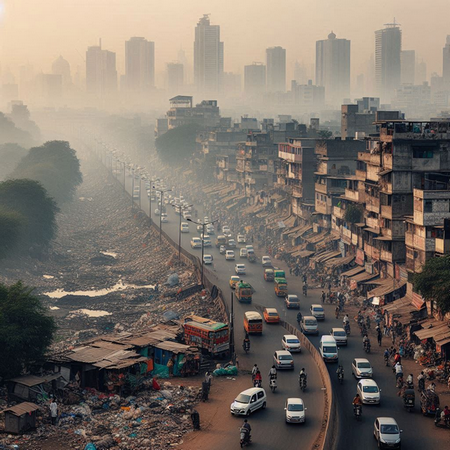
city

Air pollution is another pressing issue in Indian cities. The World Health Organization (WHO) ranks several Indian cities, including Delhi, Kanpur, and Lucknow, among the most polluted globally. In 2020, air pollution caused an estimated 1.7 million deaths in India, according to a study published in The Lancet. The over-reliance on private vehicles, combined with unchecked industrial emissions has led to worsening air quality, making it hazardous for people to live and work in densely populated urban environments.

Overcrowding and Infrastructure Strain

With the growing influx of people into cities, housing and infrastructure are stretched to the limit. Many Indian cities are ill-equipped to handle their burgeoning populations – resulting in cramped living conditions, inadequate water supply, and frequent power outages. This overcrowding exacerbates social and health issues, leading to an overall decline in quality of life.

The Solution – Integrated Townships
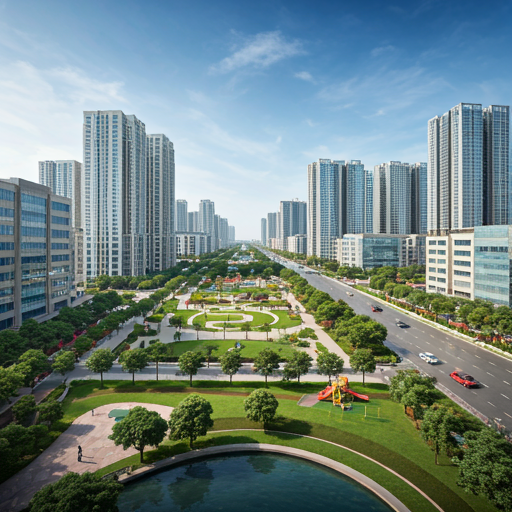
township

Amid these escalating challenges, integrated townships are the most viable alternative to traditional urban housing models. These large-scale developments are self-sustaining communities that combine residential, commercial, recreational, and educational facilities in one comprehensive layout. Unlike conventional city apartments, which are often isolated and disconnected from essential amenities, integrated townships provide a more balanced and convenient lifestyle.

Integrated Townships – A Brief History

Integrated townships began emerging in India during the 1980s and 1990s. Even before that, cities like Jamshedpur – founded in 1907 by the Tata Group to support their workforce – served as early examples of self-contained, self-sustaining communities. Jamshedpur was among the pioneers of integrated urban living in India where residential spaces were developed alongside recreational spaces like parks and essential services such as schools and medical facilities.

Chandigarh, planned by Le Corbusier in the 1950s, is another prime example of a development plan where housing and public facilities were created alongside commercial business centres. However, these were entire cities with their own municipalities. The concept of integrated townships – large residential complexes developed along with retail, office, civic and lifestyle developments – started gaining momentum in the 2000s.

Today, these townships have emerged as the single most transformative solution, offering a holistic living environment that promotes sustainability, convenience, and a better quality of life. They have become even more relevant if we consider the increasing chaos of modern city life.

Convenience and Reduced Commuting

One of the biggest advantages of integrated townships is the proximity to workplaces, schools, healthcare facilities, shopping centres, and entertainment options. By reducing the need for long commutes, these developments save residents time and money while alleviating traffic congestion in major cities. According to one report, more than 80% of homebuyers in metropolitan areas now prefer housing projects which are within a 10-kilometer radius of their workplaces.

Sustainable and Environmentally Friendly

Integrated townships are also designed with sustainability in mind. Green spaces, efficient waste management systems, rainwater harvesting, and renewable energy sources are increasingly becoming standard features of these developments. Integrated townships with eco-friendly infrastructure reduce carbon footprints and command a higher premium over non-sustainable developments. Moreover, by centralizing resources and infrastructure, integrated townships can reduce the strain on municipal services, thus promoting a more sustainable and resilient urban ecosystem.

Improved Quality of Life

Integrated townships prioritize the well-being of their residents by offering a range of recreational and wellness facilities. From parks and sports complexes to community centres and healthcare services, these projects are designed to cater to all age groups and lifestyle preferences. They foster a sense of community and safety, with round-the-clock security and controlled access points ensuring a secure living environment.

Moreover, the availability of schools and educational institutions within the township means that families do not need to send their children far from home, reducing stress and providing a better work-life balance. Many leading minds in the real estate industry have recognized integrated townships as the future of housing, particularly in countries experiencing rapid urbanization like India.

Not surprisingly, integrated townships outperformed standalone residential projects in both price appreciation and rental yields because of the superior convenience and amenities they offer. Furthermore, the demand for integrated townships is not limited to the residential segment.

After the COVID-19 pandemic, more and more businesses have realized how important it is to have their operations closer to where their employees live. As a result, the commercial real estate segment is also seeing a surge in demand for office spaces within township developments, thanks to the growing trend of the ‘walk-to-work’ lifestyle.

Towards a Better Residential Experience

As India’s cities continue to expand, the traditional model of urban housing is proving to be increasingly untenable and homebuyers now seek alternatives that offer convenience, sustainability, and a better quality of life. Integrated townships are the answer, and will therefore account for more and more Indian residential spaces in the years to come.

About the Author:

akash

Akash Pharande is Managing DirectorPharande Spaces, a leading real estate construction and development firm famous for its township projects in Greater Pune and beyond. Pharande Promoters & Builders, the flagship company of Pharande Spaces and an ISO 9001-2000 certified company, is a pioneer of townships in the region. With the recent inclusion of Puneville Commercial into one of its most iconic townships, Pharande Spaces taken a major step towards addressing Pune’s current and future requirements for fully integrated residential-commercial convenience

Breathing Uneasy – Housing Choices Amid Worsening AQI

akash pharande

 By- Akash Pharande, Managing Director – Pharande Spaces

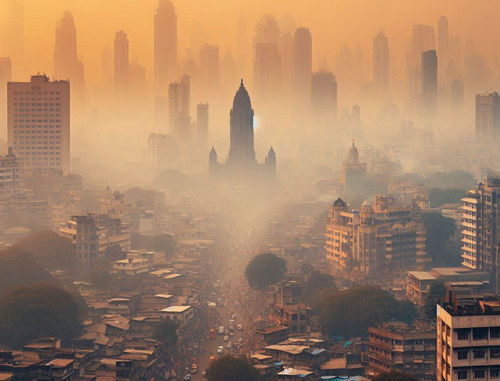
The problem of rapidly worsening air quality in India has a direct correlation to our housing choices. Increasing urbanization, industrial proliferation, and population growth are causing more and more homebuyers to prioritize the quality of their living environments.

Urban Centers – The Worst Hit

Indian city centres face severe air pollution threat:

  • Heavy Traffic – The congested city centres with high population and traffic density contribute significantly to vehicular emissions.
  • Industrial Pollution – Proximity to industrial zones with obsolete or nonexistent pollution control measures worsens air quality.
  • Urban Heat Island Effect – The concentration of buildings and human activities in cities leads to higher temperatures – which, in turn, escalate pollution levels.
  • Lack of Green Spaces – The absence of parks and green areas in densely populated urban regions makes natural air filtration impossible.

pollution

A Shift Towards Cleaner Surroundings

Many suburban areas with lower population density and more green open spaces offer relief from urban pollution. Planned cities, like Chandigarh, Navi Mumbai and PCMC (Pimpri Chinchwad Municipal Corporation) showcase the effective separation of residential and industrial zones, improving overall air quality for all concerned.

In the absence of planned development, many suburban paradises are at risk. Rapid real estate development will eventually turn green sanctuaries into polluted urban-like environments.

Exploring the Solution – Integrated Townships

To tackle this issue, the Indian residential real estate sector has introduced integrated townships as a solution that can withstand environmental challenges.

  • Captive Green Spaces – These townships prioritize green open spaces like parks and gardens to create an environmentally sustainable environment.
  • Reduced Vehicle Emissions – Because they incorporate schools, shops and recreational facilities within their precincts, townships reduce overall vehicle movement.
  • Sustainable Infrastructure – Initiatives like rainwater harvesting and waste recycling promote eco-friendly living practices.
  • Combating Urban Heat Islands – Development plans for townships include extensive green areas, tree-lined streets, natural or artificial water bodies, and renewable energy sources to combat heat accumulation. By securing these advantages, integrated townships ensure that the area remains eco-friendly – now and in the future.

breathing

Tips for Prospective Home Buyers to Avoid Air Pollution Risks

  • Begin by examining air quality data for different regions. This information is often accessible through environmental monitoring agencies or online air quality indices. Check websites that offer real-time air quality updates to evaluate current atmospheric conditions.
  • When selecting locations, consider the presence of green spaces. Look for areas close to parks, reserved forests, and other open green zones, as they result in better overall air quality. Don’t choose a home in a project too close to a highway or an industrial zone, or prone to traffic bottlenecks. Also note that elevated areas often offer better air quality because heavy pollution smog primarily settles in low-lying areas.
  • Evaluate the condition of roads and public transportation as this will determine how much emissions accumulate in an area. Do internet research and check news to review the area’s infrastructure and future development plans to anticipate changes that could impact air quality.
  • When checking out a home, find out if it has adequate cross-ventilation and good green home features. Energy-efficient homes typically provide better air quality thanks to their sealed and insulated environments.
    You can, to some extent, enhance indoor air quality by using indoor plants. But this is obviously a very minimal solution to a major problem

In conclusion

With air quality playing an important role in home purchasing choices, buyers must prioritize features that ensure a clean and healthy living environment.

By picking the right location and project, you can protect your and your family’s well-being and still enjoy the conveniences of modern life. Opting for integrated township living is a wise decision amid rapidly declining air quality in urban India. In any case, make any housing with a lot of research and awareness about air quality.

And remember – the clean environment you get in a currently green but quickly developing suburb may not be guaranteed tomorrow. Ensure that your loved ones can breathe freely – not only today but also in the future.

About the Author:

Breathing Uneasy - Housing Choices Amid Worsening AQI

Akash Pharande is Managing Director – Pharande Spaces, a leading real estate construction and development firm famous for its township projects in Greater Pune and beyond. Pharande Promoters & Builders, the flagship company of Pharande Spaces and an ISO 9001-2000 certified company, is a pioneer of townships in the region. With the recent inclusion of Puneville Commercial into one of its most iconic townships, Pharande Spaces taken a major step towards addressing Pune’s current and future requirements for fully integrated residential-commercial convenience
Pune’s Real Estate Boom – Is Now the Perfect Time to Invest?

akash pharande

By-Akash Pharande, Managing Director – Pharande Spaces

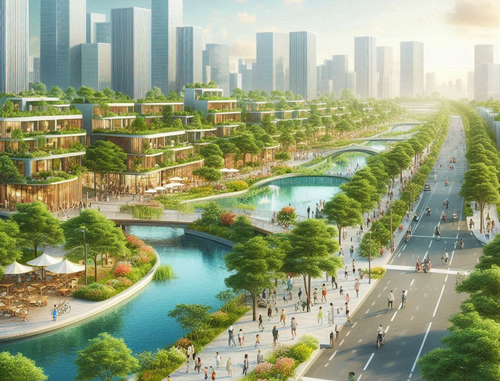
Pune, one of India’s most vibrant real estate markets, has experienced rapid changes over the past few years. Latest data from leading real estate consultancies show a scenario of strong housing price increases and ongoing changes in market dynamics, pointing towards further price hikes in the future.

According to real estate consultants Anarock, Pune and the Mumbai Metropolitan Region (MMR) saw over 50% of the overall housing sales in Q2 2024 among the top seven cities. This is a resounding statement for Pune — a city once considered the laid-back cousin of the financial capital and is now competing in the same league.

Rising Property Prices: A Continuum

Recent data from various leading consultancies clearly show Pune’s trend of rising property prices. There has been a significant 20-23% year-on-year increase compared to Q1 2023. This resilience and rising demand are driving prices higher. Several factors explain Pune’s growing housing prices

– Economic Growth & Employment Opportunities: Pune’s real estate market has improved significantly due to its development into a major IT and manufacturing center. High demand from professionals seeking homes near their workplaces has led to a surge in property values in and around IT parks and manufacturing hubs.

– Infrastructure Development: Ongoing and planned infrastructure improvements such as road extensions, new flyovers, and the Pune Metro are boosting the city’s property values and connectivity. This dynamic is evident across Greater Pune, which includes the Pune Municipal Corporation (PMC) and the infrastructure-driven Pimpri-Chinchwad Municipal Corporation (PCMC).

– Shift in Housing Segments: Pune’s housing market is now driven by mid-range and premium-to-luxury housing, thanks to higher demand for such options. The higher purchasing and borrowing power of the target clientele supports ongoing price increases.

pune real estate

So – Buy Now or Later?

To answer this very important question, it is necessary to consider some fundamentals. Pune’s strong economic growth draws professionals and families from various industries. The city offers a high livability quotient, better housing affordability, and a superior climate compared to neighboring Mumbai. It also boasts top-grade healthcare and education options and proximity to Mumbai, Maharashtra’s main economic hub.

Pune has delivered an overall residential price appreciation of well over 20% in just one year. Naturally, both end-users and investors find the city very appealing, especially considering its rapid growth since 2020, which saw Pune’s lowest year for housing demand in the last decade due to the COVID-19 pandemic.

Job losses, economic disruption, and the disappearance of construction labour brought building activity to a halt. The lockdowns caused a significant decline in real estate market demand and supply.

But in 2021, the market began to bounce back powerfully. With a 17% year-on-year increase, Pune saw the highest property sales since 2013. Buyer confidence increased steadily. In 2023, the Pune housing market rebounded remarkably. The current year is poised to set new benchmarks.

The writing is clearly on the wall — there is no stopping the Pune housing market, and a wait-and-watch stance can cost buyers dearly. For those who want to buy a home in Pune, either to live here or to reap investment returns, there is a strong argument for acting now. Historical data and current patterns clearly imply that the city’s property values will keep rising.

Given the continuous growth of the city and its expanding economic base, homes bought now will deliver significant value addition over time. Pune is currently second only to Mumbai in new residential launches and sales and is also attracting increasing interest from institutional investors eyeing its commercial real estate market.

This means more workplaces, more jobs, and even higher housing demand driving prices steadily northward. For potential buyers and investors, the message is clear – there is no equity in waiting for a more opportune time in Pune’s thriving housing market.

About the Author:

Pune's Real Estate Boom - Is Now the Perfect Time to Invest?Akash Pharande is Managing Director – Pharande Spaces, a leading real estate construction and development firm famous for its township projects in Greater Pune and beyond. Pharande Promoters & Builders, the flagship company of Pharande Spaces and an ISO 9001-2000 certified company, is a pioneer of townships in the region. With the recent inclusion of Puneville Commercial into one of its most iconic townships, Pharande Spaces taken a major step towards addressing Pune’s current and future requirements for fully integrated residential-commercial convenience
Real Estate’s Hopes from The Upcoming Union Budget

akash

By Akash Pharande, Managing Director – Pharande Spaces

The Indian real estate sector is a crucible of economic growth and employment. The sector stands at a crossroads as the government prepares to present its Union Budget. Though it has massive potential, the Indian housing industry still faces numerous hurdles.

To generate more growth and address the housing needs of the growing population, particularly in the low and mid-income segments, the budget must include tax breaks, regulatory reforms, and financial assistance measures.

Affordable and mid-income housing

Affordable and mid-income housing is the foundation of the real estate industry, meeting the urgent housing needs of the enormous LIG and middle-class population. To significantly boost this section, the following strategies are critical:

Interest Subsidies and Housing Loans: Widening the scope of the Pradhan Mantri Awas Yojana (PMAY) and raising the interest subsidy for housing loans is the need of the hour. Doing this will make homeownership more affordable. Reducing interest rates will also lower the financial stress put on aspiring homebuyers.

Enhanced Credit-Linked Subsidy Scheme (CLSS): Extending and improving the CLSS can provide financial relief to mid-income housing buyers. Both the income eligibility threshold and subsidy amount should be raised.

Single-window Clearance for Affordable Housing: A single-window clearance system for budget home projects will help considerably to make the incredibly complex approval process more streamlined and simple. This, in turn, would help to decrease delays in possession of such units and reduce the overall costs.

Real Estate's Hopes from The Upcoming Union Budget

Tax breaks to lighten the load

Tax breaks are critical when it comes to making homeownership more approachable, and they can also encourage builders to take on new affordable housing projects:

Raise Tax Deduction for Housing Loan Interest: Raising the tax deduction limit under Section 24(b) of the IT Act is long overdue and the need of the hour. The deduction limit should be increased from the current Rs. 2 lakh to at least Rs.3 lakh or even more.

Reduce Stamp Duty: The government can encourage state governments to cut their stamp duty rates, which account for a significant portion of the cost of homeownership. Even a temporary decrease or waiver of stamp duty on affordable and lower-middle-income housing can boost demand and sales.

Incentives for First-Time Buyers: First-time homebuyers should get further sentiment boosters. For instance, the government can raise the deduction limit under Sections 80EE and 80EEA for such buyers.

GST Reforms For Developers: GST rates applicable on construction materials and services can help lower overall project costs for builders. Also, a reduced GST rate for affordable housing projects would help attract more builders to this vital segment and to pursue such projects.

Real Estate's Hopes from The Upcoming Union Budget

Policy Measures and Provisions: Indirect Increases

Apart from direct financial boosters, the budget can introduce many policy initiatives that will indirectly improve sentiment in the housing sector:

Fast Track Infrastructure: This government is certainly determined to develop infrastructure like roads and public transport such as metros and railways. This helps expand the metropolitan areas and boosts affordable housing, which is usually developed in emerging areas where land is cheaper and infrastructure is still catching up. However, we need a much faster roll-out of such projects so that connectivity to such areas improves at a faster pace.

Land Reforms: Simplifying the overall land acquisition process will help developers speed up their supply of new projects. There is an express need for an open and effective land records management system that reduces disputes and, therefore, project delays.

Better Finance Access: Developers always need access to financing, but smaller and medium-scale players are at a bigger disadvantage than big players. The budget could consider announcing a separate real estate investment fund and also credit guarantees to such builders so that their cash flow improves.

Rental Housing Policy: Rental housing would benefit from favourable policies and tax incentives for those who cannot afford to buy homes. Implementing a model tenancy law and providing tax breaks on rental income would help a lot.

The Union Budget is an ideal platform and opportunity for the government to give teeth to its Housing for All scheme. While the original 2022 deadline was not met, it is not too late to revive this dream and make it a concrete reality. The Indian real estate sector certainly looks forward to such boosts for both homebuyers and builders.

About the Author:

Akash Pharande is Managing Director – Pharande Spaces, a leading real estate construction and development firm famous for its township projects in Greater Pune and beyond. Pharande Promoters & Builders, the flagship company of Pharande Spaces and an ISO 9001-2000 certified company, is a pioneer of townships in the region. With the recent inclusion of Puneville Commercial into one of its most iconic townships, Pharande Spaces has taken a major step towards addressing Pune’s current and future requirements for fully integrated residential-commercial convenience
Greater Pune – A Urban Expansion Benchmark by PMRDA

Akash Pharande, Managing Director - Pharande Spaces

By Akash Pharande, Managing Director – Pharande Spaces


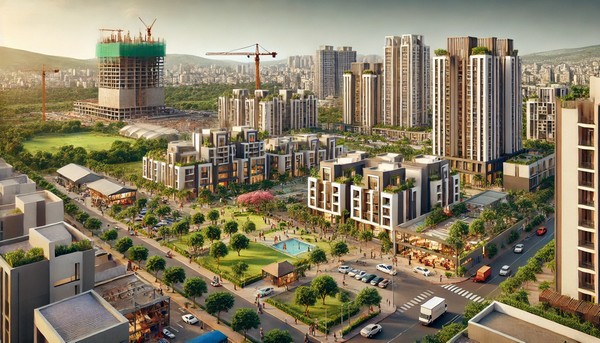
The Pune Metropolitan Region Development Authority (PMRDA) oversees an extensive and strategically significant territory now collectively referred to as Greater Pune. It covers both urban and rural regions.

The two key territories under Greater Pune are the Pune Municipal Corporation (PMC) and the Pimpri-Chinchwad Municipal Corporation (PCMC). PMRDA also governs the pivotal Talegaon Dabhade and Lonavala Municipal Councils – the former a strong and growing industrial hub, and the latter arguably Maharashtra’s favourite tourist destination.

Beyond these municipalities, PMRDA also administers numerous suburban and rural areas which are vital for Greater Pune’s expansion and development. These include the rapidly developing industrial hotspots Chakan and Pirangut, as well as Pune’s pre-eminent and pioneering IT hub Hinjawadi.

Among the rural areas are Mulshi, Maval, Khed, Haveli, and Junnar, which are important for their agricultural contributions and potential for future development. Known for their scenic landscapes, Mulshi and Maval are already attracting considerable real estate development.

As can be seen, Greater Pune is vast and diverse and showcases PMRDA’s governance across many major urban centres, IT hubs, industrial zones, and rural areas.

Over the past decade, Greater Pune’s exponential growth stands as a strong testament to PMRDA‘s strategic planning and robust implementation of development initiatives. But is this pace of growth really necessary? Let’s look at the facts.

city-planning

Population Growth and Urbanization

As of 2024, Pune’s population is estimated to be around 7.35 million in the metropolitan area and approximately 4.44 million within the city limits. Its vast talent pool across all employment categories is Greater Pune’s greatest asset, and this population needs to be accommodated.

It stands to reason that the region’s real estate sector has been booming. According to data from MahaRERA (Maharashtra Real Estate Regulatory Authority), there has been a consistent rise in the launch of new housing projects. In 2023 alone, Pune saw over 50,000 new homes launched, while Pimpri-Chinchwad added 20,000.

Prominent real estate developers have been having a field day – or rather, a field epoch – launching massive projects to aid this expansion. Given that home seekers in Greater Pune are looking for options across categories, a large number of these projects offer modern amenities that cater to the middle and upper-middle-class homebuyer segments.

While the supply of affordable housing projects has been more muted due to decreased demand, the market is replete with options even in this category.

Infrastructure Development

Across the length and breadth of Greater Pune, PMRDA has consistently focused on infrastructure development as a cornerstone of the region’s urban growth. One prime example is the Pune Metro which, in just the first phase, will connect key areas like Hinjewadi, Shivajinagar, and Pimpri. The reduced commute time creates more housing demand across all areas.

Additionally, the 128 km Ring Road will decongest city traffic by giving Greater Pune an alternative road travel route and connecting various parts of the region across major highways and economic zones. For Pune’s economic triple engine of IT, manufacturing, and the services sector, this spells gold and will massively boost trade and commerce. According to recent reports, absorption in Pune’s commercial office space reached 6.5 million square feet in 2023.

Sustainable Urbanization

PMRDA‘s commitment to Greater Pune includes a strong focus on sustainable urbanization. It has now made it mandatory that green spaces and energy-efficient designs be included in all new projects. Also, digital infrastructure, smart transportation, and efficient waste management have been prioritized.

Social Infrastructure

The growth of Greater Pune extends beyond just economic and infrastructural development. PMRDA is keenly aware that for overall quality of life and livability, adequate social infrastructure to support its growing population is of paramount importance. Not surprisingly, the region under its aegis boasts top-grade schools and colleges, hospitals, and recreational amenities.

To summarize…

Under the able administration of PMRDA, Greater Pune’s urban expansion has emerged as one of the most impressive success stories of planned growth, economic prosperity, and sustainable development. It sets a new benchmark for urban and urbanizing India, demonstrating how strategic governance and innovative planning can create a thriving, modern metropolis.

With continued focus on infrastructure, sustainable development, and quality of life, Greater Pune is poised to be a model city for the future, embodying the aspirations of a rapidly urbanizing nation.

About the Author:

Akash Pharande is Managing Director – Pharande Spaces, a leading real estate construction and development firm famous for its township projects in Greater Pune and beyond. Pharande Promoters & Builders, the flagship company of Pharande Spaces and an ISO 9001-2000 certified company, is a pioneer of townships in the region. With the recent inclusion of Puneville Commercial into one of its most iconic townships, Pharande Spaces taken a major step towards addressing Pune’s current and future requirements for fully integrated residential-commercial convenience

Commercial Integration – Reshaping India’s Residential Landscape

By  – Akash Pharande, Managing Director – Pharande Spaces

Akash Pharande, Managing Director - Pharande Spaces

One important feature changing how people live and work in India’s fast-urbanizing terrain is the incorporation of commercial areas into residential townships. While this concept – which combines residential areas with workplaces, shops, and recreational areas – is not new, its uptake has sped up recently, particularly in the wake of COVID-19.

Evolution and Origins

Mixed-use projects are nothing new to India; even in pre-independence India, residential areas and bazaars coexisted together. But in the early 2000s, integrated townships, as they are now known, started to take off. Encouraged by India’s economic expansion and rapid urbanization, developers realized the benefits of creating an all-encompassing residential experience for the growing middle class.

This trend became even more evident after the 2008 financial crisis. This is when forward-thinking builders began to seek out ways to make projects more profitable and desirable. Including residential and commercial areas into one complex promised to boost footfall in retail malls by providing a captive market for retailers. Office buildings within the same precincts gave homeowners the possibility of walking, bicycling to work, or taking a short drive there with no traffic woes to contend with.

The COVID-19 epidemic kicked off a major move towards remote work, less crowded residential areas with sufficient greenery, the convenience and safety of having necessary retail outlets within easy reach, and small commutes to work. In short, the pandemic solidified the already strong attraction for integrated townships.

integrated township

The Coworking Revolutions

Residential-commercial complexes like integrated townships are becoming all the more relevant because of the increasing popularity of coworking. If we take Pune as an example, the relevance and impact of coworking is hard to miss.

This city has evolved massively from its previous tags of ‘Oxford of the East‘ and ‘Pensioner’s Paradise’. Pune’s vibrant educational institutions and IT/ITeS sector generate and attract more and more young professionals and millennial entrepreneurs. Simultaneously, even some of the biggest MNCs in Pune have been looking at cutting costs after COVID-19.

Coworking spaces are the logical solution to bring down corporate costs and provide a fertile environment for collaboration, networking, and creative engagement. The most successful ones are located in and around residential catchments, so their availability in integrated townships is a win-win proposition.

Pune has been seeing steady growth in the coworking segment, with more operators of varying sizes constantly entering the fray. Especially after COVID-19, the coworking solution has found favour with many companies as well as the city’s growing young population. Pune’s thriving startup culture has contributed hugely to its growing popularity, as have the gig economy and service-based companies such as digital marketing, automobiles, and blockchain.

Not surprisingly, leading property consultants reported that 2021 saw a no less than 30% increase in demand for integrated townships over the same period the year before. Where work-from-home (WFH) has become ingrained, especially in metros and tier-1 cities, this rise is significant. Compared to exclusively residential projects, mixed-use townships have seen higher residential sales following the epidemic.

work-life 2.0

Integrated commercial-residential townships are growing in popularity in India because of:

Work-Life Balance: Integrated townships encourage a healthy it by merging living and recreational areas, and minimizing travel time to and from work. This is something that the modern workforce appreciates more and more.

A Sustainable Lifestyle: Sustainable living is becoming more and more important to urban Indians. Mixed-use townships lessen the need for driving and therefore have a lower carbon footprint overall. The more modern integrated townships also offer advanced green features such as wastewater recycling, use of solar lighting and heating, green areas to act as lung space, and proper cross-ventilation in flats to reduce cooling costs in summer.

Profitability for Developers: Integrated townships with commercial components baked in are a lucrative proposition for developers. The added appeal and convenience factor of these projects usually makes them more expensive than ordinary residential projects; however, Indians today are willing to spend more on a sustainable, convenient, and hassle-free lifestyle. Also, there is considerable brand value involved in creating and sustaining modern integrated townships, since such projects require specialized knowledge and considerable capital to build and maintain.

Policy Support: Integrated townships are encouraged and promoted by Indian government programs like the Smart Cities Mission, and sustainability factors are also incentivized for both homebuyers and developers. Mixed-use integrated projects in suburban areas are also actively encouraged by the government because they help decongest urban areas.

Buyer Preferences: The pandemic changed consumer preferences considerably. More and more Indians are choosing to live in spacious, uncluttered, and health-promoting projects that provide quick access to workplaces and the requirements of daily living. Mixed-use integrated townships negate most of the stresses and health hazards of inner-city life. They are also ideal for remote working scenarios.

The Future of Mixed-use Townships

The trend of developing residential- and commercial projects is not only a durable one but the very call of the future in India. Companies’ growing acceptance of remote working arrangements will increase demand for residential developments that meet professional requirements even more. Moreover, the continuous urbanization and increasing disposable incomes in India point to a long-term interest in these kinds of living arrangements.

The boundaries dividing residential and commercial areas are blurring as urban India develops. More than just a real estate fad, integrated townships are the logical answer to the evolving demands and lifestyles of contemporary Indian society. Their increasing popularity is bringing about a profound change in urban planning and development—a move toward a more comfortable, sustainable, convenient, and all-encompassing residential experience.

About the Author: Akash Pharande is Managing Director – Pharande Spaces, a leading real estate construction and development firm famous for its township projects in West Pune and beyond. Pharande Promoters & Builders, the flagship company of Pharande Spaces and an ISO 9001-2000 certified company, is a pioneer of townships in West Pune. With the recent integration of Puneville Commercial into one of its most iconic townships, Pharande Spaces taken a major step towards addressing Pune’s current and future requirements for fully integrated residential-commercial convenience.

How Housing Prices Are Set (No, It’s Not Arbitrary)

akash pharande  By – Akash Pharande, Managing Director – Pharande Spaces
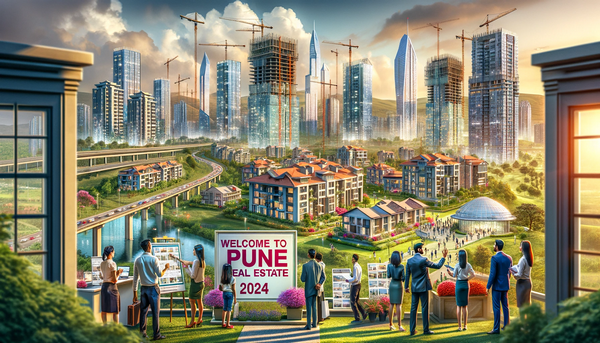
The Indian housing market is in continuous boom mode, with more people that ever aspiring for homeownership and developers vying for their attention. However, one thing that still tends to haunt many buyers’ minds is the lack of clarity when it comes to the prices of homes. While homes by good developers are selling at a fast clip, many buyers still feel that the prices are set arbitrarily.

Let’s explore how real estate developers arrive at the prices for their properties. For this, we first need to understand a concept and process called ‘price discovery’.

What is Price Discovery?

Price discovery is the process by which the market determines the value of a particular product. It applies to almost all products, including smart phones, costlier household items like air conditioners, refrigerators and television sets, and so on.

You have doubtlessly noticed that the prices of some of these items tends to fluctuate according to the demand for them, the state of the economy, time of year, and even the weather. Even gold items, where the price of the basic raw material is determined by its market value, also experience price hikes during the festive season.

But if the economy is in doldrums and disposable income is low, even gold items will sell at a discount because of lower demand.

In the context of real estate, price discovery determines the prices at which properties reasonably sell. In India, the process of price discovery for residential real estate is complex, as it involves several factors. One of the most important factors is the cost of land.

The Cost of Land

Land is a finite resource, and its availability is limited. The cost of land can vary widely depending on its location, the availability of basic infrastructure there, and what kinds of developments the area has already seen. For all intents and purposes, there is no such thing as basic cost of land – while there may be certain basic benchmarks, the prices of different plots even in the same area can vary widely.

Developers do influence the cost of land through development activities. Announcing new projects can increase land demand in nearby areas, especially if the development enhances the area with amenities and infrastructure. Less directly, the demand from developers for land in a certain area tends to drive up the price quoted by the landowners.

More influential developers, such as those who build massive townships and industrial projects, can also influence zoning and land use changes. This increases land value by enabling more profitable developments for other developers. Large-scale developments can bring about broader economic growth, which attracts businesses and residents, thereby increasing demand and therefore land costs.

In markets where some developers hold large land parcels, they control the supply, and this will also influence pricing. And, of course, government policies also play a key role.

But whether they are responsible for the current land prices or not, developers must factor in the cost of this finite resource when setting the price for their properties.

Construction Costs

Another important factor that influences the price of homes is construction costs. The amount of money a developer spends on construction materials, labour, and other expenses can vary widely depending on the city, location, nature of the project, and quality of the materials used.

The third factor will again vary depending on whether the project being developed falls into the luxury, mid-range, or affordable housing category. The cost of relevant labour hinges on its ready availability in the area.

If the project’s location is remote and the developer breaking completely new ground there, construction labour needs to be brought in from far off and be accommodated. In the case of high-density development areas, labour tends to be more readily available.

Demand

The third factor that affects the price of housing is the demand for it. This can vary significantly depending on the location of the project and whether the project addresses the actual requirements of the target clientele. For example, a luxury development in an area largely defined by low-cost housing is unlikely to see much organic demand.

Also, demand will depend on the developer’s brand value and the amenities offered in the project. Even with good brand backing, the right location and appropriateness of the project, a developer must set the ticket sizes of his homes reasonably so as not to be ‘priced out of the market’ – meaning that prices must be in line with similar projects by other developers in the area.

To summarize

Given the complexity of these factors, it is not surprising that the process of price discovery in the Indian housing sector can often seem arbitrary and opaque. Developers must consider multiple factors to set the price for their properties.

One common strategy used by many – but no means all – developers is to set a base price for their properties but be open to negotiate on it with individual buyers. There is usually more scope for negotiation in the case of projects which are not seeing much sales volumes.

Finally, developers often provide discounts or incentives to buyers who purchase earlier in the project’s development cycle. This encourages buyers to commit to purchasing homes before construction is complete, helping developers to improve cash flows and reduce their financial risk.

Each developer must consider the unique factors that affect the price of their properties and come up with a pricing strategy that is appropriate for that particular project. But conveying these various factors to every single customer is not feasible – finally, home buyers are interested in buying a home and not in the challenges that the developer faces.

It is also pertinent to note that the market also tends to be self-correcting. If developers set excessively high prices, the demand for their properties will be lower than they expected. On the other hand, if a developer sets the prices too low, he may miss out on a good profit margin.

But few home buyers today are willing to be patient to see if prices in a particular project will correct. In fact, most buyers are looking for ready-to-move homes precisely because they’re not willing to wait. This means that the developer must come up with the right pricing strategy right off the bat.

If you’ve found a good home option in the right location, in the right project by the right developer, and the price corresponds to your budget, it is safe to assume that the developer has done his homework and that ‘the price is right’.

2024’s Top Choice for Home Buyers – Why Pune is Winning Hearts

2024's Top Choice for Home Buyers - Why Pune is Winning HeartsBy  – Akash Pharande, Managing Director – Pharande Spaces
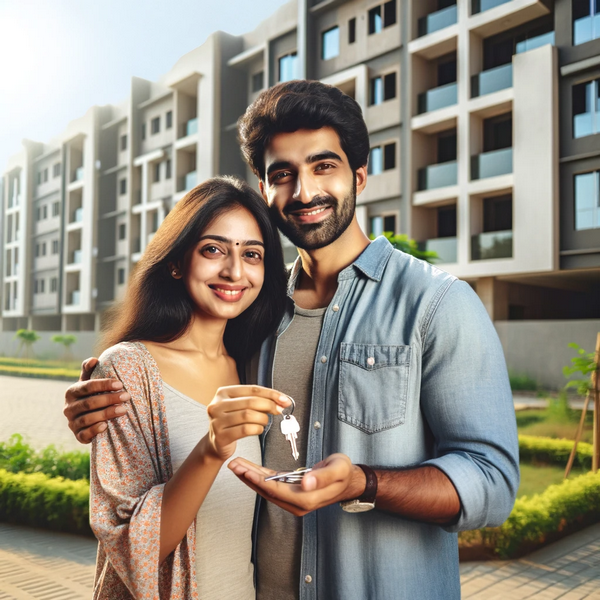
As the veil lifts on 2024, property end-users and investors in and around Pune are firming up their New Year’s resolution to achieve home ownership this year. It’s certainly the perfect time for it. According to real estate consultants Anarock, Pune and MMR were the top-selling housing markets in 2023.

In Pune, approximately 86,680 homes were sold in 2023, states Anarock, second only to the Mumbai Metropolitan Region’s impressive sales of 153,870 units. Pune‘s high ranking in housing sales is not surprising. The city offers a lot more than just more attractive price points compared to Mumbai. But the price factor certainly matters.

Pune’s Price Advantage

In Pune, you can find a 1BHK apartment ranging from Rs. 35 to 45 lakhs, depending on the area. In contrast, a similar 600-700 square foot apartment in Mumbai would cost around Rs. 80 lakhs to 1 crore. Property prices in Mumbai are typically 30-40% higher than in other Indian cities.

To put it in percentage terms, real estate in Mumbai is, broadly speaking, 75.21% more expensive than in Pune. This makes Pune a far more accessible market for a broader range of buyers and investors. However, there is no doubt that the affordability factor is gradually decreasing because Pune has seen steady price appreciation.

According to a recent report, 2023 saw the average housing price in Pune rise by 11% increase, reaching Rs 5,208 per square foot. This rise was attributed to improved demand in the housing market. Predictions suggest this trend will continue in 2024, making Pune a magnet for investors seeking long-term value growth.

But apart from prices, Pune wins over Mumbai in several other ways.

dream achieved.

Why Pune Succeeds Consistently

Pune continues to deliver the perfect balance of lifestyle and investment value compared to Mumbai. The city offers superior space with more spacious residential options – a distant dream in most MMR areas except the farthest suburbs. Pune is ideal for families and individuals wanting a better quality of life through larger living spaces.

Pune‘s strategic location and improving transport infrastructure also make it highly attractive. The city’s proximity to Mumbai is a defining advantage. At the same time, Pune‘s education, healthcare, and entertainment facilities contribute to a higher standard of living. Additionally, Pune‘s IT parks, commercial hubs, and strong services industry continue to transform the landscape, attracting job seekers and investors.

While buyers and investors have many options in Pune, some areas stand out for important reasons. One getting considerable attention is Punawale.

Punawale – Standout Housing Hotspot

Punawale, within the Pimpri-Chinchwad Municipal Corporation (PCMC) in Pune, has seen remarkable growth, emerging as a preferred housing destination. Like Pune, Punawale has seen substantial price appreciation due to its strategic location, infrastructure development, and surging demand for quality housing.

Unlike other locations, Punawale caters to diverse segments, from affordable housing to luxury projects.

The area has well-planned roads, efficient public transport, and easy access to schools, hospitals, and shopping. This infrastructure makes Punawale more appealing than many Pune areas.

The PCMC Edge

Overall, PCMC outperforms Pune Metropolitan Region in several aspects. PCMC implemented a rational master plan focused on sustainable, balanced development. This urban planning foresight resulted in better-managed residential and commercial spaces, efficient utilities, and less congestion, making areas like Punawale more livable.

PCMC emphasizes green, open spaces. The area has parks and gardens, contributing to a healthier, more aesthetically pleasing environment. These green spaces provide much-needed recreation and relaxation, a rarity in many urban areas.

Punawale maximizes these advantages. It is home to West Pune‘s most outstanding integrated township, which has been a game-changer for its real estate market by enhancing the overall real estate value proposition and setting new residential space standards for the region.

The transformative power of outstanding developments is well-established, and India has several examples of this phenomenon. The entire socio-economic structure of the area changes for the better.

Superior Connectivity

A standout feature of Punawale is its connectivity. Well-linked to key Pune areas and other cities via roads and highways, proximity to the Mumbai-Pune Expressway and major arterials enhances the appeal for commuters and those wanting easy access.

Quality of Life

Infrastructure, connectivity, green spaces, and a high-grade township have significantly uplifted Punawale’s quality of life. Residents enjoy a balanced lifestyle with modern amenities, nature, and community focus.

Punawale’s transformation into a real estate hotspot resulted from strategic planning, infrastructure development, and visionary projects. Growth is based on urban convenience, connectivity, and green space – the future of sustainable urban living.

The Future Beckons

Ongoing and planned infrastructure projects, coupled with demand for quality housing, strongly support Punawale’s future growth. Improved road connectivity and public transport have played a pivotal role in boosting values. Easy access to major employment hubs like Hinjewadi IT Park and MIDC industrial belt has made Punawale a hotbed for home seekers valuing easy commutes without compromising quality of life.

For end-users and investors, Punawale brings everything together. With consistent growth in values and enhancements in quality of life and connectivity, Punawale is a standout real estate destination in 2024.

One Year of COVID – Pune Housing Market Holds its Ground

by Akash Pharande, Managing Director – Pharande Spaces

Despite the Covid-19 pandemic’s onslaught for more than a year now, the Pune residential market has remained resilient. Notably, Pune was among the worst-affected cities in not just Maharashtra but the entire country during both waves. Naturally, this has impacted the city’s economy in almost all sectors.

However, Pune’s housing market did fairly well even in the last one year. Both demand and new supply have been good and even picked up speed after restrictions were rolled back following the first wave in 2020.

Pune’s housing sales benefited a lot from the stamp duty cuts (now unfortunately over) and low home loan interest rates. The Maharashtra government’s stamp duty reduction (3% between September to December 2020 and 2% between January to March 2021) was a boon that helped both developers and their customers.

Leading banks are still offering home loans below 7%. Also, many of the prominent developers still offer bespoke deals including payment schemes (10:90, 20:80), a complete waiver of stamp duty and registration charges, GST waiver (5% of the property cost minus ITC benefits) and cash-back schemes. These offers continue to make buying homes in Pune attractive.

Moreover, buying homes has become a major priority for Puneris – not only for complete family safety in the pandemic but also because housing is still the best investment in a city like Pune.

Pune Housing Demand and Supply

Housing demand remained good in the last one year and Pune’s average property prices have remained attractive at around Rs. 6,573/sq. ft. in 2020 (according to Housing.com) for both first and second-home buyers. Affordability is a big factor in price-conscious Pune, especially during a health crisis like Covid-19.

In terms of new supply, ANAROCK Property Consultants says that roundabout 30,000 units were put on the market between April 2020 and March 2021. Developers confidently added this supply because housing demand in Pune exceeded expectations even in the pandemic. Because of strong competition, Pune’s developers maintained focus on the correct unit sizes, quality of their homes, and timely completion of their projects.

According to property consultants, Pune’s developers sold approx. 26,800 units in FY 2021. Interestingly, 48% of these sales were in the Pimpri-Chinchwad Municipal Corporation (PCMC) areas. In the previous FY 2020, PCMC’s share was lower at 45% of about 52,000 homes. The growth of housing demand in PCMC clearly shows that this highly-planned region is getting more and more attention from buyers during the pandemic.

Besides having all necessities that make life easy – such as water and electricity supply, scientific sewage system, abundant green open spaces and safety, PCMC is also Maharashtra’s Townships Capital.

Integrated townships are now all the rage among homebuyers who want additional safety and convenience after getting burned by Covid-19. Such buyers want to live in fully-equipped gated communities where all basic requirements, as well as safety and security, are assured.

In cities like Pune, the pandemic has in many ways been a booster for housing demand. We expect property prices to start hardening within 12-18 months because of the healthy demand.