Tag: Urbanization

Breathing Uneasy – Housing Choices Amid Worsening AQI

akash pharande

 By- Akash Pharande, Managing Director – Pharande Spaces

The problem of rapidly worsening air quality in India has a direct correlation to our housing choices. Increasing urbanization, industrial proliferation, and population growth are causing more and more homebuyers to prioritize the quality of their living environments.

Urban Centers – The Worst Hit

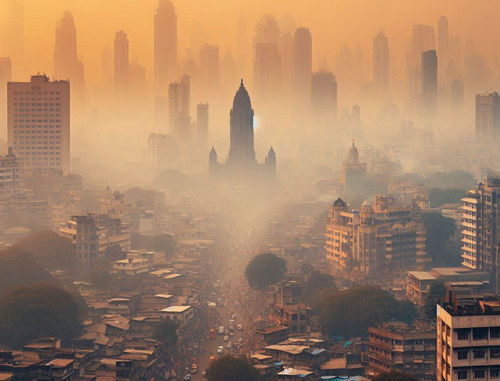
Indian city centres face severe air pollution threat:

  • Heavy Traffic – The congested city centres with high population and traffic density contribute significantly to vehicular emissions.
  • Industrial Pollution – Proximity to industrial zones with obsolete or nonexistent pollution control measures worsens air quality.
  • Urban Heat Island Effect – The concentration of buildings and human activities in cities leads to higher temperatures – which, in turn, escalate pollution levels.
  • Lack of Green Spaces – The absence of parks and green areas in densely populated urban regions makes natural air filtration impossible.
pollution

A Shift Towards Cleaner Surroundings

Many suburban areas with lower population density and more green open spaces offer relief from urban pollution. Planned cities, like Chandigarh, Navi Mumbai and PCMC (Pimpri Chinchwad Municipal Corporation) showcase the effective separation of residential and industrial zones, improving overall air quality for all concerned.

In the absence of planned development, many suburban paradises are at risk. Rapid real estate development will eventually turn green sanctuaries into polluted urban-like environments.

Exploring the Solution – Integrated Townships

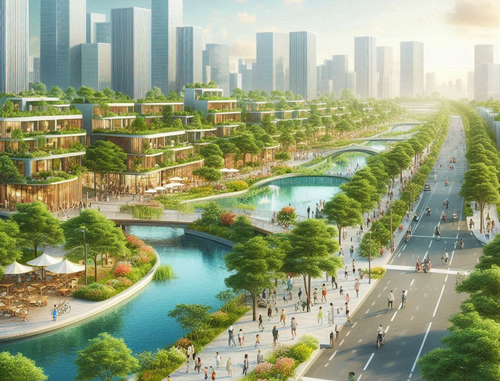
To tackle this issue, the Indian residential real estate sector has introduced integrated townships as a solution that can withstand environmental challenges.

  • Captive Green Spaces – These townships prioritize green open spaces like parks and gardens to create an environmentally sustainable environment.
  • Reduced Vehicle Emissions – Because they incorporate schools, shops and recreational facilities within their precincts, townships reduce overall vehicle movement.
  • Sustainable Infrastructure – Initiatives like rainwater harvesting and waste recycling promote eco-friendly living practices.
  • Combating Urban Heat Islands – Development plans for townships include extensive green areas, tree-lined streets, natural or artificial water bodies, and renewable energy sources to combat heat accumulation. By securing these advantages, integrated townships ensure that the area remains eco-friendly – now and in the future.
breathing

Tips for Prospective Home Buyers to Avoid Air Pollution Risks

  • Begin by examining air quality data for different regions. This information is often accessible through environmental monitoring agencies or online air quality indices. Check websites that offer real-time air quality updates to evaluate current atmospheric conditions.
  • When selecting locations, consider the presence of green spaces. Look for areas close to parks, reserved forests, and other open green zones, as they result in better overall air quality. Don’t choose a home in a project too close to a highway or an industrial zone, or prone to traffic bottlenecks. Also note that elevated areas often offer better air quality because heavy pollution smog primarily settles in low-lying areas.
  • Evaluate the condition of roads and public transportation as this will determine how much emissions accumulate in an area. Do internet research and check news to review the area’s infrastructure and future development plans to anticipate changes that could impact air quality.
  • When checking out a home, find out if it has adequate cross-ventilation and good green home features. Energy-efficient homes typically provide better air quality thanks to their sealed and insulated environments.
    You can, to some extent, enhance indoor air quality by using indoor plants. But this is obviously a very minimal solution to a major problem

In conclusion

With air quality playing an important role in home purchasing choices, buyers must prioritize features that ensure a clean and healthy living environment.

By picking the right location and project, you can protect your and your family’s well-being and still enjoy the conveniences of modern life. Opting for integrated township living is a wise decision amid rapidly declining air quality in urban India. In any case, make any housing with a lot of research and awareness about air quality.

And remember – the clean environment you get in a currently green but quickly developing suburb may not be guaranteed tomorrow. Ensure that your loved ones can breathe freely – not only today but also in the future.

About the Author:

Breathing Uneasy - Housing Choices Amid Worsening AQI

Akash Pharande is Managing Director – Pharande Spaces, a leading real estate construction and development firm famous for its township projects in Greater Pune and beyond. Pharande Promoters & Builders, the flagship company of Pharande Spaces and an ISO 9001-2000 certified company, is a pioneer of townships in the region. With the recent inclusion of Puneville Commercial into one of its most iconic townships, Pharande Spaces taken a major step towards addressing Pune’s current and future requirements for fully integrated residential-commercial convenience

Shimla after Urbanization

Increased Urbanization no Solution to Developing Sustainable India of our Dream- Kulpati Prof PB Sharma

The nations around the world are sold on the idea of increased urbanization as a solution to make the wheels of economic development go fast to meet the objective of trillion-dollar economies and to provide modern amenities to a larger proportion of the world population. India is no exception, as is expected to achieve the target of 50% population living in urban towns and megacities by 2050. No wonder as the world cities are regarded as the powerhouse of world economic growth, accounting for 60% of global GDP and hence form the basis of developing a prosperous world, as per the UN-Habitat World Cities Report 2020.

The report also mentions that the world cities occupy 3 percent of earth area but consume 70 percent electricity and account for 80% of total carbon emissions as of today! What’s more, the rapid urbanization is resulting in a growing number of slum dwellers, inadequate and overburdened infrastructure, and great pressure on services such as waste collection and disposal, water and sanitation systems, roads and transport, worsening air pollution, and unplanned urban expansion.

Increased urbanization for development strategy assumes that in the years to come the cities will be greener and sustainable by an increased focus on energy efficiency, sustainable technology innovations, and smart and intelligent systems to manage urban habitat. Smart and sustainable cities are being projected as a promise for a green and bright future to the global community.

But the advocates of urbanization forget that increased urbanization after globalization and liberalization created megacities and urban townships but also created several problems including the exodus from rural areas to cities and metropolis towns. They also created slums. It is alarming to note that In India by 2011 the slum population was 5.41% and by 2017 it increased to 10.4% of India’s population. It is further projected to grow to 18% by 2036. Hence, if the business as usual continues by 2050 when urbanization is expected to grow to 50%, the slum’s population shall account for almost 40 % of the population in India, says Prof PB Sharma, Vice-Chancellor Amity University Gurugram.

The UN Secretary-General in his foreword to the WCR-2020 has said “We cannot go back to business as usual. Cities and communities are demanding that those in authority take the opportunity to build back better. To emerge stronger, we need a sustainable, inclusive, and green recovery for people and the planet. That means dealing with the existing challenges of how cities are planned, managed and financed, and ensuring their development is compatible with the goal of net-zero emissions by 2050”. The emphasis here is clearly on ensuring a green and sustainable future for mankind.

I must not hesitate to say that the increased urbanization is the decease of the western mind and is not the best way for a country like India to create a green and bright future for either the current or the future generations. A better way for a country like India, where 80 percent population is still living in rural areas would be to find better ways of developing a New and Sustainable India of our dream.

A better way would be, to “Go Rural with a High-tech Mind and Scientific Solutions” and build rural areas as vibrant economic growth centers of new India, creating millions of jobs and ushering into an era of mass entrepreneurship, powered by the innovative genius of young India, said eminent academician Prof PB Sharma making a strong case for going back to basics of sustainable, happy and developed habitat during his deliberations at the North Zone Vice-Chancellors meet at Shoolini University, Himachal Pradesh organized by Association of Indian Universities, AIU. The VCs meet was to explore the role of the universities and institutions of higher learning in the realization of the SDGs for a nation like India.

Presentations at the VCs conference were made by a galaxy of experts from Indian universities, online education providers, UN-Habitat, NITI Aayog, Ministry of Housing and Urban Affairs, and School of Planning and Architecture who all deliberated on the contribution of HEIs in making Cities and Human Settlements Inclusive, Safe, Resilient, and Sustainable to meet the SDGs.

Our major focus in India should be how to create jobs in millions and yet without the exodus of our population from rural to urban areas. The advocates of urbanization shall argue that it is for the reasons of job creation and to usher rapid economic growth that urbanization-based development is needed. What they forget of course that the same jobs could be created in the rural areas had we been able to penetrate rural areas with good quality education, skilling, and industrialization in areas that matter for sustainable rural development.

High-tech aggrotech, Food-tech, info-tech, scientifically developed herbal Pharmaceuticals and a whole lot of cottage industries, including in areas of modern technologies like low-cost electronics, and a large number of ancillaries of modern industries can be pushed in rural areas now that skilling and good quality education can make its inroads in rural India. This would not only decongest the cities that are already choking because of population exodus from rural to urbanization.

Green energy technologies, water conservation in agriculture, and improving the yield as well as the quality of agricultural produce would be the positive outcome of going rural with high-tech minds. We spend so much effort to educate rural children in the cities and delink them from their native habitat in our urban-centric industrialization thus denying rural India the benefit of its talented children. A high-tech rural-centric development model is needed for a country like India for achieving the goal of sustainable inclusive growth in the coming years.

Professor PB Sharma while chairing the session on SDG-12 on Contribution of HEIs in Ensuring Sustainable Consumption and Production Patterns said “As we move deeper into the scientific explorations and mind-boggling technology innovations now on, the education in Indian universities should take on board sustainability and sustainable development goals as the guiding principles for accelerating innovations and rolling out startups powered by the inspired minds of young India to make New India a prosperous and happy abode of humanity alongside achieving the goal of inclusive development powered by mass entrepreneurship and sustained focus on creating a green and sustainable future. I would advocate for a strong case for redesigning our education system tuned to sustainability.”

Prof Sharma also said that our age-old traditions of education for man making were founded on the principle of Janani Janam Bhumascha Swargadapi Gariyashi (develop your motherland as the heaven on earth) despite the fact that education in ancient India has a universal appeal. The mass production-led industrial development in India created an increased demand for labour, both skilled as well as unskilled and also created huge migration of labour from villages to industrial hubs in large cities and metros.

The great economic disparity that India’s growth story created during 75 years of India’s independence is a matter of grave concern. 42.5% wealth of India is still in the hands of the top 1% of population while the bottom 50% account for mere 2.8% of India’s wealth in 2020 as per a paper by Maitreesh Ghatak of the London School of Economics (June 2021). It is also interesting to note that the corresponding figures for 1991 were 16.5% for top 1% and 8.8% for the bottom 50% of the population.

Thus, the globalization and liberalization that made Indian economy grow leaps and bounds also resulted in greater economic disparity due to growth-centric development devoid of equity and inclusiveness. The damage it did for environment and air and water pollution created further tears and distress in the Indian society, said Prof Sharma, who is also the founder Vice-Chancellor of DTU and a former Professor of IIT Delhi