Tag: Vice-Chancellor

New La Trobe University Vice-Chancellor strengthens ties during India visit

20th March 2024, Delhi: Australia’s La Trobe University has identified key areas to further strengthen its longstanding commitment to Indian Research and Education partnerships during a visit by the University’s New Vice-Chancellor. Professor Theo Farrell, who began as Vice-Chancellor in February this year, has met with a range of Industry, Government, and Trade Representatives during a five-day visit to the country.

New La Trobe University Vice-Chancellor strengthens ties during India visit

La Trobe has a proud and successful history in India, partnering with tertiary institutions and organizations on projects that benefit both countries and helping develop India’s brightest minds through joint education opportunities.

During his visit, Professor Farrell convened several Roundtable discussions with Partners, Industry, and Government Representatives, on opportunities to collaborate on areas of mutual interest that address national priorities and that are important for Industry Innovation and Development.

Professor Farrell said there were several priority areas for La Trobe that presented opportunities for deepening relationships in India and developing new partnerships.

These include continuing to support and expand student exchanges in India and Australia; developing research focussed on digital technologies and skills innovations; research commercialization opportunities, and linkages with industry partners. Deepening mutual industry partnerships play to La Trobe’s strengths in areas including smart cities, sustainable agriculture and food security, bio innovation, and in health and care innovation.

“Some of La Trobe’s most important university partners are in India, and we are building important partnerships with industry and businesses in India that leverage our significant expertise in areas including sustainable food and agriculture, health and wellbeing, technology and bio-innovation, ”Professor Farrell said.

“Our expertise in bio-innovation has recently been recognised by BioNTech, one of the world’s leading biotechnology companies, who have chosen La Trobe’s Melbourne campus as the base for its new mRNA manufacturing facility to develop and test cancer treatments. “In addition, we’re committed to institutional cross-learning, joint intellectual programs and research, collaborative approaches that address industry challenges and joint educational partnerships that provide important valuable learning opportunities for students.”

Opportunities for further collaboration and engagement were also discussed at a Leadership Roundtable of all member Universities of the Asian Smart Cities Research Innovation Network (ASCRIN), which was founded by La Trobe University in 2019 and is now its Single Largest Research Internationalisation Initiative with joint investment of more than AUD $43 million (Rs 235 crores)

ASCRIN brings together a network of researchers, global industry partners, government collaborators, and start-ups to advance research into smart city-related projects, helping to improve the sustainability, livability, and efficiency of cities and towns in the region.

“The Network, with over 250 researchers, has already made significant strides in curating a strong portfolio of impact-based projects aimed at enhancing sustainability, liveability, and efficiency of cities and towns in the region. Our vision is now to build on this and accelerate engagement with industry and government to fast-track commercialisation and adoption pathways,” said Professor Aniruddha Desai, ASCRIN Founder and Co-Director of IIT Kanpur – La Trobe University Research Academy.

The Network has over 50 projects underway that will make a tangible difference in the lives of people in India, including:

• Data-driven decision-making to improve Dairy supply chains.

• Re-using construction and demolition waste to reduce landfill.

• Intelligent planning of energy grids to optimize consumption and reduce costs.

• Using sensors to improve indoor growing conditions of medicinal crops.

• Real-time crash prediction in traffic on urban roads and intersections to increase the safety of all road users.

The Tata Institute of Social Science (TISS) last year joined other leading tertiary institutions, the Indian Institute of Technology Kanpur (IIT-K) and Birla Institute of Technology and Science, Pilani (BITS-Pilani) as partners in the Network, which already includes more than 250 researchers and over 70 Joint-PhD projects.

Professor Farrell and Pro Vice Chancellor of TISS, Professor Shankar Das also announced a Joint- PhD program, which will support Indian students to conduct research addressing the growing challenges of urbanization in Asia.

The La Trobe delegation will celebrate the finalists and winners of the Annual Technology Infusion Grand Challenge, which is designed to encourage undergraduate students in Science, Technology, Engineering and Mathematics and Business fields to be confident in their skills and knowledge to produce a solutions and solve a concrete problem using next-generation smart technologies.

Over 130 students in some 67 teams from 18 universities in the region submitted innovative entries.

Professor Farrell will also visit Mahindra University, where La Trobe has launched a joint Bachelor’s degree program in civil engineering.

The collaboration, initiated in 2023, aligns with India’s National Education Policy 2023 and Australia’s Education Strategy for India, offering a unique opportunity for students to pursue their Bachelor’s degree in civil engineering with two years at Mahindra University and two years at La Trobe University. Students will receive a bachelor’s degree in civil engineering from both Universities.

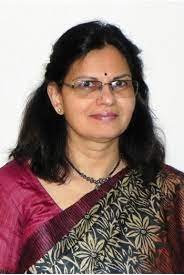
Increased Urbanization no Solution to Developing Sustainable India of our Dream- Kulpati Prof PB Sharma

The nations around the world are sold on the idea of increased urbanization as a solution to make the wheels of economic development go fast to meet the objective of trillion-dollar economies and to provide modern amenities to a larger proportion of the world population. India is no exception, as is expected to achieve the target of 50% population living in urban towns and megacities by 2050. No wonder as the world cities are regarded as the powerhouse of world economic growth, accounting for 60% of global GDP and hence form the basis of developing a prosperous world, as per the UN-Habitat World Cities Report 2020.

The report also mentions that the world cities occupy 3 percent of earth area but consume 70 percent electricity and account for 80% of total carbon emissions as of today! What’s more, the rapid urbanization is resulting in a growing number of slum dwellers, inadequate and overburdened infrastructure, and great pressure on services such as waste collection and disposal, water and sanitation systems, roads and transport, worsening air pollution, and unplanned urban expansion.

Increased urbanization for development strategy assumes that in the years to come the cities will be greener and sustainable by an increased focus on energy efficiency, sustainable technology innovations, and smart and intelligent systems to manage urban habitat. Smart and sustainable cities are being projected as a promise for a green and bright future to the global community.

But the advocates of urbanization forget that increased urbanization after globalization and liberalization created megacities and urban townships but also created several problems including the exodus from rural areas to cities and metropolis towns. They also created slums. It is alarming to note that In India by 2011 the slum population was 5.41% and by 2017 it increased to 10.4% of India’s population. It is further projected to grow to 18% by 2036. Hence, if the business as usual continues by 2050 when urbanization is expected to grow to 50%, the slum’s population shall account for almost 40 % of the population in India, says Prof PB Sharma, Vice-Chancellor Amity University Gurugram.

The UN Secretary-General in his foreword to the WCR-2020 has said “We cannot go back to business as usual. Cities and communities are demanding that those in authority take the opportunity to build back better. To emerge stronger, we need a sustainable, inclusive, and green recovery for people and the planet. That means dealing with the existing challenges of how cities are planned, managed and financed, and ensuring their development is compatible with the goal of net-zero emissions by 2050”. The emphasis here is clearly on ensuring a green and sustainable future for mankind.

I must not hesitate to say that the increased urbanization is the decease of the western mind and is not the best way for a country like India to create a green and bright future for either the current or the future generations. A better way for a country like India, where 80 percent population is still living in rural areas would be to find better ways of developing a New and Sustainable India of our dream.

A better way would be, to “Go Rural with a High-tech Mind and Scientific Solutions” and build rural areas as vibrant economic growth centers of new India, creating millions of jobs and ushering into an era of mass entrepreneurship, powered by the innovative genius of young India, said eminent academician Prof PB Sharma making a strong case for going back to basics of sustainable, happy and developed habitat during his deliberations at the North Zone Vice-Chancellors meet at Shoolini University, Himachal Pradesh organized by Association of Indian Universities, AIU. The VCs meet was to explore the role of the universities and institutions of higher learning in the realization of the SDGs for a nation like India.

Presentations at the VCs conference were made by a galaxy of experts from Indian universities, online education providers, UN-Habitat, NITI Aayog, Ministry of Housing and Urban Affairs, and School of Planning and Architecture who all deliberated on the contribution of HEIs in making Cities and Human Settlements Inclusive, Safe, Resilient, and Sustainable to meet the SDGs.

Our major focus in India should be how to create jobs in millions and yet without the exodus of our population from rural to urban areas. The advocates of urbanization shall argue that it is for the reasons of job creation and to usher rapid economic growth that urbanization-based development is needed. What they forget of course that the same jobs could be created in the rural areas had we been able to penetrate rural areas with good quality education, skilling, and industrialization in areas that matter for sustainable rural development.

High-tech aggrotech, Food-tech, info-tech, scientifically developed herbal Pharmaceuticals and a whole lot of cottage industries, including in areas of modern technologies like low-cost electronics, and a large number of ancillaries of modern industries can be pushed in rural areas now that skilling and good quality education can make its inroads in rural India. This would not only decongest the cities that are already choking because of population exodus from rural to urbanization.

Green energy technologies, water conservation in agriculture, and improving the yield as well as the quality of agricultural produce would be the positive outcome of going rural with high-tech minds. We spend so much effort to educate rural children in the cities and delink them from their native habitat in our urban-centric industrialization thus denying rural India the benefit of its talented children. A high-tech rural-centric development model is needed for a country like India for achieving the goal of sustainable inclusive growth in the coming years.

Professor PB Sharma while chairing the session on SDG-12 on Contribution of HEIs in Ensuring Sustainable Consumption and Production Patterns said “As we move deeper into the scientific explorations and mind-boggling technology innovations now on, the education in Indian universities should take on board sustainability and sustainable development goals as the guiding principles for accelerating innovations and rolling out startups powered by the inspired minds of young India to make New India a prosperous and happy abode of humanity alongside achieving the goal of inclusive development powered by mass entrepreneurship and sustained focus on creating a green and sustainable future. I would advocate for a strong case for redesigning our education system tuned to sustainability.”

Prof Sharma also said that our age-old traditions of education for man making were founded on the principle of Janani Janam Bhumascha Swargadapi Gariyashi (develop your motherland as the heaven on earth) despite the fact that education in ancient India has a universal appeal. The mass production-led industrial development in India created an increased demand for labour, both skilled as well as unskilled and also created huge migration of labour from villages to industrial hubs in large cities and metros.

The great economic disparity that India’s growth story created during 75 years of India’s independence is a matter of grave concern. 42.5% wealth of India is still in the hands of the top 1% of population while the bottom 50% account for mere 2.8% of India’s wealth in 2020 as per a paper by Maitreesh Ghatak of the London School of Economics (June 2021). It is also interesting to note that the corresponding figures for 1991 were 16.5% for top 1% and 8.8% for the bottom 50% of the population.

Thus, the globalization and liberalization that made Indian economy grow leaps and bounds also resulted in greater economic disparity due to growth-centric development devoid of equity and inclusiveness. The damage it did for environment and air and water pollution created further tears and distress in the Indian society, said Prof Sharma, who is also the founder Vice-Chancellor of DTU and a former Professor of IIT Delhi

The North Cap University adds two feathers to its cap with “One District One Green Champion Award” and Top Ranking in THE WEEK

New Delhi, India: It’s a matter of great pride for The NorthCap University to receive a notable ranking in The Week’s India’s Best Universities 2021. NCU added another feather by also receiving the Champion Award for Gurugram district under the ‘ONE DISTRICT ONE GREEN CHAMPION AWARD’ category. This year the competition was conducted online by the Mahatma Gandhi National Council of Rural Education, Dept. of Higher Education under Ministry of Education, Govt. of India for the implementation of Swachhta Action Plan 2020-21.

With university rankings as an often go-to indicator for students and parents, it is a great honor for NCU to be recognized in the Top 10 Non-Government Multi-disciplinary universities in North India conducted by THE WEEK-Hansa Research Survey. THE WEEK and Hansa Research conducted the Best University Survey 2021 to rank the best multidisciplinary and technical universities in the country. A primary survey was conducted with 259 academic experts, spread across 15 cities. They were asked to nominate and rank the top 20 universities in India. With a prestigious ranking of 2 in the Top Non-Government Multi-disciplinary universities in Delhi -NCR, NCU is well on its way to achieving greater heights.

The NorthCap University is a 25-year-old Educational Institution committed to impart quality education to the youth of this country in the field of Engineering, Management, Law, and Liberal Arts. The University is known for its academic ambiance, lush green surroundings, state-of-the-art infrastructure, cleanliness, outreach programs, international tie-ups, and vibrant academic culture.

Speaking on their recent accomplishments, Prof. Nupur Prakash, Vice-Chancellor, NCU said the following “We are extremely honored by the two accolades we have received in the past weeks. The notable ranking that NCU has received is an indicator of our growth and development as an institute and we hope to continue rising in ranks in the future. Apart from the ranking, we were also humbled by the ‘One District One Green Champion award’ that was bestowed on us by the ministry. The university has always been committed to its goal of following environment-friendly practices such as grid-fed solar power installations, rainwater harvesting, garbage segregation, etc. And we shall continue many such practices in the future as well.”

The University has a recognized Social Entrepreneurship, Swachhta & Rural Engagement Cell (SES REC), recognized by MGNCRE. The University has successfully framed the SES REC Action plan and constituted working groups for improving facilities in the campus and the community/ adopted villages in the areas of sanitation and hygiene, waste management, water management, energy conservation, and Greenery post-COVID -19.

Apart from The Week Ranking, NCU has also attained ‘Band A’ ranking (i.e., ranking between 06-25) in the category of ‘University & Deemed to be University (Private-Self-Financed)’ in Atal Ranking of Institutions on Innovative Achievement (ARIIA) 2020. The NCU is recognized by the University Grants Commission (UGC), the Bar Council of India (BCI), and Accreditation Services for International Colleges (ASIC), U.K.

Attachments area

Flag Hoisting Ceremony hosted at The NorthCap University on the occasion of 75th Independence Day

New Delhi, India: The NorthCap University (NCU), Gurugram, celebrated India’s 75th Independence Day with a flag hoisting ceremony on campus. Abiding by the COVID-19 rules laid down by the Government of India, the university celebrated this day with a small group comprising of Vice-Chancellor, Pro-Chancellor, a few faculty members, and students.

The event was organized to commemorate the devotion and struggle of not just our ancestors and freedom fighters but the current army, police, doctors, and other Covid warriors who sacrificed a lot for the safety of the nation at present. Remembering the sacrifices of our freedom fighters, Prof. Nupur Prakash, Vice-Chancellor, The NorthCap University (NCU) said, “This is a day to remember the sacrifice of our freedom fighters and their devotion to the cause of freedom through struggle and sacrifice. On this occasion, we remember those young people who went willingly to the gallows. We are breathing today in a free India, thanks to them and many other great leaders and people who struggled and worked consistently towards the freedom of the country. It becomes our moral responsibility to uphold the ideals, values, and vision laid by them. We should greet each other and pray to God for the development and prosperity of our nation.”

Flag Hoisting Ceremony hosted at The NorthCap University on the occasion of 75th Independence Day

The Vice-Chancellor also expressed her gratitude towards the scientists who worked day and night, leaving their families behind to develop the Covid-19 vaccine. She quoted “Our scientists have toiled day and night to develop the Covid vaccine. It is a matter of pride that India has been a pioneer in helping other countries to combat the deadly situation created by the Covid-19 pandemic by providing the vaccine to them.”

Further talking about the measures taken by The NorthCap University to combat the pandemic, Prof. Nupur Prakash said “The NorthCap University, also has taken stringent measures to combat the pandemic. A free vaccination drive was conducted on 10th June 2021 for all the employees and their families at the university campus in collaboration with Columbia Asia Hospital, Gurugram. Special care is being taken by the University to maintain hygiene on the premises and we are taking all precautionary measures to keep it Covid free.”

This year, The NorthCap University is celebrating its 25th year of excellence in education, as it progresses towards NCU 2.0. The North Cap University (NCU) and Arizona State University (ASU) have recently collaborated to focus on all round enhancements and innovation in education quality and delivery to position NCU as a leading national university, aligned to the ideas of excellence and innovation outlined in NEP 2020. Unlike conventional academic partnerships which are restricted to a school, department, or program, this is a strategic collaboration between two institutions.

Prof. (Dr.) Nupur Prakash takes charge as Vice-Chancellor of The NorthCap University

rof. (Dr.) Nupur PrakashNew Delhi, India: The NorthCap University today announced the appointment of Prof. (Dr.) Nupur Prakash as its Vice-Chancellor. In her role, she will head all academic schools and departments and chair the Board of Management, the Academic Council, and all other statutory bodies.

Prior to joining The NorthCap University, she served as the Vice-Chancellor of Indira Gandhi Delhi Technical University for Women, Principal of Indira Gandhi Institute of Technology, Dean, School of Engineering and Technology and Dean, School of IT, Guru Gobind Singh Indraprastha University.

She earned her Bachelor’s in Electronics and Communication Engineering and Master’s in Computer Science and Technology from IIT Roorkee, where she received the Chancellor’s Medal. She did her Ph.D. in artificial intelligence from Punjab University. She has published and presented more than 100 research papers and articles in national and international journals and conferences. She has been a strong propagator of STEM education for girls and has won many accolades including the “Inspiring Women Edu-leader” in 2014, 22nd Devang Mehta Business School Award for “Outstanding Contribution to Education” and several other laurels. With her sound technical background in technology, she will be at the forefront of driving innovation at The NorthCap University and facilitate its transformation to a digital-first university matching global standards.

Speaking to reporters, Prof. (Dr.) Nupur Prakash said, “I am excited to be associated with an acclaimed institution which has a long tradition of academic excellence. I look forward to working with the talented and dedicated faculty and staff at The NorthCap University to steer the university towards greater excellence.”

Prof Nupur Prakash’s appointment comes on the backdrop of the university’s recent announcement of its tie-up with Arizona State University and Cintana Education. Welcoming her appointment, Prof. (Dr.) Milind Padalkar, Pro-Chancellor, The NorthCap University said, “The education landscape is witnessing rapid changes as new technologies emerge, hybrid learning replaces offline learning, and policies such as NEP 2020 take effect to usher in internationalization. Prof Nupur Prakash is a fine blend of scholarship and administrative expertise. She would strengthen the university’s leadership to take the university to greater heights.”

World University of Design powers the drive towards a Sustainable Future

Sonepat: World University of Design conducted a Design Thinking and Service Design Workshop – sort of a mini Global Goals Jam – today on World Industrial Design Day. The workshop was attended by educators from different schools and colleges in and around Sonepat, Haryana who were trained in the nuances of Sustainable Development Goals (SDGs) set by UNDP and how they are applied towards development and sustainability.

In this one day virtual workshop spearheaded by Dr. Sanmitra Chitte – Dean of School of Management – principals and teachers of the participating schools were trained in the methodology of Design Thinking that leads towards Design Strategy. It emphasized on how Design Thinking could help them achieve one of the specific SDGs set aside by UNDP, focusing on the dire need to “Reduce the load of solid waste in and around the area we live in”. The participants were awarded certificates for their zeal and passion towards the idea of a sustainable future.

From a list of 17 goals (that must be fulfilled by 2030) advised for a better world, the University has chosen to participate in goals 11 (Sustainable Cities and Communities) and 12 (responsible consumption and production) that are interdependent. As the chief mentor of the university, Dean, Dr. Sanmitra Chitte says, “The workshop is in line with curriculum that is taught at WUD’s School of Management, where we ensure that students are enabled to understand management from a different perspective and that they are all the time involved in innovative thinking ability. The students from school of Management are capable of generating strategies with the help of design thinking and are able to work on service design and also systems with Artificial Intelligence, machine learning, data indexing etc”

Design Thinking is the backbone of this workshop addressing the Sustainable Development Goal of Regenerative Cities; it is an indispensible subject that will be addressed under the NEP for curriculum at senior secondary school level. By holding this workshop attempt has been made to train and equip teachers who can in turn share inputs on problem solving with school students. The sole intent of the workshop was to enlighten them about the very concept of the term Design and its use across industries as a problem solving component; its reverence as the last piece of the jigsaw puzzle.

Dr. Sanjay Gupta, Vice Chancellor, World University of Design says, “We are standing at the cusp of a large change, a major disruption. It is our duty to train our next generation in thinking innovatively to manage technology while making the planet more sustainable.”

For more information on World University of Design, please visit : www.world university of design.ac.in

FLAME University certified as Great Place to Work® for 2021-22

Pune: FLAME University, a pioneer of liberal education in India, delivering the country’s premier interdisciplinary education experience, has been certified as a Great Place to Work® for the year 2021-22. This certification recognizes FLAME for building a high trust and high performance culture within its institution. FLAME University is only the second university in India to be certified as Great Place to Work®.

During the pandemic, with a focus to ensure continuous learning, the FLAME faculty was trained in record time in how to conduct online teaching and engage with students using various training aids. At the same time, professional services staff were introduced to digital tools through a series of learning programmes to facilitate remote working. Amidst these unprecedented times, FLAME University focused even more on strengthening its people-centric culture and ethos.

FLAME University has created a well-nurtured and positive environment for its entire workforce by organizing in-house learning programmes for the professional services staff which are delivered by internal faculty; providing faculty with individual research grants which can be utilized for attending conferences, buying books, software/hardware and other resources that could further research and development; and also regularly organizing conferences / webinars on various themes and guest-speaker sessions that are open to faculty, students and professional staff.

The Great Place to Work® Certification is one of the most prestigious achievements for any organizations across the globe. For an organization to get certified, 70% or more of its employee respondents should rate the organization as a great workplace by Great Place to Work® Institute.

Dr. Dishan Kamdar, Vice Chancellor, FLAME University said, “This certification recognizes FLAME University’s consistent effort to create an engaging and inclusive environment for its workforce as well as to maintain a level of transparency with the workforce so that their needs and wants can be catered to, this will eventually result in the smooth functioning of this liberal education institution.”

In a year as many as 10,000 organizations from over 60 countries partner with Great Place to Work® Institute for assessment, benchmarking and planning actions to strengthen their workplace culture. Great Place to Work® Institute’s methodology is recognized as rigorous and objective and is considered as the gold standard for defining great workplaces across business, academia and government organizations.

264 students, 41 education institutes participated in JK Lakshmipat University’s online cultural fest Celestial ‘21

Leading higher education institute JK Lakshmipat University (JKLU), Jaipur recently concluded their maiden Global Cultural Festival Celestial ’21. The 48 hours non-stop event, which kicked off at 9.00 am on April 9, concluded on April 11. It received 329 entries from India and overseas and saw 264 student participations from 41 educational institutions. There was prize money in the form of Amazon Gift vouchers for the Winners and Runners-Up.

The festival, which had students Sanket Gandhi and Bismanpreet Singh as the President & Vice President, respectively, and had Dr. Sheetal Mundra, Dr Punam Mishra, Ms. Shraddha Bharatiya, and Dr. Richa Sharma as Core Faculty Coordinators, started with Saraswati Vandana and a film about JKLU, followed by welcoming all participants and guests participating in the opening ceremony. “Celestial ’21 – Swimming in the Virtual Heaven”, aimed to encourage appreciation and participation in the cultural diversity and the ethos of our heritage. Through this event, JKLU provided a platform for students in-house, as well as from other institutions, to showcase their creativity and potential through an exciting range of events including dance, music, painting, caricature, stand-up comedy, debate, logic, share market, auction, and much more.

Dr. RL Raina, Vice-Chancellor, JK Lakshmipat University, in his inaugural address mentioned that, along with the core curriculum, JKLU espouses the importance of co-curricular and extra-curricular activities for every student. He said, “We produce, nurture and groom holistic and integrated individuals as ambassadors of this great university”. He congratulated the event organizers and welcomed all the participants for their unflinching enthusiasm and wished them good luck.

There was a lot of excitement in the course of the 48 hours non-stop saga and apart from the energy and bonhomie that was palpable, there was a lot of learning for everybody from this first-time experience, which was executed in record time. There were eminent judges from Overseas and India including, Ms. BaayanBaaj (Co-Founder, Warshaworks, Dubai), Mr Adam Smith (Software Development Lead, Chicago, USA), Ms. Smitha Busar (Sr Software Engineer, Clean Power Research, Seattle, USA), Ms Nupur Mahajan (Director of Learning, Ingenious Faces, Delhi), Dr.GarimaDalal (Assistant Professor, Linguistic Empowerment Cell, Jawaharlal Nehru University), Mr Apoorv Mishra (Editor-in-Chief, India Law Journal), Mr. Anurag Hoon (Co-Founder & CEO of Manzil Mystics, Delhi), Neeraj Arya’s Kabir Café (Mumbai) and Ms. Rahil Verma (Mortgage Advisor, Cibic), who had a tough time choosing the winners.

Dr. RL Raina, in his concluding address, mentioned, “Celestial ’21 is a record of its own kind. It has set a bar which only needs to be enriched, going forward. I would like to record my deep appreciation and recognition for the efforts of all participants and organizers who put up this great show despite the boundation of the Covid-19 pandemic”.

The entire program was meticulously organized and coordinated by a team of 55 members from JKLU’s Faculty and the student community, who led the Core Committee and Sub-Committees for Registration, Design, Technical, Result Compilation, Report Compilation, Certification, Marketing & Promotion, Sponsorship, and Media. It ended with a video presentation of the 48-hour journey and a Vote of Thanks from the Student Core Committee.

JK Lakshmipat University to host webinar on “New Age MBA for Future Leaders”

Jaipur, March 2021: In order to highlight the changing market scenarios for the leaders of the future, Institute of Management at JK Lakshmipat University is all set to organize a  webinar with Mr. Jishnu Changkakoti, Director, Sueno Management Consultancy on “New Age MBA for Future Leaders” on 20th March at 6 PM IST.

The speaker Jishnu will throw light on the changing job scenarios and the job market expectations in the upcoming world besides how the Pinnacle MBA Program trains students to upskill themselves and be updated with the new age technologies such as AI, ML, blockchain, and cryptocurrency. He will also share how important it is to produce strategic leaders who can work and succeed in this technologically driven era and face its challenges.

The webinar will also highlight the role of the institutions to maintain a management education linked around the changing world. Importance of keeping an MBA curriculum relevant to the changing job market and the role played by Pinnacle MBA.

“JKLU is passionate about building the country’s most innovative higher education institution. They help our students perceive learning as a continuous process and to become future-ready professionals with 21st-century skills. We are all excited to organize the webinar under the guidance of great leader and visionary Mr. Jishnu Changkakoti” said Dr.RL Raina, Vice-Chancellor, JK Lakshmipat University, Jaipur.

Jishnu-led Sueno Management Consultancy provides consultation to start-ups/companies that need high-quality marketing and sales expertise. He is also on the “Stanford Seed Consultant” panel, in which he consults with companies that are a part of Stanford University’s Seed Program from across the world.

All interested participants can find the detailed information about the conference at http://bit.ly/3tdjenM

SRM University-AP launches MBA in Data Science with specialization in Business Analytics.

Apprehending the need of the hour, SRM University-AP unveiled an MBA in Data Science with a specialization in Business Analytics, a 2-year full-time classroom programme that provides a unique offering for business professionals by blending Business Management with Analytical Skills.The glorious presence of the maestros from the industry and academia Ms Sarita Digumarti, Co-Founder and COO, Jigsaw Academy, Dr Randhir Mishra, Digital Learning Design Expert & Professional Performance Coach, Digital Transformation Evangelist, Mr Gaurav Baidyasen, Vice- President and Head, Data Science, SRM Group, Prof V S Rao, Vice-Chancellor, SRM University-AP, Prof D Narayana Rao, Pro-Vice-Chancellor, and Prof AVS Kamesh, Head- Department of Management graced the inauguration ceremony. Leveraging on their vast experience spanning across decades, the experts shared insights pertaining to the industry, market, and businesses to assist the audience in comprehending the significance of Data Analysis in modern business operations, strategy building, and designing impactful marketing initiatives.

The intensive course involves innovative learning techniques, including case-based learning, experiential learning, supplementary learning, industry learning, and one-on-one mentorship-based learning. This programme intends to give a holistic understanding of the domain, along with enhancing cross-functional management skills amongst learners.”The business professionals will need to be ‘Digitally Enlightened’ to exploit the unprecedented career opportunities opening up in the future. Aligned with the core philosophy of SRM University AP – ‘Graduating Future relevant professionals’, I am convinced that the MBA Data Science program would emerge as a preferred choice by the aspirants who are committed to being digitally proficient future-ready business professionals,” opined Dr Randhir.

For efficient decision making, industries are employing the emerging discipline of Data Analytics. Unleashing the power of Data Science, Predictive Modeling, and Business Analytics, businesses thrive in the modern world by achieving an edge over their peers. A Data Analyst’s prominent role is to uncover the patterns from data and develop various statistical models to predict future trends. “We are in the age of information where the applications of high-tech tools, business analytics and machine learning are considered to be the significant assets. Organisations are developing a data-driven culture and looking for skilled professionals,” asserted Mr Gaurav.

The MBA programme is designed by industry experts, aligned to industrial needs, and is delivered by the best of industry practitioners as well as faculty from IITs and top-notch institutions across the globe. The internship embedded in the programme will enable the students to gain valuable work experience, develop a network, and assess specific techniques learned in the classroom.”The MBA in Data Science program launched by SRM University is an excellent and timely program that will help bridge the data science and analytics skill gap in India. The programme is a blend of core business knowledge along with data skills, and the combination will help graduates be ready for a wide variety of strategic business roles,” concluded Ms Sarita.