Tag: Prof. PB Sharma

Integration of Education and Research vital for creating Talent Pool for the New Age- Anugyan Sharma and Prof PB Sharma

By: Anugyan Sharma and Prof PB Sharma
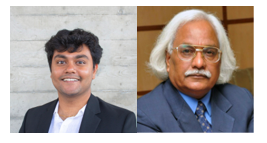
Anugyan Sharma and Prof PB Sharma

As the global community moves deeper into the era of great opportunities to innovate and excel, creating an upsurge of economic growth and advancement of human society to new altars of scientific advancement and game-changing technology innovations, universities are required to do a serious rethinking of redesigning curriculums to gravitate with an integrative environment of learning and research. Such an environment shall unleash the power of creativity and infinite power of innovative genius of students and scholars. This will also pave the way for the most effective interface with industries and the policymakers in the government who always look for innovative outcome from the scholastic and innovative minds of the university community. This becomes all the more important today when the rich talent pool of university students and scholars have a great opportunity to collaborate and with the easy access to the vast knowledge reservoir, and create deeper insights into both learning and research in their degree programs. Students today have opportunities to engage in cutting-edge research and innovations if great value to the community and the industry.

It is therefore important to create an enabling ecosystem for the talent to flourish in an integrative environment of education and research and give expressions to immense creativity and innovativeness that the new generation of learners are endowed with.

Education Research and Practical Nexus

This integrative environment of education and research promotes learning by doing, engagement in deep learning, and above all creates learning to exploration of the vast horizons of knowledge with the joy of knowing beyond conceivable limits of knowledge. In a learning environment that is increasingly becoming technology-integrated and will be driven more and more by AI the new generation learners and scholars must learn to make responsible use of these technologies. AI is going to provide great capabilities of exploring into unknown and that too along the data-driven intelligent pathways that otherwise were so difficult given the complexity of situation and abundance of data and possibilities.

The Challenge of Responsible Use of AI:

With great advancement of science and technology comes great responsibility to use technology empowerment with great care. We need systems in place both within the devices and in operating system of technology gadgets that shall impact human behavior and promote the responsible use of AI to learn.

Quest for Self-Learning and Collaborative Research:

Needless to say that much of the learning in the new age shall be facilitated by self-learning as the interactive feature of smart and intelligent devices and systems today offer great convenience for knowing and learning. It is in this respect too the integration of education with research, the quest to explore and discover offers a great way forward to navigate into the deep and exciting horizons of learning and research.

Challenges of AI-Driven Research:

AI-driven research, while offering immense opportunities for deep learning and research, is often associated with monumental challenges largely rising out of ethical and moral considerations, especially in medical, pharmaceutical and life sciences research. Francis McKay et al (2022) in their well-researched article on “The ethical challenges of artificial intelligence-driven digital pathology’ in the Journal of Pathology: Clinical Research has clearly identified four key ethical issues to be considered when deploying AI infrastructures in pathology, namely, privacy, choice, equity, and trust. The authors have emphasized the need for robust public governance mechanisms in AI-driven digital pathology. The premise for use of AI-driven research in other areas including agriculture and food science will require such a robust public governance mechanism.

Action Plan for Synergy Between Education and Research in a University:

1. Cultivate a Culture of Inquiry:

To create a research-focused academic environment, it is essential to integrate research findings into the curriculum, which will enrich course content, and promote discussions of critical thinking. Additionally, implementing research mentorship programs can pair students with faculty members, providing hands-on experience as well as personalized guidance. Establishing dedicated funding and resources for undergraduate research projects will further support this initiative, and ensure that students have ample opportunities to engage in meaningful research.

2. Foster Interdisciplinary Collaboration:

To Forster interdisciplinary collaboration, establishing cross-disciplinary research centers is the key. These centers can promote collaboration between faculty and students of carious fields, and can encourage innovative approaches to complex problems. Developing interdisciplinary courses that draw from multiple subjects further supports this goal, allowing students to engage with diverse perspectives. Additionally, encouraging faculty members from different departments will create joint research projects that can lead to groundbreaking discoveries and a more integrated academic community.

3. Promote Knowledge Transfer:

Enhancing faculty development is crucial, and this can be achieved by providing training on effective teaching methods, research dissemination, and knowledge transfer. Additionally, establishing technology transfer offices can facilitate the commercialization of research findings, generating revenue for the university. Collaborating with industry partners further supports these efforts by translating research into practical applications and creating job opportunities for graduates.

4. Enhance Research Infrastructure:

Investing in state-of-the-art research facilities and equipment is essential for advancing scientific inquiry and innovation. Securing external funding through grants, contracts, and donations further supports these research initiatives, ensuring that projects are well-resourced. Additionally, providing robust support for data management, analysis, and visualization is crucial, enabling researchers to effectively handle and interpret complex datasets.

5. Recognize and Reward Excellence:

Incorporating research contributions into faculty evaluation criteria ensures that scholarly work is valued and rewarded. Establishing awards and recognition programs for outstanding research achievements further encourages a culture of excellence. Additionally, recognizing student research excellence through prizes and scholarships motivates and supports the next generation of researchers.

6. Measure and Evaluate:

To effectively measure and evaluate the synergy between education and research, it’s essential to develop key performance indicators that track progress and impact. Regular assessments should be conducted to identify areas for improvement, allowing for adjustments to the action plan as needed to ensure continuous enhancement of educational and research outcomes.

By implementing these strategies, universities can create a vibrant and dynamic environment that fosters innovation, creativity, and intellectual growth for both faculty and students.

Let the new age of AI assisted learning and research create both the talent pool as well as enrich knowledge reservoirs beyond conceivable limits of knowledge and empower the global humanity to overcome the monumental challenges and create a bright and blissful future on planet Mother Earth.

Anugyan Sharma is pursuing bioengineering at UC San Diego and Prof. PB Sharma is the Vice Chancellor of Amity University Gurugram and has been the founding Vice Chancellor of DTU Delhi.

Increased Urbanization no Solution to Developing Sustainable India of our Dream- Kulpati Prof PB Sharma

The nations around the world are sold on the idea of increased urbanization as a solution to make the wheels of economic development go fast to meet the objective of trillion-dollar economies and to provide modern amenities to a larger proportion of the world population. India is no exception, as is expected to achieve the target of 50% population living in urban towns and megacities by 2050. No wonder as the world cities are regarded as the powerhouse of world economic growth, accounting for 60% of global GDP and hence form the basis of developing a prosperous world, as per the UN-Habitat World Cities Report 2020.

The report also mentions that the world cities occupy 3 percent of earth area but consume 70 percent electricity and account for 80% of total carbon emissions as of today! What’s more, the rapid urbanization is resulting in a growing number of slum dwellers, inadequate and overburdened infrastructure, and great pressure on services such as waste collection and disposal, water and sanitation systems, roads and transport, worsening air pollution, and unplanned urban expansion.

Increased urbanization for development strategy assumes that in the years to come the cities will be greener and sustainable by an increased focus on energy efficiency, sustainable technology innovations, and smart and intelligent systems to manage urban habitat. Smart and sustainable cities are being projected as a promise for a green and bright future to the global community.

But the advocates of urbanization forget that increased urbanization after globalization and liberalization created megacities and urban townships but also created several problems including the exodus from rural areas to cities and metropolis towns. They also created slums. It is alarming to note that In India by 2011 the slum population was 5.41% and by 2017 it increased to 10.4% of India’s population. It is further projected to grow to 18% by 2036. Hence, if the business as usual continues by 2050 when urbanization is expected to grow to 50%, the slum’s population shall account for almost 40 % of the population in India, says Prof PB Sharma, Vice-Chancellor Amity University Gurugram.

The UN Secretary-General in his foreword to the WCR-2020 has said “We cannot go back to business as usual. Cities and communities are demanding that those in authority take the opportunity to build back better. To emerge stronger, we need a sustainable, inclusive, and green recovery for people and the planet. That means dealing with the existing challenges of how cities are planned, managed and financed, and ensuring their development is compatible with the goal of net-zero emissions by 2050”. The emphasis here is clearly on ensuring a green and sustainable future for mankind.

I must not hesitate to say that the increased urbanization is the decease of the western mind and is not the best way for a country like India to create a green and bright future for either the current or the future generations. A better way for a country like India, where 80 percent population is still living in rural areas would be to find better ways of developing a New and Sustainable India of our dream.

A better way would be, to “Go Rural with a High-tech Mind and Scientific Solutions” and build rural areas as vibrant economic growth centers of new India, creating millions of jobs and ushering into an era of mass entrepreneurship, powered by the innovative genius of young India, said eminent academician Prof PB Sharma making a strong case for going back to basics of sustainable, happy and developed habitat during his deliberations at the North Zone Vice-Chancellors meet at Shoolini University, Himachal Pradesh organized by Association of Indian Universities, AIU. The VCs meet was to explore the role of the universities and institutions of higher learning in the realization of the SDGs for a nation like India.

Presentations at the VCs conference were made by a galaxy of experts from Indian universities, online education providers, UN-Habitat, NITI Aayog, Ministry of Housing and Urban Affairs, and School of Planning and Architecture who all deliberated on the contribution of HEIs in making Cities and Human Settlements Inclusive, Safe, Resilient, and Sustainable to meet the SDGs.

Our major focus in India should be how to create jobs in millions and yet without the exodus of our population from rural to urban areas. The advocates of urbanization shall argue that it is for the reasons of job creation and to usher rapid economic growth that urbanization-based development is needed. What they forget of course that the same jobs could be created in the rural areas had we been able to penetrate rural areas with good quality education, skilling, and industrialization in areas that matter for sustainable rural development.

High-tech aggrotech, Food-tech, info-tech, scientifically developed herbal Pharmaceuticals and a whole lot of cottage industries, including in areas of modern technologies like low-cost electronics, and a large number of ancillaries of modern industries can be pushed in rural areas now that skilling and good quality education can make its inroads in rural India. This would not only decongest the cities that are already choking because of population exodus from rural to urbanization.

Green energy technologies, water conservation in agriculture, and improving the yield as well as the quality of agricultural produce would be the positive outcome of going rural with high-tech minds. We spend so much effort to educate rural children in the cities and delink them from their native habitat in our urban-centric industrialization thus denying rural India the benefit of its talented children. A high-tech rural-centric development model is needed for a country like India for achieving the goal of sustainable inclusive growth in the coming years.

Professor PB Sharma while chairing the session on SDG-12 on Contribution of HEIs in Ensuring Sustainable Consumption and Production Patterns said “As we move deeper into the scientific explorations and mind-boggling technology innovations now on, the education in Indian universities should take on board sustainability and sustainable development goals as the guiding principles for accelerating innovations and rolling out startups powered by the inspired minds of young India to make New India a prosperous and happy abode of humanity alongside achieving the goal of inclusive development powered by mass entrepreneurship and sustained focus on creating a green and sustainable future. I would advocate for a strong case for redesigning our education system tuned to sustainability.”

Prof Sharma also said that our age-old traditions of education for man making were founded on the principle of Janani Janam Bhumascha Swargadapi Gariyashi (develop your motherland as the heaven on earth) despite the fact that education in ancient India has a universal appeal. The mass production-led industrial development in India created an increased demand for labour, both skilled as well as unskilled and also created huge migration of labour from villages to industrial hubs in large cities and metros.

The great economic disparity that India’s growth story created during 75 years of India’s independence is a matter of grave concern. 42.5% wealth of India is still in the hands of the top 1% of population while the bottom 50% account for mere 2.8% of India’s wealth in 2020 as per a paper by Maitreesh Ghatak of the London School of Economics (June 2021). It is also interesting to note that the corresponding figures for 1991 were 16.5% for top 1% and 8.8% for the bottom 50% of the population.

Thus, the globalization and liberalization that made Indian economy grow leaps and bounds also resulted in greater economic disparity due to growth-centric development devoid of equity and inclusiveness. The damage it did for environment and air and water pollution created further tears and distress in the Indian society, said Prof Sharma, who is also the founder Vice-Chancellor of DTU and a former Professor of IIT Delhi

Amity University Haryana : Celebrates Innovation

Ayurvedic Biotechnology based Gullar tree milk for liver regeneration, Renewable Energy & Smart Energy Systems, Technology Incubation & Development Of Entrepreneurs, Akara flowers extract for chronic asthma treatment,  Waste Water Treatment  Technology using Nano-Particles, , Nanostructured materials for bulletproof jackets and bulletproof glass,  Nano Biosensor to detect infectious diseases and Stem Cell-based cucumber extract for eco-friendly skin cream providing UV protection and skin rejuvenation, AI integrated Humanoid, Drone-based smart agriculture, intelligent robot for fire-fighting and nano energy generators for tomorrow’s electronic devices are some of the innovations which were presented on the online platform as part of its annual Innovation day celebration today organized each year by Amity University Haryana on 28th September. This day is a culmination of year-long activities on campus showcasing innovation practices from various domains from different Amity campuses.

Dr. Ashok K Chauhan, Founder President, Amity Group in his address to university faculty, research scientists and students said: “I breathe innovation; I dream innovation and ensure that our outcome-based research and innovation ecosystem enables us to achieve ever-rising benchmarks of success”. What we teach in Amity are Sanskaras and Values that are embedded in the future-ready professionals that our graduate is, said Dr Ashok K Chauhan who presided over the daylong celebration of the spirit of innovation and joy of creativity in Amity Universities in India and its campuses abroad.

Dr Atul Chauhan, Hon’ble Chancellor AUUP and President, RBEF while gracing the occasion said, “Innovation is in the DNA of Amity Education Group and we firmly believe that the Vision Amity inspires us to do something impactful that will not only make our country great but will create a better world”. Amity is one of those organizations which has great capability to adapt to the changing technologies and create an environment to innovate and excel”.

Speaking on the occasion, Chancellor AUH Dr. Aseem Chauhan said Amity University is an epitome of higher education that blends modernity with tradition and culture, where science and technology blend harmoniously with performance, progression and innovation. He expressed his great satisfaction at the fast track progress made by Amity universities at Gurugram, Jaipur, Mumbai, Raipur, Gwalior and Lucknow. “We in Amity recognize that unlimited protentional exist for causing innovations and developing innovated technologies and innovated products. We can make impossible possible and the innovation is the key to make this happen” said Chancellor Dr Aseem Chauhan

In his welcome address, Prof. PB Sharma, VC, AUH shared the accomplishments of Amity University Gurugram in respect of research and innovations. 64 high impact R&D projects sponsored by DST, DBT, ICMR, AYUSH and MoIT are currently in progress and 158 patents have been filed by AUH said Prof Sharma. He summed up AUH’s philosophy in these words, “Our eyes are well set to cause innovations in plenty, nurturing a culture of innovation, making innovation a habit, contribute to solution research for the industry and society, provide an education and research environment to empower our graduates and scholars with the Wings of Knowledge and Power of Innovation so that they succeed in taking flights of success and contribute to the prosperity and wellbeing of the vast humanity.

Prof Sharma also informed that even during the Covid-19 Lock down period AUH faculty have published 482 Research Papers, Filed 40 patents, Contributed 45 book chapters and also submitted 90 R & D projects out of which 13 have already been granted for a total value of Rs 5 crores approximately. This was on top of conducting online classes and online examinations.

Dr Padmakali Banerjee, the Pro Vice Chancellor of Amity University presented 10 major milestones that AUH has crossed that included academic innovations that introduced a flexible creditbased curriculum way ahead of time in 2015, strong industry integration and internationalization.

On this occasion the University Chronicle, compendium of 151 Pearls of Innovations(Patents filed by AUH), Annual Report on Research and Innovation 2020 @ AUH, ASET Newsletter, Publication on Nano Science and Technology at AUH were also released by the dignitaries.

Prof. (Dr.) Rajendra Prasad, Dean, Faculty of Science, Engineering & Technology, Director, Amity Institute of Biotechnology (AIB) gave a brief presentation on R & D Projects & Impact publications.

Three high impact webinar panel discussions were conducted on Innovation Day. The first ‘Financial Inclusion through Innovation and Entrepreneurship’ in which Guest Speakers were Dr Valentin Bolotnyy, Hoover Centre, Stanford University, USA, MrAmbarish Datta, MD & CEO BSEI, Bombay Stock Exchange and Dr Ram Subramaniam, Founder, My Money Karma – California, USA and the session was moderated by Dr A K S Suryavanshi, Professor & Director, Amity Business School, Mumbai.

The second Panel Discussion was on ‘Innovations for New India’, speakers were Padma Bhushan Dr NK Ganguly, Former Director General – Indian Council of Medical Research who talked about Immunity and Diagnostic during the time COVID -19, Dr Vijay K. Chaudhary, NASI-Honorary Scientist, the University of Delhi who said that “No country can become great without technology innovations”, Dr Sanjay Singh, Chief Executive Officer, Gennova Biopharmaceuticals Ltd who shared his vision for bio innovations including indigenous development of Covid-19 vaccine. The session was moderated byDr. W. Selvamurthy, President, Amity Science, Technology & Innovation Foundation (ASTIF).

The third-panel discussion on Innovations for Global Competitiveness was led by Shri Anil Bhasin, President of Havells India and was moderated by Dr Vikas Madukar, Dy Director Amity Business School at AUH.

The Vice-Chancellors of various Amity universities shared their best practices for R&D and innovation and highlighted major accomplishments of their universities.

The daylong celebration of Amity Innovation day 2020 was attended by over 3000 participants that included Dr Amita Chauhan, Chairperson, Amity International Schools, Trustees of RBEF, Dr Gurinder Singh, Gp Vice-Chancellor, President of ASTIF Dr W Selvamurthy, VCs and Pro VCs, Deans, HoIs, members of faculty and a large number of young inspired students from various Amity Campuses. The Vote of thanks was presented by Maj Gen BS Suhag, Dy Vice-Chancellor AUH.  The event was coordinated by Dr Vikas Madhukar, Dy Director Amity Business School and was assisted by Dr Monika Yadav and Dr Geetika Agrawal.

Amity University Haryana in a short span of 10 years has emerged as a hub of immense creativity, thought leadership in a vibrant hub of higher-end R & D in areas like Big-Data and AI, Machine Learning and IoT, Life Science, Bio-Technology, Bio-Medical Engineering, Nano-Science and Technology, Water Technology and Air Pollution Mitigation and Control and a crusader of sustainability, that has earned for our young university the honour of being a Platinum Category LEED Certified campus by the US GBC.