Category: Entertainment

Infiniti Mall Malad’s Diwali Pahat Strikes a Festive Chord with Music Lovers

Mumbai, Nov23: Infiniti Mall Malad celebrated Diwali Pahat – Lakh Lakh Chanderi with a vibrant morning of live Marathi music, featuring acclaimed singers Sharayu Date and Hrishikesh Ranade. Bringing families and music lovers together, the celebration captured the spirit of Diwali through melodies cherished across generations.

The artists delighted audiences with a lively mix of Marathi classics, devotional compositions, bhavgeet and popular favourites, including Kevhatari Pahate, Nijaroop Jhala, Tejomay, Jevha Tujhya Batanna, Mi Maj Harpun, Pahile Na Mi Tula and Kadhi Tu. The performances created a soulful and celebratory atmosphere, making it a memorable festive morning.

The event was also broadcast live on ABP Majha, taking the celebrations beyond the mall and bringing the festive experience to a wider audience.

Hosted by RJ Amit, with musical arrangements by Darshana Jog, Diwali Pahat – Lakh Lakh Chanderi celebrated the richness of Marathi music and culture, adding a melodious touch to the festive season at Infiniti Mall Malad.


Odia Film ‘URMI’ Makes Its Mark on the National Stage, Selected for Two Prestigious Film Festivals

Odia Film ‘URMI’ Makes Its Mark on the National Stage, Selected for Two Prestigious Film Festivals

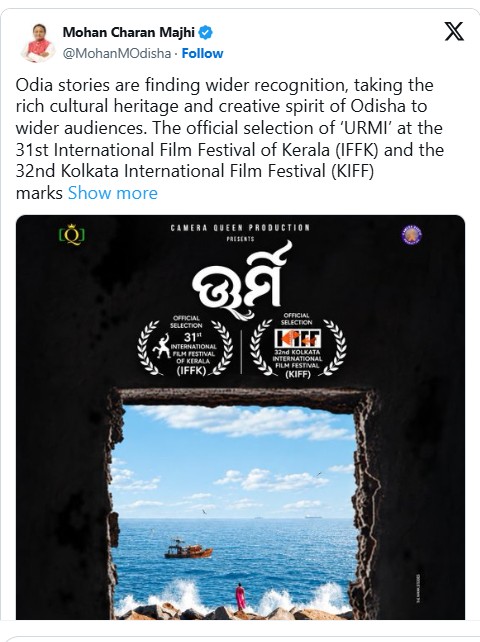
Bhubaneswar, Nov 23 (UDN): In a proud moment for Odia cinema, the film ‘URMI’ has earned national recognition with its official selection for two prestigious film festivals — the 31st International Film Festival of Kerala (IFFK) and the 32nd Kolkata International Film Festival (KIFF).

The dual selection marks a significant achievement for the Odia film industry, bringing Odisha’s regional storytelling and cultural richness into the national spotlight.

Congratulating the cast, crew and entire team of URMI on Sunday, Chief Minister Mohan Charan Majhi described the achievement as a moment of pride for Odisha and its rich cultural heritage.

Taking to social media platform X, the Chief Minister said the film’s selection reflects the growing recognition of Odia stories, along with the state’s creative talent and cultural identity. He also expressed confidence that such accomplishments would strengthen the presence of Odia cinema on national and international platforms.

Odia Film ‘URMI’ Makes Its Mark on the National Stage, Selected for Two Prestigious Film Festivals

Odia stories are finding wider recognition, taking the rich cultural heritage and creative spirit of Odisha to wider audiences. The official selection of ‘URMI’ at the 31st International Film Festival of Kerala (IFFK) and the 32nd Kolkata International Film Festival (KIFF) marks another significant milestone in this journey. Heartiest congratulations to the entire team on this remarkable achievement. Such recognition strengthens the presence of Odia cinema and inspires a new generation of storytellers. May Odia cinema continue to transcend boundaries and earn acclaim on the global stage.

— Mohan Charan Majhi (@MohanMOdisha) November 22, 2026

In his congratulatory message, Majhi appreciated the team’s efforts and noted that recognition at prestigious film festivals would inspire emerging filmmakers and storytellers to explore new creative possibilities.

The Chief Minister further hoped that Odia cinema would continue to transcend geographical boundaries, connect with wider audiences and earn greater appreciation on the global stage.

The selection of URMI at two prominent film festivals is another encouraging milestone for Odia cinema, highlighting the growing potential of regional films to find audiences and recognition beyond their home state.

Diploma in Advanced Filmmaking: Turning Creative Passion into Professional Cinema

The film industry is evolving rapidly, creating exciting opportunities for aspiring filmmakers, content creators and media professionals. With the growth of OTT platforms, digital cinema, advertising, television, web series and independent filmmaking, the demand for skilled professionals with practical filmmaking knowledge is increasing. A Diploma in Advanced Filmmaking offers an opportunity for individuals to transform their creative interests into professional skills and explore careers across the entertainment and media industries.

Filmmaking is much more than operating a camera or directing actors. It is a combination of storytelling, visual communication, technical expertise, artistic expression and collaborative production. An advanced filmmaking programme aims to provide students with an understanding of the complete filmmaking process, from developing an idea and writing a screenplay to shooting, editing and presenting a finished film.

Understanding a Diploma in Advanced Filmmaking

A Diploma in Advanced Filmmaking is a specialised educational programme designed to develop practical and technical skills required for film production. It generally covers different aspects of filmmaking, including direction, cinematography, screenwriting, production design, sound recording, editing and post-production.

Unlike programmes that focus primarily on theoretical film studies, advanced filmmaking courses typically emphasise practical training, workshops, production exercises and hands-on experience.

Students learn how to develop stories, translate scripts into visual narratives, manage production teams and use professional filmmaking equipment. Depending on the institution, the course may also introduce students to digital cinematography, visual effects, colour grading and contemporary content production techniques.

What Does the Course Cover?

The curriculum of a Diploma in Advanced Filmmaking can vary depending on the institution, course duration and specialisation. However, several core subjects are commonly included.

1. Film Direction

Direction is one of the most important components of filmmaking. Students learn how to interpret a screenplay, develop a creative vision, guide actors, plan scenes and communicate effectively with the production team.

They also understand shot composition, scene continuity, camera placement and the process of translating a director’s vision into a finished film.

2. Cinematography and Camera Techniques

Cinematography determines how a story is visually presented to audiences. This subject introduces students to camera operations, lenses, lighting techniques, framing, camera movements and exposure.

Students explore how different lighting arrangements, camera angles and visual compositions can influence the mood and emotional impact of a scene.

3. Screenwriting and Story Development

Every successful film begins with a compelling story. Screenwriting modules teach students how to develop concepts, create characters, structure narratives and write dialogue.

Students may also learn screenplay formatting, storyboarding, plot development and script analysis.

4. Film Editing and Post-Production

Editing brings individual shots together to create a meaningful and engaging story. Students are introduced to professional editing workflows and software used in the film industry.

Training may include:

  • Video editing and sequencing.

  • Audio synchronisation and sound editing.

  • Colour correction and colour grading.

  • Visual effects and motion graphics.

  • Digital finishing and film export.

Popular software packages used in professional workflows may include Adobe Premiere Pro, DaVinci Resolve and Avid Media Composer, depending on the institution.

5. Sound Design and Recording

Sound plays a significant role in creating an immersive cinematic experience. Students learn about location sound recording, microphones, dialogue recording, background scores, sound effects and audio mixing.

They also understand how sound design contributes to storytelling and enhances the emotional connection between films and audiences.

6. Production Management

Making a film requires planning, coordination and financial management. This module introduces students to budgeting, scheduling, location management, production logistics, equipment planning and team coordination.

These skills are particularly important for aspiring independent filmmakers and production entrepreneurs.

Why Is Advanced Filmmaking Becoming Important?

The entertainment industry is undergoing a major transformation. Traditional cinema continues to coexist with digital streaming services, social media video platforms, branded entertainment and independent digital productions.

OTT platforms have expanded opportunities for filmmakers, writers, editors, cinematographers and production professionals. Meanwhile, businesses increasingly use video content for advertising, brand storytelling, corporate communication and digital marketing.

This changing environment has increased the importance of multidisciplinary filmmaking skills.

A professionally trained filmmaker can explore opportunities beyond conventional movie production. Documentary filmmaking, television commercials, music videos, corporate films, educational videos, web series and digital content production are also potential career avenues.

Career Opportunities After a Diploma in Advanced Filmmaking

A diploma in advanced filmmaking can help students prepare for different entry-level and specialised roles in the media and entertainment sector.

Some potential career options include:

Career option

Key responsibilities

Assistant Director

Supporting directors and coordinating shooting schedules

Cinematographer

Managing camera operations and visual storytelling

Film Editor

Editing footage and creating the final narrative

Screenwriter

Developing scripts, dialogues and story concepts

Production Assistant

Supporting day-to-day film production

Sound Designer

Creating and managing audio elements

Documentary Filmmaker

Producing factual and research-based films

Video Content Creator

Producing content for digital platforms

Independent Filmmaker

Developing and producing independent projects

With experience, professionals may progress towards directing, production management, cinematography, editing supervision or establishing their own production companies.

Who Should Consider This Course?

A Diploma in Advanced Filmmaking can be suitable for:

  • Students interested in cinema, television and digital media.

  • Aspiring directors and cinematographers.

  • Photography and video enthusiasts.

  • Content creators looking to develop professional production skills.

  • Graduates interested in media and entertainment careers.

  • Advertising and digital marketing professionals.

  • Individuals planning to establish independent film or video production businesses.

Admission requirements differ between institutions. Some programmes accept students after Class 12, while others may require graduation or prior experience in media production.

Practical Training: The Foundation of Filmmaking Education

One of the most important factors when selecting a filmmaking programme is the quality of practical training.

Reading about cinematography or film direction cannot replace the experience of working on an actual production. Students should have opportunities to participate in short-film projects, documentary assignments, studio exercises and collaborative production activities.

A strong programme should ideally provide:

  • Access to professional cameras and lighting equipment.

  • Practical cinematography and direction workshops.

  • Editing and post-production facilities.

  • Industry-oriented projects.

  • Opportunities to create short films.

  • Guidance from experienced filmmakers and industry professionals.

  • Portfolio development and project-based assessments.

A completed short film or documentary can become an important part of a student’s professional portfolio when applying for internships, production assignments or employment opportunities.

The Role of Technology in Modern Filmmaking

Technology is reshaping almost every stage of film production. High-resolution digital cameras, drone cinematography, virtual production, computer-generated imagery (CGI), advanced editing tools and artificial intelligence are expanding creative possibilities.

Artificial intelligence is increasingly being used for script development assistance, editing workflows, visual effects, subtitles, sound processing and production planning.

However, technology alone cannot replace creativity, storytelling ability, artistic judgement and human understanding. Successful filmmakers must learn to use new tools while maintaining a strong foundation in cinematic language and visual storytelling.

As the industry evolves, professionals who combine creative thinking with technical knowledge are likely to have a competitive advantage.

How to Choose the Right Filmmaking Institute

Choosing the right institution is an important decision for anyone planning to pursue a career in filmmaking. Students should evaluate the programme beyond its name or advertised duration.

Some important factors to consider include:

  1. Curriculum: Check whether the course covers direction, cinematography, editing, sound and production management.

  2. Faculty: Explore the professional experience and industry background of instructors.

  3. Infrastructure: Examine the availability of cameras, lighting equipment, studios and editing facilities.

  4. Practical exposure: Understand how much time is dedicated to actual film production.

  5. Industry connections: Check for internships, workshops, masterclasses and production opportunities.

  6. Student projects: Review films and creative work produced by previous students.

  7. Certification: Verify the institution’s recognition, accreditation and the validity of its diploma.

Students should also compare course fees, duration, admission requirements and placement support before making a decision.

The Future of Filmmaking as a Career

India’s film and entertainment industry offers opportunities across multiple languages, formats and production environments. Regional cinema, independent films, streaming content, advertising and digital storytelling are creating diverse avenues for creative professionals.

The expansion of regional content is particularly significant, as audiences increasingly engage with stories rooted in local cultures, languages and experiences.

For aspiring filmmakers, this presents an opportunity to develop distinctive creative voices while exploring professional opportunities in a competitive industry.

However, a diploma alone does not guarantee employment or commercial success. Building a strong portfolio, developing practical experience, networking with industry professionals and continuously upgrading technical skills remain essential.

Conclusion

A Diploma in Advanced Filmmaking can be an important stepping stone for individuals who want to turn their passion for cinema into a professional pursuit. By combining storytelling, technical training, creative development and practical production experience, such programmes can help students understand the demands of modern filmmaking.

As the media and entertainment landscape continues to expand, the ability to create compelling visual stories will remain valuable across cinema, television, OTT platforms, advertising and digital media.

Ultimately, filmmaking is not just about making movies; it is about communicating ideas, capturing emotions and presenting stories that connect with audiences. For individuals willing to learn, experiment and create, advanced filmmaking education can open the door to an exciting and evolving creative profession.

World Television Day: Why TV Still Holds Its Ground in the Age of Reels, YouTube and OTT

Bhubaneswar, Nov 21 (UDN): In an era dominated by Instagram reels, YouTube videos and on-demand streaming, television may appear to be losing its place in the daily lives of younger audiences. Yet, even among Generation Z and children who have grown up with smartphones, the traditional television screen continues to retain its appeal.

World Television Day: Why TV Still Holds Its Ground in the Age of Reels, YouTube and OTT

 Representational Image 

From cartoons and films to live sports, news and cultural programmes, television offers an experience that short-form digital content cannot entirely replicate. Its ability to bring families together, deliver detailed information and create shared viewing moments continues to give the medium a distinct place in the digital age.

As the world observes World Television Day on November 21, the occasion offers an opportunity to reflect on how television has evolved and why it remains relevant despite the rapid growth of digital platforms.

From black-and-white screens to the digital era

Television has undergone a remarkable transformation since its early days of black-and-white broadcasts. High-definition screens, smart TVs, digital channels and internet-based services have changed both the way programmes are delivered and how audiences consume them.

The United Nations General Assembly proclaimed November 21 as World Television Day in 1996, marking the significance of the first World Television Forum held on November 21 and 22 that year.

The observance recognises television’s influence on public opinion, communication and awareness of important social, political and global issues.

Over the decades, television has moved beyond entertainment to become an important source of information, education and public engagement.

Why television still matters to Gen Z

Younger audiences increasingly turn to smartphones and social media for quick updates, entertainment and information. Short videos and streaming platforms offer convenience and personalised content, making them an integral part of modern media consumption.

However, television provides a different kind of viewing experience. News bulletins, documentaries, debates and special reports can offer greater context and sustained coverage of events, while live broadcasts allow viewers to follow major developments as they unfold.

Television also continues to connect generations. Families often share the experience of watching films, sporting events, serials and special programmes, creating moments that go beyond individual screen time.

For many children, cartoons and movies on television remain a familiar source of entertainment even as mobile devices become increasingly accessible.

Akshita, a Class IV student from Bhubaneswar, said she enjoys watching cartoons and films on television during her leisure time despite being familiar with smartphones and social media.

Her preference reflects how traditional television can continue to appeal to young viewers alongside newer digital platforms.

Credible broadcasting in an age of viral content

The growing popularity of social media has made information more accessible, but it has also increased concerns about misinformation, misleading clips and unverified viral claims.

In this environment, responsible television journalism and credible broadcasting continue to have an important role. Professional news coverage, fact-based reporting and in-depth discussions can help audiences understand developments beyond the headlines and short clips circulating online.

Television also remains a platform for public awareness campaigns, educational programming and stories that bring social issues into the public conversation.

An evolving medium, not an outdated one

The rise of OTT platforms and mobile-first entertainment has changed television’s traditional dominance, but it has also pushed broadcasters to adapt. Many television networks now offer digital streaming, mobile applications and online content, allowing audiences to access programmes across multiple screens.

Rather than disappearing, television is becoming part of a wider media ecosystem in which traditional broadcasting and digital platforms increasingly coexist.

On World Television Day, the message is not simply about preserving an old medium. It is about recognising television’s continuing ability to inform, educate, entertain and connect people across generations.

The screen may have changed, and the way audiences watch may be different, but television’s place in the media landscape is far from over.

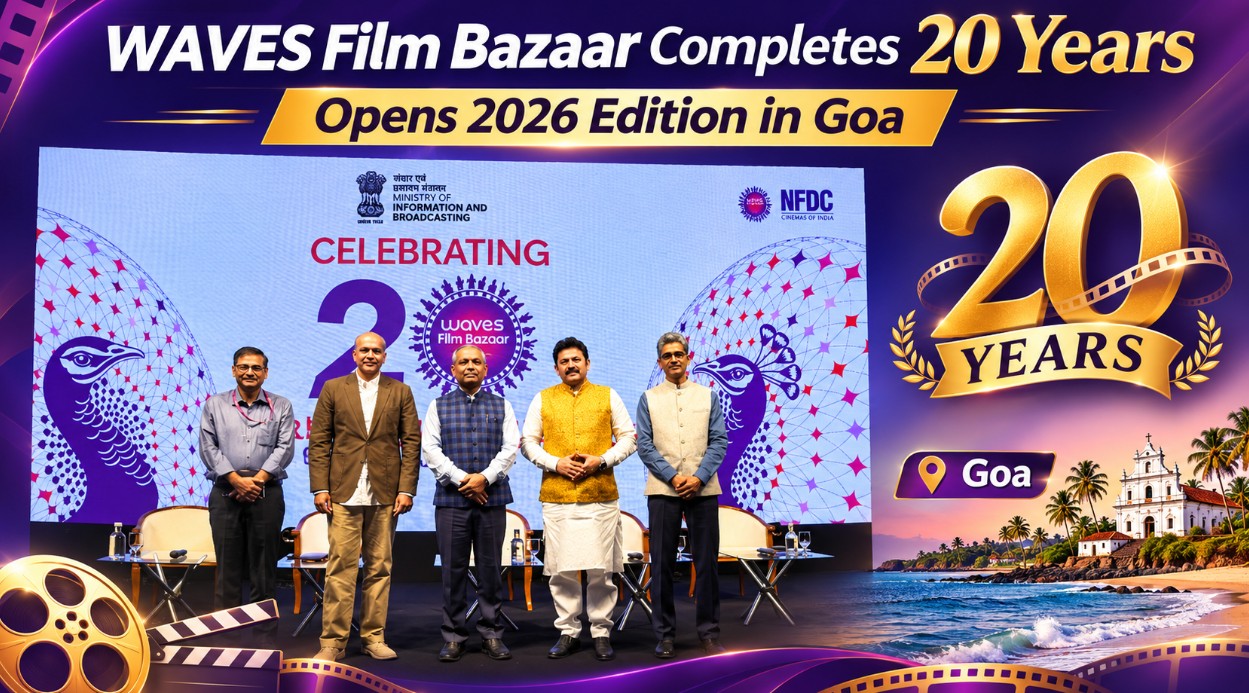
WAVES Film Bazaar Completes 20 Years, Opens 2026 Edition in Goa

WAVES Film Bazaar Completes 20 Years, Opens 2026 Edition in Goa

The five-day film marketplace aims to turn creative concepts into international collaborations, with over 2,500 delegates expected from across the industry.

Goa, Nov 20: The 20th edition of WAVES Film Bazaar opened at Taj Cidade de Goa Horizon on Friday, bringing together filmmakers, producers, writers, investors, distributors and other industry professionals to explore partnerships and take film projects to wider markets.

Organised by the National Film Development Corporation (NFDC) under the Ministry of Information and Broadcasting, the five-day marketplace is being held alongside the 57th International Film Festival of India (IFFI). The event marks two decades of efforts to connect India’s film industry with international creative and business networks.

Film Bazaar’s growth reflects expanding global reach

Delivering the keynote address at the inauguration, Secretary of the Ministry of Information and Broadcasting Chanchal Kumar highlighted the platform’s growth since its launch in 2007.

From an initial gathering of 204 delegates representing 18 countries, Film Bazaar has expanded into a major industry marketplace, attracting more than 2,500 delegates in recent editions.

Kumar described the initiative as a bridge between creative ideas and commercial opportunities. Referring to Prime Minister Narendra Modi’s vision of ‘Create in India, Create for the World’, articulated at WAVES 2025, he stressed the importance of giving Indian creative professionals greater access to global markets.

He invited filmmakers and industry representatives from India and abroad to use the platform to discover new projects, build partnerships and create opportunities that deliver both cultural and economic value.

A platform for projects at every stage

Addressing the gathering as Guest of Honour, IFFI Festival Director Ashutosh Gowariker highlighted Film Bazaar’s role in connecting filmmakers with people who can help advance their projects, whether they are still developing a script or have completed a film and are seeking distribution.

He said the marketplace supports creative journeys at different stages rather than limiting its engagement to finished productions. Even informal conversations and meetings, he noted, can develop into meaningful professional collaborations.

Gowariker encouraged delegates to make full use of the event, interact with new people and share ideas, including unfinished projects. He urged participants to approach the marketplace with openness and confidence, as a single conversation could lead to an important opportunity.

He also underlined cinema’s ability to change perspectives and influence how people understand the world.

NFDC highlights two decades of association with IFFI

Welcoming participants, NFDC Managing Director Dhiraj Singh described Film Bazaar as an integral part of IFFI, maintaining a close association with the festival over the past 20 years.

He noted that the marketplace has grown considerably in scale and scope, creating a broader range of opportunities for professionals across the film industry.

The inauguration was attended by G. Krishnakumar, Chairman of NFDC, and Prabhat, Additional Secretary in the Ministry of Information and Broadcasting. Prabhat delivered the vote of thanks.

Taking Indian stories to international audiences

Over the years, WAVES Film Bazaar has developed into a meeting point for creative talent and industry decision-makers. By bringing together writers, filmmakers, producers, investors and distributors, it seeks to help promising projects find collaborators, funding and routes to international audiences.

As the marketplace enters its third decade, its focus remains on strengthening industry connections and creating pathways through which diverse Indian stories can reach viewers around the world.

The 2026 edition is being held from November 20 to 24 in Goa, as part of the wider IFFI programme running from November 20 to 28.

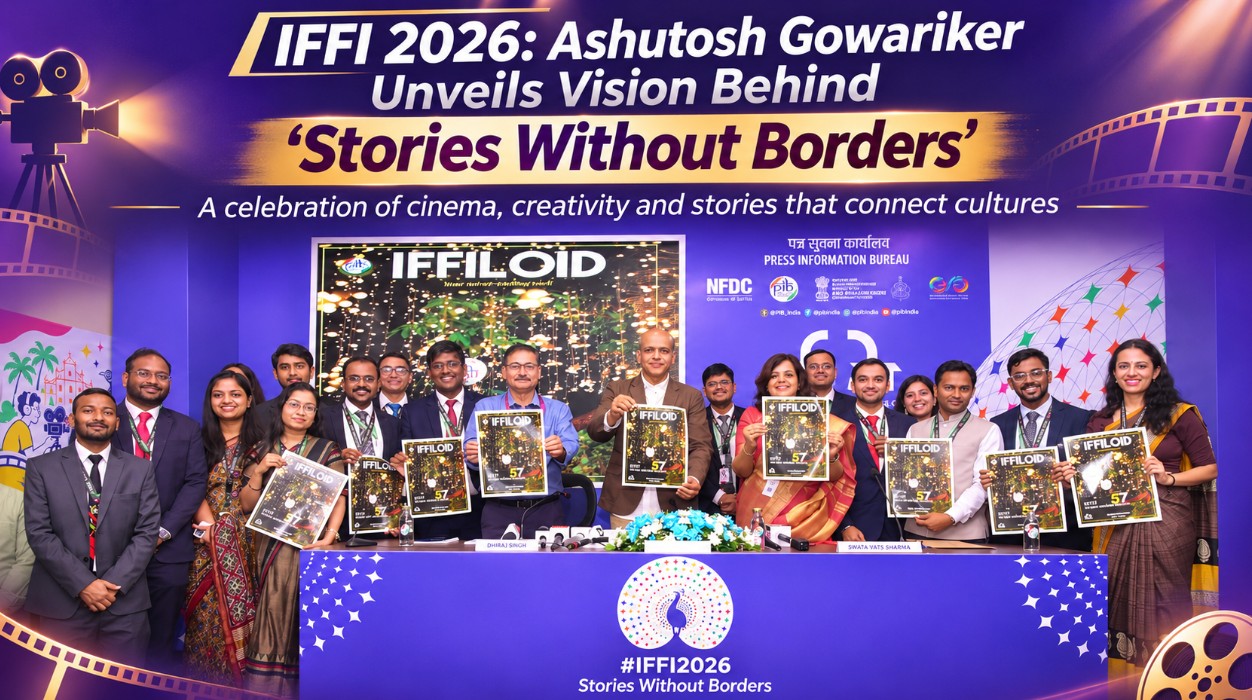
IFFI 2026: Ashutosh Gowariker Unveils Vision Behind ‘Stories Without Borders’

IFFI 2026: Ashutosh Gowariker Unveils Vision Behind ‘Stories Without Borders’

Festival Director Ashutosh Gowariker highlights three new cinematic sections, greater visibility for documentaries and the role of media in taking global cinema to wider audiences.

Panaji, Nov 20: The 57th International Film Festival of India (IFFI) is setting its sights on cinema as a force that can connect people across geographical, social and cultural divides. Built around the theme ‘Stories Without Borders’, this year’s festival aims to bring together films that explore shared human experiences while reflecting the diversity of societies and cultures.

At a media briefing held at the PIB Media Centre in Panaji on Friday, Festival Director Ashutosh Gowariker outlined the vision behind the 2026 edition and called on media professionals to explore the festival’s wide-ranging programme. The session was attended by Dhiraj Singh, Managing Director of the National Film Development Corporation (NFDC), and moderated by Smita Vats Sharma, Director General (West), Press Information Bureau.

Theme explores boundaries within society

Explaining the central theme, Gowariker said that ‘Stories Without Borders’ is not limited to national or geographical boundaries. It also addresses divisions within families and communities, including those shaped by caste, social differences and other socio-cultural realities.

The festival seeks to showcase stories that move beyond these barriers and highlight emotions and experiences that connect people across different backgrounds.

Three new sections broaden the festival programme

A key feature of this year’s edition is the introduction of three new sections: Animation, Documentary and Films about Films.

Gowariker highlighted the growing importance of documentary filmmaking and the need to create greater opportunities and visibility for documentary creators. In this connection, IFFI will organise a special gala presentation of films made by winners of the recently concluded Mumbai International Film Festival (MIFF).

The expanded programme also includes retrospectives, curated showcases and special screenings, offering audiences opportunities to engage with different forms, styles and traditions of filmmaking.

Media urged to explore the full cinematic line-up

The Festival Director encouraged journalists and other media representatives to look beyond their usual film preferences and experience the festival across its various sections.

He specifically highlighted gala screenings, red-carpet events, international press conferences and Panorama interactions as important opportunities to engage with filmmakers and visiting delegates, understand their creative journeys and discover new cinematic perspectives.

Gowariker also urged media professionals to cover films across categories, including retrospectives, while maintaining their independent editorial judgement and critical approach. He said media coverage plays a significant role in bringing the festival’s films and conversations to audiences across the country.

Greater flexibility for media interactions

Addressing the practical needs of journalists covering the event, Gowariker expressed his willingness to facilitate informal and meaningful interactions between the media and the festival team. He said arrangements had been adjusted to provide greater flexibility, taking into account the professional commitments of media personnel and the time required to cover festival activities.

The briefing also saw the unveiling of the official brochure of the 57th IFFI.

Running from November 20 to 28, 2026, the festival continues to position itself as an international meeting point for filmmakers, audiences and industry professionals. With its expanded programming and emphasis on stories that cross social and cultural boundaries, IFFI 2026 aims to strengthen cinema’s role in encouraging dialogue, creativity and cross-cultural understanding.

IFFI 2026 to Showcase 30 Indian Feature Films and Five Global Films on Environmental Challenges

Goa, Nov 18: The 57th International Film Festival of India (IFFI) is set to bring together the diversity of Indian cinema and powerful international stories on environmental change, with a programme designed to connect filmmaking, cultural exchange and sustainability.

IFFI 2026 to Showcase 30 Indian Feature Films and Five Global Films on Environmental Challenges

Scheduled from November 20 to 28 in Goa under the theme “Stories Without Borders”, the festival will place Indian storytelling at its centre while using cinema to explore humanity’s relationship with nature and the need for sustainable ways of living.

The programme also reflects the broader vision of “Create in India for the World”, with a focus on showcasing regional voices, encouraging emerging filmmakers and bringing global audiences into conversations that extend beyond national boundaries.

Indian Panorama showcases the breadth of domestic cinema

A major attraction will be the Indian Panorama section, featuring 30 feature films, 20 non-feature films and five web series nominated for the Best Web Series (OTT) Award.

The feature-film selection includes mainstream productions, films competing for the Best Debut Director of an Indian Feature Film award and titles under the New Horizon segment. Some of these films will have their world, international, Asian or Indian premieres.

Indian cinema will also have a strong presence in the festival’s competitive sections. Kantara: A Legend – Chapter 1, Paro – The Untold Story of Bride Slavery and The Kerala Story 2 Goes Beyond will compete in the International Competition.

The Best Debut Feature Film category will feature Ladakhi film Birds on Ice and Kashmiri entry Sledge. Meanwhile, Kabir Sir ka Akhri Lesson, Player 5 and Sev Micchar will compete for the ICFT–UNESCO Gandhi Medal.

Classics and cinematic veterans receive special recognition

IFFI 2026 will also celebrate the legacy of Indian cinema through centenary screenings of Thulabharam, Sadhi Manase, Waqt, Kashmir Ki Kali and Chowringhee.

The festival will mark the golden jubilees of Bhakta Kannappa and Kabhi Kabhie, while paying special tributes to veteran filmmakers and actors Bharathiraja, K. Bhagyaraj and Nana Patekar.

The sixth edition of Creative Minds of Tomorrow will provide a platform for 100 young practitioners working across 13 film crafts, reinforcing the festival’s emphasis on nurturing new talent.

Mission LiFE brings environmental concerns to the screen

Alongside its celebration of Indian cinema, the festival will present five international films under its dedicated Mission LiFE section. The selection explores ecological disruption, Indigenous communities, the impact of resource extraction and the relationship between humans and the natural world.

The films include:

Like Any Other Mortal (Como Todo Mortal): Directed by María Molina Peiró, the Netherlands–Spain co-production will have its Asia Premiere. Blending documentary, flamenco and science fiction, it draws parallels between mining damage in Andalusia and robotic exploration on Mars.

IFFI 2026 to Showcase 30 Indian Feature Films and Five Global Films on Environmental Challenges

Nunkui: Directed by Verenice Benítez, this Ecuador–Chile–Germany production will make its Asia Premiere. It follows a young girl from an Amazonian Shuar community who draws on ancestral songs and forest traditions as mining interests threaten her homeland.

The Clearing: Sabine Groenewegen’s Netherlands–Indonesia film will have its India Premiere. Using archival and contemporary footage, it examines the colonial conversion of Sumatra’s rainforests into rubber plantations and the continuing consequences of exploitation and resistance.

Tropical Fractals (Fractais Tropicais): Leonardo Pirondi’s Portugal–Brazil experimental science-fiction film will receive its India Premiere. It follows scientists travelling through space and an artificial intelligence system studying Earth’s remaining traces, while a solitary wanderer moves across a devastated planet that is beginning to recover.

We Are the Fruits of the Forest (Nous Sommes les Fruits de la Forêt): Cambodian-French filmmaker Rithy Panh’s documentary will have its India Premiere. It portrays the Indigenous Bunong community in Cambodia as it works to protect ancestral traditions and fertile land amid corporate pressure and climate-related agricultural disruption.

Cinema as a platform for global conversations

By bringing Indian regional storytelling together with international films on ecological concerns, IFFI 2026 aims to widen the scope of cinematic dialogue.

The festival’s programme highlights cinema not only as an art form and cultural bridge, but also as a means of examining shared challenges—from preserving cultural identity to protecting ecosystems and building sustainable communities.

With its mix of premieres, competitive screenings, retrospectives and emerging talent initiatives, the 57th edition seeks to position Goa as a meeting point for filmmakers and audiences from across the world.

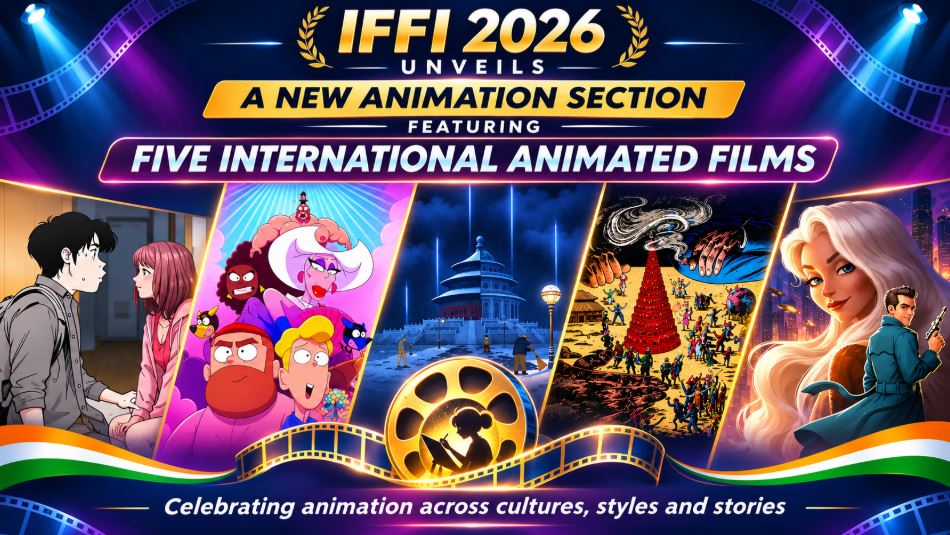
IFFI 2026 Unveils New Animation Section Featuring Five International Films

Goa, Nov 18: Animation is set to receive a dedicated spotlight at the 57th International Film Festival of India (IFFI), with the festival announcing a new section featuring five acclaimed international animated feature films from across the world.

IFFI 2026 Unveils New Animation Section Featuring Five International Films

 Representational Image

The selection brings together films from Japan, France, China, Singapore and the United States, offering audiences a diverse cinematic experience that goes beyond conventional animation. Through stories of personal relationships, social satire, loneliness, political allegory and futuristic crime, the segment highlights the medium’s ability to address complex human experiences through distinctive visual storytelling.

The five films selected for the new section are Cherry and Virgin, Jim Queen, Light Pillar, Magic Atlas and Ray Gunn.

Five films, five distinctive storytelling worlds

Directed by Masanao Kawajiri, Cherry and Virgin explores romance, social anxiety and the challenges of forming meaningful relationships. The story follows Ryo, a 32-year-old erotic manga artist who struggles to communicate with women, and Ami, a 28-year-old woman who finds it equally difficult to interact with men in real life.

Despite their insecurities and lack of romantic experience, the two gradually develop an understanding of each other and discover the possibility of genuine companionship. Blending live-action footage with manga-style animation, the film combines humour with an intimate portrayal of human vulnerability.

Kawajiri previously received international festival recognition for his 2018 animated short A Japanese Boy Who Draws.

Co-directed by Nicolas Athané and Marco Nguyen, Jim Queen offers a satirical take on identity, popularity and social acceptance. Set in Paris, the film centres on Jim, a popular fitness influencer whose carefully built social standing collapses when a mysterious virus called Heterosis begins turning gay men straight.

As Jim loses his followers, friends and influence, Lucien, a less popular but loyal young man, remains by his side. Together, they set out through Paris’s Marais district in search of a doctor believed to have discovered a cure.

Both directors trained at the Gobelins school of animation and have contributed to several recognised animation projects, bringing their distinctive creative backgrounds to this contemporary social satire.

Writer, director and production designer Xu Zao makes his animated feature debut with Light Pillar, a science-fiction drama exploring loneliness, longing and emotional attachment in a rapidly changing world.

Set in a future where space travel has become routine, the film follows Zha, a lonely cleaner working at a financially troubled film studio. He falls in love with a woman living in a virtual world and takes on extra work to afford a ticket to meet her on the Moon. However, his hopes are shattered when he discovers that the ticket is invalid.

As a film crew arrives to demolish the old studio for a movie sequence, Zha faces a final choice about the only world he has ever known. The story reflects on isolation, memory and the emotional ties people form with places and experiences.

Directed by Sun Xun, Magic Atlas is a Chinese-language animated allegory examining memory, authority and resistance.

The story unfolds in the isolated coal kingdom of Luocha, where the arrival of a mysterious magician sparks unrest in an already tense society. Arrested and imprisoned alongside an orphan boy named Xiao Zhi, the magician secretly entrusts the child with a magical atlas before being executed during the Mimeng festival, a state ritual in which citizens are forced to forget their past.

An artist and filmmaker whose works have been screened at major international exhibitions and festivals, Sun Xun brings a distinctive visual approach to the film. Magic Atlas arrives at IFFI following competition appearances at the Locarno and Tokyo film festivals.

The international selection concludes with Ray Gunn, directed by Academy Award-winning filmmaker Brad Bird. Set in the futuristic metropolis of Metropia, where humans and aliens coexist, the film presents a world of flying cars, technological spectacle and widespread corruption.

At its centre is Ray Gunn, an old-fashioned private detective struggling to preserve his values in a society that considers his profession outdated. His routine existence takes a dramatic turn when he becomes involved in the biggest case of his career.

Known for directing acclaimed films such as The Incredibles and Ratatouille, Bird brings his experience in combining emotion, humour and action to this futuristic animated noir.

IFFI widens its cinematic canvas

The new animation section reflects IFFI’s effort to showcase the creative range of international cinema and introduce audiences to different forms of visual storytelling. The selected films demonstrate how animation can engage with contemporary social questions, personal emotions and imaginative possibilities while connecting viewers across cultural and linguistic boundaries.

Established in 1952, the International Film Festival of India is among Asia’s oldest international film festivals. Organised by the Ministry of Information and Broadcasting in association with the Government of Goa and the Entertainment Society of Goa, the festival provides a platform for global cinema, Indian filmmaking and cultural exchange.

The 57th edition of IFFI will take place in Goa from November 20 to 28, 2026.

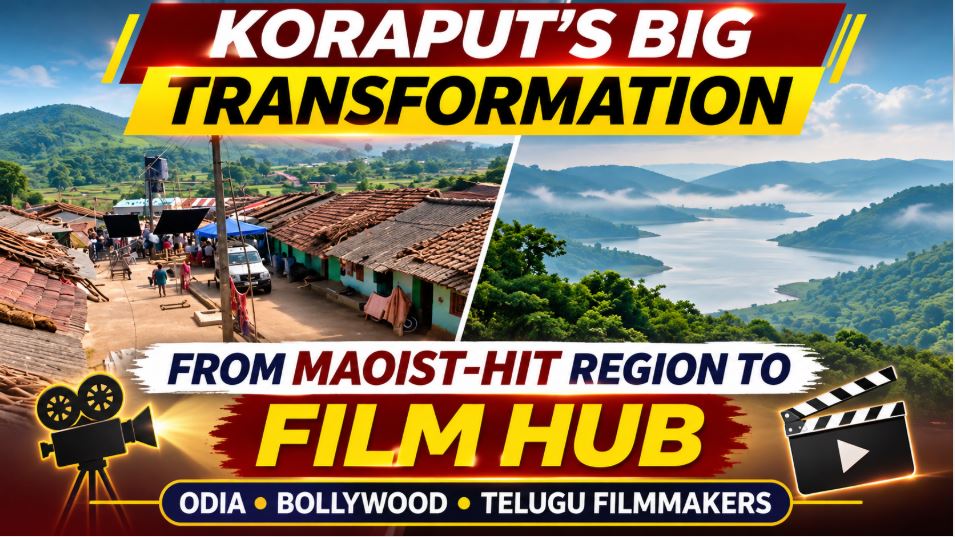
Koraput Transforms from Maoist-Hit Region into Film Hub, Attracts Odia, Bollywood and Telugu Filmmakers

Koraput, Nov 13 (UDN): Once associated with Maoist violence and security concerns, Odisha’s Koraput district is gradually building a new identity as a sought-after destination for filmmakers. Its picturesque hills, dense forests, valleys and scenic landscapes are drawing film crews from the Odia, Bollywood and Telugu industries, putting the region in the spotlight.

Koraput Transforms from Maoist-Hit Region into Film Hub, Attracts Odia, Bollywood and Telugu Filmmakers

 Representational Image 

The changing perception of Koraput is opening up fresh possibilities for the district, with film productions bringing visitors, creating local opportunities and showcasing its natural beauty to audiences beyond Odisha.

Odia actor Babushaan Mohanty is currently shooting for his upcoming film Nabarupa in a village near Pottangi, with the picturesque Deomali hills providing the backdrop. The production is unfolding amid tribal settlements and traditional homes, giving the film an authentic rural setting.

For local residents, the presence of a film crew and familiar faces from the screen has become an exciting experience. Kuji Jani, a resident of the area, said seeing Babushaan in person was a moment of happiness.

“We had seen Babushaan on television, but seeing him in person made us very happy. We had never imagined that we would get to witness a film shoot like this,” Jani said.

From security concerns to cinematic appeal

Koraput’s emergence as a filming destination reflects a gradual shift in how the region is perceived. Areas that were once considered difficult to access because of Maoist activities are now receiving film crews, supported by improvements in security, connectivity and cooperation from local communities.

The district offers filmmakers a wide range of natural settings. Deomali’s mist-covered hills, the forests surrounding Gupteswar and the valleys of Lamtaput provide varied backdrops for different genres and visual narratives.

The association of the region with prominent film projects, including Pushpa, Anushka Shetty-starrer Ghaati and SS Rajamouli’s Varanasi, has also helped draw attention to Koraput and its cinematic potential.

Actor Sumanta Sahu said the district had undergone a significant change in perception.

“Koraput was once known as a Maoist-affected region but has now emerged as a film hub,” he said.

Actor Rabindra Mishra believes that choosing locations within Odisha can also contribute to the state’s development. “Koraput has several beautiful locations, and shooting Odia films here instead of outside Odisha would contribute to the state’s development,” he said.

Film shoots bring local communities into the spotlight

Beyond the visual appeal, film productions could help connect remote communities with the wider world. Local participation, demand for services and increased visibility may create opportunities for residents and businesses, while encouraging more visitors to explore the district.

Production associate Bijay Patra said film projects could help change perceptions about places that people once avoided because of security concerns.

“People earlier hesitated to visit these places due to fear of Maoist activities, but films will now help showcase the beauty of the region to a wider audience,” he said.

Infrastructure key to sustaining the momentum

Despite its growing appeal among filmmakers, Koraput still faces infrastructure-related challenges. Better facilities, logistical support and adequate arrangements for production teams will be important if the district is to attract regular film projects.

The larger opportunity lies in converting temporary film shoots into long-term benefits for the local economy. Improved tourism facilities, stronger connectivity and greater participation of local communities could help translate the growing interest into employment and business opportunities.

Koraput’s natural landscapes have long been among Odisha’s most striking attractions. As filmmakers increasingly discover the region, the district has an opportunity to move beyond its troubled past and establish itself as a prominent destination for cinema and tourism. Whether this emerging film-driven interest can deliver sustained economic gains will depend on how effectively the region addresses its infrastructure needs.

IFFI 2026 in Goa: 57th International Film Festival of India to Begin on November 20

Panaji, Nov 13: Goa is gearing up to welcome filmmakers, artists and cinema enthusiasts from across the world as the 57th International Film Festival of India (IFFI) returns from November 20 to 28, 2026, with the theme ‘Stories Without Borders’.

IFFI 2026 in Goa: 57th International Film Festival of India to Begin on November 20

The nine-day festival will celebrate the diversity of Indian and international cinema, bringing together creative professionals and audiences for a series of cinematic showcases, cultural exchanges and film-related programmes.

Ahead of the grand opening, the organisers will hold a curtain-raiser press conference on November 13 at Taj Cidade de Goa Horizon, where details of the festival’s major attractions, programme highlights and special initiatives will be announced.

Goa Chief Minister to attend curtain-raiser event

Goa Chief Minister Dr. Pramod Sawant will grace the press conference, which will also be attended by senior officials and representatives from the film and entertainment industry.

Among those expected to be present are Smt. Delilah Lobo, Vice Chairperson of the Entertainment Society of Goa (ESG); Shri Chanchal Kumar, Secretary, Ministry of Information and Broadcasting; Shri G. Krishnakumar, Chairperson of the National Film Development Corporation (NFDC); and Shri Dhiraj Singh, Managing Director, NFDC.

IFFI 2026 Festival Director Ashutosh Gowariker and the Chairpersons of the Festival Jury will also participate in the event.

‘Stories Without Borders’ to define this year’s festival

The theme of this year’s edition, ‘Stories Without Borders’, reflects cinema’s ability to connect people across nationalities, cultures and languages through compelling storytelling and shared human experiences.

With an expanded and diverse programme, IFFI 2026 aims to showcase the creative strength of Indian cinema alongside outstanding works from international filmmakers.

The festival is expected to provide a platform for filmmakers, industry professionals and emerging creative talents to exchange ideas, explore new perspectives and build connections across the global film community.

Goa prepares for nine days of cinematic celebrations

Over the years, IFFI has emerged as an important platform for showcasing world cinema and promoting India’s engagement with the international film industry.

The 57th edition will continue this tradition by bringing together diverse cinematic voices and offering audiences an opportunity to experience films and creative expressions from different parts of the world.

The November 13 curtain-raiser is expected to offer the first comprehensive glimpse of the festival’s programme and key attractions ahead of its opening on November 20.

With ‘Stories Without Borders’ as its guiding theme, IFFI 2026 seeks to reinforce cinema’s role as a universal language that brings cultures closer and celebrates the power of stories to transcend boundaries.