All posts by Sujata Muguda

Social Beat and Salesforce host the MarTech Leadership Summit 2024

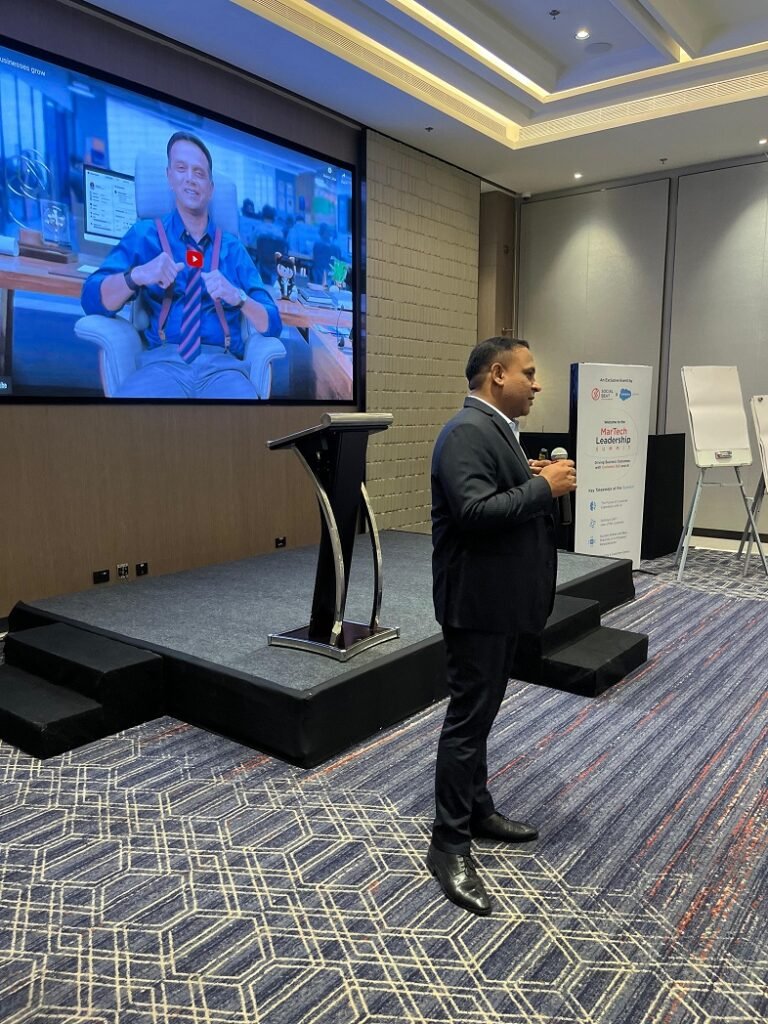
Mr. Eshant Mishra, Director DX Business, Salesforce

Mumbai, October 4th, 2024…Social Beat, in collaboration with Salesforce, announced the success of the MarTech Leadership Summit 2024 held in Mumbai. The Summit brought together leaders from marketing and technology to discuss the integration of cutting-edge MarTech solutions, AI, and automation to drive business growth and enhance customer experience. The summit was a rich learning experience with actionable insights on the future of marketing technology for attendees.

Speaking at the summit, Mr. Vikas Chawla, Co-Founder of Social Beat, remarked, “The MarTech Leadership Summit 2024 exemplifies the power of innovation and collaboration. By joining forces with Salesforce, we were able to bring forward transformative ideas and solutions that will redefine how brands approach marketing and shape customer experience. It’s exciting to witness how businesses are embracing MarTech to stay ahead in a rapidly evolving digital landscape.”

The summit began with Mr. Eshant Mishra, Director DX Business, Salesforce and Mr. Tanmay Tiwari, Lead Solution Engineer – DX, Salesforce sharing how Salesforce’s suite of tools, including Customer 360 and AI-powered solutions, enable businesses to enhance customer experiences and drive significant business results through data integration and personalised engagement. They also highlighted the power of AI and automation in improving operational efficiency and optimising marketing strategies.

At the panel discussion on ‘The Importance of MarTech and AI in Today’s Era’, Ms. Shruti Sinha, Chief Customer Officer, House of Anita Dongre and Mr. Sandesh Rane, CDO & CTO, Group Landmark highlighted how MarTech and AI are enabling brands to deliver personalised customer journeys and create seamless shopping experiences across digital and physical platforms. The panel was moderated by Mr. Suneil Chawla, Co-Founder, Social Beat, emphasising the transformational role of AI-powered marketing in boosting efficiency and driving business growth.

The second panel discussion on ‘Future-Proofing Your Marketing Strategy – The Role of Automation’, with Ms. Mahuya Chatturvedi, Head of Marketing and Consumer, Aditya Birla Century Ply and Mr. Vivek Shetty, VP Digital, Bandhan Mutual Fund shared insights into how automation is streamlining marketing processes and helping businesses stay competitive by reducing response time and improving campaign efficiencies. The session, moderated by Mr. Vikas Chawla, Co-Founder, Social Beat, highlighted the importance of adopting automation in marketing to build scalable strategies that deliver consistent customer engagement and enhance marketing ROI.

The MarTech Leadership Summit 2024 saw participation from marketing leaders, technology experts, and brand managers. The event has successfully positioned itself as a key resource for companies looking to enhance their digital marketing capabilities to stay ahead in the fast-evolving digital landscape.

City’s Industrialist gets elected as Sr VP of legendary national plastics body AIPMA

Hyderabad, October 04, 2024…..The First-ever Telugu man, Anil Reddy Vennam, was elected to the senior management role of 79 years old, the All India Plastic Manufacturer Association which represents 50,000 plus Plastic manufacturing companies that contribute Rs. 3.5 lakh crore to Indian economy

ANIL REDDY

He will be in office for one year.

In a Managing Committee meeting held in Mumbai, Anil Reddy Vennam former President of The Federation of Telangana Chambers of Commerce and Industry (FTCCI) was unanimously elected as Sr. Vice President of All India Plastic Manufacturer Association Mumbai, which is a 79 years old organisation.

This is also the first time that a South Indian is elected for the post of Sr. Vice President

AIPMA is the Legendary Plastics Association and is recognized by the Chemical & Fertilizers Ministry, Department of Petrochemicals, Government of India, and has representation at various Union & State Government Ministries to voice concerns and difficulties faced by the plastic industry. AIPMA also plays a role in budgetary structure recommendations, monitoring uniformity in government regulations and chalking out strategies and policies for the plastic industry, said Anil Reddy on his election

AIPMA has over 22,000 members through our Affiliated Associations from all over India, representing more than 175 cities from various segments of the industry such as polymer manufacturers, machinery manufacturers, processors, mould & dye makers, traders, exporters, manufacturers, processors, consultants, institutions and many more. Also, almost 90% of AIPMA members are from the MSME Sector., Anil Reddy added.

Sri Anil Reddy Vennam, a Hyderabad-based Industrialist is a Technical Director for M/s. Nayastrap Pvt. Ltd., Hyderabad. A Bachelor of Engineering (Mining) from Osmania University. He was Member of the State Advisory Committee of TSERC, the Minimum Wages Advisory Board of Telangana, the Telangana State Pollution Control Board (TSPCB) and Telangana State Electrical Licensing Board – Electrical Inspectorate, Govt. of Telangana and AP Welfare Board – Labour Department, Govt. of Andhra Pradesh. He was also a Member on the Regional Direct Taxes Advisory Committee (RDTAC). He was also a Central Excise Regional Advisory Committee Member of Andhra Pradesh

He is a Guest Lecturer for the Entrepreneur Development Programme at Osmania University & JNTU and many Private Engineering Institutions.

Managing Committee Member, All India Plastics Manufacturers Association – Mumbai, from 2005, till date. He was also the National President, Indian Plastic Institute (IPI), Mumbai. 2023-24 and Vice President – South, All India Plastics Manufacturers Association Mumbai from 2017-2024.

AMR is recognized as a global health security threat by WHO, CDC, and UN: Shailaja Teacher, Former Health Minister Kerala

Hyderabad, October 04, 2024….The three-day G-SPARC 2024, Global South Conference on Infection Prevention, Control, and Antimicrobial Stewardship began on Thursday morning at Shilpakalavedika in Madhapur in the city.

Speaking on the Management of outbreaks and health crises- a politician’s perspective, Ms. Shailaja Teacher, Former Health Minister of Kerala said Infection Prevention and Control, AMR (Anti Microbial Resistance) are global issues. AMR is a silent pandemic she said. AMR is recognized as a global health security threat by WHO (World Health Organisation), CDC(Centre for Disease Control), and UN(United Nations). UN addressed AMR as early as 2016. She gave insights into the preparedness before COVID spread and how proactive measures about AMR, its ‘ policy were taken in Kerala, etc and the introduction of the AMR action plan, the first time India proved to be very effective.

Speaking further she said we need one health approach to address AMR. The estimated global cost it is $ 1000 trillion by 2050.

Kerala became the first state in India to release a sub-national Actional Plan called KARSAP in 2018 and it is conceptualized and implemented on a One Health Platform. We launched the Antibiotic Literate Kerala Campaign in 2019 to make all citizens of Kerala aware of the judicious use of antibiotics in all sectors. We have also launched an AI-based Antibiogram App, she said.

Participating in a panel discussion on the Leadership role in IPC & AMS policy and practices, Dr. Evita Fernandez- Chair of the Fernandez Foundation said nurses are true custodians of the patients. However, they are scared to raise issues when the patient’s health is compromised. When anyone including doctors touches the patient, they need to be sanitized well. Nurses must get their respect. They are not subordinates to doctors. They are our colleagues. Nurses play a big role in stopping infections spread to patients. Doctors must change their attitudes towards nurses and give mutual respect, she added.

Dr Anuj Sharma of the WHO Country Office of India said for an effective AMR plan and its implementation we need a state government’s concurrence on IPC (Infection, Prevention, and Control) and AMR

The panel discussion was moderated by Dr.Hari Prasad-Chaiman – CARE Group of hospitals

The panelists were Dr. Evita Fernandez- Chair, Fernandez Foundation Dr.Gurunath Reddy-Chairman – Continental Hospital; Dr.Vincy Tribhuvan -VP- Of nursing, CARE Group; Dr. Giridhar Gyani -DG- AHPI; Dr. Kashipa Harit- Deputy Director NABH; Dr. Anuj Sharma-Team Focal Point – AMR | IPC, World Health Organization, Country O ce for India

Earlier the meeting began with a session on Understanding the science of complexity and its applications in IPC by Prof. Dr. Vijay V.Yeldandi, Clinical Professor of Medicine and Surgery, University of Illinois, Chicago, USA.

Another session by Dr Annie Thakore, CEO, of Pranaam Hospital Enhancing Infection Control Practices in Hospital Settings followed it.

A panel discussion on the Role of Environmental surveillance in mitigating infectious diseases and antimicrobial resistance was held. The Panelists were Dr. Rakesh Mishra, Director, Tata Institute of Genetics and Society (TIGS), Bengaluru and Principal Investigator, Alliance for Pathogen Surveillance Innovations (APSI)-India; Dr. Vinay K. Nandicoori, Director, CSIR-Centre for Cellular and Molecular Biology (CCMB), Hyderabad and Principal Investigator, APSI-India; Dr. Aruna Panda, Program Director, APSI-India, CCMB, Hyderabad; Dr. Shivranjani C. Moharir, Senior Scientist, TIGS; Dr. Mahesh Dharne, Senior Principal Scientist, CSIR-National Chemical Laboratory, Pune

Some of the prominent speakers who participated in the conference include Dr Anuj Sharma, WHO India Office; Prof Chedly Azzouz, Chairperson, Infection Control Africa Network; Prof. (Dr.) Atul Goel, DGHS & Director, National Centre for Disease Control (NCDC); Ms Shailaja Teacher, MLA and Former-Health Minister, Govt of Kerala

The objective of the conference is to provide a platform for Infection Prevention and Control (IPC), Antimicrobial Resistance (AMR), and Patient Safety stakeholders from Global South (resource-limited countries in Asia, Africa, Middle East, South America) to collaborate for better policies, research, tailored solutions and practices on IPC, AMS and WASH (Water, Sanitation, and Hygiene) and pandemic preparedness.

G-SPARC 2024 is organized by the Infection Control Academy of India (IFCAI), University of Hyderabad (UoH), and Pragyaan Sustainable Health Outcomes Foundation (PRASHO) with support from more than a hundred distinguished partners from academia, industry, healthcare organizations, and professional associations.

C. Damodar Rajanarsimha, TG Health Minister unveiled Telangana state’s AMR Action plan and announced that it will be implemented soon

Hyderabad, October 4, 2024.., Health Minister C Damodar Raja Narasimha unveiled Telangana States’s AMR (Antimicrobial Resistance) and announced that it will be implemented effectively very soon. Kerala was the first state in India and after that five other states in India launched their plans. We are the 7th state and we sincerely address the AMR, the silent pandemic he said while addressing the inaugural function of the three-day G-SPARC 2024, Global South Conference on Infection Prevention, Control and Antimicrobial Stewardship began on Thursday night at Shilpakalavedika in Madhapur in the city.

The Minister was the chief guest at the inaugural function. He also unveiled a conference souvenir.

Christina Z. Chongthu, Secretary of Health & Family Welfare, Govt of Telangana said since the India Action Plan on AMR was announced in 2017, we at Telangana made a good beginning, we have been focusing on capacity building, improving auditing, and following protocols to check excessive usage of antibiotics.

Prof Chedly Azzouz, Chairperson, Infection Control Africa Network said India and African countries have a lot of similarities in IPC as well as AMR.

Dr Anuj Sharma, WHO India Office said we all must collaborate to strengthen the AMR Action plan.

Recently United Nations General Assembly (UNGA) took a decision to reduce human deaths from against antimicrobial resistance (AMR) by 10% by 2030.

Global leaders have approved a political declaration at the 79th United Nations General Assembly (UNGA) High-Level Meeting on Antimicrobial Resistance (AMR), committing to a clear set of targets and actions, including reducing the estimated 4.95 million human deaths associated with bacterial antimicrobial resistance (AMR) annually by 10% by 2030 he added.

Shailaja Teacher, a science teacher turned Health Minister, who now a former minister said Kerala came out with AMR action plan first time in India. We must all unite in this fight for safer world she said.

Dr Geeta Venuganti from Hyderabad Central University said education leads to research and research to engagement and they will extend full support.

Dr Ranga Reddy Burri, Chair of G-Sparc said they have conducted 25 pre-conference workshops involving 4000 delegates as a run-up to this main event which is record. AMR is a threat to the very foundation of modern medicine. If we fail to act today we will see devastation.

Dr Guru N Reddy, Co-chair and CMD of Continental Hospital said human civilisation will be on the brink of extinction if we don’t act, it will become unmanageable. India is already the AMR Capital of the world befitting its legacy. One-third of annual deaths from AMR occur in India. One million are dying every year due to AMR.

1600 delegates from India and many global south countries are participating in the G-Sparc 24.

Govind Hari, Co-chair proposed vote of thanks.

The conference will conclude on 5th October with Dr Sridhar Banu, IT Minister gracing the valedictory function

Springer Nature Launches New Fully Open Access, Cureus Journal of Business and Economics at Tata Institute of Social Sciences, Mumbai

Accompanied by Panel Discussion on ‘Research Integrity and its Role in Strengthening Social Science Research’ as part of its India Research Tour 2024

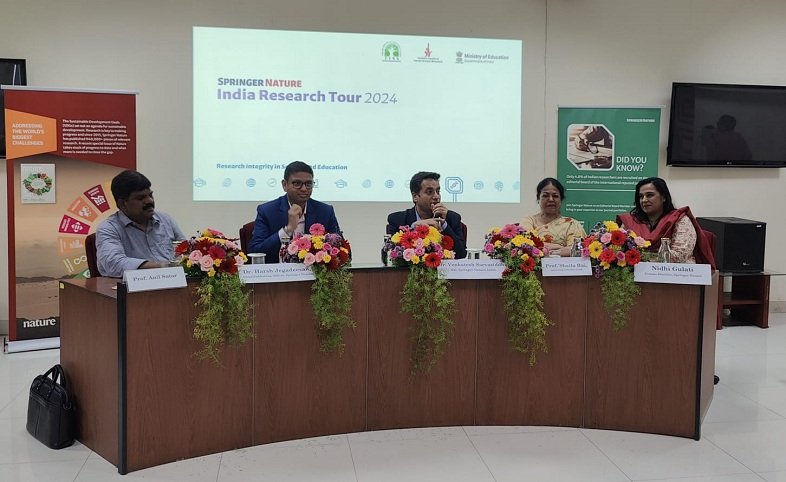
Prof. Anil Sutar, Dean, School of Research Methodology, TISS, Harsh Jegadeesan, Chief Publishing Officer, Springer Nature, Venkatesh Sarvasiddhi, MD, Springer nature India Private Limited,  Prof Sheila Rai, Council Member, ICSSR and Nidhi Gulati, Country Communication Director, Springer Nature Group, India.
Prof. Anil Sutar, Dean, School of Research Methodology, TISS, Harsh Jegadeesan, Chief Publishing Officer, Springer Nature, Venkatesh Sarvasiddhi, MD, Springer nature India Private Limited, Prof Sheila Rai, Council Member, ICSSR and Nidhi Gulati, Country Communication Director, Springer Nature Group, India.

Mumbai, 3rd October 2024 – Springer Nature has launched its new fully open access Cureus Journal of Business and Economics at the Tata Institute of Social Sciences (TISS) in Mumbai. This significant milestone is part of Springer Nature’s ongoing India Research Tour 2024 – a flagship initiative in collaboration with the Government of India, Indian Council of Social Sciences Research (ICSSR), and 26 partner institutions across nine Indian states.

The Cureus Journals Series of Journals by Springer Nature are community-based journals aimed at fostering collaboration and equity in research. They provide an innovative platform for open-access publishing, bridging academia and real-world research applications. The USP of these journals is its unique and efficient platform offering free peer-reviewed publishing with optional low-cost editing services, focused on equity, affordability and faster publishing. The Cureus Journal of Business and Economics is the 4th in the series, preceded by Cureus Journals of Medical Science, Engineering and Computer Science.

Harsh Jegadeesan, Chief Publishing Officer, Springer Nature, while speaking at the launch, emphasized the importance of open access in democratizing knowledge and making research accessible to a broader audience. He said: “The launch of Cureus Journal of Business and Economics marks a pivotal moment for Springer Nature as we continue our journey towards fostering open access publishing. This journal will play a critical role in disseminating high-quality research on global, economic and business challenges, especially in emerging economies like India and the Global South. At Springer Nature, we believe that open access is essential to advancing knowledge equity, and we are proud to contribute to the growth of research in these fields.”

Venkatesh Sarvasiddhi, Managing Director, Springer Nature India, highlighted the significance of the journal in India’s research landscape, stating: “India is emerging as a global hub for business and economic research, and we are committed to supporting this momentum with our Cureus Journal of Business and Economics. With our fully open access journals, we are empowering researchers and practitioners alike to access cutting-edge insights and contribute to solutions for today’s pressing economic issues. This aligns with our broader goal of enabling impactful research through our India Research Tour, which fosters dialogues around key issues such as research integrity.”

The launch was accompanied with an insightful panel discussion on ‘Research Integrity and its Role in Strengthening Social Science Research,’ reinforcing Springer Nature’s commitment to promoting transparency, rigor, and ethical research practices in academia. The panel comprised of Prof. Anil Sutar, Dean, School of Research Methodology, TISS, Harsh Jegadeesan, Chief Publishing Officer, Springer Nature, Prof Sheila Rai, Senior Council Member, ICSSR and Nidhi Gulati, Country Communications Director, Springer Nature, India.

Professor Shankar Das, Pro Vice Chancellor, Tata Institute of Social Sciences (TISS), underscored the role of institutions in fostering responsible research, and said: “At TISS, we believe in nurturing research that not only contributes to academic excellence but also addresses societal challenges with integrity. This collaboration with Springer Nature is a testament to our shared vision to promote ethical research practices. Integrity in research is the foundation to building public trust and ensuring that our work truly benefits the society.”

The event also had a keynote from Dr. Harsh Jegadeesan and Prof. Sheila Rai, and a RISE (Research Integrity in Science and Education) Masterclass by Dr. Ed Gerstner, Director, Research Environment Alliances, Springer Nature, London.

Springer Nature remains dedicated to advancing global research through open access publishing, and its Cureus Journal of Business and Economics is poised to become a leading platform for researchers across the globe to share knowledge, collaborate, and contribute to impactful solutions.

Industries in Delhi urge shift from leasehold to freehold to boost India’s USD 5 Trillion economy goal by 2025

Delhi, October 1st, 2024: The Executive Committee of Delhi Chapter of Indian Industries Association (IIA) held a meeting at the Jhandewalan Headquarters on September 30th, where members urged the Delhi Government, the Lieutenant Governor (LG) of Delhi, and the Union Government of India to implement a freehold policy for industrial units in Delhi.

IIA


Dr. Mamta, Chairperson of the Delhi Chapter, shared that Delhi has 29 notified industrial areas. While a scheme was introduced in 2005 to convert leasehold industrial properties to freehold, only a few have benefited from this. Government bodies like the DDA, DSIIDC, and the Industry Department have selectively applied this policy, leaving many industrial units without freehold status.

Dr. Mamta stressed that moving from leasehold to freehold is vital for unlocking the economic potential of these areas. This would attract more investments and help India achieve its $5 trillion economy target by 2025.

Main Points of the Appeal:

Business Growth: Freehold ownership would give industrial units more freedom to grow, innovate, and invest in new technologies, without the restrictions of lease agreements.

Increased Investment and Access to Credit: Freehold properties are considered more valuable by banks, making it easier for businesses to get loans and attract investors. This is crucial for supporting India’s economic development.

Enhanced Competitiveness: Industrial units in Delhi would be able to compete better with those in other regions that already have freehold status, leading to greater productivity and innovation.

Job Creation and Economic Impact: A freehold policy would lead to the expansion of industrial activities, creating jobs and developing new industrial hubs, all of which are important for reaching the $5 trillion economy goal.

Dr. Mamta urged that this policy should apply to all industrial units in Delhi, not just a few. If fully implemented, this would empower businesses to contribute more effectively to the economy and support India’s vision of becoming a $5 trillion economy by 2025.

Delhi’s industrial sector plays a key role in the state’s Gross State Domestic Product (GSDP) of $130 billion. By implementing a freehold policy, business operations would become easier, attracting more investments both from within India and abroad.

Industries in Delhi believe that this change would help support the government’s “Ease of Doing Business” initiative and boost economic growth.

United Way Bengaluru and NTT DATA Empower Women with E-Rickshaw Distribution for Livelihood Support

October 01, 2024: Bengaluru, India: In a significant move towards empowering marginalized women, United Way Bengaluru (UWBe), with financial support from NTT DATA, a global digital business and IT services leader, has distributed five e-rickshaws, each equipped with a smartphone, to five women who have successfully completed driving training.

The distribution event was held at the Office of the Commissioner of Police and was graced by Bengaluru’s Police Commissioner, Sri B. Dayananda, IPS, along with Ankur Dasgupta, Vice President & Head of Marketing, India, NTT DATA.

Supported by the Bengaluru City Commissioner’s Office and the NGO Parihar, this initiative aims to create sustainable livelihood opportunities for women from vulnerable communities. The project provides these women with the skills and tools necessary to operate e-rickshaws and collaborate with cab aggregators. Each e-rickshaw is outfitted with a smartphone to facilitate the management of ride requests through cab aggregator apps, ensuring a smooth and efficient operation.

“At NTT DATA, we believe in supporting initiatives that create lasting and meaningful change. The E-rickshaw project is a powerful step toward building a more inclusive and equitable society, where women are equipped to take control of their futures. This initiative not only offers sustainable livelihoods to marginalized women and their families but also aligns with our commitment to environmental conservation. By connecting the planet, economies, and people, we aim to drive positive global impact. We are honoured to collaborate with United Way on this initiative, which paves the way for long-term social change,” said Ankur Dasgupta, Vice President & Head of Marketing, India at NTT DATA.

“Today, we’re witnessing the transformative power of collaboration. Together with NTT DATA and United Way of Bengaluru, we’re creating a brighter future for women from vulnerable communities, where financial independence meets dignity and respect” – Said B Dayananda, Commissioner of Police, Bengaluru City

“We believe that empowering women with the tools and skills they need to be financially independent is a critical step toward building a more inclusive society. The provision of these e-rickshaws will not only give them a stable source of income but also the confidence to shape their futures,” said Rajesh Krishnan, CEO, United Way Bengaluru.

Lalbagh Ka Raja Trust Serves 10,000 Devotees in Grand Bhandara

Lalbagh Ka Raja Trust (7)

Delhi, 15 September 2024 – The Lalbagh Ka Raja Trust in Delhi, overseen by Mr. Rakesh Bindal, the chairman of the trust, along with other trustees, is hosting its grand 10-day Ganesh Pooja celebration at DDA Ground, near Sant Nirankari Samagam, Burari, Delhi, feeding over 10,000 devotees through a daily Bhandara. The event running from September 7 to September 16, has drawn lakhs of visitors, making it a major cultural and spiritual highlight in the city.


The Bhandara, which serves free meals, is a key part of the trust’s mission to give back to the community. Throughout the 10 days, volunteers have been tirelessly working to ensure that every devotee receives a nourishing meal. Even the paramilitary forces and security personnel are provided meals daily. This large-scale act of service reflects the trust’s dedication to fostering a sense of togetherness and devotion.

In addition to the religious activities, the mela surrounding the event offers a wide range of entertainment options, including paid food stalls, giant wheels, and various attractions for families and children. The combination of spiritual and festive elements has turned the Ganesh Pooja into a community celebration that blends devotion with enjoyment.

Lalbagh Ka Raja Trust (7)

“We are proud to serve 10,000 people through our Bhandara and offer a space where families can enjoy the festivities as well. We aim to make sure no one leaves without experiencing both the blessings of Ganesh and the joy of the mela,” said Mr. Rakesh Bindal, Chairman of Lalbagh Ka Raja Trust, along with other trustees.

The event also features spiritual discourses and prayers, including Hanumant Katha and Ram Katha by renowned spiritual leaders Bageshwar Maharaj and Aniruddha Maharaj. The presence of celebrities and political figures has further elevated the significance of the event.

Lalbagh Ka Raja Trust (7)

About Lalbagh ka Raja Trust
Lalbaghka Raja Trust, based in Delhi, is devoted to organizing religious festivals and serving the community through various charitable endeavors. Their annual Ganesh Pooja event is a unique blend of spiritual devotion and social welfare, aiming to create lasting connections with the community.

16-Year-Old Preetham Goli, led by Satyarup Siddhanta, successfully summits Mount Kilimanjaro

Hyderabad, 19th August 2024: Preetham Goli, a 16-year-old student of Delhi Public School, has made history as one of the youngest climbers from his city to successfully summit Mount Kilimanjaro. The ambitious young climber reached the summit on July 17th, 2024, after an 8-day expedition that tested his physical endurance and mental resilience.

Preetham, who is currently in the 12th grade, embarked on his journey on July 12th with a group of four climbers, guided by the experienced mountaineer Satyarup Siddhanta. The group faced numerous challenges during the ascent, but Preetham’s determination and perseverance saw him through to the top.

“One of the main reasons I wanted to summit Kilimanjaro was that after finishing Everest Base Camp, I was not satisfied. I wanted to do more, climb more, achieve more,” Preetham shared. “While climbing Kilimanjaro, sometimes I felt lonely, but I learned to enjoy it. Being away from everyone and everything made me realize how simple our life was. Sometimes I felt really peaceful, which I had never felt before.”

The summit day was particularly grueling, starting at 3 AM in freezing conditions. “The summit trail was very hard due to the steep ascent and slippery ground made of fine gravel or sand. Right before reaching the summit, I started having a really bad headache, which I know is common due to the altitude, so I kept pushing on. The feeling when I reached the summit was just magical – all the problems I had while climbing just disappeared.”

At the summit, Preetham proudly unfurled the Indian national flag, the NCC flag, and his school flag, a moment that he describes as one of the best feelings in the world. Although the group had planned to stay at the Crater Camp, bad weather forced them to descend to Barafu Camp the same night.

“I thank my school, Delhi Public School, Nacharam, for all the support, and I especially want to thank Satyarup Siddhanta Sir for helping me summit the mountain. Without him, the summit would have been very hard,” Preetham added.

Union Budget 2024-25 Reactions: CRISIL Limited

Quote on Economy from Dipti Deshpande, Principal Economist, CRISIL Limited

“The budget responsibly deploys the higher revenues (tax and non-tax revenues) on reducing the fiscal deficit, sustaining spending on investments and making way for higher spending to support segments of the economy that require support. Overall, the quality of spending remains intact despite the slight tilt towards revenue spending.

A lower fiscal deficit and non-inflationary nature of spending are inflation-positive, while lower market borrowings will help temper yields. We expect the 10-year government bond yields to average 6.8% by March 2025, from 7% in March 2024. On the back of a normal monsoon and cooling food inflation, we expect headline consumer price inflation to soften to 4.5% average this fiscal from 5.4% in the last. We maintain our GDP growth forecast at 6.8% for fiscal 2025 – a moderation from 8.2% in fiscal 2024 led by tighter lending conditions.”

Quote on Shrimp from Rahul Guha, Director, CRISIL Ratings

The shrimp processing sector will benefit from two specific announcements. First, the government support for marketing and financing shrimp farming through Nabard will improve the supply chain, reduce time to exports and, hence, lower the cost of production for processors and farmers. Second, reduction in import duties on certain brood stock to 5% will reduce costs for the farmers and, in turn, processors. This will make the cost structure leaner and enhance productivity over the medium term, giving shrimp exporters a boost.”

Quote on Energy from Rahul Prithiani, Senior Director & Global Head, Energy and Sustailability, Consulting, CRISIL Market Intelligence and Analytics

“The full budget for this fiscal moves the needle on the development of energy transition pathways and the shift to emission-based targets for the hard-to-abate sectors. This will drive investments in sustainable technologies and lay the framework for the development of the carbon market. Additionally, reduction in basic customs duty on battery minerals, focus on mining critical minerals, impending pumped storage policy for round-the-clock power, and taxonomy for climate finance indicate a clear push towards de-carbonisation..”

Quote on real estate from Gautam Shahi, Director, CRISIL Ratings

For the real estate sector, the impact of changes in taxation is expected to be mixed. On the one hand, the reduction in the long-term capital gains tax rate from 20% to 12.5% should boost investments over the near to medium term. On the other, the removal of indexation benefit will increase the tax incidence on property sale, especially for older properties.
Further, the Centre’s move to persuade state governments to reduce stamp duties, especially for women home-owners, can have a positive impact.

On affordable housing, the move to provide additional one crore housing units to urban poor and middle-class families under the Pradhan Mantri Awas Yojana (PMAY) scheme, with an incremental budgetary allocation of Rs 2.2 lakh crore over the next 5 years, will sustain the growth momentum in this segment.

Quote on Space Market from Pushan Sharma, Director- Research at CRISIL Market Intelligence and Analytics

The Union Budget has introduced a Rs 1,000 crore venture capital fund aimed at expanding the space market five-fold over the next decade. The country’s Rs 6,700 crore space market has seen startup engagement skyrocketing from just one in 2012 to 189 in 2023 as entrepreneurs started looking beyond traditional sectors to include satellite manufacturing and development of reusable launch vehicles. The number of use cases for the space sector has also increased with higher private participation, extending to newer ways of credit risk assessment for the agriculture sector and project monitoring, to name a few.

Quote on Capital Markets from Subha Sri Narayanan, Director, CRISIL Ratings

“The measures pertaining to tax rates on capital market transactions – Securities Transaction Tax on derivatives, Long Term Capital Gains tax, and Short-Term Capital Gains tax – are aimed at bringing in greater stability in the equity markets by incentivising long-term investment activity and curbing the derivatives segment, where traded volume has risen over 99%. There could be an impact on market volume in the near-term that, in turn, could affect the revenue of brokerage houses which have enjoyed rising profitability because of the market upcycle. At the same time, they have also had to realign their business models to manage the evolving regulatory environment, with the most recent change being the revision in the charges levied on stockbrokers by market infrastructure institutions.”

Quote on interest free loans to states from Anuj Sethi, Senior Director, CRISIL Ratings

“The increase in the allocation of interest-free loans to state governments by 15% to Rs 1.5 lakh crore for spending on capital expenditure reflects the central government’s continued focus on infrastructure development. That said, the availability of the majority of these funds will be subject to the state governments undertaking various reforms, including land and labour reforms. In the past, states had utilised only 80-85% of the budgeted levels due to their inability to meet the conditionalities. Hence, undertaking the reforms in a timely manner, which can allow states to utilise the earmarked amount, remains critical.”

The agriculture budget this year focuses on a structural measure through 4 C’s- climate, credit, cutting-edge-technology and critical infrastructure. One can see a clear focus on long-term measures to enhance productivity of crops and combat climate change through High-Yeilding and climate resilient variety of seeds. Development of infrastructure cluster for vegetables near consumption centers to bring price stability, given that post-harvest losses in vegetables can be upwards of 10%. On the technology front digital crop survey, mapping of farmers to their land parcels, and issuance of Jan Samarth based Kisan Credit Cards indicate commitment of government towards promoting better credit risk assessment, and enhanced formal credit penetration for farmers, which currently stands at around 60%. Additionally, allocations under PM KISAN and MNREGA have remained at par with last year levels.