Tag: Air Quality

Breathing Uneasy – Housing Choices Amid Worsening AQI

akash pharande

 By- Akash Pharande, Managing Director – Pharande Spaces

The problem of rapidly worsening air quality in India has a direct correlation to our housing choices. Increasing urbanization, industrial proliferation, and population growth are causing more and more homebuyers to prioritize the quality of their living environments.

Urban Centers – The Worst Hit

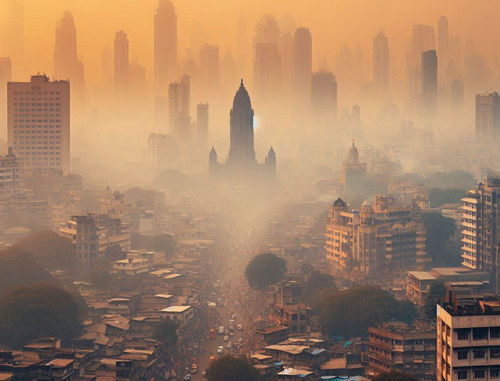
Indian city centres face severe air pollution threat:

  • Heavy Traffic – The congested city centres with high population and traffic density contribute significantly to vehicular emissions.
  • Industrial Pollution – Proximity to industrial zones with obsolete or nonexistent pollution control measures worsens air quality.
  • Urban Heat Island Effect – The concentration of buildings and human activities in cities leads to higher temperatures – which, in turn, escalate pollution levels.
  • Lack of Green Spaces – The absence of parks and green areas in densely populated urban regions makes natural air filtration impossible.
pollution

A Shift Towards Cleaner Surroundings

Many suburban areas with lower population density and more green open spaces offer relief from urban pollution. Planned cities, like Chandigarh, Navi Mumbai and PCMC (Pimpri Chinchwad Municipal Corporation) showcase the effective separation of residential and industrial zones, improving overall air quality for all concerned.

In the absence of planned development, many suburban paradises are at risk. Rapid real estate development will eventually turn green sanctuaries into polluted urban-like environments.

Exploring the Solution – Integrated Townships

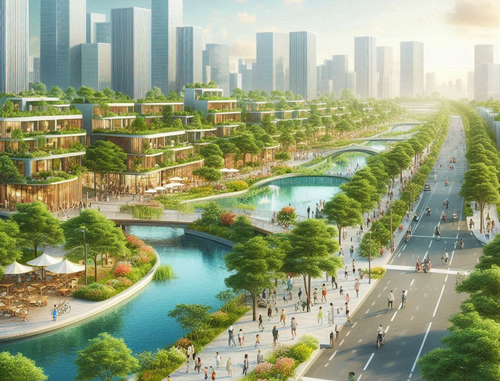
To tackle this issue, the Indian residential real estate sector has introduced integrated townships as a solution that can withstand environmental challenges.

  • Captive Green Spaces – These townships prioritize green open spaces like parks and gardens to create an environmentally sustainable environment.
  • Reduced Vehicle Emissions – Because they incorporate schools, shops and recreational facilities within their precincts, townships reduce overall vehicle movement.
  • Sustainable Infrastructure – Initiatives like rainwater harvesting and waste recycling promote eco-friendly living practices.
  • Combating Urban Heat Islands – Development plans for townships include extensive green areas, tree-lined streets, natural or artificial water bodies, and renewable energy sources to combat heat accumulation. By securing these advantages, integrated townships ensure that the area remains eco-friendly – now and in the future.
breathing

Tips for Prospective Home Buyers to Avoid Air Pollution Risks

  • Begin by examining air quality data for different regions. This information is often accessible through environmental monitoring agencies or online air quality indices. Check websites that offer real-time air quality updates to evaluate current atmospheric conditions.
  • When selecting locations, consider the presence of green spaces. Look for areas close to parks, reserved forests, and other open green zones, as they result in better overall air quality. Don’t choose a home in a project too close to a highway or an industrial zone, or prone to traffic bottlenecks. Also note that elevated areas often offer better air quality because heavy pollution smog primarily settles in low-lying areas.
  • Evaluate the condition of roads and public transportation as this will determine how much emissions accumulate in an area. Do internet research and check news to review the area’s infrastructure and future development plans to anticipate changes that could impact air quality.
  • When checking out a home, find out if it has adequate cross-ventilation and good green home features. Energy-efficient homes typically provide better air quality thanks to their sealed and insulated environments.
    You can, to some extent, enhance indoor air quality by using indoor plants. But this is obviously a very minimal solution to a major problem

In conclusion

With air quality playing an important role in home purchasing choices, buyers must prioritize features that ensure a clean and healthy living environment.

By picking the right location and project, you can protect your and your family’s well-being and still enjoy the conveniences of modern life. Opting for integrated township living is a wise decision amid rapidly declining air quality in urban India. In any case, make any housing with a lot of research and awareness about air quality.

And remember – the clean environment you get in a currently green but quickly developing suburb may not be guaranteed tomorrow. Ensure that your loved ones can breathe freely – not only today but also in the future.

About the Author:

Breathing Uneasy - Housing Choices Amid Worsening AQI

Akash Pharande is Managing Director – Pharande Spaces, a leading real estate construction and development firm famous for its township projects in Greater Pune and beyond. Pharande Promoters & Builders, the flagship company of Pharande Spaces and an ISO 9001-2000 certified company, is a pioneer of townships in the region. With the recent inclusion of Puneville Commercial into one of its most iconic townships, Pharande Spaces taken a major step towards addressing Pune’s current and future requirements for fully integrated residential-commercial convenience

Major Shift to E- Mobility and ultra vigilance on Industrial Pollution Needed to Improve Delhi and NCR Air Quality- Kulpati Prof PB Sharma

Gurugram: Come October and the Air Quality in Delhi and NCR becomes a major issue for people and also the Government. But mere curbs on fire crackers during Diwali or calls for switching off motor vehicle engines at red-lights as being proposed by Govt of Delhi would not suffice. The crux of the problem lies in plying petrol and diesel vehicles on roads in Delhi and NCR in millions and the unabated discharge of foul air from polluting industrial chimneys. Coupled with it is the congestion on roads caused by increased mobility during the festive season and lack of traffic sense by the commuters. The moot question is why are we not fighting a war against air pollution by policy interventions and technology innovations?

Today, it possible not only to know the state of air pollution at a given place and time but also to use AI decision making tools to predict both the people’s behavior as well as pollution levels caused by vehicles as well as industry hot spots. As in real war, we need both the strategies as well as technology innovative solutions to effectively arrest the monster of air pollution that is a silent killer, acknowledged by the global experts on environmental and human health.

As per the WHO report 2020, Air pollution kills an estimated seven million people worldwide every year. WHO data further shows almost 99% of the global population breathe air that exceeds the WHO guideline limits that mandate PM2.5 to be below 05 micrograms per cubic meters annually and below 15 averaged over 24 hours. It should raise our serious concern here in Delhi and NCR as the annual average of air pollution in Delhi for 2019 for PM2.5 stood at 98.6 micrograms per cubic meter, highest for any capital city in the world, as reported by ORF Occasional Paper on Air Pollution by Arpan Chatterji, December 2020. The nation as a whole also recorded annual average of 58.1 microgram per cubic meter during the same year.

From smog hanging over cities during winter to smoke inside the home, air pollution poses a major threat to human health and climate change. The combined effects of outdoor and household air pollution cause about seven million premature deaths every year, largely as a result of increased mortality from stroke, heart disease, chronic obstructive pulmonary disease, lung cancer and acute respiratory infections, as per WHO Report 2020.

With India being one of the rapidly rising star of the east in respect of the revival of post Covid-19 economy, it is natural that the mobility on road shall significantly rise with added fleets of motor vehicles, two wheelers, buses, trucks and utility vehicles. Would this not be an added burden of increased demand for fossil fuel for India’s mobility if timely strategic actions are not rolled out by the Governments both at the center and state levels?

India being one of the world’s largest importer of fossil fuel with crude oil imports of US Dollar 125 billion, (INR 8,80,000 Crores) in 2019-20 which was 42 percent higher than the previous year. What more in respect of air quality India is already under a near emergency with its 22 cities (Including the National Capital Delhi and satellite town of Gurgaon, Noida, Faridabad and Ghaziabad) being in the top 30 cities of the world. The need for the strategic actions to rapidly shift to green mobility cannot be over emphasized.

Public at large should also realize that the use of fossil fuel is one of the major factor for air pollution in India and the increasing burden of import of fossil fuel is going to cripple the Indian economy as well as the health of the environment that shall further impact badly on human health unless a major shift to green mobility is caused without further delay, says Prof PB Sharma Vice Chancellor Amity University Gurugram.

The Clean Air Program of the Govt of India should be drastically revised to aim at achieving in 2024 the goal of not more than 20% of air pollution of 2017 levels. This would require drastic actions including introducing policy measures to rapidly roll out E- Vehicles on roads of India, heavy subsidy on purchase of e-vehicles and strong support for rural based industries for utilising pallari and other farm waste for producing useful products including bio hydrogen. As for charging of e-vehicles solar powered charging stations in great numbers should be promoted along the highways and expressways at dhabas and food courts. Let Delhi and NCR cities resolve to have solar power on every roof and also no two wheelers and three wheelers of petrol on roads from June 2022. May be we have to even say that all Motor Vehicle manufacturers in India should switch over to EV production for vehicles of less than 2000 CC by 2023. It is however important that the cost of e-vehicles on road in India is kept within the affordable limits of the low and middle class. With the mechanisms of transmission and speed controls being drastically reduced in e-vehicles compared to normal petrol or diesel cars, it should not be difficult to bring a people’s e-bike for less than Rs.30000, People’s e-car on roads in India for less than 3 lacs and a good quality e-SUV for less than 7 lacs. The young innovators of India may also think in terms of designing e-kits for transforming the currently used cars into e-vehicles to make rapid transition to e-mobility possible on a scale unprecedented.

A major review of Traffic plan of Delhi is also recommended to reduce bottlenecks and congestion. The objective of the revised traffic plan should be to identify no traffic areas /zones, one-way traffic roads and ear marking of parking places in market places. It would also mean reducing traffic lights and creating signal free corridors for easy movement of vehicles. The creation of ring road in 1980s and construction Barapulla elevated road during commonwealth games, and the recent decongestion of Dhaula Quan link road to Delhi Airport are the finest examples for achieving smooth traffic flow in Delhi. Nothing prevents India to implement ITS (Intelligent Transportation System) for effective Traffic management in capital cities and on expressways. While penalties including e challans have been introduced, little or no investment has been made to establish higher- end driving training centers and massive public awareness for creating good traffic sense. After all we cannot afford for long “driving fast in slow lane”, says Prof PB Sharma, Past President of AIU and Founder Vice Chancellor of DTU.