Tag: Infrastructure

The Future of Indian Housing

Akash Pharande,

By  Mr. Akash Pharande, Managing Director – Pharande Spaces

India’s urban population explosion is causing its bigger cities to burst at the seams. Overcrowding, pollution, traffic congestion, and deteriorating infrastructure are the ‘new normal’ – a state of affairs that we have begun to accept as inevitable.

According to the United Nations, about 40% of the Indian population will live in urban areas by 2030. The pressure this puts on housing, transportation, and basic amenities in our cities is immense. Because of these urban ‘growing pains’, many citizens have become disillusioned with their cities and are even considering moving to smaller, less crowded, and less expensive tier 2 and tier 3 cities.

However, there are two catches to this way of thinking – one, most employment opportunities are in our larger cities. Two, the hammer of development is bound to catch up even in the smaller cities. Is there a way for citizens to regain a wholesome, uncluttered lifestyle without abandoning their cities of choice? There is. Integrated townships are a viable solution. But before we get into that, let’s first examine the real-time challenges that our cities increasingly face.

Traffic Congestion

India’s cities are notorious for their traffic woes. In cities like Mumbai, Delhi, and Bengaluru, residents spend hours in gridlocked traffic every day. According to a 2021 report by TomTom, Bengaluru ranked as the sixth-most congested city in the world, with commuters spending an average of 71% extra travel time during rush hour. This congestion takes a toll not only on the economy but also on the well-being of urban dwellers, since long commutes lead to increased stress, reduced productivity, and poor mental health.

Pollution and Environmental Degradation

city

Air pollution is another pressing issue in Indian cities. The World Health Organization (WHO) ranks several Indian cities, including Delhi, Kanpur, and Lucknow, among the most polluted globally. In 2020, air pollution caused an estimated 1.7 million deaths in India, according to a study published in The Lancet. The over-reliance on private vehicles, combined with unchecked industrial emissions has led to worsening air quality, making it hazardous for people to live and work in densely populated urban environments.

Overcrowding and Infrastructure Strain

With the growing influx of people into cities, housing and infrastructure are stretched to the limit. Many Indian cities are ill-equipped to handle their burgeoning populations – resulting in cramped living conditions, inadequate water supply, and frequent power outages. This overcrowding exacerbates social and health issues, leading to an overall decline in quality of life.

The Solution – Integrated Townships
township

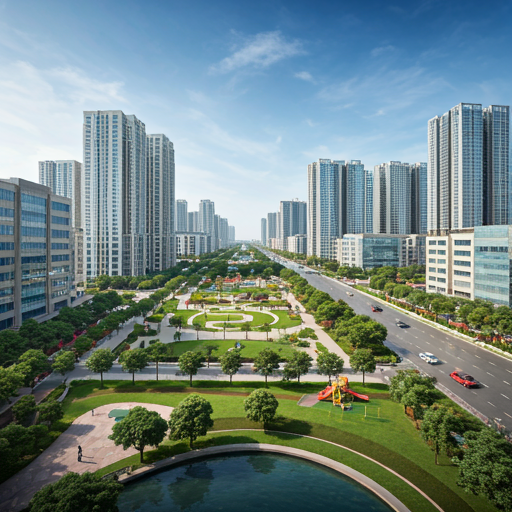
Amid these escalating challenges, integrated townships are the most viable alternative to traditional urban housing models. These large-scale developments are self-sustaining communities that combine residential, commercial, recreational, and educational facilities in one comprehensive layout. Unlike conventional city apartments, which are often isolated and disconnected from essential amenities, integrated townships provide a more balanced and convenient lifestyle.

Integrated Townships – A Brief History

Integrated townships began emerging in India during the 1980s and 1990s. Even before that, cities like Jamshedpur – founded in 1907 by the Tata Group to support their workforce – served as early examples of self-contained, self-sustaining communities. Jamshedpur was among the pioneers of integrated urban living in India where residential spaces were developed alongside recreational spaces like parks and essential services such as schools and medical facilities.

Chandigarh, planned by Le Corbusier in the 1950s, is another prime example of a development plan where housing and public facilities were created alongside commercial business centres. However, these were entire cities with their own municipalities. The concept of integrated townships – large residential complexes developed along with retail, office, civic and lifestyle developments – started gaining momentum in the 2000s.

Today, these townships have emerged as the single most transformative solution, offering a holistic living environment that promotes sustainability, convenience, and a better quality of life. They have become even more relevant if we consider the increasing chaos of modern city life.

Convenience and Reduced Commuting

One of the biggest advantages of integrated townships is the proximity to workplaces, schools, healthcare facilities, shopping centres, and entertainment options. By reducing the need for long commutes, these developments save residents time and money while alleviating traffic congestion in major cities. According to one report, more than 80% of homebuyers in metropolitan areas now prefer housing projects which are within a 10-kilometer radius of their workplaces.

Sustainable and Environmentally Friendly

Integrated townships are also designed with sustainability in mind. Green spaces, efficient waste management systems, rainwater harvesting, and renewable energy sources are increasingly becoming standard features of these developments. Integrated townships with eco-friendly infrastructure reduce carbon footprints and command a higher premium over non-sustainable developments. Moreover, by centralizing resources and infrastructure, integrated townships can reduce the strain on municipal services, thus promoting a more sustainable and resilient urban ecosystem.

Improved Quality of Life

Integrated townships prioritize the well-being of their residents by offering a range of recreational and wellness facilities. From parks and sports complexes to community centres and healthcare services, these projects are designed to cater to all age groups and lifestyle preferences. They foster a sense of community and safety, with round-the-clock security and controlled access points ensuring a secure living environment.

Moreover, the availability of schools and educational institutions within the township means that families do not need to send their children far from home, reducing stress and providing a better work-life balance. Many leading minds in the real estate industry have recognized integrated townships as the future of housing, particularly in countries experiencing rapid urbanization like India.

Not surprisingly, integrated townships outperformed standalone residential projects in both price appreciation and rental yields because of the superior convenience and amenities they offer. Furthermore, the demand for integrated townships is not limited to the residential segment.

After the COVID-19 pandemic, more and more businesses have realized how important it is to have their operations closer to where their employees live. As a result, the commercial real estate segment is also seeing a surge in demand for office spaces within township developments, thanks to the growing trend of the ‘walk-to-work’ lifestyle.

Towards a Better Residential Experience

As India’s cities continue to expand, the traditional model of urban housing is proving to be increasingly untenable and homebuyers now seek alternatives that offer convenience, sustainability, and a better quality of life. Integrated townships are the answer, and will therefore account for more and more Indian residential spaces in the years to come.

About the Author:

akash

Akash Pharande is Managing DirectorPharande Spaces, a leading real estate construction and development firm famous for its township projects in Greater Pune and beyond. Pharande Promoters & Builders, the flagship company of Pharande Spaces and an ISO 9001-2000 certified company, is a pioneer of townships in the region. With the recent inclusion of Puneville Commercial into one of its most iconic townships, Pharande Spaces taken a major step towards addressing Pune’s current and future requirements for fully integrated residential-commercial convenience


Hitachi Vantara Expands Virtual Storage Platform One Portfolio to Include New Block Storage Appliance

New Delhi, India. – May 31, 2024 – Hitachi Vantara, the data storage, infrastructure, and hybrid cloud management subsidiary of Hitachi, Ltd. ,announced the launch of its new block storage appliance as part of its Virtual Storage Platform One hybrid-cloud data platform. The new offerings include three dedicated models providing businesses with a common data plane across structured and unstructured data in block storage, specifically designed to remove complexity, enhance data protection, and reduce carbon emissions. Enhanced with features to transform the data storage experience, the block platform data foundation is tailored to meet storage needs of the mid-sized enterprise market segment by leveraging the resilience, reliability, and sustainability of Hitachi Virtual Storage Platform One.

Octavian Tanase, Chief product officer, Hitachi Vantara

The rise of AI and connected technologies has led to an exponential surge in data volumes, as businesses expect the amount of data they use to double between 2023 and 2025. As a result, businesses, especially mid-sized organizations, are being forced to rethink how to build and scale their data architectures. At the same time, the unprecedented amount of data growth has posed challenges for organizations looking to meet ambitious sustainability goals. According to a recent survey, 68% of IT decision makers indicated they were concerned with the impact AI/ML had on their organization’s energy use and carbon footprint, and 77% of respondents said that legacy data architectures negatively impacted their sustainability performance.

The new Virtual Storage Platform One Block storage appliance reflects the latest in advanced data infrastructure technology, including the ability to optimize rack space while also reducing power consumption and cooling costs. The platform’s ease-of-use, complemented by features such as self-installation capabilities, Ops Center Clear Sight for cloud-based management, and dynamic drive protection simplify day-to-day operations. Additional features include:

Intrinsic security and anti-ransomware: Hitachi Thin Image Advanced (TIA) snapshot software quickly creates copies for immediate use in decision support, software development, and modern data protection operations. It ensures the confidentiality, compliance, and protection of data against security threats and actively defends structured data against ransomware.

Enhanced data protection: The platform features always-available copies of production data for stronger data protection, while TIA also saves up to 90% of disk space by storing only the data blocks that have changed to maintain efficiency.

A more sustainable flash mid-range appliance: Facilitated by Dynamic Carbon Reduction technology, Virtual Storage Platform One Block reduces energy consumption by switching CPUs into eco-mode during periods of low activity. “Always on compression” allows the system to switch from inline data reduction to post processing which further reduces energy consumption and contributes to a lower CO2 footprint by as much as 30-40%.

Reduced complexity: Management tools, including an embedded graphical user interface (GUI) and the intuitive SaaS-based Ops Center Clear Sight portal make it easy to manage and consume the data you need.

“With the continued expansion of our Virtual Storage Platform One portfolio, we’re helping businesses to elevate their applications like never before,” said Octavian Tanase, chief product officer, Hitachi Vantara. “Our Virtual Storage Platform One Block appliance is powerful and dense, delivering the data processing and reliability that mid-sized businesses need while minimizing rack space and reducing power and cooling costs for a more sustainable data center environment. This new offering reaffirms our commitment to innovation and customer-centric solutions and sets a new standard for storage performance.”

Tailored for the mid-sized enterprise sector, Hitachi Vantara’s latest block storage appliance has distinct features that set it apart from competitors. Seamlessly integrated into the Virtual Storage Platform One management suite, the block platform’s storage arrays can be managed as one. Encompassing block, file, and object storage solutions, each offering delivers common data services, including third-party storage arrays through Hitachi Storage Virtualization Operating System (SVOS) software. Additionally, the platform’s 100% data availability guarantee assures uninterrupted data access for mission critical workloads.

“As the digital landscape continues to evolve, Hitachi Vantara’s integration of its new block storage platform into the robust architecture of the Hitachi Virtual Storage Platform One is a significant advancement for mid-sized enterprises,” said Ashish Nadkarni, group vice president and general manager, Worldwide Infrastructure Research, IDC. “This move demonstrates Hitachi’s commitment to providing scalable, reliable, and efficient solutions that address the complex needs of businesses navigating structured and unstructured data across hybrid cloud environments.”

Virtual Storage Platform One Block facilitates application consolidation with unparalleled flexibility. Starting as small as a single appliance, it seamlessly scales up to a 65-node cluster, accommodating evolving storage requirements effortlessly. This scalability empowers businesses to streamline their infrastructure, reduce complexity, and optimize resource utilization within a unified storage environment. The platform also embraces a hybrid cloud paradigm, enabling businesses to seamlessly run modern cloud-native applications alongside traditional block workloads, bridging the gap between on-premises infrastructure and the cloud.

Central Park conducts a hiring drive, aims to recruit children of servicemen and ex-servicemen

Gurgaon, May 30, 2024 – Central Park, a leading Gurgaon-based real estate developer owned by The Bakshi Group, a legacy name in infrastructure, hospitality, real estate, and automotive industries, proudly hosted a special HR Drive dedicated to supporting the children of servicemen and ex-servicemen of our national security.

Mr. Anurag Joneja, CHRO, Central Park

This first-of-its-kind initiative was held in partnership with the Zila Sainik Board and was a resounding success with 100+ qualified applicants participating. With an aim to provide opportunities for the children of those who have dedicated and are dedicating their lives to the nation’s security, this initiative furthers Central Park’s commitment to social responsibility and their ongoing support for military families.

“This initiative marks another stride in our commitment to giving back to the community. With a current workforce of over 2,000 dedicated individuals, we’re excited to expand our team by an additional 250 to 300 members in the coming year. The enthusiastic response and high-quality applicants at this HR-Drive has truly inspired us. It reaffirms our dedication to recruiting and retaining top talent while showcasing the transformative power of corporate social responsibility. We encourage other employers to explore similar initiatives that make a meaningful impact on the communities we serve,” shared Anurag Joneja, CHRO of Central Park.

The initiative focused on recruiting candidates with qualifications in various fields, including Diploma Engineers in Civil, Electrical, and Mechanical disciplines, BTech and BE graduates, PGDBM and MBA holders, BSc in Agriculture, and those with Diplomas and bachelor’s degrees in Hotel Management. Upon selection, Central Park will extend a wide range of beneficial perks including medical insurance, subsidised meals, and a thorough year-long training program to support their professional development.

Flipkart Grocery Sees 1.6X Yearly Growth, Over 50% Deliveries via Electric Vehicles

Bengaluru, May 22: Flipkart, India’s homegrown e-commerce marketplace, has recorded a 1.6X y-o-y growth in its grocery business. This significant milestone is a testament to Flipkart’s commitment to providing the best online shopping experience to pan-India consumers with a wide selection of daily essentials at great prices and convenience.

Flipkart Grocery_EV_image

Value and Convenience Drive Growth:

Being a customer-first organization, Flipkart Grocery ensures the provision of fresh produce at affordable prices. To bolster consumer trust, all its products mention manufacturing and expiry dates thereby ensuring utmost transparency and freshness. As part of its expansion journey, Flipkart is deepening its reach in Tier 2+ cities across Bharat, with consumers driving growth in cities like Aurangabad, Bankura, Bokaro, Chhatarpur, Guwahati, Jamshedpur, Krishnanagar, and Visakhapatnam.

Pioneering accessibility and quick service, Flipkart Grocery is the only e-commerce company that offers next-day delivery in over 200 cities, including metros and T2+ towns such as Anantapur, Berhampore, Gorakhpur, Moradabad, Nagaon, Saharsa, Shimoga, Vellore, among several others. With a wide array of products being offered at a consumers from these cities have shown strong inclination towards affordability, further cementing Flipkart Grocery’s position as a value destination for e-grocery shoppers.

In terms of high-performing categories, Flipkart has witnessed a 1.6X growth in essential staples such as oil, ghee, atta and FMCG favorites such as tea, coffee, detergents, and personal care. Flipkart has also recorded strong growth across essential and non-essential items, with a notable surge in premium categories such as liquid detergents by 1.8X, dry fruits by 1.5X, and energy drinks by 1.5X, among others.

Infrastructure expansion to cater to growing demand:

In an effort to cater to the rising demand for daily essentials, Flipkart has strengthened its grocery supply chain infrastructure across the country with the launch of 16 grocery fulfillment centers across key locations such as Ahmedabad, Bhubaneswar, Chennai, Hubli, Kolkata, Ludhiana, Malda, Visakhapatnam, and others. With the combined size of over 9 lakhs sq. ft. and a capacity of close to 14 lakh units, these fulfillment centers serve 66,000 grocery orders per day across these regions. Building a resilient supply chain network is one of the key pillars of Flipkart’s growth strategy and helps bring the ease of online grocery shopping to more customers in the country.

Technological innovations boost excellence:

Powered by home-grown technology, Flipkart has optimized its operations to efficiently cater to the surge in online grocery demand. Voice-enabled shopping, zero-interest credit, and open-box delivery, among other features, have been key pillars in furthering Flipkart’s commitment to enhancing its customers’ shopping experience. The company’s in-house tech teams leverage data insights to offer great prices, locate customer hubs for proximity, and ensure real-time monitoring of deliveries, thereby revolutionising the e-commerce landscape.

Focus on sustainability:

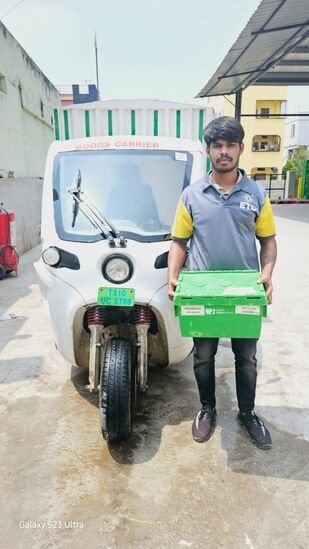
In line with its commitment to sustainability, Flipkart has made significant strides in environmental responsibility. At present, over 50 percent of grocery deliveries are covered on EVs, with Flipkart marking a y-o-y increment of 140 percent. Leading in states such as New Delhi, West Bengal, Maharashtra, Karnataka, Telangana, and Tamil Nadu, Flipkart continues to focus on sustainability across the country.

Hari Kumar G, Vice President, Head of Grocery, Flipkart, said, “Flipkart’s growth in the grocery category reflects our unwavering commitment to building innovation and customer-centricity for emerging categories while offering the right value to consumers for their everyday grocery needs. As we expand our footprint and enhance our service offerings, we remain dedicated to delivering unparalleled convenience to millions of customers across India.

At Flipkart, we are determined to set new standards in the digital grocery landscape, ensuring that Flipkart continues to be the preferred choice for customers, and we stay focused on making e-grocery accessible to all customers nationwide. With a dynamic team and a customer-first approach, we are poised to revolutionise how India shops for groceries online.”

Dark Data Steps Into the Infrastructure Spotlight

Sensors are everywhere – turning off highway lights when roads are empty, monitoring the health of bridges, and monitoring the intricate dance of telecommunications networks and electrical grids. Every flicker of these sensors is a byte of data, meticulously logged and stored. With the costs of data storage plummeting over the past decade, we’re talking about an avalanche worth of data digitally warehoused.

Much of this data has been resting in the dark, unanalyzed and unseen. This is what experts call dark data. And now, as AI steps into the infrastructure arena, this dormant data is about to step into the spotlight.

“Indeed, there appears to be an enormous amount of data collected on infrastructure operations that could be better used to improve their effectiveness,” said IEEE Life Senior Member Raul Colcher.

AI thrives on data – the more, the better. And when it comes to training sophisticated AI models, this dark data, collected over years from myriad sensors and systems, may be extremely valuable.

So, what’s the big deal about bringing this dark data to light? For starters, it’s a game-changer for infrastructure operations. With AI algorithms churning through mountains of previously unused data, we can expect leaps in efficiency and new ways to design and use our infrastructure for a future where data moves more frequently than people.

BYTES BUILD BETTER

Much of the time, dark data isn’t used because it isn’t properly tagged, and is therefore difficult to analyze. Some research suggests that the machine learning algorithms that allocate resources within mobile phone networks could be greatly improved with the use of dark data. In another case, data scientists at an oil and gas plant were able to use dark data to improve a digital model of the plant without disrupting operations.

WHERE WILL THE IMPACT BE FELT THE MOST?

The benefits of analyzing and modeling this data are vast and varied. From planning to operations, maintenance, and beyond, every facet of infrastructure could see a transformation. Picture more accurate models, better automation, and a deeper understanding of how our systems truly work.

CHALLENGES ON THE HORIZON

But, it’s not all smooth sailing. Dark data, while abundant, isn’t always clean or error-free. Questions of bias, data provenance, and security loom large. How we address these challenges will be crucial in unlocking the full potential of AI in infrastructure.

“The surge in data quantity doesn’t guarantee better results,” said IEEE Member Qi Qi Wang. “Filtering out disruptive or poor-quality data presents a substantial challenge.”

Learn more: 2023 was a landmark year in AI, as broad swaths of the public became more aware of AI thanks to the power of generative AI tools. IEEE Spectrum covered developments in-depth. Check out their run-down of the top AI stories in 2023.