Tag: CSR

Kia India announces nationwide ownership service camp from 27th June to 3rd July

Mumbai, 26th June 2024: Kia India is set to organize an ownership service camp at all authorized Kia service outlets nationally. Scheduled to take place between June 27 and July 3, 2024, the nationwide after-sales initiative aims to enhance customer engagement, promote aftersales services, and build stronger relationships with Kia vehicle owners.

Image - KIN Products (1)

During the camp, customers will benefit from a range of exclusive services crafted to ensure the optimal performance and longevity of their vehicles. These include complimentary 36-point health checks covering critical areas such as the vehicle’s exterior, interior, engine bay, underbody, and road tests. Customers will also receive a complementary AC disinfectant and car wash service for long-term maintenance.

Along with free car check-up and wash, Kia will also offer discounts on various aftersales initiatives, including a 20% discount on car care services, a 10% discount on retail Road Side Assistance (RSA) plans, and a 5% discount on accessories.

Mr. Myung-sik Sohn, Chief Sales Officer, Kia India said, “Customer satisfaction is extremely important to build a sustainable brand. And, we are committed to ensuring our customers enjoy the highest levels of safety, comfort, and convenience throughout their ownership journey with these service camps.”

The service camps will include interactive discussions on Kia’s state-of-the-art vehicle technology, driving tips, essential do’s and don’ts for vehicle maintenance, a free evaluation of used car prices and Kia’s exchange service. The company will also host CSR-focused activities like blood donation camp and free eye check-up, demonstrating its commitment to both vehicle excellence and community welfare.

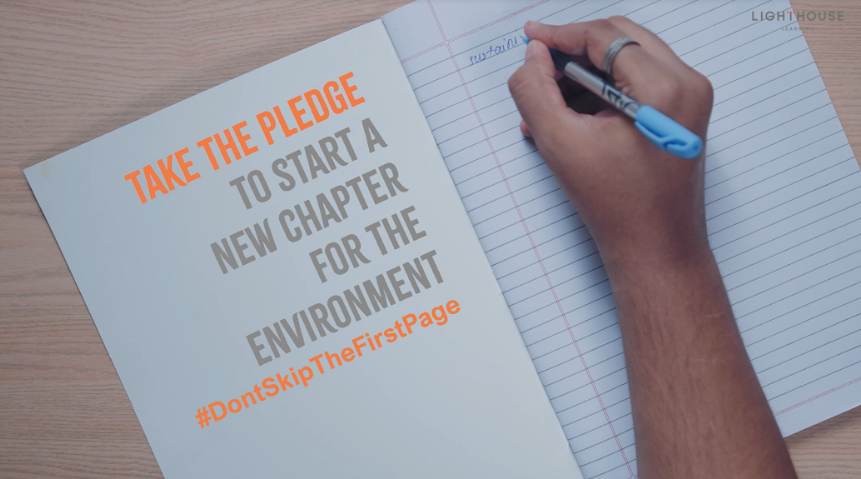
Lighthouse Learning Unveils #DontSkipTheFirstPage Campaign to Drive Eco-Consciousness

Mumbai, June 06, 2024: On the occasion of World Environment Day, Lighthouse Learning, India’s leading Early Childhood and K-12 Education Group, launched its new campaign as a part of their corporate social Responsibility (CSR) initiative dedicated to environmental sustainability. In its new campaign titled ‘#DontSkipTheFirstPage’, Lighthouse Learning aims to challenge the age-old tradition of leaving the first page of notebooks blank, advocating for a small change that can yield significant positive impacts on our planet.

dont skip

The tradition of skipping the first page of notebooks has persisted for generations, rooted in beliefs ranging from superstition to aesthetics. However, what has been overlooked is the significant environmental cost associated with this seemingly harmless tradition. Research indicates that more than 312 crore first pages are skipped annually, impacting approximately 3.12 lakh trees and resulting in 1600 tonnes of carbon emissions. The production of a single page of paper generates about 5 grams of carbon emissions, contributing to the pressing environmental issues we face today.

Driven by an unwavering commitment for environmental stewardship, Lighthouse Learning is urging students, educators, and employees across their network of schools nationwide to utilize the first page of their notebooks to catalyse a shift towards sustainability. Through this campaign, Lighthouse Learning aims to ignite a ripple effect, inspiring individuals and institutions nationwide to reassess their consumption patterns and adopt more eco conscious behaviors.

On the launch of the campaign, Prajodh Rajan, Co-Founder and Group CEO, Lighthouse Learning, said, “The launch of the #DontSkipTheFirstPage campaign this World Environment Day is a call to recognize the profound impact that small, collective actions can have on our planet. It transcends the act of using that first page; it is an invitation to evaluate our habits and adopt a more mindful approach to consumption. We urge everyone to join us in this movement by using all the pages in their notebooks, thereby contributing to the reduction of paper wastage. By collectively embracing this simple change, we can significantly cut carbon emissions and ensure the preservation of our environment for future generations. Let’s together, lead the way to create a more sustainable world.”

Lighthouse Learning remains committed to empowering students not just academically, but also as environmentally conscious citizens through initiative like #DontSkipTheFirstPage. By promoting sustainable practices like, Lighthouse Learning aims to inspire a generation of change makers who prioritise the health of the planet.

Rusen Kumar, CSR, Business Responsibility, Covid-19, Covid-19 in India, Corporate Response on Covid-19, Post Covid World

Business Responsibility in COVID-19 pandemic World

2021 was a year that showed us the true capability that India has, and how much more we can do in 2022.

By Rusen Kumar

The COVID-19 pandemic has had a serious and unprecedented impact across the economies and society in general, particularly in India. 2021 was different in every aspect and held more than its fair share of challenges. 2021 was a year where India demonstrated that our people come first – when lives depended on ensuring taking all necessary precautions. India implemented numerous initiatives towards ensuring the health, well-being and safety of our people.

India reeled under the new coronavirus pandemic situation that disrupted our collective sense of the normal, and also witnessed a crisis of unprecedented nature and effect. The harsh situation continues to remain serious, and therefore, we should continue to support our people and our communities.

However, India also saw the best of human nature at this time. India continually witnesses magnificent examples of resilience. India’s collective resolve to stand with communities, to inspire hope and healing. India is determined to come out stronger from this pandemic than we have ever been. As a sustainable and responsible India, everything we do is to inspire by a deep sense of purpose.

Our collective values have held us in good stead at this time, and they are the foundation on which we have built our success and results. It is heartening to see India rise to the challenge and continue to make a positive impact on the lives of people. In India, the pandemic situation continues to remain serious, and therefore, we continue to support our people and our communities.

India proved the solidity of the Covid-19 strategy. This has helped India quickly adapt to new ways of being stronger together and gain greater momentum addressing key challenges. Government responses in the year 2022 continue to stand robust, both economic and in terms of meeting and exceeding people’s expectations.

India’s COVID-19 vaccination coverage has exceeded 150.61 Cr on January 8, 2022. India is accelerating the pace and expanding the scope of COVID-19 vaccination throughout the country. The vaccination drive has been ramped up through the availability of enough vaccines, advanced visibility of vaccine availability for enabling better planning and streamlining the vibrant vaccine supply chain.

We need to have put in place multiple task forces for people’s hospitalization, medication and vaccination. We need to expand the scope of our employee benefits from medical and term insurance to provide for the families of employees we lost to this terrible virus. Throughout this challenging period, India responded very quickly to prioritize the health and safety of our people and continued to provide a reliable supply of medicines, vaccination and necessary help to the patients across the country.

As part of the nationwide vaccination drive, India has given COVID Vaccines free of cost to people. In the new phase of the universalization of the COVID-19 vaccination drive, India will procure and supply (free of cost) 75% of the vaccines being produced by the manufacturers in the country to various states.

The Indian business cemented its strength with its persistent effort to enhance profitability by improving upon the overall quality of the business. During the year 2022, India needs to continually launch new initiatives and economic relief to Covid-19 affected people and businesses. While India has performed well in the year 2021, It has started 2022 on an optimistic note.

People, civil society and businesses, who collectively enable India to create value by helping each other, will keep focusing on India’s strategic priorities and leveraging their strengths. Trust, confidence, and support to government efforts toward Covid-19 are key for overcoming challenges. Notwithstanding the challenges of the times, Indian businesses should continue to think from the heart and act with a high head – to care for people, covid-19 patients and communities.

Shaped by the COVID-19 pandemic, the unexpected and overwhelming year of 2021 that went by affected every aspect of our lives. In the face of this unprecedented volatility, India made proactive investments in people, processes, operations and technologies that tackle the Covid-19, so that India could deliver strong operational performance throughout the year and into the 2022 and future.

Throughout 2021, India worked hard to strengthen the long-term value of people and business, to emerge stronger coming out of the pandemic. This has been possible due to the hard work, perseverance, and commitment of India’s people. Our priority for the year 2022 will remain to ensure the health and safety of our people. Let’s put in place extensive measures to protect our people and their families, yet sadly we lost several of our valued fellow citizens.

All responsible corporate citizens must continue to extend all forms of support to COVID-19 relief efforts. In a year of turmoil, Indian corporations should be proud and humbled to have been able to serve our communities and needy people.

The year 2021 was a year that showed us the true capability that India has, and how much more we can do in 2022. I am very excited about the opportunities ahead for our people and business.

About the Author

Rusen Kumar is the founder and CEO of India CSR – The CSR Informer of India. He regularly writes on CSR, Sustainability and Environmental affairs. He brings an understanding of governance, leadership development, social development, human development, and strategic focus by serving boards. His leadership accomplishments in social enterprise, planning, and governance range from viable achievements in knowledge forum initiatives to advancement of corporate social responsibility issues in India. He can be reached at rusenk@indiacsr.in

appointment

MSME CCII appoints Rusen Kumar as Special Executive Committee Member – CSR

Chhattisgarh based entrepreneur and CEO of India CSR Network, Rusen Kumar has been appointed as a Special Executive Committee Member (Corporate Social Responsibility) of MSME Chamber of Commerce and Industries of India (CCII).

He will join the leadership team and report to Indrajit Ghosh, Global Chairman, MSME Chamber of Commerce and Industries of India (CCII).

MSME CCII is the largest business chamber for the development of MSMEs in India. The chamber integrates MSMEs, larger businesses, banks, investors, policymakers, start-ups and enhances contacts and collaborations for better business growth.

In his role, he will be advising MSME – CCII board on Corporate Social Responsibility among its members. Kumar, a successful media entrepreneur, brings an understanding on governance, leadership development and strategic focus by serving for-profit and not-for-profit boards.

He is also a member of the Humanistic Management Network India Chapter and a director to Soul of Braj Federation, Vrindavan, Mathura.

Author of 5 books and having two decades of experience in branding, corporate marketing, digital communication, corporate communication, public relations and advertising, Kumar has worked with media and corporate.

His leadership accomplishments in social enterprise, planning and governance range from viable achievements in knowledge forum initiatives to advancement of corporate social responsibility issues in India. He has travelled the length and breadth of the country to understand and learn from the people and society. He has established prestigious forums on CSR, Sustainability and social issues.

Rusen Kumar, CEO, India CSR said, “I am excited to join MSME – CCII at this time when they are gearing up for the next phase of growth. I am really looking forward to contributing to the Chamber.”

“I believe that CSR when done right can have a positive net effect on the business itself especially in SMES.”, said Rusen Kumar

“In India, corporate sustainability & responsibility (CSR) is increasingly becoming the most critical marker of a company’s ability to be inclusive, responsible, and well-intentioned in its strategic intent.”, he added.

Indrajit Ghosh, Global Chairman, MSME – CCII said, “India continues to be an important market for the MSME. We are pleased to have Rusen Kumar as our executive member – Corporate Social Responsibility. His leadership will help the Chamber in strategic CSR for the growth of MSME in our country.”

Indrajit Ghosh recently awarded the Top 101 personalities who inspired the World at Global Book of Earth.

Under the able leadership of Shri Ghosh, MSMECCII Chamber is having all relevant members Globally in various fields to guide the Chamber to grow fast.

Shri Ghosh is a Mechanical Engineer with MBA with 32 years of rich experiences in Plastics, Packaging, 8 years in food & beverages, Grains & Oils and travelled more than 40 countries very vigorously with strong global networking. Dubai is just like a second home, more than 35 times. He has worked 10 years in Sintex Packaging Joint Industries Limited & 14 years in Uflex Limited.

CSR

The strategic dimension of CSR

Brand India organized a fireside chat on Atma Nirbhar Bharat and the contribution of CSR in making New India, where Brig Rajiv Williams, Corporate Head – CSR Jindal Stainless Limited Group shared his views. The session was moderated by Mr. Sandeep Simon Behera, Director Branding & Promotions Karunya Deemed to be University.

Sharing his views on the subject Brig Rajiv Williams said, “CSR by definition, has a lot to do with the ‘Triple Bottom Line Accounting Framework, which incorporates three dimensions of performance: ‘Social, Environmental and financial, commonly referred to as the 3Ps – ‘People, Planet and Profit’. When we deep dive into the rudiments of engagement, the Social aspect that is ‘People’ remains central and constant in the Sustainable Development Agenda, because the other 2Ps, Planet and Profit have a direct impact on the first ‘P’ People. It is equally important for Corporations to understand that it is all about a continuing commitment to behave ethically and contribute toward the overall economic growth by improving lives of the workforce, their families, communities and societies at large.”

With an excellent sustainable economic development framework in place, the industry must leverage the Social good factor by promoting various communities based projects and further ‘Employee Volunteering programs, which will establish a link with the workforce and the community who are part of the product supply chain. This gives the employees and the management an opportunity to get connected with each other as also with their target audience, Whoever is the target of engagement, the bottom line in the realm of CSR is to engage and connect with people and link them with the threads of ‘Head and heart’ by speaking ‘language of the heart’ and making them a party in all development through a community-based participatory approach.

Indian Industry over the years has been into charitable giving – sharing their wealth for goodwill essentially and subsequently for growth of the business. While there were exemptions from taxation in such donations, the intent remained at supporting communities. Over time, the act of just giving transformed into the act of social investment, when the concept of Gandhi’s philosophy of ‘Trusteeship’ found favour with many corporate leaders. However, with the ‘Rights’ issues picking up momentum with more informed societies, the benefits of community investments helped in finding solutions to various labour issues. The labour unions had a strong voice and are important stakeholders in a consultative process through the essentials of collective bargaining and freedom of expression. Such realization has dawned on Corporate India as they have understood the benefits of dialogue and that has resulted in opinions in favour of corporations and the understanding on addressing community needs through community-led projects gave rise to Corporate Social Responsibility.

csr

Contribution of CSR in making New India

A powerful webinar organized by Brand India where Ashish Sachdeva, Founder President, Green Dream Foundation shared his views on Atamnirbhar Bharat and contribution of CSR in making New India. Mr. Sandeep Simon Behera, Director Branding & Promotion Karunya Deemed to be University was the moderator of the discussion.

Mr. Ashish Sachdeva said, “Compliance to requirements of Section 135 of The Companies Act 2013 by India Inc. has seen a significant increase over the last five years with regards to Corporate social responsibility (CSR) policy, committee, annual disclosure on CSR, to name a few. 76 per cent companies have spent 2 per cent or more during the current year, which is a striking 100 per cent increase over the last five years. The cumulative expenditure by N100 companies from 2014-15 to 2018-19 is INR35077 crore.”

In the CSR policy, 12 per cent companies have gone ahead and aligned their CSR activities to ‘Global Goals for Good – SDGs’. One in every three company has already aligned their annual disclosure on CSR to SDGs. Annually, India Inc. spends approximately 60 per cent of its CSR budget on health and education.

The emergence of a global crisis due to the novel coronavirus has led many corporate minds to ponder and step-in playing their part to be socially responsible to meet the need of the hour. In India, to encourage corporates towards fulfilling their social responsibility during the pandemic (as declared by the World Health Organisation) and as an endeavour to minimise its impact on public health, certain amends were made to the existing Companies Act, 2013 by the Legislators.

The Ministry of Corporate Affairs (“MCA”) issued its first Notification in light of the novel coronavirus disease, also referred to as COVID-19, on March 23, 2020. This Notification specified the decision of the Government of India to treat COVID-19 as a notified disaster and included spending of funds towards the virus as an eligible CSR activity by automatically deeming such expenditure to be treated under item (i) and (xii) of Schedule VII of the Companies Act, 2013 relating to the promotion of healthcare, sanitation and disaster management. At this point in time, the MCA had only clarified the inclusion of activities eligible for CSR spends and no emphasis was made on mode of divergence of funds towards such activities.

Many experts were boggled whether a centralised approach or a decentralised approach should be considered by the Government as a model for accounting expenditure under CSR activities. Thereafter, on March 28, 2020, the MCA issued a second Notification, through an office memorandum, in relation to expenditure towards CSR whereby the MCA issued a clarification under item (viii) of Schedule VII of the Companies Act, 2013 which enumerates that contribution made to any fund set up by the Central Government for socio-economic development and relief qualifies as a CSR expenditure. This (second) Notification clarified that the Government of India had set up the Prime Minister’s Citizen Assistance and Relief in Emergency Situations Fund (“PM CARES Fund”) with the objective of dealing with emergency or distress situations in light of the COVID-19 pandemic.

Pursuant to the office memorandum issued by MCA on March 28, 2020, many stakeholders sought clarification from the MCA on the eligibility of CSR expenditure related to COVID-19, since this Notification only included PM CARES Fund as a mode of routing CSR spends towards public health and sanitation abridging the pandemic. To elucidate the confusion amongst stakeholders pertaining to the Circular, MCA, thereafter, by way of a general circular on April 10, 2020, provided clarification in relation to a certain set of frequently asked questions on certain permissible and non-permissible corporate social responsibility activities amidst COVID-19.

Partnerships with NGOs working on the ground is the way to go. The number of companies having CSR Foundations’ have gone up from the base year (6 in 2014-15 to 18 in 2018-19). Against 21 per cent companies that implemented their CSR projects directly or exclusively through their own foundations in 2014-15, only seven per cent have reported to have chosen this mode of implementation during 2018-19, indicating an increased partnership with implementing agencies. The trend of increasing partnership is on a welcoming trend and a clear sign of recognising the strength of collaboration and partnerships, advancing SDG Goal 17- ‘Partnerships for the Goals’.

discussion

Discussion contribution of CSR in making New India

As we have celebrated our74th Independence Day, it is high time to think about reaching to the unreached. It is the time to heard the voices of the unheard. It is not the duty of state alone, every one is having equal responsibility to take others along in the journey of the development. Be it individual, any organization or industry, everyone has to recognize their role in developmental process.

One unique way of reaching to the last man standing in the cue is Corporate Social Responsibility initiatives for the companies operating in the country. A unique idea, which can change the scenario for many. Today we are discussing the idea of CSR and how it can be collaborated with the Make in India and Aatmanirbhar Bharat Abhiyan with Mr. Vikas Bhatia, who is heading Corporate Social Responsibility Initiatives of the Chambal Fertilisers and Chemicals Limited, Gadepan, Kota (Rajasthan). Mr, Sandeep Simon Behara, Director Branding and Promotion Karunya Deemed University moderated the discussion.

Since the introduction of National Voluntary Guidelines for corporate sector, the Corporate Social Responsibility initiatives got transformed into a nation building activity. The idea behind setting the guidelines for the corporate sector was to initiate a sense of responsibility towards the community members where the corporate is working, and how an inclusive environment can be created to listen the voices of the last man standing in the cue.

The Companies Act (Amendment) 2013 was a game changer for the social responsibility of the organizations. This paradigm shift of the Companies Act made social responsibility a mandate for each company having a particular financial track.

This made a moral obligation for each company falling under its ambit that now this is the time for the corporate to look beyond the profit motive and work for the betterment of the community residing in nearby areas. Thankfully the Millennium Development Goals (MDG) and later the Sustainable Development Goals (SDG) helped the organizations to think in line with the broader spectrum of social issues present around the globe.

Mr. Vikas Bhatia said, “One can argue that whether it should be voluntary or mandatory, but it is the need of the hour to think beyond making profit, expansion of business and look towards the community and the needy people, who need a constant support to live a dignified life in this unequal world. It is the moral responsibility of the organizations and companies to think about the people who are deprived, marginalized and underprivileged. Similarly, one should also think about the environmental aspect of the business operations. CSR should never be considered as expenses, it should be considered as an investment for creating better opportunities for the present and future generations. I believe that the CSR as a law has achieved many milestones and many more are yet to be achieved. It is always good to start from one end and slowly expand its outreach.”

Latest proposed amendments may help the organizations to be more transparent about the financials of CSR, and making it more streamlined. However, exclusion of non profit organizations as an implementation partners should be repealed for better collaboration and outcomes with nonprofits for implementation.

Business sustainability is very much important to create a sustainable world for the present and future generations. In order to support the larger goals for combating social inequalities, business sustainability is required to back up the idea of sustainable future.

In the present geo political and economical situations, it is the need of the hour to think towards becoming self-reliant in every field. The concept of self-reliant is not a new concept. it was a common old days’ saying that earlier it was only the salt which was required in the village from outside sources and rest other items were locally produced and consumed. During struggle for independence, the Kheda movement, now well known as Amul movement has helped to create a sense of self-reliant amongst Indian farmers.

Self-reliance is based on 5 pillars, Economy, Infrastructure, System, Demography and Demand. India is now trying to become 5 trillion economy by 2025. In order to make it happen, we need quality infrastructure and a supporting ecosystem for new and existing ventures. As we produce more, the dependency from foreign items shall come down. India having a home of more than 1.31 billion population is already having a good demand for products. One should think of strengthening all 5 pillars simultaneously.

Take the example of fertilizers sector, CFCL is producing 15% of the total demand of the country, however still we are exporting half of the requirement from other countries. If given a good support and environment for creating new fertilizer units, India can cut down its exports to a sizable amount and become self-reliant. For this the state has to play a crucial role to support the industrialists and in return those industrialists should think towards providing benefits to the community at large.

When the requirements of both (industrialist and the common people) met, we can create a win win situation for all and meet the dream of becoming self-reliant.