Tag: Agriculture

Tata Power Solar Recognizes Green Heroes for Promoting Rooftop Solar in Chhattisgarh

Chhattisgarh, 14th Aug, 2024: Tata Power Solar Systems Limited, a leader in sustainable energy solutions, is at the forefront of advancing renewable energy in Chhattisgarh, benefiting local industries such as agriculture, hospitality, coal mining, and steel, as well as empowering residential communities and standalone homes with sustainable power solutions. This remarkable progress is driven by the tireless dedication of Tata Power Solar’s Channel Partner Network, the backbone of the solar adoption initiative. These partners ensure swift installations and a smooth transition to solar energy for countless homes and businesses, making a substantial impact on the region’s energy landscape.

Tata Power Solar Recognizes Green Heroes for Promoting Rooftop Solar in Chhattisgarh

To honor their outstanding contributions, Tata Power Solar has established a transparent and rigorous incentive process that recognizes the efforts of all channel partners. This process ensures that recognition and rewards are based on clear and fair criteria, reinforcing the company’s commitment to a merit-based system that motivates all partners to excel.

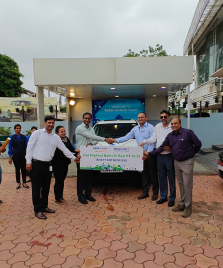
In the fiscal year 2023-2024, Bhatt Enterprises from Bilaspur, Chhattisgarh, emerged as one of the green heroes, winning a car as the top performer among channel partners in the Eastern Region. This achievement highlights Bhatt Enterprises’ exceptional dedication and impact in promoting solar adoption. However, Tata Power Solar’s recognition program extends beyond just rewarding top performers; it is designed to inspire and uplift all partners, ensuring every contributor is motivated and acknowledged.

With over 34 years of expertise, Tata Power Solar leads the sustainable energy revolution, offering rooftop consumers a 25-year warranty on modules, quality assurance, lifetime service and support, easy financing, and insurance for solar rooftop systems. Expanding its network from 500 to 5000 channel partners, Tata Power Solar aims to reach every household and business across the nation, proudly serving over 1,00,000 satisfied customers with an installed capacity of over 2GW. Tata Power Solar’s commitment to recognizing and rewarding its channel partners through a transparent and equitable process underscores the company’s dedication to excellence and partnership values. By acknowledging the hard work and achievements of all its partners, Tata Power Solar fosters a culture of mutual respect and motivation, strengthening the foundation of its expansive solar network.

The Maverick Motivator

“One huge step to success begins with a single failure” says Raunaq Kakkar, Serial Entrepreneur, Founder of Lawpreneurz, Found My Teacher and MarriedUp

Raunaq Kakkar,

Mumbai, 7th June 2024: Showcasing the many dimensions of Raunaq Kakkar as the one who turned his failure around into successful ventures. As a game-changer, Raunaq has furthered 250 start-ups across industries such as AI, Education, Agriculture, and Logistics, including diverse sectors to raise their seed capital. Charging on the dynamic momentum, Raunaq now aims towards a 2.0 plan in fostering 2000 founders in the coming year.

TED Talk in 2018 brought Raunaq within the vision of the movers and shakers. In 2022 he was awarded by the Government of Maharashtra and in 2023 he was felicitated in Dubai at the Education 2.0 event.

To help advance businesses abroad, Raunaq’s ‘Found My Teacher’ is a singular platform that coaches’ entrepreneurs in languages that are critical to success and sharpening their comms.  Raunaq has fostered 250 clients in the US, UK, Middle East, and India. With his entrepreneurial skills and astute intellect, he has raised a seed capital of 3 – 5 million USD for them.

Raunaq now aims to help 2000 founders as a fitting acknowledgment to an overwhelming response.

As a Serial Entrepreneur, he now seeks the support to collaborate with global entrepreneurs and expand his business acumen to different horizons. The journey forward is to promote 2000 business owners in the coming year.

Walmart Foundation Supports Resilient Agriculture with Dollar 1.5 Million Grant to S M Sehgal Foundation

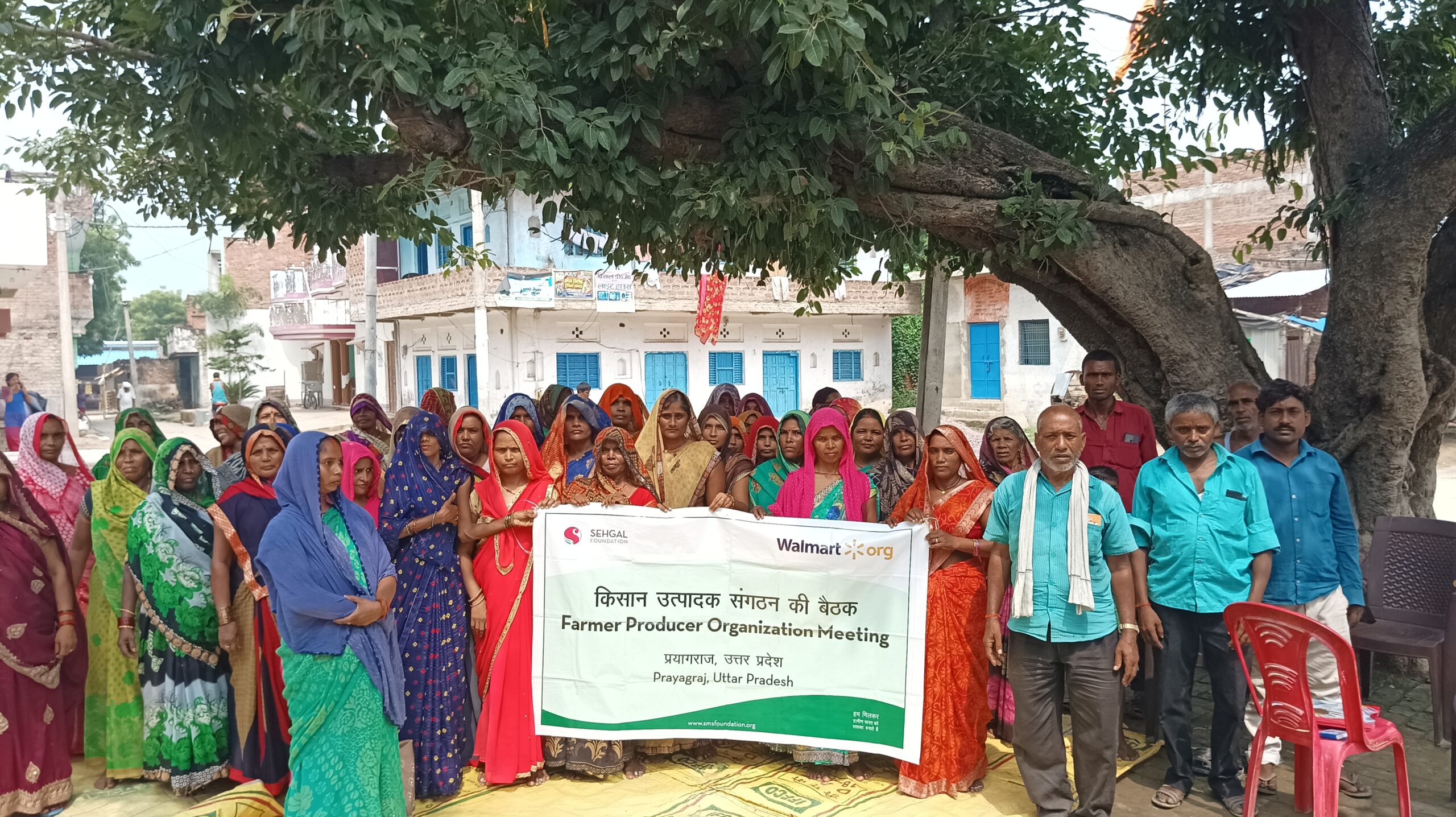
Gurugram, Haryana, India, March. 19, 2024: S M Sehgal Foundation today announced the extension of its project ‘Bolstering Farmer Producer Organizations’ in the states of Uttar Pradesh and Karnataka. Initiated in 2023 for two years with a philanthropic grant of $1.5 million from the Walmart Foundation, this next phase will reach 23 Farmer Producer Organizations (FPOs) with 23,000 members with an aim to enhance the capacities of FPOs, promote climate- resilient practices and develop infrastructure that adds value to crop production.

FPO Meeting

“We are excited to support S M Sehgal Foundation for the second phase of the ‘Bolstering FPOs project. We believe strengthening FPOs can enable more opportunities for smallholder farmers in India with capacity building at the core. Additionally, developing transparent structures, designing and implementing business models and establishing collaborations will help ensure more sustainable operations and outcomes,” Julie Gehrki, chief operating officer, Walmart Foundation said.

The initial phase of the ‘Bolstering Farmer Producer Organizations’ project spanned from 2021 to 2023 and impacted 10 FPOs, strengthened 8,000 existing members, added 2,000 new members and ensured one-third representation of women in leadership roles. Approximately 2,500 women gained essential knowledge and skills development, with 40 to 45% actively participating in project activities at the FPO level.

The project’s reach extended to over 30,000 beneficiaries. Key interventions included strengthening institutional and governance structures in FPOs, imparting knowledge on agronomic practices and farm technologies, livelihood opportunities, fostering business development, marketing, enhancing value addition, promoting digitization, facilitating financial inclusion and convergence with government programs.

The forthcoming phase aims to build upon this foundation, with a strategic focus on preparing these FPOs for market engagement through a series of targeted initiatives. This will involve advanced training and support, ensuring the FPOs are not only self-sufficient but also market- ready and equipped to meet the dynamic demands of the agricultural sector. It is strategically designed to further strengthen FPOs to take the lead in working towards a resilient and prosperous agricultural sector. The emphasis will be on creating opportunities for smallholder farmers, with a focus on women producers. S M Sehgal Foundation strengthened its collaboration with FPOs in the districts of Prayagraj, Uttar Pradesh, and Kolar, Karnataka, during the first phase, thereby paving way for the second phase of the project.

Further, there will be a strong focus on business development and establishing market linkages for high-value commodities from each FPO. Specialized training will be implemented with a focus on cultivation, post-harvest management, processing, marketing and value addition of selected commodities.

The overarching vision of the project is for the FPOs to independently undertake initiatives supported by this grant and offer value-added services to their members. By promoting transparent and inclusive business models, the project will support these FPOs in developing self-sustaining and progressive operations. This strategy aims to provide ongoing support to members, enhancing resilience and self-reliance in agricultural communities. The S M Sehgal Foundation will partner with grassroots groups, research bodies, academic institutions, and social enterprises, creating a robust support network and a conducive environment for FPOs.

“Organizing smallholder farmers into FPOs can leverage the advantage farmers have in emerging markets. It can also help mitigate challenges faced by individual farmers, such as low market prices, high input costs and limited access to technologies and markets, among others. With support from the Walmart Foundation, the S M Sehgal Foundation continues to build the capacities of FPO members. The first phase witnessed a turnaround in women’s participation with 92 women-led Farmer Interest Groups (FIGs) benefiting more than 2,500 women farmers actively engaged in FPOs,” Anjali Makhija, trustee and chief executive officer, S M Sehgal Foundation, said.

U-M researchers join global team to overcome barriers to climate-smart agriculture in South Asia

ANN ARBOR—Despite the possibility of climate-smart agriculture improving food security, most CSA practices and technologies are not widely adopted in South Asia.

A global team of researchers, including Rajiv Ghimire and Meha Jain of the University of Michigan’s School for Environment and Sustainability, has identified the key barriers to CSA adoption in South Asia and suggested strategies to overcome them in a recently published study.

“We hope that this study helps policymakers and practitioners in the region promote climate-smart agricultural technologies and practices,” Ghimire said. “CSA practices will contribute to increased food productivity and food security for millions of smallholder farmers facing the brunt of climate change and other socioeconomic changes.”

The study was a collaboration of more than 20 researchers worldwide who synthesized their work for more than a year to understand the barriers and opportunities for CSA in South Asia. CSA practices will not only help farmers adapt to climate change but will also help conserve soil, water and energy, and many of the practices and technologies have shown they can lead to increased yields.

In the study, published in January 2024 in Nature Climate Change, the researchers identified weak organizational capacities, inadequate targeted incentives and limited post-adoption follow-up as the significant barriers to CSA adoption in South Asia.

The study’s strategies to encourage CSA adoption in South Asia include information sharing through farmer-to-farmer peer networks, enhancing the management skills of custom hiring centers, targeted subsidies and crop insurance schemes, investment in extension services and incentives to the private sector, equitable dissemination of CSA information and post-adoption assessments.

“These strategies we developed in the study are particularly suited for densely populated areas such as South Asia where arable agricultural areas are scarce,” Ghimire said. “We should also understand that things might differ in different parts of the world.

“Even within South Asia, there are differences in policies, practices, incentive structure and overall sociocultural and biophysical characteristics. The four countries (India, Pakistan, Nepal and Bangladesh) we have focused on have different agricultural priorities and in some cases, there could be subnational-level initiatives.”

Post-budget quotes across different sectors: Agriculture and Manufacturing

Agriculture

Mr. Sanjiv Kanwar, Managing Director, Yara South Asia

“We welcome and commend the government’s focus on empowering poor, youth, women, and farmers through the interim budget announcement today. The increase in MSP for producers whenever required and the provision of basic goods has raised rural real income, which is a positive step towards ensuring the well-being of our farmers.

We are also pleased to see the government’s commitment to modernizing storage, supply chains, and branding in the farm sector, which will benefit both farmers and consumers. Overall, we believe that this budget will provide a much-needed boost to the agriculture sector and encourage private and public investment in post-harvest activities. As a company committed to sustainable agriculture practices, we believe that continued investment in this sector is crucial for the long-term growth and prosperity of our country.”

Mr. Raju Kapoor, Director, Industry & Public Affairs, FMC India.

“The interim budget balances the fiscal prudence with growth. It has outlined various proactive measures for the agri industry at large. The allocation of a Rupees 1 lakh crore corpus for a 50-year interest-free loan to private sector is poised to fuel R&D and innovation in India fostering a conducive environment for advancements. The continuity of the ‘PM Kisan Sampada Yojana’ will make available requisite investment at the hands of farmers to promote use of newer technologies in the form of advanced agri-inputs.

The emphasis on empowering women self-help groups with significant credit linkages will benefit in rural development and we resonate very well with it. The focus on minimizing post-harvest losses is crucial, and similarly we appreciate the decision to expand nano DAP usage across all agro-climatic conditions, which will undoubtedly catalyze the growth of drone applications in agriculture and improve fertilizer use efficiency. Investments to minimize the post-harvest infrastructure is a welcome step.

The announcement to prioritize Atmanirbhar Oilseeds Abhiyaan using newer technologies is a much-needed initiative to reduce dependence on food oil imports. The government’s focused effort to enhance dairy and fisheries productivity is welcome. The expansion of ‘Lakhpati Didi’ scheme’s target to cover 3 crore women will empower women at the grassroots level, contributing to the overall development of rural India.

The industry was also hoping for the introduction of a Production Linked Incentive (PLI) for ‘new-age’ agro chemicals, positioning India as a global exporter and addressing domestic opportunity. The government could have also rationalized GST on agro chemicals to 12 percent. Additionally, we anticipated tax incentives on R&D investments and extension activities by the industry would further encourage innovation in the sector. We remain optimistic about the positive impacts of the interim budget and look forward to collaborative efforts to addressing more concerns in the future.”

Manufacturing

Mr. Rohit Saboo, President & CEO, National Engineering Industries Ltd.

“The Interim Budget presented today highlights the government’s intent to continue its focus on inclusive and sustainable development. The government stands committed with a special emphasis on empowering the poor, women, youth, and farmers and is focused on driving policies that resonate with their aspirations.

As a responsible brand focused on implementing sustainability, we are pleased to see the government’s focus on promoting electric vehicles (EVs) which is a visionary step towards environmental sustainability as well as overall economic growth. Additionally, the commitment towards expanding the e-vehicle ecosystem brings an exciting prospect for the youth, which will create employment opportunities that align with the demands of the future. The introduction of biomanufacturing and bio-foundry schemes is also a welcome move that will be a great alternative to bio-degradable production.

5 Agri-Tech companies helping in minimizing food wastage and bringing sustainability in supply chain

India is an agriculture-based country with almost 119 million farmers which accounts for more than half of its population. Agriculture being the primary source of income in the country, the farming community is one of the worst-hit due to the pandemic, with issues like severe disruptions in the trade finance, the farm produces- supply chain and closing down of the local mandis, markets, and transport facilities.

We have curated the list of 5 Agri-tech platforms that are helping the farmers to connect with the buyers, through retailers, e-commerce, and even by directly selling the products to consumers and keep the supply chain functional throughout the pandemic and now on the path of recovery.

  1. Origo Commodities– is India’s leading Agritech commodity financing platform, creating a positive impact on the planet and agri ecosystem. Origo aims to redefine traditional modes of procurement, handling, preserving, storing and financing farm produce, which had been largely ignored by the agri markets. Over a decade, Origo has expanded pan-India, with 500 warehouses operating across 12 states in the country. The primary focus of the business has been on creating financing and supply chain solutions. Origo has become the largest service provider to the government with its warehousing capability and network and is also spearheading a technological transformation in agri supply chain financing through its flagship agri-trade finance platform, TradeFi. Origo operates in 4 areas – Agri-tech, Climate, and sustainability, Tradefinance & Blockchain. It has been responsible for facilitating storage of over 23 million metric tonnes, reducing post-harvest losses by 5 percent, providing additional food security to over 1 million people. Origo has been helping Farmers in price discovery and market linkages.

  1. AgriBazaar– As a full-stack agritech player, AgriBazaar has replicated the physical mandi (marketplace) to an e-mandi aggregator model, through which once a farmer registers and uploads his produce, buyers can place orders for the purchase. Once the deal is complete, AgriBazaar facilitates the logistics of picking up the produce from the farmer’s doorsteps and delivering it to the buyers’ warehouse.  AgriBazaar also helps buyers — from MNCs to small-scale industries — with better price discovery, and sellers with more targeted marketing of their produce. It charges a transaction fee from buyers, while farmers can sell their produce at no additional cost.

  1. SatSure: SatSure has been at the forefront of bringing the best practices of satellite image processing, big data capabilities, and IT to agriculture. It also strives to create a positive impact on the lives of farmers by helping improve crop insurance, innovate on agri lending services, and improve market linkages by creating intervention and decision intelligence frameworks for agri value chain stakeholders. It has mobile app platforms for delivering information on supply statistics of crops and crop stressing in their region. This helps with the decisions on what to sow, when to irrigate or add fertilizers, or prepare for harvest. Large banks and insurance companies in India are also leveraging SatSure’s solutions.

  1. NinjaCart: NinjaCart is an Agri-marketing platform that helps farmers to sell their produce directly to retailers and restaurants. This helps both farmers and the consumers directly as the farmers can get better prices for their crops and there is a constant supply for the consumers as well. NinjaCart’s goal is to make a strong local farmer network and expand its operations. Ninjacart furthered its vision of, ‘Safe food for billion people’ with its first set of residue-free tomatoes, produced in partnership with agri-tech platform Kilofarms.

  1. Unnati: Unnati is a new-age fintech company offering farming lifecycle support to farmers across the country. Driven by data, the brand helps convert farmers into entrepreneurs by handholding them through every stage of the farming cycle with services such as working capital, purchasing the right seeds, nutrients and pesticides for crops, harvesting, and selling the crops. Unnati’s app gives access to agri finance, knowledge support, choice of inputs, tracking farm lifecycle, and access to buyers.

Top 5 Agritech startups of 2020 that are uplifting the agriculture sector

The Indian agricultural sector has been the backbone of the Indian economy for many years after independence. While globalization has transformed the country into a much more industry centred economy, the fact that the agriculture domain of the country still commands a respectable position in India is true. Even though, over the last couple of decades, the farming community of the country has been lagging behind in terms of modernizing their agricultural operations and marketing strategies.

The lack of knowledge regarding the best technologies and techniques that can be incorporated in farming has had a massive adverse impact on the performance of the Indian agriculture sector. In the past few years agritech, communities of the country are working towards the development of the agriculture sector and are empowering agriculture space with the technological advancement of this technical improvement in the farming community is leading towards the change in the face of the Agriculture sector.

Here is the list of top 5 Agritech startups of 2020 in India that are uplifting the agriculture sector:

Agribazaar:

Founded in 2016, Mumbai-based AgriBazaar is an online platform that helps connect farmers, traders, banks, enterprises and governments. Modelled on the traditional Mandi system, the startup provides a digital platform for small farmers and merchants to directly sell and buy farm produce without the involvement of middlemen. In this case, the farmers receive payment directly in their bank accounts via e-wallet AgriPay. Apart from connecting the sellers and buyers, AgriBazaar also provides last-mile logistics support. Agribazaar uses AL and ML to offer services such as crop advisory and credit-on-click. Looking forward, AgriBazaar aims at mapping and tagging every farm and ‘becoming the Google Maps of Indian agri-sector.

Otipy:

Otipy, a social commerce venture by Crofarm launched in February 2020 by Mr. Varun Khurana sources fresh fruits and vegetables from farmers across Haryana, UP, Delhi, Gujarat, Himachal Pradesh, Karnataka, Rajasthan, and Maharashtra. This makes the platform India’s first social commerce model that connects end consumers to farmers through a community of resellers and gives them the opportunity to earn a healthy commission while handling the last-mile delivery of fresh produce.

The idea behind this platform is to build a scalable, demand-driven and tech-enabled supply chain for fresh produce operating at 35% gross margin. In this process, Otipy aims to help three key stakeholders – farmers, resellers and consumers.

DeHaat:

End-to-end agricultural solutions provider DeHaat is an agritech platform founded in 2012. DeHaat provides a marketplace for farmers to sell produce to large institutional buyers directly without the intervention of middlemen or commissioning agents. The company also provides last-mile connectivity for easy logistics and storage services. Reportedly, DeHaat has assisted farmers on its clientele to achieve a 20 per cent increase in the gate prices. Along with presenting a sellers market, DeHaat uses data science and machine learning technologies to improve production efficiency. Some of its other services include giving farmers expert insights and advisory on choosing the correct crop, soil health, suitable fertilisers and pesticides to be used, the time for harvesting the produce, and more.

Boheco:

Bombay Hemp Company was incorporated in 2013. It is an Agro-based company reimagining the future of Indian agriculture and sustainable living with hemp as their lens. This agritech company harnesses the power of agriculture by advocating Industrial Hemp and its benefits to society. They assist local farmers in cultivating the crop by providing optimum seeds, best practices in cultivation techniques, and innovating Agro-products.

KrishiHub:

KrishiHub was founded in 2016 with an aim to empower farmers through technology, design, and data science. Driven by demand, KrishiHub procures fresh vegetables directly from farmers and delivers them to businesses such as restaurants, canteens, and hostels. The startup uses an AI-powered supply chain to undertake farm-to-doorstep delivery. Use of proprietary algorithms for determining the best route for delivery agents has helped the organisation ensure delivery within 12 hours. Reportedly, KrishiHub has helped farmers reduce their vegetable wastage by up to 25 per cent.

TS Govt rolled out AI for AI(Agriculture Innovations) aimed at digital technology-led agriculture innovations, Jayesh Ranjan told Data and AI for Social Good specialists from all over the world

Telangana is one of the first two states in India to have an Open Data Policy after Sikkim. The policy which came into being four years back puts the responsibility on Government, institutions and other stakeholders Jayesh Ranjan informed a group of Data Scientists and Data Professionals gathered virtually from all over the world at the inauguration of 2nd Virtual Indo Data Week being organised from Hyderabad.

The theme of the two-day meeting is “Applied Data Science and Artificial Intelligence for the United Nations Sustainable Development Goals”, informed Parvathy Krishnan of DAV Data Solutions, the organiser welcoming the gathering.

DAV Data Solutions chose Hyderabad for Indo Data Week because of supportive and collaborative governments, its fast adaption of a new wave of technologies and their proactive approach and positive response from the stakeholders she said.

The conference features more than 40 speakers from all over the globe. Speakers and delegates from organisations such as World Bank, Pulse Lab Jakarta, Emerging Technologies Wing — Government of Telangana, National Health Authority — Government of India, startups and innovation hubs, Impact Scientist, Knowledge Exchange Innovation Center Thailand, FluxGen Technologies, research and academia such as Jheronimus Academy of Data Science, Research and Innovation Circle of Hyderabad, and Indian Institute of Management Ahmedabad are participating

Addressing the 60 plus gathering, the top IT official of the Government of Telangana, Jayesh appreciated the organiser DAV Data Solutions for organising the event despite the current situation. He congratulated Parvathy Krishnan and her youth and intern-lead event team for organising quality deliberations on such a very important subject

The theme is extremely aligned with the Telangana Government’s plans. Though there is so much knowledge and Data is available but we are unable to put it to use to the extent desired for the benefit of the communities he said.

Speaking further Jayesn Ranjan added the need to seriously look at soil health. How do we protect soil health? He asked. Farmlands are shrinking due to urbanisation. Agriculture is very important for a Telangana state. Since January 2020, the year is being observed as Year of Artificial Intelligence(AI) in the state to promote its use in various sectors ranging from urban transportation and healthcare to agriculture and others. We have achieved a lot during the past 11 months. We have been focusing on Agriculture and within in it on Data Sets. We have created many Data Sets in the state covering reports on weather and agriculture prices, location of market yards etc, Jayesh shared with the delegates of Indo Data Week.

AI has to be effectively used for social innovation. Modern farmers have to be digital farmers. We at the government embarked on AI for AI(Artificial Intelligence for Agriculture Innovation). Telangana Government uses AI for Agricultural Innovation.

AI for AI program is already rolled out to boost agricultural developments. Centre for the Fourth Industrial Revolution, India (C4IR), World Economic Forum and State-owned Agriculture University partners besides others. Agriculture is a very important domain and we at government aim at digital technology-led agriculture innovations. Through this initiative, we aim to identify the high impact use cases of AI which could benefit both farmers and policymakers, Jayesh Ranjan added

He batted for Data-Driven Agriculture. For better farm performance, Data-Driven decision-making is need of the hour, Jayesh observed. It can be used for the Sowing Window Prediction. Target that window, which, data can guide us. Crops attract pests, you can predict the pests attack. The opportunities for farmers is endless. Data can be used in Planning, Forecasting, Selecting Crops and many. Multiple areas in Agriculture can use Data predictive tools which help officials better prepared, the IT Principal Secretary explained.

But there is a challenge to the Data. State-owned Agriculture University is creating a Data Hub and standardising it along with other partners. Dept of Science and Technology, Govt of India supporting us on this. We are also collaborating with IIIT-H. Our government believes in Democratisation of Data. That is why we come out with Open Data policy as latest as in the year 2016 Jayesh Ranjan informed.

Indo Data Week began on 16th November and will conclude on 22nd with a global Hackathon on “Climate Resilient Food Security in India” and winners will walk away with INR 0ne lakh prize money. It is supported and sponsored by the Government of Telangana.

The inaugural session also included addresses from Petrarca Karetji from UN Global Pulse and Sruthi Kannan from CISCO Launchpad.

Kai Kaiser from World Bank (Vietnam); Pranay Patil from Asian Development Bank, currently deputed to the National Health Authority, Govt of India, and Vitasari Anggraeni from Pulse Lab Jakarta spoke at a panel discussion on Big Data and COVID-19 immediately after the inauguration of kick-starting the two days of knowledge sharing and thought leadership conference around Data and SDGs.