Powerful discussion on Atamnirbhar Bharat by Charudutta Panigrahi & Sandeep Behera

Powerful discussion on Atamnirbhar Bharat by Charudutta Panigrahi & Sandeep Behera

Atmanirbhar Bharat, if implemented as envisioned, would change the atma of India, forever”. A self-reliant India would not only build the capacity of the country but would engage all in the working-age group and bring about a socio-economic revolution in the country which not only the country but the entire Region has been aspiring for. Atmanirbhar would help make India’s economy dominant and rekindle social ethos.” These were some of the thoughts expressed by Mr Charudutta Panigrahi, the Indian thinker and Futurist during a fireside chat with Mr Sandeep Behera, a communication expert and journalist.

During the talk, Mr Panigrahi mentioned about ‘woke capitalism” and how CSR would play a critical role in localising Atmanirbhar Bharat. After the recent amendments in CSR regulations in the country, the corporate is looking at the community programs with renewed vigour. From Reliance Jio’s Made-in-India 5G plan to the recent boom in desi apps and PPE manufacturing, Indian industry is preparing for a swadeshi turn and this journey has to start bottoms up. Quality supply is the clinching factor and that can happen when we inculcate the spirit of excellence in workmanship among the working-age group from village upwards. The movement for ‘Made-in-India’, ‘Made-for-India’ and ‘Made-for-the-World’ products has to start from the ground and CSRs would have a major role to play in behaviour change, rural entrepreneurship and innovations. The scarcity in the availability of PPEs for management of Covid-19 positive cases prompted the garment manufacturers in Tiruppur who started making them in a small way. After learning the process of manufacturing these garments and getting their samples approved, at first only a few units started making these PPEs. But the orders kept coming in, the business expanded, pegged today at whopping Rs7000 Crore segment. What started as a completely humanitarian gesture turned out to be a large business opportunity. Across the country, both large and small manufacturers began to make PPEs. For a market that didn’t exist three months ago, India is now believed to have become the world’s second-largest producer of PPE suits.

COVID and related lifestyle is the new norm. WITH new consumer needs after the lockdown, many companies saw an opportunity, where previously nothing much existed. Food delivery platforms turned into grocery suppliers to provide contactless purchases of essentials. Indian tech firm like Byju’s, are experiencing huge registrations in their app. Mr Panigrahi spoke about the concept of Antarik which is an equation (propounded by him stating a TED Talk) explaining the diffusion or the absorption of social schemes or reforms amongst the communities. He is of the opinion that any shake up in the availability of products and services in the country due to the embargo on imports can be met by the Indian manufacturers and developers provided we realise that there is Time, Communication and Participation (∑ Antarik = T+C+iP (Time+ Communication+ internalisationParticipation) which are crucial factors to change our economy as a whole. Another example of fast adaptability was due to the sudden opportunity which came when the Indian Government banned a number of Chinese-owned apps, most notably, TikTok. Overnight, an estimated 200 million users of TikTok in India were available as consumers. A number of new and old Indian apps have since tried to capture this market. Roposo, one such platform had already been growing rapidly reaching about 50 million users. Jio could soon create a super-app like China’s super app WeChat where a user can do multiple things, from hailing a cab or making payments for purchases to chatting with friends and a host of other things without once exiting the app. The streaming platform Zee5 is also working towards becoming an Indian super-app.

Mr Panigrahi believes in the adage ‘trade is good but imports are bad’. Atmanirbhar Bharat (‘Self-reliant India’) is the only path. Vital supply chains need to be kept within India. India’s potentially huge domestic market should be tapped. He gives the example of mittelstand, the backbone of Germany’s industrial wonder. Germany’s small and medium-sized enterprises are the envy of the world and the backbone of the German economy. The country’s “Mittelstand” companies, as they are known, include more global market leaders than any from any other country. The Mittelstand companies are strongly anchored in their region and have a strong connection with their employees and the local community. A similar foundation with SMEs can be laid in India with the help of CSR and not only CSR. In her announcements on the Atmanirbhar Bharat programme, our Finance Minister announced out a number of changes that redefined the scope of MSMEs. Output and productivity for Indian MSMEs have to be the drivers in the times ahead.

During the discussions, to a question of Mr Behera, he answered saying that ‘we need to give business time to develop” under Atmanirbhar Bharat. Nothing happens magically. He elaborated on the following pointers:

– Localisation of Atmanirbhar Bharat

– Sector analysis and demand forecast for MSMEs

– Skill gap analysis at the last mile

– Woke capitalism

– Antarik Model and how it can help reduce gestation period for MSMEs to provide goods and services to the home market without delay

Lord Ram soon to take birth in &TV’s Kahat Hanuman Jai Shri Ram NirnaySamadhiya to portray the role of Lord Ram

Lord Hanuman’s unyielding devotion and selfless dedication to Lord Ram truly set him apart and made him the epitome of ‘Bhakti’. Showcasing the captivating story of devotion in its truest form, &TV’s Kahat Hanuman Jai Shri Ram will soon witness the entry of NirnaySamadhiya portraying the role of Lord Ram. is popularly known for playing the role of Bal Krishna in &TV’s popular mythological show Paramavatar Shri Krishna previously, that made him a household name.

After Lord Vishnu incarnated as Lord Ram on earth, Lord Shiva took the form of Lord Hanuman to serve Lord Ram in his purpose to defeat the evil Ravana. In the forthcoming episodes, Hanuman sees a vision of Lord Rama and wishes to meet his Prabhu. In his quest to reach his Bhagwan, the Gods guide him towards Ayoydha where he meets Raja Dashrat and thus with the birth of Lord Rama starts the beginning of a new journey. Taking you through the mythological journey of Bal Hanuman, the show will depict how the biggest bhakt of Shri Ram eventually meets his Bhagwan.

In the current episodes, Anjani Mata (Sneha Wagh) is seen narrating the tales of GyarahMukhi avatars of Lord Shiv to Bal Hanuman. Through her narration, Bal Hanuman learns vital lessons from each avatar to channelize his power of achieving his core purpose. Giving viewers a glimpse of the unheard tale of Lord Shiva and the invincible evil Ravana, watch how Bal Hanuman emerges as the greatest devotee of Lord Ram and manages to bring a successful Nirnayend to Ravana’s reign of terror.

Watch the story behind the birth of Lord Ram in Kahat Hanuman Jai Shri Ram every Monday-Friday at 9:30 pm only on &TV!

Empowering and investing in internal audit improves the effectiveness of fraud risk management, Kroll and Internal Audit Foundation survey finds

Kroll, a division of Duff & Phelps, the global leader in risk mitigation, investigations, compliance, cyber resilience, security and incident response solutions, The Institute of Internal Auditors (IIA) and Internal Audit Foundation, the nonprofit research and publishing arm of The IIA, today identify that greater empowerment of and increased investment in an internal audit can have a significant impact on the effectiveness of fraud risk management programmes. This is highlighted in a new research report, “Fraud Risk Management in Internal Audit”.

The report, based on a survey of over 700 internal audit professionals across the globe and across industries, reveals that the vast majority (80%) of internal auditors are facing barriers to being involved in managing fraud risk, despite almost two thirds (62%) saying they had seen an increase in fraud incidents over the past five years.

Tarun Bhatia, Managing Director and Head of South Asia at Kroll comments:
“As the pandemic continues to affect and transform the way we do business, new risks and frauds are emerging, making it an ever more challenging environment for companies to operate. The current conditions where businesses are suffering, people are desperate, system and processes are compromised, can lead to a perfect platform for fraud to occur and go undetected. These extraordinary circumstances demand a greater emphasis on fraud risk management.”

“Following recent scrutiny of the external audit profession globally, the focus is turning to companies’ internal defences against fraud, of which internal audit can be a key participant. India is no different. Traditionally internal audit as a function has been outsourced and lacked management focus. A stronger and specific mandate for internal audit and increased focus of boards towards strategic fraud risk management will add significant value and ultimately contribute to reducing incidents of fraud. Greater accountability on and support from the internal audit will help companies to detect fraud earlier, and speedy investigation and remediation can be carried out when issues occur. To make this happen, there needs to be complete support from the senior management, adequate resource allocation, and recruitment of people with the necessary skillsets.”

The report shows a clear disconnect between fraud risk assessment and resulting strategic plans. Almost half of the survey respondents felt that internal audit teams were not part of enterprise-wide strategic decision making, even though 91% said that they had at least some role in assessing fraud risk.

Where internal audit was part of the strategic risk management of fraud, the process was perceived as more effective overall. Those who felt that their organisation’s risk management process was ‘very good’ or ‘excellent’ increased from 31% to 60% between respondents who were ‘very involved’ and those who were ‘extremely involved’ in fraud risk management.

For those respondents who said they were ‘minimally involved’ or ‘not involved’ in the fraud risk management process, only 12% felt that their effectiveness was ‘very good’ or ‘excellent’, with over half stating that overall the fraud risk management programme was fair or poor.

A third (33%) of respondents said a lack of resources was the biggest obstacle to the internal audit being more involved in fraud risk management processes. A further one in four (23%) cited a lack of mandate as the most significant barrier, followed by one in five (21%) who cited concerns over potential conflicts of interest.

In a webinar quick poll of 1,750 internal auditors conducted by Kroll and The IIA in July 2020, it was revealed that two thirds (65%) of internal audit professionals felt that COVID-19, remote working, and financial strains would result in an increased risk of fraud. Over three quarters (77%) agreed that, if the internal audit was more involved in strategic fraud risk management, the fraud risk management process would improve.

Richard F. Chambers, President and CEO of The Institute of Internal Auditors, comments:

“It is vital for organizations of all sizes and industries to have boards, executive management, and internal audit leaders who are well aligned in their approach to managing risk, including fraud. Internal audit plays a critical role, with other surveys supporting these findings that, when the internal audit is involved, the impact of fraud is lessened. That’s because the internal audit is well-positioned due to its enterprise-wide view of an organization to identify vulnerabilities for potential fraud and, in some cases, even to investigate. What’s clear is that internal auditors know how to follow the risks. But they must have the resources to assess the exposure to potential fraud, ensure internal controls are in place and effective to limit such risks and to offer assurance that risk management processes are robust and appropriately implemented

World Breastfeeding Week: Most Awkward Places Moms Have Breastfed in India

You envision breastfeeding at home, sitting in your recliner, with delicate music out of sight. Be that as it may, actually, babies get hungry at the most badly arranged occasions and at the most awkward places. Moms claim breastfeeding in public places in India is very unpleasant and difficult due to the unavailability of breastfeeding rooms.

A staggering 93% of Indian moms feel uncomfortable while breastfeeding their children in public places due to a stark lack of breastfeeding facilities, reveal the findings of a survey conducted by Momspresso.com, India’s largest user-generated content platform that allows women to express themselves through different formats including text, audio, and video across ten languages.

When asked about the barriers to breastfeeding comfortably in India, 53% of moms cited the lack of hygienic, appropriate or safe spaces while 47% said that it is the lack of privacy and constant staring by people that hinders comfortable breastfeeding.

One reason that can be credited to this evident uneasiness is the sexualization of ladies’ bodies. The bosom is constantly observed as a sexual area instead of an organ creating vital sustenance for an infant’s development and improvement.

Here are 5 most awkward places moms have breastfed in India:

In The Car

9 out of 10 moms in India have breastfed their child in a car. Nursing the child in a moving car puts both you and the baby to the risk of injury. Many moms have had to breastfeed their babies in a car especially while travelling due to lack of any breastfeeding rooms or infrastructure. Not just travelling, there are incidents where mothers have to breastfeed their children in the parking lots of malls, shopping centres, etc as well.

In Public Transit

Breastfeeding openly expects ladies to be discrete and concealed, so as not to uncover her bosom. She is additionally required to take care of in a proper spot to abstain from discomforting others, guard against the judgment, and to shield herself from the undesirable male gaze. It is highly inconvenient for mothers to feed their babies in such judgemental scenarios.

Airport Broom Closet Rooms

This is another awkward place where mothers have had to breastfeed their children.

The majority of the mothers stated that the greatest deterrents were uncomfortable stares, hygiene, and a lack of privacy. It is crucial for airports to have breastfeeding rooms for mothers in order to provide them with a safe secure and hygienic experience rather than the one of discomfort, pressure, and turmoil.

At the restaurant

When baby’s need to eat coincides with your dinner reservation, you’re within your rights to breastfeed. However, other diners and restaurant staff might not be comfortable with this natural display. As a mother and a woman, it’s a conflicting situation. It becomes tough to feed your child without the awkward glares and stares that you get. Mothers tend to ask the host to make reservations where they have their back towards the whole place or asking someone to coverup for them.

Public Washrooms

his is absolutely an absurd and unhygienic place to breastfeed an infant. In certain emergencies, many mothers have had to breastfeed their children in public washrooms where people are relieving themselves. It is harmful to the health of both the mother and the infant. Breastfeeding requires a clean and hygienic place if that is anything one can ask for.

*250 youths of Muzaffarpur find employment*

India BPO Promotion Scheme has become a boon for those who had to leave their homes and families in search of a job. Hundreds of youths interested in BPO sector can now find employment in their hometowns. *IBPS is a scheme which runs under the Digital India Program launched by Ministry of Electronics and Information Technology (MeitY)*. The Vision India BPO in Muzaffarpur, established under this scheme is a first of its kind organization employing more than 250 youths. Women and disabled have been especially benefitted through this BPO founded in 2016.

According to *Vivek Kumar, the CEO of Vision India*- a company associated with human resource development that runs skill development programs in small towns, “We had always believed in the efficiency of this town`s youth population. We knew they would be capable enough to meet the work requirements in BPO sector once we trained them. But as in the case of all new startups, we were analyzing all the perspectives of this initiative. Our company conducted a survey which revealed that 56% of the employees working in the BPOs running in the metro cities belong to small towns. The main reason behind this was the lack of employment opportunities in these cities. This motivated us to open BPO centres in tier II & III cities and Muzaffarpur is one of them.

IBPS removed all the barriers: Vivek Kumar adds, “Several obstacles came up during the process of opening BPO centres. The financial viability of BPO centres was the biggest challenge we faced. Fortunately, we got to know about the *IBPS implemented by STPI*. Many problems were solved due to the support given to us by STPI. Under this scheme, one can avail a benefit of Rs. 1 lakh per seat, provided they qualify certain standards set by the government. We have employed the youth while benefitting from IBPS. This scheme is not only directly or indirectly providing job opportunities to the youth but also putting a stop on their migration from this region.”

A golden opportunity for women and disabled:

A huge number of youths being employed are women and disabled. Vivek Kumar says, “The parents in small towns are hesitant in sending their daughters away for education or jobs. Due to this, many talented girls are denied the opportunity to get a job or showcase their potentials. This initiative has paved path for many girls to work in the BPO sector and prove their talents. Besides that, many disabled youths are making their futures bright by working at this centre. This initiative also helps in the all-round development of youth. They are trained in a manner that they can work and perform not only in the BPO sector but in any other industry as well.”

What is the aim of IBPS: The aim of IBPS is to create a system through the expansion of ITES/BPO operations. This would boost the development, make the investment easy and attract the industrial world in such regions. *This initiative by STPI and Vision India in Muzaffarpur* has indeed pushed this region ahead in the field of ITES/BPO. It has not only reduced the migration of youth by providing jobs to them but has also socially helped them in carrying out their responsibilities towards their families.

IDP Education hosts the biggest virtual education fair to help students

Studying overseas is a life-changing decision, not only for students but for their families too. Due to the disruption of services caused by COVID-19, students were facing great difficulty in the decision-making process. To address the various challenges faced by the students and their families, IDP Education, a global leader in international education services will be hosting the biggest virtual education fair. Spread over eight weeks, this education fair will begin from 10th August 2020 and will continue till 10th October 2020. Over 150 leading institutions from Australia, UK, U.S. Canada, New Zealand, and Ireland will participate in the Virtual Education Fair to interact with Indian students and help them with their overseas education plan.

First-of-its-kind, this virtual education fair is an initiative by IDP Education to solve the concerns of students and help them connect with their preferred institutions over a 1-on-1 video call from the comfort of their homes.

Piyush Kumar, Regional Director (South Asia), IDP Education, said, “IDP offers Indian students the right advice and top-quality assistance to choose the right course and institution in Australia, UK, U.S. Canada, New Zealand, and Ireland to meet their career aspirations. IDP has over 700 world-class institution partners across these six destinations and is best placed to offer students the choice to find the course most suited to them. IDP recognizes that going for higher education abroad entails a high expense, so it is important to take the correct decision the first time itself. It, therefore, provides students and their parents with an all-inclusive platform to facilitate the exchange of valuable information and get proper guidance from industry experts.”

“We understand that shortlisting an institution and working through the application process can be a bit challenging for students. Our goal, therefore, is to assist and guide them through all the steps from the initial exploratory stage, application submission to safe arrival on campus,” added Mr. Kumar.

Through this virtual fair, students can apply directly to the institutions of their choice and get detailed information on scholarships, ranking, visas, etc. by IDP’s experienced and certified education experts over a 1-on-1 video call feature. This allows them to interact face-to-face with institution representatives and get answers to their queries. IDP’s education fairs endeavor to help students make their dream of education abroad come true.

Shri Ram Mandir Bhoomi Pujan A Motivating Call from the North East

Almost a year ago, away from media hype, an unsung rally was held Umphruph- Smit Village, East Khasi Hills, Meghalaya in support of the vision of Hon’ble PM, Shri Narendra Modi Ji.

Its aim – to bring awareness among the indigenous and tribal populace of rural Meghalaya, about the various schemes and efforts being taken by the NDA Govt, for inclusive and sustained growth of all sections of society.

The rally was organized by Smt Elizabeth Nongbri, executive member of BJP Mahila Sangh, Meghalaya Pradesh, who is also a member of the All India Anglo Indian Association.

The rally was very well attended. Meghalaya, being a matrilineal society, the maximum participation was by Mahila members. The people of this area are mainly small-time farmers and artisans, who have to work very hard for the sustenance of their families. Alas, they are a neglected lot, more so the Anglo Indians among them. Mostly unaware of the various Govt schemes for rural folk, time for them is at a standstill.

The participants were very supportive of the idea for the re-construction of Shri Ram Temple at the original site at Ayodhya. While in agreement with the proposal, over one thousand persons from among the Anglo Indian Community, Christians and persons of Indigenous Faith, all belonging to the predominantly The Christian State of Meghalaya, expressed willingness for active participation in large numbers for the event when organized. Unfortunately, the pandemic put paid to their enthusiasm. This gesture from the Anglo Indian and Christian Community is probably the first of its kind and demonstrates the strong social fabric of our Nation.

The Holy Event is now underway at Ayodhya, as we go to the press. The enthusiasts in that remote corner of Meghalaya would probably watch the proceedings on TV, time from their daily grind, permitting. At best, they would silently rejoice that their tiny effort has now been vindicated. Their belief that inclusive economic growth; social respect for all religions including the safeguarding of places of worship of historical significance; a uniform civil code and mutual respect, as being emphasized by the PM would result in developing a confident society and a strong Bharat.

Could we in the ‘mainstream’ spare a thought for these simple, peace-loving, rural folk who look up to the ‘mainland’ for succour?

TFMC to observe Natl Handlooms Day on August 7 All Heads of Facilities to wear Handloom Masks

TFMC (Telangna Facilities Management Council) to observe National Handlooms Day on 7th August. To mark and observe the occasion, all the Heads of Facilities and other Facilities Management professionals to wear Handloom Masks.

Facility management (FM) is a profession that improves business and lives by ensuring functionality, comfort, safety, and efficiency of the built environment and is practised by 25 million people around the world.

Disclosing this in a press note issued in the city, Satyanarayana Mathala, President of 400 members strong body of Telangana Facilities Management Council informed that they will take a Virtual Oath to Pledge their support to Handlooms. A Handloom Mela Calendar for the year 2020 and 2021 will be unveiled.

TFMC has been promoting ‘Handlooms Monday’ initiative for the past couple of years to encourage nearly six lakh IT employees working in over 400 companies water Handloom Clothes every Monday. To promote this TFMC has organised a series of Handloom Melas in various office in the IT Corridor in the past three years. Through these melas IT employees birth handloom clothes worth Rs 1.2crore shared Satya.

Now that many are confined to Homes they would like to promote Handloom Masks.

The call was given by TFMC asking IT employees wear Handloom Masks Amjad evoked very good response. Many employees shared their pics wearing Handloom Masks.

Adds Satya, the Companies or representatives supporting Handlooms initiative include CN Rao Divyashree- CFO; IKEA – Sapna – Facilities Head; GUS – Anderson; Ram Murthy- Arcesium, Parusuram- Intelligence; Dharan – Zensar Technologies, Swarnalatha- CHUBB

Deepa; Rajouri- Clean Harbours; Sharfoddin- CTS; Nagaraju – Raheja IT Park and many others.

RBI approves appointment of Sashidhar Jagdishan as HDFC Bank’s new MD & CEO

The Reserve Bank of India approved the appointment of Mr Sashidhar Jagdishan as Managing Director & CEO of HDFC Bank. The appointment is for a period of 3 years beginning October 27, 2020, and is subject to the approval of the Bank’s board and shareholders.

Mr Aditya Puri, the iconic Managing Director who led the bank since inception retires on October 26, 2020.

Shyamala Gopinath

“Sashi brings to the table a rare combination of IQ and EQ. Given his understanding of the business, coupled with a strong people connect, we’re confident that he’ll take the bank to the next level. My best wishes are always with him,” said Ms Shyamala Gopinath, Chairperson, HDFC Bank Limited.

Aditya puri

“I congratulate Sashi on his appointment. He understands the Bank’s ethos, a culture which has made it what it is. Given our inherent strengths and now Sashi’s leadership, I believe that the best of the Bank is yet to come,” said Mr Aditya Puri, Managing Director, HDFC Bank Limited.

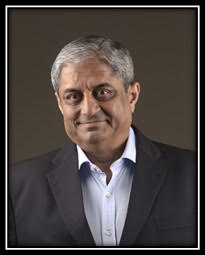
Mr. Jagadishan

“I’m humbled by this. I fully recognise that Mr Puri’s are huge shoes to fill. But I’m confident that with the support of my colleagues, the board, other stakeholders, and indeed God’s grace, I’ll be able to live up to the faith that Mr Puri, the Board, and the regulator have reposed in me. I’ll leave no stone unturned to carry forward the rich legacy,” said Mr Jagdishan.

Sashi to his friends and colleagues, Mr Jagdishan joined the Bank in 1996 and has played a critical role in its growth ever since. Starting as a manager in the Finance department, he’s grown from strength to strength wearing different hats. In 1999, he became Business Head – Finance and in 2008, the Chief Financial Officer of the bank. In 2019, he was appointed the “Change Agent of the Bank’ and given additional responsibilities of Legal & Secretarial, Human Resource, Corporate Communication, Infrastructure & Administration, and CSR.

Mr Jagdishan has an overall experience of 30 years, 24 of which he’s spent in HDFC Bank. Prior to HDFC Bank, he had a 3-year stint with Deutsche Bank, AG, Mumbai.

Mr Jagdishan is a Science Graduate (Physics) from Mumbai University and a qualified Chartered Accountant. He also holds a Master’s degree in Economics of Money, Banking & Finance from the University of Sheffield, UK.

EMERGENCY NEUROSURGERY ON COVID-19 POSITIVE PATIENT AT MGM HEALTHCARE

In these unprecedented times, when cases are heard about hospitals refusing to even admit or treat symptomatic COVID-19 suspects for any other ailments, MGM Healthcare, a multi-speciality quaternary care hospital in the heart of the city, not just admitted but also successfully completed an emergency neurosurgery procedure on a COVID-19 positive patient.

23-year patient was presented with a spinal tumour due to which he was suffering with severe lower back pain and a rapidly progressing numbness in his legs. Control of his bowel and bladder functions also became very difficult for him. Surgery was the need of the hour and the only option. But unfortunately, he tested COVID-19 positive.

Explaining the patient’s condition during admission, Dr. K. Sridhar, Director & Group Head – Institute of Neurosciences & Spinal Disorders, MGM Healthcare said, “Neuro emergencies cannot wait as any delay in management can have disastrous effects on the patient.” 

 “As the patient’s condition was rapidly deteriorating, we had no option but to perform the surgery despite being tested positive for COVID-19.  Meticulous planning was needed with respect to manpower and logistics. Everyone in the team were sensitized on the use of PPEs to minimize the risk of exposure. The surgery had to be done with utmost precaution and safety, as the doctors, nurses and technicians were all at risk. At the same time, we were aware that his future lay in our hands.  Despite the challenges, surgery was completed successfully and we mobilised him out of bed and got him to walk without pain the very next day,” he added. 

Commenting on the case, Harish Manian, CEO, MGM Healthcare said, “There comes a time in the lives of medical professionals where despite adverse circumstances, a decision needs to be taken and implemented. These decisions are not the usual day-to-day decisions, but those where it’s a matter of life saving. It’s indeed gratifying experience to have been able to give a new lease of life to the young man.”