Tag: ‘Made-in-India’

Cactus Partners invests dollar5 million in Indigrid Technology

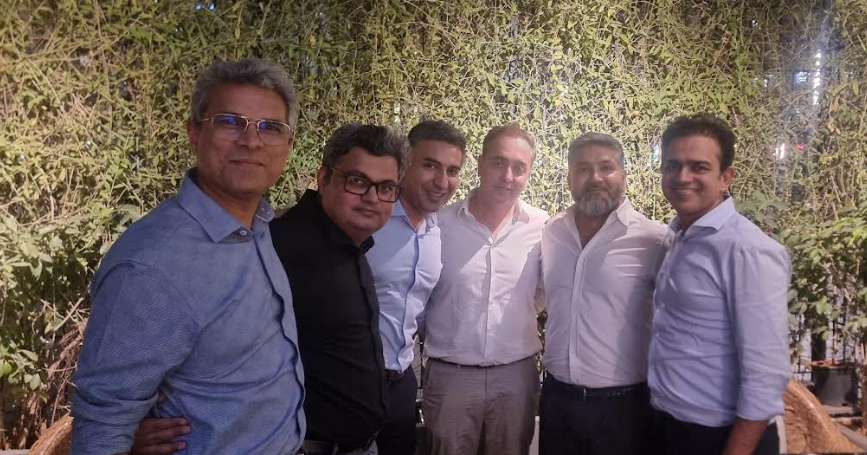
Mumbai, 13 June 2024: Cactus Partners (CP), an early growth-stage venture capital fund, today announced an investment of $5 million in full stack EV component supplier Indigrid Technology.

This marks the seventh investment made by CP and the second in the EV component manufacturing space. The fund, which started investing in January 2021, has already made investments in companies such as Kapture, Vitraya, AMPM, Auric, Lohum, and Rubix (exited).
cactus

Indigrid Technology has its manufacturing operations in Manesar and is a preferred vendor to a wide gamut of customers, including the likes of JP Minda, Hella, Revolt, Bounce, and Xidda, to name a few. With a customer centric approach, deep domain expertise, a robust product portfolio, and a growing customer base, Indigrid is well positioned to become an EV component powerhouse—“Made in India”—for India and the world.

For Indigrid Technology, the capital infusion will be directed towards several key initiatives: significantly expanding production capacity to meet growing demand; enhancing, and diversifying product offerings to appeal to a broader customer base; broadening their presence in both Indian and global markets to increase market share and reach; and strengthening the team by investing in talent acquisition, training, and development to support growth and innovation goals.

Amit Sharma, General Partner at Cactus Partners, commented on the transaction, saying, ” We are thrilled to partner with Indigrid, recognizing the unwavering commitment the founding team brings into the business. We are impressed by Sameer and Rishab’s absolute commitment to their vision, dedication to innovate, agility to understand and solve customer problems, abide by highest ethical standards, and a relentless dedication and resilience to surmount challenges and build a profitable and sustainable business. We believe the time is right for Indigrid to build upon its initial success and establish itself as a critical member of the growing EV ecosystem in the country. Indigrid will be a leading example for the “make in India” initiative. CVP, as per our stated strategy, will support the company with all our strategic resources in addition to the capital infusion.”

Speaking about the fundraise, Sameer Narang and Rishab Puri, co-founders at Indigrid, said, “We are thrilled to welcome Cactus as our new partner. Their alignment with our goals and values was a key factor in this collaboration. Cactus Partners shares our vision for a sustainable future powered by advanced EV technologies and is committed to supporting our efforts to localise innovation, manufacturing, and growth. This investment will enable us to boost our product development efforts, ensuring we stay ahead of the high growth demand curve in the rapidly evolving EV market. Our focus on creating high-quality and reliability is paramount, and this partnership will support and enhance our mission”.

In December last year, Cactus Partners had concluded the final close of Fund I at a total corpus of about Rs 630 crore. The venture capital firm received capital commitments predominantly from institutional investors and family offices, of which 60% originated from domestic sources and the rest from international limited partners based in the US, Singapore, the European Union, and the UK. The fund has a broad sector focus, with its primary interests being in climate tech, health tech, and B2B SaaS businesses.

Cooper Corporation at the Defense Exhibition 2021_3.jpeg

Cooper Corporation exhibits it’s advanced ‘Made In India’ series of engines at CQA (EE) Aundh Camp, Pune Defence Exhibition 2021

Cooper Corporation, one of the leading manufacturers of engines, auto components and gensets, recently participated in the Defence Exhibition 2021. The exhibition was organised on the occasion of “Azadi Ka Amrit Mahotsav” by the Controllerate of Quality Assurance (Engineering Eqpt.), Pune on 14th December 2021 in the premises of CQA(EE), Aundh Camp.

The event was conducted to demonstrate the evolution of QA and defence manufacturing over the last 75 years. The Defence Exhibition 2021 was inaugurated by Shri. Krishna Prakash, Commissioner of Police, PCMC. Veteran defence specialists, military units, industrialists, manufacturers, and engineering college students, among others, attended the exhibition.

At the Defence Exhibition, Cooper Corporation displayed its V Twin type and 2 Cylinder CRDI Engines. These engines are designed by Ricardo PLC with whom Cooper has a technical collaboration for the designing of its state-of-the-art family of engines. The company has developed and manufactured a range of engines utilising the latest technology. These engine models are known in the market for their compact size, best-in-class fuel efficiency and lowest maintenance costs.

Features of Cooper engines

Twin Cylinder, inline, 4 strokes, liquid-cooled Engine.
Common Rail Direct Injection System (CRDI) for Diesel Version.
4 Valves per Cylinder.
Double Overhead Camshafts.
CNG/LPG version is available.
Turbo Charged with charge-air cooling.
Exhaust gas recirculation system.
Electronic engine management system
Best in class fuel efficiency.
Compact size occupies less space per unit output.

Mr. Farrokh N. Cooper, Chairman and Managing Director, Cooper Corporation Pvt. Ltd said, “We are extremely proud to be part of the prestigious DefenceExhibition 2021. I strongly believe that our country will be the Emerging Defence Manufacturing Hub in near future. This exhibition offers an opportunity for the Indian defence industry and Indian manufactures to showcase their capabilities and advanced technologies. At Cooper Corporation, we are committed to quality, service and product innovation which has consistently kept pace with the changing market need worldwide.

In addition, as part of the government’s Aatma Nirbhar Bharat Abhiyaan initiative, our engines are the only ones chosen as import substitutes for defence, and we have supplied 500+ engines to the defence so far. Our engines are best suited for defence since they are compact, have advanced technology, and are manufactured in India for Indian conditions. All Cooper engine components are ‘Made in India,’ and are manufactured in our state-of-the-art facility in Satara, Maharashtra.”

Cooper Corporation offers 24 variants of Cooper engines ranging from 8 hp to 1000 hp, backed by engineering excellence, which can perform at a high altitude of 4100 mtr. can run at +55 degrees & -20 degree C, relentless innovation, and a commitment to quality. These engines are equipped with fully electronic management. They are compact, have a high power-to-weight ratio, and are fuel-efficient. These engines have a robust design with extended maintenance intervals and a high-power density. For LPG and CNG engines, the company has specially designed pistons and ring packs.

Mr. Pani Grahi & Mr. Sandeep

Powerful discussion on Atamnirbhar Bharat by Charudutta Panigrahi & Sandeep Behera

Atmanirbhar Bharat, if implemented as envisioned, would change the atma of India, forever”. A self-reliant India would not only build the capacity of the country but would engage all in the working-age group and bring about a socio-economic revolution in the country which not only the country but the entire Region has been aspiring for. Atmanirbhar would help make India’s economy dominant and rekindle social ethos.” These were some of the thoughts expressed by Mr Charudutta Panigrahi, the Indian thinker and Futurist during a fireside chat with Mr Sandeep Behera, a communication expert and journalist.

During the talk, Mr Panigrahi mentioned about ‘woke capitalism” and how CSR would play a critical role in localising Atmanirbhar Bharat. After the recent amendments in CSR regulations in the country, the corporate is looking at the community programs with renewed vigour. From Reliance Jio’s Made-in-India 5G plan to the recent boom in desi apps and PPE manufacturing, Indian industry is preparing for a swadeshi turn and this journey has to start bottoms up. Quality supply is the clinching factor and that can happen when we inculcate the spirit of excellence in workmanship among the working-age group from village upwards. The movement for ‘Made-in-India’, ‘Made-for-India’ and ‘Made-for-the-World’ products has to start from the ground and CSRs would have a major role to play in behaviour change, rural entrepreneurship and innovations. The scarcity in the availability of PPEs for management of Covid-19 positive cases prompted the garment manufacturers in Tiruppur who started making them in a small way. After learning the process of manufacturing these garments and getting their samples approved, at first only a few units started making these PPEs. But the orders kept coming in, the business expanded, pegged today at whopping Rs7000 Crore segment. What started as a completely humanitarian gesture turned out to be a large business opportunity. Across the country, both large and small manufacturers began to make PPEs. For a market that didn’t exist three months ago, India is now believed to have become the world’s second-largest producer of PPE suits.

COVID and related lifestyle is the new norm. WITH new consumer needs after the lockdown, many companies saw an opportunity, where previously nothing much existed. Food delivery platforms turned into grocery suppliers to provide contactless purchases of essentials. Indian tech firm like Byju’s, are experiencing huge registrations in their app. Mr Panigrahi spoke about the concept of Antarik which is an equation (propounded by him stating a TED Talk) explaining the diffusion or the absorption of social schemes or reforms amongst the communities. He is of the opinion that any shake up in the availability of products and services in the country due to the embargo on imports can be met by the Indian manufacturers and developers provided we realise that there is Time, Communication and Participation (∑ Antarik = T+C+iP (Time+ Communication+ internalisationParticipation) which are crucial factors to change our economy as a whole. Another example of fast adaptability was due to the sudden opportunity which came when the Indian Government banned a number of Chinese-owned apps, most notably, TikTok. Overnight, an estimated 200 million users of TikTok in India were available as consumers. A number of new and old Indian apps have since tried to capture this market. Roposo, one such platform had already been growing rapidly reaching about 50 million users. Jio could soon create a super-app like China’s super app WeChat where a user can do multiple things, from hailing a cab or making payments for purchases to chatting with friends and a host of other things without once exiting the app. The streaming platform Zee5 is also working towards becoming an Indian super-app.

Mr Panigrahi believes in the adage ‘trade is good but imports are bad’. Atmanirbhar Bharat (‘Self-reliant India’) is the only path. Vital supply chains need to be kept within India. India’s potentially huge domestic market should be tapped. He gives the example of mittelstand, the backbone of Germany’s industrial wonder. Germany’s small and medium-sized enterprises are the envy of the world and the backbone of the German economy. The country’s “Mittelstand” companies, as they are known, include more global market leaders than any from any other country. The Mittelstand companies are strongly anchored in their region and have a strong connection with their employees and the local community. A similar foundation with SMEs can be laid in India with the help of CSR and not only CSR. In her announcements on the Atmanirbhar Bharat programme, our Finance Minister announced out a number of changes that redefined the scope of MSMEs. Output and productivity for Indian MSMEs have to be the drivers in the times ahead.

During the discussions, to a question of Mr Behera, he answered saying that ‘we need to give business time to develop” under Atmanirbhar Bharat. Nothing happens magically. He elaborated on the following pointers:

– Localisation of Atmanirbhar Bharat

– Sector analysis and demand forecast for MSMEs

– Skill gap analysis at the last mile

– Woke capitalism

– Antarik Model and how it can help reduce gestation period for MSMEs to provide goods and services to the home market without delay