Category: Education

London leads European EDTECH Revolution

London, 9th September 2020. London is the leading EdTech hub in Europe according to new research published today, the first day of London Tech Week 2020, by London & Partners and Dealroom.

Best in Class: Global Trends in EdTech from a London Perspective explores EdTech VC-led investment trends since 2014, comparing countries and cities in terms of deal value and deal count, and considers the impact of coronavirus on the accelerated adoption of EdTech and the growth of the sector.

The report reveals that London is the top destination for EdTech investment in Europe, featuring as the only European city in the global EdTech top 10 by total VC investment value. The UK capital comes in eighth globally, with $630m invested into London-based EdTech companies since 2014. China dominates the top five ranking, with Beijing taking the top spot and Shanghai in third, while San Francisco and Bangalore come in second and fourth respectively.

Last year, London-based EdTech companies raised a total of $124m in VC investment, ahead of Paris with $92m and Berlin’s $67m. London’s EdTech ecosystem is also the largest in Europe, with an estimated value of $3.4bn. The Paris EdTech ecosystem is worth $1.9bn, while Berlin’s is $0.8bn.

Hemin Bharucha, Chief Representative, India at London & Partners said: “The EdTech sector globally has seen exponential growth over the last six months due to the accelerated adoption of online learning brought on by the coronavirus pandemic. The new research today shows that London is the leading EdTech hub in Europe, home to some of the world’s most exciting EdTech companies who are leading the way in innovation. The UK capital is also quickly becoming a major global hub for the sector, with its thriving ecosystem providing access to tech talent, growth capital, policy makers and world-class universities all in one place.”

Amongst EdTech investment deals in Europe, London’s EdTech startups have consistently raised more funding rounds than any other city since 2017. This year so far, London leads with 15 deals, followed by Paris (10), Berlin (6) and Dublin (1). Comparing global cities for deal count in 2020, the UK capital ranks fourth behind San Francisco, Bangalore and New York and ahead of Beijing.

High deal count volume suggests there is significant growth ahead for London’s EdTech sector, as early-stage startups develop innovative technologies and apps for learning and development.

Coronavirus has forced major changes in education at every level, from early years to adult learning and career development. The pandemic has accelerated the adoption of digital technology in education with global EdTech investment on track to grow by 15% in 2020, a predicted $7.6bn.

The EdTech sector in London is in its infancy compared to other sectors like AI, fintech and healthtech, but the latest research shows startups in London and across the UK are well-positioned to capitalise on the recent adoption of EdTech. London is also home to Europe’s only current EdTech unicorn, Learning Technologies Group.

Further analysis of the research shows that the UK EdTech sector is one of the fastest growing in Europe, with VC investment quadrupling between 2014 and 2019. While the US and Asia continue to dominate the global EdTech investment landscape, the UK is leading the way in Europe with over $1bn in VC-investment into EdTech since 2014, followed by France with $0.4bn and Ireland with $0.3bn.

The UK received 39% of all European EdTech investment in 2019, more than France, Ireland and Germany combined. London alone accounted for 17% of total European investment last year.

While European investors still contribute the majority of investment into European EdTech, US investors are playing an increasingly important role, demonstrating growing confidence in Europe’s EdTech sector.

Last year, 27% of VC investment into Europe came from US investors, up from 23% in 2018. London-based companies are attracting significant interest from US investors too, with EduMe securing $5m Series A funding from Valo Ventures in July, the Silicon Valley-based VC’s first European investment.

Nic Newman, Partner at Emerge Education said: “At Emerge we have seen how EdTech companies are benefiting from the world’s education going online almost overnight. These changes were precipitated by the COVID-19 crisis, but the result may be a tipping point for EdTech towards mass adoption in schools, further and higher education and corporates. Education will never be the same again now that millions of students and teachers have embraced online learning platforms. We also recognise that this change brings challenges, such as unequal access, which must be addressed.

“To build and scale a successful EdTech company you need to be part of an advanced EdTech ecosystem. With some of the best emerging EdTech companies, a thriving community and a web of support from venture finance to growth programs, London is one of the top cities in the world for EdTech.”

A number of London’s ‘rising stars’ in EdTech have experienced considerable growth during the pandemic and are expanding globally from the UK capital, as well as hiring rapidly. These companies include:

EduMe – The corporate training solution offers customisable and mobile-first remote training, communication and engagement platform for deskless workers and in July closed a $5m Series A funding round from Valo Ventures.

WhiteHat – Career-focused modern professional apprenticeships aimed at 800,000 UK 16-24 year old’s not in employment, education or training have accelerated their employee count over the last 6 months.
VRtuoso – A tool to create virtual reality presentations for corporate learning, sales and marketing, changing the way knowledge is delivered by creating interactive and immersive learning experiences
Lingumi – The EdTech platform for toddlers and preschoolers raised a $5m million Series A in April 2020 to continue developing its AI-driven language lessons and expand the team globally.

Construct Education – The online education platform designed to offer accessible, engaging education that empowers individual personal development was founded in 2013 in London. The company quickly expanded offices from the UK, to the US and South Africa and from 2018 to 2019, its revenue grew by over 500%.
Century Tech – The developer of AI classroom technology provides students with an education personalised to their individual strengths, weaknesses, behaviours, and habits. During the pandemic, the company has signed a landmark technology partnership deal with the Lebanese government to bring their technology free to thousands of schools in Lebanon.

Jacob Waern, Founder and CEO, EduMe, The Workforce Success Platform, said: “London proved to be the right mix of talent, open-minded thinking and creativity that made it an easy choice to base our emerging business. In the last six months, we’ve built even closer relationships with our customers and are even more attuned to the best ways of serving remote employees. Through the Coronavirus crisis, we’ve experienced a surge in demand for EduMe, including Uber using us to train drivers on Coronavirus safety measures globally. With our recent (Series A) boost in committed investment, we’re aggressively hiring new talent, we’re targeting new industries and we will continue to help companies globally, to train, inform and engage an increasingly deskless workforce.”

The release of the EdTech report coincides with London Tech Week 2020 (1st-11th Sept), a fully virtual and global accessible event addressing the impact of the technology ecosystem on key issues including health, education, security, the future of work and the socio-economic inclusion of women, BAME and under-represented groups.

Education focused events taking place during the week include Future of Learning: 2020-2025 on Tuesday 8th September where futurist Shivvy Jervis, will discuss the findings of a joint investigation between her social innovation forecasting lab FutureScape248 and London & Partners with a panel of experts including Professor Mischa Dohler (King’s College London), Founder and CEO Gori Yahaya (UpSkill Digital) and Director Caroline Wright (BESA and EdTech Exchange).

The collaborative research project, Future of Learning: 2020-2025, explores four themes that are likely to influence learning over the next five years. These include skilling for the future as new job specialities like a Data Ethicist become commonplace, emerging technologies that will shape our learning experiences, such as emotionally aware AI or the tactile web, and the opportunities for hybrid learning. Sign up for the event here.

Best in Class: Global Trends in EdTech from a London Perspective can be downloaded here.

Higher Education Students Demand Focus on Mental Health in NEP-2020: IIHMR UniversityWebinar

September 2020: The new education universe, as envisioned by the NEP-2020, should address the mental health of students in the Indian higher education and focus on employable skilling, a student representative at a webinar titled ‘Dialogue on National Education Policy 2020: Transforming Education System of India’ by IIHMR University said.

“The aspect of students’ mental health should be majorly highlighted as India has the highest rates of suicide cases. Many students face undignified behaviour due to different personality shades, which also contributes to their poor mental health. We must focus more on employable skilling, considering the creativity of students, and employable education so that students have a job after completing their education,” said Rishabh Singh, a student representative, from IIHMR University, at the webinar.

Speaking about the National Education Policy’s objectives, 2020, Prof. Rajendra P Gupta, a former member of the NEP-2020 committee, said, “We have not attended to education since the Kothari Commission. The policy’s objective is to bring district-level self-sufficiency in education, reduce regulatory hurdles, and reduce artificial barriers by de-siloing education.”

“The University of Delhi had employed a Four-Year Undergraduate Program (FYUP), which caused much heartburn. The implementation of the policy should be taken seriously – there are 100 million teachers who need to become change partners; if we don’t carry them along, then there will be major trouble in implementing this education policy,” says Prof Venkat Raman, FMS, University of Delhi.

“The NEP-2020 has the potential to transform the education system of India and keeps the sustainable development goals and societal needs in mind. It will promote speed, efficiency, and diversity along with access, equity, quality, accountability, and transparency,” said Dr. Sandeep Sancheti, Vice-Chancellor, SRM Institute of Science and Technology.

“NEP has a significant footprint on liberal education all over. The policy has made a very impressive argument of moving from a single-disciplinary university system to a multidisciplinary approach and from a fragmented and siloed education system to an integrated system of education, giving us ways of handling the challenges by placing the universities into broad categories,” said Prof. Ramesh Bhat, Vice-Chancellor, NMIMS University.

“We have in the past campaigns to improve access to education such as Right to Education Act and Integrated Child Development Services (ICDS). The policy now will require out-of-the-box thinking and willingness to adopt it. The new education policy is a path-breaking one and will help the younger generation with the new competencies required in the 21st century,” says Dr. S D Gupta, Chairperson, IIHMR University.

Highlighting the policy’s focus on arts and humanities along with science, Dr. Ajit K Nagpal, Chairman, Amity PACIFIC Forum, Chairman and Director General, Amity University Middle East Initiative; and Former Health Advisor to the UAE Government, said, “The country’s identity, upliftment, spiritual and intellectual satisfaction, and creativity can be attained through learning about its history as well as art and culture. Research in arts and humanities and science and innovation will take the country forward in becoming a developed nation. This policy rightly addresses the way forward.”

“The policy allows common entrance tests for all students, but there should be multiple parameters for assessing the complete process, focusing on all areas and not only any single parameter. All regulatory bodies should be merged to improve India’s education system,” said Dr. Prabhat Ranjan, Vice-Chancellor, D. Y. Patil International University.

Dr. P. R. Sodani, Pro President, IIHMR University, and Moderator of the webinar said that the NEP emphasized that NEP intends to ensure equitable access to the highest level of quality education to all the learners irrespective of their socio-economic background.
The webinar on “Dialogue on National Education Policy 2020: Transforming Education System of India” was conducted by IIHMR University, Jaipur.

Jindal Public School Appreciates Students on Winning in Project Gurukul

New Delhi, 7 Sep. 2020: Project Gurukul hosted a Virtual Public Speaking Competition for the students of Classes 6th to 10th on the occasion of Independence Day. Project Gurukul is an initiative to promote and establish Indian culture, values and Hindi language through new progressive medium. Schools from all over India and other foreign countries participated in the competition. Jindal Public School feels immense proud on its students for securing positions in the competition. Students of Jindal Public School not only have made everyone proud in academics but also in co-curricular activities.

The students of Jindal Public School, Dwarka actively participated in this online competition and the following students secured the top positions:

  1. Ms. Rohini, 2nd Position (Class 6);
  2. Master Manjeshwar Pandey, 3rd Position (Class 7);
  3. Ms. Shruti, 2nd Position (Class 8); and
  4. Ms. Tamanna Kumari, 2nd Position (Class 10).


Tejinder- Daisy, Founder & CEO, Project Gurukul, said, “We are very happy to inform that the children of Jindal Public School participated extensively in the program organized by Project Gurukul to celebrate Independence Day. The presentation of all the children was appreciated and the credit goes to the Principal & Teachers and the education is given by the school.

We hope that the children of Jindal Public School will participate extensively in the upcoming events of Project Gurukul and we will continue to receive the guidance and support from the school”.

Sh. Uttam Singh, Principal, Jindal Public School, Dwarka heartily congratulates the students for making the school and their parents proud. He says, “We heartily congratulate our gifted and talented students for their hard work and perseverance. I am thankful to the parents and the teachers for their continuous guidance and motivation to the students. They have made us extremely proud.” The school is impressed and appreciates the efforts put in by all the students, teachers, and parents during these times. 

India’s Edu-Warriors from 72,000 schools celebrated at first-ever Knowledge L’avenir Conclave by Tech Avant-Garde & Microsoft

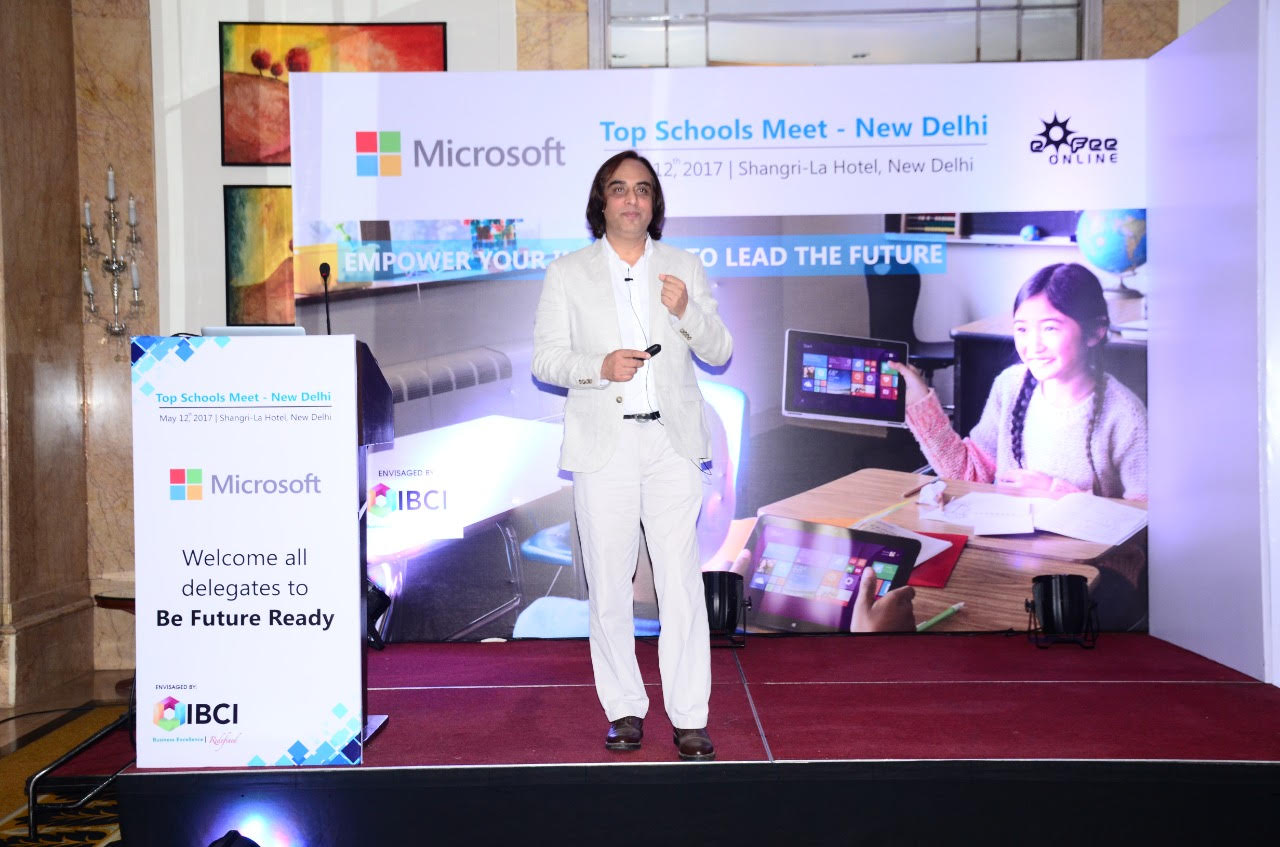
Bengaluru, 5 September 2020: On Teacher’s Day, Edu-Warriors undertaking Digital Transformation & Holistic Learning program to make school teachers future-ready were celebrated at the first-of-its-kind Knowledge L’avenir Conclave webinars by Mr. Ali Sait of Tech Avant-Garde (TAG), in association with Microsoft, Knowledge Key Foundation, Lycee Corp, Efeeonline and Roshini Social Schooling. Over the next 12 weeks (till November 2020), 3,000 teachers will exhibit their Digital Teaching Skills and over 150,000 teachers from over 72,000 schools across India with a student-teacher population of 76 million (7.6 crore) will get inspired to make the Digital Transformation. This grand education showcase is part of Mr. Sait’s vision to transform 18 lakh schools in India from four walls of the classroom to Connected Learning Community after the announcement of the National Education Policy (NEP).

education Knowledge L’avenir Conclave by Tech Avant-Garde & Microsoft

The keynote speakers (edu–warriors) for I TOUCH THE FUTURE… i teach L’avenir Knowledge Conclave (LAC) Curtain Raiser moderated by Mr. Ali Sait (CEO, TAG), were: Mr. Kulbhushan Sharma (President, NISA), Mr. Vincent KV (Secretary, ASISC), Dr. Vinnie Jauhari (Director-Education and Industry Expert, Microsoft), Dr. Dakshayini Kanna (Director, Principal, Harvest International School), Ms. Vandana Baik (R&D and Innovation, Dir. Of Higher Education, Goa), Ms. Sonia Garcha (CSpathshala), Ms. Roshini Kumar (Chief Patron, Roshni, Social Schooling) and Ms. Praveen Rai (COO, NPCI) along with several school principals and teachers from all parts of the country.

Dr. Vinnie Jauhari (Director-Education and Industry Expert, Microsoft) Knowledge L’avenir Conclave by Tech Avant-Garde & Microsoft
Dr. Vinnie Jauhari (Director-Education and Industry Expert, Microsoft)

In her opening remarks, Dr. Vinnie Jauhari (Director-Education and Industry Expert, Microsoft) quoted world-famous personalities such as Nobel laureate and education activist Malala Yousafzai who said, “They cannot stop me. I will get my education, if it is in the home, school or any place” and Microsoft’s global CEO Satya Nadella who said, “As COVID-19 impacts every aspect of our work and life, we have seen two years’ worth of digital transformation in two months Microsoft Education transformation framework Leadership & Policy, Teaching & Learning, Intelligent Empowerment, and Student and School Success.”

Ali Sait, CEO, Tech Avant-Garde Knowledge L’avenir Conclave by Tech Avant-Garde & Microsoft
Ali Sait, CEO, Tech Avant-Garde

Ali Sait, CEO, Tech Avant-Garde, said, “The Government’s National Education Policy has given a boost to making India a world leader in digitally imparted school education by 2020 – the 75th platinum jubilee year of Indian independence. NEP will also help ed-tech companies to raise funds required for transforming 18 lakh schools across India. In fact, academicians and ed-tech players are very happy that NEP follows the UNESCO model of 21st century-ready classrooms and digital devices as textbooks. The ideas of Open Schools, Cluster Public-Private Schools to take digital learning to underprivileged and remote students; and spending on digitization instead of brick and mortar classrooms are revolutionary. If implemented in the right spirit, then India will become a global leader in education.” The Indian education industry has crossed the USD 100 billion mark (Rs. 7.5 lakh crore) while the ed-tech industry is expected to cross USD 3.5 bn by 2020.

Student Knowledge L’avenir Conclave by Tech Avant-Garde & Microsoft

“The transformation and adoption of digital teaching and learning have been the fastest in 2020 – 3 to 4 times faster than those witnessed in the last few years. We believe that Microsoft has the mother of all content and if every teacher is empowered as a content creator, then the whole school is transformed. Teachers well versed in digital teaching can transform Government schools and this will help students/teachers in remote areas. Eventually, the students will drive the change and can be part of the class of digitally trained teachers even if they are not in a class,” says Ali Sait. But it’s a long journey as they have touched only the tip of the iceberg – 72,000 schools out of 4 lakh private sector schools and 14 lakh Govt. schools.

Ali Sait Knowledge L’avenir Conclave by Tech Avant-Garde & Microsoft

Ali Sait also says that each class needs Rs. 10 lakh to be digitally transformed. “The Government has announced bold steps in NEP with emerging tech-driven ideas such as Skype in Classroom and Virtual field trips instead of the traditional ‘chalk and talk’. As home schools become the new normal, Cognitive learning, Mixed Reality, Immersive Learning, IoT and AR-VR will eventually reach students at home. Public-private partnership is the way forward where the private sector helps by investing a million to transform each class. Poor bandwidth related problems can be tackled the way it is done in Africa – internet through SIM cards,” says Ali Sait.

Under the above program, teachers have been trained in Gen Extra Muros – Knowledge Beyond Walls pedagogy. The teachers who are trained under this program are “Future Ready”. They are eligible to take part in Knowledge L’avenir Conclave to display their digital teaching skills. Each Knowledge L’avenir Conclave webinar will be a one-day event; in which teachers from one school will present topics of their choice, using technology-based teaching tools. In every webinar, an average of 20 teachers from 1,000 schools will get an invitation to attend and witness this digital teaching extravaganza. The attendees will get insight on digital teaching and would get inspired to enhance their teaching skills. Knowledge L’avenir Conclave participation is only by invitation – each invited school is allowed to enroll teachers to make a presentation in the webinar to exhibit their digital teaching skills.

teacher Knowledge L’avenir Conclave by Tech Avant-Garde & Microsoft

Ali Sait’s dream of a Connected Learning Community is a simple yet powerful idea with even more relevance today than when he first introduced the concept in the year 2002. His vision is that the world is an enriched learning environment in which technology used well enhances and expands opportunities for learning while providing the practical technology experience needed in today’s society and workplaces. In the Connected Learning Community: Students, educators, and parents have any time, anyplace access to learning; Learning is relevant, individualized and personalized; Schools have information systems that support accountability and efficient management; Schools, campuses, homes, libraries, businesses, and global resources are connected in a dynamic, collaborative learning environment. Yet for 21st-century learning, technology alone is not sufficient. Schools, students, and teachers must have the vision and opportunity to experiment, innovate, and create with technology as a learning tool. Ali wants to facilitate a New Era of Education in a growing number of schools and communities around the world. Technology has helped launch a new era of education that simultaneously fosters academic excellence and the practical experience needed to succeed in life and work in the growing knowledge economy. Nevertheless, communities have only begun to tap the potential of technology for learning.

Sapna Uppal, Knowledge L’avenir Conclave by Tech Avant-Garde & Microsoft

Most of these students and teachers would require items such as Laptops, Tablets, Handheld devices, electronic writing pads, learning software, internet, desks, chairs, etc. Tech Avant-Garde is planning to showcase these products in Knowledge L’avenir Conclave webinars along with the names of the fulfillment agencies.

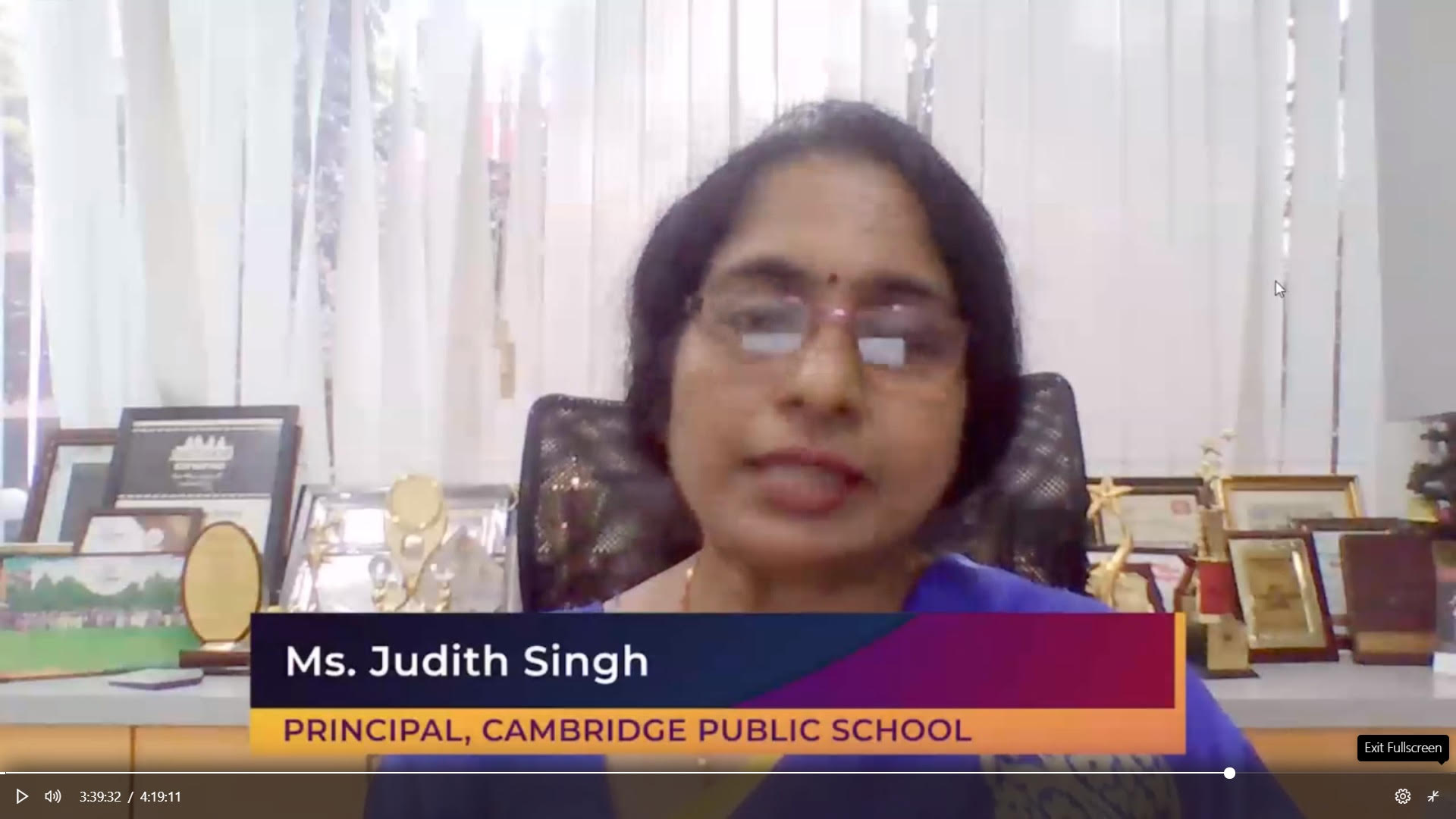
Ms. Judit Singh, Knowledge L’avenir Conclave by Tech Avant-Garde & Microsoft

Declare August 15 as Mind Sports day: Dinesh Victor, MD SIP Academy urges Union HRD Ministry

Hyderabad, September 05, 2020…..SIP Academy, the institution which nurtured Bhanu Prakash’s talent from his early childhood urged Union HRD Ministry to declare August 15, the day Bhanu Prakash won the first ever gold  for India in the Mental Calculation World Championship at Mind Sports Olympiad in London last month, as Mind Sports Day, to promote Mind Sports in a large way in the country.

Bhanu Prakash is the World’s fastest human calculator. 

Informing this in a press note issued in Hyderabad today on the eve of felicitation to the Maths Wizard on his winning the title, Dinesh Victor an IIT and IIM alumni, CEO of SIP Academy who has been a champion of skill development movement in Children in India informed that his organisation would present representation to Union HRD Ministry to this effect very soon.

Mind sport is a game of skill where the players compete based on their intellectual ability as opposed to physical exercise. India has this talent abundantly. If this talent is honed well, India can prove its supremacy in this in the world, shared Dinesh

Bhanu, the maths genius appealed to the government to give importance to mental sports. It will be my endeavour among other things to promote Mind Sport in the country.

Dinesh Victor who was in the city also announced that they would bring out a book titled “A boy who became a Calculator”, will profile his journey, struggle, preparations, his future and vision. Aimed at young students, in a easy to read friendly format the book will be out in the next two months.

Dinesh Victor is one of the names to reckon in India on the subject of Skills Development in children.

Mind sports is seen as a new mantra to develop the intellectual potential of the child by many educationists, parents. It is considered and defined

as a genre of sports by many developed countries. But, we haven’t done much in this.

The Mind Sport tests the mental strength and mettle of participants. Mind sports are becoming popular in upwardly mobile households.  Many experts, educationist, particularly parents are awakening to the dangers of their children becoming addicted to digital screens and devices and we want kids to explore Mind Sport as a good and constructive engaging activity which will contribute to their intellectual potential, Dinesh added.

Educators, Teachers, including sports personnel are not only for it but, encouraging children to participate in mind sports for play, pleasure, learning, mental fitness and competition.

A well known Hyderabad Cricket Commentator tweeted aiming at students some time ago, ‘cricket is fine, how about Scrabble?”

The benefits of Mind Sport are plenty. The rote-centric Indian learning system stimulate both parts of bran, which Mind Sport does.

Several competent researches highlighted that engagement with mind sports improves the cognitive, physical and psychological health of children.  It will help them beat stress, engagement mind productively. It boosts kids self-confidence. They will develop problem-solving analytical and critical thinking skills which are most sought in the current period shared Dinesh

Dinesh also announced that SIP Academy wants to support him in his journey of eradicating maths phobia and his vision in promoting Maths as Mind Sport in India

Adosphere upskills 1.20 lakh government teachers through Workplace from Facebook

New Delhi, September 5, 2020: Adosphere, a leading digital transformation expert, has announced the successful execution of a groundbreaking community and collaboration building project for training and curriculum support for over 1.2 lakh teachers. The project, launched on Teachers’ Day in 2019, has facilitated online collaboration and training for teachers across Gujarat, helping local students continue their studies despite disruptions from Covid-19.

Adosphere leveraged Workplace from Facebook, online communication and collaboration platform, to train and help in capacity building for teachers in public schools across rural and urban areas. Workplace uses familiar Facebook features like chat, video calls, posts, and groups to connect everyone in a team, school, or business.

The workplace has enabled the teachers to collaborate digitally, share knowledge, and build an online community. The tech has helped them stay connected and maintain education continuity despite the pandemic. With nearly 70% of the teachers on-boarded on the platform, this initiative is one of the biggest deployment of technology in education in rural India.

Some of the social collaborations enabled include real-time, two-way knowledge transfer between rural to urban areas. Teachers from remote villages shared innovative ideas, learnings and case studies with the teachers in larger towns, thereby facilitating the best use of limited resources for improving education delivery for teachers.

Adosphere is also exploring similar synergies for digital innovation with multiple state government organisations. Adosphere aims to achieve 100% coverage by on-boarding all 2.5 lakh teachers of the state-run schools within the next two years.

“The teacher community is hugely proactive in embracing new technologies and that is the reason for huge engagement and organic growth on the digital platform,” said Mr. Abhijit Sonagra, Founder, Adosphere. He added, “As digital community builders and change-makers, we want to help transform the education delivery ecosystem, one that will have an exponential impact on democratization of teachers training and capacity building in the years to come. This project is a role model for showcasing the power of digital interventions to connect, educate, train upskill & reskill and spread awareness through community building and collaboration platforms such as Workplace from Facebook.”

Ernesto Tey, Global Director, Ecosystem and Partnerships, Workplace from Facebook added, “At Workplace, we believe work is better when people are closer, teamwork is faster and culture is stronger. The workplace is a powerful digital platform that reduces communication gaps and enables transparency – all of which are increasingly important in our post-pandemic, disparate working world. We’re proud to serve the teachers of Gujarat and look forward to connecting their entire workforce soon.”

Asif Sawant, State MIS, Department of Education, Gujarat Government, said, “Empowering Teachers through the workplace and digital technologies can enhance learning experiences and with a wider reach of the platform, organizations such as UNICEF and Disaster Management can easily reach out to provide training to the teachers.”

Vocational Education: The Way out to Fight Pandemic Woes : By Mr. Ankit Shyamsukha, CEO, ICA Edu Skills

In a developing nation like India, a skilled population is one of the most important pillars to deal with any socio and economic challenges. Even in the unprecedented times of the coronavirus pandemic, organizations are looking for those people who exhibit the new-age skills to sail through the economic slowdown. The demand for new-age skills including Machine Learning, Artificial Intelligence, Blockchain, Digital Marketing or Cloud Computing is high and the vocational institutes are leaving no stone unturned to change their education mandate according to the changing times. If we look at the scenario of India’s EdTech Industry, it’s second-biggest in the world after the US and around 25% of startups funding in India are towards EdTech Companies in just Q1 FY 20-21. However, we still need some robust steps to strengthening our vocational education ecosystem.

Here are some of the ways through which vocational education can be strengthened:

Identification of vocational education as a separate entity

In our country, vocational education is often clubbed with schools, colleges and universities. It needs to be given a distinct identity in addition to importance. The lack of a nodal body to control this vocational education provided by the private players clearly shows the lack of proper communication. This is the best time when any support from the government and a push in vocational education can ensure a highly-skilled India, a step towards self-reliance. The move will also attract a lot of investment. For instance, Industries go to China because they get trained manpower there and it’s easy to set up a company/factory as compared to other countries.

Importance of trained manpower is the need

As people have been losing jobs due to the coronavirus pandemic, it shows the need for skill training to flourish in the competitive market. .Over the past few years, skills (and not academic backup from top colleges or ivy league universities) have always opened doors for many opportunities in our country. With the kind of market we have, everybody has the issue of cash in hand. In our country, the penetration of vocational education is one of the lowest in the world.

Learn-Unlearn-ReLearn

The entire community, especially the millennials, need to unlearn and relearn. With a lot of doors being closed, 1000 new opportunities are opening up. What we lack is relevant training and skills to cater to these opportunities For example: during the COVID-19 era, the number of websites created in the last three months is almost equal to the websites created in a year’s time. Offshore accounting has grown 3times with businesses abroad looking for cost-effective and efficient teams to do their work and what better place than India, ‘the outsourcing capital of the world’. A lot of new skills and avenues have opened up.

Local has become the new vocal

People have shifted to their own home cities either due to safety reasons or because they ave lost their jobs. Instead of brooding, they need to pull up their socks and upskill according to the demand in their particular city. If you are in Bengaluru, you need to have IT skills but when you are in Gujarat, you need to acquire industry skills to get jobs. People should identify the skills they need and similarly find the best people/company who can provide the best skill training accordingly.

More push from the government

In order to bring forth colossal changes, giant steps should be taken, which can only be done by the policymakers in the Parliament and not just one individual. Our government should also focus primarily on vocational education in order to sail through the economic slowdown. Vocational education is the backbone of every developed nation. For example- China has a huge platform for vocational training. They make sure that their training reaches to the last mile of the country so that well-trained people can be placed in a befitting industry.

Top Institutes offering vocational education

ICA Edu Skills – Certified Industrial Accountant
Institute of Digital and Content Marketing – Digital Marketing
EdX – MIT Data Science and Statistics Certificate
Coursera – Wharton Business Analytics Certification (Coursera)
Udemy – Machine Learning Course A-Z™: Hands-On Python & R In Data Science (Udemy)
Simplilearn – Big Data Hadoop Certification Training Course
Top Courses in Demand (High Demand from Corporates):
Programming Languages (Python, Java, C++, React etc)
Accounting | Banking | Finance | Taxation
Digital Marketing
Advanced SQL
Big Data Analytics
Machine Learning
Blockchain
Robotics
Animation
Web Developer

IIHMR Inducted into the Prestigious United Nations Academic Impact (UNAI)

Jaipur, September 2020: IIHMR University,a premier higher education institution in the field of healthcare management and development studies have been inducted as a member of the prestigious United Nations Academic Impact (UNAI).

United Nations Academic Impact (UNAI) is a United Nations initiative that aligns higher education institutions in supporting and contributing to realizing the UN’s goals and mandates, including the promotion and protection of human rights, access to education, advancing peace, sustainability, and conflict resolution.

Through this membership, IIHMR joins 1470 institutions in 146 countries, including about 150 institutions from India.[1]As a part of the UNAI, the institution will play an essential role in achieving the sustainable development goals (SDGs) by becoming the incubator of new ideas, inventions, and solutions to many global challenges. Besides, the membership will allow IIHMR to harness the international community to foster innovation and research in humanity.

“We are delighted to have the privilege of becoming a member of this prestigious body. UNAI provides a unique platform where university students, academics and researchers can connect and share ideas, research, and resources to promote the SDGs and other UN mandates. The IIHMR University has been working to provide equal opportunity in healthcare management and development studies education for more than three decades and focuses on issues in healthcare, gender equality, human rights, and sustainable development,” says Dr. P. R. Sodani, Pro President, IIHMR University.

Stonehill International School participates in NEASC’s Global Virtual Forum on “Planning for a Successful Start during COVID-19”

Bengaluru, September 04, 2020: The New England Association of Schools and Colleges (NEASC), an independent, voluntary, and non-profit membership organization, which connects and serves over 1500 public, independent, and international schools in the U.S. and worldwide, is currently holding a series of webinars on COVID-19 resources for its member schools. Stonehill International School is a NEASC Accredited school which exemplifies Stonehill’s globally recognized standard of excellence.

Last week, NEASC held a Global Virtual Forum on Planning for a Successful Start, to share practical tips to help teachers prepare for back-to-school operations in the midst of the evolving pandemic. Jitendra Pandey, MYP Coordinator, Stonehill International School, the only Indian on the panel, was invited to share his ideas and perspectives, along with teachers from public, independent, and international secondary schools from across the world.

The webinar addressed challenges on managing a safe and effective restart of school operations. The panellists spoke about how they are preparing differently this year and how supporting mental health is key amongst the teachers and students.

According to Mr. Jitendra Pandey, MYP Coordinator, Stonehill International School, “Educators need to be open-minded and adaptable as they continue to learn. The pandemic has created opportunities for us to transform the nature of education in the future. I believe that the nature of assessing students need to be meaningful, more frequent and creative. Teachers need to find creative ways to gather evidence of student learning and understanding. Mental health is another important issue and a support system is needed to reach out to the entire community of parents, students and teachers. The experience of distance learning is often impersonal and faceless and it is vital that teachers reach out to vulnerable students when face-to-face contact at school is not possible.”

These webinars serve as a resource and support in the interest of helping NEASC members and the wider school community stay informed and prepared during the global pandemic. Jim Mooney, Deputy Director, NEASC Commission on Independent Schools said, “It is in the community of colleagues that we will find the strength to move ahead.”

This Teachers Day – Five Edtech Portals which can act as teachers for children during COVID 19 Pandemic

Globally, the closure of schools and educational institutions has affected almost 600 million learners across the world. COVID 19 pandemic has turned education system upside down and boosted remote learning process.

Hence, the EdTech platforms came into play to provide solutions to millions of students in India and helping them with their studies as well as keeping them safe from the deadly COVID-19. Also, these portals are catering to all age groups of children starting from 3 to 16+.

So, this Teachers Day we have listed five EdTech platforms that are helping students to easily study at home or acquire a new skill:

Vedantu :- Vedantu Learn Live Online is one of India’s leading online tutoring website that covers the whole syllabus ranging from CBSE, ISCE, NTSE, Olympiads, and even IIT JEE. Vedantu is offering free online classes on its website and through its app in order to keep students safe inside their homes. The website also offers free study material, apart from the online classes. The website has given a free access to all live classes and content of Vedantu for Grades 1 to 12, JEE & NEET. The online classes can be accessed via their website and on their app that is available for free on Android and iOS.

BeSingular.com – BeSingular is an EdTech platform to skill the next generation, create real, responsible impact through working with the technologies of the future. It’s age graded curriculum, which is curated using the best minds, is built to make students(Age 8-16 yrs) be fearlessly exploratory, big dreamers, progressive, dynamic, and futuristic. The programs at BeSingular focus on teaching Exponential Technologies including Artificial Intelligence (AI), Programming, Robotics, Game Design, Embedded Systems, 3D printing, and Augmented & Virtual Reality (AR, VR). BeSingular impart these programs via offline & Online mode along with live projects focused on solving real world challenges and are curated by technologists and global experts. Established in May 2019 and founded by Mr. Nitesh Jain, he believes in having the ability to shape young kids’ imagination by helping them adapt to the future of technology and solve humanity’s biggest challenges. BeSingular’s Massive Transformative Purpose (MTP) is ‘Transforming education ecosystem to impact the learning possibilities of the next generation.’

Flintoclass@HOME – A preschool-at-home model designed to deliver high-quality preschool education to the homes of children during the COVID-19 pandemic. The easy-to-use comprehensive preschool kit ensures that children continue their early education from the safety and comfort of their homes. Currently, it includes programs for 1.5-5.5 year olds and follows a blended learning approach with pre-recorded interactive sessions and hands-on activities. The all-inclusive monthly kit gets delivered with multi-sensory learning experiences, daily activities, step-by-step instructions, revision materials and even a dashboard to track every child’s daily progress. Flinto believes that given the right tools, every child has the ability to bloom and grow to his/her fullest capacity. And that’s why they take their design process very seriously. All the products and learning tools are intensively researched, developed and assessed at India’s first and only R&D Centre for early education — Flinto Early Learning Research Foundation, by a team of child psychologists, pedagogy experts, curriculum developers and game designers. The research centre collaborates with parents and early educators to create an ecosystem that is conducive for harnessing the true potential in every child.

Brainly – It is one of the largest online learning platforms, uniting students with fellow students, parents, and teachers around the world to help solve their academic problems and to facilitate knowledge exchange. It has a user base of over 25million in India. Here, it connects users to their peers to help strengthen their skills, from math to science, history, and beyond for free.

Byju’s – It is India’s most loved learning app for anyone from the first standard to a higher education aspirant. Engaging video lessons, study material mapped to the syllabus, interactive questions and unlimited practice with in-depth analysis inculcates a fun-learning experience, keeping the interest and longer retention period intact. You may buy a course as per the personal requirement. This EduTech platform makes the learning and understanding of concepts much easier for school kids. The subject focus of the platform is Maths and Science, and the concepts are explained using 12-20 minute digital animation videos.