Tag: London

Experience Spiritual Growth: Dhyan Foundation To Open New Dhyan Center At Banjara Hills- Offering Free Yoga

Dhyan Foundation is the only Indian non-profit body to work with Border Security Forces (BSF) to rehabilitate cattle

Ashwini Guruji under whose guidance the classes delivered lectures at prestigious institutions like IIM, Bangalore, Oxford University, London etc.

Hyderabad, June 20, 2024.Dhyan Foundation, a volunteer-driven social organisation is to open a New Dhyan Center in Banjara Hills for Free Yoga Training. It will be the state-of-the-art Yoga Studio. It will be formally opened on Sunday by its volunteers.

Dhyan Foundation works for the welfare of animals, particularly the Indian sacred animal cow. It is the only organisation working with the Border Security Force (BSF) to rehabilitate cattle rescued from the Indo-Bangladesh border.

Disclosing this in a press note issued in Hyderabad, the Dhyan Foundation spokesperson said the centre which is coming up in the centre of the city at Banjara Hills is its place and can accommodate up to 200 people. It will teach every aspect of Yoga by volunteers who are students, homemakers, lawyers, journalists, doctors, and CEOs under the guidance of Ashwini Guruji of Dhyan Ashram.

Soon it will run a few special sessions of Secrets from Sanatan Kriya for eternal youth & glow and a brilliant mind, under the guidance of *Ashwini Guru ji* of Dhyan Ashram.

FILE PIC DHYAN CENTRE

Ashwini Guruji is an embodiment of the gyan of the Vedas. He follows the Guru-Shishya parampara in its totality, He believes yoga is a sadhana and not a business. The foundation is committed to the cause of spreading awareness about the authentic path of yoga, as laid down by Sage Patanjali 4,500 years ago. Be it conducting lectures at various prestigious institutions like IIM, Bangalore, Oxford University, and London, authoring masterpieces on esoteric subjects (including the thesis on anti-ageing, Sanatan Kriya – The Ageless Dimension) or taking seekers from across ages on spiritual sojourns to places of importance in the Vedic culture – He has continuously enlightened us about our history.

From revealing to us the deep secrets hidden under the Earth at the Patal Bhuvaneshwari Caves, interpreting the ancient Vedic symbolism of the Rollright stones in the UK, to uncovering astounding revelations of the Sigiriya rock in Sri Lanka, Ashwini Guruji has enlightened us about the Vedic relevance of each of these places.

Formed in 2002 to share and spread the gyan of the original and pristine form of yog, Dhyan Foundation, today is a global phenomenon with centres all across the world where Sanatan Kriya (Patanjali Ashtang Yog in its original, undiluted form) sessions are conducted free of cost as per the ancient Guru-Shishya Parampara. Thousands across the globe have benefited physically, emotionally, mentally and spiritually from the practice of Sanatan Kriya.

Dhyan Foundation runs several animal welfare programmes for dogs, birds, cows, monkeys and many other animals. Today, it has over 47 shelters and gaushalas and we provide aid, care, food and shelter to over 70,000 animals.

Those interested in training in Yoga free of cost may please reach out to Dhyan Foundation at Road no 10 Banjara Hills Hyderabad 500034, Google location pin https://maps.app.goo.gl/tr6BEkzMCgFvgDys5?g_st=iw. For more information, please drop in at 8465005989, 9393468680. Please visit the Dhyan Foundation website Www.dhyanfoundation.com

Amplify Healthcare Documentation Launches AI-Powered Clinical Workflow Solution with Dragon Medical Integration

LONDON, June 13, 2024  — Prescribe Digital, a pioneering leader in healthcare technology, proudly introduces its AI-powered clinical documentation workflow solution, designed to elevate the efficiency of healthcare professionals grappling with the ever-increasing demands of accurate and timely clinical correspondence.

In response to the escalating pressures faced by healthcare providers to deliver vast quantities of precise clinical documentation in a timely manner, Prescribe Digital’s new platform, Amplify+®, incorporates Nuance’s Dragon Medical capabilities, recognised globally as top-rated speech-driven clinical documentation technology.

Prescribe Digital has supported clinicians with documentation in the healthcare industry for almost 20 years. This solution comes as a new arm to their support offering, providing clinicians and administrative staff with tools to help revolutionise workflows.

Key features and benefits of Amplify+®:

End-to-end AI-Powered efficiency: Amplify+® harnesses the power of artificial intelligence to streamline clinical documentation, ensuring accuracy and timeliness in healthcare correspondence.

Providing complete workflow alongside embedded speech recognition and Dragon Medical One: The Microsoft Azure-based platform, Amplify+®, utilises Dragon Medical One and integrated speech capabilities to provide healthcare professionals with advanced voice control that allow for more comprehensive and unified clinician and administrative staff correspondence.

Zero client installation: Amplify+® eliminates the need for client installations, allowing for a hassle-free and efficient onboarding process.

Pre-built PRSB templates: Incorporating a full template builder with pre-built PRSB templates for all outpatient departments.

Mark Frost, Managing Director at Prescribe Digital, said: “Having worked in the healthcare industry for almost 20 years, we understand the immense challenges faced by healthcare professionals in delivering accurate and timely clinical documentation. Running on Microsoft Azure, Amplify+® is not just a solution; it’s a transformation in how healthcare workflows are managed, providing a seamless, integrated experience with the benefit of Dragon Medical and Dragon Medical One. Amplify+® is the answer to the increasing demand for efficient and accurate clinical correspondence.”

Simon Wallace, Chief Clinical Information Officer at Microsoft, said: “Amplify+® incorporates Dragon Medical One and embedded speech recognition with workflow management. The two combined will empower healthcare professionals to manage clinical correspondence and to focus on what matters most – patient care.”

Global Peace Index reveals highest number of countries engaged in conflict since Second World War

LONDON, June 11, 2024  — Today marks the launch of the 18th edition of the Global Peace Index (GPI) from international think-tank, the Institute for Economics & Peace (IEP), revealing that the world is at a crossroads. Without concerted effort, there is a risk of a surge in major conflicts.

Key results

  • 97 countries deteriorated in peacefulness, more than any year since the inception of the Global Peace Index in 2008. Conflicts in Gaza and Ukraine were the primary drivers of the global fall in peacefulness, as battle deaths reached 162,000 in 2023.
  • 92 countries are currently involved in conflicts beyond their borders, more than at any time since the inception of the GPI.
  • First of its kind military scoring system suggests that US military capabilities are up to three times higher than China.
  • The global economic impact of violence increased to $19.1 trillion in 2023, representing 13.5% of global GDP. Exposure to conflict poses a significant supply chain risk for governments and businesses.
  • Militarisation recorded its largest yearly deterioration since the inception of the GPI, with 108 countries becoming more militarised.
  • 110 million people are either refugees or internally displaced due to violent conflict, with 16 countries now hosting more than half a million refugees.
  • North America saw the largest regional deterioration, driven by increases in violent crime and fear of violence.

There are currently 56 conflicts, the most since World War II. They have become more international with 92 countries involved in conflicts outside their borders, the most since the GPI’s inception. The rising number of minor conflicts increases the likelihood of more major conflicts in the future. For example, in 2019, Ethiopia, Ukraine, and Gaza were all identified as minor conflicts.

Last year recorded 162,000 conflict related deaths. This was the second highest toll in the past 30 years, with the conflicts in Ukraine and Gaza accounting for nearly three-quarters of deaths. Ukraine represented more than half, recording 83,000 conflict deaths, with estimates of at least 33,000 for Palestine up to April 2024. In the first four months of 2024, conflict related deaths globally amounted to 47,000. If the same rate continues for the rest of this year, it would be the highest number of conflict deaths since the Rwandan genocide in 1994.

The global economic impact of violence in 2023 was $19.1 trillion or $2,380 per person. This is an increase of $158 billion, driven largely by a 20% increase in GDP losses from conflict. Expenditure on peacebuilding and peacekeeping totalled $49.6 billion, representing less than 0.6% of total military spending.

Iceland remains the most peaceful country, a position it has held since 2008, followed by Ireland, Austria, New Zealand, and Singapore – a new entrant in the top five. Yemen has replaced Afghanistan as the least peaceful country in the world. It is followed by Sudan, South Sudan, Afghanistan, and Ukraine.

The Middle East and North Africa (MENA) remains the least peaceful region. It is home to four of the ten least peaceful countries in the world and the two least peaceful, Sudan and Yemen. Despite this, the UAE recorded the largest improvement in peacefulness in the region – rising 31 places to 53rd in 2024.

Although most indicators of peacefulness deteriorated over the past 18 years, there was an improvement in the homicide rate which fell in 112 countries, while perceptions of criminality improved in 96 countries.

Steve Killelea, Founder & Executive Chairman of IEP, said: “Over the past decade, peacefulness has declined in nine out of the ten years. We are witnessing a record number of conflicts, a rise in militarisation, and heightened international strategic competition. Conflict negatively affects the global economy, and business risk from conflict has never been higher, compounding the current global economic vulnerabilities.

“It is imperative for governments and businesses worldwide to intensify their efforts to resolve the many minor conflicts before they escalate into larger crises. It’s been 80 years since the end of WWII, and the current crises underscore the urgency for world leaders to commit to investing in resolving these conflicts.”

Changing nature of conflicts

As conflicts become more widespread and more internationalised, increasing complexity reduces the likelihood of achieving lasting solutions. Ukraine and Gaza are examples of ongoing historical grievances or ‘forever wars’ without clear resolutions. The number of conflicts resulting in a decisive victory for either side has fallen from 49% in the 1970s, to less than 9% in the 2010s. Over the same period, the number of conflicts that ended through peace agreements fell from 23% to just over 4%.

Another key factor reshaping conflict is the impact of asymmetric warfare technology, making it much easier for non-state groups, as well as smaller or less powerful states, to compete in conflicts with larger states or governments. The number of states using drones rose from 16 to 40, a 150% increase between 2018 and 2023. Over the same period, the number of non-state groups which committed at least one drone attack rose from 6 to 91, an increase of over 1,400%.

Middle East tensions

Due to the Gaza war, Israel’s ranking fell to an all-time low of 155th, the largest deterioration in peacefulness in the 2024 GPI. However, over the past decade Palestine has witnessed the largest deterioration, slipping to 145th. Highlighting the growing tensions, Israeli media stories with a negative sentiment towards Palestinians increased from just over 30% in 1999 to 92% in early 2023, while stories with negative sentiment by Palestinian media towards Israelis increased from just under 30% in 1999 to 85% in early 2023.

The conflict has also thrown the entire Middle East region into crisis, involving Syria, Iran, Lebanon and Yemen, with the economic consequences mounting and a high risk of open warfare. A further broadening of the conflict would severely impact the global economy, potentially triggering a worldwide recession. Highlighting the point, Syria’s economy shrunk by more than 85% after the start of the civil war in 2011, and the Ukrainian economy shrunk by 29% in the year after the onset of the conflict in 2022.

Global military capability

Since the start of the Ukraine war, militarisation has increased in 91 countries, reversing the trend of the prior 15 years. Given the forward commitments of many countries to military spending, it is unlikely to improve in the coming years.

Changes in the dynamics of warfare have seen troop numbers decrease while technological sophistication has increased. Over the last decade, 100 countries reduced their armed forces personnel, while global military capability increased by over 10%.

First of its kind research by IEP calculates the military capability of countries by combining military sophistication, technology, and combat readiness. It reveals that the US has substantially higher military capability than China, which is closely followed by Russia. Traditional approaches to measuring military capability generally count the number of military assets only.

Regional highlights

  • Europe remains the most peaceful region, however, it recorded its largest year on year increase in military expenditure since the GPI’s inception.
  • North America recorded the largest regional deterioration in peacefulness with a drop of just under 5%. Both the US and Canada saw significant falls, primarily driven by increases in violent crime and fear of violence.
  • Sub-Saharan Africa is now the second least peaceful region behind MENA as it faces several security crises – most notably increasing political unrest and terrorism in the Central Sahel.
  • Asia-Pacific remains the second most peaceful region with a slight decline in peacefulness. Papua New Guinea recorded the worst deterioration in the region, caused by intensified tribal violence from disputes over territory and land ownership.
  • Central America and the Caribbean experienced a minor decline in peacefulness, as countries like Haiti battled high levels of organised crime and civil unrest. Despite this, El Salvador recorded the world’s most significant peace improvement.
  • South America experienced the second largest fall in peacefulness with a deterioration of 3.6%. The largest changes occurred for the Homicide Rate, Political Terror Scale, and Intensity of Internal Conflict indicators.

Energy Transitions Commission says countries can triple climate ambition by COP30

LONDON, June 10, 2024– In its latest briefing, Credible Contributions: Bolder Plans for Higher Climate Ambition in the Next Round of NDCs, the ETC calls for industry and government collaboration to raise the ambition of the next round of Nationally Determined Contributions (NDCs) by COP30. If we are to limit the impact of climate change, NDCs can and must reflect technical potential and reinforce existing progress by setting more ambitious targets with stronger links to national policies. By setting a clear direction of travel and reducing uncertainty, the next round of NDCs can further accelerate the deployment of clean energy technologies.

Since the Paris Agreement was signed at COP21, countries are required to submit and ratchet up national climate pledges every five years. The next submission is due next year. These NDCs, as they are known, serve as high-level roadmaps for national climate action by establishing targets for emissions reductions over 10-year periods. Success in the low-carbon transition to date has been driven by industry’s response to government targets – accelerating deployment and driving down costs. Industry recognises the opportunity in the next round of NDCs and calls on governments to prioritise delivering high-ambition NDCs which will provide certainty, unlock investment and accelerate technology deployment.

Third round of NDCs due in 2025

Global greenhouse gas emissions are currently at an all-time high (~59 GtCO2e)[1] and continue to rise. If fully achieved, current NDC targets set in 2020 are only expected to deliver ~6 GtCO2e of emissions savings per year by 2035. This figure is far from the ~23-30 GtCO2e reduction required by 2035 for a 1.5°C-aligned pathway.

According to the ETC, if governments reflect existing policy commitments made at COP28 and at national level, and the latest technological progress in the next round of NDCs, overall ambition levels could almost triple. This would achieve ~18 GtCO2e of mitigation per year in 2035 and put the world on a trajectory to limit warming to 2°C.

Rapid progress is being made. Many core technologies of the energy transition have already reached tipping points for self-reinforcing growth and strong national policies support the acceleration of manufacturing and deployment around the world. For example, new wind and solar installations now meet over 90% of global power demand growth. Electric vehicles now make up 18% of global passenger vehicle sales and as much as 20% and 40% of sales in Europe and China respectively. Technologies and policies required to decarbonise heavy industry and long-distance transport are reaching commercial readiness.

Further, at COP28, nearly 200 countries committed to triple renewable energy capacity, double the pace of energy efficiency improvement by 2030 and transition away from fossil fuels in the energy system.

“Industry has rapidly scaled up manufacturing and deployment of clean energy technologies with existing policy support and commitments. Higher ambition in the next round of NDCs at COP30 has the potential to reinforce and accelerate this positive feedback loop. Collaboration between industry and government to commit measurable, deliverable, and investable plans is key to driving action.” Adair Turner, Chair of the Energy Transitions Commission.

Existing commitments and embedded progress provide headroom for major strengthening of NDCs but going beyond 2°C to align NDCs to a 1.5°C pathway will require further action still. Faster progress will be required in halting deforestation, phasing out coal from the power system and accelerating project delivery in hard-to-abate industry and transport.

“The next round of national climate plans – NDCs 3.0 – are due from early next year and will be among some of the most important policy documents produced so far this century. Each country’s NDC is for it to decide – they are after all nationally determined, so it’s not one-size-fits-all. As the Energy Transitions Commission report underscores, these new plans can serve as powerful blueprints, to propel countries’ economies and societies forward.” Simon Stiell, Executive Secretary of the United Nations Framework Convention on Climate Change (UNFCCC).

“NDCs 3.0” must help to translate ambition into action

Higher ambition from government and industry is needed to stimulate accelerated deployment of clean energy technologies, but ambition alone will not deliver progress. The ETC recommends that “NDCs 3.0” define:

clear and detailed roadmaps for implementation of accelerated climate action backed by strong government policy (e.g., quantitative targets for GW of renewables, phase-out dates for bans on the sale of gasoline or diesel engine vehicles).
measurable, comprehensive (covering all sectors and GHGs) and granular targets for emissions reductions.
investable plans, especially for emerging markets, clearly stating the investment and international climate finance required to deliver stated targets.
“We welcome the ETC’s recommendations for NDCs 3.0 and urge governments to engage with the private sector to inform the development of policy roadmaps and investment plans within their NDCs. If we are to deliver on the next round of NDCs, CEOs and Ministers will need to embrace new forms of public-private problem-solving to advance sectoral transformations.” Peter Bakker, President & CEO of WBCSD.

Priorities will differ by country but the ETC’s briefing highlights that for all countries, whatever their level of ambition, implementation and financing, a step change in ambition is possible in the next round of NDCs. Backing NDCs with detailed transition plans can unlock the investment and industry action required to achieve these aims.

“Tripling ambition in the next round of NDCs is feasible if governments reflect the rapid technological progress made in the energy transition to date and existing commitments they have made. This would put us much closer to the Paris Agreement target. But to limit global temperature rises to just 1.5°C, ambition must be set even higher. It would require an immediate halt to deforestation, rapid coal phase out globally and accelerated progress in heavy industry and transport.” Ita Kettleborough, Director of the Energy Transitions Commission.

Credible Contributions: Bolder Plans for Higher Climate Ambition in the Next Round of NDCs has been developed in collaboration with ETC members from across industry, financial institutions, and environmental advocacy. The ETC is a global coalition of leaders from across the energy landscape committed to achieving net-zero emissions by mid-century whose members include Arup, bp, HSBC, Iberdrola, National Grid, Octopus Energy, Petronas, Shell, SSE, Rabobank, Vattenfall, We Mean Business, and World Resources Institute.

Football Icon Kaká Inspires Teens with Confidence Talk at Gatorade 5v5 Finals

LONDON, June 5, 2024– Gatorade has brought Brazilian football legend Kaka to boost the confidence of the losing team from the 2024 Gatorade 5v5 Finals at the UEFA Champions League Final in London. The legend surprised young players in the locker room post-match, sharing a reminder that ‘You Never Stay Defeated’, and the power losing has, to fuel tomorrow’s success.

The final saw team Brazil triumphed over team Colombia by a scoreline of 5-1. To transform the moment of disappointment for the losing team into one of hope, rather than a drop in confidence, Kaka’s heartfelt Team Talk soothed their spirits and shared the message to harness the loss as fuel to build resilience and growth.

Kaka, known for his creativity and goal scoring prowess, faced challenges throughout his career. During the You Never Stay Defeated Team Talk, he described transforming his setbacks into motivation. This culminated in Kaka starring in the 2007 UEFA Champions League Final, where Milan emerged victorious with a 2-1 win over Liverpool.

Discussing the You Never Stay Defeated Team Talk, Kaka said “The 2024 Gatorade 5v5 Finalists did a tremendous job at coming second out of 13 teams worldwide. However, losing can feel permanent, especially when you are a teenager. Incredible results can be achieved when we use defeat to fuel success. I am fortunate to have had a long, successful career. Yet, I will always appreciate the fact that the setbacks I encountered along the way fueled my victory. The way you handle defeat is what sets you on the path to victory.”

Speaking about this year’s Gatorade Global 5v5 Finals at the UEFA Champions League Final in London, VP of Marketing at Gatorade, Bart LaCount says, “The Gatorade Global 5v5 Finals offers lifelong lessons and values of sport to each of the participants. The You Never Stay Defeated Team Talk from Kaka is a first-hand account of overcoming defeat to come back better than ever on the greatest footballing stage. As a Confidence Coach, Kaka’s advice will fuel our Gatorade 5v5 finalists and young people around the world with the confidence they need to strive towards their sporting ambitions.”

Telrad Networks Introduces New Comprehensive Partner Program

LONDON, May 21, 2024– Telrad Networks, a leading global provider of innovative wireless telecommunication solutions, is pleased to announce the launch of its new comprehensive Partner Program.

The Telrad Partner Program provides a unique opportunity for partners to represent the leading-edge portfolio of Telrad’s future-proof BreezeAIR product line. These products offer end-to-end communication solutions for various verticals, including municipalities, education, oil & gas, mining, WISPs, transportation, T1 operators, government, and more. Telrad Partner Program offers four tiers – Silver, Gold, Platinum, and Diamond – each providing a range of benefits and advantages for partners.

Eyal Zafrir, CEO of Telrad Networks, commented, “Here at Telrad, we strongly believe that a success of a company lies with loyal partners, where both sides enjoy profit and trusts by actively targeting mutual success.”

“The Telrad Partner Program is our comprehensive offering, tailored to diverse industries, countries, and regulatory environments. With a diverse product portfolio our four tiers partner program, effectively meets the needs of partners most complex requirements.” – adds Raz Kivelevich-Carmi, Telrad’s CTO.

By signing up to the Telrad Partner Program, partners will yield remarkable results by leveraging Telrad’s expertise and resources, providing innovative solutions to deliver exceptional value to its customers and seize new opportunities in the dynamic wireless market.

Partners in the Telrad Partner Program will have access to resources, support, and incentives to help them grow their businesses and succeed in the marketplace. The program aims to build strong and mutually beneficial partnerships, empowering partners with the tools to deliver high-speed internet and communication services to businesses and communities worldwide.

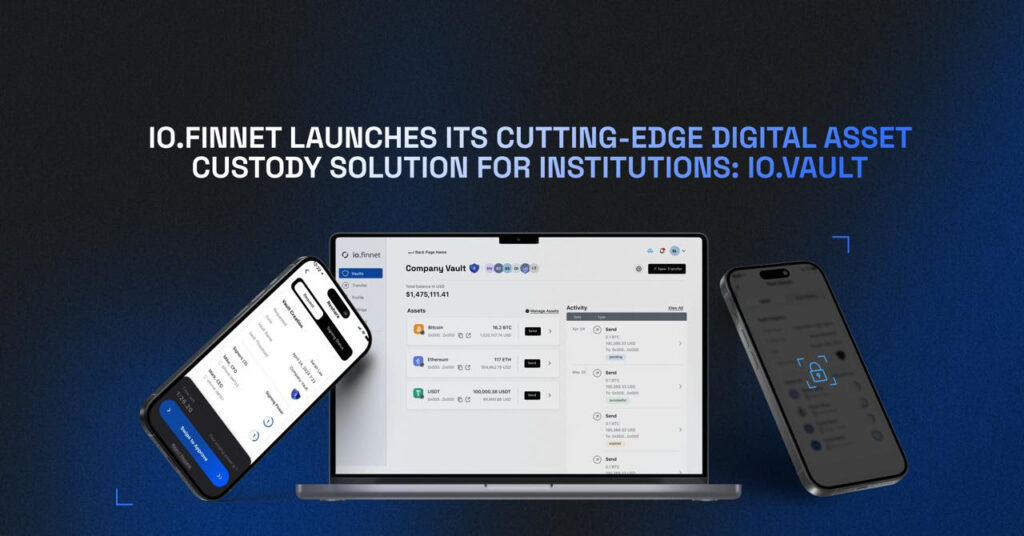
io.finnet Launches Its Cutting-Edge Digital Asset Custody Solution for institutions: io.vault

LONDON, May, 16th 2024io.finnet, the pioneering Tech company, is thrilled to announce the launch of io.vault, its groundbreaking digital asset self-custody solution for institutions. io.vault is already gaining traction, with io.finnet onboarding some of the most prominent institutional actors in the digital asset space including Ibanera and Evo Exchange among others.

DIGITAL ASSET

io.vault empowers corporate clients to securely hold and transact digital assets, offering a scalable and secure solution designed for OTCs, DeFi platforms, cryptocurrency exchanges, active trading funds, and more. io.vault can be tailored to the specific needs of any company managing digital assets.

This cutting-edge technology is based on io.finnet’s proprietary Trustless Multi-Party-Computation (tMPC), which enhances security by distributing weighted signing authority among multiple participants. The solution, audited by Kudelski Security, provides both scalability and security for managing digital assets. Additionally, configurable signing requirements enable customization to fit specific organizational needs while maintaining user autonomy over assets.

“Scalability is a major hurdle for companies managing digital assets,” said Gregory Pepin, CEO of io.finnet. “Traditional solutions lack the security and seamless integration needed. io.vault solves this problem by empowering companies to securely manage their assets without relinquishing control.”

Unlike custodial services that hold private keys, io.vault ensures companies maintain direct control of their assets. It provides a fully customizable solution for transaction validation, giving companies the flexibility and security to scale their operations. This addresses the growing distrust in third-party custodians following high-profile failures like Celsius and BlockFi. Companies can now break free from the vulnerabilities and dependencies associated with outsourced custody, gaining complete control over their digital assets.

“io.vault is a game-changer,” continued Pepin. “It provides a scalable, secure, and trustworthy alternative to traditional custodian services, positioning io.finnet as a leader in addressing the evolving needs of the digital asset management landscape.”

With the launch of io.vault alongside existing offerings, io.finnet envisions itself as a trailblazer in paving the way to an open and decentralized financial network using revolutionary technologies. This innovative approach sets io.finnet apart in the rapidly evolving digital asset management space.

New Omdia research shows AI processors for the edge will nearly double by 2028

LONDON, February 23, 2024 –PCs will be the main driver of growth in the AI edge processor market over the next four years, according to new research from Omdia.

This was among the results announced by Omdia in the 2023 edition of its AI Processors for the Edge Forecast, which covers the market for artificial intelligence processors across ten device types including smartphones, PCs, tablets, smart speakers, robots, and UAVs, among others. The total market for AI processors at the edge is expected to grow from $31bn in 2022 to $60bn in 2028, a CAGR of 11%.

Several factors are leading to PCs’ growing importance in this market. Product availability is certainly a key factor with Intel’s Meteor Lake CPUs recently joining AMD’s Ryzen 7040, 8040, and 8000G processors, Apple’s M-series, and Qualcomm’s Snapdragon Elite X. Also playing a role is the expected rebound of PC market which has slowed recently after a COVID-19 pandemic related surge in 2020 and 2021. Beyond 2025, though, the machines sold during the surge will start approaching the end of their accounting lives, creating the possibility of a refresh cycle that will help with AI PC adoption.

“This is especially important as demand from smartphones – an early-adopting sector – is expected to slow” said Alexander Harrowell, Omdia’s Principal Analyst for Advanced Computing. “Saturation is certainly a factor in the smartphone market, as over two-thirds of them by volume now have some form of AI acceleration and growth is concentrated in the premium price tier.”

The forecast splits the market by processor types such as in-CPU accelerators, AI-ASICs, AI-ASSPs, GPUs, and FPGAs and power/performance bands across the 10 device classes.

As discussed in the report, systems-on-chips introduced in 2018-2019 with basic acceleration are now beginning to drop out of vendors’ product lines in favor of more powerful ones. As a result, the lowest and middle performance tiers are emptying out and the next ones up growing, with the strongest growth in the top (>30 TOPS) group. The bulk of growth will come from proprietary AI-ASSPs such as Qualcomm’s Snapdragon and Mediatek’s APU.

Harrowell added, “AI ASSPs will push from 19% to 28% of the market, largely at the expense of GPUs. PCs are beginning to look more and more like smartphones or tablets as they adopt the CPU-GPU-NPU architecture familiar from nearly all modern smartphones, while in-CPU acceleration has been unexpectedly slow to take off.”

Softline Venture Partners fund bought a share in IoT-company T-One Group

LONDON, United Kingdom – April 13, 2021 – Softline Venture Partners, the corporate venture fund of Softline Group, became a co-owner of the Russian JSC T-One Group, which specializes in the creation and development of services based on navigation technologies for consumer and corporate markets. The parties did not disclose the number of shares and the value of the deal.

The key product of T-One Group is its own telematics platform. It is used to create and improve information and navigation systems for two categories of customers. The first one is regional authorities. T-One Group works with them under concessionaire agreements to create and upgrade existing regional information and navigation systems (RINS) to improve the quality of passenger services and to solve logistics problems. RINS systems, based on the platform of the T-One Group, are operated in the Moscow Region, the Omsk Region and a number of other regions.

The second category of customers is private logistic companies. The income from cooperation with them makes up a significant part of the revenue.

“Buying a share in the capital of T-One Group is investing in the rapid growth of the transport telematics market, which is simply inevitable in our country with its immense distances. At the same time, such a mature and efficient product as the T-One Group’s software and hardware platform has good chances to enter foreign markets, where Softline Group is traditionally well positioned. We will be glad to facilitate the export of products and technologies created in Russia to more than 50 countries where Softline operates” – Elena Volotovskaya, head of the Softline Venture Partners fund and vice president for investments at Softline Group.

“In any country in the world, transport infrastructure operators face roughly the same challenges. They include transportation variability, transportation safety and road network connectivity. The platform created by the T-One Group team effectively addresses all these challenges for Russian customers and is ready to offer its services to foreign customers. We will be glad to take part in improving the safety and efficiency of transport infrastructures operated by both individual foreign companies and entire countries” – Sergei Ponomarev, CEO of T-One Group.

MC-Bauchemie Russia Migrates its Corporate Data to Softline Cloud

LONDON, United Kingdom: MC-Bauchemie Russia, a manufacturer of building materials and a developer of technologies for their effective use, has successfully migrated part of its IT-resources to Softline cloud featuring its market-best performance.

After choosing Softline cloud services the customer received financial guarantees of strict compliance with all SLAs, and now they can build a fault-tolerant and cost-effective IT infrastructure.

For more than half a century, MC-Bauchemie has been one of the world’s leading manufacturers of building materials and a developer of technologies for their effective use. Today its subdivisions operate in more than 40 countries and employ about 2,500 professionals. In Russia, MC-Bauchemie’s offices are successfully operating in St. Petersburg, Kirovsk, Ramenskoye, Samara, Krasnodar, and Tyumen.

To cover current business needs in the Russian market the company has already cooperated with a cloud services provider. Over time, the quality of that provider’s services became insufficient given the needs of the business. In an effort to change the situation for the better, the MC-Bauchemie Russia management started thinking about migrating their IT-resources to the cloud of a different provider. At the same time, the crucial need was to ensure the smooth operation of all services and business processes.

Softline, a global provider of IT solutions and services, offered the best option. After detailed analysis of MC-Bauchemie’s Russia needs and after collecting all the relevant information about the current state of the IT infrastructure, the provider’s experts suggested the phased migration of the corporate resources to Softline cloud.

Before starting the project, the MC-Bauchemie Russia management reviewed the solution’s features. The solution uses the certified FlexPod platform based on NetApp storage systems, Cisco switches and processors, and VMware software. The solution allows flexible scaling of resources, reduces capital expenditure on IT infrastructure, and offers an easy way of managing the virtual data center via a web interface. Through its 24/7 technical support, this high-quality, affordable and attractive service is equally popular among large corporate clients and SMEs.

The customer tested the cloud service to verify its functionality. The skilled staff of MC-Bauchemie Russia independently migrated the company’s IT resources to Softline cloud. Using Veeam Cloud Connect software, the customer made the migration process quicker and more secure. The Softline team provided proper answers to all the customer’s questions at all stages of the project’s implementation, they cooperated with MC-Bauchemie’s Russia experts in performing emerging IT tasks, and offered swift responses.

“On the one hand, it is easy to offer a familiar and proven service to the customer. In this case you don’t have to start from scratch. No need of talking about the technical and economic benefits of cloud services since the customer is quite aware of them. On the other hand, any project is always a great responsibility and mobilization of all resources. After all, we have to prove in fact rather than in word that our service is the best on the market, and that our service is the only way to the most efficient resolution of emerging IT tasks. The customer now has no doubt about the high industrial expertise of Softline, and I am sure that we are going to implement many joint projects with MC-Bauchemie Russia in future”, said Vladimir Kalin, Head of Softline Data Center Services Department in the North-West region.

“The consistent transfer of MC-Bauchemie’s Russia IT-resources to Softline cloud was the main task that we had to solve during the project’s implementation. Before choosing a new provider, we carefully studied all the functionality of its solutions and ran thorough tests. In addition, we attended two cloud technology events held by Softline, and these confirmed the high industrial expertise of the company. Softline cloud provides the fault tolerance, stability and performance that we expected before starting this migration. Scaling is quick, and the volume of scaling is sufficient for solving current business tasks”, said Viktor Milyaev, Head of MC-Bauchemie’s Russia IT Department.

About Softline Group:

Softline is a leading global Information Technology solutions and services provider focused on emerging markets of Eastern Europe, Americas, and Asia. Softline helps customers achieve digital transformation and protect their business with cybersecurity technologies. Their services include end-to-end technology solutions, public and private clouds, software and hardware provisioning and broad array of associated services.

Softline Group’s consolidated turnover in 2020 exceeded $2 billion US dollars with sales growth 13.2%. Softline has offices in 55 countries and 95+ cities worldwide. With more than 25 years of distinguished history, the Group has managed to grow rapidly while consolidating technology expertise and a business model encompassing all emerging markets.