Tag: CNBC-TV18

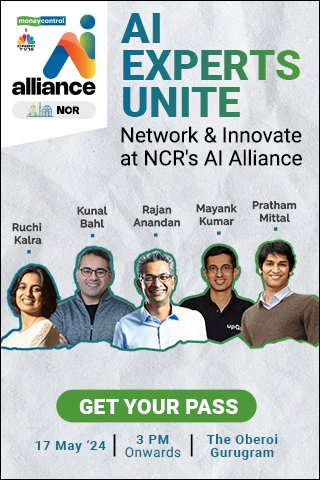
Moneycontrol and CNBC-TV18’s AI Alliance comes to the National Capital Region on May 17th, Friday

13th May 2024: Following the resounding success of its Bengaluru and Pune edition, Moneycontrol and CNBC-TV18’s AI Alliance is set to host its next chapter, themed ‘AI: Shaping the Future of NCR’ on May 17, 2024, at The Oberoi, Gurgaon. The summit promises to highlight the transformative potential of AI across various industries and its pivotal role in shaping the future of the National Capital Region (NCR).

Known for its diverse array of IT/BPM firms, multinational corporations, and a thriving startup ecosystem, NCR has been a key contributor to India’s prominence in the technology sector. With its inherent advantages, tech talent and potential in AI innovation, NCR was a natural choice for the AI alliance.

AI Delhi

The AI Alliance in NCR will serve as a platform for industry leaders, policymakers, and innovators, fostering collaboration and charting a path for NCR’s AI-driven future.

The event will be graced by distinguished speakers such as S Krishnan (Secretary, Ministry of Electronics and Information Technology), Abhishek Singh (Additional Secretary, Ministry of Electronics and Information Technology), Rajan Anandan (Managing Director, Peak XV Partners) Kunal Bahl (Co-Founder, Snapdeal and Titan Capital), Rafee Tarafdar (CTO, Infosys), Prateek Maheshwari (co-founder PhysicsWallah) Varun Alagh (co-founder and CEO, Honasa Consumer) Mayank Kumar (Co-founder & MD, upGrad), Pratham Mittal (Founder, Masters’ Union) and Ruchi Kalra (Co-Founder, OfBusiness and Oxyzo).

The event will also have top executives from Nandan Nilekani’s people+ai to take the audience through why India can emerge as the AI use case capital of the world.

Attendees can expect to gain valuable insights as the discussions touch upon themes ranging from India’s AI mission, AI regulation and policy, impact of AI on the IT sector, building population scale AI, its implications on education, to the essentials of building a thriving AI startup ecosystem in the region. The audience will also get a chance to interact with founders, policymakers, and thought leaders, and explore networking opportunities and potential collaborations.

Chandra R Srikanth, Deputy Executive Editor, Moneycontrol said, “With the NCR city chapter of AI Alliance, we are deepening our commitment towards fostering and building an AI community in India and shining a light on its impact across sectors. Just as our Pune edition highlighted the city’s vibrant auto, Saas and deep tech ecosystem, this event will delve into NCR’s tech DNA and the opportunities it can leverage in the AI era. It will serve as a platform to boost collaboration and innovation.”

The Delhi chapter of YES BANK & CNBC-TV18 Growth Summit in association with Max Life Insurance puts a spotlight on India’s $10 trillion economy plan

14th March: The Delhi edition of YES BANK and CNBC-TV18’s – The Growth Summit: A Vision to a $10 Trillion Economy, in association with Max Life Insurance, was organised on Wednesday. The summit brought together policymakers, industry leaders, startup founders, and a diverse range of experts to engage in substantive discussions regarding India’s economic growth. The primary focus of the summit centred on the government’s ambitious 25-year plan aimed to position India as the world’s third-largest economy, boasting a GDP of $10 trillion.

A spokesperson from CNBC-TV18 extended a warm welcome to the attendees, moving to the opening remarks by Prashant Kumar, MD & CEO of YES Bank. “In the last few years, we have witnessed large investments in the infrastructure landscape, taking the country to the next-level. India has come out as a strong force with all the headwinds happening around the world, and to continue that, we need to remain self-insulated and self-reliant. Moving towards becoming the third largest economy is not enough; the ultimate goal should be that every Indian benefits from this growth. It is crucial for all of us to work collaboratively and focus on areas including—inclusivity with growth, manufacturing, boosting exports, supporting MSME and the startup ecosystem and funding innovation. The involvement of the government and private sector together is the key to achieving the $10 trillion economy plan.”

During his address, Mr Kumar announced the launch of ‘Yes Private’ in Delhi, which is the Bank’s newest market offering that aims to partner HNI Business owners and C-Suite executives in their endeavour to leverage the opportunities on the road towards a $10 trillion Indian economy.

The event kicked off with a fireside chat on ‘Leading from the front: How to Live up to your Strategic Vision’ in conversation with Mr Suresh Narayanan, CMD, Nestle India he said, I feel fortunate to be a part of a 160-year-old company that values providing experiences to people, not just selling products. Nowadays, digitisation has levelled the playing field for everyone, and e-commerce and AI are helping us plan better. However, with tech being such a driving force presently, we need to utilise it responsibly and remember technology is here to serve mankind and not the other way around. Lastly, trust, empathy and compassion are not just buzzwords and the long-lived companies are going to be those where this five letter ‘TRUST’ is placed in everything they do.” The discussion was moderated by Ms Sheeren Bhan, Managing Editor, CNBC-TV18.

The event continued with another interesting thought-provoking discussion on ‘Unveiling Indian Healthcare as a Model of Growth & Excellence’ in conversation with Dr Naresh Trehan, Executive Chairman, Medanta he stated “Every person in India deserves access to decent healthcare. With the introduction of the Ayushman Bharat scheme, the industry has extended a lifeline to over 500 million individuals who were previously left out of the healthcare facility. It’s surprising to admit that healthcare expenses alone are driving 2 to 4% of our population below the poverty line each year. Considering the extent of our nation’s growth, with a population increasing by 25 million annually, the challenge before us is immense, but the steps taken by the current government through Ayushman Bharat have provided immense relief.”

Subsequently, there was another fireside chat on ‘Betting Big One on India: Identifying New Growth Opportunities’, Mr Sunil Vachani, Chairman, Dixon Technologies.

The fireside chat was followed by a special address by Mr. Prashant Tripathy, MD & CEO, Max Life Insurance. He said, “In India’s pursuit of becoming a $10 trillion economy, visionary policy initiatives stand as cornerstones of inclusive growth. From pioneering financial inclusion schemes and the development of robust digital infrastructure to the progress of our vibrant start-up ecosystem- these collective endeavours underscore the remarkable journey we’ve undertaken as an economy in the last decade. As we stride forward, India must prioritize policies that foster innovation, technological advancement, tackle income inequality, and promote sustainable development practices. These critical areas demand our unhindered focus, as we inch towards an economy that unlocks sustained development for one and all.”

The evening continued with an engaging panel discussion on ‘Facilitating the Emerging Stars of Indian Business’ with insights from industry experts Mr Akshay Ghulati (Co-founder & COO, Shiprocket); Mr Anirudh Arun (Co-founder, CEO, BluSmart Fleet) and Mr. Ish Babbar (Cofounder & CTO, Insurance Dekho).

The evening continued with an engaging conversation with Virendra Sehwag, Former Indian Cricketer. Talking about how the Indian team can bring home the World Cup, he said, “We need to play it like a knockout match, be brave and fearless and most importantly, make the right decision on the field. India has never lacked talent; we need to play aggressive cricket and not worry about winning.”

Concluding the summit was a thought-provoking session conducted by Kumaar Bagrodia, leading Neuroscientist & Founder of NeuroLeap, on ‘The Neuroscience of Investing’.

The Delhi edition of ‘The Growth Summit – Vision for a $10 trillion Economy’ underscored India’s trajectory towards economic prosperity as industry leaders and experts converged to chart a path towards a $10 trillion economy. The next edition of the summit will be held in Hyderabad on 15th March,2024.

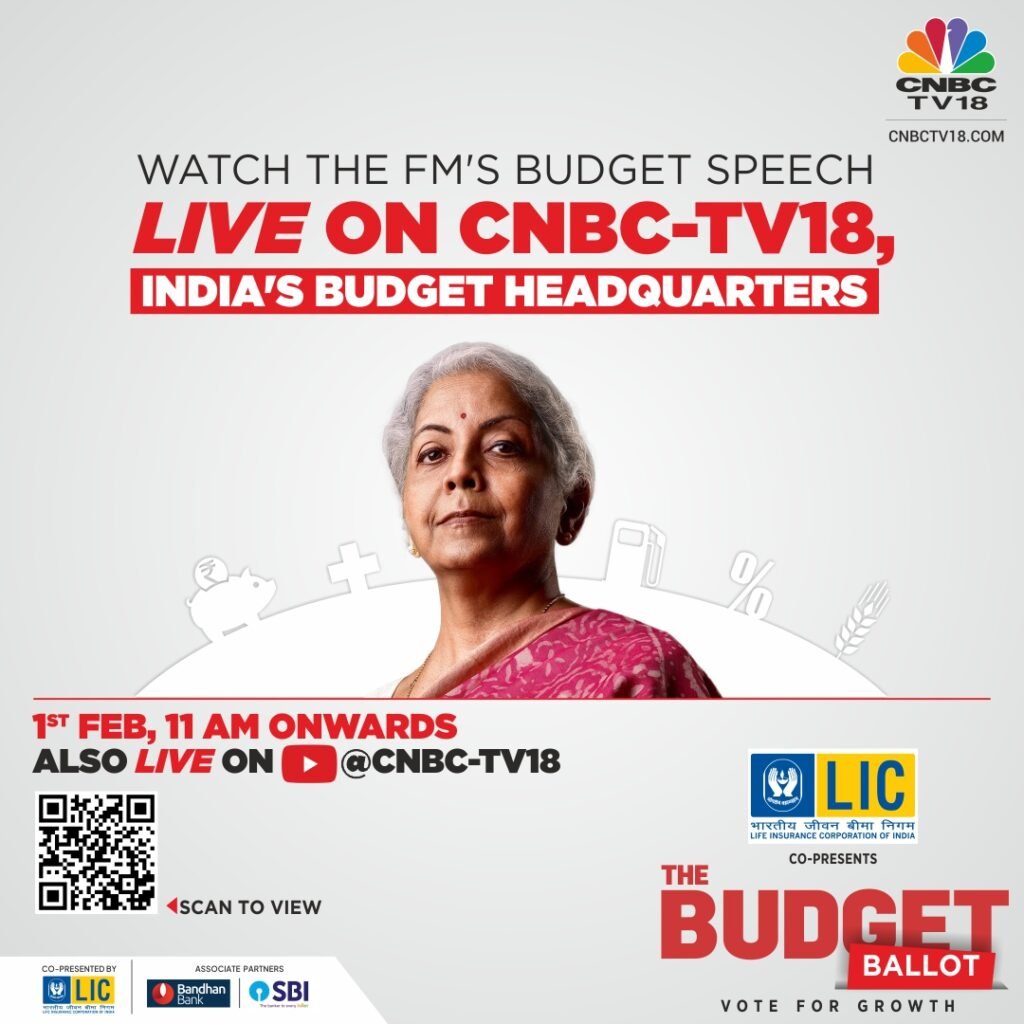
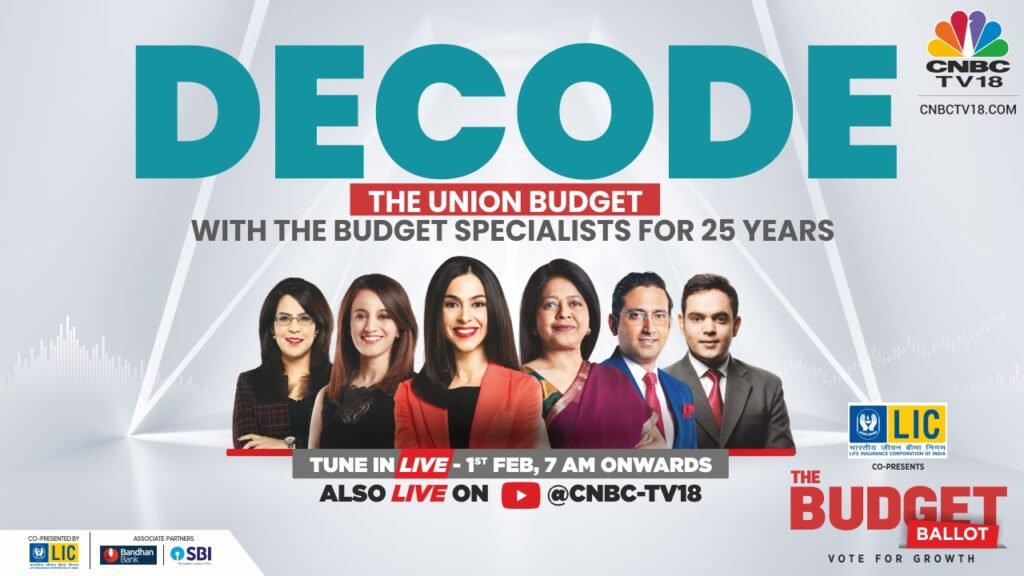
Get Ready For the ‘Budget Ballot: Vote for Growth” with CNBC-TV18 – India’s Budget Headquarters

1st Febreuary 2024: CNBC-TV18, India’s No. 1 English Business news channel, kickstarted its exclusive Budget programming with ‘The Budget Ballot – #MyBudgetWishlist’ campaign, a pioneering initiative that captured the nation’s pulse and given voice to the citizens’ expectations leading up to the Interim Budget 2024. With over 2500 entries received through the website and multiple on-ground touchpoints in Mumbai and Delhi, the campaign emerged as a significant channel for the nation to articulate its hopes and expectations from the Union Budget and the finance minister, especially as a run up to the upcoming general elections.

Budget 2024 CNBC-TV18 New Creative 1

This engaging initiative complemented the dynamic CNBC-TV18 programming lineup dedicated to offering in-depth insights and expert analysis in the run-up to the Budget as well as decoding the implications of the announcement for the audience.

The pre-budget shows comprehensively address various facets of the Budget, featuring well-researched information and cutting-edge analysis led by CNBC-TV18’s Esteemed Guest Editors such as Dr. K.V. Subramanian, Executive Director, International Monetary Fund and Former CEA; N.K. Singh (15th Finance Commission); Sajjid Chinoy (JP Morgan); Dinesh Kanabar (Dhruva Advisors). In the ‘Budget Market Masters,’ market veterans like Raamdeo Agrawal (Motilal Oswal Financial Services); Nilesh Shah, (Kotak Mahindra AMC); S Naren (ICICI Prudential AMC); Prashant Khemka (White Oak Capital); and Ashok Wadhwa (Ambit) discuss expectations of the markets and anticipated movements because of the Budget announcement.

Budget FM Speech CNBC-TV18 Insta

The comprehensive and well-rounded Budget Day reportage will include shows such as the “The FII View” where the viewers gain a perspective on foreign investments in India, featuring Robert Sockin (CITI) and Arvind Sanger (Geosphere Capital) sharing their expertise. Featuring the biggest voices from India Inc., leaders such as Dinesh Khara (SBI), Sanjiv Bajaj (Bajaj Finserv), Sanjiv Puri (ITC), Sunil Vachani (Dixon Technologies), Suneeta Reddy (Apollo Hospitals) will share their opinions & analysis of the Budget 2024 announcement. Through ‘Mapping the Macros’, experts such as Sajjid Chinoy (JP Morgan), Jahangir Aziz (JP Morgan), and Samiran Chakraborty (CITI India) will explain the macroeconomic landscape and in ‘The Tax Tangle’, Dinesh Kanabar (Dhruva Advisors), Rajiv Memani (EY) and Sudhir Kapadia (EY) will help decode taxation complexities.

“The CNBC-TV18 Budget Ballot campaign is a powerful forum for voicing our nation’s collective hopes & dreams from the Budget. We believe the Citizen must be at the centre of policy making and the Budget ballot is an effort to initiate a dialogue. This is our latest effort in making the Budget accessible to viewers, an endeavour we have been committed to for the last 25 years. Our experience, expertise and understanding of the Union Budget will ensure our coverage comprehensively decodes the fine print of the Interim Budget 2024 and amplifies the impact of the announcements, all this LIVE and in real time. With a stellar line up of industry leaders, economists, policymakers & global investors, CNBC-TV18 will bring you the most value-added analysis of the Union Budget”, stated Shereen Bhan, Managing Editor, CNBC-TV18.

Smriti Mehra, CEO, Business News, Network18, added, “Our dedication to being the foremost authority on business & financial news and insights is encapsulated in our programming lineup and the enthusiastic response to the #MyBudgetWishlist campaign. As Budget Day approaches, we aim to equip our audience with information that is relevant and useful to them in their financial journey. For Union Budget 2024, we have partnered with some of the most renowned brands such as Life Insurance Corporation of India, along with State Bank of India and Bandhan Bank. Notably, CNBC-TV18 being a multiplatform news brand, will be going LIVE on TV, website, and YouTube, ensuring that our viewers can access real-time updates and expert analysis seamlessly across various mediums.”

CNBC-TV18 Launches Hashtag MyBudgetWishlist Campaign: A platform for Citizens to share their views

27th January 2023: CNBC-TV18, India’s leading business news channel, announces Hash tag MyBudgetWishlist campaign, capturing the nation’s expectations ahead of the eagerly awaited Union Budget on February 1st. This unique initiative aims to offer citizens a platform to voice their opinions and ideas for the country’s future, as we also approach the General Elections. By encouraging citizens nationwide to participate, the #MyBudgetWishlist campaign seeks to amplify the voice of the public. Through a dynamic and engaging campaign, CNBC-TV18 seeks to become the bridge that connects the citizens with the decision-makers.

One of the distinctive features of this campaign is the CNBC-TV18 Budget Ballot, where people can submit their budget wish list online and offline. For online participation, individuals can visit the dedicated campaign page to share their expectations. To effectively engage the viewers about the upcoming budget, the channel launched an exclusive social media filter, enabling users to express their views.

CNBC

To extend the reach of the campaign a ballot box will be placed in selected colleges and multiplexes across Mumbai and Delhi this weekend where people can come and cast their expectations from the Union Budget. These Budget expectations collected will be shared with the Finance Minister. Furthermore, CNBC-TV18 will showcase these expectations during its comprehensive budget coverage, providing a unique insight into the sentiments and expectations of the Indian public.

Shereen Bhan, Managing Editor, CNBC-TV18 said, “For more than two decades, CNBC-TV18 has analysed the intricate details of the Budget, interpreting its repercussions on the economy, business, markets, and the general public. With the #MyBudgetWishlist campaign, this year CNBC-TV18 is empowering citizens to play an active role in shaping the nation’s economic trajectory ahead of the Union Budget. Every voice matters, and we want to amplify it as we approach the eagerly awaited Union Budget on February 1st. Let’s make this budget truly reflective of the aspirations of the people.”

Smriti Mehra, CEO – Business News, Network18 said, “The budgetary timeframe provides us with an excellent chance to reaffirm our commitment as a reliable investment partner for our audience. In the run-up to the General Elections, #MyBudgetWishlist becomes a crucial platform for citizens to articulate their expectations. CNBC-TV18’s Budget Ballot, both online and offline, provides a unique opportunity for individuals to contribute to the national discourse.

As the nation gears up for the General Elections, CNBC-TV18 invites everyone to be a part of this extraordinary initiative and contribute to shaping the economic future of the nation. Join the #MyBudgetWishlist campaign and let your voice be heard.

FM Nirmala Sitharaman inaugurates the 16th edition of CNBC-TV18’s India Business Leader Awards 2021

Mumbai: CNBC-TV18’s India Business Leader Awards (IBLA) is regarded as the gold standard in recognising business excellence in India. Continuing its legacy of honouring ‘Leaders of Change’, the brand geared up ahead of the 16th IBLA amidst all gusto with an exclusive TownHall event, held virtually on Friday, March 5. The knowledge-sharing discussion, hosted and moderated by Managing Editor and Anchor, Shereen Bhan where she welcomed the esteemed guests and asked them what their expectations are on how the banking sector will pan out over the next Financial Year along side Executive Editor, Latha Venkatesh, saw the Honourable Finance Minister, Nirmala Sitharaman shed light on ‘Paving the path for India’s Economic Resurgence’ along with eminent leaders such as K V Kamath — Former President of the New Development Bank; Zarin Daruwala — Cluster CEO, India and South Asia markets (Bangladesh, Sri Lanka and Nepal), Standard Chartered Bank; Uday Kotak — Managing Director of Kotak Mahindra Bank, Rajesh Gopinathan, CEO and Managing Director of Tata Consultancy Services; Dr. Sanjiv Goenka, Chairman of the RPG Group; Suresh Narayanan, Chairman and Managing Director – Nestlé India Limited; enlightened the viewers on various policies, budget norms, and key learnings that will pave the way for economic growth.

Speaking at the exclusive TownHall, FM Nirmala Sitharaman shared her thoughts on Cryptocurrency, saying, “We are working with the RBI on a host of issues such as cryptocurrency, ARC/AMC, DFI. The government is planning to take a calibrated decision on cryptocurrencies, and we want to make sure there is a window available for experiments in the crypto world. While the world is moving fast with technology, we cannot pretend that we don’t want it.” Adding to that, she also reiterated the need for the private sector to lend a helping hand by stating, “With all eyes towards the future, we want the participation of the Indian private sector to set the pace for India’s revival. Going forward, the government will also run the relay race with the private sector and come up with policies that are favourable to the private sector. With an eye towards utilizing and expanding capacity, we look forward to doing maximum work in the first quarter of FY22.”

Sharing his valuable insight at the TownHall, KV Kamath said that he sees the budget as an economic blueprint for the next decade, where things will surprise us in the positive as well as lay the roadmap for further growth. Along with the honourable FM and KV Kamath, each of these in industry leaders added immense value and perspective to the event. Amongst those was Zarin Daruwala who endorsed her support to Bad Banks and said that they, being a good thing, are clearly enabling Indian banks to focus on corporate lending and help aggregate debt. Reiterating the fact that its success will entirely depend on the kind of talent it is able to attract, Zarin also highlighted how simple must the legal process be in order for the bad bank to resolve quickly. Another luminary who impressed all with his outlook and forward thinking was Uday Kotak who praised India’s recovery in the recent quarter and said that he expects the investment cycle to kick start in the next 6 months to a year. Sharing the same thoughts, Suresh Narayanan affirmed to the fact that India’s consumption story continues to be strong and economically we need to stay positive about it because it is here to stay. He also mentioned, although India saw a bad Q2, Q3 and Q4 are showing signs of recovery.

Responding to some queries and legit concerns Hon’ble Finance Minister raised the level of optimism on India’s path to revival.

Watch the entire TownHall event at the link below: https://twitter.com/CNBCTV18News/status/1367797578599784448

CNBC-TV18 and Microsoft launch SMB UTSAV to recognize and reward unsung SMB heroes of the Indian economy

Small and Medium Businesses have been the backbone of the Indian economy. While Covid-19 did hinder their streamlined work, it also made them appreciate the role of modern technology plays in growth and prosperity in this digital age, and how it can help them step into the future. Driving this similar thought ahead and aiming to help SMBs in this long run – CNBC-TV18, Indian leading English business news channel has joined hands with Microsoft to launch ‘SMB Utsav’. This contest is an opportunity of recognition for all the unsung heroes of the Indian economy to get business and technology offerings worth upto ₹ 15 lakhs and bolster their growth in the new paradigm.

Started from 7th December 2020, this is a 3 month-long event, which will identify and award the best SMB for their business/organizational resilience every month. The aim is to provide a game-changing environment for small businesses that will enable flexibility, operational efficiencies, and increased productivity. This in turn will help the winning SMB to drive innovation and unlock opportunities. With the help of Investment Information and Credit Rating Agency of India(ICRA) analytics – the knowledge partners, CNBC-TV18 will shortlist businesses from the received entries and assess their mettle that helped tide over the recent adversities. The winner will be awarded benefits of worth 15 lakh which will include technology benefits, business benefits by Microsoft and country wide promotion on the CNBC-TV18 platforms.

The CNBC-TV18 editorial panel along with ICRA will conduct a 3-phase methodology (Judging process), which will be a deliberate procedure designed on a combination of various criteria, including online submission, shortlisting, and at the final stage,  the jury meet.

Commenting on the same, Smriti Mehra, CEO at CNBC-TV18 said, “Considering the situation of the current time, we have realized that implementation of technology is a must for every business. With more and more innovations coming into the picture, it is only practical that SMBs adapt to them and take their businesses to the next step. Using the expertise of Microsoft, we want to help businesses realize their potential and give them a boost towards their growth with digital transformation and help uplift the economy of our country.”

Interview: Rakesh Jhunjhunwala in conversation with Shereen Bhan on CNBC-TV18

Q: Before I talk to you about the year ahead, I wanted to understand whether your mood has changed? Since we last spoke in June, which was the time that the pandemic was raging in India, we were also in the midst of the harshest lockdown, you had said then that you were getting a tad frustrated. In light of the developments that have taken place, the reopening of the economy, movement on the reform front the government has undertaken, are you less frustrated today Rakesh Jhunjhunwala?

A: No, I never said in June that I was frustrated. What I had said that time was that I am a tad frustrated by the slow pace of reforms in India. I was very bullish for the market even at that time. And I have no reasons – I think that pace of reform is picking up and in the markets, I remain as bullish as ever. I was extremely bullish in June and I am extremely bullish even today.

Q: You were bullish on the markets even in June but you are right to point out that you were frustrated with the pace of reforms. So let me ask you about whether the manner in which the government has responded to the COVID crisis, we have seen more agricultural reforms, we have seen labour reforms being announced, the Prime Minister (PM) hosting a round table with sovereign wealth funds, pension funds, trying to draw in foreign direct investment (FDI) and foreign portfolio investment (FPI) flows to India. How does the India story stack up on the reform front to you today?

A: We must remember one thing that it is not easy to do any reform in India. The agricultural reform at least if I talk to five agricultural experts and three agricultural companies, everybody is very bullish on them but look at the way the governments in Punjab and Haryana and Maharashtra are reacting. I feel personally that the government is doing extremely good reform and is hell-bent to do the reform regardless of the political opposition whether from within or from the opposition.

So I have to see things in the context. We are in a democracy, we have to carry people with us. I am extremely happy with the kind of reform the government is doing and I think the next one – they are going to pass the bill on electricity reform in parliament which is already. I think that is also a game-changer and I think there is going to be the only strategic sale of public sector undertakings (PSUs).

So I think I am extremely happy now that we are catching up the pace of reforms, we are making efforts to attract capital both foreign and Indian. We Indians must realise that in a democracy like India, it is not easy to have reform and change and there is a vested interest for everything. So rather than June, my frustration is reduced by 80 per cent.

Q: Given where the global economy finds itself with the accommodative monetary policies continuing across the world, bond-buying programmes getting enhanced, what does it mean in terms of liquidity and flows into India? When we last spoke you were talking about how foreign institutional investors (FII) ownership in Nifty50 has halved in the last three years, what do you believe it is going to look like going forward?

A: I think the money is going to come not slowly, not fast but in a tsunami. Because India is one of the last frontiers of markets where there can be substantial growth in the world, the world is awash with liquidity, that liquidity has to find an outflow and the ownership in India now is far lesser than it was three years ago. So I think there is going to be a tsunami of capital into the stock markets both foreign and Indian because I think most Indians and foreigners are still not bullish about Indian economy and the signs of the economy and the reform, according to me, is going to – this year suppose you have 10 per cent negative growth, I think next year we will have 10 per cent positive growth so we will reach levels of 2019-2020 and in 2019-2020 we lost 15 days in March and after that, I believe we are going to grow 6-7-8-9 and 10. So we may need – it is my opinion, it may be right or wrong – we will reach the double-digit figure in five years. We have got uncertainties on our side and I am bullish on India more than anything else for the economic growth that lies ahead for India.

Q: A categorical assertion that you believe that there is a tsunami of capital that will come into India, into the markets and FDI as well. But what will that then mean in terms of sectoral themes that you expect to play out, sectoral bets that you expect to play out?

A: It is a relay race, it is a buffet, and everybody is going to join in. So you believe in the Indian story and choose your stocks. I am bullish that the Indian economy will grow. The fact is that corporate profits to gross domestic product (GDP) in India is at all-time lows. So there is going to be a double-whammy. Percentage of profits to GDP is going to go up and the size of the GDP is going to go up and then I believe with low-interest rates and with low exposure to equity of Indians and in general, a favourable outlook towards emerging markets and especially towards India is going to lead towards a tsunami of money in the markets. I feel India is where we were in 2003.

Q: You talked about how India finds itself poised at where it was in 2003, what is your hypothesis there?

A: My hypothesis is that India is going to – 2003-2009 we grew 8-9 per cent. I think the next 4-5 years we are going to get there. The second thing is there is probably disbelief in the markets, market have unbelievable strength. Worldwide I think there is going to be very low-interest rates at least for the next 3-4 years, there are a lot of reforms that has taking place, corporate profit to GDP are at all-time low and I think GDP is going to go up, percentage of corporate profits to GDP is going to go up, Indian companies are – I mean at their best efficiencies as they ever have been. We have got a clean system, lot of rouge entrepreneurs have been removed. So I think all these factors – I think India is going to enter a period of very high growth. I see a different India than most Indians.

I see growth and prosperity coming, I could be wrong and that coupled with the platforms to garner equity into this country, both local and foreign. I think we are in a market which will surprise everybody on the upside.

Q: Let us talk about your big calls now and I want to start by talking to you about pharma because when we last spoke this is what you said to me on pharma, you said it has hit 30-40 runs at the moment, it will hit a double century. It has been a rank outperformer – whether it is on account of COVID, whether it is on account of China plus one strategy – this is a sector that clearly as seen a fair degree of interest. Do you believe that there is more steam here?

A: Last time I told you 30-40 runs, this time I will tell you 40-42 runs.

Q: So you will continue to place bets here?

A: No sector is going to have linear growth, after a rise every sector is going to stop for some time, consolidate and then make the next move. So I am not smart enough to know that now this sector has gone up, it is going to consolidate for some time so let me sell and buy the other sector, then the other sector after three months will peak out, then I should buy back the pharma sector- I am not so smart to know when this will happen. I know that it is going to go up, there are going to be periods of consolidation and correction and I don’t attempt to time it so thinly.

Q: You said that you believe this market is going to surprise us, where do you believe this surprise is going to come in from and I will try and link this to what you told me previously. You said some of the biggest winners will be found in the most beaten sectors. So the surprise element – where do you see that coming in from? Give me some of the spaces?

A: In most battered stocks, it could be metals, it could be the public sector. Metals, the public sector, other areas of battered stocks, other areas where there has been total disbelief in the market over years, I think that is where the highest returns will come.

Q: Since you talked about the public sector and one of the themes that you were hoping will take off finally is the strategic disinvestment theme. In fact, I was speaking with the Economic Affairs Secretary and he was very clear that the impediments are there, they acknowledge them for companies like BPCL, Container Corporation, etc. but they still feel that they will move ahead. Do you believe that this is going to be a big theme that will be revisited this time around?

A: No ma’am, see there are two parts for the public sector. One is the strategic disinvestment but how do you handle other valuations. Today you see HPCL, BPCL so many stocks, maybe Cochin Shipyard – I don’t want to name too many stocks and I don’t own any of them, maybe small ownership in HPCL. The question is – one is you have got to realise value by strategic disinvestment. When you are going to realise value? When the owner treats his share better. Buyback by HPCL is the first indicator that the government of India now wants to be careful and strive to work to enhance the valuation of its assets. That is one medium by which I think the value of the public sector stocks will go up. A basic change in attitude by the government of India to treat its own assets better – not just do things like sell HPCL to IOC, sell REC to PFC, but do things in a more thoughtful manner which will create shareholder value and the first indicator is the buyback by HPCL and I don’t think this has happened without the knowledge and consent at the highest levels of government, that is my guess.

That is one way by which public sector stocks will gain value and second, of course, is a strategic investment and third is asset monetisation and they have – I am told they are promised there will be no ETFs, as far as possible they will be no sale except strategic disinvestment and they will treat that asset better and not disinvest them in a haphazard manner. I think that could lead to re-rating and re-evaluation of the public sectors stocks in a massive manner. So strategic sales is ultimate, but there are other factors which will lead to better valuations.

Q: So you anticipate a re-rating if of course this coherent strategy not just on strategic disinvestment, but enhancing shareholder value for the public sector stocks plays itself out?

A: The first indication is the buyback by HPCL and it makes eminent sense. I think this buyback by HPCL means they are going to do this in a lot more companies, in a various manner by no haphazard disinvestment, by buybacks, by whatever way. But the owner of these assets mainly which the government of India has now realised that we must work with governance and with legitimate methods to enhance the value of their assets. The buyback in HPCL is not only important for HPCL it is important for what it is indicated, but I also have no information this is my judgement from what has happened. Realising that there is a lot of room for evaluation in public sector stocks and that was not happening because the government was doing in a haphazard manner. Now the government is going to manage the assets better that is what HPCL buyback indicates.
Exclusive Interview: Brian Moynihan Chairman and CEO of Bank of America in a conversation with Shereen Bhan on CNBC-TV18

Q: What do you make of the global recovery? Most CEOs that we speak to do seem to suggest that perhaps the worst is behind us, that the crisis has passed. Would you agree?

A: If you think about the major economies of the world, whether it is European, Chinese, US, Indian economy – if you look at economies that are on the further side of the healthcare crisis because this is a healthcare crisis that has an economic impact, you can see that China’s economy is growing again and it is bigger than it was. If you look at the US, expectations from our experts this quarter is that you will see 30 per cent plus growth in GDP for Q3. So we were 32-33 per cent down in Q2, 30 per cent plus up in Q3 which leaves you at about 95 per cent of the size you were the year prior to the crisis, which is a big restoration of the economy. In Europe likewise, you are starting to see it come back.
However, it is all going to be about the healthcare crisis. Today and yesterday the concern is the cases rise, will there be further measures to control and shutdown and that may make the recovery ebb inflow. However, right now we have restored a major part of the economies in the world.

Q: You spoke about the ebb inflow that is expected given the fact that we are now seeing a rise in COVID cases across the US and Europe. What is the worst case that is being factored in at this point in time? We are now starting to see local restrictions, lockdowns being re-imposed, what is the worst-case scenario that is being factored in today?

A: Our research team has the US growing in Q4 and then growing in each of the quarters next year and total growing 4.5 per cent or so next year. We have India down 9 per cent in 20 and then up 8 per cent. So people are factoring in those ebbs inflows, they are probably not factoring in a worldwide shut down again. However, you don’t see that in government resolutions as you look at the economies across the US or in different conditions. You are seeing that the ability to control the hospitalisations in a serious outcome because the treatment regimens are better etc and we are in a race for a vaccine which is somewhere out there ahead of us. So now the question is what are you going to do between now and then? think the nature of the controls appear to be different although we have to take this virus very seriously – wear a mask, social distancing and all those things I think the understanding of that is much deeper in our populations than it was in March and April. We didn’t understand how the virus was transmitted back then, so the shutdown and the belief that you had to close public transportation and things like that are not the same right now.

Q: In terms of the central bank as well as government interventions, we have seen a whole bunch of stimulus packages being announced not just in the US but across the world. What is the expectation now given where we find ourselves with global growth and specifically in the US what next now in terms of intervention?

A: You got to remember that this is a healthcare crisis and till the healthcare crisis is behind us the central governments around the world, governmental administrations around the world including the administration in the US, basically in March, April and May unloaded tremendous monetary stimulus, as well as a fiscal stimulus which has had a strong offsetting effect and that, is why you got this fast snapback to the highs. You are at 95 per cent of the economic size in the US immediately because of what the public sector did through monetary stimulus and fiscal stimulus and so all that has worked.

The issue now is that it has gone on longer than people thought. So now the question is, as you look across the range of industries, certain industries are back and the revenues are there, certain industries have fared well in this, but some other industries need another stimulus in my mind to help those people make it to the other side of the crisis. So the focus can be narrower but you still need some help both on the human side and also on the economic side to make those industries cross the river and get to the other side

Exclusive Interview: Salil Parekh, MD & CEO of Infosys in conversation with Shereen Bhan on CNBC-TV18

Q: Let me start by asking you about the transformation strategy that was put in place when you joined the company almost 3 years back in 2018 in January. The focus then was on winning large deals, on becoming more relevant in the digital space and skilling employees as well as further efforts to localize. Now you have been able to achieve good metrics on each of those parameters that you had set out. So, as you start your fresh year, is there going to be a new strategy, will you do a little bit of the same, will it be something different, are you going to sharpen and refine the current strategy? What should we now expect?

A: I think absolutely — we have had many of those areas – digital, reskilling, and focus on what we do with our employees, all of that working well. Our focus today going ahead is continuing with where we are. We close out the third year in March and at that stage, we will start to look at what could be the further refinement. What we are really seeing is much more work on digital transformation. As you know, we reported 25 per cent growth in digital in the previous quarter and we see that traction continuing. About half our companies now focused on digital. We are seeing more and more work in the cloud space. We launched our own cloud brand ‘Infosys Cobalt’ a few weeks ago. So, that should continue and much more refinement in that direction.

Q: On the digital front, because when you posted your numbers, you did talk about 50 per cent of revenues coming from the digital business soon. Can you quantify that for us? What is the timeline that we are looking at?

A: Soon means in the next few quarters because we have been growing at this very good pace of 25 per cent for some time. Even though this whole crisis environment, with the global economy in a difficult situation, our growth in digital is continued. The focus for many large enterprises is really to adopt digital and drive it through. So, really in the next few quarters, we hope to see us crossing over the 50 per cent.

Q: What we are seeing today is a resurgence of cases across the US and Europe when it comes to COVID. Is that a concern? Are you starting to hear nervousness from clients already on the back of that?

A: Today we are seeing that the cases are increasing, the model that we build or the scenarios we built had anticipated some of that to come about. Our growth guidance, which is 2-3 per cent, bakes in some of that. Of course, if there is an extreme scenario, we have not baked it in, but we do not see that coming today and we don’t see at this stage any nervousness from our clients especially on the digital portfolios.

Q: I want to talk a little bit about what we are now starting to see in a post COVID era – when I spoke with Rajesh Gopinathan he said that we are at the start of the first phase of a multi-year tech transformation cycle. How are you reading that and what is this going to mean structurally for each of your businesses going forward? What is it going to mean in terms of spends as well that you foresee?

A: The technology world is really going through a massive change and any large enterprise is leveraging technology for different uses. So, you look at businesses whether in retail, in banking, in insurance, everyone is leveraging technology to make sure that they are connected with their consumers, their customers in a direct way, in a digital way. All of that is a benefit for us and Infosys because the more there is focus on these digital technologies, the more we see growth in the coming years. Once we get beyond the COVID situation, my sense is we will come back to where we were as we entered it. We had a very good growth pace of 9.8 per cent; my sense is we will start to come back to that and now this wave has further accelerated.

CNBC-TV18 in association with Standard Chartered Bank announces the 2nd edition of ‘Leadership Collective: India – an Investment Magnet’

The unprecedented public health crisis has set in motion the wheels of change as the world heads towards the road to recovery. India promises to play an integral role as the global economy nears a reset in its scale of operations. In a bid to explore the myriad untapped opportunities for businesses in India, CNBC-TV18, India’s leading English business news channel and Standard Chartered Bank is all set to virtually host the 2nd edition of ‘Leadership Collective: India – an Investment Magnet’ on 13th October 2020, 5 pm onwards.

Regarded as the last leg of this year’s India Business Leader Awards, the virtual event revolves around harnessing newer avenues that will aid the country in emerging as the most favourable investment destination. The event aims to dive deep into the economic policies that can be implemented to achieve near and long-term growth for various sectors and businesses.

The Leadership Collective will see Sanjeev Sanyal, Principal Economic Advisor, Ministry of Finance, GOI as the Keynote speaker and Amitabh Kant, CEO, NITI Aayog presenting the concluding address to the audiences. It will also host a panel discussion focused on ‘India: World’s New Factory’ and feature business leaders such as Suresh Narayanan, Chairman of CII National Committee of Food Processing Industries; Martin Schwenk, MD & CEO, Mercedes-Benz India; William L. Blair, Vice President & Chief Executive, Lockheed Martin India, ZarinDaruwala, CEO, India, Standard Chartered Bank, Sharad Tyagi, MD, Boehringer Ingelheim India & President, OPPI. The panel shall be moderated by Shereen Bhan, Managing Editor, CNBC-TV18, who will also conclude the show encapsulating the takeaways and actionable insights that will help to place India on the world business map.

To know more about the event you can visit their website: http://cnbc-tv18.leadershipcollective.in/index.html