Tag: Bill and Melinda Gates Foundation

Aiims New Delhi And Iiti Drishti Cps Foundation At Iit Indore Supported By Nmicps Unite For Setu 2024

New Delhi, 20, 2024: AIIMS New Delhi and IITI DRISHTI CPS Foundation, under the umbrella of the National Mission on Interdisciplinary Cyber-Physical Systems (NMICPS), launched by Prime Minister Narendra Modi in the year of 2018, proudly announce the successful launch of SETU-2024, a revolutionary initiative aimed at propelling digital healthcare innovation in India.
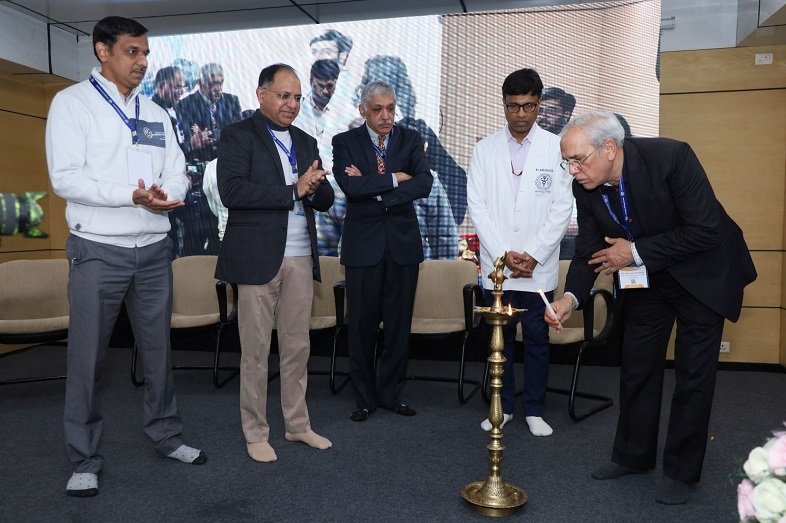
AIIMS New Delhi and IITI DRISHTI CPS Foundation at IIT Indore,

SETU-2024, a collaborative program, serves as a unique platform for the convergence of AIIMS New Delhi and DRISHTI CPS Foundation, fostering the commercialization of cutting-edge healthcare technologies. This unprecedented collaboration seeks to reshape the healthcare landscape in India by driving innovation from educational institutions and early-stage deep tech startups into real-world applications.

The program brought together key stakeholders from across the nation, including Directors and Senior Doctors from eight AIIMS, researchers from various IITs, technology developers from NITs/IIITs, and experts from Medical and Engineering Institutes. The closed-door setting at AIIMS facilitated meaningful connections between technology developers and potential users, effectively bridging the gap between innovation and implementation.

Prof. Bhupesh Kumar Lad, Project Director of DRISHTI CPS Foundation, welcomed dignitaries and participants, emphasizing the pivotal role of innovation and the foundation’s efforts in fostering collaboration between academia, startups, and healthcare organizations.

AIIMS New Delhi and IITI DRISHTI CPS Foundation at IIT Indore, 2

The event featured engaging Panel Discussions with experts from various AIIMS, IGIB, National Health Authority, University of Michigan, Bill and Melinda Gates Foundation, and William J Clinton Foundation, among others. These discussions explored challenges and opportunities in digital healthcare, highlighting its pivotal role in advancing the Indian healthcare system. Parallel round table discussions addressed specific healthcare challenges in Radiology, Neurology, Rare Diseases, and other critical areas.

Dr. M C Misra, Former Director of AIIMS New Delhi, and the chief guest of the program, emphasized the crucial role of digitalization in the current healthcare landscape. Dr. M. Srinivas, Director of AIIMS New Delhi and the Guest of Honor, underscored the imperative to develop frugal and cost-effective healthcare solutions, aligning with the vision of achieving ‘Atma Nirbhar Bharat’ in the healthcare sector.

SETU-2024 showcased a diverse range of hardware and software products developed by startups and academic researchers funded and mentored by DRISHTI CPS, including decision support systems, 3D modeling solutions, simulation tools, and digitization platforms.

Aditya SG Vyas, CEO of DRISHTI CPS Foundation, concluded the event by highlighting the importance of fostering deeper connections and sought more collaborative efforts and knowledge sharing. With the support of the Department of Science & Technology, Government of India, IITI DRISHTI CPS Foundation remains committed to catalyzing advancements in Digital Healthcare, contributing significantly to the enhancement of healthcare services in India. SETU-2024 stands as a visionary initiative, uniting stakeholders to bridge gaps, foster partnerships, and pave the way for rapid advancements in healthcare technology.

About 60% married women use modern contraceptive methods in Rajasthan – PMA India Survey

Jaipur: One of the globally acclaimed universities and renowned research institutions, IIHMR University, Jaipur, has been implementing project PMA in Rajasthan. Performance Monitoring for Action or PMA involves India as one of the program countries out of the other 9 countries which include Ethiopia, Kenya, Burkina Faso, Nigeria, Niger, Uganda, and the Democratic Republic of Congo. The project is implemented by IIHMR University, Jaipur in collaboration with Jhpiego, Bill & Melinda Gates Institute for Population and Reproductive Health at the Johns Hopkins Bloomberg School of Public Health with support from the Ministry of Health & Family Welfare, Rajasthan. The project is funded by the Bill and Melinda Gates Foundation.

There has been a gradual increase in the use of modern contraception among females of Rajasthan in the reproductive age group – from 52% in 2016 to 59% in 2020 among married women. Further, the PMA study reveals that rural women and urban women already have on average 2.4 children and 1.9 children, respectively, by the time they start using contraception. There has been a significant improvement in the stock availabilities of injectables over the past years in public facilities. Also, as per the study, female sterilization has been a widely used method among women over the years. Another key finding observed was the percentage of the time contraceptive methods were discontinued. Around 40% of the time, methods were discontinued within 12 months; 31% discontinued for other reasons while 9% did so to become pregnant. The 14% of females, however, discontinued switching to another method.

76% of women who were using a method and 31% of women who were not using a method said it was a joint decision of using a contraceptive method between them and their partners. The women who work outside of the house are more likely to use a modern method than those who are not. And among all the women who were surveyed, the rural women were the ones, who got engaged in sexual activity earlier, married earlier, and gave birth earlier than urban women, however initiated contraception later. Almost 20% of the young women were married by the age of 18 – 4% had given birth and only 3% of women used contraceptive by that age.

Apart from family planning, the survey also shared the findings on COVID-19 from the same households. About 84% of households reported a complete or partial loss of income, and 39% reported complete loss of household income. Speaking about the health facilities, 32% of them were closed during COVID-19 restrictions, of which, 69% were closed for a month or longer duration. There were about 48% of women who needed to visit a health facility during COVID-19 restrictions avoided visiting a facility due to fear of COVID-19 at the facility. Almost 96% of all women had at least some concern about getting COVID-19, with 69% reporting being very concerned about getting COVID-19. 35% of women who needed to visit a health facility during COVID-19 restrictions were not able to access health services. 15% of women left their current community to avoid COVID-19 while 83% of women living in a household that lost partial income reported a large, moderate or small loss of personal income. The women in the union, who reported more economic reliance on their husband/partner during COVID-19 than before the COVID-19 restrictions were about 63%. The women worried about the impact of COVID-19 on their household’s future finances were 83%.

In Rajasthan, data collection is led by the Indian Institute of Health Management Research (IIHMR) University in Jaipur. A sample of 134 enumeration areas (EAs) was drawn by the International Institute for Population Sciences from a master sampling frame. In each EA, households and private health facilities were listed and mapped, with 35 households randomly selected in each EA. Households were surveyed and occupants were enumerated. All eligible females ages 15 to 49 were contacted and consented to interviews. The final completed sample included 4,577 households (98.8% response rate), 5,405 females (98.1% response rate) and 575 health facilities (98.5% completion rate). The first round of data collection was conducted between August and October 2020.