Tag: ASSOCHAM

350 tribal artisans to be handpicked under ASSOCHAM TEDP program

New Delhi: With an aim to uplift the tribal community and instill the idea of entrepreneurship, the national industry body-The Associated Chambers of Commerce and Industry of India in association with the Ministry of Tribal Affairs has kick-started their ‘Tribal Entrepreneurship Development Programme (TEDP), with a target to identify at least 350 tribal artists and help them expand their enterprises before 31st December 2020.
The tribal community comprises nearly 8 percent of India’s population. The central government initiated the program to get the tribal communities in the mainstream, leverage their strength, and to help them contribute to the process of Nation building. This is in line with the Aatmanirbhar Bharat Abhiyan announced by the central government to initiate self-sustenance and would help in creating employment-generating opportunities for the tribal community.

Shri. Arjun Munda, Honourable Union Minister of Tribal Affairs, Government of India stated that there is a huge amount of ignorance about the tribal heritage and products. “Skill development and training is the need of the hour, so as to make them confident, self-reliant, financially independent and to develop and build resilience in them,” he said.

The minister explained that the program designed to develop entrepreneurial skills in tribal artisans by the ASSOCHAM is a kind of value proposition that they were looking at. “Hopefully, it will alter the path towards growth and inclusiveness for the tribal community in the country,” he said.

The program would identify artisans engaged into segments like Tribal Textiles, Paintings and Wall art, Superfoods, Traditional Medicinal Plants and Products, and Forest Produce. The artisans would be selected for the program from all across the country.

Each selected one amongst the tribes’ pan-India will be assessed and the training module will be designed on the basis of this assessment. The training will be aimed at improving the skillset based on the area of their expertise and developing new designs for their products as per market demand. Skills such as how to market their products on various platforms, how to maintain checks and balances, better accounting practices for managing finances would be taught and emphasized upon.

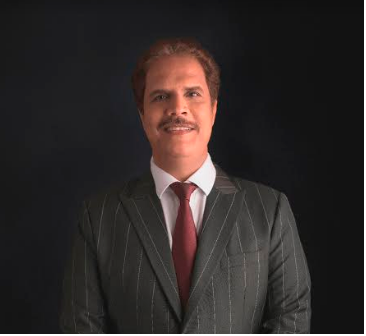
Dr. Niranjan Hiranandani, President, ASSOCHAM said that the program will ensure that no one remains without the opportunity to progress and grow. “To support India’s vision of becoming Aatmanirbhar, the ‘Tribal Entrepreneurship Development Programme’ would try and optimize the contribution of tribal community to the growing economy of our country,” he said. The training that will be given at the CoE will make sure that the potential of approximately 8 percent of our population must be fully developed and leveraged,” added Dr. Hiranandani.

Mr. Deepak Sood, Secretary-General, ASSOCHAM, said that there are several challenges and bottlenecks that inhibit the growth process of creating self-sustainable enterprises. “These artisans face challenges such as lack of financial linkage and market access. At the center, we are trying to explore avenues of propelling the process and creation of robust tribal brand identity and in the process – build and enhance the entrepreneurial capabilities of the tribal artisans,” he explained.

The program is a sustained multi-stakeholder, multi-institutional collaborative initiative by the apex industry body ASSOCHAM to address the needs and to work for the upliftment of the tribal communities in the country.
Let India’s 7 Crore Traders Become Ambassadors of Vocal For Local, Says Experts At ASSOCHAM’s ‘Wisdom Series’

The Associated Chambers of Commerce and Industry of India (ASSOCHAM), one of the apex trade associations of India in association with ITC Sunfeast concluded the third edition of its Wisdom Series lecture titled ‘Role of Consumer Voice’ on the theme of ‘Aatmanirbhar Bharat – Vocal for Local – Moving towards Self-Reliant India’. The event saw an expert panel consisting of Prof. Bejon Kumar Misra, International Consumer Policy expert, Shri Praveen Khandelwal, National Secretary General, Confederation of All India Traders and Mr Anil Rajput, Chairman, ASSOCHAM FMCG Brand Promotion and Protection Council holding an insightful discussion on retail chain utilisation, quality control of products and role of small and medium-sized enterprises to promote local MSMEs and industries to achieve a self-reliant India.

Highlighting the crucial role played by retail traders in pushing the agenda of Vocal for Local, Mr. Praveen Khandelwal said, “Traders can play a major role here as India’s 130 crore population have the first contact with the trader. For any kind of requirement, they approach a trader first. We have more than 7 crore traders and they can play a crucial role in this aspect. Every trader in the country can be a brand ambassador for Vocal for Local and Aatmanirbhar Bharat. This can be a great contact point for launching a vicious campaign as to why we need Vocal for Local and Aatmanirbhar Bharat as there are several in this country who do not know the real value of buying local.”

He further added on how liberating traders from license raj can propel consumption, “Today if you want to start a business or manufacture a product, then you need 28 types of licenses. How can manufacturers plan to produce if they have to get 28 licenses? Most of these licenses are redundant and they have been existing since the pre-Independence era. The producing sector should be liberated to the extent that it becomes easy for the sector to concentrate on producing more and not put their mind on how to reduce costs. They need to be given freedom from the command of multiple authorities.”

Furthering the discussion by focusing on how small traders in the value chain can be amply used to realise the goal of Aatmanirbhar Bharat, Mr. Bejon Kumar Misra said, “There should be an inventory of the existing industries we have, their capacities, their core competencies and what are the other applications of their skills. Then we need to have an inventory list of products that are being imported but can also be manufactured domestically. Once these two lists are matched and steps like incentivising small scale manufacturers, linking of medium-scale manufacturers to large-scale manufacturers by becoming an ancillary part of them in terms of outsourcing and sub-contracting are taken then am sure that we will be able to utilise a lot of unexplored capacities. In order to utilise the full potential of small manufacturers, they need to be helped which means our internal procurement system, be it government or private, must develop a good supply chain.”

Both the experts agreed that there needs to be a standardization of manufactured products to encourage domestic and global consumption. Mr. Bejon Misra in this regard said, “The cornerstone of Aatmanirbhar Bharat is quality. We must bring in standards and regulations that assure the consumer of quality and safety. If we want to become a manufacturing hub then we need to bring in the best quality of the world in the goods manufactured in India. If we can produce the best quality domestically, then we will not only capture the Indian consumer but also the global consumer. The government must incentivise local manufacturers not just through subsidies but by upgrading their technology, knowledge and incentivising good manufacturing and distribution practices.”

Mr Anil Rajput, Chairman, ASSOCHAM FMCG Brand Promotion and Protection Council while moderating the discussion presented insightful questions before the panellists and highlighted the role of consumers in promoting domestic consumption. “The recent pandemic has brought many changes in consumer behaviour and their pattern. While shopping malls and multiplexes were closed, small grocery shop and vegetable and fruit vendors delivered essential items at the doorstep of every citizen’s houses. This led to citizens opting for small grocery stores and vendors selling goods near their living area and saw many businesses reinvent their products, services and distribution channel. This shows that consumers have a very important role to play to make the vision of Aatmanirbhar Bharat successful by promoting local products and increasing use of Indian products. This is an opportunity for local brands to establish themselves well in local markets and then promulgate at national and international levels.”

Comment on RBI Policy by Dr. Niranjan Hiranandani, President (National) NAREDCO and Assocham, Mr. Dinanath Dubhashi, MD & CEO, L&T Financial Services & Mr. Kaushal Agarwal – Chairman, The Guardians Real Estate Advisory

RBI’s 9.5 percent contraction forecast was much anticipated: Dr Hiranandani President (National) NAREDCO and Assocham

The decision to rejig home loan rules will provide a boost to the real estate sector
The Reserve Bank of India’s Governor Shaktikanta Das announcement of keeping the repo rates unchanged while forecasting a 9.5 per cent contraction in FY21 was on expected lines stated ASSOCHAM president, Dr. Niranjan Hiranandani.

“It affirms our beliefs that the worst is over for the Indian economy. The RBI governor also confirmed that the contraction in economic growth witnessed in the April-June quarter with 23.9 per cent is behind us. He also accepts that growth is likely to pick up in the second half of the fiscal and enter into the positive zone in the January-March quarter,” He pointed out.

According to Dr. Hiranandani, the RBI’s decision to keep key rates unchanged was also much anticipated. “Further reduction in key interest rates was not a possibility at this juncture. The RBI’s decision to extend the scheme for co-lending to all NBFCs, HFC in respect of all eligible priority sector loans will allow greater operational flexibility to the lending institutions and is much welcomed,” he said.

Since February last year, the monetary policy committee has cut the repo rate by 250 basis points.

RBI’s decision to rationalise the risk weights on home loans and link them to Loan to value ratios only will give a boost to the real estate sector as well, he said. “Particularly this step would benefit borrowers of higher value loans. It would ensure that more credit is available to borrowers. This move is a much appreciated step recognising the role of the real estate sector in generating employment and economic activity,” he added.

Dr. Hiranandani explained that the industry welcomes the Reserve Bank of India’s announcement to undertake further measures as necessary to assure market participants of access to liquidity and easy finance conditions. “The RBI has through its proactive measures taken honest efforts to provide access to easier credit to smaller businesses. However, we believe further steps would be needed to revive the economy,” he said.

Dr. Kaushal AgarwalMr. Kaushal Agarwal, Chairman, The Guardians Real Estate Advisory

“The status quo was on expected lines. The steep reduction in the rates over the past several months are slowly beginning to show impact on the ground. The move by RBI to link risks to loan to value will help banks shred the cautious lending approach. The move is bound to offer a much-needed jump start to lending and liquidity cycle in the marketplace. The move is quite differentiated and going to be effective.”


MD&CEO_Dinanath Dubhash

Mr. Dinanath Dubhashi, MD & CEO, L&T Financial Services

‘The current announcements by RBI underline its seriousness in pushing for collaborative efforts of banks and NBFCs in reaching out to the unserved as well as the underserved sectors of the economy.

Along with operational efficiency, this move augurs well for the sector. Extension of the co-origination scheme will give greater operational flexibility to the lending institutions. The introduction of round the clock RTGS facility is encouraging and supportive of growth. Measures like on-tap TLTRO will help build further confidence in the sector and we will await the details on specific sectors applicable for TLTRO as well as the terms and conditions to be met for availing the benefits. Having said that, we are hopeful that a broad spectrum of sectors, including NBFCs, will be considered.’

Screening Test for Children (Ages11 to 18) for Early Detection & Treatment of Hypertension, Cholesterol and Diabetes, Says Experts At Assocham’s ‘Illness To Wellness’ Series

The Associated Chambers of Commerce and Industry of India (ASSOCHAM), one of the apex trade associations of India concluded the eighth edition of the ‘Illness to Wellness’ series themed ‘Prevention and Management of Hypertension’. The event saw an elite panel of leading cardiologists, hold an active dialogue on hypertension prevalence in India, its risks at the time of COVID-19, its early detection in children and best practices to lead a healthy life free from hypertension and cardiovascular diseases.

Supported by the hygiene brand SAVLON, the programme, an innovative and comprehensive approach to cascade awareness through wellness campaigns to address preventive healthcare management and to promote health, hygiene, and well-being of people, saw the renowned panellists firstly put forth the commonality of hypertension and how it is showing its presence even in children.

Reflecting on how hypertension is no longer a rich man’s disease but a steady silent killer, Padma Bhushan Dr. T.S. Kler, Chairperson, PSRI Heart Institute said, “Hypertension is currently one of the most common diseases in the world today. It was estimated in 2012 that there are 1.13 billion people with hypertension. In men, only 9.2% of the adult population has hypertension and in females, it was 4.5%. So roughly, more than one-fourth of the world population has hypertension. Two-third of the patients of hypertension are in the lower-middle-income countries. In fact, incidents of hypertension are less in advanced countries like the USA. People say that it is a disease of the rich, but it is not so, rather it is the other way around. Also, almost 95% of hypertension cases are idiopathic hypertension meaning, we do not know the cause of it. Only 5% of cases have some removable cause.”

Elaborating on how children too are prone to hypertension, Dr. Manjinder Sandhu, Director Cardiology & Artemis Cardiac Care said, “It is a big myth that children do not have hypertension, rather a significant number of children do have it. In fact, paediatricians these days routinely check the blood pressure of children. When children or young adults have hypertension, we need to explore secondary causes. This is very important because earlier blood pressure of children would not be checked, and they would go undetected. By the time it was detected, it would have already created a lot of damage in the body due to the constant high pressure exerted.”

He also added that patients of hypertension are not necessarily more prone to contracting COVID-19 or developing severe symptoms but bear the same risks as a healthy person.

Adding to the discussion by focusing on how early detection can help prolong lives, Prof Dr. Raman Puri, Senior Interventional Cardiologist, Indraprastha Apollo Hospital and Chairman, Lipid Association of India said, “If parents have a history of premature coronary artery disease then the child comes at high risk of developing cardiovascular diseases. In such a case, the cholesterol test should be done at least at the age of 11 or at least at 18. For children born with a family history of high cholesterol, it can be done as early as 2 years of life. It may seem surprising, but it is the right age to detect. Detecting high cholesterol in the younger age group and bringing it down to a normal range will prolong their life. I request parents to screen their child’s blood sugar and lipid profile at least at ages 18 or 20. Preventable and treatable disorders like high cholesterol, diabetes and hypertension when detected early can make life comfortable and disease-free for these children.”

He further added that cardiovascular mortality in Europe and America has reduced by 50% while in India it has increased by 41%. Almost 40% of those approaching doctors with heart problems are less than 40 years of age and 20% of those dying of heart diseases are less than 40 of age highlighting the high prevalence of coronary artery disease in the country.

The expert panel unanimously agreed that those suffering from hypertension, diabetes and other cardiovascular diseases, can easily bring it under control through regular exercise, weight control and by learning better management of internal and external stress. Regular monitoring and continuation of prescribed medicines can keep these conditions from developing into high-risk factors.

Mr Anil Rajput, Chairman, ASSOCHAM CSR Council, reiterating the prevalence of hypertension and the importance of raising awareness around it said, “It is estimated that over 1.3 billion people worldwide are affected by hypertension. If you do not have it under control, it can lead to several complications. The rise in cases over the decade has been worrisome. Thus, we can see the importance attached to having greater knowledge and awareness about this disease. The most common cause is often pointed to an unhealthy diets such as excessive salt consumption, a diet rich in trans fats and a lower intake of fruits and vegetables. In poor countries, having a balanced and healthy diet becomes an extremely challenging task. Therefore, it is important for people to have ample awareness of the importance of having a healthy lifestyle.”

Dr. Rajesh Kesari, Founder and Director Total Care Control acted as the moderator of the event and raised pertinent questions before the panellists to guide the discussion into a strong knowledge-sharing, myth bursting and information-heavy webinar. His smart manoeuvring of the discussions helped reap health foresight from the veteran cardiologists.