Archive: May 3, 2026

NMDC Revved Up FY27 With a 16 percent Growth

Hyderabad, 3  May 2026: Mining powerhouse, NMDC produced 46.4 lakh tonnes and sold 36.8 lakh tonnes of iron ore in April 2026.

The largest iron ore miner in the country has recorded a 16% growth in production in the first month of FY27 over the corresponding period last year. Riding on its best-ever mining performance at the Bailadila iron ore projects, production in April 2026 is the highest ever achieved by NMDC in April on the company’s timeline.

Tracking iron ore production over the recent four-year period reveals a steady CAGR of 3.9% for India. Within this backdrop, NMDC delivered a stronger 6.8% CAGR, outperforming industry growth and thereby increasing its share of incremental output.

NMDC Revved Up FY27 With a 16 percent Growth

 “The expansion of capacities and capabilities of NMDC is in full swing. We have laid the necessary groundwork across logistics, infrastructure, technology, and supply chain integration to enable our strategic leap forward. Starting at 4.6 million tonnes in April, NMDC has its heart set on 60+ million tonnes for this financial year. The team is ready, aligned, and confident to rise to the next level of growth!” said Shri Amitava Mukherjee, CMD, NMDC.

53+ million tonnes in FY26 and a positive early cycle update from NMDC boost optimism in India’s iron and steel sector.

Eastern Coalfields Limited Celebrates Labour Day

 Sanctoria, May 03, 2026: Labour Day was celebrated at the headquarters of Eastern Coalfields Limited (ECL) on May 01, 2026. The objective of the event was to recognize the contribution of workers and to raise awareness about their rights. The program commenced with a heartfelt tribute to workers at the Shaheed Smarak located at the headquarters, where all present paid homage to the martyrdom of workers and remembered their unparalleled sacrifices in nation-building.

These workers worked tirelessly in the mines without regard for their lives, ensuring the prosperity and progress of the nation to date. On the occasion of Labour Day, the event was organized by ECL management with the theme that the sacrifices of workers cannot be forgotten; rather, they inspire us to further strengthen our commitment to social justice, better working conditions and workers’ rights. Paying tribute to the martyred workers, the ECL management resolved to build a future where every worker can live with dignity and safety. This was followed by flag hoisting and the singing of the corporate song of Coal India Limited. On the occasion of Labour Day 2026, Chairman-cum-Managing Director, ECL Shri. Satish Jha, expressed deep gratitude to all employees, contractual workers, trade unions and stakeholders. He conveyed a message to collectively harness their strength, turn future challenges into opportunities and build a stronger, more resilient and future-ready ECL. During the program, awards were also presented in the following categories:

  • Achievement of Coal Production Target:
  1. Pandaveswar Area
  2. Satgram–Sripur Area
  • Highest Growth in Coal Production:
  1. Jhanjra Area
  2. Bankola Area
  • Achievement of Overburden Removal (OBR) Target:
  1. Mugma Area
  2. Kenda Area
  • Highest Growth in Overburden Removal (OBR):
  1. Bankola Area
  2. Kenda Area
  • Highest Achievement in Coal Dispatch:
  1. Pandaveswar Area
  2. Satgram–Sripur Area
  • Highest Growth in Coal Dispatch:
  1. Jhanjra Area
  2. Bankola Area
  • Special Achievement:
  1. Marketing and Sales Department
  2. Legal Department
  3. Satgram–Sripur Area (for action against coal theft)

The program was attended by Chairman-cum-Managing Director, ECL Shri. Satish Jha, Director (Human Resources) Shri. Gunjan Kumar Sinha, Director (Technical) Shri. Girish Gopinathan Nair, Special Guest Shri. Niladri Roy, former Director (Technical), ECL along with officers and employees. Members of the JCC, Welfare Board, Safety Board, and representatives of trade unions (INTUC, BMS, CITU, AITUC, HMS, INTTUC, TUCC, KMC, UTUC, CMSGA) as well as representatives of CISTEA, OBC Association, INMOSSA, and CMOAI were also present. All speakers highlighted the importance of the workforce before the ECL management. The event was organized by the company’s Welfare Department headed by the General Manager Shri. Ravi Rashmi Ranjan Lakra. The program concluded with a vote of thanks delivered by Ms. Alka Kujur, Assistant Manager (Human Resources), Welfare Department.  

If sports are not doing well in India, the primary culprits are the sports federations” — Col Nachhatar Singh Johal

Hyderabad, May 3, 2026: Symposium, Hyderabad’s emerging platform for ideas and leadership, hosted its second flagship session, “Beyond the Game: The Business of Athletic Excellence,” at Quorum in Rayadurgam in Hyderabad, bringing together some of India’s most respected voices from sport, public policy, administration, media, and industry for an evening of high-level discussion and exchange, disclosed a press note issued in the city today. 

Founded by Mr Girish Mallpani and co-founded by Sri Jayesh Ranjan IAS, Symposium is envisioned as a recurring intellectual forum where leaders from government, business, academia, and public life engage in meaningful cross-domain dialogue on issues shaping India’s future.
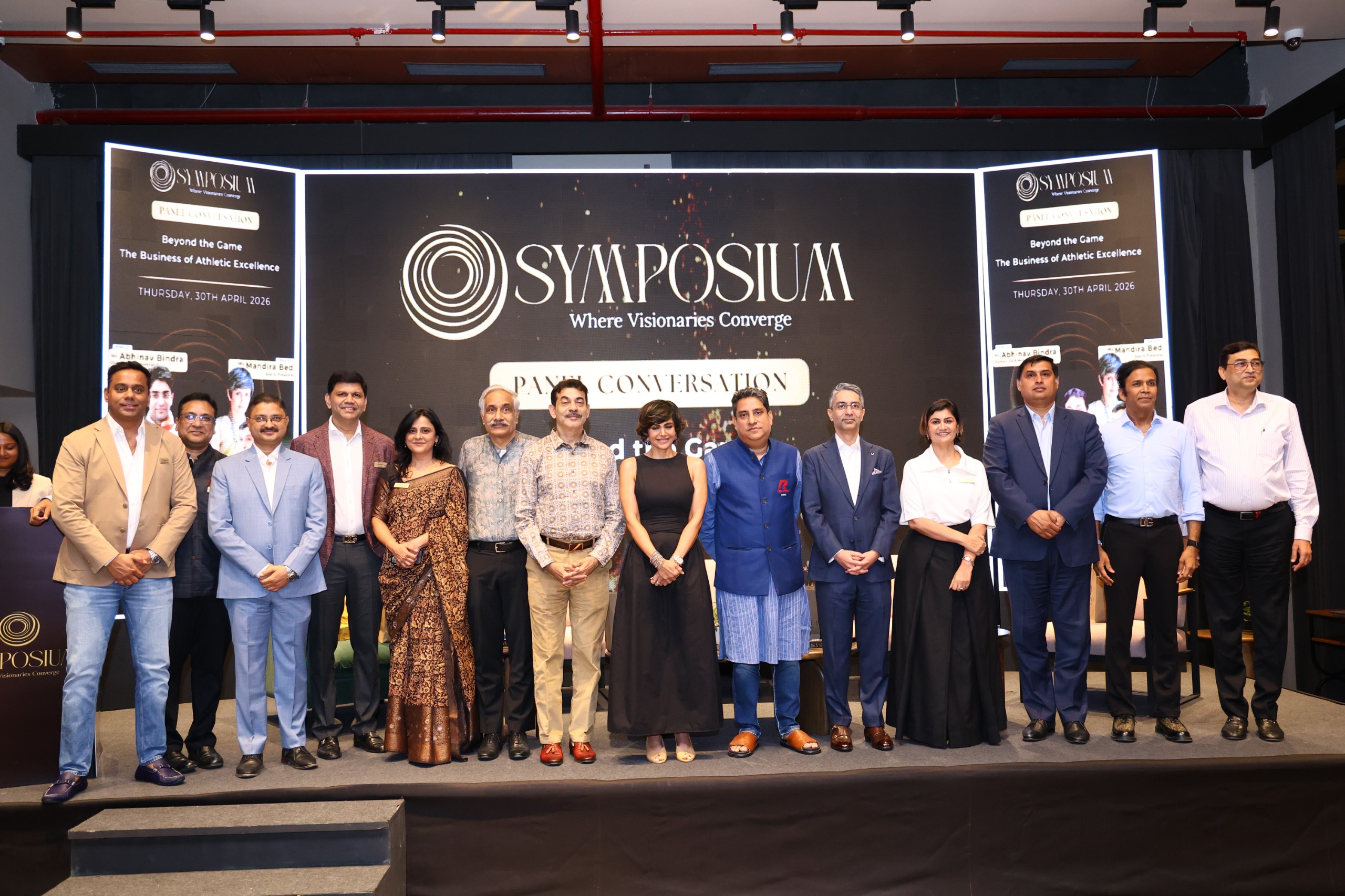
If sports are not doing well in India, the primary culprits are the sports federations” — Col Nachhatar Singh Johal


The session featured an accomplished panel comprising: Abhinav Bindra — India’s first individual Olympic gold medallist and founder of the Abhinav Bindra Foundation; Col Nachhatar Singh Johal — CEO, Target Olympic Podium Scheme (TOPS), Sports Authority of India; Boria Majumdar — noted sports historian, author, and journalist and Mandira Bedi — actor, presenter, and advocate for sports and fitness

The discussion was moderated by Sri Jayesh Ranjan IAS, Special Chief Secretary, Government of Telangana, and co-founder of Symposium.

The evening explored what it truly takes to build world-class sporting ecosystems in India — from grassroots development and policy frameworks to institutional support, infrastructure, private investment, sports science, athlete welfare, and the growing business of sport.

Addressing the audience, Sri Jayesh Ranjan IAS highlighted Telangana’s progressive approach toward sports development, stressing the importance of allowing experts to lead athlete training, talent identification, and career planning, while governments focus on enabling infrastructure and long-term support systems.

He noted that this forward-looking model is already helping athletes prepare for life beyond their competitive years, addressing one of the most critical gaps in the sports ecosystem. He also observed that India’s sporting landscape is rapidly evolving, breaking traditional barriers of gender and access, with both government and media playing transformative roles in shaping the country’s sporting culture.

In a significant announcement during the session, Sri Jayesh Ranjan revealed that the first honorary doctorate to be conferred by the proposed Telangana Sports University would be awarded to Abhinav Bindra.

Referring to an earlier moment during the event when the emcee mistakenly addressed Bindra as “Doctor,” he remarked: “We will soon make that a reality.” He announced that whenever the first convocation of the Telangana Sports University is held, he will confer the first Honorary doctorate of Telangana Sports University on Abhinav Bindra” — Jayesh Ranjan

Speaking about India’s Olympic ambitions, he highlighted the role of the Target Olympic Podium Scheme (TOPS), launched by the Ministry of Youth Affairs and Sports in 2014 to identify, support, and prepare India’s top athletes for Olympic and Paralympic competition.

Drawing parallels with cricket’s transformation through the IPL, he noted that the league had created a massive sports economy and professional ecosystem involving hundreds of specialists behind every franchise.

“The IPL transformed the way cricket is played and consumed. Each IPL team today functions like a large professional organisation with hundreds of people working behind the scenes. The important question now is: how do we build similar ecosystems for every other sport in the country?” he said.

Abhinav Bindra shared insights from his journey in elite sport and high-performance systems, emphasising that sport teaches lessons far beyond medals and victories.

“Sports have taught me how to respect myself,” Bindra said. Encouraging greater participation in sport across India, especially among rural youth and children, he stressed the importance of discipline, resilience, and sports as a way of life.

“The next decade will be the decade of sports. We must build sport from the grassroots. Ever since shooting began being introduced at the school level, more young people have started taking up the sport. Significant investments are now being made in sports infrastructure and athlete development,” he added.

Col Nachhatar Singh Johal reflected on India’s Olympic preparation strategy and the importance of structured talent pathways, institutional planning, and long-term investment in athlete development.

In one of the evening’s most candid observations, he remarked: “If sports are not doing well in this country, the primary culprits are the sports federations.”

Sports historian and journalist Boria Majumdar spoke about the importance of storytelling, media visibility, and commercial structures in shaping sporting culture in India.

Highlighting the challenges faced by women’s cricket, he acknowledged Mandira Bedi’s contribution in helping popularise the women’s game.

“Men’s cricket has been marketed exceptionally well. What many people consume today is not just cricket, but the spectacle around it. If audiences truly loved cricket equally across formats, women’s cricket would already be as commercially successful as the IPL,” he observed.

Mandira Bedi highlighted the remarkable rise of women’s sport in India, recalling how audiences had evolved from sparse stadium attendance to massive national and global viewership. She credited media coverage and sporting spectacles for creating visibility, aspiration, and wider recognition for athletes and women’s participation in sport.

Adding broader perspective to the conversation, Boria Majumdar also reflected on India’s sporting journey and the shift from celebrating isolated champions to building a more sustainable and interconnected sporting ecosystem.

In his opening remarks, Mr Girish Mallpani, Founder of Symposium and CMD of MPM Group, pointed to the meteoric rise of the Indian sports economy as evidence of the sector’s growing significance.

Referring to the dramatic rise in IPL franchise valuations — from approximately ₹400–500 crore in 2008 to well over ₹15,000 crore today — he noted that the sports ecosystem now creates value not only for athletes, but also for coaches, broadcasters, institutions, investors, sponsors, and the wider economy.

The event witnessed participation from senior bureaucrats, industry leaders, entrepreneurs, academicians, investors, policy thinkers, and members of Hyderabad’s leadership community, reinforcing Symposium’s vision of creating a high-trust platform for informed and meaningful dialogue.

Commenting on the success of the session, Mr Girish Mallpani said:

“Symposium was created with the belief that some of the most important ideas emerge when leaders from different disciplines come together in genuine conversation. This session reflected the kind of thoughtful exchange we hope to build consistently — conversations that are relevant, future-facing, and rooted in collective progress.”

Sri Jayesh Ranjan IAS added: “India’s sporting ambitions today go far beyond medals. They are connected to policy, infrastructure, economics, youth development, and national identity. Forums like Symposium create the space for interdisciplinary thinking that is essential to shaping long-term outcomes.”

Conceived as an invitation-led platform for intellectual exchange, Symposium aims to cultivate a community committed to lifelong learning, informed leadership, and meaningful engagement across disciplines. Through curated sessions throughout the year, the forum seeks to examine themes at the intersection of policy, business, culture, technology, economy, and society.

The successful conclusion of its second session further establishes Symposium as a promising forum for serious conversation and collaborative thinking among India’s emerging and established leadership voices.


 

Bollywood, Breakthroughs & Beyond: Raghav Sachar’s Story Takes the Spotlight on Dreamers Show

New Delhi, 3 May 2026: The latest episode of the acclaimed Dreamers Storytelling Series, curated and narrated by storyteller Sudhanshu Rai, brings to life the extraordinary early journey of musical prodigy Raghav Sachar, a story rooted in instinct, resilience, and unwavering passion for music.

The episode opens with a remarkable childhood moment that would unknowingly set the stage for Sachar’s future. At just three years old, he watched his father play the harmonica for his mother. Drawn by curiosity, the young Sachar approached and asked for the instrument. Though hesitant, his father handed it over, assuming the child would simply experiment with sound. What followed left both parents astonished, the three-year-old effortlessly reproduced the same tune and returned the harmonica. This defining moment marked his first introduction to music and revealed an innate gift that would shape his life.

Bollywood, Breakthroughs & Beyond: Raghav Sachar’s Story Takes the Spotlight on Dreamers Show

Recognizing his talent, Sachar’s parents supported his musical inclination, even as he struggled academically. He was enrolled in a boarding school, where he found himself emotionally distanced from music, the very thing that defined him. This sense of disconnect weighed heavily on him. During this period, he was also involved in a physical altercation with another student, which led to hospitalization. Feeling confined and increasingly detached from his true calling, he made the bold decision to leave the hospital, driven by an unshakable urge to return to music and pursue it on his own terms.

The episode delves deeper into the challenges he encountered, including discouragement from educators, one of whom labelled him a “disgrace.” Despite societal pressures during the 1980s, when conventional education was prioritized over artistic pursuits, Sachar persisted. With the steadfast support of his parents, he pursued formal training and eventually enrolled at Monash University, specializing in saxophone and flute.

Studying abroad came with its own set of hardships. Financial constraints required Sachar to undertake advertising gigs from India to fund his education. His perseverance paid off when his debut album received support from renowned artists including Sunidhi Chauhan, Kailash Kher, and Kunal Ganjawala, who contributed their voices without charging a fee, an early testament to the respect he commanded within the industry.

A significant turning point in his career came when legendary filmmaker Yash Chopra recognized his talent and invited him into his studio. This led to Sachar’s debut as a music director with the film Kabul Express. He further established his presence by contributing as an instrumentalist in popular Bollywood films such as Salaam Namaste, Parineeta, Dhoom, and Hum Tum.

Today, Raghav Sachar stands as a multifaceted artist, composer, performer, innovator, and entrepreneur. He leads his own music label, continues to experiment with and invent new musical instruments, and explores the therapeutic dimensions of sound, using music as a tool for healing.

Through this episode, Dreamers Storytelling Series not only celebrates Sachar’s journey but also reinforces its mission of spotlighting real-life stories that inspire courage, creativity, and conviction.

Youtube Link: https://youtu.be/kDKhIXng0?si=1mtexpa854rqeWP


Celebrating National Fitness Day with Major Milestones for Fitness Pioneer Elaine LaLanne

During March we celebrated some incredible women. We wanted to recognize one more incredible woman on National Fitness Day, Elaine LaLanne who has had not only a remarkable career but a remarkable year so far and should be celebrated on National Fitness Day! First, she and her late husband Jack were inducted into the at the global Health & Fitness Association (HFA)  “Hall of Fame” on Sunday, March 15, 2026, in San Diego, California, The HFA Show 2026, health and fitness industry conference and trade show. Afterwards followed a wonderful celebration for Elaine LaLanne to Celebrate her 100th Birthday!
 
On her 100th Birthday on Thursday March 19th, she also released a book called “HER Legacy.” This is her 5th book she has written in her lifetime. “Her Legacy” is a tribute to Elaine’s impact on the fitness industry, wellness and empowerment. There are also contributions by 14 authors who are helping to carry on Elaine’s legacy. She says of HER legacy, “Legacy isn’t inherited. It is built, lived, and shared.” There are so many people, both in and not in, the fitness industry who have been inspired by Elaine LaLanne over the past 10 decades and this book is a tribute to that. Some of the 14 authors include, Amy Boone Thompson, Cathie Friedrich, Tracy Markley, Deirdre Barnes, Janet McLoughlin, Dolly B. Stokes, and so many more! They all wanted to honor, contribute to this amazing book and to also show that Elaine’s Legacy will continue on no matter what!
 
During March, Women’s History Month, Elaine has hit some major milestones. She was inducted alongside her late husband, Jack LaLanne, into the HFA Hall of Fame. She turned 100 on the same day she released her book, “HER Legacy.” Elaine has always wanted to help others, whether that was through health and fitness, friendship or mentorship. “Helping others live better is one of the greatest gifts you can give.” She definitely has done that and so much more. During this Women’s History Month, with everything she has achieved this month and throughout her career she deserves to be celebrated and have HER Legacy continued. “Legacy isn’t inherited. It’s built, lived, and shared.” Don’t worry, Elaine, your legacy has been built, lived, and shared with many and will continued to be shared for years to come!
 
Also coming up for Elaine, she will be helping to launch a campaign to get her late husband Jack LaLanne, the Godfather of Modern-Day Fitness; the Congressional Medal of Freedom! Please be on the lookout for more information later this month!

Reimagining Finance: Crypto Platforms Move Beyond Marketplace Models


New Delhi, 2 May 2026

Crypto asset service providers (CASPs) have long served as the backbone of the virtual digital asset ecosystem. They operate as marketplaces where users buy, sell, and trade crypto assets. But a recent paper by the Bank for International Settlements (BIS) argues that the world’s largest CASPs have evolved well beyond that role. Today, the BIS finds, these platforms perform functions that closely resemble those of traditional financial intermediaries like banks and credit institutions. The BIS refers to such platforms as multifunction cryptoasset intermediaries, or MCIs. It also argues that understanding what they do, and how they do it, has direct implications for how they should be governed.
 
For  instance, most MCIs offer users access to “earn programmes”.  In earn programmes, customers deposit their idle assets with MCI’s in exchange for monetary returns. Customers transfer ownership of their crypto asset, for instance, a unit of a token, to the MCI for a set period of time. In exchange, the MCI promises to return the deposited asset with additional returns. The MCI then lends the crypto asset to borrowers, and returns a portion of the earnings they make back to the original customer. Regardless of how the MCI’s investment ultimately performs, the customer is contractually owed their unit of a token, or an equivalent amount, back.

More Than a Marketplace: Crypto Platforms as Financial Intermediaries

MCIs are, in effect, doing what banks do. They are taking the customer’s funds and putting them to work. However, when banks enter and execute similar arrangements, they do so with strict rules and guidelines that ultimately protect consumers and their assets. For MCI’s however, no such guardrails are presently mandated by regulations.
 
The paper is careful not to frame MCIs as bad actors. The dynamics it describes arise from MCIs’ business model, not necessarily from intent. But it is equally clear that the regulatory architecture has not kept pace. As of 2025, only 11 of the jurisdictions surveyed by the FSB had a finalised regulatory framework addressing risks from crypto activities. Among those, only two covered MCI borrowing and lending activities.
 
If MCIs are to continue such functions, the BIS paper advocates a mix of entity-based and activity-based regulation. Entity-based regulation means that the MCI as a whole is subject to oversight, much like a bank is regulated as an institution rather than product by product. This would include requirements that are calibrated to the unique risks posed by each MCI’s business model and the broader cryptoasset market. Activity-based regulation would further impose leverage limits, customer asset safeguards and similar guardrails. Robust governance frameworks, stress testing, and consolidated supervision are equally essential.
 
As MCIs deepen their links with traditional finance through exchange-traded products, custody arrangements and institutional partnerships, disruptions at a major platform may carry growing potential for broader spillovers. The paper does not argue that MCIs should not exist, or that their role is inherently problematic. It argues, instead, that a role of this scale should not remain outside the regulatory perimeter.

Business News For Profit

Roswell Park Experts Highlight Untapped Potential of CDK Inhibitor Cancer Therapy


BUFFALO, N.Y., May 02: Worldwide, more than a million breast cancer patients have been treated with cyclin-dependent kinase 4/6 (CDK4/6) inhibitors, which slow or stop the uncontrolled multiplication of cancer cells. Researchers see untapped potential in those targeted therapies, which can dramatically extend progression-free survival the time before the disease grows worse and overall survival, even in metastatic disease. Could those benefits be extended to patients with other types of cancer?

The latest advances in the rapidly evolving field of CDK inhibitors are newly reported in a research review in Nature Reviews Drug Discovery, co-authored by three investigators from Roswell Park Comprehensive Cancer Center whose collective expertise spans both the laboratory and clinic: Erik Knudsen, PhD, Chair of Molecular and Cellular Biology and Senior Vice President and Associate Director for Basic Science; Agnieszka Witkiewicz, MD, Professor of Oncology and Personalized Medicine; and Sheheryar Kabraji, BMBCh, Chief of Breast Medicine. 

Marketed under the brand names Ibrance, Kisqali and Verzenio, CDK4/6 inhibitors were first approved by the FDA more than a decade ago for the treatment of the two most common breast cancer subtypes, HR+ and HER2-. They interfere with the overactive CDK proteins that enable cancer cells to multiply rapidly. 

“Since unrestrained proliferation is a defining hallmark of cancer, there is hope that new CDK inhibitors and related therapeutic strategies could have a broad impact on the treatment of other cancers moving forward,” says Dr. Knudsen. But despite extensive research, these drugs are FDA-approved only as treatment for certain forms of breast cancer.

The authors present an overview of the progress made toward realizing the full potential of these drugs. 

“Ten years after the first approvals of drugs in this category, CDK inhibition continues to provide new therapeutic options for patients with advanced cancer,” says Dr. Kabraji. “However, drug resistance and toxicity are ongoing challenges. Novel drug combinations guided by dynamic biomarkers will help us achieve more precise and effective CDK inhibition.”

The review cites recent developments contributing to that progress:

  • Because most tumors will eventually stop responding to CDK inhibitors, new treatments are in development that combine them with drugs targeting other treatment pathways, creating multiple roadblocks to prevent or postpone treatment resistance.
  • Investigators are also working to identify and evaluate new biomarkers that could better explain how tumors become treatment-resistant. This could also open the door to personalized treatment by making it possible to match a patient’s specific tumor characteristics with the most promising CDK therapies.
  • New CDK inhibitors are being created with the goal of improving patient outcomes. These include more-selective CDK4 inhibitors to reduce the side effects of treatment, such as low white blood cell counts, infections and gastrointestinal upsets, and CDK2 inhibitors to both reduce treatment resistance and successfully treat patients with a wider range of tumor types.

“By aligning therapeutic intervention with evolving tumor biology, the field can move beyond static treatment strategies toward a more responsive and durable model of precision oncology,” says Dr. Witkiewicz, highlighting further opportunities for progress in developing and employing these targeted treatments.

Business News For Profit

Crypto’s Next Leap: Platforms Transform into Financial Intermediaries

New Delhi, 2 May 2026

Crypto asset service providers (CASPs) have long served as the backbone of the virtual digital asset ecosystem. They operate as marketplaces where users buy, sell, and trade crypto assets. But a recent paper by the Bank for International Settlements (BIS) argues that the world’s largest CASPs have evolved well beyond that role. Today, the BIS finds, these platforms perform functions that closely resemble those of traditional financial intermediaries like banks and credit institutions. The BIS refers to such platforms as multifunction cryptoasset intermediaries, or MCIs. It also argues that understanding what they do, and how they do it, has direct implications for how they should be governed.
 
For  instance, most MCIs offer users access to “earn programmes”.  In earn programmes, customers deposit their idle assets with MCI’s in exchange for monetary returns. Customers transfer ownership of their crypto asset, for instance, a unit of a token, to the MCI for a set period of time. In exchange, the MCI promises to return the deposited asset with additional returns. The MCI then lends the crypto asset to borrowers, and returns a portion of the earnings they make back to the original customer. Regardless of how the MCI’s investment ultimately performs, the customer is contractually owed their unit of a token, or an equivalent amount, back.

More Than a Marketplace: Crypto Platforms as Financial Intermediaries

MCIs are, in effect, doing what banks do. They are taking the customer’s funds and putting them to work. However, when banks enter and execute similar arrangements, they do so with strict rules and guidelines that ultimately protect consumers and their assets. For MCI’s however, no such guardrails are presently mandated by regulations.
 
The paper is careful not to frame MCIs as bad actors. The dynamics it describes arise from MCIs’ business model, not necessarily from intent. But it is equally clear that the regulatory architecture has not kept pace. As of 2025, only 11 of the jurisdictions surveyed by the FSB had a finalised regulatory framework addressing risks from crypto activities. Among those, only two covered MCI borrowing and lending activities.
 
If MCIs are to continue such functions, the BIS paper advocates a mix of entity-based and activity-based regulation. Entity-based regulation means that the MCI as a whole is subject to oversight, much like a bank is regulated as an institution rather than product by product. This would include requirements that are calibrated to the unique risks posed by each MCI’s business model and the broader cryptoasset market. Activity-based regulation would further impose leverage limits, customer asset safeguards and similar guardrails. Robust governance frameworks, stress testing, and consolidated supervision are equally essential.
 
As MCIs deepen their links with traditional finance through exchange-traded products, custody arrangements and institutional partnerships, disruptions at a major platform may carry growing potential for broader spillovers. The paper does not argue that MCIs should not exist, or that their role is inherently problematic. It argues, instead, that a role of this scale should not remain outside the regulatory perimeter.

GAC’s overseas export volume breaks through to new highs, surging 133.9% year-on-year from January to April, as its global expansion journey enters the fast lane

GUANGZHOU, China, May 2, 2026 /PRNewswire/ — Building on strong overseas sales with 86% YoY growth in Q1, GAC has further accelerated its global expansion. From January to April, the company exported 70,474 vehicles, a 133.9% YoY increase. Guided by the “One GAC 2.0” strategy, GAC is advancing toward its annual target of 250,000 export units, with a stretch goal of 300,000.

As GAC’s global strategic flagship, the AION UT continues to excel. In the pure electric hatchback segment, it ranks first in Hong Kong SAR, Colombia, Uruguay, and Singapore; second in Indonesia; and third in Thailand and Mexico. In Australia, the AION UT secured over 600 orders within its first pre-sales month.

Robust Regional Growth and Breakthroughs in Benchmark Markets

In Asia-Pacific, GAC secured 6,287 orders at the Bangkok International Motor Show. Monthly sales in Hong Kong SAR, Malaysia, and Indonesia surged by 503%, 900%, and 338%, respectively, while the AION UT officially launched in Australia. In Europe, the model debuted in Milan and commenced localized production with Magna in Austria, marking a critical step for GAC’s “In Europe, for Europe” commitment. In Israel, AION entered the top 10 for EV sales just six months post-launch. Across the Americas, sales in Uruguay and Colombia skyrocketed by 775% and 1,007%. Concurrently, GAC continues expanding its sports marketing footprint by sponsoring top football clubs like Brazil’s Flamengo and Bolivia’s Oriente Petrolero.

Global Strategy Upgrade and Accelerated Eco-Expansion

At the 139th Canton Fair, GAC secured letters of intent for over 900 vehicles (approx. $10 million export value), demonstrating the strength of its “Technology + Ecosystem” model. The 2026 GAC International Partner Conference gathered 700 dealers from 87 countries, reinforcing the international sales network. At Auto China, GAC unveiled its 2030 Strategic Plan, aiming to enter 120 countries and establish over 2,000 overseas touchpoints. Leveraging a full-powertrain product matrix across its GAC, AION, and HYPTEC brands, the company targets one million annual overseas sales.

Transitioning from product exportation to deep-rooted global ecological integration, GAC is rapidly accelerating its journey toward the one-million-unit international milestone.

About GAC:

For further information about GAC, please visit: https://www.gacgroup.com/en or follow us on social.

Photo – https://mma.prnewswire.com/media/2971383/1.jpg

Cision View original content:https://www.prnewswire.co.uk/news-releases/gacs-overseas-export-volume-breaks-through-to-new-highs-surging-133-9-year-on-year-from-january-to-april-as-its-global-expansion-journey-enters-the-fast-lane-302760614.html

GAC's overseas export volume breaks through to new highs, surging 133.9% year-on-year from January to April, as its global expansion journey enters the fast lane

American Association of Neurological Surgeons Names Neurosurgery Podcast as Official AANS Podcast

Rolling Meadows, Ill., May 02: The American Association of Neurological Surgeons (AANS) is pleased to announce a new strategic partnership with Neurosurgery Podcast, hosted by Drs. Mike Wang and JP Kolcun, officially naming it the official podcast of AANS.

With more than 1 million listens and a rapidly growing global audience, Neurosurgery Podcast has become a trusted voice in neurosurgical education and discourse. This partnership reflects AANS’ commitment to meeting neurosurgeons where they are, delivering high-quality, accessible and timely content that supports lifelong learning and clinical excellence.

“This partnership reflects AANS’ commitment to meeting neurosurgeons where they are delivering timely, accessible and high-quality content that supports lifelong learning and advances patient care,” said AANS CEO, Katie O. Orrico, JD. “The Neurosurgery Podcast has become a trusted platform for meaningful dialogue across our specialty, and we’re proud to elevate its impact as the official podcast of AANS.”

As the official AANS podcast, Neurosurgery Podcast will continue to deliver deep dives, candid conversations and expert insights on the most pressing issues shaping the future of neurological surgery. Through this collaboration, AANS will further extend the reach of its initiatives, amplifying critical conversations across the specialty and strengthening engagement throughout the global neurosurgical community.

“We’re honored to partner with AANS in this new capacity and expand the reach of the Neurosurgery Podcast,” said Michael Wang, MD, podcast host. “Our goal has always been to foster open, honest conversations that educate, challenge and connect neurosurgeons around the world, and this collaboration allows us to do that on an even greater scale.”

Together, AANS and Neurosurgery Podcast advance a shared mission: to connect, inform and inspire neurosurgeons worldwide through the power of conversation.