New norms: Tourism Education post Covid-19 will require new ways to prepare for the Future
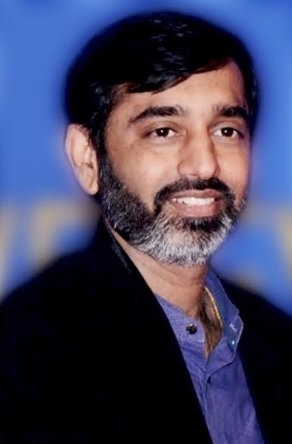
By – Mr. Vipul Solanki, Director, LivGlobal – Institute of Travel & Tourism
The tourism industry is one of the most emerging sectors in India, a country with rich traditions, heritage, and a variety of tourist attractions and travel resources. Tourism education, a specialized division of education, trains, and nurtures individuals for providing world-class hospitality services. To fulfill the required skillset and employability of the gen-next youth, our present education system tries to patch up with the industry requirement in the finest ways.
Specialized education on the subject of “Tourism” spanning various aspects of the travel industry has been a sought-after course among career aspirants in India. The growing per capita income levels in the emerging economy of India is expected to be a key driver of the industry over the next decade. According to The World Travel and Tourism Council (WTTC), tourism supported 39.8 million jobs i.e. 8% of India’s total employment, and generated around $194 billion i.e. 6.8% of India’s GDP in 2019. It’s predicted that by 2028, India will have around 52.3 million jobs in the tourism segment. In fact, India has an ambitious plan of becoming a USD 5 trillion economy by 2025, and tourism is envisaged to play a pivotal role in achieving the same. However, Covid-19 pandemic has had a rather harsh impact on the tourism segment across the world. Though the pandemic impact could last for some more time, the long-term prospects for the industry are looking bright.
While several aspects of the tourism industry will never be the same in the post-Covid-19 world, some of the emerging trends in tourism education are as below:
Access to the best in the Tourism Industry: In spite of its grappling impacts on the tourism education sector, it is quite evident that the post-Covid-19 era will witness the rise of more evolved Hybrid learning. This new way of learning that combines virtual educational materials and opportunities for online communication with old-style place-based classroom methods has opened up many avenues for the betterment of tourism education. While we have visiting faculties in physical classrooms, now the arena for the same has expanded to a multifarious level. The world has shrunk and the best in business globally present anywhere in the world can coach students as guest and regular faculties. Thus, in addition to learning only about local skill sets, students will also have an opportunity to get exposed to knowing and adapting the global skill sets.
Skills to understand and access technology: Thriving in a digital world has already led to the advent of numerous modus operandi especially in terms of innovation. Augmented reality, virtual reality, bots and automation has entered every avenue or domain including the travel and tourism industry. The emergence of these technologies has been on the rise which makes it essential to learn about these applications and its usage. With regards to the dynamics and demand as per employability in the industry, the tourism education sector will have to transition to the new way of learning. Adapting to a digital curriculum wherein technological innovation is at the forefront will help provide the students with an opportunity to attend interactive hybrid sessions hosted by both faculties and leaders from the industry’s key sectors. The live virtual panel discussions, webinars, and Q&A sessions enable students to gain numerous insights to better prepare themselves for their future careers in the post-Covid-19 world.
Digital marketing leading the way forward: There is not even a single part of the travel and tourism industry that has not profited from the extensive use of the internet and digitalization. The farsighted marketers operating within the sector are making use of radical technologies to help convert desire into action. Digital platforms have altered the way marketers in the past would operate and has bestowed them the ability to put their communications right at the fingertips of probable customers. Another aspect transforming the sector is an active social media presence which helps to increase the number of people engaging with your brand. Moreover, digital marketing is also particularly convenient in times of crisis as it can be used to aid in shifting public opinion by generating and focusing on an alternate narrative.
Boosting the ‘Think Tank’ quality in aspirants: Learning has to be a two-way approach. The one-sided approach has never worked and never will. During the on-going course, the sessions or workshops must never limit themselves only to industry experts imparting the theories, experiences, and other course materials. The students can learn and derive from the learning only if they are put into a situation where they come up with their own ideas and concepts. The industry’s up-gradation depends on the new injections, which is only possible if enough room or support is provided to enable the students to become think-tanks. The aspect of uniqueness and new conceptions will contribute to dynamic avenues for the industry thus generating employment.
Curriculum inclusions: To bounce back in the post-pandemic phase, the travel education sector requires a top-down overhaul of the course curriculum. The industry needs to make all efforts to equip students with emerging tourism skills through a revised training methodology. Combined scholarships, hands-on knowledge about the trends that have shaped the industry amidst the crises, and certification courses on COVID 19 will reskill students for the new normal.
Tourism Education – The Way Forward: The country’s education sector is expected to be a fast-growing one. Due to the rapid urbanization, India’s educational demographics pertaining to the number of out-of-school children falling under the age bracket of 16 years and above has been gradually surging. Further, the growing income levels leading to increased discretionary consumption are expected to augur well for the tourism sector and job opportunities therein. As a result, the educational courses related to tourism are expected to be in demand among aspiring students in the country. These courses include undergraduate and postgraduate level ones including Bachelor’s Degree in Travel & Tourism, Post-Graduate Diploma in Tourism and Travel Management, Master’s Degree in Tourism & Travel Management, etc. which are highly sought after.