NAMG Academy of modelling and grooming launched a glamorous calendar with star-studded events.
The calendar is curated by creative director Shakir Shaikh with industry experts like Noor Khan, Aziz Zee, Salman Khan, Nishankh Sainani along 12 designers.
Mr Sushant G Jabare graciously hosted the launch event at the Amethhyyst lounge and bar.
The sizzling Calendar was shot at a serene crescent resort and spa in Indore. The talent partner for Eclat is Modcast whereas First India is a media partner.
This glam calendar has an amazing lineup of designer wear by industry stalwarts such as James Feirerra, Archana Kochhar, Ken Ferns, Maheka Mirpuri, Asif Merchant, Kshitij Chaudhary, Label Kaleido, 2die4 by Diandra Soares, Genes Leconate Hemant, Lascelles, Karleo, and Sharavan Kumar.
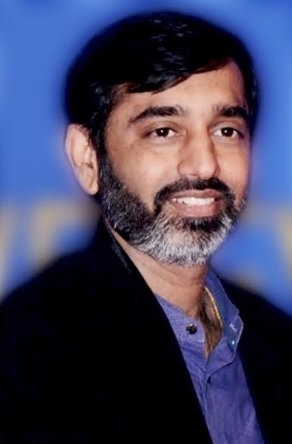
NEST Academy founder Mr Vipul Solanki and Design institute head Suvidha Patil expressed their happiness about launching the calendar with their own students, mentors and industry experts.
Every month in this calendar oozes out different aspects of style and fashion and the launch event was Glimpse of it. Actor Eijaz Khan, Pavitra Punia, Shibani Kashyap, Vikas Verma, Siddharth Kashyap, Nitin Mirani, Shweta Khanduri, Sandhya Shetty, Aditya Singh Rajput graced the launch.
By – Mr. Vipul Solanki, Director, NAFDI – School of Interior Design
The design challenges of the 21st century manifest itself unambiguously in the halls of design schools, where the Generation Z is coming of age. The pandemic has mutated everything for the global populace. Its impact has compelled people in every industry to arch and evolve in real-time. The very ways in which we live, work, learn, and even design have altered dramatically during the days of the crisis. In many ways, the fluctuations are here to stay. The interior design industry is nothing but leading the gateway for change by embracing the salient issues of the day. Right from where technology fits into contemporary curriculums and how students are finding their place in the professional world to novel ways of comprehending about diversity in interior design programs have been rethinking their roles. For educators and students pursuing interior design, there is a need of envisaging new design education approaches.
The below mentioned futuristic trends heralda paradigm shift in the domain of design education in the country:
Industry’s macro-vision and co-creation skills: Theindustry’s present scene necessitates budding students and freshers to emphasize on “how to do it”, rather than “what to do”. Comprehending this process and being proficient of networking with the right people and experts will help offer a sea of exposure to students. This set of skills will reinforce the co-creative capabilityrequired for a designer. To enable designers to build sturdy structures alongside forging strong relationships, the industry must focus on specialization and fragmentation of knowledge. By adapting to the formation of collectives and the process of collaboration,the sector of interior design education can help students in sharing spaces, facilities and ideas all under one roof.
VR as a social experience: Virtual reality is integrally immersive and hence is suited to design representations. A multitude of web platforms facilitates users with a dual experience, wherein they can get access to three-dimensional environments from their desktops as well as with their VR goggles. In case of a design studio, this technological application presents an exciting opportunity enabling students to network in the spaces they have planned in real-time.
Hybrid learning reinventing design education:Blended learning combines the best of face-to-face and online experiences to produce improved learning outcomes.Its potential for change is huge in transformingthefoundation of architectural education, be it in various design disciplines like industrial and interior design, architecture or planning. Following a hybrid approach to learning will facilitate in creating a learner centred experience that is tailored, relevant, and engaging. Through this way educational skills can be augmented by lending student centred approaches to meet the diverse pedagogical requirements of learners.
3D scanning lending a flip to the traditional classroom: This technology has become accessible over the past few years. Scans are an instant way to intercede between physical and simulated environments, enabling students to scan architectural and design models and environments. The choice of uploading these models to the web lends another level of interactivity and share ability. For instance, these models can be viewed on the web, in VR or unified into real-time game engines.
Chart your career creatively: Considering the educational needs of the post-pandemic era, any run-of-the-mill interior design programme won’t make the cut for students. A course that comprisesof cutting-edge perspectives that is savvy to the changing paradigms will be more sought-after.The interior design courses offer a 360-degree shift in public and private design spaces enabling graduates to choose from a plethora of opportunities in the professional market. These consist of roles such as: interior architect, design educator, independent researcher, product designer, sustainable interiors consultant and landscape designer to name a few.Design entrepreneurs are required to apply rigorous R&D processes that encompassdetailed market and user research. Right from budding entrepreneurs to large MNCs, interior design has nowbecome a key part of the way businesses are being performed.
Working in amalgamation with the other edifices, the world, of interior design education can truly be a game-changer in the edification domain.
By Mr. Vipul Solanki, Director, NAEMD – Nest Academy of Event Management and Development
Being an industry that is deeply dependent on face-to-face networking, when the pandemic led the world to a halt, the event management industry’s p
Mr. Vipul Solanki, Director, NAEMD – Nest Academy of Event Management and Development
rospects seemed ambiguous. But always buoyant and innovative, the sphere of outdoor entertainment has already started retooling for the future. With the industry starting to gradually adapt itself to the new normal, the educational institutions imparting event management courses have taken refuge in innovation to tide over the crisis. Event management organizations across the country are offering training methodologies as per the socially distant learning while ensuring to keep it at par with the physical classroom experience.
Going by various studies conducted, about 94% of companies in the events industry are aiming at exploring the sector of digital IPs to enable amended consumer attraction and retention in the coming months. Industry experts suggest that a measured industry transition will be perceived, which will involve 3 primary phases – phase 1 will entail boasting about wired events, followed by phase 2 that will mark a gradual onset of physical experience with restricted attendees, and finally the phase 3, wherein the whole industry is expected to bounce back stronger.
Below mentioned are ways by which event management institutes are taking cues from industry that is adapting to the global crisis to ensure a smooth learning process:
Hybrid events becoming a standard: The pandemic has shifted the focus a bit for event management institutions. The industry has been pivoting to digital experiences like hybrid events featuring a blend of live and virtual components. This model enables a number of students to be present at a physical location, while the audience at large attends the event remotely. With there being no perceivable sign of going back to a world of in-person only meetings, in the near to mid-term, hybrid events offering in-person and digital participation will be standard. Although hybrid events run parallel with shared moments of engagement, these should be planned as two separate user experiences. There are a host of online event podiums like webcasts and 3-D immersive worlds, so comprehending which one will accomplish on the organisation and participant goals is of prime significance.
Creating ‘omni-channel’ experiences: Prioritizing your audience prerequisites and understanding how the students would like to engage and with what content is vital in facilitating to build an engaging experience. With the event industry tuning to become hybrid or omni-channel in the future, organisations will have to generate content, communities and experiences that will help engage the audience in the medium they are most comfortable in. The institutes need to be forward-thinking in embracing new business models and skills development, which will facilitate recovery and fuel growth.
Equipping students with modern advertising techniques: The pandemic times have noted the growth of consumer-centric, dynamic and engaging advertising methods. With consumers being confined to their homes, their social media usage has increased. In the wake of this trend, several organisations are educating students by resorting to virtual platforms by engaging in live streams, dedicated pop-ups and landing pages to drive traffic and to enhance viewer participation.
Ramping up experiential marketing: This new-age marketing strategy is being adopted by institutions to equip students with immersive brand experiences. Such engagement marketing technique emphasizes on promoting differentiated experiences designed to help students connect with brands.
By binding innovation, the events industry continues to play a significant function, even during these challenging times, and this advancement will be indispensable not only for its survival but also its success in the forthcoming years.
Vipul Solanki, Director, LivGlobal – Institute of Travel & Tourism
By – Mr. Vipul Solanki, Director, LivGlobal – Institute of Travel & Tourism
The tourism industry is one of the most emerging sectors in India, a country with rich traditions, heritage, and a variety of tourist attractions and travel resources. Tourism education, a specialized division of education, trains, and nurtures individuals for providing world-class hospitality services. To fulfill the required skillset and employability of the gen-next youth, our present education system tries to patch up with the industry requirement in the finest ways.
Specialized education on the subject of “Tourism” spanning various aspects of the travel industry has been a sought-after course among career aspirants in India. The growing per capita income levels in the emerging economy of India is expected to be a key driver of the industry over the next decade. According to The World Travel and Tourism Council (WTTC), tourism supported 39.8 million jobs i.e. 8% of India’s total employment, and generated around $194 billion i.e. 6.8% of India’s GDP in 2019. It’s predicted that by 2028, India will have around 52.3 million jobs in the tourism segment. In fact, India has an ambitious plan of becoming a USD 5 trillion economy by 2025, and tourism is envisaged to play a pivotal role in achieving the same. However, Covid-19 pandemic has had a rather harsh impact on the tourism segment across the world. Though the pandemic impact could last for some more time, the long-term prospects for the industry are looking bright.
While several aspects of the tourism industry will never be the same in the post-Covid-19 world, some of the emerging trends in tourism education are as below:
Access to the best in the Tourism Industry: In spite of its grappling impacts on the tourism education sector, it is quite evident that the post-Covid-19 era will witness the rise of more evolved Hybrid learning. This new way of learning that combines virtual educational materials and opportunities for online communication with old-style place-based classroom methods has opened up many avenues for the betterment of tourism education. While we have visiting faculties in physical classrooms, now the arena for the same has expanded to a multifarious level. The world has shrunk and the best in business globally present anywhere in the world can coach students as guest and regular faculties. Thus, in addition to learning only about local skill sets, students will also have an opportunity to get exposed to knowing and adapting the global skill sets.
Skills to understand and access technology: Thriving in a digital world has already led to the advent of numerous modus operandi especially in terms of innovation. Augmented reality, virtual reality, bots and automation has entered every avenue or domain including the travel and tourism industry. The emergence of these technologies has been on the rise which makes it essential to learn about these applications and its usage. With regards to the dynamics and demand as per employability in the industry, the tourism education sector will have to transition to the new way of learning. Adapting to a digital curriculum wherein technological innovation is at the forefront will help provide the students with an opportunity to attend interactive hybrid sessions hosted by both faculties and leaders from the industry’s key sectors. The live virtual panel discussions, webinars, and Q&A sessions enable students to gain numerous insights to better prepare themselves for their future careers in the post-Covid-19 world.
Digital marketing leading the way forward: There is not even a single part of the travel and tourism industry that has not profited from the extensive use of the internet and digitalization. The farsighted marketers operating within the sector are making use of radical technologies to help convert desire into action. Digital platforms have altered the way marketers in the past would operate and has bestowed them the ability to put their communications right at the fingertips of probable customers. Another aspect transforming the sector is an active social media presence which helps to increase the number of people engaging with your brand. Moreover, digital marketing is also particularly convenient in times of crisis as it can be used to aid in shifting public opinion by generating and focusing on an alternate narrative.
Boosting the ‘Think Tank’ quality in aspirants: Learning has to be a two-way approach. The one-sided approach has never worked and never will. During the on-going course, the sessions or workshops must never limit themselves only to industry experts imparting the theories, experiences, and other course materials. The students can learn and derive from the learning only if they are put into a situation where they come up with their own ideas and concepts. The industry’s up-gradation depends on the new injections, which is only possible if enough room or support is provided to enable the students to become think-tanks. The aspect of uniqueness and new conceptions will contribute to dynamic avenues for the industry thus generating employment.
Curriculum inclusions: To bounce back in the post-pandemic phase, the travel education sector requires a top-down overhaul of the course curriculum. The industry needs to make all efforts to equip students with emerging tourism skills through a revised training methodology. Combined scholarships, hands-on knowledge about the trends that have shaped the industry amidst the crises, and certification courses on COVID 19 will reskill students for the new normal.
Tourism Education – The Way Forward: The country’s education sector is expected to be a fast-growing one. Due to the rapid urbanization, India’s educational demographics pertaining to the number of out-of-school children falling under the age bracket of 16 years and above has been gradually surging. Further, the growing income levels leading to increased discretionary consumption are expected to augur well for the tourism sector and job opportunities therein. As a result, the educational courses related to tourism are expected to be in demand among aspiring students in the country. These courses include undergraduate and postgraduate level ones including Bachelor’s Degree in Travel & Tourism, Post-Graduate Diploma in Tourism and Travel Management, Master’s Degree in Tourism & Travel Management, etc. which are highly sought after.