Tag: New York

Long Delayed: Education for Every Child in Africa

NEW YORK, June 17, 2024 — As we speak, millions of crisis-affected girls and boys across the African continent are being denied their human right to a quality education. In the absence of financial means to provide a quality education, or still suffering the brunt of protracted conflicts, Africa’s children do not enjoy the same rights as the rest of us. As an immediate consequence, girls are forced into child marriage, boys are recruited into armed groups, millions of children are hungry, and millions more are illiterate. Few of them have any means to move beyond such an existence without receiving an inclusive and continuous quality education.
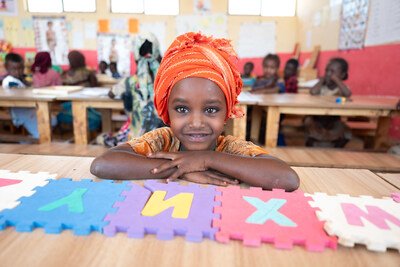
Day of the African Child

As we commemorate the Day of the African Child under this year’s theme of “Education for all children in Africa: The time is now”, we need to follow the lead of the African Union and the African people in receiving their long-awaited right to a quality education across the continent. Long delayed and overdue, the time to empower an Africa fit for the 21st century is now.

As we commemorate the Day of the African Child under this year’s theme of “Education for all children in Africa: The time is now”, we need to follow the lead of the African Union and the African people in receiving their long-awaited right to a quality education across the continent. Long delayed and overdue, the time to empower an Africa fit for the 21st century is now.

A panoply of interconnected challenges undermines local and national initiatives to deliver on the collective goal of ‘education for all’ in Africa. Extreme poverty and conflicts over resources expose children and adolescents to armed conflict and violence on a daily basis. There are 35 recognized armed conflicts across the continent that continue to rage in countries such as Burkina Faso, Cameroon, the Central African Republic, the Democratic Republic of the Congo, Ethiopia, Mali, Mozambique, Nigeria, Senegal, Somalia, South Sudan and Sudan.

Forced displacement is on the rise as a result of conflict, climate change, extreme poverty and instability. In all, 44 million people are displaced in Sub-Saharan Africa, according to UNHCR statistics from 2023, up from 38.3 million in 2021.

In Africa, the climate crisis is also an education crisis. Over the past 10 years, an estimated 42 million crisis-affected children in Sub-Saharan Africa have faced climate shocks amplified by climate change. In 2023, Cyclone Freddy left a path of chaos and destruction. Approximately 1,500 classrooms were destroyed, disrupting learning for half a million students and forcing 1.4 million people on the move across six countries.

Extreme poverty and economic losses add to the collected risks that are pushing children and the young generation out of school and derailing efforts to deliver on the Sustainable Development Goals (SDGs). Four out of 10 children in Sub-Saharan Africa live in extreme poverty. With high class fees and limited resources in the household, children are forced to join the workforce, get married, gather water, or simply stay home from school because their families can’t afford a school fee.

These collective challenges have resulted in the single largest education crisis in the world today. According to UNESCO, 98 million children are out of school in Sub-Saharan Africa. Even when they are in school, the quality of learning is often severely lacking, and Africa has the highest illiteracy rate in the world today.

This education crisis is having vast impacts on Africa’s social and economic development, and perpetuating further non-virtuous cycles of conflict, hunger and displacement.

Sudan is on the brink of the worst education crisis in the world today. Since conflict began in April 2023, a staggering 18 million children have been pushed from their schools. Even before the conflict, there were 6.9 million out-of-school children. In Nigeria, 20 million girls and boys are out of school. In Ethiopia, conflict, drought, poverty and other factors have resulted in 13 million children out of the classroom. This adds up to 51 million children out-of-school in just these three countries alone. In the Democratic Republic of Congo, a resource-rich country, among many in Africa, economic interests force African children into child labour rather than into attending school.

We Live in the 21st Century

What’s wrong with the world? All of us need a new vision that is based on human rights for all, and education is at the core of such a vision. Not just education for the few or the privileged, but education for all of Africa’s children. To deliver on this, we need to embrace human rights in action, based on the promises outlined in the Convention on the Rights of the Child and the African Charter on the Rights and Welfare of the Child.

It starts with resources. In the face of such blatant inequity, we, as a global community, need to shoulder our responsibility by urgently and substantially increasing funding for education in Africa. Education Cannot Wait (ECW) is calling for US$600 million in additional resources to reach our US$1.5 billion resource mobilization target. This will allow us to reach 20 million crisis-impacted children worldwide, and to scale-up our investments in Africa.

Addressing the injustice towards Africa, we also need to support African leadership. As outlined by the African Union, member states across Africa are expected to ensure free, inclusive primary education, reduced costs for secondary education, and substantial investment and support for early childhood education. Financial resources are key to providing action-oriented and results-driven support.

Given its power to lift-up entire generations and transform minds, education is the single most powerful tool we have in delivering on each and every one of the SDGs in Africa. Some of our greatest role models for humanity were educated and thus able to help all of us to advance cooperation and human rights worldwide.

National ownership and localization are imperative to our efforts. By connecting global donors, UN agencies, civil society and the private sector with national governments and local non-profits, we can scale-up the impact, for Africa and the world, of each and every dollar we invest in education in Africa.

The Day of the African Child commemorates a student uprising in 1976 in Soweto, South Africa. At that time, students marched en-masse to protest the poor quality of education and apartheid. Hundreds of students and innocent bystanders were killed, many more were injured.

Kyndryl Teams With NVIDIA to Accelerate Adoption of Generative AI-enabled Solutions

NEW YORK, May 21, 2024 – Kyndryl , the world’s largest technology infrastructure services provider, announced a collaboration with NVIDIA to accelerate the development, implementation and use of AI-powered insights and business outcomes.

Kyndryl’s AI-powered open integration digital business platform, Kyndryl Bridge, will support the end-to-end lifecycle of AI development and implementation in real-world business environments for customers running full-stack NVIDIA accelerated computing and software. Kyndryl also will tap into the domain and industry expertise of Kyndryl Consult to speed customers’ ability to test, verify and deploy generative AI solutions, facilitate rapid application deployment and enhance operational experience.

This collaboration will provide a combination of technology and services critical to customers looking to rapidly scale generative AI solutions to remain competitive in their respective industries. By coupling Kyndryl’s expertise with NVIDIA technologies, customers will be able to tap into a wealth of knowledge crucial to their continued adoption and ability to scale.

To further accelerate customer adoption and implementation of generative AI solutions in their mission-critical IT operations, Kyndryl will leverage the NVIDIA NeMo platform and NVIDIA NIM inference microservices to address industry-common and industry-specific use cases such as customer support, IT operations automation, fraud and loss prevention, and real-time analytics.

Kyndryl is adding generative AI capabilities to its successful Kyndryl Bridge platform and AIOps services, leveraging NVIDIA NIM to simplify and speed generative AI deployments for network and application management. The incorporation of NVIDIA NIM into Kyndryl Bridge will enable AIOps to be optimized on NVIDIA Tensor Core GPUs to rapidly process failure prediction and analysis while delivering comprehensive insights that will significantly reduce network and IT infrastructure failure. The incorporation of retrieval-augmented generation (RAG) with NVIDIA NeMo Retriever microservices allows the solution to be uniquely customized to enterprise environments. This development will provide a holistic view and approach to managed IT services.

“We’re excited to be working with NVIDIA to provide the building blocks and know-how customers need to fully unleash the potential of generative AI throughout their businesses,” said Hidayatullah Shaikh, vice president, Software Engineering, Kyndryl Bridge. “By combining NVIDIA’s generative AI software with Kyndryl’s capabilities, we’re uniquely prepared to help address and resolve the biggest pain points for customers seeking to integrate AI across their hybrid IT estates.”

“As generative AI can scale productivity and insight for companies across industries, many organizations are seeking experts to help them quickly integrate AI applications into their operations,” said John Fanelli, vice president of enterprise software at NVIDIA. “Kyndryl’s solutions and expertise in integrating full-stack NVIDIA AI can help customers rapidly establish and scale their AI strategies.”

Kyndryl is offering comprehensive services via the Kyndryl Bridge catalog, providing the NVIDIA AI platform across industries, including financial services, retail, telecom and healthcare. Kyndryl Consult will support customer implementations running on the NVIDIA accelerated computing infrastructure, in on-premises deployments or in a private cloud, hybrid or multicloud environment.

Kyndryl Bridge’s integration with NVIDIA AI will enable the following new benefits to customers:

  1. · Accelerate generative AI performance on Kyndryl Bridge using NVIDIA AI and accelerated computing to enhance efficiency and speed customer adoption across industries.
  2. · Drive value for customers through Consult & Managed Services generative AI offerings on the Kyndryl Bridge platform (LLMOps, Data Modernization and Infrastructure Services with NVIDIA NIM) leveraging NVIDIA capabilities to facilitate creation of integrated solutions.
  3. · GPU-aware workload placement – via CloudOps and SustainabilityOps – to drive improved performance and deliver insights to support energy efficient generative AI workloads.
  4. · Enhance performance of generative AI applications, such as AI-powered chatbots and virtual avatars on NVIDIA-powered systems through real-time insights from Kyndryl Bridge AIOps.

Worksport Announces SOLIS Solar Cover Availability for Ford F-150 Lightning, Pioneering Sustainable Off-Grid Energy Solutions for EV Pickup Trucks

West Seneca, New York, February 23, 2024 – Worksport Ltd. (Nasdaq: WKSP;) (“Worksport” or the “Company”) announces that it has commenced the initial planning phases for the development of a model of its innovative SOLIS solar cover for the Ford F-150 Lightning. This pioneering product signifies a significant step forward in sustainable automotive solutions, providing F-150 Lightning owners with the ability to harness solar energy for off-grid use. Once a SOLIS model is developed and optimized for the Ford F150 Lighting, Worksport’s engineering team intends to begin exploring the feasibility and possibility of integrating the SOLIS Solar Tonneau Cover with the vehicle’s charging system.

Understanding the unique challenges posed by the Ford F-150 Lightning’s size, weight, and limited bed area, Worksport is committed to conducting comprehensive tests to accurately measure the maximum additional mileage the SOLIS can offer, if integrated directly as a passive charging option. While the F-150 Lightning’s specifications may impact the total miles gained, Worksport’s preliminary estimates suggest the SOLIS solar cover can contribute meaningfully to the vehicle’s range, underscoring the Company’s dedication to maximizing power efficiency for its customers. Previous calculations conducted by Worksport’s engineering team have shown than the Solis Solar Tonneau Cover can potentially increase range by up to 10 miles in certain circumstances.

In addition to the SOLIS solar cover, Worksport plans to offer the SOLIS and COR battery bundle for the F-150 Lightning, offering a complete solution for clean, off-grid energy utilization. This innovative pairing is expected to allow for the utilization of solar power without depleting the vehicle’s onboard power reserves, marking a significant advancement in sustainable automotive technology.

The COR Battery, a crucial component of this bundle, is currently undergoing rigorous testing and is on track to proceed to the manufacturing stage for its Alpha Launch. This stage will involve real consumer testing, further demonstrating Worksport’s dedication to product excellence and reliability. While preparations for the SOLIS solar cover are nearing completion, its launch is planned to strategically align with the finalization of the COR Battery to ensure a seamless introduction to the market. In the meantime, parts for the SOLIS are being sourced from suppliers, laying the groundwork for mass production and availability.

“Worksport is at the forefront of integrating solar technology with automotive accessories, and the SOLIS solar cover for the Ford F-150 Lightning is a testament to our innovative spirit and dedication to sustainability,” said Steven Rossi, CEO of Worksport. “By offering the SOLIS and COR bundle, we believe that we are not only providing a means to enhance electric vehicle range through renewable energy, but also empowering F-150 Lightning owners to embrace clean, off-grid energy solutions. We look forward to sharing the results of our tests and bringing this transformative product to the market.”