Tag: Managing Director – Pharande Spaces

FOMO vs. FOBO – In A House Hunt, One Helps and the Other Hurts

akash

By -Akash Pharande, Managing Director – Pharande Spaces

India’s real estate market provides many opportunities for home buyers. However, it is not easy to navigate, especially for first-time buyers. With so many options and also varying offers from developers, it is often difficult to decide which property purchase ticks all the right boxes for an individual buyer who has never purchased a property before.

Within this complexity, the psychological phenomena of FOMO – the Fear of Missing Out and FOBO – the Fear of Better Options – play big roles in homebuyer decisions. While FOMO can be advantageous in such decisions, FOBO leads to indecisiveness. This can have potentially harmful results.

FOMO and FOBO – Digging Deeper

FOMO is a state of anxiety induced by the fear that one is missing out on an exciting or lucrative opportunity. In real estate, FOMO is what drives timely purchase decisions. As we know, the best projects sell out quickly and prices are also constantly rising, so FOMO is a positive impulse.

On the other hand, FOBO – the Fear of Better Options – causes aspiring buyers and investors to overanalyze the available options. At any given time, more than just a few properties are available to homebuyers that meet their budget, ideal location and lifestyle expectations.

FOBO tends to paralyze the decision-making process because the buyer is constantly hoping to find a superior alternative even if they have already identified a very suitable option. There is, of course, nothing wrong with having plenty of options, but FOBO tends to get buyers stuck in an endless loop of indecision. This can cause them to miss out on perfectly good properties at acceptable price points.

FOMO Can Be Your Ally

Though FOMO has become a derogatory word on social media, it has its advantages. In the context of residential property, it can induce genuine buyers to make timely decisions. This is very important in a market where the best options are often sold out during promotional launches. Infrastructure development, demand, and escalating development costs are constantly pushing up property prices. Homebuyers who experience FOMO at the right time and act on it are often at an advantage in such a fast-paced market.

In many of our cities, projects in high-demand areas often have limited inventory. Once these options are sold and off the market, there may be no similar options available at such prices for a long time – or ever. FOMO helps buyers to overcome hesitation and act quickly when they see a property that meets their needs and budgets.

Likewise, home loan interest rates can be quite volatile, and they play a major part in the overall cost of acquisition. When interest rates are low, FOMO works to the benefit of buyers by driving them to apply for home loans and closing deals before interest rates go up once more. The same is true for periods of discounts, such as the festive season

First-time homebuyers undergo a lot of anxiety when the time comes to take the plunge. FOMO helps convert this anxiety into productive action. Once buyers finally make their commitment, the fear of missing out goes away and relief takes its place.

FOMO

FOBO – The Fence-sitter Limbo

In contrast, a state of perpetual indecision leads to stress and regret if good options are missed out on. While FOMO can result in positive action, FOBO tends to freeze the decision-making process altogether. While scouting the housing market for a home, this can have catastrophic consequences.

FOBO results in an endless chase after a ‘better’ property, location, or deal. Buyers in this state of ‘analysis paralysis’ tend to see one favourable option after the other snapped up by someone else, or become too costly for them to buy.

With FOBO, a buyer who finds a home in a good area, in a project by a good developer, and at a price they can afford, will entirely miss the bus as they perpetually look for a better deal. By the time they circle back to the previous option, it is often too late.

The endless search for the ‘ideal’ option in a world where perfection is a myth only results in emotional distress and lost opportunities. Yes, the housing market is replete with options, but no single home buyer can – or should aspire to – inspect them all. Buyers with FOBO are invariably frustrated, confused people who cannot make up their minds on anything of significance.

In real estate, time is money and you can’t afford to lose either. A delay of even a couple of months can mean a substantial increase in property prices due to demand, inflation, or other market factors. FOBO’s inability to commit to a decision often results in missed chances to lock in properties at favorable prices or lower interest rates.

Over time, these costs add up, making the eventual purchase far more expensive than it would have been had the decision been made earlier.

Finding the Middle Ground

That said, there is also a healthy balance of FOMO and FOBO possible. It’s just a matter of finding that mid-point. Even if there is a sense of urgency, a buyer must not make hasty decisions and do his or her due diligence.

It is certainly important to see as many properties as is feasibly possible. This should not be a hurried process. It is best to set oneself a timeline within which a decision will be made. Usually, a month of dedicated searching is ample time. It is also important to factor in market conditions and to take professional advice before signing on any dotted line.

You want to leverage the urgency of FOMO and turn it into positive energy – but set realistic criteria. A buyer should have a list of ‘must-haves’ to refer to, and should not over-extend their budget. Set a limit to how big your shortlist should be.

If it starts getting endless, FOBO has taken over and it is time to snap out of it. You’re looking for a home that makes you happy, which you can afford, and which will appreciate well over time. Once you’ve found this home, make sure that you know that your hunt is over.

 About the Author:

Akash Pharande is Managing Director – Pharande Spaces, a leading real estate construction and development firm famous for its township projects in Greater Pune and beyond. Pharande Promoters & Builders, the flagship company of Pharande Spaces and an ISO 9001-2000 certified company, is a pioneer of townships in the region. With the recent inclusion of Puneville Commercial into one of its most iconic townships, Pharande Spaces taken a major step towards addressing Pune’s current and future requirements for fully integrated residential-commercial convenience
puneville

Pharande Spaces Announces Festive Launch of Iconic Integrated Township Puneville Phase 3

Pune– Continuing the success saga of one of India’s most iconic celebrated integrated townships, Pharande Spaces today announced that Phase 3 of Puneville is now open for booking. Phase 3 will incorporate eight towers offering 2, 2.5 and 3 BHK configurations.

The festive season launch comes with extremely attractive offers including an Early Bird Special Rate, Spot Booking offer, Ather 450X Electric Bike, 25:25:25:25 financial scheme, and 10:70:10:10 scheme via HDFC. Customers also have a tempting spread of other freebies to choose from, including Apple iPhones, IKEA vouchers, gold coins, modular kitchens, Reliance Digital vouchers and travel vouchers.

Located in West Pune’s thriving real estate hotspot Punawale, Puneville set a new benchmark of integrated residential luxury when it was launched in August 2014 and Phases 1 and 2 are 95% sold out. This is an unprecedented sales record for an integrated township, but came as no surprise – Puneville is a unique luxury township in all respects.

Designed by Aedas, the globally acclaimed, award-winning architects of ultra-luxury hotels in Las Vegas and Macau, Shanghai’s dazzling Financial Centre and Singapore’s Marina Bay Sands, Puneville sweeping futuristic lines and matchless luxury quotient quickly captured the imagination of aspirational homebuyers across the country.

“Puneville is quite literally a masterpiece of ultra-modern urban living, designed on the lines of Futuristic Architecture,” says Anil Pharande, Chairman – Pharande Spaces. “We have spared no effort or expense to make it India’s most luxurious integrated township. The speed with which the first two phases sold out is a strong testimony that we succeeded. Phase 3 offers all of Puneville’s trademark futuristic features and more.”

Integrated townships, with advanced security and safety features, autonomous facilities and amenities and modern conveniences, have become the most sought-after residential option in post-Covid-19 times. Puneville is a fully independent ecosystem that ensures safe, healthy living with abundant green open spaces and state-of-the-art health and sports facilities.

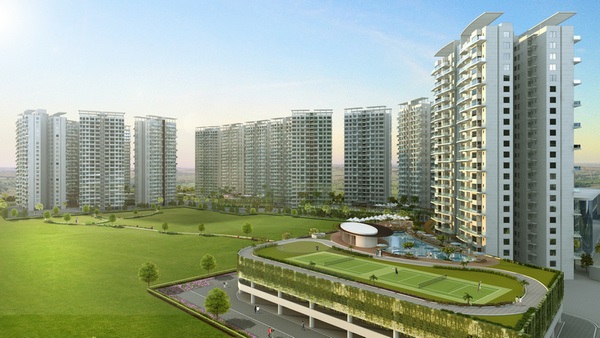
Puneville features a state-of-the-art hospital, a top-grade international school and commercial office complexes for corporate occupiers. It also has verdant landscaped gardens and green open spaces, a gym and tennis court, an Olympic-size lagoon-shaped swimming pool, a jogging track, a dedicated children’s play area, and an ultra-modern, fully equipped clubhouse.

“Life at Puneville is perfection by design,” says Akash Pharande, Managing Director – Pharande Spaces. “No matter what happens elsewhere in Pune, this integrated township has everything you need to lead a comfortable, secure, tech-enabled lifestyle amidst abundant greenery. All our units have the latest smart home features, and the entire township is built and operated on the strictest principles of sustainable living. We are delighted to announce the third phase of this spectacular township – along with some exclusive festive season offers.”

Puneville launched the success story of Punwale, which quickly became one of Pune’s most popular locations with the arrival of this avant-garde integrated township. Punawale’s strategic location off the Pune-Mumbai Expressway was an instant hit with employees from the Hinjawadi IT Tech Park and the MIDC manufacturing belt. It is also a short drive away from Baner, Balewadi, Wakad, Ravet, etc.

Relatively affordable currently, Punawale will see rapid price appreciation going forward. The development of the Pune Ring Road will push up housing and office space demand in Punawale as it will connect key areas like Ravet, Hinjewadi, Punawale and Wakad. The ongoing Shivajinagar-Maan metro project from Hinjewadi to Shivajinagar will further improve overall connectivity and push up property prices in the future.

About Pharande Spaces:

Pharande Spaces is a leading real estate construction and development firm famous for its township properties in Pune. Pharande Promoters & Builders, the flagship company of Pharande Spaces and an ISO 9001-2000 certified company, is a pioneer of integrated townships in West Pune. Its Chairman Anil Pharande is also President – CREDAI (Pune Metro)

Pune Real Estate - In Need of Intervention

Pune Real Estate – In Need of Intervention

– by Akash Pharande, Managing Director – Pharande Spaces

While things are not as bad as initially feared, the Indian real estate sector has suffered greatly from the COVID-19 pandemic. Pune was no exception – like other cities, Pune also saw a complete halt in construction activity during the first pandemic lockdown period.

After the relaxations, we did see construction activity pick pace gradually. In fact, many previously delayed projects were getting completed in the last year despite the pandemic. Even now, when cases are rising in the PMC and PCMC regions, the partial lockdown in Maharashtra allows at least construction activities where workers are present at the site.

Large and medium-sized developers are able to take the necessary precautions at their sites, and can to some extent sustain their workers even during a slow construction period. However, smaller developers are in trouble – apart from lack of funds, smaller projects do not have enough space for labour camps.

Spiralling Construction Costs

It is not just the lockdowns that are giving developers a hard time. Rising prices of cement and steel over the last one year have been a serious concern for developers. Developers have repeatedly sought the central government’s intervention in the cartelization by cement and steel manufacturers which is leading to unchecked price hikes.

The sudden and continuous upsurge in prices of steel, cement and other key raw materials used in construction has massively increased the overall construction cost for developers. This is a huge burden for all players – but again, it is the smaller, cash-starved builders who are most affected.

Everyone Pays the Price

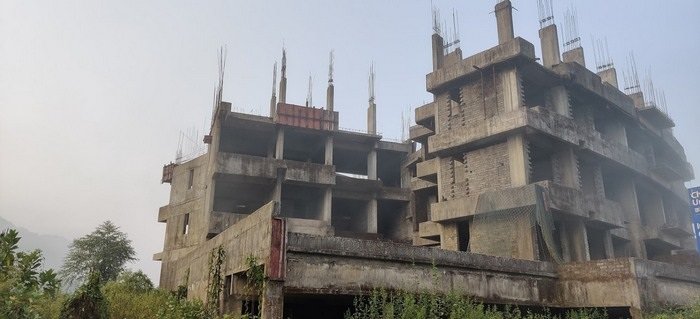
Unchecked construction costs ultimately impact project deliveries and result in stalled projects in many cases. This has negative consequences for all stakeholders. Developers are challenged to incorporate the additional construction costs without adding further to the burden of their customers. Homebuyers find property prices steadily going beyond their budget. And the government loses stamp duty and registration revenue which it can collect with better sales.

We have already seen that government intervention can have very positive outcomes. The recent decision to keep the RR rates unchanged is much appreciated, but it was the limited-period stamp duty cut by the Maharashtra government which had boosted housing sales in PMC and PCMC significantly. Asking for an extension by few more months to keep the momentum going is perfectly justified.

The current situation is extremely negative for real estate developers – not just in Pune, but across India. We earnestly hope that the government will consider supporting the sector much more. The real estate industry employs more than 40 million workers, supports more than 250 associated industries, and is a major contributor to India’s overall economic growth.

Moreover, housing is a basic necessity and government intervention is very essential – especially in unprecedented times such as the pandemic.

Air Quality - From Fundamental Right to Privilege

Air Quality – From Fundamental Right to Privilege

by Akash Pharande, Managing Director – Pharande Spaces

Do you know one of the most important facets of housing choices today? Size, budget, location and developers’ brand are obviously important. But there is another facet that explains why more and more homebuyers are choosing to live in projects which are NOT in the city centre but in emerging areas close to the city.

Across the world, we are seeing one of the worst side-effects of unfettered urbanization – the deterioration of air quality. In India, cities like Delhi-NCR, Mumbai and Pune are notable examples of this. However, it is happening everywhere across the world, including China, the United States, South America and Europe. Everywhere we look, rapidly increased urban development is resulting in tremendous air contamination.

The odd-even vehicle number system now being applied in Delhi is not new. It has already been extensively used in cities like Paris, Manila and Beijing. In the most highly-congested cities of Vietnam, the authorities are desperately trying to find ways to increase metro rail coverage and use. In the near future, the use of personal vehicles may become completely illegal in cities like Oslo and Madrid. In the Danish capital of Copenhagen, over half of the population only uses bicycles.

In India, we have not yet woken up to the full evils of air pollution. However, it takes very little imagination to predict that the problem will grow over our heads eventually.

Air Pollution and COVID-19

In recent times, air pollution has become even more worrisome because of the ongoing pandemic. According to a recent research study by Harvard T.H. Chan School of Public Health, breathing more polluted air over many years can by itself exacerbate the impact of a pandemic like COVID-19.

This study established a clear correlation between chronic air pollution (which has built up over years) and a staggering 11% increase in deaths by COVID-19 infection.

Awareness Is Everything

I recently met a young American couple – both digital nomads – who lived in the almost defunct hill station of Lavasa near Pune for almost eight months during the first lockdown. They had work visas and could have worked from anywhere in India. Though they had to work with slow cellular Internet and had very little access to the many resources available in Pune city, they chose Lavasa for this single reason – its air quality.

“We obviously also have the problem of air pollution in America – but the air quality in most Indian cities is so horrible that we simply could not stay there,” the husband told me. “We tried Mumbai and Pune but they were intolerable. Apparently, very few people here realize that air pollution is not just about what you can see and smell. Thankfully, we have a friend in Mumbai who loaned us the use of his second home in Lavasa.”

Be it Delhi, Beijing, Brazil or New York, clean air is one resource that everyone needs – and very few people get anymore. Industries, automobiles – and, in the case of India, also stubble burning – pollute the air to such an extent that people who breathe it tend to live shorter and more miserable lives.

In Pune, there are almost no unpolluted areas left. The once green environs of village areas like Undri-Pisoli, Panshet, Kamshet and Katraj have already been over-run by real estate development and industrialization. HNIs who could afford to live in areas like Koregaon Park and Boat Club Road have realized that despite relatively more trees and vegetation, they cannot escape air pollution there any longer.

Clean air is a dire necessity. However, like privacy, it is also a luxury that most Indians no longer have access to. Even our most advanced filtration technologies are unable to deliver this vital resource.

What Is The Way Out?

The only real solution is to live in areas where pollution has not yet caught up.

To some extent, integrated townships present a solution. The latest townships are scientifically planned and offer more open green spaces – also known as ‘lung spaces’ in urban planning verbiage. Internal roads are planned in a manner that prevents traffic congestion.

Also, integrated townships have everything from shops and restaurants to hospitals and even office buildings. A new luxury township in Urse near Pune goes an extra mile by offering exclusive low-rise housing formats as well as a dedicated golf course.

Residents can reach these facilities easily without getting caught in traffic jams. Even more importantly, integrated townships are generally too large to be built within the city. The kind of land parcels that are needed for their development are only available in the peripheral areas. This means that the air around them is less polluted.

In cities like Pune, township developers are constantly seeking out newer, cleaner and greener areas to cater to customers who want to regain a fundamental right – simple, good quality air for their families to breathe.

According to a leading property consultant commenting on the effect that Delhi’s air pollution is having one homebuyer preferences, integrated townships in well-connected outlying areas will now start drawing increasing demand. They also confirm that the demand for second homes in these less polluted areas is also growing, since city-dwellers want to have at least an occasional respite from the pollution of the inner city.

Managing Director - Pharande Spaces,

PCMC – Redefining Livability in Maharashtra

Akash Pharande– By Akash Pharande

Pune has a lot going for it – it has a strong industrial belt, is a major education hub and an important base for the armed forces, and is the second major IT destination of the country. In recent years, the Centre for American Entrepreneurship called it an ‘emerging global start-up hub.’ This growth in the start-up ecosystem is mostly led by Pune’s tech talent pool, Maharashtra’s innovation-friendly policies, and numerous other factors.

With an estimated population of 7.4 million as of 2020, the city has seen sustained migration of professionals over the last few years. No wonder, it has transitioned from a Pensioner’s Paradise into a vibrant economic hub close to the financial capital of India – Mumbai.

The city soon became known as one of the best places in India to live and work in. It was named India’s most livable city in the Ease of Living Index published by the ministry of housing and urban affairs (MoHUA) in both 2018 and 2019.

The Success Story Unravels

However, in the latest 2020 rankings, it slipped to the second position, being pipped by Bengaluru. The main factors responsible for this dip are unfavourable infrastructure, traffic congestion, and lack of planning within Pune Municipal Corporation (PMC) to support the ever-growing population. Bengaluru suffers many of the same problems, especially because the existing roads are unable to cope with the increasing vehicular traffic.

Pune’s problems with infrastructure are legendary. Urbanization puts tremendous strain on India’s primary cities, which are challenged by the constantly increasing population. When this problem had spun out of control, some of these cities added satellite cities which were designed to decongest the main cities. Some of them have managed to achieve this and have today emerged as superior alternatives to the parent cities.

International property consultants JLL came closer to the truth about livability with their 2017 report ‘Liveability Quotient – A Paradigm Shift in India’s Satellite Cities’. Pune’s satellite city Pimpri-Chinchwad Municipal Corporation (PCMC) was one of the cities which this report examined.

The PCMC Difference

Formally launched in 1982, PCMC was created with one primary objective in mind – to administer to the civic and infrastructural needs of citizens.

The creation of PCMC was a complete success, and it has emerged as a far more desirable alternative to live in than the PMC. All basic necessities that make life easier in a city – such as reliable water and electricity supply, well-defined sewage system, green open spaces and scientific town planning are available in abundance. PCMC also enjoys better-planned wide roads which address the issue of traffic congestion.

Planned Development

Like in the case of Navi Mumbai, residential and commercial real estate in PCMC is clearly defined in clusters. This allows for a more logical movement of people and materials within the demarcated zones – and, most importantly, preserves the overall quality of life in its residential zones.

It is therefore not surprising that when MoHUA released its 2018 edition of the Ease of Living Index, prominent spokespeople, as well as residents of PCMC, questioned how the city did not rank higher than Pune since it has vastly superior features for its citizens. This question has not been answered satisfactorily, even today.

On the one hand, we have the urban chaos of the Pune Municipal Corporation where urban planning seems to be based mainly on how much the shrinking space in the city can be filled with maximum real estate in the shortest possible time and for maximum profitability.

According to property consultants ANAROCK, Pune saw the highest increase in average property prices among the top 7 cities between 2013 and 2020. As we know, property prices are also dictated by land scarcity – which is certainly true in PMC.

On the other hand, we have the PCMC – spread over 172 sq. km. area and set to further increase by 5-6 sq. km. after the state government scrapped the Pimpri-Chinchwad New Township Development Authority (PCNTDA) and directed that all the developed area under PCNTDA be allotted to the PCMC.

PCMC is a multiple award-winning and progressive, future-facing municipality administered by committees responsible for Law, Women and Child Welfare, City Improvement, Biodiversity, and Sports, Art, Literature and Culture.

Matchless Living and Work Experience

Living in PCMC is a lifelong lifestyle choice which all age groups – from school-going children to adult professionals and senior citizens – swear by consistently. Apart from its vast manufacturing belt which employs lakhs of citizens, the region has some of the best schools and hospitals. Generous, planned open green spaces and parks provide the ‘lung space’ which PMC largely lakhs, delivering a high standard of healthy living.

PCMC’s economic hubs and administrative centres also provide a sharp contrast to what is seen in Pune. Overall, the city has been impeccably planned – but even more importantly, PMRDA has rigorously enforced the blueprint. The region’s massive integrated townships, created by leading developers specialized in this complex residential-cum-commercial format, are the ultimate lifestyle standard that continually attracts homebuyers who are fed up with Pune’s unregulated, congested and polluted urban areas.

PCMC has been created and maintained on the pillars on which all of India’s cities of the future must be built. Not surprisingly, it also surpasses Pune in the number of integrated townships – which offer a vastly superior lifestyle to citizens and are in high demand.

Thanks to its superior town planning, PCMC continues to have enough land parcels to accommodate these futuristic residential formats which offer everything within their perimeters.

Redefining Livability

PCMC outranks Pune in terms of overall connectivity, work-life balance for its citizens, social and civic infrastructure, and affordability of homes as well as the overall cost of living. It has far more green open spaces and is closer to Mumbai than Pune – as well as to the IT hotbed of Hinjewadi (which had propelled Pune into the limelight in the first place).

PCMC citizens enjoy a much better quality of life and most would never prefer to live in Pune. While we cannot say whether this will be taken into consideration when the next Ease of Living Index is compiled, we do know that for the people who matter most – namely its citizens – there can be no other place to call home but PCMC.

About the Author

Akash Pharande is Managing Director – Pharande Spaces, a leading real estate construction and development firm famous for its township properties in West Pune. Pharande Promoters & Builders, the flagship company of Pharande Spaces and an ISO 9001-2000 certified company, is a pioneer of townships in West Pune.

Punawale – Infrastructure and Affordability Gamechangers in PCMC

-Akash Pharande, Managing Director – Pharande Spaces

Strategically located off the Pune-Mumbai Expressway, Punawale has emerged as a flourishing real estate hotspot in West Pune. Punawale is popular with both homebuyers and rental housing tenants, making it an ideal investment destination. What works in its favour are affordability and easy connectivity to key areas in PCMC and Pune City, including the infotech hotbed of Hinjewadi – which employs over 2.5 lakh software professionals and is growing at over 14% per annum – and other prominent locations like Baner, Balewadi, Wakad, Ravet, etc.

Like many other areas in Pune’s thriving PCMC, Punawale had humble beginnings but quickly turned into a major real estate hotspot when prominent developers started building high-quality housing projects there. The real turning point for Punawale came when the luxury integrated township Puneville was announced. This township was a major growth catalyst and soon, Punawale was fully-equipped with top-of-the-line infrastructure and facilities like schools, hospitals, entertainment hubs and malls. Today, Punawale is a major source of pride for the Pimpri-Chinchwad Municipal Corporation (PCMC).

While a major factor catalysing real estate growth in Punawale is its proximity to Hinjewadi, it also benefits from the industrial areas of Pimpri-Chinchwad, Chakan and Talegaon. The demand from manufacturing employees gave rise to Punawale’s emergence as a top-notch affordable housing district. Punawale is a far more affordable alternative to the nearby locality of Wakad, where average property prices are currently around Rs. 6,600 per sq. ft.

Over the last few years, several residential projects have been launched in Punawale which are particularly a major attraction for first-time homebuyers employed in Hinjewadi and the MIDC manufacturing belt. It has a perfect blend of urban development and scenic beauty, and is perfect for those who want to live amidst nature and yet close to all the key amenities of the city.

Thanks to the watchful control enforced by PCMC and the Pimpri-Chinchwad New Town Development Authority (PCNTDA), development in Punawale remains well planned with very adequate infrastructure to support the residential areas.

Punawale has seen several new residential project launches over the last six to seven years. As per data by real estate consultants, more than 8,400 homes have been launched here between 2013 to 2020. Of this supply, almost 58% is ready-to-move-in while another 15% will get completed within the next one year.

Since most homebuyers currently prefer ready homes, this makes Punawale an ideal destination for them. Moreover, Punawale has just 1,400 unsold homes currently, and 76% of this supply is under active construction.

The USP of Affordability

While homes in the integrated township Puneville are priced between Rs. 44,00,000 to Rs. 1,90,00,000 for the top-end luxury homes, Punawale is still a haven of affordability. Most properties launched here in recent years are priced within INR 80 lakh. The average property prices in Punawale are currently about Rs. 5,200 – Rs. 5800 per sq. ft. – very similar to Hinjewadi, but Punawale has an edge over the IT hub because it has a much larger palette of options and also a lot more open spaces.

According to real estate portal 99acres, Punawale has an assortment of different residential BHK configurations. Demand for 1 BHK homes is very high, and Punawale has far more supply of such affordable housing than the neighbouring localities. Most homebuyers here prefer new homes over resale homes because the newer projects have much better amenities.

One can easily find a 1BHK apartment in Punawale within Rs. 45 lakh, while 2BHK homes are selling between Rs. 50 to 70 lakh.

Infrastructure Advantage

Punawale already enjoys very good connectivity to various key areas – another reason apart from affordability why the demand for homes remains high here. But the upcoming infrastructure projects in and around the area will make Punawale even more attractive in the coming years – for example, the ongoing Shivajinagar-Maan metro project from Hinjewadi to Shivajinagar. This will give a new boost to the area’s connectivity by providing easy access to localities like Balewadi Phata and Baner, among others.

At the same time, the ongoing development of the Pune Ring Road is also proving to be a gamechanger for Punawale. In the Pimpri-Chinchwad belt, the Ring Road will encompass Ravet, Hinjewadi, Punawale and Wakad. As the Ring Road and metro corridor get closer to completion, property prices in areas like Punawale will begin rising because of the increasing demand for such a well-connected area.

About the Author

Akash Pharande is Managing Director – Pharande Spaces, a leading real estate construction and development firm famous for its township properties in West Pune. Pharande Promoters & Builders, the flagship company of Pharande Spaces and an ISO 9001-2000 certified company, is a pioneer of townships in West Pune.