Tag: Yoga

Students of Ryan International Academy Bavdhan engage in Musical Yoga

Pune, June 24, 2024 – Ryan International Academy Bavdhan celebrated World Yoga Day and Music Day, with the vibrant fusion of Yoga and Music. The event showcased the harmonious and rejuvenating effects these practices can bring to our lives. To mark this special occasion, Ms Shriyukta Pathak, Alumni of MIT Peace World University, graced the occasion to conduct a musical yoga session for the students and staff.

Ryan Internation School Bavdhan Yoga and Music Day

Yoga and Music for Holistic Well-being

The session began with Ms. Pathak guiding participants through a series of easy but effective yoga asanas, designed to invigorate and refresh the body and mind. The gentle flow of yoga, synchronized with relaxing music, created an atmosphere of tranquillity and unity. This celebration displayed the powerful impact of integrating yoga and music into our

daily routines for better mental and physical well-being.

Ryan Group of institutions has introduced such activities as promoting Yoga and Music Day with the purpose to achieve a healthy mind and a healthy body among learners and workers because health is an inseparable part of students’ and employees’ life.

Revolutionize Your Health: The Advantages of Yoga-Based Wellbeing

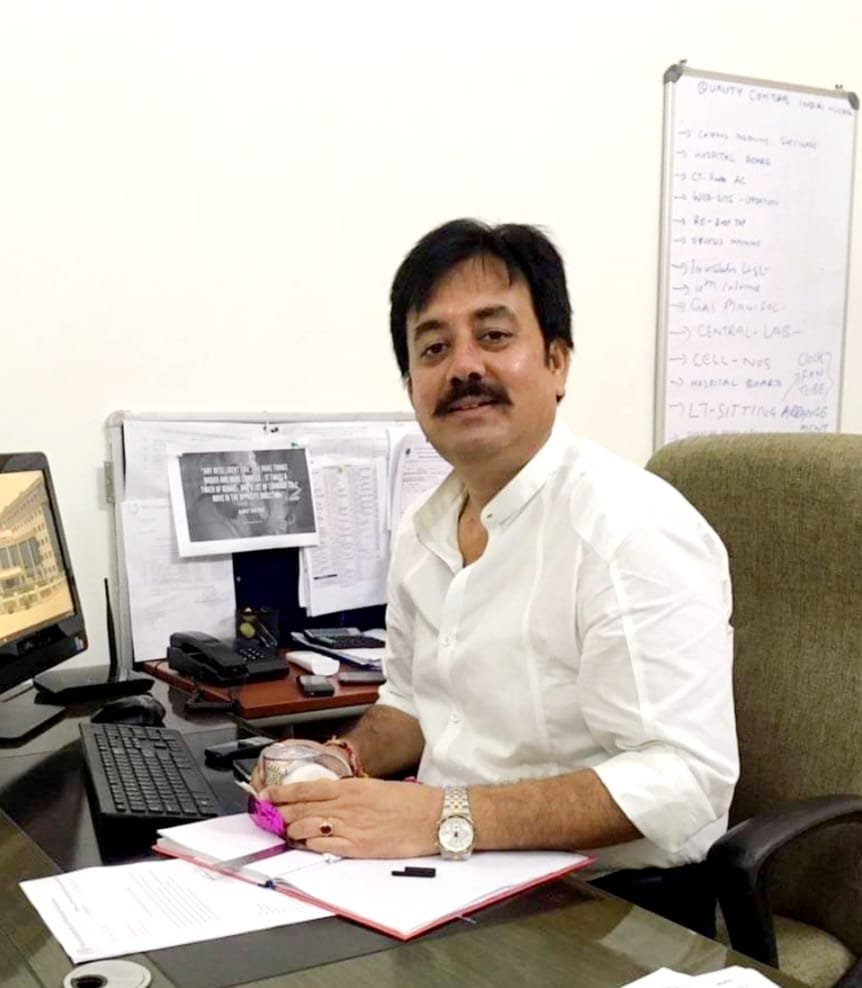
Raj Vardhan, OSD Chairman, NIIMS Hospital (1)

According to Mr. Raj Vardhan Dixit, OSD Chairman, Noida International Institute of Medical Sciences (NIIMS) College & Hospital, NIU-

Yoga, with its holistic approach to wellness, has emerged as a powerful tool for addressing both physical and mental health issues. Incorporating daily yoga sessions into one’s routine not only enhances flexibility, strength, and balance but also offers therapeutic benefits for conditions like back pain and arthritis. The practice extends beyond physical postures to include breathing exercises and meditation, pivotal for reducing stress levels, thereby contributing to improved heart health and lowered blood pressure. Participating in yoga-focused wellness retreats presents an immersive experience tailored to individual needs. These retreats offer specialized programs catering to various fitness levels and health conditions. For beginners and individuals with limited mobility, gentle yoga sessions provide a supportive introduction to the practice, focusing on foundational poses and gradual progression. Advanced classes challenge experienced participants with more complex postures and deeper meditation techniques, fostering continued growth and exploration.

Nutrition plays a crucial role in these retreats, with workshops and curated meals designed to promote healthier eating habits. By emphasizing balanced nutrition, participants learn to complement their yoga practice with dietary choices that support overall well-being and enhance physical vitality. Wellness professionals at these retreats offer personalized consultations and develop tailored treatment plans, ensuring that each participant receives comprehensive guidance aligned with their specific health goals.

 The retreat environment itself is conducive to healing and rejuvenation, featuring serene settings that encourage relaxation and mindfulness. Participants engage in a variety of activities beyond yoga, such as nature walks, meditation sessions in tranquil surroundings, and treatments like massages or acupuncture. These activities complement the yoga practice, promoting a holistic approach to wellness that integrates physical exercise, stress management, and emotional well-being.

Moreover, yoga-focused retreats are inclusive spaces, welcoming individuals from diverse backgrounds and fitness levels. By offering a range of activities and services, these retreats ensure accessibility and accommodate varying preferences and needs. Whether someone seeks to improve flexibility, manage chronic pain, or simply rejuvenate their mind and body, the retreats provide a supportive framework for personal growth and transformation.

Overall, yoga-focused wellness retreats exemplify a comprehensive approach to health enhancement. By integrating physical movement, stress relief techniques, and mindful eating practices, these retreats empower participants to cultivate a balanced and healthy lifestyle. Through personalized attention, expert guidance, and a nurturing environment, individuals not only enhance their physical health but also foster mental clarity, emotional resilience, and overall well-being. Embracing yoga as a cornerstone of wellness not only improves individual health outcomes but also promotes a sustainable path to living fully and vibrantly.

India and Russia are closer than they seem: Indian Vibes in Moscow

Moscow is a multicultural city. It is home to 13 million people, and only about half of them are native Muscovites. The capital attracts residents of smaller Russian cities, as well as immigrants from CIS countries, Middle Asia, Europe, and even India, with its opportunities both for education and career development and for a rich cultural life. The Indian diaspora in Moscow numbers about 15,000 people. Many come to Moscow to get higher education and stay on, finding good jobs in their specialty, doing business, and building families.

India and Russia 2

Indian culture has taken root in modern Moscow

Muscovites are interested in Indian culture and are happy to adopt some of the festivals and traditions. In recent years, there have been numerous festivals of Indian culture in the capital, bright Holi celebrations are organized in parks, and young women often decorate themselves with mehendi. Muscovites who lead an active lifestyle have come to appreciate yoga and various forms of meditation as practices that help to harmonize themselves and fill their lives with joy and inspiration, to find a fulcrum within themselves. However, yoga with a Moscow accent may differ from the Indian tradition. Often Moscow yoga implies the presence of curious attributes, such as brightly colored leggings, a mat decorated with the phases of the moon, the use of incense palo santo. The decor of decent yoga clubs necessarily includes aged statues of Ganesha or Buddha’s head. It is also very desirable after practice to go to a trendy smoothie bar with a friend to chat about the finer things and signs the universe gives us.

Indian cuisine

In Moscow, you can find restaurants of almost every cuisine in the world. Muscovites are great gourmets and enjoy trying different flavors. As a rule, most people do not dine at home. Businessmen and office workers go to cafes and restaurants for lunch and meetings. There are many Japanese, Italian, Vietnamese, Georgian, and Chinese establishments in the city. And, of course, authentic Indian restaurants thrive in the capital, as well as small Indian corners in gastrocenters (former Soviet food markets or streetcar depots rebuilt in a modern style, which now house food outlets popular especially among young people). It is important that the chefs and owners of the establishments are Hindus. Therefore, their knowledge and skill in cooking Indian food can be trusted. In Moscow restaurants of Russian and European cuisine, as a rule, all taste preferences are treated with understanding – there is a choice of vegetarian dishes or you can always ask to exclude animal products from your order.

Spirituality

The most common religion in Russia is Orthodox Christianity. However, in addition to Orthodox churches, Moscow has several Catholic and Protestant churches, synagogues, mosques, and Hindu temples. Many modern Muscovites are atheists, but they study the history of different religions and beliefs with interest. Both Hindi living in Moscow and Muscovites visit the Sikh temple Gurudwara Sahib, as well as the temple of Lord Krishna, where services and lectures are regularly held. By the way, Krishna has many followers in Moscow: even just walking along one of the central streets in good weather, one can meet a group of people in brightly colored clothes and saris dancing and singing Hare Krishna.

Art

If you are interested in classical music, fine arts, and contemporary art, Moscow is ideal for a wide variety of cultural leisure activities. It would take more than one day to visit all the best Moscow museums and galleries; besides, expositions and exhibitions change quite often. Often there are temporary exhibitions related to the Indian tradition. For example, in the main art state museum – Tretyakov Gallery, in addition to the permanent exhibition, which showcases masterpieces of Russian art of the XI – early XX centuries, now (from October 10, 2023 to March 10, 2024) you can visit the exhibition of Nicholas Roerich. It presents vivid landscapes of the famous artist, philosopher, mystic, spiritual teacher, and follower of Agni yoga. Roerich found inspiration for his works both in Russian and Indian culture – he made many trips and expeditions to India, and for the last 18 years of his life the artist worked in Naggar (Himachal Pradesh).

Conclusion

Thus, Indian culture is firmly embedded in the life of modern Moscow. Coming to another continent as a tourist, Hindi can not only get new impressions, see the famous Moscow sights, museums, theaters, parks, and estates, get acquainted with the rhythm of the city, but also be sure that even far from home you can meet something dear to your heart.

Disclaimer: The information contained in this press release is provided by a third party and does not necessarily reflect the views or opinions of our organization. We do not endorse or guarantee its accuracy.

Yoga, done the right way, is a blessing for all

Yoga, done the right way, is a blessing for all

The excitement around celebration of the International Yoga Day on June 21 is building up amid Prime Minister Narendra Modi’s own plans to hit the mat on that day.

But in the post-Covid times, medical practitioners have cautioned people who were hit by the coronavirus and administered steroids. All these people must practice yoga only under watchful eyes of a trained practitioner as the possibility of trivial muscle or joint injuries among them is high.

Medical practitioners say that they have noticed a spike in cases wherein people, especially elderly,  who were treated with steroids for coronavirus have developed mild osteoporosis or are struggling with chronic muscular pain even after recovering from Covid-19.

“There is no doubt about yoga’s benefits in reducing back aches and postural issues but some people who are struggling with post-Covid issues need to be careful,” said Simran Kumar, a consultant in Delhi government health department.

Improper warm up or erroneous copying ofYouTube videos without guidance of a yoga trainer are also likely to cause muscle and tendon strains in some people struggling with post-Covid issues, said another medical practitioner.

The benefits of yoga include stress-relief and fitness but improper execution of asanas – including overstretching of muscles – can expose people to injuries, said yoga trainer Sadhana Singh.

“In some people, with marginal osteoporosis or other related issues, overzealous flexing or extending the spine can injure the back. While performing asanas which need forward folds, one should be gentle as a beginner and not push too hard to achieve perfection,” said Dr Madhujeet Gupta, Spine & Pain Specialist at Axis Clinic for preventive orthopaedics.

He said elderly people suffering with weak bones  in the aftermath of coronavirus infection and the involved steroid treatment, need to take special care. “Some of the common age-related injuries during over-stretching could be vertebral collapse or ligament and muscle injuries. In such cases, the compressed spine needs to be repaired with kyphoplasty and  regenerative cell therapy for the soft tissue injuries,” said Gupta, a spine endoscopy specialist.

Yoga trainer Singh advises proper warm-up and a round of preparatory poses before moving into poses like hanumanasana (leg split), sarvangasana (shoulder stand), uttanasana (standing forward bend), salambashirshasana (head stand) and pashimottanasana (seated forward bend) that require a slightly more effort and flexibility.

The benefits of yoga, India’s 5,000-year-old body of knowledge, are enormous. Even the western world has started to accept yoga’s physical and mental health benefits. Medical practitioners and yoga trainers are unanimous about yoga being a power vehicle for spreading India’s soft power in the world. So, this June 21 join the International Yoga Day celebrations and make your body fit but do not forget to take a trainer’s help or over stressing yourself in the race to compete with others.

Yoga practices to prevent Covid....

Yoga practices to prevent Covid…

At the top of everyone’s minds, these days is to guard ourselves against Covid, as we struggle with a second wave of the pandemic.

As the age-old saying goes, prevention is better than cure. Specific yogic practices, when followed daily, have proven to be highly effective in not just prevention but also post-illness recovery from the virus.

While this has been established by clinical studies, the need of the hour is widespread adoption of the same.

Why Yoga

While maintaining the norms of social distancing and frequent handwashing is a must, it might not be enough in the current scenario. Once we are exposed to the virus, the outcome is based on how robust our body’s defense mechanism is.

The better equipped the body is to cordon off the infection, the higher are the chances that we pass off the threat either without any symptoms, or have a smooth recovery from the illness. In some severe cases, even survival might be determined by how prepared our body’s resistance is.

It thus seems imperative to include in our daily routine, practices that prepare the body to maintain or restore its normal function despite any external threats.

The good news is we don’t have to venture very far as the solutions lie in our very own culture. The ancient Indian Yogic practices help achieve samatvam (homeostasis) at the level of the mind and the body. Homeostasis refers to the ultimate balance of all body functions and is linked to a healthy, disease-free state.

Yoga asanas, pranayama, meditation, and relaxation techniques directly boost baseline immunity, through various mechanisms as detailed below. Yogic techniques also greatly improve lung capacity/pulmonary function and the health of respiratory muscles which is key as lung involvement is co-related with worse outcomes in Covid-19.

What practices work best for Covid?

Asanas:

Dhanurasana (bow pose) directly works on lymphatics in the intestine, which is the first line of protection against infection. Matsyasana (Fish pose) improves immunity by stimulating the thymus gland, which is the center of the immune system, and “trains” T cells to recognize pathogens. Uttansana/Hastapadasana (Forward bend) helps in chest expansion increasing lung capacity and encourages ventilation esp in the clavicular of the lungs, which otherwise receive little fresh air. Trikonasana (Triangle pose) stretches the fascia around the lungs and helps in improved breathing. Also helpful in relieving tension.

Stress levels have been directly linked to immunity. When the body is under stress it releases cortisol which suppresses the protective mechanism of the body. Here comes the role of relaxation techniques.

Ananda Balasana (Happy baby pose) is great for stress relief and overall relaxation by opening up the hips. VipritKarni (legs up the wall pose) provides gentle relaxation by improving the circulation of blood in the brain. Savasana (corpse pose) helps in deep relaxation and has been proven to significantly lower stress.

Breathing techniques:

Kapalbhatipranayam helps to improve the strength of respiratory muscles and flush out impurities from the respiratory passages. Brahmari (bee breath) is highly effective in stress relief by directly acting on the parasympathetic nervous system. Deergha pranayama improves ventilation in the lungs and strengthens all 3 respiratory muscle groups – the clavicular, intercostal and diaphragmatic.

Others:

Meditation is a proven remedy for keeping stress levels under control. It can be guided if you are a beginner. Jal neti is an excellent kriya to flush out toxins from the upper respiratory tract.

These practices should best be learned from an expert, to avoid any side effects of injuries. Each practice has some medical conditions as contra-indications, hence it is advised to practice under supervision when you are starting.

Research has also established the role of yogic practices in recovering from the post-Covid damage to lung function. My students have shown remarkable progress in their oxygen saturation and overall lung capacity with regular guided practice.

Given the current scenario, it would be wise to embrace these practices as part of our daily routine. Having said that, if you have fever, cough, and difficulty breathing, seek medical care early.

Author:
Dr. Charu Arora
Doctor (Singapore) turned Yoga teacher. RYT 200
At the intersection of ancient practices and modern science.
ISB Hyd.
Worked for India’s top Health Tech Startups