Tag: Telemedicine

Revolutionising Healthcare Access: Clinics on Cloud’s HealthATM Brings Preventive Diagnostics to Millions
Preventive diagnostics

In an era where healthcare accessibility and affordability remain critical challenges, Clinics on Cloud emerges as a beacon of innovation and hope. This pioneering health tech company has taken significant strides to bridge the gap in healthcare services through its revolutionary HealthATM platform, transforming the way communities access essential medical services.

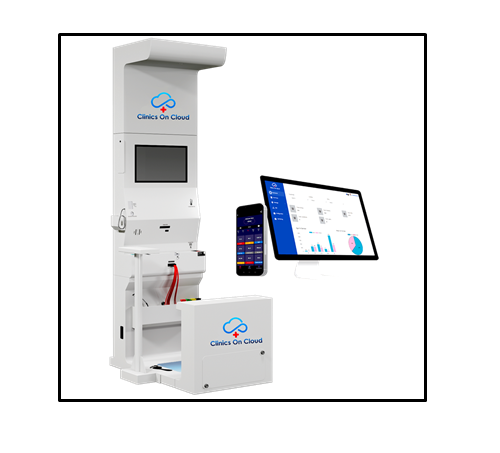
Clinics on Cloud stands at the forefront of the health tech industry, driving forward with its commitment to address global healthcare challenges. Their flagship platform, HealthATM, seamlessly integrates basic health checkups and consultations, offering individuals a convenient and efficient way to access high-quality medical care.

Vision and Mission:

Guided by the vision of “HEALTH FOR ALL,Clinics on Cloud is dedicated to making preventive diagnostics accessible to everyone. Their mission centers on alleviating the burden of illness and healthcare costs globally by providing affordable and instant health checkups through HealthATM. With a vision of placing one health kiosk every 2 kilometres, Clinics on Cloud aims to ensure healthcare is within everyone’s reach.

Key Initiatives:

HealthATM Platform: The cornerstone of Clinics on Cloud‘s innovation, the HealthATM platform, harnesses cutting-edge technology to deliver essential health services to underserved communities. With over 2,500 HealthATMs strategically installed across India, Clinics on Cloud is expanding the reach of preventive healthcare, improving health outcomes for countless individuals. Each HealthATM can check over 60 health parameters in less than 10 minutes, ensuring quick and comprehensive health assessments.

Telemedicine: Clinics on Cloud’s telemedicine feature brings doctors to patients’ screens, providing remote consultations with access to all necessary health reports. This ensures timely medical advice and reduces the need for physical visits, especially in remote areas.

Digital Reports: The platform generates digital reports, allowing patients to review their health records with a click, facilitating better follow-up and continuity of care.

Partnerships: Clinics on Cloud has established strategic partnerships with Public Sector Undertakings and government projects, enhancing the accessibility of their services. By collaborating with these initiatives, Clinics on Cloud is bringing quality medical services closer to people, addressing healthcare disparities in numerous communities.

Impact and Reach:

Since its inception in 2017, Clinics on Cloud has made remarkable progress in the healthcare sector. With operations spanning over 200 cities and a robust presence across India, the company has positively impacted millions of lives. By providing access to essential health checkups and telemedicine facilities, Clinics on Cloud is playing a pivotal role in transforming healthcare accessibility. The company’s focus on prevention over cure ensures that communities stay healthier and reduce the burden of chronic illnesses.

In summary, Clinics on Cloud‘s innovative HealthATM platform is not just a technological marvel but a significant leap towards equitable healthcare. Through their unwavering commitment to “HEALTH FOR ALL,” Clinics on Cloud is making a profound difference in the lives of individuals and communities, one HealthATM at a time.

To learn more about Clinics on Cloud and their groundbreaking initiatives, visit [Clinics on Cloud](https://clinicsoncloud.com).

Year End Quotes from Healthcare, Telemedicine, Medtech & Pharma Industry

Vikram Thaploo CEO Apollo telehealth

Mr. Vikram Thaploo, CEO, Apollo Telehealth (largest and oldest multi-speciality telemedicine network in the world. A unit of Apollo Hospitals Group,)

The COVID-19 pandemic resulted in massive disruptions across different industries and the healthcare industry has definitely been hit hard. But thankfully, the healthcare industry effectively managed the outbreak owing to full support from the central and state governments. Although there has been slow adaptation of digital tools in the healthcare industry, everything changed with the outbreak of the pandemic. The effect of healthcare technology and digital solutions was felt in many different ways than we could have expected. During the lockdown, both the patients and the healthcare practitioners realized the importance of digitisation. The pandemic has almost entirely changed how the healthcare industry in India operates. With telehealth, hospitals are now also concerned about reaching patients online, how to deliver and protect patient information. Telemedicine and remote patient monitoring are being increasingly adopted by service providers to virtually manage patients, predict and prevent illnesses, and improve clinical outcomes. There’s been almost an 80 per cent rise in consumption of digital healthcare services after COVID-19. Digital technologies like extended reality, cloud systems, big data, and artificial intelligence are taking the center stage to enhance user- experience and increase process efficiency. These technologies have accelerated digital Health, remote patient monitoring and timely clinical protocols.  In the coming years too, digital health applications & therapeutics, personal health wearables, and AI, NLP(neural language processing), robotics process automation or the RPA-enabled process accelerators in clinical prediction, operational transformation and compliance improvement will further drive and shape the future of healthcare.
 
Mr Nikkhil K masurkar Executive Director entod

Mr. Nikkhil K Masurkar, Executive Director, Entod Pharmaceutical (specializes in Ophthalmology, Dermatology and ENT)

The healthcare market can increase three-fold to Rs. 8.6 trillion (US$ 133.44 billion) by 2022. In 2020, in a very short period, Covid-19 became an unparalleled disruption to every area of the healthcare industry. The overall response to the pandemic witnessed both the private and government sector working in tandem. The private Indian healthcare players rose to the occasion and have been providing all the support that the government needs, such as testing, isolation beds for treatment, medical staff and equipment at government COVID-19 hospitals and home healthcare. The healthcare industry, along with the central and state governments, undertook a robust response plan to tackle the pandemic by setting up dedicated COVID-19 hospitals, isolation centers and tech-enabled mapping of resources. Despite initial hiccups, the healthcare system in India managed to withstand the pandemic. The different efforts in manufacturing of medical equipment, disposables, drugs and the most recent vaccine efforts made by India has placed us as a global leader. Primary healthcare has become accessible to the needy and poor through digital interventions. Even in areas like clinical trials, there is less intervention in terms of human repetitive reviews due to use of technological tools like Artificial Intelligence (AI). The Indian healthcare sector is diversifying and opportunities are emerging in every segment, be it providers, payers or medical technology. With growing competition, organizations are cognisant of new challenges and are looking to explore the latest business dynamics and trends impacting their segment. India is full of opportunities for players in the medical devices industry. The country has also become one of the leading destinations for high-end diagnostic services with tremendous capital investment for advanced diagnostic facilities, thus catering to a greater proportion of population. The country’s competitive advantage lies in the increased success rate of Indian companies in getting Abbreviated New Drug Application (ANDA) approvals. India also offers vast opportunities in R&D as well as medical tourism. After the pandemic, governments and organizations are more focused towards building digital infrastructure and preventive healthcare which will surely pave the way to a brighter future for the healthcare industry in the years to come. ENTOD has grown by 45% year on year (YOY) in the Ophthalmic and Otological market as per the IQVIA MAT Nov 21 data. We have also gained the maximum market share 0.93% in this segment during this period. We expect to maintain the same growth in the next financial year too due to the momentum generated in the market and the launch of our new divisions, new innovative products and proposed increased field force numbers.
Mr. Ashok Patel, Founder and CEO, max Ventilator

Mr. Ashok Patel, CEO and Founder, Max Ventilator(India’s leading ventilator manufacturer)

Doctors say that the pandemic will always be there till at least  6 years. So all the businesses are prepared to deal with it. Even as Covid-19 has led to the rise of diagnostics and equipment along with an impressive rise in virtual and homecare-driven device segments, there has been an increased emphasis on making low-cost lifesaving devices such as ventilators and oxygen concentrators. Speaking especially of ventilators, from now onwards, the rule of 4 beds per ventilator will become more of a reality. With telemedicine and app-based online pharmacies becoming more of a constant surrounding our daily lives spurring innovations in related devices and equipment, the coming year will also see more action in big data, AI and machine learning-based disease prediction technologies, apart from a push to more sophisticated surgical devices meant for a range of conditions such as neurological, cardio-vascular, oncological, orthopedic or musculosketal conditions. However I must add that for AI-based ventilators to become a reality, more time would be needed. While make-in-India has gained momentum with the view to become more self-reliant, the Chinese products have received a setback. This means that quality will determine the entry of new products and more rigorous quality checks will increasingly become a norm. The coming year will also see major investment and focus on medical device components and parts in the country. At the same time, given the surging omicron cases outside India and a repeat of the same not totally being out of question in India, Covid-related devices and equipment will continue to remain a focus of attention of manufacturers in the country in the coming year.  

Dr H S Chhabra, Director, Indian Spinal Injuries Centre

Dr H S Chhabra, Director, Indian Spinal Injuries Centre


“The year 2021 was a challenging one for India’s health sector, as the lethal second wave of coronavirus struck. As a result, an unprecedented number of people lost their lives and there was unparalleled suffering for countless others. It did, however, serve as a valuable lesson for the entire healthcare industry, leading to the resurrection and upgrading of health infrastructure in both the public and private sectors. We not only have a completely functional oxygen plant but are also now fully equipped to face new challenges, such as Omicron, with a team of experienced doctors and paramedical staff. As we approach 2022, I strongly advise everyone to take both the doses of the vaccine, if already not taken. Also, continue to observe social distancing measures, wear masks, practise hand hygiene and adhere to all the guidelines issued by the Indian government.”

Dr. Aashish Chaudhry, Managing Director, Aakash Healthcare

Dr Aashish Chaudhry, Managing Director, Aakash Healthcare, Dwarka


“Aakash Healthcare is ready for 2022, with a solid infrastructure in place to help counteract the possibility of Covid’s third wave. Since last year, the hospital has been working in close collaboration with the government to provide critical care to COVID-19 patients in the pandemic, and has earned the reputation of being one of the most sought-after centres for personalized care during COVID times. As the New Year approaches, we hope to complete the trials for the children’s Covid vaccine. As a  part of our overall development and expansion plans, we will establish a World Class Bone and Joint program/hospital in Gurgaon by next year. The new venture will serve as an Orthopedics, Joint Replacement, and Spine Hospital. In addition, we intend to open a new Cancer Hospital in Dwarka. which will provide comprehensive cancer care  including Radiation and BMT (Bone Marrow Transplant).
We are almost about to launch our State of the art Liver Transplant Program at our existing Dwarka Hospital, Multiple clinics as well as Super Speciality Hospitals are about to crop up in North India. A couple of our international projects  are also in the pipe line for 2022.”
 

Telemedicine in India – Time has come

Dr Ajay Kumar, Chairman, BLK Liver and Digestive Diseases Institute and a Patron of SeekMed

Practising telemedicine means communicating with the patients from a distant place and advising on the treatment, medicines, advice etc. It has been in existence for long but did not have the legal sanction and was waiting for the right circumstances and right time to take off. It was always considered to be a fancy, high-end technology to connect people from remote areas with their doctors in far off cities. It was available in corporate hospitals, but you always required a local doctor as an intermediary to write the prescription. This technology has been used wisely in high profile projects like ECHO to advise the doctors on their patients and to link peripheral doctors with the tertiary care specialized hospitals.

Changed Times:

COVID pandemic has created a unique situation across the world. People are rightly advised to avoid crowded places. Hospitals are full of COVID patients. A lot of patients are asymptomatic. So everybody who visits the hospital is suspected to suffer from COVID unless proved otherwise. This is all the more in India, as because of population, hospitals are crowded more than usual. Also, hygienic conditions are not the same as in developed countries in the world. This has created a fear psychosis regarding regular hospital visits among population except in emergency conditions. People are avoiding a visit to hospitals. Earlier, usually people from far away places were desirous of consulting doctors on phone or email. With the advent of this Pandemic, as patients even from approachable distances from hospital want to avoid visiting hospitals for fear of acquiring infections. Something which was a matter of convenience has now become a matter of necessity. Moreover, it has now been legalized by the regulatory body and thus prescription given on telemedicine is legally valid. Thus, with legal sanction from the regulators, these are the right circumstances and the right times for telemedicine to take off.

Can telecon replace regular hospital consultation?

For ages, for the right art of medicine, person to person contact is considered to be sacrosanct. What can be discerned by reading patient’s expressions, finding hidden messages in patient’s history, observing the way the patient walks into your clinic, anxiety/apprehension on the patient’s mannerisms is necessarily not decipherable on telemedicine but a lot of it is still possible. What is a doctor, I miss on telecon is the science of eliciting physical signs but even more important is the art of holding the patient’s hand and touching the forehead to give comfort or what the doctor conveys through expressions of compassion and reassurance, which breaks many barriers, probably can’t be fulfilled by telemedicine. Because of this, I will always consider telemedicine as second to the person to person interview. But as it is, with the passage of time, as we became more and more investigation oriented and focused on filling files to practice defensive medicine, we were losing that art.

But as they say, Necessity is the mother of invention. With pandemic of the corona, making a large number of us homebound, scary to visit the crowded place – more so hospitals, senior patients and doctors being advised not to come out in open and of course, the technology available to overcome many shortcomings of existent anomalies in telemedicine, it has become the reality and is there to stay for future.

As we learn more and more about it, we need to look at its special advantages and realize deficiencies which probably can be overcome to a large extent in near future. As International medical tourism has grown in a big way in the last decade and a half, we were already seeing its adoption in follow up cases or in pre-visit consultations. There are few situations where telemedicine can actually take place of regular face to face consultations:

• Follow up visits of chronic diseases
• Advise on some abnormal lab investigations
• Opinion prior to face to face consultation
• Second opinions
• Triaging: how important is to visit the hospital for a particular situation

While we are looking at the virtue of telemedicine, it is very important for the service providers to assure the users regarding the confidentiality of their medical history. Also as data is the most important tool in every future business, a lot of interested parties may use it for their business ends or some nefarious designs. Regulators also have to make sure that this is looked into.

Demand for Telemedicine to Rise Post Covid-19: Survey

The coronavirus pandemic has caused significant disruptions in the healthcare sector and has evidently accelerated the use of telemedicine or virtual medical consultations. In a recent survey, a whopping 70% agreed that telemedicine is going to be the future of healthcare in India. The country’s leading telemedicine healthcare clinic has released some interesting insights about how far this form of medical consultation has been adopted.

The survey saw maximum participation by the millennials. About 53.2% of these were females of all age-groups. News and media coverage of the recent spurt in E-clinics have bode well for virtual medical consultations as about 35% became aware about telemedicine through this medium. A close second, at 31%, were those who came to know about it from their family and friends. Due to lockdown, consumption of news and recent developments increased among people and this has contributed significantly to awareness about telemedicine.

The option to access healthcare facilities remotely for health management purposes by using digital information and communication technologies is driving the growth of telemedicine in a time when people are unable to make physical visits to the doctor.

Overall, the survey reveals a consensus among all that telemedicine is here to stay for long even after the pandemic is over. Majority participants admitted to using telemedicine at least 2-3 times in the past four to five months, with about 40% saying that they used telemedicine the most during the period of lockdown. Post the lockdown, many government hospitals, private hospitals and e-pharmacies have taken to telemedicine. Many corporates also have adopted telemedicine in their employee wellness strategies.

The surge in teleconsultations follows the long-pending telemedicine guidelines which were finally issued by the Ministry of Health and Family Welfare (MoHFW), in partnership with NITI Aayog and Board of Governors (BoG), Medical Council of India (MCI).

About 60% said they found it relatively easy to book an appointment online for a virtual consultation and given the current times where social distancing is the need of the hour, this is a more beneficial and safer alternative to visiting a doctor in person, which would otherwise expose them to the risk of contracting the virus. The only barrier that many face in this mode of consultation is the availability of doctors, something that is quite understandable in view of the epic proportions of the ongoing health crisis.

According to Mr. Ayush Mishra. CEO, Tattvan E-clinics, “Telemedicine is definitely being used on the frontline amid the coronavirus outbreak. The pandemic has forced people to stay at home and cancelled all traditional medical appointments, imposing a new standard of living on every individual – not on just those who became infected. This resulted as an emerging opportunity to implement new technologies and strategies as the field embarked on a new frontier of healthcare. As per the survey, around 70% agreed that telehealth consultations are going to be the new normal of the healthcare sector in India. It is still complicated due to the barriers like education, innovations, language, etc, but the landscape of telemedicine could continue to change, to the betterment of physicians and patients alike”.

A good number of participants agreed that telemedicine makes it a lot easier to avail healthcare during times of disasters and pandemics and are reasonably satisfied with the apparatus in place presently. They find it to be a more reliable and comfortable option as compared to face-to-face consultations, because telemedicine takes care of exigencies – providing timely, last-minute service to chronic patients, eliminating the waiting time for ambulances and the like.

Non-exposure to potentially sick patients and easy access to specialty experts/doctors pan-India emerged as the key benefits of telemedicine followed closely by saving transportation fee and time and more convenient clinic visits. Thus, the survey paints a positive picture for telemedicine in India with the majority conceding to the view that telemedicine will grow exponentially in the times to come and more medicines and other medical services should be made available digitally.

As per the conversation with Anmol Arora, CEO, DocVita, he said “In India, virtual consultations are currently picking up because of the safety they bring to both patients and providers from getting infected. For some specialities, telemedicine is preferred over in-person visits for the anonymity and privacy it offers, like therapy. At DocVita, consultation requests have been growing 2x every month, and 2% of our users have been inviting others to join the platform. While we expect to keep up with the growth in the coming months, we anticipate the emergence of telemedicine as the new normal as people become acquainted with online healthcare services. There are also other reasons behind the rising popularity of telemedicine – reduced travel and a convenient, democratised access to healthcare for all. Besides, 70% of health issues can be diagnosed and treated online, such as issues related to dermatology, nutrition and mental health. Majority of requests on the platform have been for family doctors and dermatologists.”