Presidency University, Bengaluru organises National Conference on Gender and Inclusion
Bengaluru: 25th March 2024: The National Conference on Gender and Inclusion was organized by Presidency University, Bengaluru, Centre for Development Policy and Practice, and GOONJ, in collaboration with Digital Empowerment Foundation (DEF) and Maulana Azad National Urdu University (MANUU) on 14th March 2024 at Presidency University campus. The conference was a prominent event in the ongoing discourse surrounding gender dynamics in the Indian workforce. The theme of the conference for this year was ‘Women in the Workforce.’ The conference was packed with insightful sessions and esteemed speakers that aimed to shed light on the challenges, opportunities, and strategies for fostering gender equality and inclusion in the labour market.
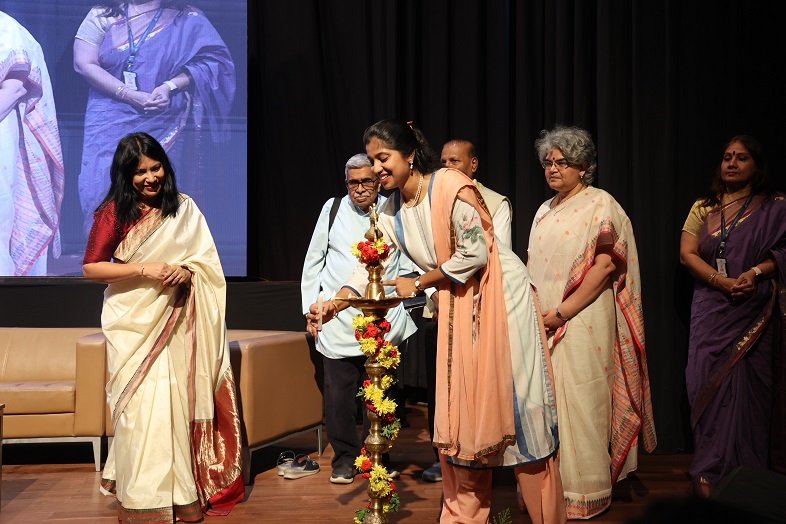
The inauguration of the conference witnessed a thought-provoking Presidential address by the Chief Guest Ms. Vinita Bali, a global business leader and former CEO of Britannia Industries. Her insights, garnered from her extensive experience in the corporate realm, set the tone for deliberations throughout the day. The conference featured a stellar line-up of esteemed guests, including Dr. Gayathri Vasudevan, Chief Impact Officer of Sambhav Foundation & Chairperson of LabourNet, who delivered a special address, where she shared 8 short stories that highlighted the gender-based perceptions and discrimination. Vasudevan’s expertise in social impact and labour dynamics added significant value to the discourse on gender and inclusion. The keynote address delivered by Ms. Rukmini S., author and independent data journalist delved deeper into “What the Data Says: On Gender and the Workforce”.
Speaking at the inauguration, Registrar of Presidency University, Dr. Sameena Noor Ahmed Panali reiterated her belief that acknowledging the profound significance of women’s participation in the workforce is not just a pursuit of social justice, but a vital catalyst for economic prosperity. She highlighted Presidency University’s active involvement in supporting Gender and Inclusivity for the past five decades that helped uplift and sustain 60% of women in various leadership roles across their schools, colleges, and University.
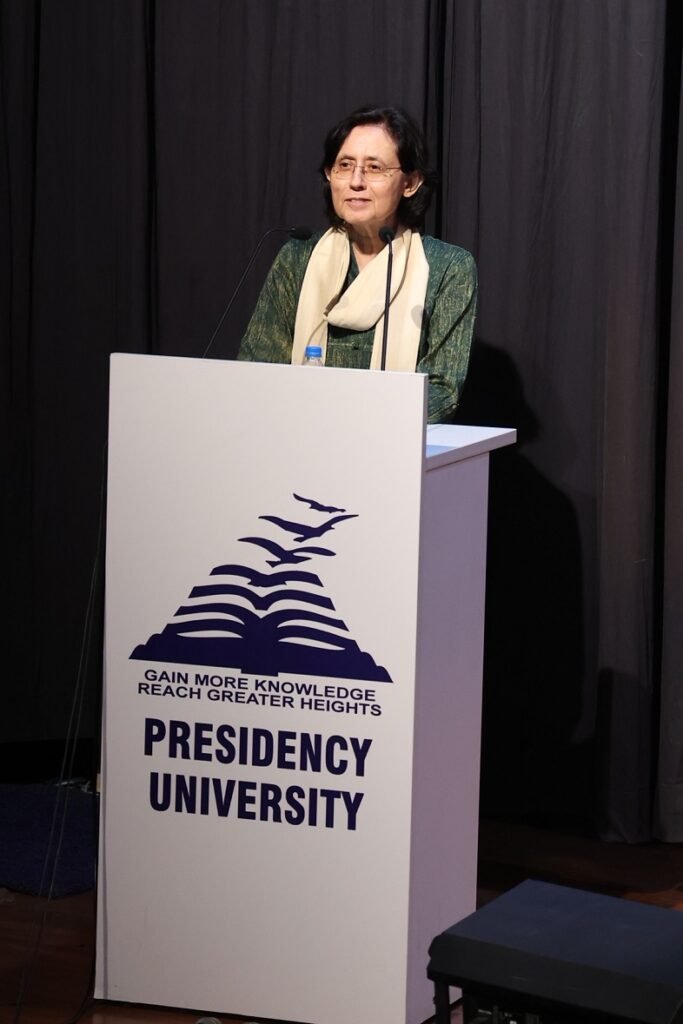
Dr. Anubha Singh in her address stated that gender equality requires more than just acknowledging women’s achievements. It demands a paradigm shift in our mindsets and workplaces. At Presidency University, we firmly believe that gender equality is not just a goal, but a fundamental principle. We are committed to fostering an inclusive environment where women can excel in academics, research, and leadership roles.
Dr. Anubha Singh reiterated that this conference offers a valuable platform for open dialogue, knowledge sharing, and collaborative action. We will hear from renowned thought leaders, industry experts, and women themselves who have shattered glass ceilings and carved their own paths to success. She motivated all the delegates present by stating that together, we can build a world where gender is not a barrier to success, but a source of strength and diversity.
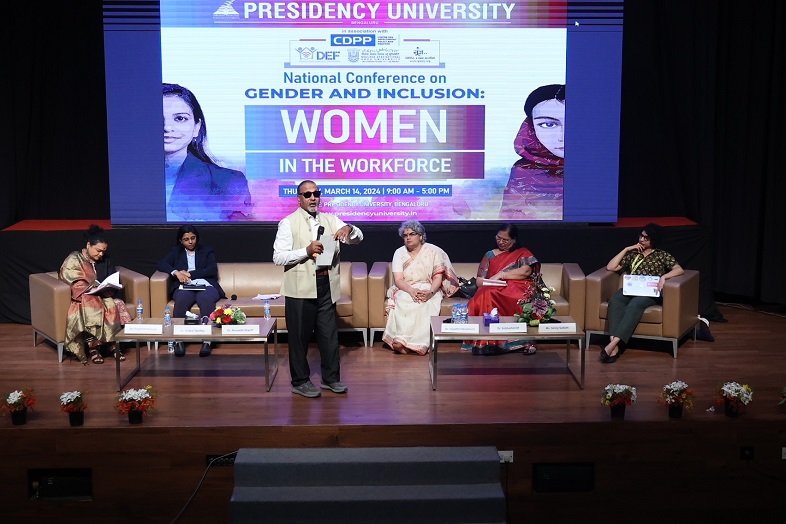
The heart of the conference was its panel discussions, where experts from diverse backgrounds converged to dissect critical aspects of women’s participation in the workforce.
Panel Discussion 1 on “Women in the Workforce: What the Data Says”, chaired by Dr. Abusaleh Shariff, Executive Director and Chief Scholar at the US-India Policy Institute, delved into the data surrounding women in the workforce. Accompanying him was Dr. Subhashini Muthukrishnan, Registrar and Professor at St. Joseph College of Commerce, Bengaluru, and Dr. Priyanka Dwivedi, Assistant Professor at Chanakya University, Bengaluru, Dr. Sridevi Tandley, ML Solutions Evangelist, Renowned Speaker & Educator. The panelists looked at different data points analyzing the participation of women in the workforce. Explanations and theories were sought to explain the declining trend of female labor force participation. Concepts such as human capital, low household decision-making, poor economic status and reproduction and childcare were discussed. Numerous contradictions were identified in PLFS data, with specific focus on rural, urbans, wage-work and casual work and self-employment. Their insights helped provide a nuanced understanding of the statistical trends and underlying factors influencing female labour force participation rates.
Panel Discussion 2, ‘Woman in the Workforce: Tackling Challenges and Way Forward’, chaired by Ms. Puja Marwaha, CEO of CRY (Child Rights and You), focused on tackling challenges and charting a way forward for women in the workforce. With Dr. Vinod Vyasulu, a Senior Economist and Professor, and Ms. Soma Wadhwa, a Senior Research Fellow at CDPP and Associate Professor at the School of Modern Media, UPES, the panel delved into the multifaceted challenges encountered by women both prior to and after entering the workforce. Topics spanned the necessity of legislative frameworks alongside their practical implementation to foster workplace inclusivity. Regional disparities were explored, highlighting the discrepancy between educational attainment and employment opportunities. Furthermore, the discourse underscored how the digital divide exacerbates these challenges for women.
The 3rd and final Panel Discussion on ‘Women in the Workforce: Learnings from the Grassroots, moderated by Mr. Anshu Gupta, Founder of Goonj, grassroots perspectives took centre stage. Featuring voices such as Ms. Kamini Kumari, Secretary of Aapka Aanchal, Bihar, Ms. Uthara Narayanan, Founder of Buzz Women, Bengaluru, and Ms. Hemlata Rajput from Shrijan Kalyan Samiti, Raipur, they shared personal experiences of navigating the workplace as women at the grassroot levels and delved into the obstacles hindering women’s entry into the workforce. Concluding, they emphasized the importance of reshaping narratives and highlighted themselves as beacons of hope for societal, cultural, economic, and political progress.
Following the panel discussion, the academic discourse was enriched by paper presentations, offering a platform for scholars and researchers to present their findings. The papers focused on various aspects of women in the workforce in India. The topics of the papers ranged from qualitative analysis of workspace in an urban setting to the problems faced by marginalized women in rural parts of the nation.
The valedictory address was provided by Ms. Meenakshi Gupta, Co-Founder, Goonj, who encapsulated the day-long conference’s key takeaways and encouraged the members present to find innovative ways and means to support gender equality and inclusivity.
In essence, the National Conference on Gender and Inclusion at Presidency University. Bengaluru was a prominent platform for dialogue, collaboration, and action. By harnessing the collective wisdom and expertise of diverse stakeholders, this conference endeavored to foster an environment where women not only participate but thrive in the workforce, thus paving the way for a more inclusive and prosperous future for all.