~Stakeholders urge reforms across disability certification, healthcare access, insurance, workplace inclusion and national health systems to improve outcomes for people living with Multiple Sclerosis and other invisible neurological conditions~
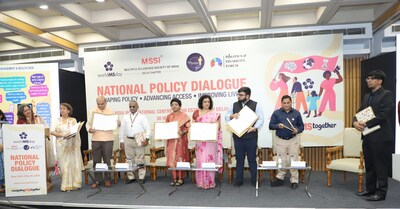
NEW DELHI, May 30, 2026 /PRNewswire/ — In a significant step towards strengthening disability-inclusive healthcare and social protection in India, Members of Parliament, policymakers, neurologists, disability rights advocates, insurance stakeholders and persons living with Multiple Sclerosis (MS) today endorsed a landmark 10-point Declaration on Invisible Disabilities and Gender at the National Policy Dialogue organised on the occasion of World MS Day 2026.
Multiple Sclerosis, a chronic and progressive neurological condition affecting an estimated 1.5–2 lakh people in India, remains one of the country’s most overlooked invisible disabilities. Many of its symptoms including fatigue, cognitive impairment, chronic pain, visual disturbances and bladder dysfunction are often not outwardly visible, contributing to delayed diagnosis, barriers to disability recognition, insurance challenges and difficulties in accessing long-term care and support.
Organised by the Multiple Sclerosis Society of India (MSSI), Delhi Chapter, in association with Believe in the Invisible (BITI) and the Politics & Disability Forum at the India International Centre, New Delhi, the National Policy Dialogue was held under the theme ‘Shaping Policy. Advancing Access. Improving Lives.’ The dialogue brought together an ecosystem of stakeholders spanning government, healthcare, disability rights, insurance, academia, patient advocacy and public health to examine systemic reforms required across healthcare access, disability rights, insurance inclusion and long-term neurological care.
The conclave featured dedicated sessions on invisible disabilities, the cost of living with MS, insurance access, digital health and policy reform. Discussions highlighted the need for earlier diagnosis, timely intervention and continuity of care, alongside more inclusive insurance frameworks and stronger financial protection mechanisms for people living with chronic neurological conditions. Participants also emphasised the importance of strengthening neurological data systems, including the Indian MS Registry Network (IMSRN), and expanding access to multidisciplinary and specialist neurological care across India.
Menaka Guruswamy, Member of Parliament, Rajya Sabha, said, “This National Policy Dialogue is an important step in deepening our understanding of Multiple Sclerosis and the realities of living with invisible disabilities. It provides a valuable platform for policymakers to learn directly from clinicians, persons living with MS, caregivers and advocates about the spectrum of challenges they navigate every day. India has made significant progress in recognising the rights of persons with disabilities, and conversations such as these are essential to ensuring that our laws, policies and institutions continue to evolve in ways that better reflect the lived experiences of people affected by conditions such as MS.”
Dr. R.K. Dhamija, Distinguished Neurologist, Director, IHBAS, and Chair, National Task Force, NITI Aayog Brain Health Initiative, said, “Multiple Sclerosis is a complex, unpredictable and lifelong neurological condition that requires early diagnosis, timely intervention and sustained access to advanced therapies. While often simplified for patient understanding, the clinical reality is far more challenging and demands a nuanced approach to treatment and long-term care. Investing in neurological care is not merely a healthcare expenditure, it is an economic imperative that helps prevent irreversible disability, reduces long-term care costs and enables people to remain active and productive. Improving outcomes requires a collaborative approach that brings together clinicians, policymakers, patient groups and healthcare systems to ensure timely access, continuity of care and meaningful support for people living with MS.”
Dr. Satendra Singh, Professor of Physiology, University College of Medical Sciences & GTB Hospital and Disability Rights Activist, said, “India has made significant progress in recognising a wider spectrum of disabilities through the Rights of Persons with Disabilities Act, 2016. The next step is ensuring that healthcare, disability, welfare and social protection systems work in greater alignment to translate these rights into meaningful outcomes for persons living with invisible and episodic conditions such as Multiple Sclerosis. Stronger coordination across ministries, institutions and programmes can help create a more seamless pathway to diagnosis, certification, care, support services and entitlements. Dialogues such as these are important because they bring diverse stakeholders together to identify solutions that are both inclusive and actionable.”
Ms. Charu Sharma, a person living with Multiple Sclerosis (PwMS), said, “My world changed in a single day in October 2024. It began with what I thought was ordinary exhaustion, a strange sensitivity in my ears, double vision and a sudden loss of balance. I dismissed it as vertigo and walked into an ENT clinic expecting a simple prescription. Instead, the doctor looked closer and advised an MRI. Within ten days, I received a confirmed diagnosis of Multiple Sclerosis.
While my life changed in an instant, I know I was fortunate. An early and accurate diagnosis within days is something many people living with MS in India still wait years to receive. My only wish is that the journey after diagnosis was different. I wish patients were given clearer guidance on what to expect, the road ahead, and the financial realities of treatment. When your body is fighting an invisible battle, clarity, transparency and empathy can become the anchors that help you navigate it with confidence and strength.”
Renuka Malaker, Honorary National Treasurer, Multiple Sclerosis Society of India (MSSI), who is also a caregiver to a PwMS, said, “For people living with Multiple Sclerosis, the challenges often extend far beyond the disease itself. Delayed access to insurance, high out-of-pocket costs, limited awareness of available entitlements and the absence of comprehensive patient data continue to create barriers to timely care. The National Policy Dialogue has brought policymakers, clinicians, patient advocates and implementation agencies to the same table to address these gaps. We hope the Declaration serves as a catalyst for stronger insurance inclusion, better access to support systems and a more robust national understanding of the true burden of MS in India.”
A key outcome of the conclave was the adoption of the Declaration on Invisible Disabilities and Gender, which outlines a roadmap to strengthen implementation of the Rights of Persons with Disabilities (RPwD) Act, 2016 and improve the inclusion of invisible neurological conditions within India’s healthcare, disability and welfare systems. Key recommendations include:
- Recognition guidelines for invisible and episodic disabilities under the RPwD Act.
- Flexible disability certification for people with fluctuating conditions.
- Inclusion of MS and other chronic neurological conditions within National Health Mission care pathways.
- Expansion of the Indian MS Registry Network (IMSRN) into a broader national invisible disability registry.
- Affordable access to disease-modifying therapies and long-term neurological care.
- Expanded tele-neurology services across India.
- Gender-sensitive diagnosis and treatment pathways.
- Stronger digital monitoring of disability rights implementation.
- Inclusive workplace policies for invisible disabilities.
- A National Mission on Invisible Disabilities.
The declaration reflects a growing consensus among stakeholders that India’s healthcare and social protection systems must evolve to better address invisible conditions that significantly affect an individual’s functional ability, quality of life and socioeconomic participation.
In his keynote address, Dr. Dhamija highlighted that Multiple Sclerosis remains a priority focus area within the Government of India’s Brain Health Initiative. He noted that the recommendations emerging from the dialogue and the Declaration on Invisible Disabilities and Gender would contribute to ongoing national policy discussions aimed at improving accessibility, availability and affordability of care, while strengthening disability benefits, social support systems and employment opportunities for people living with chronic neurological conditions. He also underscored the importance of sustained collaboration between clinicians, patient support organisations and policymakers to translate policy intent into meaningful action and improved outcomes for persons living with MS and other invisible disabilities.
About MSSI
The Multiple Sclerosis Society of India (MSSI) is a registered voluntary, non-profit organization established in 1985, dedicated to supporting individuals affected by Multiple Sclerosis (MS) across the country. MSSI is affiliated with the Multiple Sclerosis International Federation (MSIF), UK, and is part of a global network committed to improving the lives of people living with MS. At the national level, MSSI spearheads unified initiatives that strengthen and amplify the efforts of its regional chapters. Through collaborative action and a cohesive voice, MSSI advocates for the rights and needs of Persons with Multiple Sclerosis (PwMS). For more information, visit www.mssocietyindia.org
About Politics & Disability Forum
Politics and Disability Forum is a legal and policy research organisation working on the political rights of Persons with Disabilities. The research area focuşes on the broad intersection of political rights and the social model of disability and how they interact with other marginalized identities. The forum is founded by Shashank Pandey who is a former legislative assistant to member of parliament fellow, lawyer and Global Disability Leadership Fellow.
About Believe in the Invisible (BITI)
Believe in the Invisible (BITI) is a women-led non-profit organization redefining disability through creative advocacy. Using comics, zines, storytelling, and immersive experiences, the organization builds awareness around invisible disabilities. BITI works at the intersection of health, education, and policy to drive systemic change. Its flagship Experience Zone simulates real-world barriers faced by people with invisible disabilities, while its zine-making workshops and workplace DEI sessions translate lived experience into actionable tools for inclusion.
For further information, please contact:
Desiree Crasto | desiree.crasto@finnpartners.com
Abhigale Barretto | abhigale.barretto@finnpartners.com
Photo – https://mma.prnewswire.com/media/2991399/photo.jpg
 View original content to download multimedia:https://www.prnewswire.com/in/news-releases/world-ms-day-national-policy-dialogue-adopts-landmark-10-point-declaration-calling-for-stronger-recognition-of-invisible-disabilities-in-india-302786313.html

