Archive: April 30, 2026

TraceLink Wins 2026 Globee® Cybersecurity Award as OPUS Sets the Standard for Secure, Agentic Supply Chain Operations

GxP-aligned, industrial-grade platform secures the world’s largest Agentic Business Network—enabling trusted, real-time execution across global supply chains

Summary
TraceLink has been named a winner in the 2026 Globee® Awards for Cybersecurity, recognizing the company’s leadership in securing complex, multienterprise supply chain operations. TraceLink’s Orchestration Platform for Universal Solutions (OPUS) is a GxP-aligned, industrial-grade foundation for the Agentic Business Network—securing third-party interactions, serialized data, and mission-critical transactions to enable trusted, real-time execution across global supply chains.

BOSTON, April 30, 2026 /PRNewswire/ — As life sciences supply chains transition from fragmented, manual processes to real-time, AI-driven operations, cybersecurity is no longer just a safeguard—it is the operating foundation. In recognition of this shift, TraceLink, the world’s largest Agentic Business Network, has been named a winner in the 2026 Globee® Awards for Cybersecurity, honoring the company’s OPUS platform for securing mission-critical transactions across global supply networks.
TraceLink logo

Leading supply chains are aggressively transforming into agentic, multienterprise operating systems—fueled by end-to-end, real-time trading partner information powering governed AI agents that act, decide, and coordinate across organizational boundaries. This new model enables unprecedented opportunity to increase business productivity and performance, but also introduces new risks. Every business transaction and AI-driven decision must be trusted, governed, and auditable in real time.

Traditional enterprise systems—built on fragmented integrations and point-to-point connections—were never designed for this level of coordination. They lack the shared infrastructure required to securely support continuous, multienterprise execution.

TraceLink’s Orchestration Platform for Universal Solutions (OPUS) addresses this challenge by providing a secure, network-native foundation where companies, humans, and AI agents operate within a shared, but governed environment. By linking more than 315,000 authenticated organizations in life sciences and healthcare and enabling standardized, real-time data exchange, OPUS provides a secure, network-native foundation for digital and agentic supply chain operations.

“Trusted supply chains begin with trusted infrastructure,” said Shabbir Dahod, President and CEO of TraceLink. “OPUS is engineered with security, governance, and reliability built into every process and transaction across the network. That secure foundation is what allows companies to confidently digitalize operations, adopt AI, and deploy governed, no-code AI agents to scale intelligent, agentic execution across their supply chain.”

Security as the Foundation for Agentic Execution

In highly regulated life sciences and healthcare environments—where manufacturers, suppliers, CMOs, logistics and transportation providers, distributors, pharmacies, and regulators exchange sensitive product and compliance data—even a single vulnerability can disrupt operations, delay product availability, or impact patient safety.

OPUS is purpose-built to operate in this environment, providing an industrial-grade, audit-ready foundation for secure, multienterprise collaboration. Within this foundation, OPUS Agents function as governed digital teammates—executing tasks, managing exceptions, and coordinating across partners with full permissioning, auditability, and compliance controls.

As companies scale AI-driven operations, every action—human or agent—remains secure, traceable, and aligned with regulatory requirements.

Independently Validated Security, Reliability, and Governance

The security and resilience of the OPUS platform are independently verified through globally recognized certifications and attestations, including:

  • ISO 9001:2015 (Quality Management System)
  • ISO 27001:2022 (Information Security Management System)
  • ISO 27017:2015 (Cloud Security)
  • SOC 1 Type II and SOC 2 Type II Attestations
  • GxP-aligned quality and compliance controls supporting regulatory readiness

These validations confirm OPUS as a secure, audit-ready foundation for trusted interactions across global supply networks.

Operating at global scale, the TraceLink network processes approximately 300,000 files daily and maintains 99.98%+ availability in an active-active-active, always-on architecture.

This performance ensures uninterrupted product, information, and financial flow—helping companies prevent stockouts, maintain compliance, and ensure patients receive critical therapies without delay.

From Secure Infrastructure to Intelligent Operations

As supply chains evolve toward continuous, real-time execution, the ability to securely coordinate across partners—and increasingly, across AI agents—will define industry leaders.

By embedding security, governance, and trust directly into its network and platform architecture, TraceLink is enabling a new operating model: an Agentic Business Network where companies can scale operations, automate complex processes, and collaborate seamlessly across their ecosystem—without compromising control or compliance.

“Congratulations to the 2026 winners for their exceptional contributions to strengthening our digital world,” said Sam Madan, President of the Globee® Awards. “Your innovation and leadership continue to advance cybersecurity and set new standards across industries.”

About TraceLink 
TraceLink is the world’s largest Agentic Business Network, enabling life sciences and healthcare companies to build and manage a scalable digital workforce of governed, no-code AI agents that execute and coordinate mission-critical supply chain operations alongside human teams.

Powered by the Integrate-Once™ OPUS platform, which links 300,000+ authenticated network entities that exchange hundreds of billions of product transactions annually, only TraceLink delivers the industrial foundation required to develop, train, and continuously optimize agentic supply chain talent—governed AI agents—operating across multienterprise processes.

This agentic workforce model redefines how work gets done—expanding capacity, accelerating execution, and enabling safe, secure supply chain ecosystems that serve the greater good and operate with unprecedented agility, intelligence, and productivity beyond the limits of human-only operations, ensuring patients receive safe, high-quality therapies and products when and where they are needed.

Learn more at www.tracelink.com.

About the Globee® Awards
The Globee® Awards, a business awards program with worldwide participation, organize 10 awards programs that recognize achievements and innovations across multiple industries and sectors. These include programs focused on business, artificial intelligence, cybersecurity, leadership, innovation, customer excellence, technology, and more.

To learn more about the Globee® Awards, visit: https://globeeawards.com.

Logo – https://mma.prnewswire.com/media/1004729/TraceLink_logo_v3.jpg

Cision View original content:https://www.prnewswire.co.uk/news-releases/tracelink-wins-2026-globee-cybersecurity-award-as-opus-sets-the-standard-for-secure-agentic-supply-chain-operations-302757840.html

TraceLink Wins 2026 Globee® Cybersecurity Award as OPUS Sets the Standard for Secure, Agentic Supply Chain Operations

PFCD Advocates for Insurance Coverage of Robotic Joint Replacement Surgery to Bridge India’s Treatment Gap

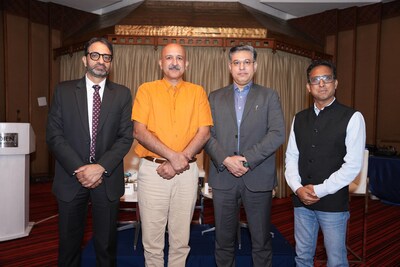
NEW DELHI, April 30, 2026 /PRNewswire/ — The Partnership to Fight Chronic Disease (PFCD) convened a panel of leading orthopaedic surgeons in New Delhi – Dr. Ramneek Mahajan, Chairman – Orthopaedics, Joint Replacement and Chief Robotic Joint Replacement, Max Healthcare; Dr. Havind Tandon, Senior Consultant, Orthopaedics and Joint Replacement, Apollo Hospital; and Dr. Subhash Jangid, Principal Director, Joint Replacement and Orthopaedics, Fortis Memorial Research Institute (FMRI) – to discuss India’s growing arthritis burden, critical technological-insurance discrepancies and the urgent need for equitable coverage for robotic-assisted joint replacement (JR) surgery.

India performs an estimated 2.5–3.5 lakh joint replacement surgeries annually, the majority of which continue to be performed using conventional techniques.[1] Despite the growing interest in technology-enabled procedures, robotic-assisted joint replacements currently account for only around 5–10% of total joint replacement surgeries in the country, with adoption largely concentrated in metropolitan hospitals that have access to advanced surgical infrastructure and trained specialists.[2] The panel emphasized that insurance gaps, not medical limitations, remain the biggest barrier preventing patients from accessing life-changing care.

Robotic-assisted joint replacement offers surgical precision, faster recovery, and improved long-term outcomes. CT-based planning allows surgeons to tailor the procedure to each patient’s unique anatomy, anticipate anatomical challenges in advance, reduce human surgical errors, preserve healthy tissue, leading to better joint function and long-term outcomes. However a fundamental challenge persists; there is an increasing gap between what is clinically optimal for the patient and what is financially reimbursable. The gap is beginning to influence the treatment decisions, which should ideally remain purely clinical.

Patients often come with the expectation that their insurance will cover the best available treatment. In reality, they are frequently informed that robotic surgery is either partially covered, subject to sub-limits, or in some cases not covered at all. As a result, patients are compelled to make decisions based on affordability rather than clinical need – undermining the principle of patient-centric care.

This  coverage gap exists despite the Insurance Regulatory and Development Authority of India (IRDAI) guidelines to include modern treatments, since 2019.

While robotic surgery is recognized under modern treatments, current insurance practices continue to apply arbitrary sub-limits, show wide variability in reimbursement, and in some cases reimburse robotic joint replacement procedures at levels lower than conventional joint replacement surgery. The classification of robotic technology as a discretionary or luxury component further exacerbates access challenges.

These gaps have a direct and significant impact on clinical practice. Surgeons are increasingly forced into difficult conversations, balancing the responsibility to recommend the best possible treatment against what is financially viable for the patient. Hospitals may also limit offering robotic-assisted procedures to insured patients due to reimbursement uncertainties. Ultimately, patients either bear a higher out-of-pocket burden or compromise on the quality of care they receive.

Dr. Ramneek Mahajan, Chairman – Orthopaedics, Joint Replacement and Chief Robotic Joint Replacement, Max Healthcare, said, “Robotic-assisted joint replacement has become an important clinical advancement in orthopaedic surgery because it allows surgeons to plan and execute procedures with greater accuracy and consistency. Precise implant alignment plays a critical role in improving joint function and long-term outcomes for patients. However, when insurance policies place restrictions on modern surgical techniques, patients are often compelled to choose conventional procedures even when more precise options are available.”

Dr. Havind Tandon, Senior Consultant – Orthopaedics and Joint Replacement, Apollo Hospital, said, “In clinical practice, it is not uncommon to see patients hesitate or alter their treatment decisions because of insurance limitations on robotic-assisted procedures. Many patients are willing to consider advanced surgical options for better recovery and mobility, but sub-limits and reimbursement restrictions create financial uncertainty. As a result, patients may settle for alternatives that align with insurance coverage rather than what is clinically most suitable.”

Dr. Subhash Jangid, Principal Director, Joint Replacement and Orthopaedics, Fortis Memorial Research Institute (FMRI), said, “Insurance frameworks should also consider the long-term value of technologies that enhance surgical precision. Robotic-assisted joint replacement can contribute to better implant positioning, fewer complications, and a lower likelihood of revision surgeries. When insurers look beyond the upfront cost of technology and evaluate the overall impact on patient outcomes and long-term healthcare expenditure, comprehensive coverage can prove beneficial for both patients and the healthcare system.”

Panellists emphasized that insurers need to look beyond upfront costs and assess the longer-term value that robotic technology delivers, including lower revision rates, reduced readmissions, and faster patient recovery. When evaluated on total cost of care, the technology represents a benefit for patients, insurers, and the healthcare system alike.

Aman Gupta, Asia Representative, PFCD, underlined the patient-centric mission: “At PFCD, our focus is ensuring no patient is left behind due to financial constraints. We advocate for insurance policies that recognize robotic joint replacement as a medically necessary, value-driven innovation. Bridging these insurance gaps is essential for enabling equitable access to world-class care and improving the standard of surgical outcomes across India.”

PFCD continues to champion equitable access for patients requiring advanced surgical interventions. Every individual should have the right to access the highest level of medical precision without the burden of discriminatory insurance caps, strengthening the Indian healthcare ecosystem as a whole.

About Partnership to Fight Chronic Disease:

The Partnership to Fight Chronic Disease (PFCD), established in 2007, is a global coalition of patients, providers, community groups, businesses, labor organizations, and health policy experts dedicated to raising awareness and driving action against chronic disease – the leading cause of death, disability, and rising healthcare costs.

[1] https://timesofindia.indiatimes.com/city/ahmedabad/scalpel-meets-software-robotic-surgeries-go-high-tech-in-abad/articleshow/123000342.cms?utm_source=chatgpt.com

[2] https://www.linkedin.com/pulse/robotic-knee-hip-replacement-india-medical-vs-insurance-shilpa-arora-8y39c/

Photo: https://mma.prnewswire.com/media/2970237/PFCD_Advocates_Coverage.jpg


Cision View original content to download multimedia:https://www.prnewswire.com/in/news-releases/pfcd-advocates-for-insurance-coverage-of-robotic-joint-replacement-surgery-to-bridge-indias-treatment-gap-302758911.html

PFCD Advocates for Insurance Coverage of Robotic Joint Replacement Surgery to Bridge India's Treatment Gap

EquiLend Launches Enhanced US Mark-to-Market Solution, Bringing Centralized Pricing and Automated Marking Directly to Its Platform

New solution streamlines daily mark-to-market workflows and reduces operational complexity for securities finance market participants

NEW YORK, April 30, 2026 /PRNewswire/ — EquiLend today announced the launch of its new US Mark-to-Market solution, giving securities finance firms a cost-effective alternative for daily mark-to-market processing built directly within the EquiLend platform. Firms currently relying on third-party mark-to-market infrastructure can now access the same core functionality – centralized pricing, automated contract marking, and SPO charge generation without leaving the platform they already use.

EquiLend logo

The solution uses existing contract data and centralized pricing to automate contract marking and charge generation within EquiLend, removing the need to route the mark-to-market workflow through a separate system. Mark data integrates directly into client systems and downstream processes.

Addressing Client Needs Across the Mark-to-Market Workflow

The redesigned algorithm marks contracts automatically, flagging only those with a break on a field specifically required to calculate the mark – such as currency, collateral margin, rounding factor, or quantity – or deals identified as Orphans, keeping manual intervention to a minimum. Contract pairing is handled through Unified Comparison.

For clients running SPO charges, payment settings and parameters are configured once, and EquiLend automatically generates and sends charges after contracts are marked.

Mark-to-market data integrates directly into client systems, keeping downstream processes and internal workflows current without requiring additional reconciliation or data handling.

Industry Voices

“Automated mark-to-market solutions have existed for many years, but now we are offering clients this upgraded functionality natively within the EquiLend ecosystem, providing industry-standard functionality as part of our post-trade suite of products.”
Nick Delikaris, Chief Product Officer, EquiLend

“By building these significantly upgraded mark-to-market capabilities natively into EquiLend, using contract data and centralized pricing we already have within our broad ecosystem, we’re offering clients a cost-effective solution for a critical daily operational process.”
Simon Waddington, Head of Post-Trade & RegTech Solutions, EquiLend

About EquiLend
EquiLend is a global financial technology firm offering Trading, Workflow, Data & Insights, and Digital Solutions for the securities finance industry. With offices in North America, EMEA and Asia-Pacific, EquiLend operates across various jurisdictions worldwide, adhering to the highest regulatory standards.

The company is committed to excellence and innovation and is consistently recognized for its contributions to the industry. EquiLend is Great Place to Work Certified™ in the U.S., UK, Ireland and India and has been awarded Global Data Provider of the Year and Regulatory Solution of the Year in the Securities Finance Times Industry Excellence Awards 2025.

For more information, please visit  www.equilend.com.

Logo – https://mma.prnewswire.com/media/1060364/EquiLend_Logo.jpg

Cision View original content:https://www.prnewswire.co.uk/news-releases/equilend-launches-enhanced-us-mark-to-market-solution-bringing-centralized-pricing-and-automated-marking-directly-to-its-platform-302758907.html

EquiLend Launches Enhanced US Mark-to-Market Solution, Bringing Centralized Pricing and Automated Marking Directly to Its Platform

Bybit’s Latest Proof-of-Reserves Shows Strong Asset Backing Across Key Holdings

DUBAI, UAE, April 30, 2026 /PRNewswire/ — Bybit, the world’s second-largest cryptocurrency exchange by trading volume, has released its 35th Proof-of-Reserves (PoR) report, reflecting asset balances as of April 22, 2026, as mainstream asset value tops $17.0B. Independently verified by Hacken, the latest disclosure shows reserve ratios for all major tracked assets exceeding 100%, indicating that user liabilities are fully backed by on-chain holdings.

The report underscores Bybit’s continued focus on transparency through the publication of verifiable reserve data, allowing users to confirm the status of custodial assets. The latest figures point to consistent overcollateralization across both major cryptocurrencies and stablecoins, with particularly strong buffers in USDC holdings and steady coverage in BTC and ETH reserves.

Key Metrics (as of April 22, 2026)

USDT Reserve Ratio: 107%
(User Assets: ~6.01 billion USDT | Wallet Holdings: ~6.47 billion USDT)

USDC Reserve Ratio: 159%
(User Assets: ~716.88 million USDC | Wallet Holdings: ~1,145.42 million USDC)

BTC Reserve Ratio: 109%
(User Assets: 44,566 BTC | Wallet Holdings: 48,986 BTC)

ETH Reserve Ratio: 102%
(User Assets: 433,877 ETH | Wallet Holdings: 445,886 ETH)

Stablecoin reserves show a wider margin above liabilities, while crypto asset coverage remains closely aligned with user balances, reflecting a balanced reserve structure. This distribution suggests a conservative approach to asset custody, maintaining excess reserves while preserving capital efficiency.

Users can access the full report and verification details via Bybit’s Proof-of-Reserves page, where reserve balances and audit attestations are updated on a recurring basis.
#Bybit / #CryptoArk  / #ProofofReserves

About Bybit

Bybit is the world’s second-largest cryptocurrency exchange by trading volume, serving a global community of over 80 million users. Founded in 2018, Bybit is redefining openness in the decentralized world by creating a simpler, open and equal ecosystem for everyone. With a strong focus on Web3, Bybit partners strategically with leading blockchain protocols to provide robust infrastructure and drive on-chain innovation. Renowned for its secure custody, diverse marketplaces, intuitive user experience, and advanced blockchain tools, Bybit bridges the gap between TradFi and DeFi, empowering builders, creators, and enthusiasts to unlock the full potential of Web3. Discover the future of decentralized finance at Bybit.com.

For more details about Bybit, please visit Bybit Press
For media inquiries, please contact: media@bybit.com
For updates, please follow: Bybit’s Communities and Social Media

Discord | Facebook | Instagram | LinkedIn | Reddit | Telegram |  TikTok | X | Youtube

Logo – https://mma.prnewswire.com/media/2932256/5947391/Bybit_TNFP_Logo.jpg


Cision View original content:https://www.prnewswire.co.uk/news-releases/bybits-latest-proof-of-reserves-shows-strong-asset-backing-across-key-holdings-302758870.html

Bybit's Latest Proof-of-Reserves Shows Strong Asset Backing Across Key Holdings

Global Logistics Shift: Why Air Cargo Demand Continues to Rise

Global logistics is going through a structural shift. Air cargo is no longer seen only as a premium option for emergencies. For many companies, it has become a practical tool for managing speed, uncertainty, and supply chain risk.

Why Air Freight Demand Is Growing

Global air cargo demand has continued to rise in recent years, supported by international trade, e-commerce growth, and the need for faster delivery. In 2025, demand reached record levels when measured by cargo tonne-kilometers.

Several factors are driving this trend:

  • more complex global supply chains;
  • higher expectations for fast delivery;
  • disruptions in ocean and land transport;
  • growth in high-value and time-sensitive goods;
  • increased demand for flexible logistics solutions.

Air cargo is not replacing sea freight. Instead, it is becoming an essential part of diversified logistics strategies.

At the same time, companies such as company ACGC are part of this shift toward more flexible and efficient air freight solutions.

The E-commerce Effect on Air Cargo

E-commerce has significantly reshaped delivery expectations. Customers now expect fast shipping, even across borders. This has increased the role of air freight in moving goods that are valuable, seasonal, or time-sensitive.

Air cargo is widely used for electronics, fashion, pharmaceuticals, spare parts, and perishable products. In these sectors, delays can lead to lost revenue, production issues, or product spoilage.

Supply Chain Disruptions Push Businesses Toward Speed

Global supply chains remain vulnerable to disruption. Port congestion, geopolitical tensions, weather events, and regulatory changes can delay shipments and create uncertainty.

In such situations, businesses often turn to air freight to maintain continuity. While it is more expensive than sea transport, it helps reduce the impact of missed deadlines, stock shortages, and production downtime.

As a result, air cargo is increasingly used not only for urgent shipments but also as a strategic backup.

Technology Is Making Air Freight More Accessible

The air cargo sector is evolving through digitalization. Online booking systems, real-time tracking, automated documentation, and improved route planning are making air freight easier to manage.

These tools increase transparency and reduce errors. They also allow businesses to better compare delivery options based on time and cost.

Another important factor is the use of cargo space on passenger aircraft. As passenger traffic grows, this additional capacity supports the expansion of global air freight.

Long-Term Outlook for Air Cargo

Air cargo demand is expected to continue growing over the long term. This growth is supported by global trade, express delivery, and the increasing movement of high-value goods.

At the same time, the industry faces challenges. Air freight remains more expensive and more carbon-intensive than many other transport options. Fuel costs, capacity limits, and environmental regulations will continue to influence the market.

The Bottom Line

Air cargo demand continues to rise because businesses need speed, reliability, and flexibility in an unpredictable global environment.

It is not the right solution for every shipment. However, for urgent and high-value goods, air freight remains one of the most effective ways to keep supply chains moving.

HNS 2026 | Huawei and Industry Organizations Launch Xinghe AI Full-Scope Security Campus Technical White Paper

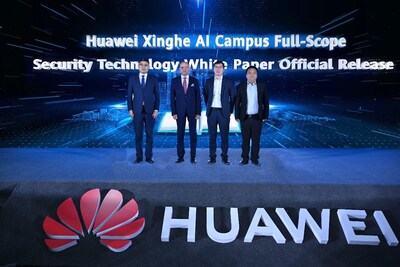
CAIRO, April 30, 2026 /PRNewswire/ — At the Huawei Network Summit 2026 (HNS 2026) held recently in Cairo, Huawei and industry organizations officially released the Xinghe AI Full-Scope Security Campus Technical White Paper.

The white paper introduces for the first time four key pillars of campus security—connectivity, asset, spatial, and privacy security—to build a full-domain security architecture with multi-layered protection. This marks a new stage in AI campus security, evolving from single-point defense to all-domain awareness and proactive intelligent defense.

The launch ceremony of the white paper

The white paper provides a systematic approach to building a full-scope security technology architecture and elaborates on the world’s first complete framework for campus network security.

“Security is the cornerstone of AI campuses,” said Ricky Zhu, Vice President of the Campus Network Domain, Huawei’s Data Communication Product Line. “By integrating digital and physical domains, Huawei pioneers multi-layered protection across connectivity, asset, spatial, and privacy security. This development shifts campuses from reactive defense to proactive awareness and intelligent safeguarding.”

Key highlights of the four major campus security dimensions include:

  • Connectivity security: On the wireless side, Huawei’s exclusive Wi-Fi Shield technology eliminates the risk of packet eavesdropping at the physical layer. On the wired side, end-to-end MACsec combined with Post-Quantum Cryptography (PQC) provides long-term security for data transmission even as quantum computing matures, protecting against data leakage.
  • Asset security: The surging number of dumb terminals in governments, finance, and other sectors has heightened the risk of network attacks. To address this, Huawei’s solution leverages clustering identification to automatically recognize dumb terminals with 95% accuracy. By combining terminal behavior anomaly detection with local inference on switches, the solution can detect traffic anomalies in seconds and proactively block them, effectively preventing network intrusions and lateral movement. The resulting benefits include terminal visibility and controllability without unauthorized access and spoofing.
  • Spatial security: Huawei’s Wi-Fi channel state information (CSI) sensing technology detects spatial security conditions through a single wireless access point (AP), preventing intrusions into sensitive areas. The technology analyzes only wireless signal disturbance patterns to safeguard spatial security while protecting personal privacy to the maximum extent.
  • Privacy security: In executive rooms, meeting rooms, hotel guest rooms, and other sensitive environments, traditional methods for detecting hidden imaging devices are often inefficient and prone to high miss rates. Huawei tackles this by launching the iGuard spycam-detecting AP, which offers three key advantages—comprehensive detection, precise detection, and 24/7 operation—to safeguard trade secrets and personal privacy in such private places.

Looking ahead, Huawei will continue collaborating with customers and industry organizations to put the white paper’s core technical indicators into practice across industries. This effort will help to drive the high-quality development of secure and intelligent campuses.

For details of the white paper, visit https://e.huawei.com/en/documents/products/enterprise-network/c1d4f9aa8b514ac188db924a0cb237dd.

Photo – https://mma.prnewswire.com/media/2969821/image1.jpg

Cision View original content:https://www.prnewswire.co.uk/news-releases/hns-2026–huawei-and-industry-organizations-launch-xinghe-ai-full-scope-security-campus-technical-white-paper-302758852.html

HNS 2026 | Huawei and Industry Organizations Launch Xinghe AI Full-Scope Security Campus Technical White Paper

etrailer First in St. Charles County to Offer Missouri Child Care Works

The company is the first in the county to introduce the shared child care support solution for its employees.

(St. Louis, Mo., April 30, 2026) Child Care Aware of Missouri (CCAMO), in partnership with Kids Win Missouri, recently worked with etrailer to launch the Missouri Child Care Works Tri-Share program. As the first local business to adopt the program, etrailer is expanding access to shared child care support for its workforce.

Missouri Child Care Works is designed to increase family access to affordable, high-quality child care through locally coordinated cost-sharing partnerships. St. Charles County-based etrailer is bringing this new shared child care support model to its employees. The program is modeled after the Tri-Share approach, which divides the cost of child care among employers, families and either state government or a philanthropic partner.

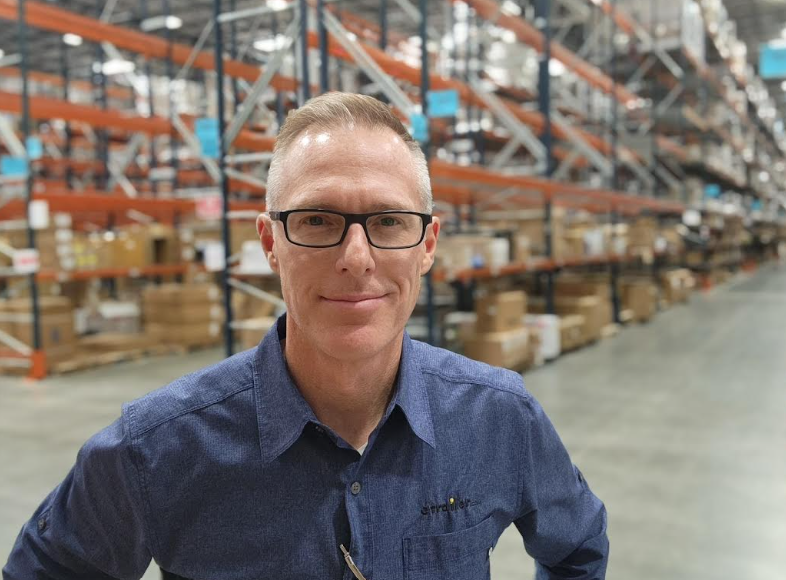
etrailer First in St. Charles County to Offer Missouri Child Care Works


This initiative helps employee families with children age five and under to receive child care support through funding from etrailer and the state. Administered by CCAMO, the employer and state contributions are paid directly to participating child care providers, making the benefit easy to use for etrailer employees.

etrailer is a family-owned and operated business specializing in RV, trailer and towing accessories. Founded in 1946, the company’s showroom and installation facility is located at 1507 Highway A in Wentzville, Missouri. etrailer.com is the world’s leading online retailer of custom-fit towing accessories.

“We couldn’t be more excited about the support this program brings to growing families around the shop, and we can’t wait to see where it takes us next,” said Greg McCarthy, Team Enthusiast at etrailer.

“When employers invest in child care benefits, they play a critical role in removing barriers for families returning to the workforce while strengthening their ability to attract and retain talent,” said Robin Phillips, CEO of Child Care Aware of Missouri. “With full-time child care representing one of the largest expenses for working families, our partnership with etrailer offers a meaningful solution to support employee retention.”

Founded in 1999, CCAMO is a statewide nonprofit that focuses on a comprehensive early childhood education experience through impactful programs and partnerships. The organization’s services include workforce development, child care business supports, advocacy and policy work, and its new Child Care Keeps Missouri Working, a regional campaign offering concierge solutions to businesses undergoing employee recruitment and retention challenges due to the overwhelming shortage of quality child care options. For more information, call (314) 535-1458 or visit www.mochildcareaware.org.

Wahed Launches First Shariah‑Compliant Single-Family Residential Real Estate Fund for All US Investors

NEW YORK, April 30, 2026 /PRNewswire/ — Wahed, a global Islamic fintech platform backed by Saudi Aramco’s Wa’ed Ventures and Qatar Development Bank, today launched the first fully Shariah-compliant real estate fund accessible to non-accredited investors in the United States.

wahed logo

The fund is designed to give everyday investors access to a diversified portfolio of rental properties with a minimum investment of $100 through a structure that uses zero debt financing and is 100% equity-financed, meeting Islamic finance requirements while targeting 5-7% annual net returns. It is intended to set a new standard for Shariah-compliant real estate investing in the United States, where most professionally managed real estate vehicles rely on leverage and refinancing.

Until now, US investors seeking Shariah‑compliant exposure to real estate have faced limited options, particularly in the single‑family rental segment. Most private real estate funds permit the use of leverage and are restricted to accredited investors, while retail investors have faced high minimum thresholds, limited diversification and the practical burden of sourcing, selecting and managing properties directly.

The single-family rental market continues to attract attention from both institutional and retail investors. The national median existing-home price stood at $405,400 in December 2025, according to the National Association of Realtors, up approximately 60% nationwide since 2019. Zillow estimates America’s housing shortage reached 4.7 million units in 2025, while Goldman Sachs Research projects that 3-4 million additional homes beyond normal construction need to be built to address the shortage. Rental demand remains firm in many regions and housing supply has not kept pace with population growth in several markets. At the same time, higher borrowing costs and tighter financing conditions have increased demand in real estate structures that are less sensitive to financing conditions. Wahed believes a zero-debt approach is well suited to investors who want long-term exposure to real assets without taking on leverage.

Wahed began addressing this access gap last year with the launch of its deal‑by‑deal private real estate product, which allows investors to buy fractional shares in individual US properties. Investor demand has been strong, with properties consistently filling by waitlist users before being released more broadly on the platform.

“Faith-aligned investors in the US have been waiting for a real estate solution that does not force them to compromise,” said Mohsin Siddiqui, CEO of Wahed. “This fund gives them a clear route into single‑family rentals through a structure that avoids debt, provides diversification and liquidity and reflects the standards we apply across our platform. It builds on the demand we have already seen and moves us closer to our goal of making Shariah-compliant wealth management available at scale.”

The new fund is a natural extension of that momentum and is designed for investors who prefer a portfolio approach rather than choosing properties one by one. The fund is always available and provides automatic diversification as new properties are added, allowing investors to gain exposure without having to wait for individual deals to become available. Investors can start with $100, receive rental income based on their share of the portfolio and access quarterly liquidity windows. Wahed manages acquisition, due diligence, tenant relationships and ongoing compliance through a highly experienced investment and operations team.

“Our role is to build real estate solutions that meet a clear need in the market and reflect the principles we stand for,” said Ahmar Sheikh, Head of US at Wahed. “This fund brings together rental properties that are selected and managed with care, in a structure that is less exposed to changing financing conditions and interest rate cycles, and that allows investors to participate on an ongoing basis. It is a model that makes sense for investors regardless of religious affiliation.”

The US Real Estate Fund is open to non‑accredited investors nationwide, subject to regulatory requirements.

About Wahed 

Wahed is a global Islamic fintech company committed to democratizing access to Shariah‑compliant investments. Since 2015, the company has served more than 450,000 clients across 130+ countries and is licensed in 9 jurisdictions. Wahed manages more than $1 billion in assets across its entities through a suite of Halal investment products that includes equity portfolios, venture investing and real estate. The company is backed by prominent investors including Saudi Aramco’s Wa’ed Ventures and Qatar Development Bank and maintains offices in New York, London, Abu Dhabi, India and Kuala Lumpur.

For more information about Wahed Real Estate in the US, visit www.wahed.com.

Risk Disclosures: 

This investment is speculative, illiquid and involves substantial risk, including the possible loss of your entire investment. Securities are offered through Dalmore Group LLC, Member FINRA/SIPC. Wahed and Dalmore are not affiliates. Investors will be clients of Wahed. An offering statement has been filed with the SEC. SEC qualification does not imply approval or endorsement of the offering’s merits. Please review the full offering circular for complete terms and risks.

Investors are purchasing shares of a Fund and not the underlying asset(s) of the Fund. There is no assurance any Fund will achieve its objectives, is not listed on an exchange and may not be suitable for all investors. Distributions are subject to and are not guaranteed.

As of March 5th, this is the first Shariah-compliant investment fund in the U.S. to offer non-accredited retail investors direct, pooled exposure to a managed portfolio of single-family rental (SFR) properties. This statement reflects our understanding of currently available products and may change as new offerings emerge.

Logo – https://mma.prnewswire.com/media/2760166/Wahed_logo_Grey__Wahed2022__7_Logo.jpg 


Cision View original content:https://www.prnewswire.co.uk/news-releases/wahed-launches-first-shariahcompliant-single-family-residential-real-estate-fund-for-all-us-investors-302758197.html

Wahed Launches First Shariah‑Compliant Single-Family Residential Real Estate Fund for All US Investors

Former Okta President of Auth0, Shiven Ramji, to Join Cellebrite as President, Products and Technology

Ronnen Armon to Retire

TYSONS CORNER, Va. and PETAH TIKVA, Israel, April 30, 2026 /PRNewswire/ — Cellebrite DI Ltd. (Nasdaq: CLBT), a global leader in AI-powered Digital Investigative and Intelligence solutions, today announced the appointment of Shiven Ramji as President of Products and Technology. In this role, Ramji will lead the Company’s product and technology organization, driving innovation and execution of Cellebrite’s industry-leading Digital Investigative and Intelligence platform. Ramji will start on May 4, 2026 and succeed Ronnen Armon, who will be retiring in a few months after the transition is complete.

Shiven Ramji to join Cellebrite as President, Products and Technology

“We are thrilled to welcome Shiv to Cellebrite. Shiv’s impressive track record, experience and expertise will be critical as we continue to accelerate the pace of AI adoption and innovation in our products to support our customers and deliver on our mission of protecting communities, nations and businesses,” said Thomas E. Hogan, CEO of Cellebrite. “I would like to thank Ronnen Armon for his leadership and many significant contributions to Cellebrite’s success over the last five years, including transforming the Company into an AI-first, market-leading public company. On behalf of the employees of Cellebrite, I want to wish Ronnen all the best as he enters this well-deserved chapter of his life.”

Ramji brings a wealth of experience to Cellebrite and a track record of scaling high-growth technology companies and leading product and technology organizations through periods of significant growth and transition. He joins from Okta, where he served as President of Auth0, managing a $1 billion ARR business and overseeing its product, data, security and technology strategy and execution. Before Auth0 and Okta, Ramji served as the Senior Vice President of Product at DigitalOcean, and held leadership positions at global brands including Amazon, NBCUniversal, LiveIntent and The Nielsen Company.

“I am honored to join Cellebrite and lead a team that is dedicated to making a real difference in the world,” said Shiven Ramji. “Cellebrite’s commitment to innovation is fundamental to its inspiring mission. I look forward to working with the team to further enhance and broaden our product offerings, and empower our customers to make the world a safer place.”

Ramji is an active angel investor and startup advisor, with a deep commitment to fostering entrepreneurship and innovation. He currently serves on the boards of Products That Count and Aiven.io.

References to Websites and Social Media Platforms
References to information included on, or accessible through, websites and social media platforms do not constitute incorporation by reference of the information contained at or available through such websites or social media platforms, and you should not consider such information to be part of this press release.

About Cellebrite
Cellebrite’s (Nasdaq: CLBT) mission is to protect communities, nations and businesses as a global leader in digital investigative and intelligence solutions. We provide a comprehensive, integrated Digital Intelligence platform that enables our customers to unify their investigative lifecycle and manage digital evidence. The Cellebrite platform allows customers to accelerate nearly 3 million legally sanctioned investigations annually, enhance sovereign security, elevate operational efficacy and enable advanced mobile research and application security. Available via cloud, on-premises and hybrid deployments, Cellebrite’s technology enables its customers around the globe to advance their missions, elevate public safety and safeguard data privacy. To learn more, visit us at www.cellebrite.com, https://investors.cellebrite.com/investors and find us on social media @Cellebrite.

Contacts:

Investor Relations
Andrew Kramer
Vice President, Investor Relations
investors@cellebrite.com
+1 973.206.7760

Media
Jackie Labrecque
Director of Content Strategy and Operations
Jackie.labrecque@cellebrite.com
+1 771.241.7010

Cellebrite Logo

Photo – https://mma.prnewswire.com/media/2969340/Cellebrite_Shiven_Ramji.jpg

Logo – https://mma.prnewswire.com/media/2855183/5945547/Cellebrite_Logo.jpg

Cision View original content:https://www.prnewswire.co.uk/news-releases/former-okta-president-of-auth0-shiven-ramji-to-join-cellebrite-as-president-products-and-technology-302758130.html

Former Okta President of Auth0, Shiven Ramji, to Join Cellebrite as President, Products and Technology

Applied Intuition Collaborates with Heidelberg Materials to Advance Innovation in Quarry Operations with Autonomous Haulage Fleets

Deployment brings intelligent, vehicle-based autonomy to Australia, establishing a new operating model for construction and mining environments.

SUNNYVALE, Calif., April 30, 2026 /PRNewswire/ — Applied Intuition, Inc., a leader in physical AI, today announced its collaboration with Heidelberg Materials, one of the world’s largest integrated manufacturers of building materials and solutions, to deploy autonomous haulage systems for Heidelberg Materials’ quarry operations, starting in Clarence Sands, Australia.

Applied Intuition will provide its Self-Driving System (SDS) for Construction to support autonomous haulage operations within Heidelberg Materials’ fleet of construction and mining vehicles in Australia. The deployment marks the next real-world application of Applied Intuition’s autonomy platform in industrial environments. Upon successful completion, it will support the expansion of autonomous operations within Heidelberg Materials’ broader Australian network.

The collaboration also challenges the standard industry model. While autonomy solutions traditionally target the largest quarry sites, this system is designed for smaller operations, including those running just two 40-ton trucks, making it deployable across quarry sites of varying size worldwide.

“No two quarry or construction sites operate the same way, with different layouts, constraints and economics,” said Qasar Younis, co-founder and CEO of Applied Intuition. “We’ve built our platform to adapt to that reality. This partnership shows we can take the same core system used in large mining operations and apply it to smaller, infrastructure-constrained quarry sites, scaling it across hundreds of unique locations.”

For Heidelberg Materials, the partnership is aimed at enhancing safety and operational performance. It also reflects the need for an autonomy solution that can operate at large sites and smaller ones too, whereas traditional autonomous haulage systems are often too infrastructure-heavy or costly to scale. For Applied Intuition, it serves as a proof point that its autonomy platform is designed not just for one-off deployments, but for global scale across construction, quarry and mining environments of any size.

Applied Intuition’s system runs directly on the vehicle, with integrated perception, decision-making and safety systems onboard, enabling reliable operation without constant connectivity or heavy site infrastructure.

The collaboration builds on Applied Intuition’s growing presence in construction and mining autonomy and reinforces its broader physical AI strategy. The same core platform has already been deployed in other industries, including trucking and defense, with learnings from each domain contributing to continuous system improvements. Applied Intuition’s SDS platform strategy also enables the company to bring technologies proven in other domains into construction and mining, helping accelerate development and deployment.

Through this project, Applied Intuition demonstrates the range of its autonomy platform, from some of the largest mining trucks in the world to smaller quarry vehicles operating in constrained, lower-infrastructure environments. Together, these deployments highlight the company’s approach to building scalable autonomy for construction and mining from the ground up.

To learn more about how Applied Intuition is building the future of construction autonomy, visit applied.co.

About Applied Intuition
Applied Intuition, Inc. is powering the future of physical AI. Founded in 2017 and now valued at $15 billion, the Silicon Valley company is creating the digital infrastructure needed to bring intelligence to every moving machine on the planet. Applied Intuition services the automotive, defense, trucking, construction, mining and agriculture industries in three core areas: tools and infrastructure, operating systems and autonomy. Eighteen of the top 20 global automakers, as well as the United States military and its allies, trust the company’s solutions to deliver physical intelligence. Applied Intuition is headquartered in Sunnyvale, California, with offices in Washington, D.C.; San Diego; Ft. Walton Beach, Florida; Ann Arbor, Michigan; London; Stuttgart; Munich; Stockholm; Gothenburg, Sweden; Bangalore; Seoul; and Tokyo. Learn more at applied.co.

Cision View original content:https://www.prnewswire.co.uk/news-releases/applied-intuition-collaborates-with-heidelberg-materials-to-advance-innovation-in-quarry-operations-with-autonomous-haulage-fleets-302758302.html

Applied Intuition Collaborates with Heidelberg Materials to Advance Innovation in Quarry Operations with Autonomous Haulage Fleets