Tag: Millennials

The Nuclear Family – Housing India’s Millennials

akash_pharande

By Akash Pharande, Managing Director – Pharande Spaces

Young, dual-income nuclear families and single professionals just beginning their careers are the driving forces of urban India today. In 2022, nearly half of Indian households consisted of 1 to 4 members, marking a significant rise in nuclear families from just 37% in 2008. By 2024, it is likely that this proportion has surpassed the 50% threshold, with smaller family units dominating the demographic landscape.

The transition from joint families to nuclear ones signals a profound cultural shift. While joint families once offered financial predictability, elderly care, and shared responsibilities, modern nuclear families prioritize independence, personal growth, and global aspirations. This shift is reshaping India’s urban housing market.
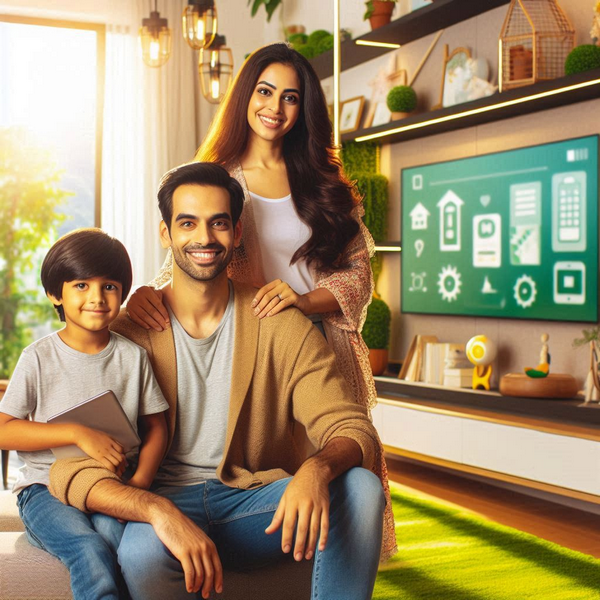
Millennial Dream Home 1

The Evolution of the Indian Nuclear Family

What drives the rise of nuclear families?

Financial Independence: Youth today seek autonomy over their finances, aligning with modern lifestyles.

Freedom of Choice: Young couples prefer making life decisions without traditionalist interference, particularly when family elders control resources. While these families remain respectful of elder care, their close bonds with previous generations have loosened. They aim for growth without constraints, focusing on career advancement, family investment, and quality of life.

Modern Parenting: Parents wish to raise their children with contemporary values, often focusing on creating global citizens.

The Millennial Dream Home

For the millennial nuclear family, the definition of an ideal home has evolved. Here’s what they prioritize:

Space for Growth – Homes need to accommodate expanding families. A survey by Anarock found that 51% of homebuyers preferred 3BHK units over smaller 2BHKs, despite rising property prices.

Sustainability – with 84% of Indians aware of global warming (Yale Program on Climate Change Communication, 2022), eco-friendly homes are now in demand. Features like energy-efficient designs and green certifications are becoming essential.
Safety and Security – Rising urban crime rates drive families toward gated communities and integrated townships with robust security measures.

Technological Integration – Smart homes are gaining traction, with the Indian smart home market expected to reach $6.5 billion by 2024. However, it’s not just about gadgets—it’s about creating smarter living environments.

Smarter Housing for Smarter Families

For today’s nuclear families, housing is not just about a home; it’s about the lifestyle it supports. This has led to increased demand for integrated townships—self-sustaining communities offering residential, retail, healthcare, and entertainment facilities within a single complex.

Millennial Dream Home 2


Why Integrated Townships?

Lifestyle Solutions: These townships offer “walk-to-work” convenience, on-site amenities, and pollution-free environments, reducing reliance on crowded urban hubs.

Complete Ecosystems: They blend residential and commercial spaces, catering to the all-in-one lifestyle nuclear families seek.

Enhanced Connectivity: With expanding metro networks, suburban areas housing these townships are now more accessible and affordable.

Challenges in Meeting Demand

Despite their appeal, integrated townships remain niche offerings due to the following challenges:

Land Availability: Securing large, cohesive parcels of land is a daunting task for most developers.

Expertise: Designing a township requires proficiency in integrating diverse real estate segments like hospitals, malls, and housing.

Capital Intensive: Building such ecosystems demands substantial investment throughout the development lifecycle.

As nuclear families reshape India’s urban housing market, the demand for sustainable, secure, and smart homes continues to rise. Integrated townships represent the future of housing, offering holistic solutions tailored to the aspirations of modern families. However, with limited supply and high barriers to entry, the race to meet this demand will define the next phase of India’s real estate evolution.

akash_pharande

About the Author:

Akash Pharande is Managing Director – Pharande Spaces, a leading real estate construction and development firm famous for its township projects in Greater Pune and beyond. Pharande Promoters & Builders, the flagship company of Pharande Spaces and an ISO 9001-2000 certified company, is a pioneer of townships in the region. With the recent inclusion of Puneville Commercial into one of its most iconic townships, Pharande Spaces has taken a major step towards addressing Pune’s current and future requirements for fully integrated residential-commercial convenience.

Weber Shandwick Launches ‘Elections Matter: India Report’

Bengaluru, 21st June 2024: Weber Shandwick India,  launched the “Elections Matter: India Report”. The survey led by the Corporate Advisory and Public Affairs practice, examined election sentiments around news consumption habits, trust in different information sources, and voting behaviours and motivations among Gen Z (18-24 years) and Millennial (25-44) consumers in India.

Key findings

Media consumption behaviour w.r.t. current events, news & politics

Generational differences in news consumption: Stark contrast exists in news engagement between Millennials and Gen Zs. Over 55% of Millennials followed news daily, compared to about 36% of Gen Z with males significantly more inclined to current events, news & politics. While TV is among the top 3 news sources, there was a significantly lower preference among Gen Zs (44%) compared to Millennials (60%).

Reaffirmation of digital consumption surge: YouTube is the leading platform for consumption of current events, news, and politics, in keeping with the digital media uptake. It was the dominant information source across all demographics, particularly driven by Delhi, while TV channels were on top in Chennai and Bangalore. It was followed closely by Instagram, TV, and WhatsApp.

Most watched is necessarily not the most trusted: Google search, print media, and digital news media had a higher trust quotient compared to most social media platforms.

Traditional media resonating stronger for Millennials: Print media continued to have higher acceptance among Millennials. 45% of Millennials consumed print media for news and politics compared to only 31% of Gen Zs. This preference pattern was evident even in the consumption pattern for television. South India especially Chennai and Bangalore had a stronger leaning to television than the rest of India. Also, 42% of males favoured print versus 33% of women. Print media was also high on trust compared to most social media platforms.

Concerns about misinformation: After fake news websites, social media influencers topped the list for spreading misinformation. Males in particular were especially distrustful of them.

Sentiments towards elections & voting

Motivated Millennials and less enthusiastic Gen Zs: Millennials were significantly motivated by elections and voting due to a strong sense of civic duty and the desire for educational reform. Chennai and Hyderabad had a higher sentiment comparatively towards elections.

In contrast, Gen Z showed less enthusiasm, hinting at a potential apathy in political engagement.

Priority issues for elections and new government expectations: Civic and social factors such as infrastructure development, outweighed economic concerns and party manifesto promises as primary voting motivations across gender and generational cohorts. The state of the economy and education were the most pressing issues both for the current elections and future government focus, reflecting widespread concerns about socio-economic and educational development. This shift suggested a future-oriented approach to polling, with voters seeking macro-level changes for a better future.

Regional differences in voting motivations: Voters in Delhi focused on infrastructure development, while those in southern regions, such as Chennai and Bangalore, prioritized voting for candidates who promised to bring about change and impactful leadership.

Gender-specific concerns towards elections: While the economy, education, and public safety were perceived to be among the top priorities for the recent elections, women were particularly interested in women empowerment issues, highlighting the importance of gender-specific policy agendas. Also, over 55% would like the new government to focus on the economy, education, and healthcare agendas.

Commenting on the consumer survey findings, Rohan Kanchan, MD – Consulting and Head of Public Affairs, Weber Shandwick India, said, “This report underscores the dynamic nature of news consumption and electoral engagement in today’s digital age. Even as broader generational trends are known, nuances within the cohorts reveal a break from the pattern. For instance, the connection of Influencers in consumer motivations vis-a-vis trust in perception, might have implications in analyzing corporate reputation and development of future strategies. Our national commonalities peppered with our regional disparities, continue to provide an interesting lens to any consumer study such as Elections Matter.”

The survey was conducted by YouGov among 1,000 respondents from the top 10 cities in India, including Mumbai, Delhi-NCR, Chennai, Kolkata, Bangalore, Hyderabad, Pune, Lucknow, Jaipur, and Ahmedabad. The demographics of the survey were balanced, with a near-equal split between males (51%) and females (49%), and evenly distributed between Gen Zs and Millennials.

Disclaimer: This third-party press release is for informational purposes only. We do not guarantee its accuracy or completeness. Views expressed are those of the authors and do not reflect our own.