Tag: BEIJING

Cctv+: Dream Chasers–ten Stories in One City (Episode 1)

BEIJING, June 27, 2024– Episode 1: Heart of the Homeland: The Dream Journey of Li Yuefeng, CEO of Beijing Anding Homecoming Agricultural Science and Technology Co., LTD.

From the center of Beijing, a journey southward less than 40 kilometers brings you to the ancient town of Anding in Daxing District. Here lies the largest ancient mulberry garden in north China and also a unique site exclusive to Beijing, earning it the name “hometown of mulberry“. Now, this venerable mulberry garden welcomes a new neighbor—the Taiwan Oneheart science and technology farm. Li Yuefeng, hailing from China’s Taiwan region, is building a smart farm on this land alongside his partners.

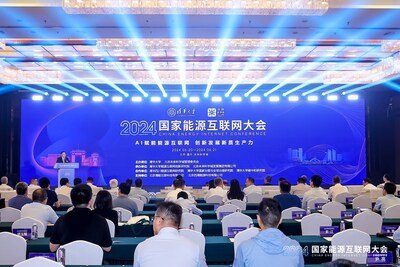
2024 China Energy Internet Conference held in Future Science City, Beijing

BEIJING, June 24, 2024 — The China Energy Internet Conference was held in Future Science City, Changping district, Beijing, from June 20 to 21. It was hosted by Tsinghua University, the Administrative Committee of Beijing Future Science City, the Energy Internet Research Institute of Tsinghua University and Beijing Future Science City Group Co., Ltd.

2024-China-Energy-Internet-Conference-is-held-in-Future-Science-City--Changping-district--Beijing--f

With the theme of “AI empowering Energy Internet Innovation and Development of New Quality Productive Forces“, the conference invited academicians from the Chinese Academy of Sciences and the Chinese Academy of Engineering and other industry experts, as well as guests from energy Internet related enterprises, research institutes, financial institutions and industry associations.

The 2024 Annual Report on the Development of National Energy Internet, Construction Plan of Carbon Monitoring and Management Platform for Future Science City were officially released at the conference.

Attendees had extensive in-depth discussions and exchanges during seven sub-forums on the topics of technological innovation and engineering application of energy digitalization industry, intelligent hydrogen power, carbon neutralization of energy storage application and standardization of energy Internet.

After visiting the exhibition hall of the Future Science City, the Energy Internet Building, and the Central Research Institute of the State Power Investment Corporation, attendees gained a more comprehensive and in-depth understanding of the support policies and latest construction achievements for the industrial development planning of the Energy Valley, Future Science City.

The conference aims to build a platform for cross-border exchange of innovative resources such as universities and venture capital institutions of energy Internet-related enterprises to help China take a more solid step towards innovation and transformation in the field of energy, and to provide Chinese wisdom and solutions for the construction and development of the global energy Internet network.

CGTN: Five decades on, China and Malaysia to accelerate building a community with a shared future

BEIJING, June 20, 2024– Construction of the East Coast Rail Link (ECRL), a mega rail project under the Belt and Road Initiative in Malaysia being built by the China Communications Construction Company, is in full swing.

The project, 60 percent of which was completed in March, is expected to greatly enhance connectivity and bring more balanced growth to Malaysia by linking its less-developed region on the east coast to the economic heartland on the west coast upon completion.

China is willing to work with Malaysia to steadily advance the construction of major projects, such as the East Coast Rail Link and the “Two Countries, Twin Parks” project while expanding the scale of trade and investment and promoting cooperation, Chinese Premier Li Qiang said on Wednesday while meeting with Malaysian Prime Minister Anwar Ibrahim. Li is on an official visit to Malaysia from June 18 to 20.

China’s model of partnership featuring amity, sincerity, mutual benefit and inclusiveness is no doubt a refreshing alternative brought to the table of multilateral cooperation in Southeast Asia. The dividends accrued were translated into a tailwind upon which the BRI is riding to triumph in the region where Malaysia is one of the key beneficiaries, Ong Tee Keat, president of the BRI Caucus for Asia Pacific and former transport minister of Malaysia, wrote in an article published on Wednesday.

China has been Malaysia’s largest trading partner for 15 consecutive years, and Malaysia has long been China’s second-largest trading partner in the Association of Southeast Asian Nations (ASEAN).

Last year, Chinese President Xi Jinping and Prime Minister Anwar reached an important consensus on jointly building a China-Malaysia community with a shared future.

During Li’s visit, China and Malaysia agreed to accelerate building a China-Malaysia community with a shared future, maintain close high-level exchanges and deepen cooperation in various sectors. The two sides also agreed to promote the high-quality implementation of the Regional Comprehensive Economic Partnership and conclude the negotiations for version 3.0 of the China-ASEAN Free Trade Area as soon as possible.

Strengthening people-to-people bonds

This year marks the 50th anniversary of the establishment of diplomatic relations between China and Malaysia and the “China-Malaysia Friendship Year.” The past 50 years have seen China and Malaysia tightening people-to-people bonds.

In 2023, Malaysia received around 1.4 million Chinese tourists, making Chinese tourists one of the top six inbound tourist groups to the country. The recent visa-free travel waiver has significantly boosted people-to-people exchanges. “We are positive about reaching over 5 million tourists from China,” said Tourism Malaysia Director-General Manoharan Periasamy in April.

During the visit, Li also called on the two sides to deepen people-to-people and cultural exchanges in areas such as culture, tourism and education, as well as between the youths of the two nations and at the subnational level to further facilitate personnel exchanges between the two countries.

The 2024 International Youth Dialogue on World Cultural Heritage Protection and Tours successfully held

BEIJING, June 19, 2024 — From June 12 to 16, under the guidance of the China International Communications Group (CICG) and the Information Office of the People’s Government of Yunnan Province, the 2024 International Youth Dialogue on World Cultural Heritage Protection and Tours were successfully held by the China Center for International Communication Development (CCICD) of CICG and the Publicity Department of the CPC Honghe Hani and Yi Autonomous Prefecture Committee. At the event, Zi Zhenhua, Member of the Standing Committee and Director-General of the Organization Department of the CPC Honghe Hani and Yi Autonomous Prefecture Committee, delivered a welcome speech. Prof. Shahbaz Khan, Representative of UNESCO Multisectoral Regional Office for East Asia, Qin Changwei, Secretary-General of the Chinese National Commission for UNESCO, Lu Cairong, former Vice President of CICG and Secretary of the CPC CICG Committee, Lai Yong, Deputy Director of the Information Office of the People’s Government of Yunnan Province, Jose Diaz, chargé d’affaires at the Colombian embassy in China, and Lu Qiong, Vice President and Secretary-General of the Chinese Cultural Relics Society, delivered speeches respectively. The event also invited nearly 180 participants including envoys, international media reporters and youth from nearly 20 countries such as Italy, South Africa, and Russia, heads of relevant departments from the Honghe Hani and Yi Autonomous Prefecture, and reporters from state-run, Yunnan provincial and Honghe prefectural media outlets.
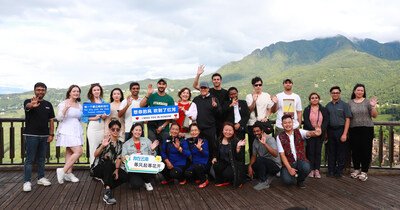
Image-1

In his speech, Prof. Shahbaz Khan said that cultural diversity and creativity are natural driving forces for innovation, and young people are the main innovators. The encouragement and support for young people will help unlock the innovation potential of the entire society, injecting continuous momentum into sustainable development. UNESCO has long been committed to promoting international cultural exchanges and cooperation, focusing on and encouraging young people’s participation in the protection of world cultural and natural heritage for the sustainable development of humanity.

Qin Changwei emphasized that young people are full of vitality and are the most open and inclusive group in society. Over the years, China has carried out education programs to enhance young people’s awareness and ability of cultural heritage protection. The Chinese National Commission for UNESCO will work with all parties to support their participation in world heritage protection.

Lu Cairong pointed out that young people are an important force in protecting and passing on the world cultural and natural heritage. To promote this work, we must deepen international people-to-people exchanges and cooperation to jointly build a dialogue and cooperation network for global cultural heritage protection. We must promote the in-depth integration of culture and technology, empowering cultural heritage with digital technology. We should build an international youth exchange platform to contribute young people’s strength to this meaningful undertaking.

Lai Yong said that in recent years, Yunnan Province has earnestly acted on General Secretary Xi Jinping’s important instructions on cultural heritage protection. He hoped to take this event as an opportunity to deepen cooperation with all parties. Based on the “International Youth Exchange and Field Learning Center“, he vowed to create a “1+1+X” model comprising the Field Learning Center, the Honghe Hani Rice Terraces, and various activities, in a bid to strengthen cultural exchanges and mutual learning and promote the understanding among different civilizations.

Jose Diaz said that engaging young people in the protection of world cultural heritage will help cultivate a new generation of guardians of cultural treasures and promote exchanges and cooperation among different cultures. China actively promotes international cooperation in cultural heritage protection, and has played a fundamental role in this area, setting a good example for other countries. He hoped to deepen cooperation between his country and China in this field and consolidate their friendship and partnership.

Lu Qiong said that world cultural heritage is a valuable treasure shared by all mankind. This event, which focuses on world cultural heritage protection, is the best action to implement President Xi Jinping’s important instructions. It will surely pull strengths from all sides for the scientific protection of world cultural heritage. The Chinese Cultural Relics Society will actively perform its new cultural mission and play a better role in the efforts to protect, utilize, inherit and promote world cultural heritage.

During the event, the “International Youth Exchange and Field Learning Center” jointly built by the Information Office of the Yunnan Provincial People’s Government and the CCICD of CICG was officially unveiled. The base aims to further promote the participation of international youth in the protection of world cultural and natural heritage and create an open, inclusive and innovative platform for youth exchange. It will be located in Yuanyang County of the Honghe Hani and YiAutonomous Prefecture.

After the unveiling ceremony, the Honghe Initiative was issued to advocate for the global youth to exert their leadership in the endeavor to protect, carry on, and innovate in the world’s natural and cultural treasures for humanity, highlighting exchange and mutual learning among civilizations.

At the event, the launch ceremony of the Third “Lovable China” International Short Video Contest was also held with three themes: “Chasing Dream in China”, “Diversified China” and “Smart China“. It was expected that with wonderful short video works, the international contestants could explore and display China’s diverse cultures and development achievements, telling the story of China from the perspective of the international youth, and showing the world a true China in a multi-dimensional and panoramic way.

During the roundtable discussion, youth representatives from the China World Heritage Cultural Center of the China Academy of Cultural Heritage, China Arab TV in Dubai, Associated Press of Pakistan Corporation (APPC), Vision Intelligence (Anhui), Yuni Culture and Arts Heritage Center and other institutions exchanged ideas on a range of topics. They talked about cultural heritage management systems, digital protection of world cultural heritage, the important role of media in the protection, and so on, contributing young people’s wisdom to this grand cause.

CGTN: ‘For the good of my people’: Xi Jinping’s devotion to service

BEIJING, June 16, 2024 — Fifty-five years ago, a 15-year-old Xi Jinping, as an “educated youth,” went to Liangjiahe Village in northwest China’s Shaanxi Province. He later spent seven years in the countryside, working and living alongside farmers.

Those years helped foster his unchanging belief in doing practical things for the people, Xi recalled.

After being elected general secretary of the Communist Party of China (CPC) Central Committee in November 2012, he pledged his continuous dedication to serving the people. “The people’s wish for a happy life is our mission.

From a rural Party branch secretary to the general secretary of the CPC Central Committee, Chinese president and chairman of the Central Military Commission, Xi Jinping always has the country in mind and sees himself as the people’s servant.

Man of the people

Xi arrived in Liangjiahe as a slightly bewildered teenager and left as a 22-year-old man determined to serve the people.

He later went to Zhengding, a poor county in north China’s Hebei Province. Li Yaping, then a Zhengding County official, recalled that Xi said China had many things waiting to be done and needed some people to shoulder responsibility.

From his early years, Xi seemed uninterested in the trappings of offices. He would travel for days, sometimes into the mountains, to talk with people at the grassroots, learn about their difficulties, and help solve their problems.

In Zhengding, Xi rode an old bicycle all over the county and noticed that the annual grain procurement quota of 38 million kilograms by the state had left local people hungry.

He wrote to the CPC Central Committee, suggesting local farmers’ difficulties were caused by the high procurement quota. After the investigation team learned about the situation, they reduced the quota from 38 million kilograms to 24 million kilograms.

Cheng Baohuai, then secretary of Zhengding County CPC Committee, recalled that people appreciated Xi’s work, saying they finally had enough food. Xi really rooted himself in the people and took to heart the hardships of the people, Cheng said.

‘For the good of my people’

Since the 18th CPC National Congress in 2012, Xi has made over 100 visits at the grassroots level, including to both urban and rural areas.

He voiced concerns about the food markets’ holiday supply sufficiency, residents’ access to medical care and migrant workers’ pay. Addressing people’s pressing needs is on the agenda of the central authorities and has become the driving force behind reforms.

We are now practicing a people-centered development philosophy,” Xi said during a symposium on eradicating extreme poverty on June 23, 2017. “People-centered development must focus on what the people need most.”

Under Xi’s leadership, China has witnessed historic changes, with absolute poverty wiped out and moderate prosperity attained for the country’s 1.4 billion people.

China’s per capita disposable income in 2023, for instance, increased by 6.1 percent year on year, and the income gap between urban and rural residents continued to narrow. The gains of poverty elimination were consolidated and expanded, with per capita income in rural areas that have been lifted out of poverty growing by 8.4 percent last year.

“Chinese modernization aims to ensure that development is for the people and by the people and that its fruits are shared by the people,” Xi said at a seminar in February 2023.

Asked about his feelings on being elected president of China during a visit to Italy, Xi acknowledged the huge responsibility and arduous task to govern such a big country, but expressed his devotion to China’s development.

“For the good of my people, I will put aside my own well-being,” Xi said.

CCTV+: Father’s Influence on Xi to Be Public Servant of People

BEIJING, June 17, 2024  — For Chinese President Xi Jinping, words and deeds of his father Xi Zhongxun (1913-2002) embodying the principle of “being a public servant of the people” are a great family heirloom that runs deep in his outlook on life, work, and philosophy.

In the exhibition hall of the premises of the former prefectural Party committee of Suide of northwest China’s Shaanxi Province , one line of words is particularly striking: “sit upright on the side of the people,” which was said by Xi Zhongxun who was once also the Party chief of Suide County.

“My father required us to live a simple life. Our clothes were not only all patched up, but also were hand-me-downs from elder brothers and sisters. Elder brothers handed down their clothes to younger sisters, and then the younger sisters handed them down to younger brothers. We were not allowed to leave a grain of rice on the plate. My family has strict revolutionary traditions,” said President Xi.

Xi Zhongxun taught his children through words and deeds, and required them to remain true to their original aspirations. He was “from the people” and had the people in his heart, practicing the mass line throughout his life.

Xi Zhongxun’s words and deeds had a profound impact on Xi Jinping. From a small village to the Party Central Committee, and from village Party secretary to the general secretary of the Party, Xi Jinping has always cared about the people and the country, devoted himself to the people and regarded the people’s aspiration for a better life as his ultimate goal.

“His requirement is to work well, study well, and handle everything well. For us, it’s a motto that we must pass on to future generations. When Xi Zhongxun joined the revolution, he did not regard himself as a cadre, but as an ordinary person, doing mass work village by village, household by household,” said Qi Xin, mother of Xi Jinping.

“He had always believed that I should be a part of the people, and should never separate from them. My grandfather was a farmer, my father joined the revolution as a farmer, and I myself worked as a farmer for seven years. The concerns of the people are what I have always cared about. Things of the people are the most important things,” said President Xi.

“From the people, for the people, benefit the people.” These words and deeds of Xi’s father are the relay, inheritance, and promotion of the revolutionary spirit of the two generations of Chinese communists. They convey the deep love between father and son, and the commitment to being a public servant for the people.

Xinhua Silk Road: Central China’s Yichang holds 2024 Qu Yuan’s hometown Dragon Boat Culture Festival

BEIJING, June 12, 2024 — The 2024 Qu Yuan’s hometown Dragon Boat Culture Festival kicked off on June 7 in Zigui County of Yichang City in central China’s Hubei Province.

pic

At the opening ceremony of the event, the sacrificial ceremony in ancient time was for the first time demonstrated in the form of art. A grand original performance named “China in the Songs of Chu” was staged, depicting the scenarios in the songs with local scenery and virtual reality technology.

This edition’s cultural festival features three major events, including the opening ceremony, a CCTV special program and the second Dragon Boat Festival cultural month. The city also held a series of activities during the traditional festival, such as a dragon boat race, folk performances and a China-chic fair, to boost the atmosphere of the festival among local people.

Yichang is the hometown of Qu Yuan, a great Chinese patriotic poet, who was also a minister of the State of Chu during the Warring States Period (475 B.C.-221 B.C.). The Dragon Boat Festival is originated to commemorate Qu Yuan on the fifth day of the fifth lunar month of the Chinese calendar.

In 2009, the custom of “Qu Yuan’s hometown Dragon Boat Festival“, as a part of China’s Dragon Boat Festival, was inscribed on the Representative List of the Intangible Cultural Heritage of Humanity.

In recent years, Yichang has engaged in the promotion of Qu Yuan culture by building a Qu Yuan cultural park, producing Qu Yuan-themed play and launching the compilation of the complete works of the Songs of Chu, making Qu Yuan culture an important window and a distinctive symbol to show the profound cultural heritage of the city.

Xinhua Silk Road: E. China’s Rongcheng starts new round of south-north abalone cooperative breeding

BEIJING, June 12, 2024 — Fishermen in Rongcheng, east China’s Shandong Province have started a new round of abalone breeding in alliance with their partners in southeast China’s Fujian Province to improve the survival rate of abalones, consolidating the south-north abalone cooperative breeding model.

Abalones have very strict requirements on their growing environment, especially the water temperature. The south-north cooperative abalone farming model between Rongcheng and Fujian abalone farmers has lasted for 20 years. The model has been proven as an effective way to meet such requirements and improve the survival rate of abalones.

Specifically, in April and May every year, at the turn of spring and summer, as the sea temperature in the southern China gradually rises, fishermen in Fujian move the abalone fries to the sea area of Rongcheng to escape the heat. And starting from November, when late autumn comes, they return the abalones back to Fujian to enjoy warm winter. It is learned that since mid-April this year, more than 100 million abalones have been shipped to Rongcheng City.

Under the arrangement, abalones are no longer affected by the harsh winter in the north and the scorching heat in the south, and has achieved year-round growth. Besides, the abalone maturity period has been shortened from 18 months to 12 months, and the survival rate of abalones has also increased to more than 90 percent.

Gen Z Dialogue on Energy Silk Road: Beijing Event Triumph

BEIJING, June 10, 2024 — On June 6, CNPC’s “Generation Z” Youth Dialogue, revolving on the theme of “Bridging Pipelines, Hearts Aligned: Young Vibes along the Energy Silk Road,” was grandly held at the CNPC Science and Technology Exchange Center in Beijing Foreign employees from SINO-Pipeline International in Kazakhstan, Myanmar, Uzbekistan, Tajikistan, and Kyrgyzstan, together with Chinese employees, shared their stories of mutual learning, growth, and development during the construction and operation of energy cooperation projects under the Belt and Road Initiative. Chinese and foreign young employees also performed wonderful cultural programs.

This event, hosted by SINO-Pipeline International, aimed to promote exchanges and cooperation among the youth of countries along the Belt and Road, showcasing the development achievements of energy cooperation projects under the Belt and Road Initiative. The event was held in a hybrid format with a main venue in Beijing and multiple video sub-venues, and was live broadcast in Chinese, Russian, and Burmese. To ensure extensive participation by Chinese and foreign employees, sub-venues were set up in joint venture/wholly-owned companies in Kazakhstan, Myanmar, Uzbekistan, Tajikistan, and Kyrgyzstan, as well as Xinjiang Company, and Yunnan Branch.

Shen Zhong, Deputy Director of the Corporate Culture Department of CNPC delivered a speech. While promoting international cooperation, CNPC consistently strengthens people-to-people exchanges and cooperation, deepening exchanges and mutual learning between civilizations in the journey toward high-quality development. He expressed hope that young friends would leverage the stage of energy cooperation, continuously surpass themselves in cultural exchanges and insights sharing, and inject fresh blood into energy cooperation along the Belt and Road.

Zhong Fan, Executive Director of SINO-Pipeline International, pointed out that over the past decade, SINO-Pipeline International has continuously improved its integrated investment, construction, and operation based on win-win cooperation, focused on cultivating a team of international talents with a global vision, and actively promoted international people-to-people exchanges under the Belt and Road Initiative. He hoped that young friends would link their destinies to the progress of human civilization, “build a golden bridge together,” and demonstrate personal value in advancing high-quality development along the Belt and Road.

The event consisted of two parts: youth dialogues and cultural performances. A total of 33 Chinese and foreign youth participated in the event. In the youth dialogue segment, six pairs of “one Chinese, one foreign” youth engaged in live dialogues in Chinese around the theme “Building a Golden Bridge Together: Energy Youth on the Silk Road.” The speakers were all outstanding young employees recommended by their respective enterprises to share their exciting personal experiences.

The event commenced with a dance performance titled “Ode to the Silk Road” by employees of Xinjiang Company, setting the stage for the youth dialogues. Subsequently, young representatives from various countries took the stage to share their touching stories. Aigerim Akhmetova and Jiang Tao from Asia Gas Pipeline LLP exemplified dedication and perseverance in lighting up thousands of homes. Avezov Rasulbek and Wang Weijian from JV”Asia Trans Gas”LLC reminisced about the brotherhood forged while handling compressor failures in the freezing cold. Yi Meng and Zhang Yunliang from Trans-Tajik Gas Pipeline Company Limited spoke about overcoming workplace challenges and chasing dreams along the New Silk Road. Gulina Sailanbek and Lei Qimeng from Beineu-Shymkent Gas Pipeline LLP shared the tremendous changes in local residents’ lives after the commissioning of the pipeline project. Ryskulov Mirrakhim and Lu Ming from Trans-Kyrgyz Gas Pipeline Company Limited recounted supporting Kyrgyz students in overcoming difficulties to complete their studies. Kyaw Thu Yan Aung and Cui Shanglin from South-East Asia Crude Oil/Gas Pipeline Company Limited showcased the economic and cultural integration and deep friendship in China-Myanmar energy cooperation.

Kazakh employees Aigerim Akhmetova and Gulina Sailanbek expressed in their narrations: “After the pipeline was commissioned, we witnessed firsthand how residents along the pipeline route transitioned from the traditional ‘coal and wood era’ to the brand new ‘blue-gold era.’ This is not just a green pipeline transporting clean energy but also a friendship pipeline conveying Chinese-Kazakh friendship.”

Chinese and foreign young employees performed wonderful dances and songs, showcasing the cultural integration achievements of “Generation Z” youth. Yunnan Branch’s original song Against the Current demonstrated the spirit of perseverance and teamwork. The company’s band, Concentric Circles, adapted and performed Glorious Years, pushing the event atmosphere to a climax. Their performance fully reflected the vitality and passion of “Generation Z” youth along the Belt and Road, and brought the youth dialogue event to a successful conclusion.

SINO-Pipeline International, along with local partners, has jointly constructed and operated several transnational crude oil and natural gas pipelines, including the Trans-Asia Gas Pipeline, the Myanmar -China Oil and Gas Pipeline, and the Kazakhstan- China Crude Oil Pipeline, along the Belt and Road in Central Asia and Myanmar. Among the over 4,000 Chinese and foreign employees, young employees from both China and abroad are active on the front lines of pipeline project construction and operation. They have been jointly tackling risks and challenges, deepening mutual learning and cultural exchange, and ensuring the safe and stable operation of transnational pipelines.

CICC Porsche Fund has completed its initial closing

BEIJING, June 8, 2024  — Recently, CICC Porsche (Shanghai) Venture Capital Investment Partnership (Limited Partnership) (hereinafter referred to as “CICC Porsche Fund”) sponsored by CICC Private Equity Investment Management Co., Ltd. and the wholly-owned overseas entities of Dr. Ing. h.c. F. Porsche AG (hereinafter referred to as “Porsche”) has completed its initial closing and filing with the Asset Management Association of China.

image

It is Porsche’s first cooperation with a leading Chinese financial institution’s private fund management subsidiary worldwide. Porsche is an anchor investor that will zealously promote the development of the fund. Porsche’s investment and main cooperation scheme this time have been approved by the Porsche Global Board of Directors at its headquarters in Germany, with a highly strategic positioning. Porsche’s excellent technical system is expected to help CICC Porsche Fund select investment targets and promote post-investment empowerment.

CICC Porsche Fund is the first CICC fund (through its private fund management subsidiary) to cooperate with internationally renowned auto companies. It is significant as an illustration of CICC group’s international business. It is a model of cooperation between CICC and overseas industrial groups, attracting global capital, and serving as a high-level opening-up to the world.

The CICC Porsche Fund team has been deeply involved in the fields of new energy and intelligent connected vehicles, with distinct industry characteristics and international attributes. The team will continue to explore investment opportunities in the fields of new energy and intelligent connected vehicles with professional investment capabilities, balancing internationalization and regionalization strategies, striving for a win-win situation for portfolio companies, strategic partners, and investors, and helping China’s new energy and intelligent connected vehicle industry to flourish.

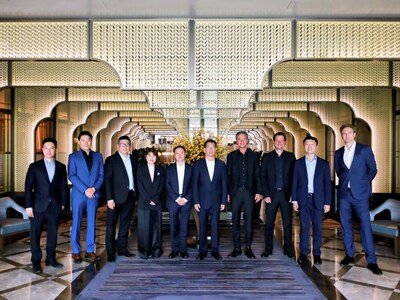
On April 24, 2024, Lutz Meschke, Deputy Chairman of the Executive Board and CFO of Porsche, and his delegation met with Yicheng Xu, member of the Management Committee of CICC, in Beijing. Björn Scheib, Head of Investor Relations and Vice President of Porsche, Shuguang Wang, member of the Management Committee of CICC and head of the Investment Banking Department, and Gang Chu, Managing Director of CICC, accompanied the meeting.