Category: Technology

Symphony by Wix Integrates Link’s Wallet for Agents, Built by Stripe, Enabling AI Agents to Make Payments on Behalf of Small Businesses

With Link’s wallet for agents,  Symphony’s AI agents go from flagging what needs attention to handling it, keeping inventory stocked, bills paid, and deadlines met on the owner’s behalf, with every purchase approved first

NEW YORK, October 15, 2026 – Wix.com Ltd. (NASDAQ: WIX), today announced that Symphony by Wix, the standalone multi-agent system for small and medium-sized businesses and solopreneurs, now connects to Link, Stripe’s  digital wallet. The integration allows Symphony’s team of AI agents to make payments on the business owner’s behalf, taking execution one step further. Symphony’s agents already know how a business operates and work as a coordinated team across it, executing tasks and surfacing growth opportunities. With Link connected, they can now carry that work through to payments, so a task is finished rather than handed back to the owner.

Most AI tools for business stop at insight. They find the problem, draft the email, or flag the risk, and then hand the final step back to the owner. With Link connected, Symphony’s agents can carry tasks through to payment, with business owners approving each purchase before it is made. For small business owners, that means stock is reordered before it runs out, invoices are paid before they fall overdue, and entry fees are covered before a deadline passes, none of it landing back on the owner’s to-do list.

Every payment runs inside a system the owner controls. With Link’s wallet for agents, buyers review and approve each spend request, while Stripe uses a secure payment token or one-time virtual card for the transaction.  In practice, it can play out across the whole life of a business:

  • A new owner is setting up their business. Symphony identifies the required registration fees and pays them, so the business is registered before the first sale.

  • A candle shop’s best-selling scent drops below five units. Symphony reorders from the usual supplier and pays overnight, so the owner wakes up to “reordered” rather than “almost out.”

  • A supplier invoice lands on a Friday afternoon. Symphony confirms the amount matches the purchase order and pays it that day, instead of it sitting until the owner has a free hour.

  • A local farmer’s market closes applications in three days. Symphony pays the entry fee right away, so the opportunity is secured rather than left on a list that expires.

  • A customer leaves a two-star review over a late delivery. Symphony sends a complimentary gift card the same day to make good.

Symphony’s agents never see the owner’s underlying payment details, and each card is capped at the approved amount. Approval can be given within a 10-minute window from any device, by WhatsApp or SMS. 

“Since launch, Symphony has been built to act on behalf of business owners, not just advise them,” said Ronny Elkayam, COO of Wix. “Connecting Link is the last mile of that promise. An agent that can find an overdue invoice or an expiring grant deadline is useful. An agent that can get it paid, with the owner’s approval and inside clear limits, is a teammate. That is the difference between knowing what to do and having it handled.”

“People start businesses to solve problems and serve customers. Routine tasks like ordering supplies and paying bills take valuable time away from that work,” said Jay Shah, business lead for Link at Stripe. “With Link’s wallet for agents, Symphony can handle more of those tasks, giving business owners more time to focus on what matters most to them.”

The Link integration follows Symphony’s August launch and extends the platform’s expansion into the operational layer of how SMBs manage, automate, and grow. The connection is rolling out to Symphony users with a US-based Link account, with payments made in US dollars.
 

Leostream Simplifies Secure Remote Access with New Cloud Offering

Leostream Cloud connects authorized users directly to the workstations and resources they need, providing an alternative to VPN-based remote access

BOSTON – October 15, 2026 – Leostream Corporation, a leading provider of secure remote access and digital workspace management solutions, today announced Leostream Cloud, a new cloud-based offering designed to simplify secure remote access to physical and cloud-hosted workstations and other protected resources.

Remote users often need access to a specific workstation or resource, not an entire corporate network. Yet organizations have traditionally relied on virtual private networks (VPNs) to provide remote connectivity, potentially giving users broader network access than their work requires. Leostream Cloud enables organizations to replace or avoid VPN deployments for these remote access use cases by authenticating users, applying access policies and connecting them only to the resources they are authorized to use.

“Remote access has traditionally been associated with providing users a path into the corporate network, often through a VPN, but in many cases that is more access than they actually need,” said Karen Gondoly, CEO of Leostream. “With Leostream Cloud, we’re applying the same principles of choice and controlled access that have always been central to Leostream, but now delivered through the cloud. Organizations can provide secure remote access without requiring users to first connect to the corporate network through a VPN. Instead, they can authenticate the user, authorize the specific resource and limit everything else, giving users a simple way to connect while giving IT greater control over what they can access.”

Leostream Cloud also supports vendor privileged access management (VPAM) use cases, giving organizations a way to provide third-party users and contractors controlled access to specific resources without granting broader network access.

“Organizations need a practical way to give vendors and other external users access to the systems required to do their jobs without unnecessarily opening up the broader environment,” said Piotr Baranowski, Owner, Instructor and CTO, Open Source Education Center (OSEC). “In validating the VPAM workflow in Leostream Cloud, we saw how identity and access policies can be used to connect an authorized user directly to an approved resource. It’s a straightforward approach to a remote access challenge that many organizations are trying to solve.”

Secure Access to the Resource, Not the Network

Leostream Cloud combines identity-based authentication with policy-driven resource assignment to control who can connect, what they can access and how the connection is established. Users sign in through a centralized access experience and see only the resources they are authorized to use. By connecting users directly to approved resources rather than first placing them on the corporate network, Leostream Cloud can eliminate the need for a VPN in remote access scenarios where users only require access to specific workstations or systems. 

The Leostream Cloud Agent uses outbound connectivity to help organizations provide access to protected resources without directly exposing remote access services such as RDP or SSH to the internet. Organizations can also centrally manage access policies and resource assignments while maintaining logs and optional session recordings for greater visibility into remote activity.

Leostream Cloud can support remote access across physical workstations, data centers, branch or project sites, and cloud environments. Organizations can select from connection protocols including RDP, VNC, SSH, HTML5, Amazon DCV, Jump Desktop, and Sunshine/Moonlight based on the requirements of different users and workloads.

This flexible approach enables a range of remote access scenarios, including connecting engineers to CAD workstations, creative professionals to cloud GPU resources, researchers to Linux systems, and contractors to specific approved resources. For organizations evaluating alternatives to HP Anyware, Leostream Cloud provides a flexible path forward that supports multiple connection protocols and diverse physical, virtual and cloud-hosted resources without locking users into a single protocol or infrastructure model.  Rather than deploying a separate access solution for each environment or use case, IT teams can manage diverse users, resources and connection methods through a centralized platform.

Leostream Cloud is part of an organization’s Zero Trust Network Architecture (ZTNA), by applying identity and policy at the point of access and limiting users to authorized resources. For organizations looking to reduce reliance on VPNs, this resource-specific model provides an alternative to extending network-level access to remote users. It is designed to address a specific component of ZTNA: securely connecting authenticated users to individual workstations and protected resources without providing unnecessary access to the surrounding network.

AVer’s MT300(N) Achieves Certification for Microsoft Teams Rooms

AVer's MT300(N) Achieves Certification for Microsoft Teams Rooms


Taipei, Taiwan – Oct 15: AVer Information Inc., an award-winning provider of AI audio-video solutions, announces the MT300(N) is now Certified for Microsoft Teams. The MT300(N) meets Microsoft’s performance and compatibility requirements for qualified Teams Rooms deployments, supporting reliable integration across certified room environments.

“Achieving certification for the MT300(N) emphasizes our continued focus on delivering solutions that simplify deployment while supporting reliable collaboration experiences,” said Katie Sullivan, Senior Product Manager for AVer Information Inc. “The MT300(N) gives organizations greater flexibility by enabling voice tracking, multi-camera switching and broad compatibility with leading audio and video technologies in a compact platform.”

“We’re pleased that the AVer MT300(N) camera is certified for Microsoft Teams,” said Albert Kooiman, General Manager, Teams Partner Engineering and Customer Enablement at Microsoft. “The MT300(N) supports multi-camera voice-tracking, outputting over a single USB stream and integrates with a broad ecosystem of third-party microphones that are certified for Microsoft Teams. This combination provides customers with powerful choices for creating effective meeting experiences, especially in large meeting rooms.”

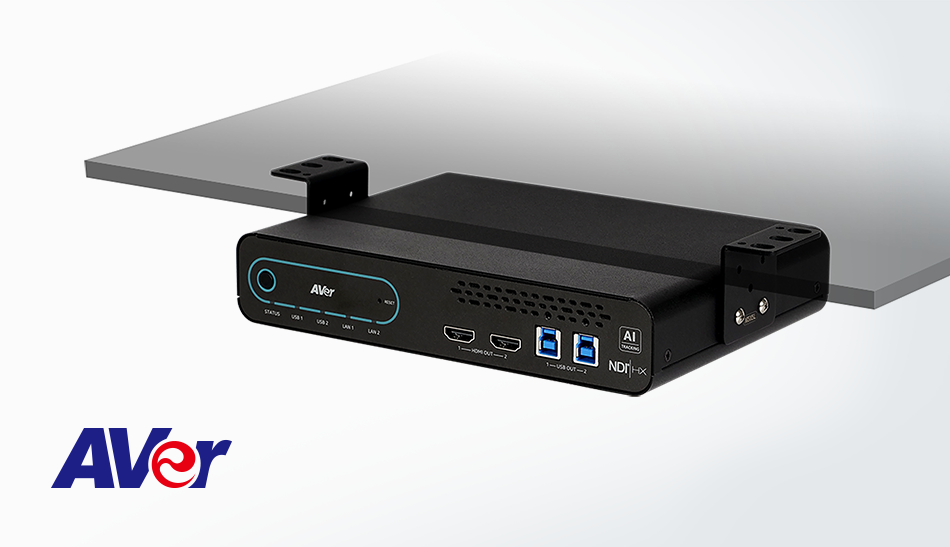
The MT300(N) is designed to enhance AVer PTZ cameras by adding advanced voice tracking capabilities in a compact, flexible form factor. The MT300N can be discreetly installed beneath a table, mounted behind a display with the included surface-mount brackets, or integrated into a rack with an optional rack-mount accessory. By connecting multiple cameras, the MT300N enables seamless voice-activated camera switching to ensure active speakers remain in view for a more engaging and natural collaboration experience.

The MT300(N) brings advanced voice tracking functionality to Microsoft Teams Rooms environments through integration with Microsoft Teams Certified microphones. Designed for flexible collaboration workflows, the MT300(N) supports customizable multi-camera switching with a variety of connectivity options for cameras enabling seamless integration with Teams Rooms and a range of content capture applications.


AAEON Expands UP Brand Portfolio with New UP Display Kit to Meet Edge Computing and HMI Needs

AAEON’s first UP-branded display system delivers fanless edge computing, industrial connectivity, and a 15.6-inch multi-touch interface in one compact platform.

AAEON Expands UP Brand Portfolio with New UP Display Kit to Meet Edge Computing and HMI Needs

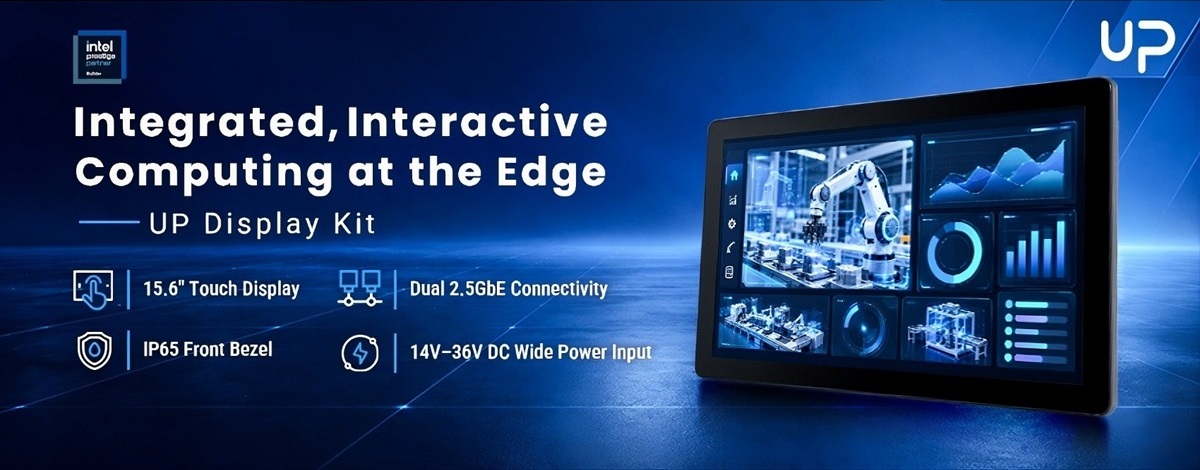
Taipei, Taiwan – Oct 15: Leading IPC provider AAEON (Stock Code: 6579) has released the UP Display Kit, an edge computing and HMI platform in one Intel® Processor N-series-powered compact system. The device is the first of its kind under the UP brand, which primarily targets the developer board and edge PC markets, representing an expansion of the brand’s product offerings.

The system has been made available in a range of SKUs featuring CPUs from across both the Alder Lake-N and Twin Lake generations of the efficiency-focused Intel® processor series, including the octa-core Intel® Core™ 3 Processor N355 and Intel® Core™ i3-N305 Processor, as well as the increasingly popular Intel® Processor N97.

AAEON states that the primary motivation behind the UP Display Kit is to integrate the user-friendliness of a high-spec display unit with the utility and reliability of an industrial edge PC. As such, industrial HMI, self-service kiosks, and smart retail terminals have been identified as potential applications for the product.

AAEON Expands UP Brand Portfolio with New UP Display Kit to Meet Edge Computing and HMI Needs


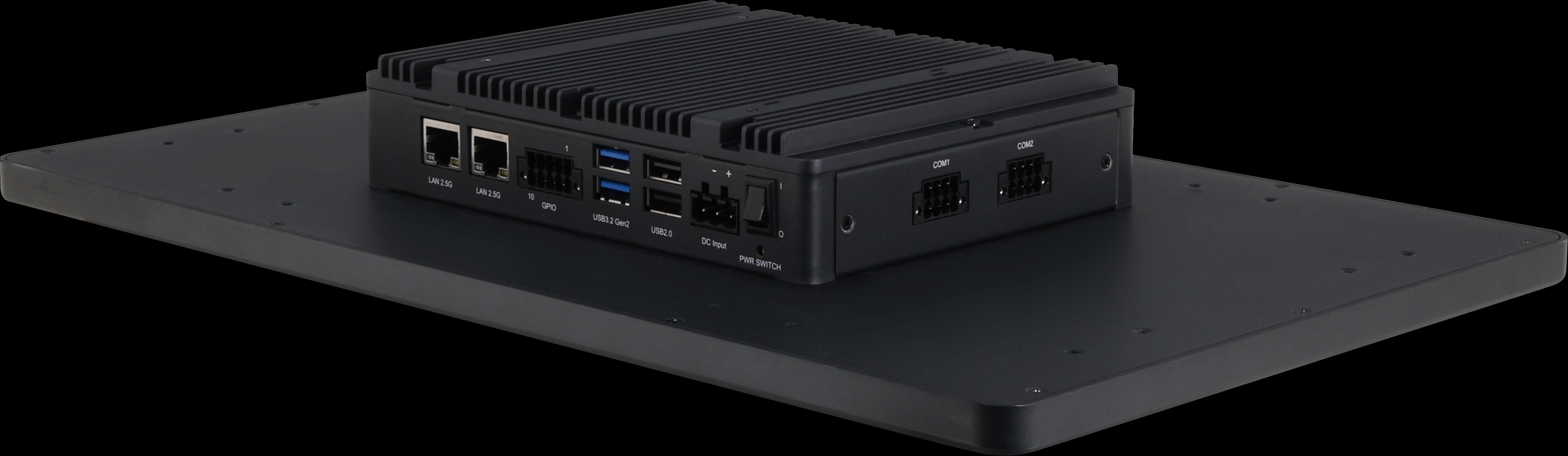
The UP Display Kit features a 15.6″ projected capacitive multi-touch display and OS support for both Windows® 11 LTSC and Ubuntu 22.04 LTS for UI design flexibility. Meanwhile, the device provides a number of interfaces conducive to its intended deployment environments, beginning with two 8-pin terminal block connectors for software-configurable RS-232/422/485 and an 8-bit GPIO. Joining these industrial I/Os are dual RJ-45 ports, each supporting 2.5GbE, and four USB ports (two USB 3.2 Gen 2, two USB 2.0).

For expansion, the UP Display Kit provides an M.2 2230 E-Key for Wi-Fi module installation, as well as two M.2 2280 M-Key slots, one offering a 4-lane PCIe Gen 3 interface for NVMe storage support and one dual-lane PCIe interface. Alongside these, the system supports up to 16GB of DDR5 via a SODIMM slot, while more conventional storage can be obtained through the option of up to 128GB of eMMC.

The display kit is designed for reliable, quiet operation in rugged environments, as illustrated by its IP65-rated front bezel, which grants protection against dust and water ingress. In addition to this, the kit supports either a 14V to 36V DC input with a dedicated ground screw or a standard 12V input, depending on configuration. As is typical of AAEON platforms designed for outdoor, industrial, or kiosk deployment, the system relies on passive cooling, using a heatsink within its chassis to ensure adequate dissipation.

Altair Semiconductor Adds Iridium NTN Direct Support to ALT1350 and ALT1550 IoT Chipsets

MCLEAN, Va., Oct. 15: Iridium Communications Inc. (Nasdaq: IRDM), a leading provider of global voice, data, aircraft surveillance, and positioning, navigation, and timing (PNT) satellite services, today announced that Altair Semiconductor, a world leader in cellular IoT chips, is integrating Iridium NTN Direct℠ capability into Altair’s ALT1350 and next-generation ALT1550 IoT chipset platforms. With terrestrial cellular IoT and Iridium satellite connectivity on a single chipset, device manufacturers, module makers and mobile network operators (MNOs) will be able to extend IoT connectivity beyond the reach of terrestrial networks through the Iridium satellite network, without adding a separate satellite modem to their designs.

The partnership combines Altair’s cellular IoT chipset technology, among the most highly integrated low-power connectivity solutions available, with Iridium’s 3GPP standards-based non-terrestrial network (NTN) service, giving device manufacturers another chipset option for products that need connectivity beyond terrestrial cellular coverage. With the ultra-low-power ALT1350, these connectivity requirements can include asset tracking, logistics, smart metering and utilities, agriculture, vehicle telematics, industrial monitoring and remote infrastructure. With the ALT1550, these capabilities extend to a new generation of AI-powered 5G eRedCap devices, such as smart glasses, AI assistants and other wearables, that need to stay connected wherever they go.

“Altair has deep experience developing highly integrated, low-power IoT solutions, and we’re excited to work together to extend their reach with Iridium’s truly global satellite network,” said Tim Last, executive vice president, Iridium. “As a market leader in satellite IoT, Iridium is offering device manufacturers a powerful new way to develop connected products. Integrating Iridium NTN Direct into Altair’s chipsets will enable solutions and applications that require reliable, low-power connectivity beyond the limits of terrestrial networks.”

“Adding Iridium NTN Direct to our ultra-low-power LTE-M/NB-IoT ALT1350 and 5G eRedCap ALT1550 chipsets reflects our commitment to giving customers greater flexibility in how and where their IoT devices connect,” said Dima Feldman, VP Product Management and Marketing, Altair Semiconductor. “With Iridium’s truly global LEO satellite connectivity alongside terrestrial cellular, device manufacturers can more easily develop solutions that will reliably work anywhere they’re deployed.”

Iridium NTN Direct leverages Iridium’s fully operational, LEO satellite constellation and globally coordinated L-band spectrum to extend standards-based connectivity beyond terrestrial networks. The service is designed to support NB-IoT and direct-to-device (D2D) applications using compatible 3GPP standards-based chipsets, providing MNOs, chipset manufacturers and device makers with a path to extend connectivity through the Iridium satellite network.

Altair joins a growing ecosystem of partners bringing the Iridium NTN Direct service to market. A combination of chipmakers, module manufacturers, OEMs, device makers, and IoT developers is leading the next generation of NTN-cellular integration with Iridium NTN Direct.

Matrix Comsec Receives CII Award for Excellence in Research & Development

Awarded Silver in Electronics, Space & Defence, recognising sustained investment in indigenous R&D, engineering excellence, and technology development.

Matrix Comsec Receives CII Award for Excellence in Research & Development


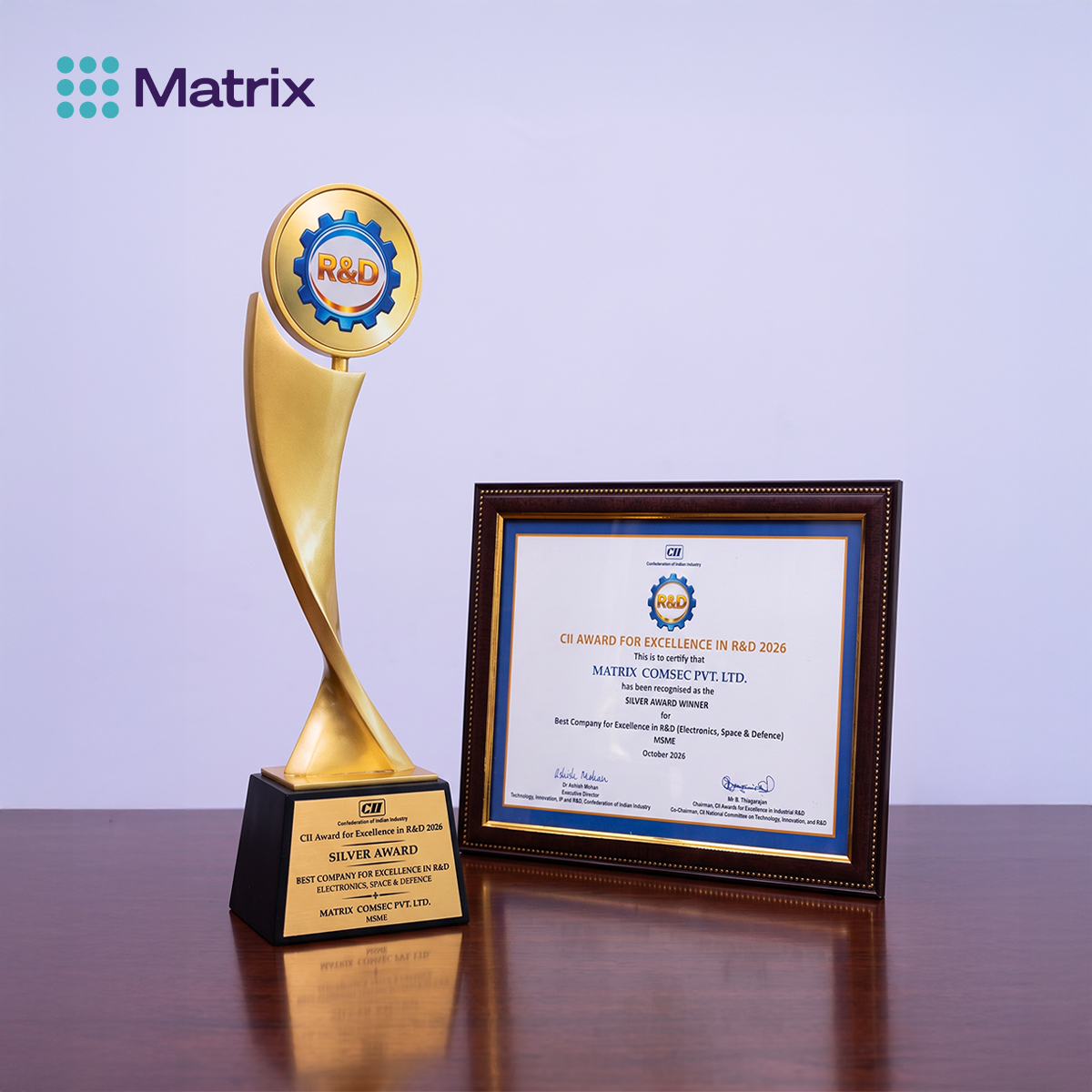
Oct 15: Matrix Comsec, a leading provider of integrated, enterprise-grade physical security solutions, has received the CII Award for Best Company for Excellence in R&D – Silver in the Electronics, Space & Defence category. The award was presented at the CII Global Summit on Industrial R&D & Competitiveness 2026, held on October 7, in Bengaluru, under the theme “Powering India’s R&D for Global Impact.”

The recognition highlights Matrix’s commitment to indigenous research and its engineering-led approach to developing reliable, enterprise-ready technologies. With end-to-end in-house R&D, the Company brings together research, product design, development, and engineering to address complex security challenges and deliver solutions built for performance, scalability, and long-term value.

Matrix’s R&D ecosystem comprises two dedicated R&D laboratories and more than 250 R&D professionals, with capabilities spanning hardware, embedded systems, software, artificial intelligence, video analytics, and cybersecurity. This integrated approach has enabled Matrix to develop indigenous technologies across its Video Surveillance, Access Control, Time-Attendance, and communication solutions. The technology developments of the Company include an indigenously designed PTZ camera, a 96-channel Network Video Recorder with RAID resilience, and the COSEC ARGO FACE200T touchless biometric solution.  Its research efforts have contributed to 47 registered intellectual property assets. The company has also developed capabilities in AI-based face recognition, object classification, automatic number plate recognition, and secure platform architectures.

Speaking on the recognition, Mr. Sundar Subramanian Pillai, AVP Product Management, Matrix Comsec, said, “We are honoured to receive the CII Award for Excellence in R&D. For us, R&D has always been more than developing products; it is about building engineering capabilities that enable us to solve real-world challenges and create technology with lasting value. This recognition reflects the dedication of our R&D teams to developing indigenous technologies and extending our engineering capabilities to address evolving customer needs. We remain committed to strengthening our R&D ecosystem and advancing technologies that contribute to India’s technological capabilities and global competitiveness.”

The Summit brought together policymakers, industry leaders, R&D and technology heads, researchers, academia, and international experts to discuss the future of industrial research, innovation, and global competitiveness. The programme featured international participation from WIPO and delegations representing Japan, Germany, Israel, and Russia, alongside representatives from CSIR, INAE, and INSA.

This recognition reinforces Matrix’s commitment to purposeful innovation, engineering excellence, and indigenous technology development. Through continued investment in in-house R&D, Matrix remains focused on developing integrated, scalable, and reliable technologies that address real-world enterprise challenges and deliver measurable outcomes.

Leonardo DRS STAG-5 EO/IR Gimbal with Laser Target Designator Supports Precision Fires Demonstration During Iron Sting Event

Precision fires validation highlights how DRS’ STAG-5 gimbal can help operators improve targeting accuracy, extend standoff and enable precision fires in contested environments

Leonardo DRS STAG-5 EO/IR Gimbal with Laser Target Designator Supports Precision Fires Demonstration During Iron Sting Event


ARLINGTON, Va.– Oct. 15, 2026 – Leonardo DRS, Inc. (Nasdaq: DRS) announced today that its STAG-5 EO/IR Gimbal with Laser Target Designator (LTD) supported a recent precision fires demonstration in conjunction with Performance Drone Works (PDW) during the Iron Sting Precision Mortar Validation Event, highlighting the role of advanced target design capabilities in enabling extended-range, accurate strike operations. The event was hosted by the Capability Development & Innovation (CD&I) office, formerly the Irregular Warfare Technical Support Directorate (IWTSD), within the Secretariat for Special Operations (SSO) in support of the U.S. Army Special Operations Command (USASOC). 

Conducted at the White Sage Mortar Range in Dugway, Utah, the event evaluated the safety, accuracy, and extended-range performance of next-generation precision mortar munitions while also providing operators with hands-on experience using emerging technologies in realistic scenarios. 

During the event, a PDW C100 drone equipped with the DRS STAG-5 EO/IR Gimbal with Laser Target Designator supported target designation during mortar engagements at ranges exceeding the standard maximum range of a 120 mm non-rifled mortar. The successful execution of repeated engagements demonstrated the consistency and reliability required for operational employment and reinforced the value of advanced laser designation capabilities in modern fires workflows.

“The STAG-5 is designed to provide operators with precise, reliable ISR and targeting capabilities that can enhance mission effectiveness across a wide range of operational environments,” said Jerry Hathaway, senior vice president and general manager of Electro-Optical Infrared Systems (EOIS) at Leonardo DRS. “Events such as Iron Sting underscore the importance of delivering technologies that improve accuracy, extend operator standoff, and support evolving battlefield requirements.”

The STAG-5 is designed to support mission success by enabling operators to designate targets with precision and confidence as part of integrated fires operations. When paired with advanced electro-optical and infrared sensing capabilities on deployed platforms, the system can improve target acquisition and designation, strike confirmation, and mission observation from safer standoff positions.

DRS continues to work closely with customers, operators, and industry partners to advance precision engagement solutions that address the needs of today’s warfighter. Through participation in events such as Iron Sting, the company is demonstrating how scalable, mission-ready technologies can help operators Own the Edge™ through improved precision, survivability and operational flexibility in contested environments. For more information regarding the DRS STAG-5 EO/IR Gimbal, visit www.leonardodrs.com/stag5.

Wiliot and Thinaer Partner to Bring Secure Physical AI to the Department of Defense Customer Base

SAN DIEGO, CA – October 15, 2026 – Wiliot, a global leader in Physical AI for supply chains, and Thinaer, an industry leading provider of Physical AI infrastructure and software, today announced a partnership to bring secure, real-time asset visibility to the defense industrial base. The collaboration begins with a Thinaer deployment at a major U.S. aerospace and defense manufacturer serving the Department of Defense (DoD), tracking critical materials and parts throughout its internal supply chain.

Thinaer will begin deploying 1.7 million Wiliot IoT Pixels in Q1 2027 at the first customer’s operations, establishing a foundation for broader adoption across the defense industrial base.

The partnership also marks Wiliot’s entry into defense following scaled deployments across retail, post and parcel, logistics, and food and beverage. It extends Physical AI to complex defense manufacturing operations, where continuous asset visibility can help keep critical production programs on schedule.

Within these operations, materials and parts can undergo ten or more transformations as they move between locations, including temporary external facilities. Losing visibility between production stages can leave teams searching for critical components and put production schedules at risk. Tracking those movements continuously helps manufacturers understand where materials have stalled and intervene before delays spread across the operation.

“True Physical AI closes the gap between raw material and intelligent action. When every object on the factory floor is ambiently connected, the floor becomes a dynamic, self-navigating ecosystem where materials communicate their own state, location, and operational readiness to the systems and humans moving them,” said Bryan Merckling, CEO of Thinaer.  “Wiliot IoT Pixels’ combination of size, cost, and battery-free operation lets us connect far more of those materials to the ‘Connect Everything’ layer of our Physical AI platform.”

Wiliot IoT Pixels are stamp-sized, battery-free Bluetooth sensors that attach to materials, parts, or containers to aggregate real-time location data. Wiliot’s Physical AI platform processes this data into asset-level insights that Thinaer integrates with information from its broader sensor infrastructure.

Together, these inputs give defense teams a shared view of operations across facilities to track asset movements, identify bottlenecks, and address delays. They also provide AI systems with the physical-world context needed to anticipate disruptions and keep production on schedule.

Protecting that operational data is central to the joint solution. Wiliot IoT Pixels transmit encrypted data that remains protected during collection and relay until it reaches the processing environment behind secure firewalls. Thinaer’s platform operates in government secure cloud environments, including Impact Level 5 environments, bringing established security infrastructure to the partnership’s defense applications.

“Defense manufacturers need continuous insight into their operations and control over the sensitive information those operations generate,” said Alex Sliwinski, Wiliot Vice President of Sales. “Encrypted data at the asset level is fundamental to serving this market. With Thinaer, we can put that data to work securely across the materials and parts on which defense production depends.”

With a roadmap to millions of tracked assets, the first deployment establishes a foundation for broader adoption of Physical AI across defense manufacturing. Thinaer has already identified additional customers for the joint solution, while its work in healthcare and other industrial markets provides opportunities to extend the partnership beyond defense.

PayQuicker Strengthens Its Leading Orchestration Platform with Advanced API Capabilities, AI-Driven Automation and Real-Time Visibility

Customers gain real-time webhooks, batch processing at scale, payment retractions, and expanded funds visibility with API v2 

New York — October 14, 2026 — PayQuicker, a leading global payouts orchestration platform, today announced that API v2, its next-generation API platform, is now available to its customers. With the launch, clients gain access to advanced capabilities, including real-time webhooks, high-volume batch processing, payment retractions, and expanded visibility into funds activity.  

In delivering new AI-driven automation capabilities, PayQuicker customers can now react to events as they happen instead of repeatedly checking for updates, process payments and invitations in high-volume batches, and gain greater visibility into funds activity through the API. Existing integrations are unaffected and remain fully supported, so customers can upgrade when it suits their teams and timelines. 

“API v2 gives customers more ways to automate payout workflows, manage payments at scale and gain real-time visibility into funds activity,” said James Legan, CTO of PayQuicker. “From processing thousands of payments in a single job to responding to payout activity as it happens, these capabilities give program administrators greater efficiency, flexibility and control over their payout operations.” 

Key capabilities of API v2 include:

  • Real-time webhooks: Signed notifications for payee registrations, payment status changes, account receipts, and batch job progress, replacing the need to poll for updates.

  • Batch processing: Submit up to 5,000 payments or invitations per job, with payments schedulable up to 30 days ahead. Failed rows are reported individually without stopping the rest.

  • Payment retractions: Recover the remaining balance of a payment sent in error directly through the API, without a support ticket or manual recovery process.

  • Enhanced funds visibility: Access funding balances and transaction activity through the API for greater oversight and easier reconciliation.

API v2 is available now. Developers can explore API v2 documentation at https://docs.payquicker.io, while existing customers can contact their PayQuicker representative for sandbox credentials and guidance on planning their upgrade. 

Logitech Unveils Its Biggest Enterprise Launch Ever: More Power, More Future-Proofed Rooms for the AI Revolution

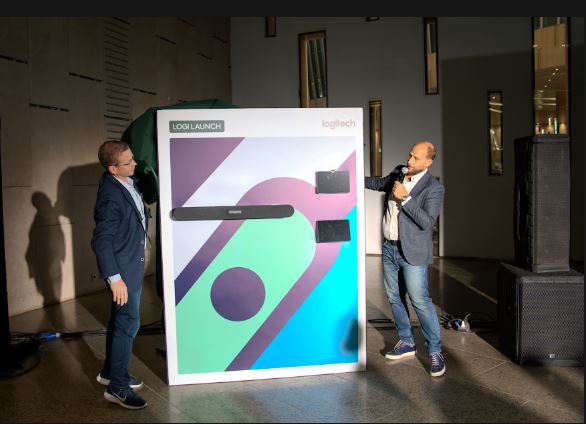
Dubai, United Arab Emirates — October 14, 2026  — Logitech has unveiled the largest enterprise product launch in company history, engineered to equip companies for the AI revolution. Headlined by Logitech Rally Bar 2, Rally System 2 Pro, and Sound Shape technology, the new portfolio brings advanced compute, intelligence and sensing into more workspaces to support the next decade of intelligent collaboration.

“This second generation of smart video collaboration devices is Logitech’s answer to a new, dual mandate for IT: Deliver exceptional meeting experiences today while preparing for an AI-powered tomorrow,” said Henry Levak, general manager of Team Workspace Solutions at Logitech.

Logitech Unveils Its Biggest Enterprise Launch Ever: More Power, More Future-Proofed Rooms for the AI Revolution


“AI-powered workspaces will be most valuable when they make collaboration feel effortless and fit the way organizations actually work,” said Murad Ali, Head of Middle East & Central Asia, Logitech for Business. “For Middle Eastern organizations, where teams often collaborate across cities, countries and cultures, the next generation of intelligent meeting rooms can help every voice be heard, every space work harder, and every meeting feel more connected. Logitech’s new portfolio is an important step toward that future.”

Rally Bar 2: A Market Leader, Reinvented for the AI era

Rally Bar 2 is the successor to the industry-leading Rally Bar, now supercharged by a Qualcomm chipset that offers four times more edge AI processing power than various other video bars on the market.

A custom-designed lens and 1-inch sensor bring stunning visual clarity, and AI-powered Right Sound 3 brings studio-quality audio to meeting rooms. Embedded sensors automate the workplace by booking meetings when people walk in and provide occupancy data to help leaders make informed decisions about real estate.

With its sleek design, Rally Bar 2 can easily be installed by one person in just minutes. It is housed in an aluminum unibody for easier recycling.

Certified for Microsoft Teams, Zoom Rooms, and Google Meet, and built on Microsoft Device Ecosystem Platform (MDEP), Rally Bar 2 merges Microsoft’s enterprise-grade security standards with Logitech’s room intelligence and signature meeting experiences.

Rally System 2 Pro: Mastering Massive Spaces

A chronic pain point for IT is delivering quality, AI-driven meeting experiences in large, multi-purpose spaces–rooms. These spaces may constitute only a fraction of the building but consume the majority of IT effort. Logitech Rally System 2 Pro is a modular new solution that dramatically simplifies multi-vendor setups in complex and divisible rooms, making Logitech a one-stop-shop for all spaces, from small to extra-large rooms.

Introducing Sound Shape: Audio That Defies Expectations

High-value spaces like executive boardrooms and training rooms are historically tricky to outfit with audio. Logitech’s Rally Speaker 2 Pro and Rally Speaker 2 Max house groundbreaking new Sound Shape audio technology. Sound Shape uses focused acoustic beams to precisely direct sound toward listeners throughout the room. The result is evenly distributed sound across a 20-meter (about 65 feet) space–a feat only partially achieved previously by costly and complex ceiling speaker array installations.

Next-generation product highlights:

●    Rally Bar 2: Video bar for medium to large rooms, with next-generation processing power; 4-speaker system, 6 beamforming mics, occupancy detection and environmental sensing.

●    Rally System 2 Pro: Modular video conferencing system for large, complex, and divisible rooms, includes:

○    RoomMate 2 Pro: A Qualcomm-powered compute box running up to three 4K displays, multiple cameras, speakers, and mic pods across Android, PC, or BYOD setups.

○    Rally AI Camera Pro: A dual-camera device combining a wide-angle 1-inch sensor with Logitech’s legendary optical PTZ camera design.

○    Rally Speaker 2: Linear, 7-driver beaming networked speaker delivers the same volume and intelligibility in the back of the room as it does in the front.

○    Logitech Link: Native AV-over-IP tech that links Logitech devices using simple Category cables—no external extender and no PoE injectors.

○    Right Sight 3: Smarter multi-camera tracking that uses multiple wall-mounted or center-of-table cameras and angles to automatically capture the best view of the room.

●    Rally Speaker 2 Pro: Soundbar with 32 micro-drivers evenly distributes sound throughout large rooms via Logitech’s new Sound Shape audio technology.

●    Rally Speaker 2 Max: Soundbar with 64 micro-drivers evenly distributes sound throughout extra large 20m (65-foot) rooms via new Logitech’s unique Sound Shape audio technology.

Also new:

●    Tap IP 2: Brighter, smarter, network-connected meeting room touch controller.

●    Tap Scheduler 2: Room scheduling panel with brighter display, higher-resolution, upgraded compute and built-in motion sensor.

Pricing and Availability

Rally Bar 2, Tap IP 2, and Tap Scheduler 2 are rolling out globally now. Rally System 2 Pro, RoomMate 2 Pro, and the Rally Speaker 2 lineup will be available in Summer 2027. Right Sight 3 camera switching capability will be available in the second half of 2027 as a free CollabOS software update. For more details, please visit www.logitech.comor check with your local or online retailer.