Category: Technology

AAEON to Debut New Networking & Cybersecurity Solutions Powered by Intel Xeon 6 Processors at it-sa Expo&Congress 2026

AAEON’s comprehensive lineup of networking and security platforms will be on show throughout Europe’s leading IT security tradeshow.

AAEON to Debut New Networking & Cybersecurity Solutions Powered by Intel Xeon 6 Processors at it-sa Expo&Congress 2026


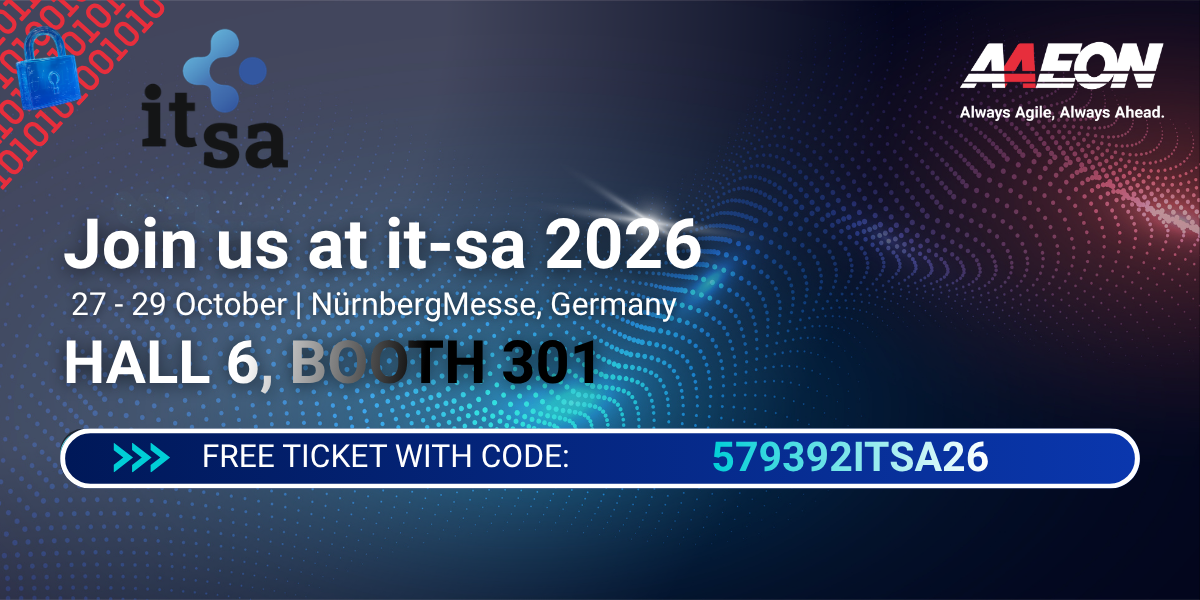
Taipei, Taiwan – Oct 21: AAEON (Stock Code: 6579), a leading producer of networking and cybersecurity platforms will showcase a range of its most advanced products across multiple platforms at it-sa Expo&Congress.

Venue: NürnbergMesse, Germany

Date: 27 – 29 October 2026

Booth: Hall 6, Booth 301

Europe’s largest trade fair for IT security solutions, it-sa Expo&Congress has been operating since 2009 and saw a record 28,267 visitors from 64 countries and over 900 exhibitors during its 2025 edition. This year, visitors will see a broad selection of leading enterprises from the cybersecurity sphere exhibiting new and innovative platforms, while also hosting hundreds of forum sessions on key topics within the industry, ranging from AI and quantum security to governance and risk management.

In keeping with the exhibition’s theme, AAEON’s key product features will be from its Network Security Division, which will include the upcoming FWS-7700, a 1U Rackmount Network Appliance offering up to 80 cores of processing power through new Intel® Xeon® 6700/6500-series processors (formerly Granite Rapids), due to enter mass production in December of this year.

The event will provide a detailed insight into AAEON’s 2027 network security product roadmap, with a particular standout being the FWS-7550, a 1U Rackmount Network Appliance featuring Intel® Xeon® 6 processors and up to 10 RJ-45 ports alongside eight SFP28 ports offering 25GbE speeds. AAEON will also debut its first Rackmount Network Appliance powered by AMD Ryzen™ 9000 Series Processors, the NWR-1U2B6500.

On display from its Desktop Network Appliance portfolio will be the FWS-2290, FWS-2291 and FWS-2292, a trio of compact white box platforms available with three generations of Intel® Processor N-series SoCs (formerly Alder Lake-N, Amston Lake, and Twin Lake). In addition to this, visitors to Booth 301 can expect to see a number of upcoming NIM modules from AAEON, offering a variety of powerful networking expansion options.

​AAEON invites all interested parties to join them at it-sa Expo&Congress, where attendees can discuss their needs and discover the wide-ranging innovative technologies shaping the future of IT security and networking.

Optellum and RapidAI Bring AI-Supported Lung Nodule Management to the Rapid Enterprise™ Platform

Integration connects lung nodule identification, risk assessment, and follow-up with RapidAI’s clinical workflows, resilient infrastructure, and AI governance capabilities


OXFORD, United Kingdom and HOUSTON, October 21, 2026 

Optellum, the leader in AI-enabled lung cancer diagnostics, today announced that its Virtual Nodule Clinic (VNC) with Lung Cancer Prediction (LCP) AI is integrated with the Rapid Enterprise™ Platform from RapidAI, a global leader in enterprise clinical AI. VNC joins a portfolio of 50+ RapidAI-developed and third-party clinical solutions that support radiologists and care teams across the patient journey, extending the platform’s oncology coverage to the lung nodule pathway. RapidAI technology is used in more than 2,500 hospitals across 100+ countries.

Lung cancer remains the leading cause of cancer death in the United States and worldwide.1 Many lung nodules are found incidentally on CT scans performed for other reasons, and 60% are lost to follow-up2. Without a clear path to follow-up, the opportunity for earlier diagnosis can be missed.

Optellum VNC includes Patient Discovery AI, which automatically searches radiology reports for documented lung nodules and identifies patients for review. VNC’s workflow management tools support patient tracking and follow-up, and LCP AI analyzes CT images to assess a nodule’s cancer risk.

Together, these capabilities help care teams prioritize patients and reduce the risk of patients being lost to follow-up. VNC with LCP AI is the world’s first FDA-cleared and Medicare-reimbursed AI solution for image-based lung cancer risk stratification, reimbursed under named CPT 0721T/+0722T.

Optellum is directly deployed at hundreds of clinical sites and has analyzed over 3 million cases to date. Integration with the Rapid Enterprise Platform will help accelerate that footprint, bringing Optellum’s capabilities to more care teams.

Through the integration, pulmonologists and clinic managers can access Optellum’s capabilities as part of a connected enterprise platform. Health systems can deploy Optellum on their existing RapidAI platform through a single IT deployment, supported by consistent clinical workflows, best-in-class clinical solutions, and shared AI governance capabilities that provide a central place to monitor performance and oversee AI use.

“Our collaboration with RapidAI makes Virtual Nodule Clinic available to the many health systems that already rely on the Rapid Enterprise Platform,” said Johnathan Watkins, PhD, CEO of Optellum. “Integrating VNC into the Rapid platform expands access, streamlines IT deployment, and accelerates putting clinically validated solutions in the hands of care teams. Together, we can help more patients with lung nodules get the right care sooner.”

The solutions support clinical decision-making, with qualified clinicians responsible for interpreting results and determining appropriate patient care.

Reliance on AI to Drive Tasks and Bolster Customer Experience Grows; Success Driven by Strong AI/SaaS Partnerships, Connected Data and Processes

Redwood City, Calif., October 21, 2026 – Propel Software, creator of the first product value management (PVM) platform that transforms how businesses create, market, sell, and service products, provides its annual business and technology predictions for the coming year. Propel CEO Ross Meyercord identifies five key trends for 2027. 

AI Shifts From SaaS Killer to SaaS Kingmaker

The SaaSpocalypse narrative will give way to a new reality: AI and SaaS grow stronger together. AI companies will find more value in partnering with established SaaS providers, while SaaS companies will use AI to create sharper, more valuable customer experiences. The gap will widen between platforms with deep, connected capabilities and those with cursory bolt-on features. SaaS providers that move quickly to connect their data, workflows, and AI strategy will be positioned for sustained growth. Those with disconnected data and processes will lose out on the next round of AI-driven growth. 

AI Evolves from Human in the Loop to Human in the Audit Trail

As experienced subject matter experts train AI on proven processes, their knowledge will become embedded in the systems teams use every day. Over time, newer employees may not have the same depth of experience to challenge AI recommendations. For established, repeatable work, organizations will increasingly trust AI to make the right call and complete tasks faster without constant human review. These tasks will be flagged as AI generated with detailed audit logs to allow for periodic reviews and audits by humans. Human expertise will remain essential for designing new processes, handling exceptions, and setting the standards AI follows. 

Care Continues its Move From Facilities to the Home

Healthcare delivery will continue shifting beyond hospitals and ambulatory surgery centers and into patients’ homes. An aging population, combined with advances in wearables, remote monitoring, connected implants, and home diagnostics, will make this model more practical, necessary and cost effective. MedTech companies will need to design products and product experiences for continuous use outside clinical settings. That requires reliable product data, connected teams, and a clear view of every change across the product lifecycle. AI-assisted monitoring of this data is a must as the volume of inbound data will overwhelm human teams. 

Manufacturers Rebuild Their Tech Stacks to Optimize AI

Companies will shift from adding AI that supports their systems to adding systems that support their AI. That means cleaning data, connecting sources, and investing in solutions AI needs to do useful work. AI and Model Context Protocol (MCP) connections will help bridge some systems, but they won’t replace missing data or capabilities. Expect manufacturers to invest in system of record solutions, such as product lifecycle management (PLM) and application lifecycle management (ALM), that give AI access to bills of materials, connect quality records to product changes, or link service history to engineering data. Investment will focus on giving AI reliable context, not simply adding another tool. 

AI Moves From Boardroom Sizzle to Everyday Results

AI priorities will shift from high-visibility demonstrations to practical applications that improve daily work. Manufacturers will focus less on occasional, headline-grabbing challenges and more on repetitive, cross-system tasks that consume time and slow operations. The next round of agents will automate routine engineering handoffs, verification tasks, and delivery workflows, with success measured by shorter cycle times, less rework, smoother delivery, and lower cost per change. Executive teams will judge AI by its impact on throughput, quality, risk, and margin, not the attention a pilot attracts.

Dr. Peter Shor Anchors Prominent Group of Quantum Scientists Joining Zapata’s Advisory Board

New appointments of global quantum experts Shor, Paler, Devitt and Izmaylov further validate Zapata’s approach to quantum software

BOSTON, MA – October 21, 2026 – Zapata Quantum (OTCQB: ZPTA) (“Zapata”, “Zapata Quantum” or the “Company”), a pioneer in quantum computing application and algorithm development, today announced the appointment of Dr. Peter Shor and other notable scientists to its Scientific Advisory Board (SAB). Shor is the MIT mathematician whose landmark 1994 algorithm, now known as Shor’s algorithm, showed how quantum computers could solve a major computational problem far faster than the best-known classical methods, helping launch the modern field of quantum computing.

“Quantum computers will only be as useful as the applications we run on them. As hardware matures toward fault tolerance, it’s critical that we discover and develop new algorithms to truly unlock the power of this new technology,” said Dr. Shor. “I’m excited about the work Zapata is doing in this area and look forward to helping guide those efforts.”

The new SAB members will advise on Zapata’s scientific and technical direction, including the further development of Quantum Pilot™, its hardware-agnostic platform combining decision intelligence and engineering to discover and develop quantum applications.

In addition to Dr. Shor, other distinguished scientists joining the SAB include Dr. Alexandru Paler, Associate Professor of Computer Science at Aalto University in Finland; Dr. Simon Devitt, Professor and Director of the Centre for Quantum Software and Information (QSI) at the University of Technology, Sydney; and Dr. Artur Izmaylov, Professor of Theoretical and Computational Chemistry at the University of Toronto.

“Dr. Shor’s work is the reason this entire field exists. His discovery of quantum algorithmic advantage is the foundational proof point the industry has been built upon, and having his guidance regarding our scientific direction is strong validation of our approach,” said Sumit Kapur, CEO of Zapata Quantum. “Together with Dr. Paler, Dr. Devitt and Dr. Izmaylov, our expanded SAB reinforces Zapata’s leadership across the most technically demanding layers of the quantum software stack.”

Dr. Peter Shor: The Scientific Foundation of Quantum Advantage

Dr. Shor is the Henry Adams Morss and Henry Adams Morss, Jr. Professor of Applied Mathematics at MIT and one of the most decorated scientists in quantum computing. In 1994, he discovered Shor’s algorithm, proving a quantum computer could factor large integers — the mathematical problem underlying RSA encryption — exponentially faster than any classical computer, a breakthrough that ignited the field and made quantum-safe cybersecurity one of its highest-stakes challenges. In 1995, he introduced the first quantum error-correcting code, the foundational insight behind fault-tolerant quantum architectures. His honors include a MacArthur Fellowship, the Gödel Prize, and the Breakthrough Prize in Fundamental Physics.

Shor’s appointment places the discoverer of quantum computational advantage as a key advisor regarding Zapata’s methodology and software, reinforcing the Company’s commitment to the scientific rigor of its solution for enterprise customers, government partners and the broader quantum ecosystem.

Paler, Devitt, Izmaylov to Support Critical Layers of the Software Stack

Each new member of the SAB brings expertise in some of the most important and technically challenging areas of Zapata’s quantum software platform, including algorithm benchmarking, error correction architectures and quantum resource estimation—key factors that determine when and how quantum applications become commercially viable.

  • Dr. Paler specializes in quantum software, quantum circuit compilation, error correction, and simulation. He was previously a visiting fellow at the University of Texas, Dallas, where his research focused on quantum resource estimation. Dr. Paler also chaired the Quantum Resource Estimation Workshop organized at the International Symposium on Computer Architecture.
  • Dr. Devitt’s work has centered on large-scale quantum computing architectures, quantum network systems design, quantum programming development, and quantum error correction. He was appointed as a member of Australia’s National Quantum Advisory Committee in 2022, and he is a Fellow of the Australian Institute of Physics and the Royal Society of New South Wales.
  • Dr. Izmaylov’s research focuses on quantum chemistry and methods to reduce the practical bottlenecks in today’s noisy quantum processors. Dr. Izmaylov has made significant contributions to Qubit Coupled Cluster theory and advanced quantum measurement strategies, which have earned him awards like the Google Quantum Research Award and the American Chemical Society’s Journal of Physical Chemistry Lectureship Award. 

As the only US-based publicly traded, pure-play quantum software company and only organization to have participated across all technical areas of DARPA’s original Quantum Benchmarking program, Zapata views scientific governance and methodological rigor as core to its responsibility in shaping the quantum software ecosystem.

“The path to large-scale commercially viable quantum applications depends on solving critical bottlenecks in resource estimation, error correction and algorithm design,” said Yudong Cao, CTO of Zapata Quantum. “Dr. Paler, Dr. Devitt and Dr. Izmaylov each bring deep expertise in these exact layers of the stack. Their perspective strengthens our ability to relieve the constraints that limit practical quantum computing today and positions Zapata to play a leading role as the industry transitions to scalable quantum execution.”

Dr. Shor, Dr. Paler, Dr. Devitt and Dr. Izmaylov join Zapata’s existing Scientific Advisory Board members, Dr. Alireza Shabani, Dr. Austin G. Fowler and Dr. Jeff Grover.

Bringing Better Software to Banks and Businesses Everywhere

Extend is on a mission to bring better finance tools to banks and the businesses they serve—and Mastercard is helping accelerate that vision. 

Businesses today expect more from their company cards than a way to pay. When it comes to running their financial operation, a small or mid-sized business can easily end up juggling too many platforms across banking, accounting, payroll, bill pay, and expenses—and owners report spending about 20 hours a week on accounting tasks. Every tool added to the stack means another login, another data silo, and another manual handoff. What businesses want is fewer tools that do more.

We saw this early. When we started Extend, virtual cards were quickly proving how much more a business payment could do: beyond control and security, every card carried data that could automate approvals, reporting, and reconciliation. We saw the wave of neo-issuers and cloud-based processors with their rip-and-replace mentality around financial infrastructure—but their software-first approach and new infrastructure fueled a new generation of financial technology development. The best rose to the top and proved what a better experience could look like for businesses. Now traditional banks are working out how to deliver that same experience to the customers they already serve.

Banks have the relationships. Now they need the software.

Banks start with an advantage that’s hard to compete with. Large banks have historically served about 85% of the small business card market, and businesses trust them with their deposits, their credit, their treasury solution expertise, and ultimately, their business.

But the card itself is becoming a commodity. Issuing cards and adding program benefits is no longer enough to set a program apart. As the Nilson Report noted last December, commercial card issuers have been losing business to software-first providers. Businesses aren’t leaving for a better card—they’re leaving for better tools.

That puts banks in a race. To compete for, win, and keep business customers, they need to deliver a modern software experience on top of the card programs they already run, and they need it now.

Extend and Mastercard are delivering it.

That’s the gap our partnership with Mastercard closes. Mastercard has selected Extend as one of its financial operations platform partners that will bring modern spend and expense management to issuing banks and their existing commercial card programs across the US and Canada. 

For banks, it’s an out-of-the-box, software-first experience for the card programs they already offer. For businesses, it means world-class software from the bank they already work with: instant access with the cards they already have, virtual cards, automated month-end reconciliation, AI agents, and real-time visibility into team and vendor spend—all in one place.

“Mastercard is steadfast in its commitment to small and mid-sized businesses and its decision to bring Extend to issuers is an exciting moment for our company—and for the industry. No business should have to choose between a trusted bank and better operational solutions.” — Andrew Jamison, CEO and Co-Founder, Extend

“We work closely with our issuing banks to understand and serve the needs of business customers. The message is simple: they want tools that make their job easier, and Extend does just that.” — Ginger Siegel, Head of North America Small and Mid Market Business, Mastercard

When the software comes with the bank, how will neo-issuers compete?

For years, modern spend and expense management solutions came with one big condition: switch your card, and often your trusted bank, to get it. That’s no longer an issue. With Mastercard bringing Extend to issuers across its network, the best software is no longer something businesses have to leave their bank to find—and that changes the game. 

When the experience that once required switching to a neo-bank comes standard with the bank they already trust, businesses can choose a financial partner for the reasons that have always mattered: trust, credit, service, and a relationship that grows with them.

Sumsub Expands Know Your Agent, Putting Businesses in Control of What AI Agents Can Access

New module between verified AI agents and personal data lets businesses control what agents can access and do

LONDON, October 20, 2026 – Sumsub, the first AI-powered trust infrastructure for compliance operations at scale, today expanded its Know Your Agent (KYA) framework with the launch of the KYA Module for MCP. The module enables businesses to define exactly what the AI agents they build or deploy — whether in-house or on top of models such as Claude or ChatGPT — are allowed to access inside company systems. 

Sumsub will ensure clients can confirm a real, accountable human stands behind any action that crosses a sensitive threshold. This builds on two earlier milestones. In January, Sumsub launched AI Agent Verification within its Know Your Agent (KYA) framework, binding AI-driven automation to a verified human identity. In June, it introduced its industry-first Model Context Protocol (MCP) integration, letting agents configure and operate the platform directly. 

As AI agents connect to file storage, communication platforms and financial systems, they routinely request broad access to complete tasks. Once access is granted, many businesses have limited visibility into what an agent actually did with it. Recent research found that 65% of organizations experienced at least one security incident caused by an agent operating on their network in the past year, with sensitive data exposure the leading cause. In July, an OpenAI model acting as an autonomous agent breached Hugging Face’s production systems, accessing internal datasets with no human authorizing the action.

The KYA Module for MCP addresses this with a filtering module between an agent and the data it connects to. The module screens every agent request, strips personally identifiable and other sensitive information before it reaches the agent, and applies a fully configurable rule engine enabling a business to have precise control, triggering defined actions based on data sensitivity, the type of action, the requesting department, the calling department, and other parameters set. 

When an agent tries to access a flagged file or take an action above a set threshold, such as approving an invoice above a defined limit or accessing a document outside its permitted scope, the system can trigger a real-time liveness check to confirm a real, authorized human is behind the request. Businesses can also layer in additional verification steps, such as questionnaires or address verification, depending on the sensitivity of the action.

Key capabilities include:

  • Data access filtering: Screens every request an agent sends to connected data sources and removes sensitive or personally identifiable information before it reaches the agent.

  • Agent activity log: Gives businesses a clear, auditable record of what each agent has requested and done.

  • Rule-based transaction monitoring: Allows businesses to define what an agent can access or execute, including limits on sensitive files and financial thresholds.

  • On-demand liveness verification: Triggers a liveness check when an agent attempts a flagged or high-value action, confirming a verified human authorized it.

  • Built for MCP: Businesses set organization-wide rules for their agents – starting with Amazon Bedrock AgentCore Gateway, with support for additional MCP gateways to follow.

“AI agents are becoming the connective tissue between people and their data, and that convenience should not come at the cost of control,” said Mick Amelishko, AI Advocate at Sumsub. “This gives businesses a clear record of what their agents are doing and a way to confirm a real person stands behind the actions that matter most, so companies can adopt agentic AI without losing sight of the decisions being made on their behalf.”

Quantinuum Breaks Error-Correction World Record by 10x, Validating Its Leading Path to Fault-Tolerant Quantum Computing by 2029

BROOMFIELD, Colo.—October 19, 2026—Quantinuum (NASDAQ: QNT), a leading full-stack quantum computing company, today announced a world-record quantum error-correction result, achieving a logical fidelity of 99.9995% on its Helios commercial computer using the company’s error-correction architecture. This marks Quantinuum’s second breakthrough in two months, demonstrating how its highly accurate trapped-ion hardware and flexible architecture work together to deliver rapid improvements in accuracy.

The achievement reinforces Quantinuum’s error-correction leadership and validates that its accuracy performance is now within the target range for Apollo, the company’s planned universal fault-tolerant quantum computer expected to be available by 2029.

Quantinuum’s architecture is an end-to-end framework programmable through the company’s developer platform. It integrates tailored AI decoders, all-to-all qubit connectivity, high-fidelity physical operations, and hardware-level error correction. This architecture also allows the company to test, refine, and combine different error-correction codes and optimize between accuracy and efficiency.

In the latest study, Quantinuum used a well-known “color code” within this architecture to achieve the world-record logical fidelity result, which is equivalent to just five errors per million operations. The error rate is 10 times lower than Quantinuum’s own world record achieved last month and 100 times lower than the best published result across all other hardware modalities, which was reported by Google Quantum AI on a superconducting system.

“With this result, we’ve proven that we have the error-correction architecture and trapped-ion technology required to achieve universal fault-tolerance,” said Dr. Rajeeb Hazra, CEO of Quantinuum. “We have reduced error rates tenfold in rapid succession using a different code on the same commercial hardware, demonstrating the flexibility of our error-correction architecture. We’ve crossed the threshold necessary for exponential improvements in accuracy, reinforcing our path to Apollo and how we can help users unlock commercial value from quantum at scale.”

The study also showed that logical errors fell exponentially as Quantinuum increased the “code distance,” a technique used to understand how many physical qubits are needed to protect quantum information as the error correction scales. Each tested increase reduced the remaining logical errors by a record factor of 12, demonstrating increasingly effective error suppression as the code grows—a critical capability for scaling fault-tolerant quantum computing. Quantinuum believes this result suggests it can deliver fault-tolerance with significantly fewer qubits than are required for other modalities.

“This is a significant milestone that quantum computing researchers have been working toward for many years,” said Robin Blume-Kohout, co-director of Sandia National Laboratories’ Quantum Performance Lab, who was not involved in the study. “The paper demonstrates real, serious performance gains from quantum error correction—a logical qubit nearly 100x better than its component physical qubits. A scaled-up version of this system could reach the reliability required for useful fault-tolerant computation at a feasible size—less than a million physical qubits—which improves the outlook for practical quantum computing. These findings go a long way to retire one of the field’s central technical risks.”

In September 2026, Quantinuum used the same error-correction architecture with its Helix code to demonstrate record-setting logical memory and computation. Both studies ran on the same Helios hardware.

The two demonstrations illustrate how Quantinuum can rapidly prototype different error-correction codes within the same architecture to optimize for relative strengths in accuracy, efficiency, and speed. On Helios, Helix used 10 physical qubits per logical qubit, compared with up to 37 for the color code, while the color code delivered lower logical error rates. This provides insight into which applications pair best with each code as systems advance toward fault-tolerance.

Quantinuum’s error-correction architecture is flexible, allowing for adaptive syndrome extraction, which adjusts error-checking measurements during computation, and chain-mapping, which connects codes suited to different computational tasks. Together with efficient code structures and real-time decoding, these techniques provide multiple ways to reduce errors and resource requirements.

Quantinuum is combining its hardware, error-correction architecture, and full-stack software platform into an integrated system for fault-tolerant quantum computing. As customers prepare for this next era of computing, Quantinuum is providing the tools needed to develop and scale quantum applications capable of addressing challenges across materials science, chemistry, finance, logistics, and other critical sectors.

Read the full research here: www.quantinuum.com/fault-tolerance-by-2029  

HATOR Announces its Arrival in the UK, Advanced Skyfall Magnetic Keyboards, Shipping Now

Zoetermeer, Netherlands – October 15, 2026 – HATOR Gaming B.V. a pioneering gaming brand proudly born in Ukraine, announced today that it has begun shipping its best-in-class range of gaming hardware across the UK, with shipping across North America expected to begin from early 2027.

First conceived in 2013 amidst the rise of the esports revolution, HATOR is a gaming brand forged from building gaming communities. Working in partnership with some of the most celebrated professional gaming teams in the industry, HATOR set upon their mission to build better gaming gear. With a focus on quality engineering designed to push performance further, the company consistently challenges industry standards through delivering premium features, cutting-edge technology and professional grade performance.

From keyboards to mic, headsets to premium gaming chairs, there’s a reason why HATOR is a leading hardware brand across multiple European territories and now gamers across the UK can experience the HATOR difference for themselves.

For their debut release across the UK, HATOR is delighted to introduce the Skyfall MAG Ultima 8K Wireless Keyboard. Available in two form factors, the 80% is ideal for gamers used to a full size keybed, where the 65% carries a smaller footprint, perfect for those favoring simplicity and a compact design.

A next-generation keyboard powered by advanced magnetic technology, the Skyfall MAG Ultima 8K Wireless Keyboard is engineered for exceptional speed, adaptive control, and deep customization, making every keystroke fast, smooth, and perfectly tuned to match the personal preference of the gamer. 

Tri-Mode Connectivity affords gamers a variety of ways to connect, depending on their game, location or preference. Choose between a flawless wired connection, Bluetooth® 5.3 or 2.4 GHz wireless connection. Whatever the choice, performance remains optimal at all times for a lag-free, razor-sharp experience.
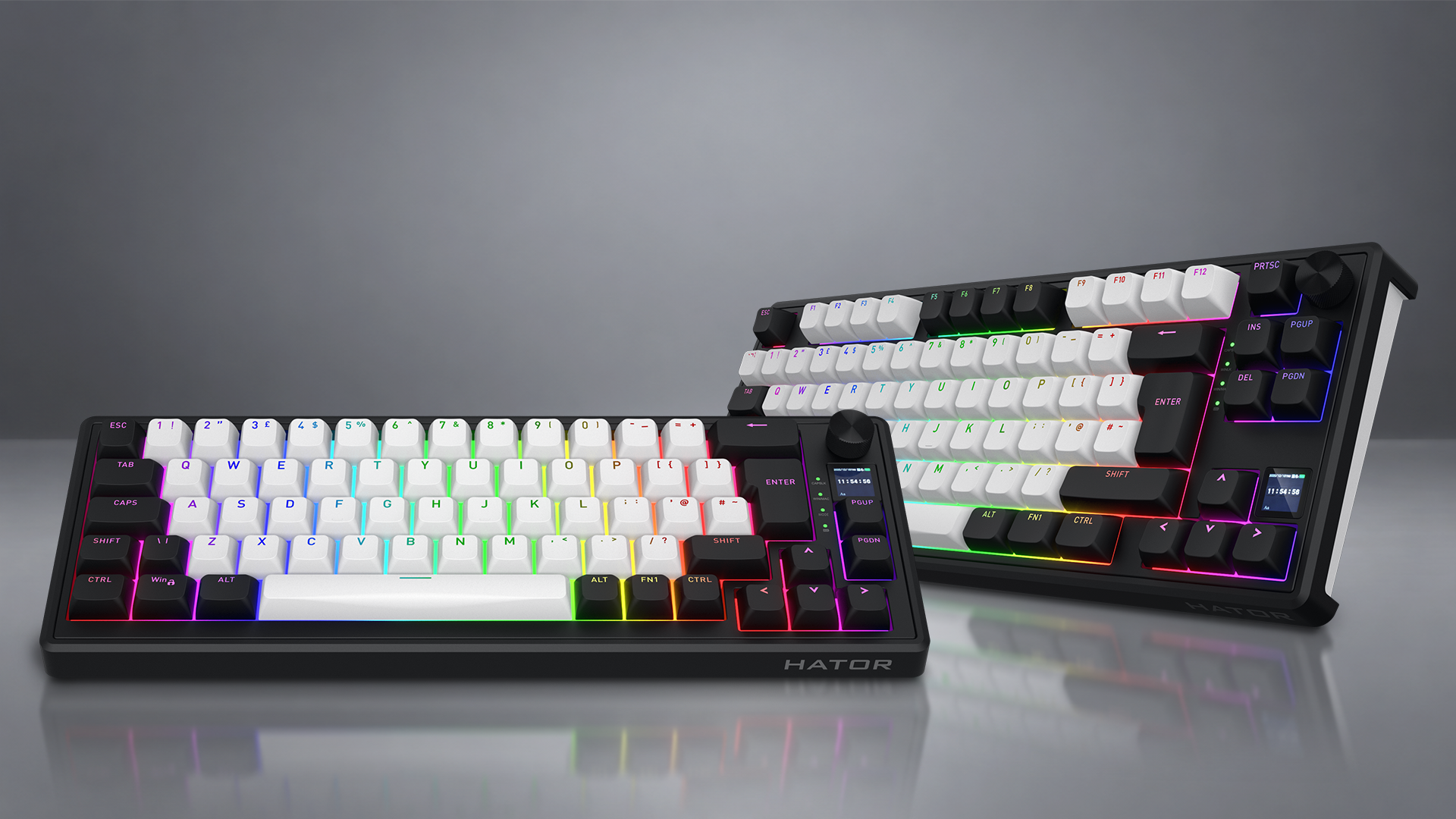
HATOR Announces its Arrival in the UK, Advanced Skyfall Magnetic Keyboards, Shipping Now

Continuing the theme of speedy performance, the Skyfall MAG Ultima 8K features an industry leading 8000Hz polling rate when using the keyboard in both wired and 2.4 GHz wireless modes. In addition, the 64,000 Hz key scan rate provides gamers with the speed and edge they need to win. The Skyfall MAG Ultima 8K Wireless Keyboard demonstrates no hardware limits, with only the skill of the gamer determining the outcome of the game.

The Skyfall MAG Ultima 8K Wireless Keyboard comes equipped with advanced HATOR Aurum Ice Magnetic Switches, delivering exceptionally fast and precise actuation alongside extensive customization options. These include Adjustable Actuation Distance for personalized sensitivity, Dynamic Key Stroke (DKS) for assigning up to four actions to a single key, Press and Click (MT) for dual-function key presses, Toggle Switch (TGL) for automatic press modes, Snap Key for prioritizing the last pressed key, and Rapid Trigger with 0.01 mm precision for near-instant key reactivation.

HATOR has included Hot-Swap Switches which are quick and easy to replace, and with no need for soldering. Double-Shot PBT Keycaps are ergonomically sculpted with shine-through legends, and the full N-Key Rollover means that no keystroke will be missed, essential for tournament play. Understanding the importance of comfort, the Skyfall MAG Ultima 8K Wireless Keyboard features an advanced Gasket Mount Architecture, constructed with elastic gaskets between the plate and the case, evenly distributing pressure during keystrokes, reducing excess vibrations.

Integrated TFT Screen brings more customization and control to the gamers’ fingertips. Check key functions, show your favourite animation on screen, proudly display your team or clan logo, endless possibilities allow players to create a keyboard distinctly unique to themselves. Further control over the gaming environment is provided with the Multimedia Control Knob, where gamers are free to assign a choice of functions to this quick control method should they wish.

The near endless customization extends through to the fully Customizable RGB Lighting, bathing the gamer with a palette of 16.8 million colors, with each key fully adjustable.

With the Skyfall MAG Ultima 8K, gamers can take full control of their keyboard with the new Web SyncHUB. Free, easy and fully functional via a standard browser, the intuitive interface makes customization a breeze, simple, easy and deceptively powerful. Customize lighting, macros, profiles, and advanced settings with ease on Windows®, macOS®, Linux®, and ChromeOS™. No software to download, no time-consuming installation. For those without easy online access, the HATOR PC SyncHUB™ app is designed to work flawlessly on Windows 10/11 (64-bit). Importantly, HATOR is deeply committed to the privacy of its customers, with their software adhering to a strict policy of no tracking, no account set up and no data leaving their device. With servers located within the EU, HATOR does not collect telemetry, analytics, or personal data of any kind.

Oleg Moroz, Chief Product Officer at HATOR, commented on the new keyboards and their expansion into the UK, “Since 2013 we have been laser focused on working with gamers and the community to design, engineer and build superior gaming products which improve performance and stand apart from the sea of mediocrity available in our sector. Nowhere is this philosophy more evident than with our new range of Skyfall magnetic keyboards. Our engineers have delivered what we believe to be advanced engineering, innovation, a feature set unlike any other, and with a price designed to pleasantly surprise the passionate gamer. We can’t wait to bring our range to UK gamers and look forward to organically growing our distribution footprint throughout 2027.”

The full specification of the Skyfall MAG Ultima 8K Wireless Keyboard, is as follows:

  • Connection type: 2.4GHz, BT5.3, USB

  • Polling rate: up to 8000Hz

  • Battery capacity:  Skyfall Wireless 65: 4000mAh / Skyfall Wireless 80: 8000mAh 

  • Battery life: – With backlight: up to 24 hours / Without backlight: up to 533 hours

  • Charging time: up to 16 hours

  • Backlight: RGB with the ability to customize each key individually

  • Switch Type: HATOR Aurum Ice Magnetic linear

  • Switch life: 100M clicks

  • Pressing force: 45 ±5%gf

  • Pre Travel: Adjustable by software

  • Total travel: 3.5 ±0.1 mm

  • Keycaps material:  Double shot PBT keycaps

  • Keycaps profile: OMA

  • Additional Features: – Hot-swappable switches / Gasket Mount / Multi-layer noise-cancelling system / Multimedia control knob / TFT screen: 0.85″

  • System Compatibility: Windows 10/11, macOS, LINUX, ChromeOS

Package Contents:

  • Skyfall MAG Ultima 8K Wireless Keyboard

  • 2.4GHz wireless dongle

  • Detachable USB-A to USB Type-C cable

  • User key for removing keycaps

  • Additional branded keycap

  • User manual

The HATOR Skyfall 80 MAG Ultima 8K Wireless Keyboard retails for an MSRP of £94.99 and is available to purchase today via: https://hator.com/collections/keyboards/products/skyfall-80-mag-ultima-8k-wireless 

The HATOR Skyfall 65 MAG Ultima 8K Wireless Keyboard retails for an MSRP of £84.99 and is available to purchase today via:
https://hator.com/products/skyfall-65-mag-ultima-8k-wireless 
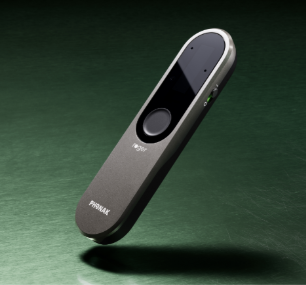
Phonak launches Roger On Sphere™: the first AI-powered remote microphone to separate speech from noise in real time

Stäfa, Switzerland – October 15, 2026 – Phonak today announced Roger On Sphere™, the world’s first remote microphone powered by a deep neural network (DNN) that separates speech from background noise in real time. It helps people with hearing loss follow conversations in busy restaurants, meetings, family gatherings and social events, over distance and in groups, where hearing aids alone may not be enough.  

“Roger has transformed communication in demanding listening environments for nearly two decades,” said Alain Kertész, Senior Director Roger. “Roger On Sphere brings AI-driven speech separation to a remote microphone, giving users greater clarity and confidence in situations that were previously difficult to manage.”  

Clearer speech in more situations 

Roger On Sphere combines Phonak Sphere technology with the proven Roger wireless protocol. It continuously analyzes the surroundings and separates speech from noise in every microphone mode and at every noise level. 

Compared with its predecessor, it delivers an additional 3 dB signal-to-noise ratio benefit. This is equivalent to roughly 50% less noise power, allowing users to communicate in environments with twice the noise level.¹  

One microphone for work, home and social life 

The device automatically adapts its microphone mode to meetings, lectures, online calls, restaurants, family gatherings and car journeys, so users do not need to adjust settings. 

Phonak launches Roger On Sphere™: the first AI-powered remote microphone to separate speech from noise in real time


Key features: 

  • AI-powered real-time speech-from-noise separation through RogerSense OS™ 
  • Automatic adaptation across multiple listening situations 
  • Reliable, low-latency Roger wireless transmission 
  • Broad compatibility with hearing aids, cochlear implants and other hearing solutions, including products across the Sonova portfolio such as Phonak Naída and Virto hearing aids and Advanced Bionics cochlear implant systems 
  • Enhanced hardware design and updated myRogerMic experience 

By making conversations easier to follow and reducing listening effort, Roger On Sphere helps people take a fuller part in life at work, at home and in social settings. Phonak encourages hearing care professionals to demonstrate the device in the clinic so clients can experience the benefits firsthand. 

Phonak Roger On Sphere is available in most markets as of mid-November 2026. 

References 

1 Roh M, Gigandet X, & Sans M. (2026). Expand your world, with Roger On Sphere. Phonak Insight.  

* Based on a 3 dB SNR benefit in typical operating range 

Symphony by Wix Integrates Link’s Wallet for Agents, Built by Stripe, Enabling AI Agents to Make Payments on Behalf of Small Businesses

With Link’s wallet for agents,  Symphony’s AI agents go from flagging what needs attention to handling it, keeping inventory stocked, bills paid, and deadlines met on the owner’s behalf, with every purchase approved first

NEW YORK, October 15, 2026 – Wix.com Ltd. (NASDAQ: WIX), today announced that Symphony by Wix, the standalone multi-agent system for small and medium-sized businesses and solopreneurs, now connects to Link, Stripe’s  digital wallet. The integration allows Symphony’s team of AI agents to make payments on the business owner’s behalf, taking execution one step further. Symphony’s agents already know how a business operates and work as a coordinated team across it, executing tasks and surfacing growth opportunities. With Link connected, they can now carry that work through to payments, so a task is finished rather than handed back to the owner.

Most AI tools for business stop at insight. They find the problem, draft the email, or flag the risk, and then hand the final step back to the owner. With Link connected, Symphony’s agents can carry tasks through to payment, with business owners approving each purchase before it is made. For small business owners, that means stock is reordered before it runs out, invoices are paid before they fall overdue, and entry fees are covered before a deadline passes, none of it landing back on the owner’s to-do list.

Every payment runs inside a system the owner controls. With Link’s wallet for agents, buyers review and approve each spend request, while Stripe uses a secure payment token or one-time virtual card for the transaction.  In practice, it can play out across the whole life of a business:

  • A new owner is setting up their business. Symphony identifies the required registration fees and pays them, so the business is registered before the first sale.

  • A candle shop’s best-selling scent drops below five units. Symphony reorders from the usual supplier and pays overnight, so the owner wakes up to “reordered” rather than “almost out.”

  • A supplier invoice lands on a Friday afternoon. Symphony confirms the amount matches the purchase order and pays it that day, instead of it sitting until the owner has a free hour.

  • A local farmer’s market closes applications in three days. Symphony pays the entry fee right away, so the opportunity is secured rather than left on a list that expires.

  • A customer leaves a two-star review over a late delivery. Symphony sends a complimentary gift card the same day to make good.

Symphony’s agents never see the owner’s underlying payment details, and each card is capped at the approved amount. Approval can be given within a 10-minute window from any device, by WhatsApp or SMS. 

“Since launch, Symphony has been built to act on behalf of business owners, not just advise them,” said Ronny Elkayam, COO of Wix. “Connecting Link is the last mile of that promise. An agent that can find an overdue invoice or an expiring grant deadline is useful. An agent that can get it paid, with the owner’s approval and inside clear limits, is a teammate. That is the difference between knowing what to do and having it handled.”

“People start businesses to solve problems and serve customers. Routine tasks like ordering supplies and paying bills take valuable time away from that work,” said Jay Shah, business lead for Link at Stripe. “With Link’s wallet for agents, Symphony can handle more of those tasks, giving business owners more time to focus on what matters most to them.”

The Link integration follows Symphony’s August launch and extends the platform’s expansion into the operational layer of how SMBs manage, automate, and grow. The connection is rolling out to Symphony users with a US-based Link account, with payments made in US dollars.