Category: interview

Archer Chiang, Founder and CEO at Giftpack shares his views on Workplace Gifting Gone Wrong

corporate gift

In an interview with Business News This Week (BNTW), Archer Chiang, Founder and CEO at Giftpack shared his views on corporate and holiday gifting strategies, challenges, and many more…

BNTW: What do people get wrong about workplace holiday gifting?

Many people overlook the importance of giving a thoughtful gift, especially in the workplace. This results in them gifting something that is clearly last-minute, generic, and not very thoughtful. We’ve all seen it and felt the uncomfortable reactions during a bad gift-exchange. Gifting is an important activity in many cultures for building relationships, showcasing thoughtfulness, and demonstrating a sense of understanding your coworkers as individuals.

In short, it all comes down to two things: the giftee and the gifter. Employers often incorrectly place the emphasis of their communications and actions on encouraging widespread participation in sending a gift rather than sending the right gift. That’s why most of the time, employees receive the same gifts, in bulk – the gift will not be appreciated, and employees will be disappointed, in bulk. The intentions and symbolism, not value or existence, of the gift itself is what is so important and often missed in corporate gifting practices.

BNTW: Why is this bad, and what goes wrong when a bad gift is given/received?

When a bad gift is given, not only is there a missed opportunity to build a stronger team culture, but feelings like resentment and awkwardness can fester making employees feel detached from their work and peers. A coworker leaves this experience disappointed they received a bad gift – a generic, ill-fitting hoodie or a water bottle that will sit on a shelf unused – and now is expected to go above and beyond for their employer, who clearly didn’t do the same for them.

Employees under these emotional conditions are likely to burn out, experience declines in performance, and look for another job. More than how it impacts one individual, a damaged team relationship can create discomfort, a decrease in team participation, and impact activities like creative brainstorming which requires trust and teamwork. The goal of Giftpack is to eliminate these pitfalls, ensuring gifts are meaningful and well-received.

BNTW: How does Giftpack address corporate and holiday gifting challenges?

Giftpack AI helps companies like Meta, Google, Zappos, and 1,400 others create better relationships with their workers through efficient and impactful personalized gifting. It’s a simple process – a recipient is issued a personality quiz to understand interests, personality, traits, preferences, behaviors, and more. Our AI compiles every gift in a 3.2M product catalog under the determined budget and then presents options aligned with the individual’s personality.

The company takes gifting, a project that typically takes hundreds of hours and countless resources, to a task of only a few minutes. 59% of employees said they would stay at their jobs longer if they received good gifts regularly, and gift recipients through Giftpack reported a 31% increase on talent retention.

BNTW: What impact has this had on improving the corporate reputation of organizations?

Giftpack has significantly enhanced corporate reputations. Thoughtful gifting showcases a commitment to employee well-being, creating a positive sentiment that resonates both internally and externally. Using Giftpack has saved companies 47 minutes per employee on the onboarding process. Additionally, there was a 57% boost in employee morale and engagement after using our unique gifting experience. Over three-quarters (83%) of our clients found our gifting generated positive measurable ROIs.

BNTW:  In what ways does this improve company culture or morale within a team?

Personalized gifts have been found to boost morale, foster a sense of belonging and appreciation, and demonstrate understanding and acceptance. This contributes to a positive company culture, strengthening team bonds and employee engagement. Additionally, recognition is a strong tool for rewarding team members with outstanding performances. Keeping employees motivated, engaged, and happy is crucial for a company to operate at its best.

BNTW: Why do so few companies and managers participate in gifting?

Companies are starting to participate in gifting more as the competition for talent retention increases in intensity. A reported 95% of companies send corporate gifts at least once a year, and 87% of companies set aside specific budgets for gifting programs. The issue is that many employers invest substantial time and resources without a clear understanding of the goals they aim to achieve through gifting. This means that a large percentage of the companies sending corporate gifts are doing it wrong, and the budgets allocated for these programs are larger than they need to be.

Without well-defined objectives, these initiatives become empty gestures rather than strategic tools for enhancing employee engagement and satisfaction. Companies often lack a structured approach to their gifting efforts, leading to wasted resources like time, peoplepower, and money. They fail to leverage technology to increase the efficiency of this important HR project.

BNTW:  Does gifting strategy change for remote work companies vs. in-office or hybrid teams?

Gifting challenges are more pronounced in remote work settings, which makes their impact even stronger – positive and negative. Physical distance creates a sense of detachment, making it easy for employees to burn out and feel disconnected from their job and peers. In contrast, in-office or hybrid teams benefit from more immediate, face-to-face interactions, naturally fostering a sense of culture of appreciation. Gifting is an easy way to create touchpoints between team members to remind them they are valued even in remote or hybrid settings.

BNTW: Is there anything else you’d like to add?

It’s crucial to recognize that AI should complement, not replace, human involvement. In fact, AI should be used to compound the impacts of human engagement among team members and colleagues. Giftpack empowers individuals to create genuine connections through thoughtful gifting, putting people at the heart of AI.

Exploring the Role of Comedy in Content Creation: An Interview with Dr. Prachetan Potadar

Dr. Prachetan Potadar

Q: Dr. Prachetan, you have an academic background in electronics & telecommunication, media management, and an MBA in project management now the recipient of 2 Honorary Doctorates in Media management. How did you transition into the world of comedy and content creation?

A: It’s an interesting journey, indeed. While pursuing my academic qualifications, I discovered my passion for creative expression and storytelling. I started exploring different avenues to channel my creativity, and eventually found my way into comedy and content creation. It was a natural progression for me, as I realized the power of humor in communicating realities and engaging audiences.

Q: Your popular e-book “meri kavita mere liye” features a comic poem titled “main beemar tha” that delves into black humour. Can you shed light on your approach to using comedy to express deeper realities?

A: Absolutely. Comedy has this unique ability to shine a light on the darker aspects of life in a way that allows us to reflect and find humour amidst the challenges. “Main beemar tha” is a prime example of using black humour to explore the ironic and absurd elements of our existence. It serves as a satirical commentary on the human condition, prompting readers to ponder deeper meanings while sharing a laugh.

Q: How do you incorporate comedy into your role as an Advertising Creative Director?

A: As an Advertising Creative Director, I understand the importance of capturing attention and delivering messages that resonate with the audience. Comedy can be a powerful tool in achieving both. I strive to infuse humour into campaigns, finding the right balance between entertainment and effectively conveying the desired message. Comedy allows us to connect emotionally, making the content more relatable and memorable.

Q: Can you share a particular incident where your use of comedy helped bring a reality or social issue to the forefront?

A: Certainly. In one of my projects, we were addressing the issue of gender stereotypes and challenging societal norms. Instead of taking a serious and confrontational approach, we decided to use humour to disarm the audience and open up conversations. By creating a series of comedic sketches that playfully debunked common stereotypes, we were able to create a safe space for dialogue and generate a positive impact on people’s perceptions.

Q: How do you navigate the fine line between comedy and addressing serious topics in your content creation?

A: It’s crucial to approach sensitive topics with empathy and respect. Comedy should never undermine the seriousness of an issue or offend individuals. I believe in the power of nuance and timing. By carefully crafting content, we can use humor to shed light on serious subjects without diluting their significance. It requires a deep understanding of the audience, context, and the responsibility that comes with creative expression.

Q: In your experience, how has comedy helped you connect with audiences and drive meaningful engagement?

A: Comedy has proven to be a universal language that breaks barriers and fosters connections. It allows me to engage audiences on an emotional level, making the content more accessible and relatable. Through comedy, I’ve witnessed people being more open to hearing different perspectives and participating in meaningful conversations. Laughter brings people together, and when coupled with genuine insights, it creates a lasting impact.

Q: What advice would you give to aspiring content creators who aim to use comedy to express deeper realities?

A: Embrace authenticity and find your unique voice. Comedy is a powerful tool to express truths and provoke thoughts, but it requires a genuine understanding of your perspectives and experiences. Don’t be afraid to experiment, take risks, and challenge societal norms. Most importantly, remember that comedy is a responsibility – it can inspire change and bridge divides. Use it wisely, and always prioritize empathy and respect in your content creation journey.

Exclusive Interview with Mr. Subroto Sen, CEO, GenY Medium

Mr. Subroto Sen_CEO_GenY Medium

We at Shreyas Webmedia Solutions (SWS) thank Mr. Subroto Sen, CEO, GenY Medium, for this exclusive interview opportunity. Mr. Subroto Sen discussed various aspects such as the future of digital marketing and consumer engagement space, Strategic plans and offerings of the company, challenges in the industry, and many more.

SWS: Mention how the strategic plans and offerings of GenY medium cater to the evolving market scenarios and economic dynamics.

Mr. Subroto Sen: Strategically, we are focusing on industries (Real Estate, Education, Healthcare & E-Commerce) that are seeing a positive tailwind due to buyer behavior change and current economic conditions. With a large number of companies now accelerating their digital transformation journey, there is a major opportunity for companies offering digital marketing services – in the form of an important mix of  Advisory/Consulting + Execution services. The market, specifically for the brand side, has now slowly started producing the talent critical to deliver the execution side of digital marketing. However, there is a dearth of talent in digital strategy & adoption. This is a critical need and therefore a great opportunity for agencies focusing on strategy + execution. The gap which consulting frameworks cant fill with end to end integration

SWS: What are the new wins and scale of growth for GenY medium?

Mr. Subroto Sen: We have built an impressive track record and capability in the Real Estate, Education, Healthcare and consumer internet (e-commerce) industries where we have been able to make a difference to the growth trajectories of market leader brands.

Over the next couple of quarters, we are doubling down on the above mentioned focus markets to build deeper and more complex solutions for our clients to help them achieve new heights.

Our latest addition to portfolio:

Education: Euro Kids, Indigo Learn

Real Estate: Ramky Constructions, Om Sree Builders, Vasavi Group

 SWS: How do the services and solutions offered by GenY medium help the clients to scale their business?

Mr. Subroto Sen: We offer digital focused brand building, revenue generation and marketing ops solutions to clients across all industries.

This encompasses the complete range of digital marketing solutions and services. On the services front, we work on Paid media (performance and media buying), Marketing Automation, Marketing Technology implementation, Creative & Branding, SEO and other organic growth prospects.

Due to the dynamic nature of the digital marketing landscape, it is critical to have a deep understanding of all the possible online marketing avenues. This makes it very difficult for most companies to handle this function in-house. This is where our teams are deeply integrated with the clients’ marketing teams to deliver results on the digital ground. Our team’s experience helps the clients navigate the strategic challenges related to communication planning, channel selection, audience strategy, media optimization, new customer acquisition and insight building, in turn giving them the insights and actionables, critical to scale their revenues. In short we do full funnel marketing !

 SWS: What is the future of digital marketing and consumer engagement space?

Mr. Subroto Sen: Today, most purchases have at least 1 digital touch point or influence point. Digital has not only become a medium of discovery but also a medium of decision influence. With social listening and customer lifecycle management (CLM) tools becoming an important part of any brand’s MarTech portfolio, online consumer engagement and retention is seeing an evolution like never before. Most online customers are classified into behavioral buckets. Based on these, brands are orchestrating personalized buying experiences & offers. Future of consumer engagement is digital lifecycle experience building.journey mapping and cracking the customer need

SWS: What is the need for brands and real estate players to align their marketing/SEO strategies to drive better results.

Mr. Subroto Sen: Synopsis- it is an additional, effective, scalable and profitable channel of revenue.

For most brands, digital’s contribution to revenue has increased by multiples over the past few years due to tail winds such as internet penetration, content consumption boom and covid. This has been aided by the ease of transacting over the internet, implying that brands will lose out on a significant revenue contribution increasingly, if they do not ride the digital marketing bus soon.

Holistically, by sharply targeting potential customers (Performance Marketing) and optimizing one’s digital assets for user search queries (SEO), the brand is able to, over a relatively short period of time, build a significant revenue channel to supplement their offline efforts.

For Real Estate players in specific, who are great spenders on offline impact media, they stand to benefit greatly by the 360 surround where digital would supplement their large offline spends. Today when these players spend extensively to build a pull for their projects, digital will not only help capture the generated interest but will also amplify the impact of their marketing rupee spent.

 SWS: What are the trends shaping the marketing space and way forward for the sector?

Mr. Subroto Sen: Application of AI in content generation, market research, campaign optimization and insight mining is strongly impacting how digital marketing works today. AI is being used as a very effective analyst, thus saving time for SMBs.

Enterprises & large organizations, who by design have more inertia, have reached a semi-evolved state of digital implementation when compared to evolved high-growth startups. For these organizations, streamlining data and their digital marketing operations while improving their digital maturity is the primary concern for the next few quarters.

While previously, agencies worked at an arm’s length distance with clients, they must now evolve to leverage AI into their delivery while building agile teams who can deeply integrate with clients to solve marketing problems.

SWS: What are the challenges that you face in this industry?

Mr. Subroto Sen: Varying levels of digital maturity and senior management’s digital conviction make it difficult to build solutions and teams from an agency perspective. The delivery team structure highly depends on the level of digital maturity of the client. While a digitally evolved client side Point Of Contact(POC) can extract a much higher value from an agency engagement, a digital nascent POC may struggle to execute some of the complex steps needed to move the needle. Today’s agency need a fix and flex model as well to navigate complex ecosystem

SWS: Any other details that you would like to share?

Mr. Subroto Sen: Thought process is very crucial in digital marketing execution, the more we are able to have a rationale and an intricate TG understanding the better it is!

Interview with Amrita Sharma, co-founder and Director at Mixed Route Juice

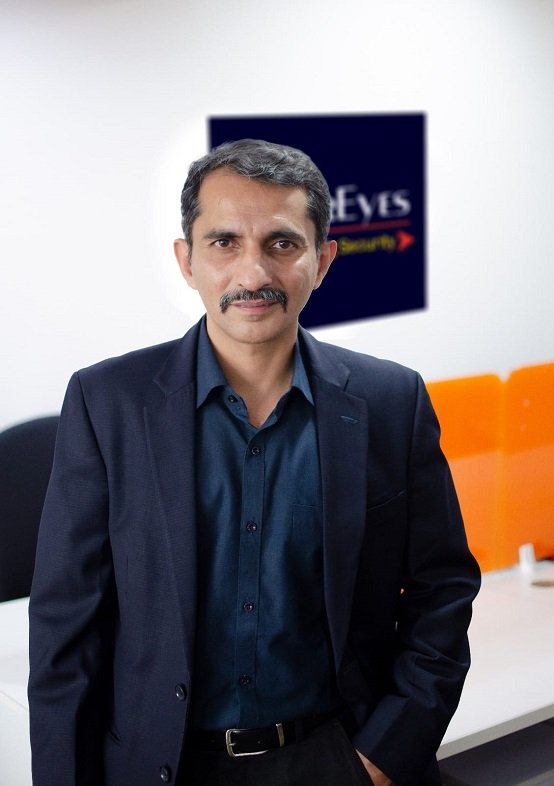
Amrita Sharma, Co founder & Director, Mixed Route JuiceMs.Amrita Sharma, co-founder, and Director at Mixed Route Juice (MRJ)shared her views on so far journey and achievements of MRJ. She is one of the most successful women entrepreneurs. We thank Ms.Amrita for this interview.

How do social media marketing and content make a difference to businesses?

A product or service pulls a consumer. Advertising is what builds a connect between the consumer and offering and Social Media has now become a crucial part of overall advertising. It gives the brand story piece by piece that lets the consumers also enjoy it with ease.

What are the core strengths of Mixed Route Juice that differentiate it from other similar firms?

We’re a strategy focussed 360 agency. Our biggest strength has been storytelling across mediums. Most agencies of our size and scale succumbed to pressure during the pandemic. But our consistency is what has made the pandemic our biggest growth period.

Tell us about your journey of getting into social content marketing.

We started as a social first agency and it gave us the initial thrust to offer a platter of services. It was a quick inroad that then moved towards establishing long-lasting relationships with our clients and gradually acquiring their bigger advertising mandates. Social for us still continues to be quick on the road.

What attracted you into the world of entrepreneurship?

Making my own decisions and owning up to success or failure is what drew me to the concept of entrepreneurship.

What should companies do to attract and retain talent?

Create a conducive system for everyone to grow.

You and your husband run your company together. What is it like being partners at home and in the workplace?

We have our territories marked at work and at home. 🙂 He respects mine and I respect his. The second thing that works very well is Trust. When either of us tells the other that ‘we’re on it’, we mean it.

What would be three magic mantras for success that any youngster can follow in the social media business?

Be adaptive. The market changes in a blink. Always be ready for it.

Work with heart. It gives you a push far greater than any other thing can.

The process makes everything better. What you do today, will get better tomorrow.

Identity Management Day – It is crucial for every individual to protect their online data and make sure their accounts are secure: Karmendra Kohli

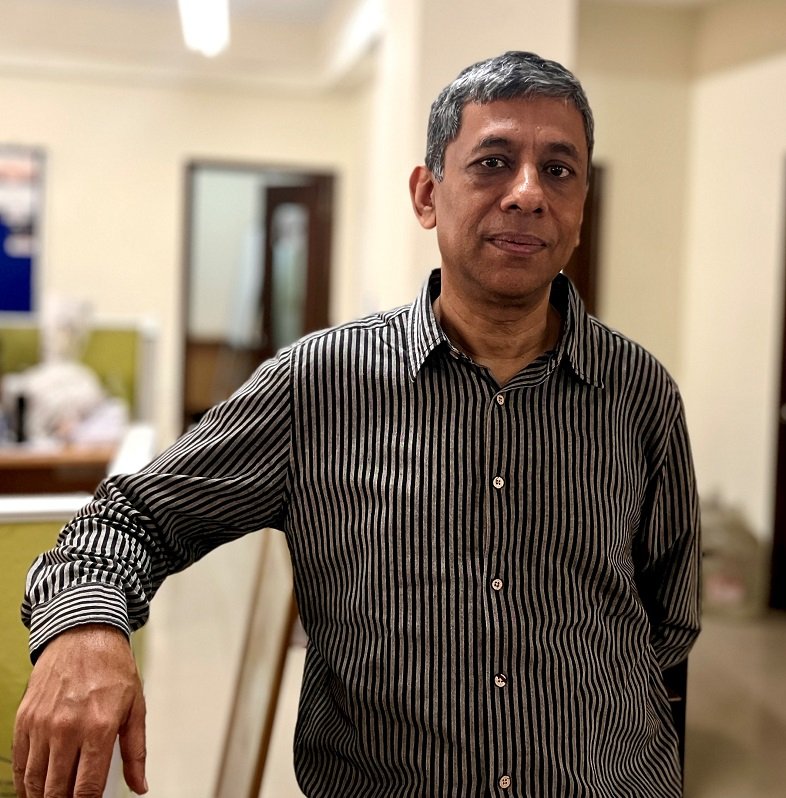
Karmendra Kohli


Bangalore: April 11 ,2023, is Identity Management Day. This day was established in 2021 via the partnership between the National Cybersecurity Alliance and the Identity Defined Security Alliance (IDSA), to be held on the second Tuesday of April, as a day of awareness to educate business leaders, IT decision makers, and the general public about the importance of identity management.

Business News This Week caught up with Mr Karmendra Kohli, CEO and Director of SecurEyes, who spoke about the importance of every individual to protect their online data and a few do’s and don’ts that everyone must follow. SecurEyes is a pure-play cybersecurity consulting, services and products company that also provides cybersecurity training and education.

Excerpts of the interview:

Business News This Week (BNTW): What is meant by Identity Management? What does it involve?

Karmendra Kohli: Identity Management, in layman’s terms, is the process of managing an individual’s digital identity. It involves making sure that only the right people have access to the right resources/ information at the right times. This includes setting up secure logins and passwords, controlling access levels, managing user profile information, and ensuring all users follow the correct security protocols. Identity Management also involves auditing user activity, monitoring access rights and privileges, and ensuring compliance with company policies. As an IT discipline, Identity management is the process of managing digital identities, which includes authenticating, authorizing, and tracking user access to information systems. It involves managing identities throughout the entire lifecycle of an individual’s usage of a system, from the initial registration process to the periodic authentication checks that occur when a user logs in. Identity management also involves managing the user’s access to data, applications, and other services within the system. This includes granting and revoking access privileges, auditing user access, and ensuring compliance with corporate policies. Additionally, identity management can involve monitoring user activity and creating reports to ensure that all access privileges are being used properly.

BNTW: Why is Identity Management important? Why does it take place in April? Any relevance?

Karmendra Kohli: This day was established in 2021 via the partnership between the National Cybersecurity Alliance and the Identity Defined Security Alliance (IDSA), to be held on the second Tuesday of April, as a day of awareness to educate business leaders, IT decision makers, and the general public about the importance of identity management. Identity Management is important to everyday digital media users because it helps protect their online data, including their personal information. It also helps protect their accounts from being hacked, stolen, or misused. Identity Management helps users make sure their online accounts are secure, so they can confidently use digital media without worrying about their data being compromised.

The relevance of Identity Management Day for people is that it provides an opportunity to educate people about the importance of protecting their personal information. It also serves to remind people of the need for strong password practices, the importance of regularly updating their security settings, and the need for caution when sharing data online. Additionally, it allows people to be aware of the legal implications of sharing their data and the potential for identity theft.

BNTW: What are the do’s and don’ts for the common person to keep their Identity in check?

Karmendra Kohli: A basic list of Do’s and Don’ts would be as follows –

Do’s

• Keep your personal information secure and private.
• Use strong passwords and change them regularly.
• Use two-factor authentication whenever possible.
• Be diligent about updating your software and antivirus programs.
• Monitor your credit report regularly for any suspicious activity.
• Be careful about what you share online.
• Use secure Wi-Fi networks whenever possible.
• Consider a privacy-focused search engine like DuckDuckGo.
• Shred or otherwise destroy documents containing personal information.
• Lock your devices when not in use.

Don’ts

• Don’t use the same password for multiple accounts.
• Don’t give out personal information online or over the phone.
• Don’t click on suspicious links or open emails from unknown sources.
• Don’t use public Wi-Fi or unsecured networks.
• Don’t store personal information on public computers or devices.
• Don’t post personal information on social media sites.
• Don’t carry around documents with personal information.
• Don’t respond to phishing emails.
• Don’t use the same PIN for all your accounts.

BNTW: How can identity management help consumers to protect against online scams and cybercrimes?

Karmendra Kohli: There are three human triggers that cyber criminals use when targeting victims –

1. Curiosity: Cyber criminals often use curiosity as a tool to get users to click on malicious links or download malicious software. For example, by sending an email with a subject line that is too good to be true, or by using enticing language such as “You won’t believe what you see,” or “Click here for a free gift.”

2. Fear: Cyber criminals may use fear as a way to get users to act quickly and without thinking. For example, an email might be sent warning of a virus that has been detected on the user’s computer, or a threat of a data breach.

3. Greed: Cyber criminals may use greed to get users to part with their money or personal information. This could be done by offering a ‘too good to be true’ investment opportunity, or by offering free products or services that require the user to provide their credit card information.

Identity management can help consumers protect against these kinds of online scams and cybercrimes by introducing extra layers of security to their accounts. Through identity management, consumers can set up multi-factor authentication, which requires additional verification steps such as second-factor authentication or biometrics to confirm the user’s identity before allowing access to an account. Additionally, identity management can also provide real-time notifications of suspicious activity, alerting consumers to potential scams or cybercrimes targeting their data. By using identity management, consumers can create stronger security protocols and protect their data from malicious actors.

BNTW: What kind of risks are involved in sharing one’s identity on open platforms?

Karmendra Kohli:

1. Identity Theft: Sharing personal information online could lead to identity theft as hackers or malicious individuals could access your data and use it to gain access to your financial accounts or other sensitive information.

2. Loss of Privacy: When you share your identity on open platforms, you are essentially giving away your privacy. You may not be aware of who is viewing the information you have shared and what they may be doing with it.

3. Phishing Scams: When you share your identity, you are giving criminals an opportunity to target you with phishing scams, which involve sending emails or messages that appear to be from legitimate sources but are actually attempts to steal personal information.

4. Cyberbullying: Cyberbullying is a growing problem, and if your personal information is shared widely, it can be used to target you with malicious messages or posts.

5. Spam: When you share your identity, you may start to receive more spam emails or messages from unknown sources.

6. Data Breaches: Open platforms can also be vulnerable to data breaches, which can result in the exposure of your personal information. This can lead to identity theft, financial fraud, and other cybersecurity issues.

BNTW: In the past, there have been high volumes of data breaches of identity. What steps should the Government of the country take to protect against such data breach?

Karmendra Kohli: According to the 2021 Norton Cyber Safety Insights Report, of 1000 respondents in the country, 36% of Indian adults detected unauthorized access to an account or device in the past 12 months. There are several laws in India that protect the consumer and consumer services from Identity Theft. However, this is an evolving space as threat actors keep changing their strategies and on the other side, systems, people and processes need to consistently educate and change to protect themselves. The Government of India has already initiated several task groups to create a comprehensive security plan at all levels.

BNTW: What is SecurEyes doing in terms of cybersecurity ? Share some information about your company

Karmendra Kohli: SecurEyes is a leading provider of cybersecurity services and solutions. Our mission is to help businesses protect their data, assets, and customers from cyber threats. We provide comprehensive and tailored cybersecurity solutions that help organizations protect their networks and data, detect and respond to threats, and ensure compliance. Our team of security experts have deep knowledge and experience across various technologies and industries, and have the capability to provide our clients with the best and most up-to-date security solutions and services. Our services include Network Security, Cloud Security, Endpoint Security, Identity and Access Management, Security Awareness Training, and Security Incident Response. We also offer Data Loss Prevention, Security Auditing and Compliance, and Security Monitoring and Management services. Our solutions are designed to meet the needs of any organization, regardless of size, industry, or budget.

Exclusive Interview with Sneha Biswas, Founder and CEO of Early Steps Academy

In an exclusive interview with Shreyas Webmedia Solutions (SWS), Sneha Biswas, Founder and CEO of Early Steps Academy, discussed how Early Steps Academy is revolutionizing academia with its innovative, Harvard-style curriculum

SWS: Please tell us about your company. How have you shaped the education sector by taking a digital-first approach?

Sneha Biswas: Early Steps Academy is an after-school learning program for school children worldwide. Its unique global curriculum exposes school children in ages 8-18 to a range of modern essential subjects and skills through the famous case study method, pioneered at Harvard, and all put in simple childlike language. The case method enables children to see the application of concepts in the real world, thereby making them confident not just in classrooms and tests, but also in the real world. With students from 47 countries, the digital-first approach to learning through the live online sessions help facilitate global interactions for young children, maximizing their exposure and making them 10X confident in this complex, ever-changing, globalized world.

SWS:  The world is changing faster than ever before, and students are smarter and more technologically advanced. How do you keep the next generation up to date with this ever-changing and complex world?

Sneha Biswas: Education, as a sector, is the most important sector to drive the economy and to make sure that the world will be in safe hands in the future. However, unfortunately, the sector has not seen any transformational innovation in the last century. While companies like Netflix, Uber and Amazon have completely revolutionized how we operate, in education we see the same subjects, the same kind of classroom designs with benches, aisles and teachers, the same focus on exams and the same routine for children. Even when we talk about the most progressive schools, the modifications are marginal – a little more interactive pedagogy, better student-teacher ratio and a slightly higher focus on application than theory.

Early Steps Academy is the world’s first program to transform education and learning for children by revolutionizing what and how children learn in the 21st century. With a range of modern essential subjects, focus on skills, one global curriculum and tangible learning outcomes, Early Steps’ mission is to make education relevant (useful) and engaging ( fun!) for the 2 Billion school-going children worldwide.

SWS: How does Early Steps Academy help school children become 10X more confident in the real world?

Sneha Biswas: In this fast-paced, rapidly changing world, children can become 10X confident and maximize their potential only when they are aware of the changes in the world, which means that they must be exposed to modern and essential 21st century subjects from Entrepreneurship, Climate, Space Tech, Applied Math and more. Confidence is not a factor of just knowledge, but also the ability to use that knowledge. This can be done by equipping children with the right set of skills that would enable them to succeed even if the world looks completely different in the next decade.

SWS: How is Early Steps Academy disrupting traditional teaching methods with its 1000+ modern essential subjects and 21st century skills curriculum?

Sneha Biswas: Early Steps Academy is disrupting education by revolutionizing what and how children learn in the 21st century. With the mission of making education relevant (useful) and engaging ( fun!) for children, Early Steps Academy’s unique case-based curriculum for children is a very different learning experience. The learning is practical, focused on real world knowledge and hones critical 21st century skills of thinking and communication in young learners – the key ingredients for success in the 21st century.

SWS: Could you please tell us about your company’s vision and how you are preparing for the future of learning?

Sneha Biswas: By 2030, there will be 3.5 Billion school going children in the world and it is imperative for the survival of the planet to have truly educated and confident children to run it, even as the world is changing at a rapid pace. Therefore, our mission is to reach each and every school-going children and introduce the Early Steps way of learning to them – thereby making sure that every child is able to maximize his/her potential and every child is walking out of school years with 10X confidence to face the real world.

SWS: The founder’s mission is to bring Early Steps Academy to 3.5 billion school-aged children by 2030.

Sneha Biswas: By 2030, there will be 3.5 Billion school going children in the world and it is imperative for the survival of the planet to have truly educated and confident children to run it, even as the world is changing at a rapid pace. Therefore, our mission is to reach each and every school-going children and introduce the Early Steps way of learning to them – thereby making sure that every child is able to maximize his/her potential and every child is walking out of school years with 10X confidence to face the real world.

SWS: Technology is crucial in the education industry. Tell us about how your company leverages technology and how do you see the scenario changing in the coming years

Sneha Biswas: Technology has helped in two things – faster dissemination of information and providing global exposure to learners. Faster dissemination of information is a critical component of learning in the 21st century world where things are moving at an unprecedented pace and knowledge becomes redundant very quickly. Additionally, technology enables a global reach for young school children, like how we do at Early Steps Academy by creating global classrooms for learners where children from different countries can come together and learn together. Increasing the speed of accessibility to high quality learning and expanding the exposure of school-going learners beyond their city is only possible through technology and that is a critical piece of solving a problem of this scale.

“We are looking forward to adding a million users on the platform in the first 3-5 months” – Piyush Kulshreshtha, Founder & CEO, KhulKe

Piyush Kulshreshtha

Interview with Piyush Kulshreshtha, Founder & CEO, KhulKe

  1. Why the name KhulKe? What was the idea behind starting the KhulKe app?

KhulKe, simply means Openly. In India, this phrase is often used in a conversation when people want others to speak freely, clearly, and in detail so that others in conversation can make sense.Social media has one of the biggest influences on human society today, so much content is getting generated and consumed and yet, nobody visits social media to make sense of things.Information (sometimes unverified), fleeting remarks from all & sundry, targeted trends, and a lot of such unpleasant behaviour is very much an integral part of the social media experience. Even the best of the minds slips into such behaviour from time to time.

We identified that the structure and approach of social media platforms have a lot to contribute to such mass behaviour and if a conversational platform where culturally users are encouraged to engage in meaningful, powerful conversations with each other’s, where the conversations are moderated by users themselves, then there is certainly a large no of users and communities who would be interested in coming together on KhulKe.We do have other features like microblogging, private messaging, and a short video timeline. We will shortly introduce India’s first Video-based meeting software, which will be embedded within KhulKe in the early days.

  1. How do you compare KhulKe with apps like Twitter, Instagram, Koo, etc.?

KhulKe as a platform integrates far more products than any of these platforms. We are proud that all of it has been developed by Indian Developers sitting in India, with funding from Indian Investors in a venture founded by an Indian.

Some key products on our platform are:

  • RoundTable: Where users can have topical, time-bound, moderated conversations along with a set of audience and use it for podcasting live, interactive sessions with the audience, uploading recorded videos of any length
  • TownHall: This is our microblogging feature that all social media users are familiar with. The only additional aspect here is that users can upload documents along with images, audio, or video.
  • Yapp: This is our private messaging feature where one-to-one chats and audio, or video calls are possible. In a few weeks, group chats along with audio or video calls will also be available. Initially, users will be able to use this product only with KhulKe users and in a few months, they will be able to connect with their Mobile or Email Contacts as well
  • Snip-It: This is our short video timeline where users can upload up to 2:30 mins videos, we hope a lot of informative and DIY videos will be seen in this segment
  • Meeting: Our in-built video-based meeting service, which is as yet unreleased, and unnamed, will be out in the coming weeks or a month

From the range of products integrated on KhulKe, you will find that our entire approach to social media business is very different. This is beyond just status sharing, this is about conversations amongst communities in public and private, casually, or formally but always meaningfully. And that’s why the microfeature on these products will also appear to be well thought out

We are new, and we hope users will find value in such participation

  1. How does KhulKe strategize to continue to differentiate?

The key differentiator for us will be the management & product development approach. We consider ourselves custodians of Free Speech. We are not here to project our ideologies and outlooks. The platform is meant for people, it is meant for communities and apart from the Laws of the Land, KhulKe as a platform will prefer to refrain from complicated Community Guidelines. Instead, we will continue to encourage users to moderate conversations themselves.

  1. Tell us something about the revenue model of KhulKe

Advertising, Sponsored Conversations, CRM, Advisory Services, User Collaborations for Work, and a few other such revenue ideas are being worked upon by our team, but first steps first, at this point we are focusing on establishing our user base.

  1. Any capital raise you are looking at?

We are looking at raising our second round very soon. Our product has to reach the gully-mohallas of India and that will require a considerable investment.

  1. What are the challenges you have been facing in making KhulKe popular in India?

We have spent the last many months testing the platform technically as well as for User Experience, Content, and Marketing. We have gained immensely from these experiments and all the learnings are being implemented in various areas. The product is available in public, anybody can check the content on the platform without the necessity to sign-up. A strong rollout plan is being put in place and you will see our advertising campaign very soon.We are confident that millions of users will want to be part of such an evolved concept.

  1. What are your plans ahead?

We are working on our launch campaign as we speak and thereafter gearing up for the second round of fundraising. We are looking forward to adding a million users on the platform in the first 3-5 months.We are also looking at rolling out a campaign for inviting a large number of content creators who can match our vision for good quality & meaningful content with simple language and interactive formats. An exciting early-stage monetization plan is underway.

Exclusive Interview with Animesh Samuel Co-founder and CEO E42

Animesh Samuel
Animesh Samuel

In an exclusive interview with Shreyas Webmedia Solutions (SWS), Animesh Samuel, Co-founder and CEO, E42 discussed the potential of AI, E42’s prospective product development projects, market expansion plans, partnerships and many more…

SWS: The adoption of AI is growing across sectors, what’s your view on this?

Animesh: Enterprises are increasingly leveraging the power of AI to address challenges and enhance their operational effectiveness, leading to a transformative impact on their business practices. AI has the capability to detect patterns and uncover opportunities to streamline business processes such as appointment scheduling, candidate selection for interviews, resume sorting, and enabling self-service options for customers, among others. By automating repetitive tasks, businesses can enhance their productivity and free up employees’ time. Furthermore, AI empowers enterprises to proactively adjust their plans in response to shifts, trends, errors, and anomalies in data, enabling them to make better-informed decisions in a timely and cost-effective manner.

SWS: Can you tell us about your E42’s journey? Any roadblocks you might have hit and how you overcame the challenges?

Animesh: We started with a seemingly impossible dream in 2012, to teach machines how to understand human language. Initially, we faced skepticism from many who didn’t believe in our vision. However, we persisted and invested everything we had, including support from the likes of Microsoft, Times Group, and Reliance Industries. For any AI-powered development, two critical components are necessary – computational power and data. To acquire the necessary computational power, we utilized GPUs from major tech giants such as Microsoft, Google, and Oracle through their startup programs and the advancement of Moore’s Law. However, obtaining training data posed a challenge for us. Our competitors, such as IBM, hired human beings to generate data for their AI models. Unfortunately, we did not have the financial resources to do the same. As a result, we developed a creative solution to obtain the data we required. We created algorithms and small generative AI models on transformer networks, and then launched the world’s first answering engine via SMS. This innovation went viral and garnered millions of question-and-answer pairs, which we then used to bootstrap the data needed to construct E42. Our ingenuity in acquiring data garnered recognition in the form of awards and selection for the Jio Gennext Hub’s first cohort.

Today, E42, with its ability to significantly save costs and manpower, is benefiting businesses from different sectors and of all sizes, including Fortune 500 companies, SMEs, and startups. We are disrupting the enterprise automation space by delivering a seamless user experience with scalability, efficiency, and cost-effectiveness.

SWS: Could you provide an overview of the products, services, or solutions that E42 offers, and how they benefit your customers?

Animesh: E42 is a no-code platform that allows users to create AI workers to automate business processes across different functions and verticals. Its unique “All for one and one for all” approach means that every AI worker built on the platform can be combined with other AI workers. This enables enterprises to leverage intelligence like never before, such as using the interaction of an AI customer care executive to suggest changes in campaign messaging to an AI marketing analyst. E42’s multifunctional capabilities, omnichannel interface, and ease of management set it apart from other technology-specific platforms that heavily rely on coding.

The advantages of E42 extend beyond its unique approach of enabling the creation of AI workers that can work together across the enterprise. As a no-code platform, E42 eliminates the need for scripting and enables quick deployment. It can process both structured and unstructured data, allowing for greater flexibility in data management. With drag-and-drop APIs and the ability to be deployed on-prem or on any cloud, E42 is easy to manage and scale.
Through our partnership network, E42 equips system integrators and original equipment manufacturers with AI capabilities, enabling them to compete with industry leaders.

SWS: Tell us about some interesting use cases of your platform and capabilities across different industries

Animesh: We serve a wide range of industries and clients, and one area where we’ve seen a significant value addition is E42’s intelligent document processing (IDP) capability. With IDP, our AI workers can read and understand unstructured documents, allowing for more accurate and efficient processing of data. One of the use cases of this is invoice processing which is an integral part of the Accounts Payable function of any enterprise and can have serious repercussions if not run efficiently. Our AI Accounts Payable Executive is skilled at automating invoice processing by reading invoices from varied formats (emails, portals, et al), running n-way matches, checking for duplicates and discrepancies, communicating with vendors for corrections, and feeding the data into any ERP, and so on. This means handling a load of several AP Executives single-handedly without any human intervention.

SWS: Could you tell us about E42’s plans for future product development, market expansion, partnerships, hiring, and funding? What are your goals for both the short and long term?

Animesh: E42 is currently preparing for its series B funding round while simultaneously working on the next iteration of our platform to streamline the development, training, and maintenance of AI systems. Our focus is on enhancing model accuracy through advanced algorithms, as well as expanding our intelligent document processing capabilities by incorporating natural language understanding and layout analysis features. In addition to our internal efforts, E42 has partnered with Beetel in India and large systems integrators such as Beyondsoft in the U.S. and Alpha Data in the Middle East, in order to increase our global footprint and enable more partners to leverage our AI capabilities. Looking ahead, we’re committed to sustaining our growth momentum in both the medium and long term, through strategic collaborations, exploring new markets, and driving innovation in our product development.

Exclusive Interview with Sinduri Reddy, Founder & MD, The Premia Academy

Sinduri Reddy
Sinduri Reddy Founder & Managing Director The Premia Academy

In an exclusive interview with Shreyas Webmedia Solutions (SWS), Sinduri Reddy (SR), Founder & MD, The Premia Academy, discussed about various opportunities and challenges in the education sector and the current trends followed in the Indian education system and many more…

SWS: What made you choose the education sector as a career?

SR: Hailing from a business and real estate family I didn’t expect to be part of the education fraternity! My journey towards this moment to impact lives began with motherhood. In my quest to find a school for my child, I yearned for one that chose wisdom over knowledge, purpose over prosperity and integrity over instant gratification, and this propelled me towards my life’s mission. The journey so far in this space is very fulfilling and uplifting in every sense of the word.

SWS: What are the challenges faced by you in the education industry?

SR: We recognize the ongoing challenges of maintaining high academic standards while keeping up with technological advancements and changing educational policies. Additionally, retaining qualified staff, and meeting the diverse needs of our students are also ongoing challenges. Despite these obstacles, we remain committed to providing our students with the best possible education and preparing them for success in their future endeavors.

SWS: What are your expansion plans?

SR: At the moment, we have a well-established campus in Attapur, and aim to create a very high standard of education aligned with the single point agenda of raising our premia pride into ethical, open minded global citizens that inspire and make the world a better place. We won’t stop until we get there.

SWS: As per you, what is the best student-teacher ratio?

SR: It is 1:15.

SWS: You have a well-structured curriculum for sports and the performing arts. What benefits do you see in this?

SR: Here at our school, we strongly believe that a holistic education is vital for every student’s personal growth and development, and that includes providing a range of opportunities in sports and performing arts. Our team has worked hard to create a safe and supportive environment that encourages students to explore their interests, develop their talents and build their confidence. We deeply care about our students and their wellbeing, which is why we have invested in a comprehensive and diverse curriculum to foster the talent within our enthusiastic learners.

SWS: According to you, what are the opportunities prevalent in the education sector and the reformations brought in the system?

SR:I believe that the education industry presents an enthralling opportunity to challenge traditional teaching methods and experiment with new ways of learning. We have a chance to leverage technology and other resources to make education more accessible and equitable for students from diverse backgrounds. We have a chance to reimagine the traditional classroom model, making space for teachers with different mindsets, and hopefully projections in terms of budgets as recognizing quality education as the basis for a more evolved world is underway.

Overall, the education industry has seen major changes in the past few years, with the NEP 2020 and the pandemic having brought about significant changes. We now have a greater emphasis on online and hybrid learning, health and safety measures, and the use of technology to support education. The mindset has changed from an information and textbook driven curriculum to a holistic skill based one. These changes are likely to have a lasting impact on the way that education is delivered and experienced in the future.

SWS: Do you think education plays an important role in the overall development of a child and can it initiate social changes?

SR: “Education is the key to unlocking the world, a passport to freedom.” We believe in the transformative power of education, and with a diverse, experienced core team, approach it from different angles. While emphasizing the need for education to be holistic, we see technology and hands-on learning as key drivers of innovation and progress that could help to drive societal change.

In today’s rapidly changing world, education is more important than ever, as it provides children with the knowledge and skills they need to succeed in an increasingly complex and interconnected society. It provides the opportunity for personal growth and fulfillment by seeking to develop essential cognitive, social, emotional, and behavioral skills. By investing in education, we are investing in the future of our children and our communities.

SWS: What are the current trends in India’s education system?

SR: Overall, the education industry has seen major changes in the past few years, with the NEP 2020 and the pandemic having brought about significant changes. We now have a greater emphasis on online and hybrid learning, health and safety measures, and the use of technology to support education. The mindset has changed from an information and textbook driven curriculum to a holistic skill based one. These changes are likely to have a lasting impact on the way that education is delivered and experienced in the future.

SWS: Your views on New Education Policy?

SR: India’s new education policy, while a welcome change, has been met with a mixed response from educators and policy experts. We understand that the policy aims to address some of the longstanding issues in the Indian education system, such as rote learning and a lack of critical thinking skills, however we share some concerns with the fraternity about its implementation and the feasibility of some of its proposals. We strive to implement it to the best of our capacities and strongly believe that the success of the policy will depend on its effective implementation in schools across the country.

SWS: Any advice you want to give to parents on choosing a right school for their child?

SR: As a modern-day parent, my advice to parents searching for a school is to prioritize the school’s values and educational philosophy over its prestige or location. I suggest looking for a school that aligns with your family’s values and offers a curriculum and teaching approach that will best support your child’s learning and development. Finally, don’t hesitate to reach out to school staff and current parents to get a sense of the school’s culture and community!

Exclusive Interview with Manik Anand, CEO, White Knights Realty

In an exclusive interview with Shreyas Webmedia Solutions (SWS), Mr. Manik Anand, CEO,  White Knights Realty discussed various aspects such as commercial real estate investments, prospects of real the state sector, and many more

SWS: As the leading real estate portfolio management company, is commercial real estate investment a good plan?

Manik Anand:  Absolutely. Commercial real estate investments offer much higher ROIs than those on residential investments. You are looking at ROIs between 6–12%, and in some cases, we have even achieved 15–18% ROI per annum. The tenants are primarily MNCs or a variety of retail brands. Retail availability is already limited. If you look at the Noida Master Plan of 2032, only around 1.7% of the total land area in the region is dedicated to commercial development. However, with the influx of multiple IT powerhouses and Fortune 500 companies such as Google, Ernst &Young, PWC, NEC, Infosys, TCS, KPMG, and Accenture etc setting up shop on the Noida Expressway, the future looks promising and bright.

SWS: What are the trigger points for commercial real estate?

Manik Anand: Well, I would say that return on investment in residential properties is low. The rental rates on residential properties generally range from 1 to 1.5% annually, capping out at 2–2.5%. This does not even cover inflation, which is hovering at around 7%. Therefore, I advise that, if you already possess a home, you should not look at residential investments to obtain greater capital gains; rather, you should consider commercial investments. In the long term, commercial investments consistently outperform traditional investments, such as mutual funds, equities, stocks, and commodities.

SWS: From a bird’s-eye view, how will 2023 turn out for the real estate sector?

Manik Anand: It’s looking very promising, lots of influx in the Noida region, primarily. The main catalyst for this is the upcoming International Airport. Delhi, the capital of the country, is set to get its second international airport, which is also set to be the third largest airport in the world and the biggest in Asia. This has led to a lot of interest from all global markets. Especially with the US and European regions seeing a downturn and a recession of sorts in the last year, with the interest rate hiking up and inflation at record levels currently, people from all over the world are looking at India as an investment option. Due to which, the unsold inventory in the region is currently may be at a 10 year low right now. A lot of industries, warehouses, corporate clients, and Fortune 500 companies are setting up shop in the region because of the excellent infrastructure that the region has to offer and the excellent connectivity to all of North India from the expressways that the region has to offer; the airport; the metro; and the existing connectivity to Delhi that the city has. So, it’s all guns blazing for 2023.

SWS:Is the luxury real estate market influencing investors to invest in luxury property?

Manik Anand:  That’s a good question. When I say that you shouldn’t be looking at residential property to invest in, the luxury real estate is on another tangent altogether. We saw this majorly during the pandemic. If they must be cocooned in the house, the kids need a separate room to attend the online classes and study, while the elder members of the family have to work from home and set up home offices. So, the people realised that the existing areas were too small, and that is what led to the rise in inquiries right after the first lockdown was lifted in August 2020. We have also seen unprecedented launches across the country and, at the same time, an excellent response from the global NRI audience, looking to acquire a piece of land or an apartment back home. With the dollar also touching a record high, it makes sense to buy real estate in the country now and take advantage of it. That is what drove the luxury real estate segment for a three-bedroom apartment ranging from about 2,000 to 3,000 square feet, going up to plush 4BHKs at 6 to 10,000 square feet. Generally, these bigger apartments with better specifications also tend to offer higher rentals than the other normal budget homes or normal housing because they tend to cater to the top management of all these IT giants who are setting up shops in the country.

SWS: Clearly, there have been high expectations for the upcoming Union Budget 2023–24. Should there be such high expectations? What are a few of your suggestions for this?

Manik Anand:  Fingers crossed! We are looking at better lending rates, which would help the developers’ complete projects on the fastrack. Secondly, we are also expecting better repo rates or a reduction in repo rates, which would in turn affect the monthly EMI payments of residential buyers, which should also drive-up demand. With “INDIA SHINING” and all eyes on India as the fastest-developing region on the globe, the upcoming financial budget should provide the impetus needed to accelerate the real estate sector, which is one of the biggest contributor to the country’s GDP.