Round table by TRI, MITRA and WRI India aligns government and industry to accelerate restoration and industrial growth
MUMBAI, India, Feb. 18, 2026 /PRNewswire/ — Focusing on building solutions across the bamboo value chain, from plantation and ecological restoration to production, market linkages and industrial adoption, various stakeholders gathered at the roundtable on ‘Bamboo Value Chains: Driving Agro-Economic Growth in Maharashtra’ during Mumbai Climate Week 2026 in Mumbai on Tuesday. Co-hosted by Transform Rural India, WRI India and Maharashtra Institution for Transformation (MITRA), the session focused on shaping a roadmap for bamboo restoration and value chain development in Maharashtra.
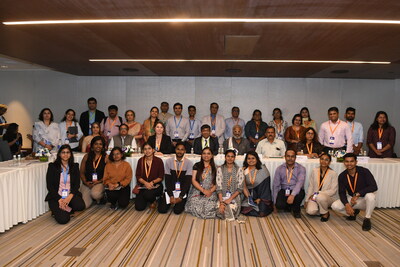
The roundtable brought together policymakers, industry representatives and development practitioners to examine how bamboo can move beyond low-value crafts toward industrial applications such as plywood and construction materials that can support growth at scale. Discussions also focused on proven models from other regions while exploring how Maharashtra can build its own industrial clusters aligned with local strengths. Participants also stressed the importance of high-quality planting material and responsible tissue culture practices to ensure long-term productivity.
Another key idea from the discussion was the proposal to create a Green Maharashtra Authority and an ADB-supported plan that links bamboo plantations with industry needs, using production-linked incentives to ensure farmers and businesses benefit while supporting long-term growth.
“TRI and WRI India have come together to support MITRA in shaping a restoration agenda and developing a roadmap to advance it, offering technical expertise and implementation monitoring support. The bamboo value chain forms a core part of this strategy, although key challenges remain. While innovation is taking place across the sector, it remains fragmented, and a significant gap persists between market demand and supply, particularly as new industrial uses grow faster than current production and procurement systems can support,” said Neeraja Kudrimoti, Associate Director (Climate Action), TRI.
She added that bridging this gap requires shifting from plantation-led schemes to a market-linked production system. Maharashtra holds strong potential in the bamboo value chain, but real progress depends on the right incentives and ground-level initiatives. “Through technical support and implementation guidance, TRI and WRI India are working with the government to help design enabling conditions that connect production more closely with evolving market needs,” added Neeraja.
Praveen Pardeshi, CEO, MITRA and Retd. IAS Officer, added that even though India has the second-largest area under bamboo, its contribution to GDP remains marginal compared to China because the challenge lies not only in plantation but in survival and value creation. “In forest and common lands, natural regeneration often works better than plantations, while industrial bamboo should follow a targeted strategy based on suitability mapping. Regions such as North Maharashtra, parts of eastern Vidarbha and the Konkan show strong potential. To achieve real scale, bamboo must move beyond crafts to higher-value industrial uses such as plywood, construction materials and fuel pellets, ensuring greater value addition for farmers,” he said.
Emphasising the opportunity offered by landscape restoration, Dr. Ruchika Singh, Executive Program Director, Food, Land, and Water at WRI India, further added that “As Maharashtra builds a bamboo-based restoration economy, keeping communities at the centre will be critical. Restoration can create durable local jobs and livelihoods, enabled by strong demand, resilient supply chains, supportive policy, and risk-mitigating tools such as insurance. Maharashtra has a significant opportunity to unlock bamboo’s restoration potential and expand its high-value applications across construction, materials, and livelihood sectors. We are committed to co-creating a thriving bamboo economy that unlocks the full potential of this multifaceted resource—driving long-term ecological outcomes alongside inclusive, sustainable growth.”
The session also viewed bamboo as a strategic opportunity to combine ecological restoration with agro-economic expansion across the state. Participants emphasised the need to diversify the bamboo sector beyond an ethanol-centric focus toward higher-value applications. As a next step, partners will work towards developing a clear roadmap to build a coordinated and market-driven bamboo economy in Maharashtra. TRI, WRI India and MITRA formalised their collaboration by strengthening their tripartite MoU to advance bamboo value chain development and landscape restoration in Maharashtra, in alignment with the state’s vision of Green Maharashtra.
The roundtable was also attended by Pasha Patel, Executive Chairman, CM’s Environment and Sustainable Development Task Force; Camille Severac, Deputy Head, Agence Française de Développement; Sanjeev Karpe, CEO, KONBAC; Remya Devan, CEO, Industree Foundation; Mridula Tangirala, Associate Director, Tata Trusts; and Shruti Nambiar, CEEW and others.
About Mumbai Climate Week
Mumbai Climate Week 2026 (17–19 February 2026) is India’s first dedicated climate action platform focused on metropolitan-scale implementation, finance mobilisation, resilience planning, and citizen engagement. Led by Project Mumbai in partnership with the Government of Maharashtra and supported by BMC, it seeks to position Mumbai as a global climate solutions hub and a climate finance gateway for the Global South.
Photo: https://mma.prnewswire.com/media/2915902/Mumbai_Climate_Week.jpg
Logo: https://mma.prnewswire.com/media/2831726/5812984/MCW_Logo.jpg
 View original content to download multimedia:https://www.prnewswire.com/in/news-releases/maharashtra-explores-bamboo-roadmap-at-mumbai-climate-week-302691412.html