Archive: August 14, 2026

Baroda BNP Paribas Mutual Fund Appoints Mr. Madhu Nair as Chief Executive Officer

Chennai, Aug14: Baroda BNP Paribas Asset Management India, the investment manager of Baroda BNP Paribas Mutual Fund, announced the appointment of MrMadhu Nair as its new Chief Executive Officer, a move that marks a decisive step-up in ambition as the fund house sets its sights on becoming a scaled, purpose-led force in India’s rapidly expanding mutual fund industry.
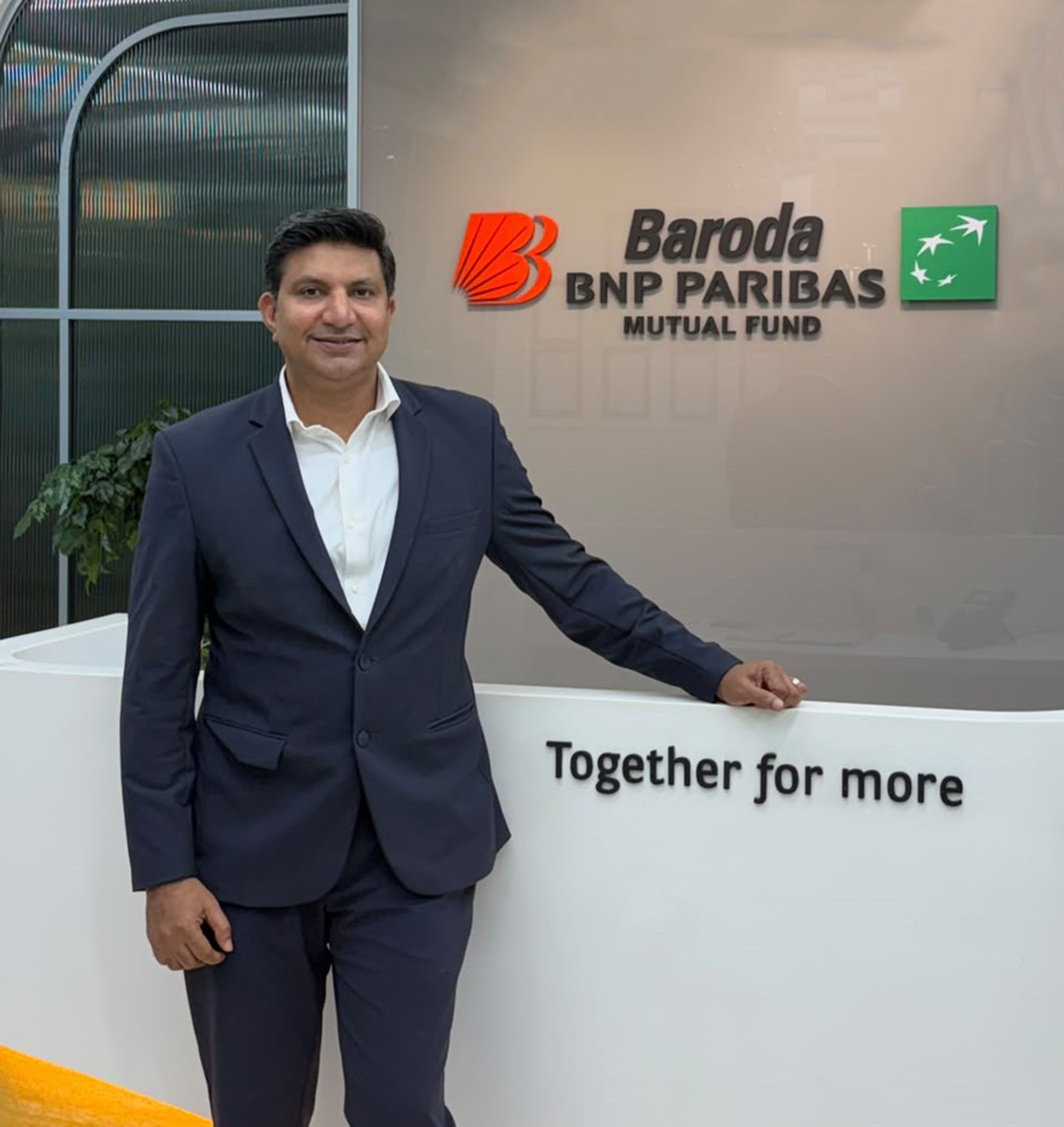
Baroda BNP Paribas Mutual Fund Appoints Mr. Madhu Nair as Chief Executive Officer

The appointment comes at a defining moment: India’s mutual fund industry has crossed ₹86.33 lakh crore in average assets under management as of the close of July 2026, and Baroda BNP Paribas Asset Management itself has crossed ₹57,000 crore in AAUM as of 31 July 2026. With this leadership change, the organisation is positioning itself not merely to participate in that growth, but to lead it.

 
MrMadhu Nair succeeds Mr. Sanjay Kumar Grover, Managing Director & CEO, who was on deputation from Bank of Baroda and successfully led the organisation through an important phase of growth.
“We are delighted to have Mr. Nair lead the team at Baroda BNP Paribas Asset Management. We believe that under his leadership, our mutual fund venture will be better positioned to leverage our large customer base and Bharat reach to make market-linked investment solutions accessible to a wider audience,” said Ms. Beena Vaheed, Executive Director, Bank of Baroda and Chairperson of the Board of Baroda BNP Paribas Asset Management .
The joint venture between Bank of Baroda, one of India’s leading public sector banks, and BNP Paribas Asset Management Asia, one of Europe’s largest asset managers, is now focused on its next phase of growth. One built on a foundation of Bank of Baroda‘s extensive domestic and international franchise combined with BNP Paribas Asset Management’s global investment expertise and research capabilities.
“We are pleased to welcome Madhu, whose leadership and deep industry experience will help accelerate the next phase of growth for the Indian asset management joint venture. We believe the Indian market offers tremendous long-term potential as more savers embrace market-linked investment solutions to build wealth. BNPPAM is proud to support Baroda BNP Paribas Mutual Fund in developing products that help Indian customers achieve their financial aspirations,” said Mr. Vincent Trouillard Perrot, Managing Director, Strategic Participations and JVs at BNP Paribas Asset Management and Associate Director of the Board of Baroda BNP Paribas Asset Management.
MrNair is a seasoned asset management professional with over 28 years of experience, having held senior leadership roles across HSBC, Invesco and Kotak, and most recently serving as Chief Executive Officer of Union Mutual Fund. He is an alumnus of Harvard Business School, bringing a global strategic lens to complement his deep, on-the-ground experience of Indian distribution and retail investor behaviour, a combination well suited to an organisation preparing to scale aggressively.
 
His vision for the organisation is clear and far-reaching to convert India’s Amrutkaal story into tangible outcomes for every Indian household, using Baroda BNP Paribas MF’s products and investment expertise as the vehicle to bring market-linked wealth creation to savers who have never before had access to it.
“I am deeply honoured by the trust and responsibility placed in me by the shareholders and Board of Baroda BNP Paribas Asset Management. With the continued support of our shareholders and the commitment of our employees, I am confident we will bring alive our brand promise of ‘Together for More’ for all our investors, partners, shareholders and employees. I look forward to leading the organisation through its next phase of growth and creating long-term value for all our stakeholders,” said Madhu Nair, Chief Executive Officer, Baroda BNP Paribas Asset Management.
Across his career, MrNair has been consistent in his belief that lasting growth comes from building purpose-led organisations; institutions where great teams are aligned to a mission larger than any single product cycle or quarterly number. That philosophy of pairing institutional grade strategy with a genuine commitment to culture and team building is central to the mandate he now carries at Baroda BNP Paribas Mutual Fund.

Chamoli Tunnel Tragedy Leaves Seven Dead as Rescue Teams Search for Missing Worker

Chamoli, August 14, 2026: Seven workers have died after a sudden rush of water and debris entered an under-construction tunnel at the THDC hydropower project in Mayapur, Pipalkoti, in Uttarakhand’s Chamoli district. One worker is still reported missing, while rescue teams continue operations at the site.

Officials said the incident occurred after a landslide created a cavity that allowed water and debris to surge into the tunnel. Fourteen workers were rescued and taken to a hospital in Gopeshwar for treatment.

Teams from the NDRF, SDRF, police, CISF, ITBP and Army have been deployed for the search and rescue operation. Authorities are working in difficult conditions as water continues to pose challenges inside the tunnel.

Uttarakhand Chief Minister Pushkar Singh Dhami has directed agencies to intensify relief and rescue efforts and is scheduled to inspect the affected site. The administration is closely monitoring the situation as rescue personnel continue efforts to locate the missing worker.

Maharashtra Moves Toward One Digital Identity for Easier Access to Public Services

Mumbai, August 14, 2026: The Maharashtra government is preparing to roll out ‘Maha-ID’, a digital identity framework designed to give citizens a simpler way to access government services and welfare programmes.

The initiative seeks to reduce the administrative burden on citizens by creating a common digital identity that can be used across multiple government departments. Instead of repeatedly providing the same information and documents for different services, residents could use their Maha-ID for streamlined verification.

The proposed system will be connected with Aadhaar, helping authorities authenticate beneficiaries and improve the accuracy of service delivery. The government expects the digital approach to reduce paperwork, shorten processing times and bring greater transparency to citizen-facing services.

Maha-ID is also expected to improve coordination among government departments by enabling information to be accessed through a more integrated digital framework. This could make it easier to identify eligible beneficiaries and minimise duplication in the delivery of government schemes.

The initiative forms part of Maharashtra’s broader digital-governance strategy, with technology increasingly being used to shift public services from department-centric processes to a more unified, citizen-focused model.

Colombia Earthquake Death Toll Rises to 273 as Rescue Efforts Continue

Bogota, August 14, 2026: The death toll from the powerful 7.4-magnitude earthquake that struck Colombia on Monday has risen to 273, while rescue teams continue searching for people still trapped or missing in affected areas.

According to Colombia’s National Unit for Disaster Risk Management, 3,824 people have been injured and 377 remain missing. The disaster has affected more than 97,500 people, with over 40,000 families reporting impacts from the quake.

The earthquake caused extensive damage to infrastructure, destroying 12,584 homes and damaging nearly 75,000 others. At least 172 buildings collapsed, while schools, healthcare facilities, community centres and airports were also affected.

Search-and-rescue teams, supported by rescue dogs and emergency equipment, continue to work through damaged areas as authorities assess the scale of the destruction and coordinate relief operations. A further 4.2-magnitude tremor was also recorded in the Chocó region, where the main quake was centred.

India’s Goods Exports Surge Nearly 20% in July Despite Global Uncertainty

New Delhi, August 14, 2026: India’s merchandise exports rose 19.63 per cent year-on-year to $44.24 billion in July 2026, marking a strong recovery in outbound trade despite geopolitical tensions and disruptions affecting global supply chains.

The July performance was supported by strong shipments of petroleum products, electronics and engineering goods. Petroleum exports increased nearly 68 per cent to $6.92 billion, while electronics exports climbed 57.4 per cent to $5.92 billion. Engineering goods shipments grew about 17.7 per cent to $12.24 billion.

India’s exports to West Asia also recovered, rising 8.6 per cent to $5.7 billion during the month. The United States remained the country’s largest export market, with shipments to the US increasing by nearly 13 per cent to $9.02 billion. Exports to China also recorded a sharp rise.

However, the strong export performance was accompanied by a rise in imports. Merchandise imports increased 17.52 per cent to $76.22 billion, pushing the goods trade deficit to a six-month high of $31.98 billion. Higher crude oil prices and increased imports of electronics, gold, fertilisers and coal contributed to the wider deficit.

The July numbers underline the resilience of India’s export sector, while also highlighting the need to strengthen domestic manufacturing, logistics efficiency and supply-chain resilience to sustain growth in global trade.

India’s July Exports Cross $80 Billion as Global Shipments Gain Momentum

New Delhi, August 14, 2026: India’s combined exports of merchandise and services rose 13.31 per cent year-on-year to $80.14 billion in July 2026, signalling continued strength in the country’s external trade despite global economic and geopolitical pressures.

The growth was supported by a sharp rise in merchandise shipments, which climbed 19.6 per cent to a record $44.24 billion during the month. Engineering products, electronics and petroleum-related shipments were among the key contributors to the strong goods export performance.

Services exports also remained an important pillar of India’s trade performance. However, imports of goods and services increased faster, rising 15.83 per cent to $95.16 billion, resulting in an overall trade deficit of about $15.03 billion in July.

The latest figures highlight the resilience of Indian exporters at a time when businesses are dealing with higher freight costs, supply-chain disruptions and geopolitical uncertainty. The strong July performance also adds to the positive momentum recorded during the opening months of FY27.

For policymakers and industry, the challenge now will be to sustain export growth while improving logistics efficiency, widening the export base and containing the impact of rising import costs on the overall trade balance.

NITI Aayog Identifies Four Sectors That Could Drive India’s Manufacturing Ambitions

New Delhi, August 14, 2026: NITI Aayog has identified chemicals, textiles, telecom and networking equipment, and solar photovoltaic (PV) manufacturing as four high-potential sectors that could play a central role in strengthening India’s position in global manufacturing.

The policy think tank’s report focuses on sectors where targeted policy interventions, stronger domestic capabilities and greater value addition can help Indian manufacturers compete more effectively in international markets. The broader exercise covers 12 priority sectors with the objective of increasing India’s participation in global value chains.

NITI Aayog has pointed to opportunities across the four sectors while also highlighting challenges such as import dependence, supply-chain gaps, cost competitiveness and skill shortages. Addressing these constraints will be critical for Indian companies to scale production and move higher up the global value chain.

The report comes as India seeks to raise the contribution of manufacturing to economic growth, exports and employment. NITI Aayog’s approach places greater emphasis on building competitive industrial clusters, improving infrastructure and reducing production costs to attract investment and expand exports.

The recommendations are expected to support India’s longer-term ambition of becoming a major global manufacturing centre by combining domestic demand with export-oriented production and deeper integration into international supply chains.

Centre releasesRs.605.71 Crore to Strengthen Agriculture in Rajasthan and Telangana

New Delhi, August 14, 2026: The Centre has approved a combined allocation of ₹605.71 crore for Rajasthan and Telangana under the Pradhan Mantri Rashtriya Krishi Vikas Yojana (PM-RKVY) and the Krishonnati Yojana, aimed at supporting agricultural development and farmer-focused initiatives.

Rajasthan will receive ₹340.59 crore, while ₹265.12 crore has been approved for Telangana. The decisions followed a review of the states’ annual action plans, utilisation of earlier funds and expenditure progress.

Union Agriculture Minister Shivraj Singh Chouhan approved the allocations during a virtual meeting with Rajasthan Agriculture Minister Kirori Lal Meena and Telangana Agriculture Minister Tummala Nageswara Rao.

Chouhan also appreciated Telangana’s Farmer ID and fertiliser distribution model, highlighting its potential to make the delivery of agricultural services more transparent and efficient. For Rajasthan, he called for greater attention to the implementation of Kisan Credit Cards (KCC) to improve farmers’ access to institutional credit.

The latest funding is expected to support state-level agricultural programmes and strengthen efforts aimed at improving farm productivity, farmer services and rural livelihoods.

SEBI Eyes Wider Accredited Investor Pool With ₹5 Crore Securities Threshold

Mumbai, August 14, 2026: The Securities and Exchange Board of India (SEBI) has proposed a new framework that could make it easier for financially sophisticated investors to qualify as accredited investors, with securities-market holdings emerging as an alternative eligibility criterion.

Under the proposal, an individual with ₹5 crore or more in securities assets could qualify for accredited investor status through this route. SEBI has also suggested a ₹20 crore securities-asset threshold for eligible body corporates and trusts, excluding family trusts.

The proposed changes are aimed at expanding the pool of investors who can participate in products and investment opportunities designed for accredited investors, including certain alternative investment structures. The regulator estimates that the new securities-assets route could potentially bring around 3.7 lakh additional investors into the eligible pool.

SEBI is also looking at making the accreditation process more streamlined. Under the proposed framework, investment managers could be permitted to assess and record an investor’s accredited status as part of the onboarding process.

The move reflects SEBI’s broader effort to make India’s investment ecosystem more accessible to investors with substantial market exposure, while maintaining eligibility standards based on financial capacity and sophistication. The proposals are subject to the regulatory consultation and final approval process.

Rackspace Technology Appoints Chetan Gupta, Ph.D., as Chief AI Officer to Advance Enterprise and Sovereign AI

San Antonio, TX — Aug 14 — Rackspace Technology® (NASDAQ: RXT), a global enterprise AI infrastructure and solutions provider, today announced the appointment of Chetan Gupta, Ph.D., as Chief AI Officer. Gupta will lead the Office of AI, with responsibility for Rackspace’s AI strategy, research, innovation, governance, and adoption across the company and its customers. His appointment strengthens Rackspace’s ability to help institutions deploy AI safely, economically, and at scale in environments where the stakes are highest: regulated industries, sovereign jurisdictions, and mission-critical operations.

Gupta joins Rackspace after nearly a decade leading global AI research at Hitachi, where he served as General Manager of the Advanced AI Center in Japan, Vice President of the Industrial AI Lab in North America, and head of Hitachi’s Global AI Center of Excellence. His work was instrumental in Hitachi’s evolution toward Physical AI, building systems for railways, energy grids, factories, and buildings, environments where AI must operate under institutional accountability, jurisdictional requirements, and zero tolerance for failure. Earlier in his career, he spent seven years at HP Labs translating advanced AI research into deployed solutions across logistics, manufacturing, energy, and mobility. He has authored nearly 300 papers and patents and mentored a generation of AI researchers and engineers.

“Chetan has spent his career building AI for the institutions the world depends on. At Hitachi, that meant trains, grids, and factories, where AI is not a demo, but an operating commitment measured in uptime, safety, and trust,” said Gajen Kandiah, CEO of Rackspace Technology. “That is precisely the discipline our customers need as they move AI into production inside regulated and sovereign environments. Chetan understands that success depends on more than model capability. It requires strategy, governance, and an operator who carries accountability from silicon to outcomes.”

Gupta’s appointment reflects Rackspace’s continued investment in enabling institutions to turn AI ambition into governed, measurable business outcomes and reinforces the company’s position as the place where enterprise AI goes to production.

“AI has reached an inflection point. The hard problem is no longer capability. It is trust: taking promising research and turning it into systems that hold up in the real world, under real regulatory and operational constraints,” said Gupta. “Rackspace occupies a distinct position in the market, operating the full stack for institutions that cannot afford to get AI wrong. I look forward to leading our AI strategy and advancing enterprise and sovereign AI for our customers and across the business.”

Gupta holds a Ph.D. in mathematics and master’s degrees in mathematical computer science and chemical engineering from the University of Illinois Chicago.