Archive: August 14, 2026

India’s Road to a Dollar 20 Trillion Economy

By Ajay Garg and Khushali Dutt

Ajay Garg is Chairman & Managing Director of Equirus Capital. Khushali Dutt is an Associate Economist at Equirus Securities.

India took 67 years to build its first $2 trillion of GDP. It added the next $2 trillion in barely a decade. The ambition now on the table — a $20 trillion economy by 2036 — asks the country to grow roughly five times over in a little more than ten years. It can be done: China sustained close to 18% nominal dollar growth for eleven straight years from a comparable base. But a leap of this size will be decided less by the target itself than by the quality of the reforms that clear the path to it. How India grows will matter as much as how fast.

How the economy grows, not just how fast

Start with the shape of the economy, not just its size. Agriculture, about 17% of GDP, will keep shrinking as a share as the country urbanises. Manufacturing, at 17–20%, is largely capped by a more protectionist world. That leaves services — already 54% of GDP — to do the heavy lifting, rising past 65% and expanding from roughly $2 trillion to more than $11 trillion. Almost every reform worth making is, in one way or another, about clearing the path for that expansion.

Twenty reforms, five engines

The reforms fall into five engines that must fire together. In the real economy, the quickest wins cost the exchequer almost nothing. A ten-year tax holiday for cold storage would attack a threadbare cold chain — only about 4% of India’s fruit and vegetables travel refrigerated, against 80–85% in the United States — and reclaim a share of the roughly 50 million tonnes of horticulture lost every year. A mandatory floor on state capital spending, after states left about ₹2.3 trillion of budgeted capex unspent in FY26, could add close to ₹5.2 trillion to GDP without a rupee of new borrowing. And listing the Railways would free the roughly ₹2.8 trillion of taxpayer capital it absorbs each year.

In the capital markets, the theme is unlocking trapped money. An India Sovereign Fund on Singapore’s Temasek model could pool the roughly $249 billion of equity the government holds across public-sector companies into one professionally run vehicle, throwing off proceeds to fund capex and subsidies without new taxes or debt. Levelling the tax treatment of bonds and equity would begin to deepen a corporate bond market that sits at just 18% of GDP against 130% for equities. And a cluster of tax reforms — abolishing advance tax, cutting withholding to a flat 5%, ending the double transaction tax on shares — would release trapped working capital and bring India into line with global norms.

In human capital, the through-line is capacity. India’s education funnels are brutally narrow: around 187,000 students sit JEE Advanced for some 18,000 IIT seats, while hundreds of thousands head abroad for undergraduate STEM. The telecom template is instructive — once private capital was let in, access exploded and prices collapsed — and the same playbook can build education capacity at scale. Reviving private research (India spends just 0.8% of GDP on R&D, the lowest in its peer group), funding universities on outcomes rather than headcount, and reviving apprenticeships complete the agenda.

In services — India’s quiet superpower — the country already hosts more than 1,800 Global Capability Centres, about half the world’s total. A single empowered National GCC Policy could push that toward 5,000. Scaling a tiny tourism-promotion budget and turning prime-ministerial visits into structured trade-and-tourism missions cost next to nothing.

And in liveability and governance — because a $20 trillion economy has to be livable — putting air pollution on a war footing, where 42 of the world’s 50 most-polluted cities are Indian, and giving cities a directly elected, accountable mayor.

Does it add up? It pays for itself

The obvious objection to a package this size is cost. On our accounting, it more than pays for itself in the very first year: roughly ₹3.4 trillion of direct costs against about ₹7.9 trillion of direct gains — a net gain of some ₹4.5 trillion, or a 2.3x return. And much of the apparent “cost” is not revenue foregone at all. Abolishing advance tax or cutting withholding does not reduce what is ultimately owed; it only shifts the timing. The tax is still paid at filing. What changes is that vast sums of trapped working capital are released back into the economy.

The currency does part of the work

Because the target is denominated in dollars, the exchange rate carries part of the load. The reforms are built to lift rupee growth from a trend of about 10.5% toward roughly 14% — and, by improving the balance of payments, to turn the rupee’s structural depreciation into modest appreciation. Growth in rupees, plus a firmer currency, is what bridges the final distance to $20 trillion in dollars.

None of this rests on a single lever. It rests on twenty of them reinforcing one another — and, crucially, on the fact that most are already within the government’s own toolkit. They need a change in law or administration more than they need new money, and several of the highest-impact moves cost the exchequer almost nothing while freeing enormous amounts of trapped capital and fiscal space. The target is unapologetically ambitious. But the path to it is more available than the scale of the number suggests.

“The way the economy grows will matter just as much as how fast.”
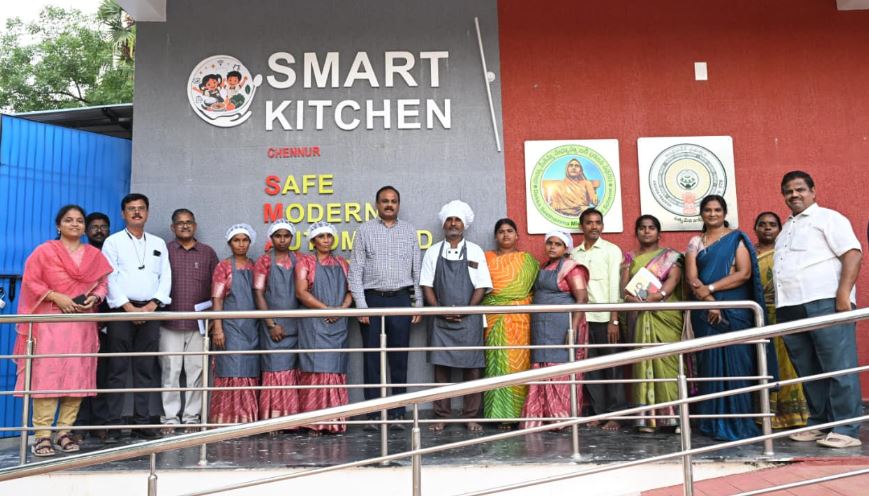
YSR Kadapa’s SMART Kitchens Transform School Meal Delivery for Nearly 1 Lakh Children

Kadapa, Andhra Pradesh: YSR Kadapa district is reshaping school meal delivery through its SMART Kitchen Initiative, combining technology, modern infrastructure, efficient logistics, sustainability and community participation to strengthen nutrition services for children.

Under the Aspirational Districts and Aspirational Blocks Programmes, 38 SMART Kitchens across the district are serving nearly 1 lakh children every day. The initiative operates through 105 optimised delivery routes and 95 dedicated vehicles, helping ensure that nutritious meals reach schools on time and in a reliable manner.

YSR Kadapa’s SMART Kitchens Transform School Meal Delivery for Nearly 1 Lakh Children


At the heart of the initiative is a centralised and mechanised cooking system designed to improve efficiency while maintaining consistency in food quality and safety. Standardised food-safety protocols have been integrated into the process, while GPS-enabled transportation and real-time monitoring dashboards provide greater visibility over meal preparation and delivery.

The use of QR-based feedback systems further strengthens accountability by enabling stakeholders to share feedback on the meal delivery process. Together, these technology-driven measures are making the system more transparent, traceable and responsive.

Sustainability is another key pillar of the SMART Kitchen model. The kitchens incorporate solar energy, electric mobility and energy-efficient systems, reducing dependence on conventional energy sources. Bio-digester-based waste management also supports more responsible handling of kitchen waste and strengthens the environmental sustainability of the initiative.


YSR Kadapa district is transforming school meal delivery through the SMART Kitchen Initiative, combining technology, modern infrastructure, efficient logistics, sustainability, and community participation under the Aspirational Districts and Aspirational Blocks Programmes.… pic.twitter.com/01U3M4S4fL

— NITI Aayog (@NITIAayog) August 13, 2026

The programme also places strong emphasis on community participation. Women-led Self Help Groups (SHGs) play an important role in supporting the initiative, creating opportunities for local participation and strengthening community ownership of the school meal system.

The SMART Kitchen Initiative illustrates how convergence between government programmes, technology, infrastructure and community participation can transform an essential public service. By improving the efficiency and reliability of school meal delivery while embedding sustainability and accountability, the model is contributing to better nutrition outcomes and creating a stronger foundation for healthier and brighter futures for children in YSR Kadapa district.

Databricks Grows Over 80 percentage Year on Year, Surpasses Revenue Run Rate and Expands AI Platform Offerings

India, Aug14: Databricks, the Data and AI company, announced it crossed a Dollar7 billion revenue run-rate, delivering over 80percentage year-over-year growth during its Q2. Building on this momentum, the company closed a Dollar 5 billion strategic funding round at a Dollar190 billion valuation. The investment will drive continued innovation across Lakebase, its serverless Postgres database built for AI agents, Genie, Databricks’ AI coworker that turns business data into trusted answers and actions, and Unity AI Gateway, for multi-AI governance and cost controls.

The round was led by Coatue, along with Blackstone, MGX, accounts advised by T. Rowe Price Associates, Inc. and T. Rowe Price Investment Management, Inc., and new investor Sixth Street Growth. Other new investors included BOND, Clearlake Capital, Point72, Premji Invest, and TPG alongside existing investors Andreessen Horowitz, Dragoneer, Fidelity Management & Research Company, Franklin Templeton, GIC, Growth Equity at Goldman Sachs Alternatives, Insight Partners, J.P. Morgan Private Capital, Kinetic, Morgan Stanley Investment Management, NEA, Ontario Teachers’ Pension Plan, Temasek, Thrive Capital, and WCM Investment Management.

The Future of Data + AI

Today, companies have a new set of employees to support: AI agents. To do their jobs, agents need a reliable, scalable foundation, clear, accurate answers from enterprise data, and the ability to easily forecast budgets and switch to more cost-effective models to avoid burning through expensive tokens. The Databricks Data + AI Platform delivers the foundation with Lakebase, enterprise context with Genie, and smart routing and cost controls with Unity AI Gateway, giving teams a simple way to build AI that actually works.

Databricks’ Financial Momentum

This funding follows Databricks’ continued business momentum, including:

  • Growing >80% year over year, surpassing $7B revenue run-rate
  • Continuing to deliver positive adjusted free cash flow over the last 12 months
  • Surpassing $1.5B revenue run-rate for Lakehouse, its data warehousing product, growing over 100% year over year
  • Exceeding $100M revenue run-rate for Lakebase
  • >1,000 customers consuming at over $1 million revenue run-rate
  • >100 customers consuming at over $10 million revenue run-rate

“Enterprises don’t just want AI that talks. They want agents working across their business that remember context, deliver accurate answers, and execute work without blowing through their budgets,” said Ali Ghodsi, Co-founder and CEO of Databricks. “That requires real-time operational data with Lakebase, context from across the business with Genie, and multi-AI cost controls with Unity AI Gateway. The tremendous investor demand for this round shows that our AI strategy is winning the market and building what every business needs to maximize their impact with agents.”

“Databricks has spent a decade being early to where AI was headed. Now it’s the infrastructure the industry builds and scales AI on,” said Thomas Laffont, Co-founder of Coatue. “What stands out most is the pace: they’ve compressed R&D timelines that used to take years into months, more like a research lab than a typical software company. We’ve been investors since 2019, and results like that are why we’re proud to lead this round today and keep building with them.”

Godrej Industries Group unveils new brand film: ‘At Godrej Industries, We craft’

The film captures the shared purpose, people, and ambition that connect the Group’s diverse businesses

Key takeaways:

  1. Godrej Industries Group has unveiled its new corporate brand film, ‘At Godrej Industries, We Craft’, bringing its purpose, ‘Crafting tomorrow since 1897’, to life
  2. Produced by Zoya Akhtar and directed by Aakash Bhatia, the film captures the people, businesses and ideas shaping the Group across consumer products, agriculture, real estate, financial services, chemicals and ventures
  3. The film explores crafting as a mindset rooted in care, imagination and responsibility, reflecting the Group’s shared ambition to create, innovate and build for the future

MUMBAI, India, Aug. 14, 2026 /PRNewswire/ — Godrej Industries Group recently unveiled its new corporate brand film, ‘At Godrej Industries, We Craft’, marking the first major cinematic expression of its refreshed purpose and brand identity launched earlier this year. Produced by Zoya Akhtar of Tiger Telly and directed by Aakash Bhatia of LoudMouth Film, the film brings the Group’s purpose, ‘Crafting tomorrow since 1897’, to life through the people, businesses and ideas shaping its diverse portfolio.

Godrej Industries Group unveils new brand film

Speaking on the launch, Tanya Dubash, Executive Director and Chief Brand Officer, Godrej Industries, said, “Earlier this year, we introduced our purpose, ‘Crafting tomorrow since 1897’, as an articulation of what has connected our businesses for over a century.”

“This film brings that purpose to life through the people, ideas and ambition that shape our Group every day. As a Group that has continued to build and evolve for more than a hundred years, we believe values and performance, innovation and responsibility, must go hand in hand as we look to remain relevant for the next hundred,” she added.

Where people, purpose and progress come together 

The film was shot across the Group’s offices, farms, factories and construction sites. It captures the people, processes and ideas behind its businesses, showing how crafting takes different forms across Godrej Industries Group while being connected by a shared purpose and ambition.

Mesmerized by the diversity of the group, Zoya Akhtar, Producer, Tiger Telly, said, “Godrej, for me, is an inheritance. You cannot have grown up in India and not had Godrej in your life. It was only when I began working on this project that I understood the diversity, range and scale of everything Godrej Industries Group does. The film became a way of discovering that world and the shared spirit that connects it.”

It brings together the distinct purposes of the Group’s businesses within a single narrative: crafting goodness through consumer products, abundance through agriculture, joy through real estate, prosperity through financial services, innovation through chemicals and inspiration through ventures.

Where purpose, people and legacy come together 

More than the act of making, the film presents crafting as a mindset rooted in care, imagination and responsibility. The work taking place across the Godrej Industries Group every day reflects the belief that progress is shaped by people who choose to create, improve, and build things that endure. It traces this spirit back to the Group’s founder, Ardeshir Godrej, whose life and work demonstrated that innovation, integrity and ambition are strongest when held together.

Aakash Bhatia, Director, LoudMouth Film, said, “The things you see, the things you don’t see. The things you notice, or you don’t, and things you only feel when you observe. Godrej Industries Group exists in all of the above. My vision was to bring to life all of that and everything the Group stands for, while keeping people at the heart of the story. The journey of turning the tangible and intangible, the ambition and experiences into the ideas, screenplay and visuals for the film was the most exciting part.”

The film is now live across Godrej Industries Group’s digital platforms. It can be viewed here.

About Godrej Industries

At the Godrej Industries Group, we serve over 1.4 billion people globally through a diverse portfolio of businesses, united by our purpose of Crafting tomorrow. With revenues of USD 7.2 billion in FY26 and a market capitalisation of USD 19 billion as of 31 March 2026, we operate across FMCG, real estate, financial services, agriculture and chemicals.

We are the leading player in India across several business categories, including residential real estate, animal feed, crude palm oil, oleochemicals, household insecticides, hair colour and air care.

We are committed to building a more sustainable future through our Good & Green programme, with ambitions of net-zero operations by 2035 and responsible supply chains by 2047. In 2025, Godrej Consumer Products and Godrej Properties were both ranked number one globally in their respective categories on the Dow Jones Best-in-Class Sustainability Indices.

For more information, please visit: www.godrejindustries.com


Godrej Industries Group Logo

Cision View original content to download multimedia:https://www.prnewswire.com/in/news-releases/godrej-industries-group-unveils-new-brand-film-at-godrej-industries-we-craft-302851643.html

Godrej Industries Group unveils new brand film: 'At Godrej Industries, We craft'

Sammaan Capital Marks First Full Quarter Under IHC with AUM Gaining Momentum

Mumbai, Aug 14: Sammaan Capital Limited, one of India’s non-banking financial  companies , reported its financial results  for the first quarter of the year ending June 30, 2026. 

Key Highlights: 

First quarter as part of the IHC Group, marking a transformational phase for Sammaan Capital

• AUM grew to ₹ 56,239 Crore from ₹53,160 crore in Q4FY26 
• Disbursed ₹ 3,875 crore in Q1FY27 across five products, driving diversified growth without  concentration in any single segment. 
• 97% of the disbursements were secured, while 3% were unsecured 
• Gross recoveries: ₹ 424 Crores; Net recoveries after taking into account provisions and other credit  costs: ₹240 Crore  
• Maintained a growth-focused approach within prudent risk guardrails, while actively pursuing both  organic and inorganic growth opportunities 
• Credit ratings upgraded to AA+ (Stable) by CRISIL, CARE and ICRA; international rating upgraded to  BB- by S&P Global within 90 days of IHC’s investment 
• Steady reduction in stock borrowing cost — ~85 bps reduction from Q2FY26 to Q1FY27, with  further ~75 bps reduction expected by end of FY27 
• Strengthening leadership team with key senior hires across functions to support new product  launches and accelerate business growth 
• Identified 53 AI use cases for phased implementation across FY27-28 
• AI-ready infrastructure initiated during the quarter — unified loan origination platform, unified HR  life cycle platform with employee self-service, major database and cloud infrastructure, modern  core LMS enabling automated onboarding & straight-through processing and scalable, secure cloud  powering LOS, data lake & AI workloads 
• Strengthening cross functional integration with IHC across Risk, Finance and IT functions

Consolidated Financial Highlights — Q1FY27

• Consolidated PAT stood at ₹243 Crore in Q1FY27 
• Disbursements at ₹ 3,875 Crore 
• Gearing ratio at 1.8x 
• Net NPA at 0.15% 
• Capital adequacy at 20.1% 

Mr. Gagan Banga, Managing Director & CEO of Sammaan Capital Limited, said:  

“This quarter marks an important milestone for Sammaan Capital as our first quarter as part of the IHC  Group. With the capital infusion now in place, a strengthened balance sheet and the backing of a global  parent, we believe Sammaan Capital is well positioned to move decisively onto its next phase of growth. Our  focus remains on growth-oriented disbursals within clearly defined risk guardrails, ensuring that growth is  both calibrated and sustainable.  

Technology remains at the core of our strategy. Our digital-first approach is creating a platform for all individual and MSME product segments.  
As we look ahead, our priorities are clear to accelerate growth responsibly, strengthen earnings, progressively  reduce our cost of funds, leverage the capabilities of our parent, deepen our technology-led distribution  platform and maintain disciplined risk management.” 

Milliman names Jim Fulton next CEO

Milliman names Jim Fulton next CEO

Business Wire India

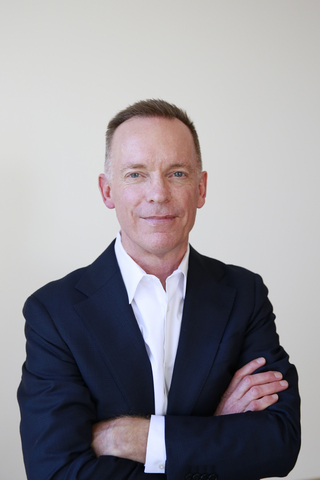
Milliman, Inc., a leading global actuarial and consulting firm, today announced that Jim Fulton has been named Milliman’s next Chief Executive Officer. Fulton has served as Milliman’s Chief Financial Officer since 2015 and has been a leader driving the firm’s organic growth and M&A strategy.


This press release features multimedia. View the full release here: https://www.businesswire.com/news/home/20260811027168/en/


Milliman, Inc., a leading global actuarial and consulting firm, today announced that Jim Fulton has been named Milliman’s next Chief Executive Officer. Fulton has served as Milliman’s Chief Financial Officer since 2015 and has been a leader driving the firm’s organic growth and M&A strategy.

Milliman, Inc., a leading global actuarial and consulting firm, today announced that Jim Fulton has been named Milliman’s next Chief Executive Officer. Fulton has served as Milliman’s Chief Financial Officer since 2015 and has been a leader driving the firm’s organic growth and M&A strategy.


Fulton’s appointment reflects Milliman’s evolution from an actuarial firm to a multidisciplinary consultancy, risk management, and technology solution provider. His expertise includes stints with Big 4 accounting and private equity-owned firms as well as technology startups. Fulton’s complementary perspective has helped fuel Milliman’s emergence as a data and technology firm that continues to be the gold standard in actuarial consulting.


“Jim Fulton is the ideal leader as Milliman continues to grow and change in this complex and evolving environment,” said Milliman Chair Bret Linton. “Jim knows Milliman and has been integral in our growth over the last decade. He lives our mission of serving our clients to protect the health and financial well-being of people everywhere.”


Fulton has spent over 30 years as an executive and Certified Public Accountant (US), leading teams across technology and professional service firms. He began his career at PwC, where he spent 12 years as part of the assurance practice. From 2002 to 2011, Fulton was the chief financial officer and a partner at Crowe, a top US accounting firm. From 2011 to 2015, Fulton worked for a small venture capital firm at the University of Notre Dame’s Innovation Park, helping launch tech and data analytic startups. Fulton is a graduate of Indiana University in Bloomington, Indiana.


“Milliman continues to be the trusted advisor to our clients, who look to us for deep expertise and data-driven solutions,” said Jim Fulton. “In the 11 years I’ve served as the firm’s financial leader I’ve come to know Milliman’s remarkable people. I’ve seen how our talent and commitment to clients continue to be our differentiator. I’m looking forward to helping shape Milliman’s future as we continue to grow and evolve.”


Fulton succeeds Dermot Corry, who is retiring after completing a five-year term as CEO and a 44-year career. During Corry’s tenure, Milliman continued its growth, made nine acquisitions, and diversified its mix of data resources, sophisticated analytics, and deep expertise.


“Milliman is a unique organization, with a commitment to independence and quality that attracts brilliant minds and cultivates innovation,” said Dermot Corry. “It has been an honor to serve as CEO of Milliman. I couldn’t be more excited for Jim as he assumes the CEO role. I wish him the best and know that Milliman will be in good hands.”


About Milliman


Milliman leverages deep expertise, actuarial rigor, and advanced technology to develop solutions for a world at risk. We help clients in the public and private sectors navigate urgent, complex challenges, from extreme weather and market volatility to financial insecurity and rising health costs—so they can meet their business, financial, and social objectives. Our solutions encompass insurance, financial services, healthcare, life sciences, and employee benefits. Founded in 1947, Milliman is an independent firm with offices in major cities around the globe. Visit us at milliman.com.


Milliman names Jim Fulton next CEO


View source version on businesswire.com: https://www.businesswire.com/news/home/20260811027168/en/


Milliman names Jim Fulton next CEO

Wipro Seating Solutions Launches Dyān™, a Seating Collection Inspired by Yoga, Mindfulness and Human-Centric Design

Wipro Seating Solutions Launches Dyān™, a Seating Collection Inspired by Yoga, Mindfulness and Human-Centric Design

Business Wire India

Wipro Seating Solutions, part of Wipro Consumer Care & Lighting’s Commercial and Institutional Business (CIB), announced the launch of Dyān™, a new seating collection inspired by the principles of yoga, mindfulness and conscious living.

As workplaces and homes increasingly prioritise well-being, flexibility and human-centric design, seating is evolving beyond functionality to support healthier ways of working and living. Rooted in Wipro’s philosophy of Innovation for Human Spaces, Dyān™ is designed to encourage natural movement, posture variation and moments of pause, creating more engaging and mindful environments.

Commenting on the launch, Anuj Dhir, Senior Vice President and Business Head, Commercial and Institutional Business, Wipro Consumer Care & Lighting, said, “At Wipro CIB, we believe great design begins with understanding how people interact with spaces. With Dyān™, we set out to create a seating collection that encourages movement, supports well-being and responds to the realities of increasingly sedentary lifestyles. Inspired by the principles of yoga and mindful living, the collection combines ergonomic design, organic forms and sustainable materials to create experiences that are both purposeful and deeply human.”

The Dyān™ collection comprises four distinct seating solutions designed to support different ways of sitting, moving and engaging with a space. Inspired by the principles of yoga and mindful living – and derived from the Sanskrit word Dhyān, meaning focused awareness and meditation – the collection reflects the ideas of balance, alignment and conscious movement.

  • Eka™ – an active seating chair inspired by the tulip, designed to encourage movement and dynamic sitting.
  • Erth™ – a floor-level seating solution inspired by the calla lily, suitable for meditation, stretching and informal activities.
  • Matsya™ – a rocking chair inspired by the fluid movement of a whale, promoting relaxation and gentle motion.
  • Mudra™ – a swan-inspired chair that blends sculptural aesthetics with ergonomic comfort for informal and collaborative settings.

The collection has been endorsed by Swasti Yoga Center and certified by IndiaErgo, reinforcing its ergonomic credentials. Crafted using 80% recycled material, Dyān™ also reflects Wipro’s commitment to sustainable design through durable and environmentally responsible processes.

Further strengthening its design credentials, Dyān™ Erth has been recognised with the Red Dot Design Award 2026 for its integration of ergonomics, well-being and sustainability. The Dyān™ collection is available across Wipro’s #MyWiproVerse Experience Centres in Pune, Hyderabad, Chennai and Bengaluru where customers, architects and designers can experience the collection firsthand.

For product queries, please contact:

Toll Free Number: 1800-22-8222

https://wiproseatingsolutions.com/dyan

Wipro Seating Solutions Launches Dyān™, a Seating Collection Inspired by Yoga, Mindfulness and Human-Centric Design

PHDCCI Delegation Meets Piyush Goyal at India–SACU PTA ToR Signing

PHDCCI Delegation Meets Piyush Goyal at India–SACU PTA ToR Signing

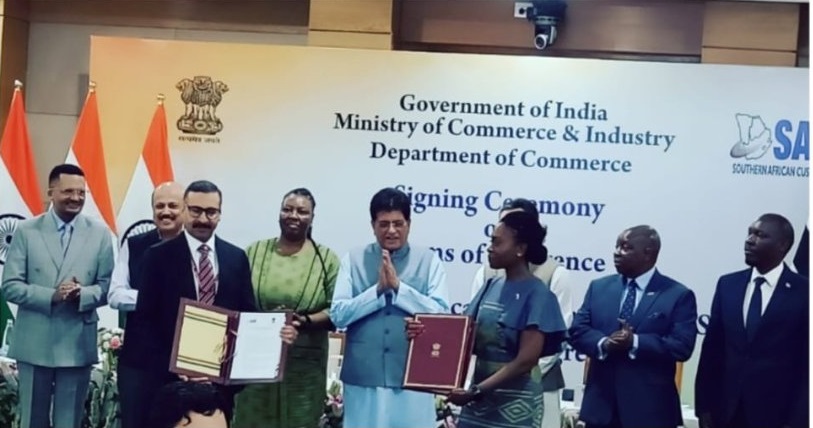
New Delhi, August 14, 2026: A delegation from the PHD Chamber of Commerce and Industry (PHDCCI) met Union Commerce and Industry Minister Piyush Goyal at Vanijya Bhawan, New Delhi, on August 12 during the signing of the Terms of Reference (ToR) for the proposed India–Southern African Customs Union (SACU) Preferential Trade Agreement (PTA).

The delegation included Dr. Ranjeet Mehta, CEO and Secretary General, PHDCCI; Sandeep Aggarwal, Senior Managing Committee Member; Sunil Mangla, Chair, Manufacturing Committee; Sanat Kumar, Chief Economist; and Rakesh Shukla, Secretary, PHDCCI.

The signing of the ToR marks an important step towards restarting formal trade negotiations between India and the five-member SACU bloc comprising South Africa, Botswana, Namibia, Lesotho and Eswatini. The framework is expected to guide discussions aimed at improving trade relations and expanding economic cooperation between the two sides.

During the meeting, the PHDCCI delegation congratulated Goyal on the development and appreciated the government’s efforts to widen India’s international trade partnerships and create greater market access for domestic businesses.

The proposed India–SACU trade arrangement could open new avenues for Indian exporters in sectors including automobiles and auto components, pharmaceuticals, engineering products, machinery, electrical equipment, chemicals and textiles.

PHDCCI reiterated its commitment to working with the government and industry stakeholders to strengthen India’s export ecosystem and help businesses identify and capitalise on emerging opportunities in Southern African markets.

NITI Aayog Consults Stakeholders on Transforming Vocational Education in Schools

NITI Aayog Consults Stakeholders on Transforming Vocational Education in Schools


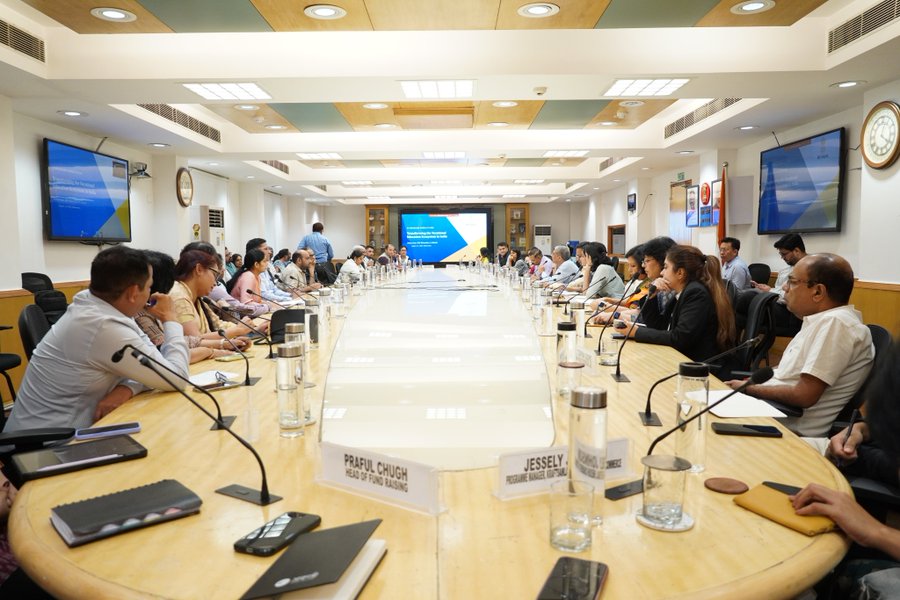
New Delhi, August 14, 2026: NITI Aayog organised a stakeholder consultation on “Transforming Vocational Education in India: Vocational Education in Schools”, chaired by Dr. Joram Aniya, Member, NITI Aayog, with the objective of strengthening the integration of vocational learning into school education.

The consultation brought together representatives from the Department of School Education & Literacy and other stakeholders to discuss ways to make vocational education more relevant, accessible and aligned with the changing requirements of the economy and labour market.

The discussions focused on improving the delivery of vocational education at the school level, strengthening links between education and employment, and creating greater opportunities for students to acquire practical and industry-relevant skills alongside academic learning.

The consultation also underlined the importance of closer coordination among policymakers, educational institutions, industry and skill-development organisations. Such collaboration can help ensure that vocational programmes reflect emerging opportunities and equip young people with skills needed for the future of work.

The initiative is in line with India’s broader efforts to build a more flexible and skills-oriented education system, where vocational pathways are integrated into mainstream schooling rather than being treated as an alternative to academic education. NITI Aayog’s ongoing work on education and skills seeks to support policy approaches that can contribute to a more capable and future-ready workforce.

President Murmu Honours Eminent Artists With Sangeet Natak Akademi Fellowships and Awards

President Murmu Honours Eminent Artists With Sangeet Natak Akademi Fellowships and Awards

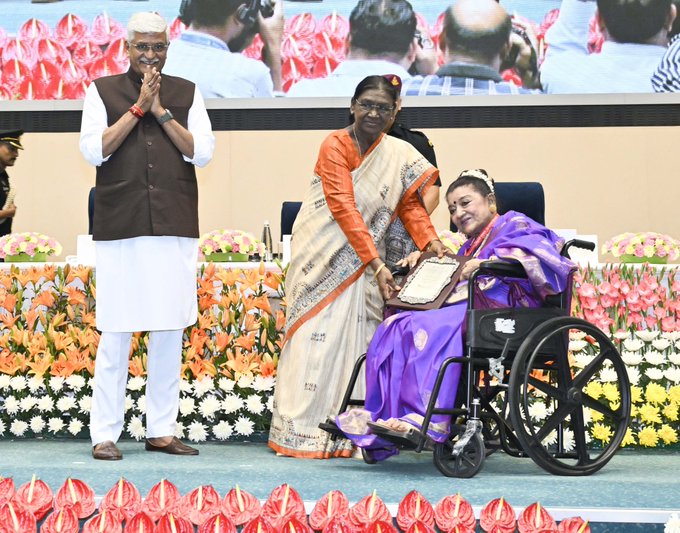
New Delhi, August 14, 2026: President Droupadi Murmu on Thursday conferred the Sangeet Natak Akademi Fellowships and Awards for 2024 and 2025 on eminent artists at a ceremony in New Delhi, recognising their contribution to India’s rich performing arts heritage.

The honours recognise achievements across music, dance, theatre, folk and tribal arts, puppetry and traditional performing arts. Seven distinguished artists were selected for the Akademi Fellowship, while the awards covered a wide range of artistic disciplines and traditions from across the country.

Addressing the gathering, President Murmu described artists as custodians of India’s collective memory and important contributors to the country’s cultural future. She highlighted how generations of artists have preserved traditions, languages, stories and artistic practices while allowing them to evolve with changing times.

The President also called upon senior artists and gurus to make systematic efforts to mentor and nurture the next generation, stressing that the continuity of India’s diverse artistic traditions depends on passing knowledge and skills to young practitioners.

The ceremony underscored the importance of performing arts not only as cultural expressions but also as a living link between India’s heritage and its future.