Archive: July 1, 2026

GST Collections Climb 14 pc to INR 1.95 Lakh Crore in June

New Delhi, July 1: India’s Goods and Services Tax (GST) collections continued their strong growth momentum in June, rising 14% year-on-year to ₹1.95 lakh crore, reflecting sustained economic activity and improved tax compliance across the country.

The robust collections were driven by healthy domestic consumption, higher business transactions, and continued improvements in GST compliance. The steady rise in revenue indicates resilience in economic activity across key sectors despite global uncertainties.

Experts believe the strong GST performance highlights the growing formalisation of the economy and the increasing adoption of digital tax systems, which have strengthened revenue collection and reduced tax leakages.

The healthy tax collections are expected to provide the government with greater fiscal flexibility to support infrastructure development, welfare programmes, and public investment while maintaining fiscal discipline.

The continued growth in GST revenues underscores the strength of India’s indirect tax system and signals positive momentum for the country’s economic outlook.

Agnikul, ICEYE Sign Pact for SAR Earth Observation Systems

New Delhi, July 1: Space technology startup Agnikul Cosmos has signed a strategic agreement with ICEYE to jointly develop advanced Synthetic Aperture Radar (SAR) Earth observation systems, marking a significant step towards strengthening India’s space-based imaging capabilities.

The collaboration aims to leverage the expertise of both organisations in developing next-generation SAR technologies capable of delivering high-resolution Earth observation data under all weather conditions, including day and night operations.

The partnership is expected to support applications across sectors such as disaster management, agriculture, environmental monitoring, infrastructure planning, maritime surveillance, and national security.

Officials said the collaboration aligns with India’s growing focus on expanding indigenous space technologies and building a robust commercial space ecosystem. By combining technological expertise, the two companies aim to accelerate innovation in satellite-based remote sensing solutions.

The agreement also reflects the increasing role of public-private partnerships and international collaborations in advancing India’s space sector and strengthening its Earth observation capabilities for both domestic and global markets.

IMI Kolkata Partners with West Bengal State Rural Livelihood Mission to Build Grassroots Entrepreneurship Capacity

IMI Kolkata Partners with West Bengal State Rural Livelihood Mission to Build Grassroots Entrepreneurship Capacity

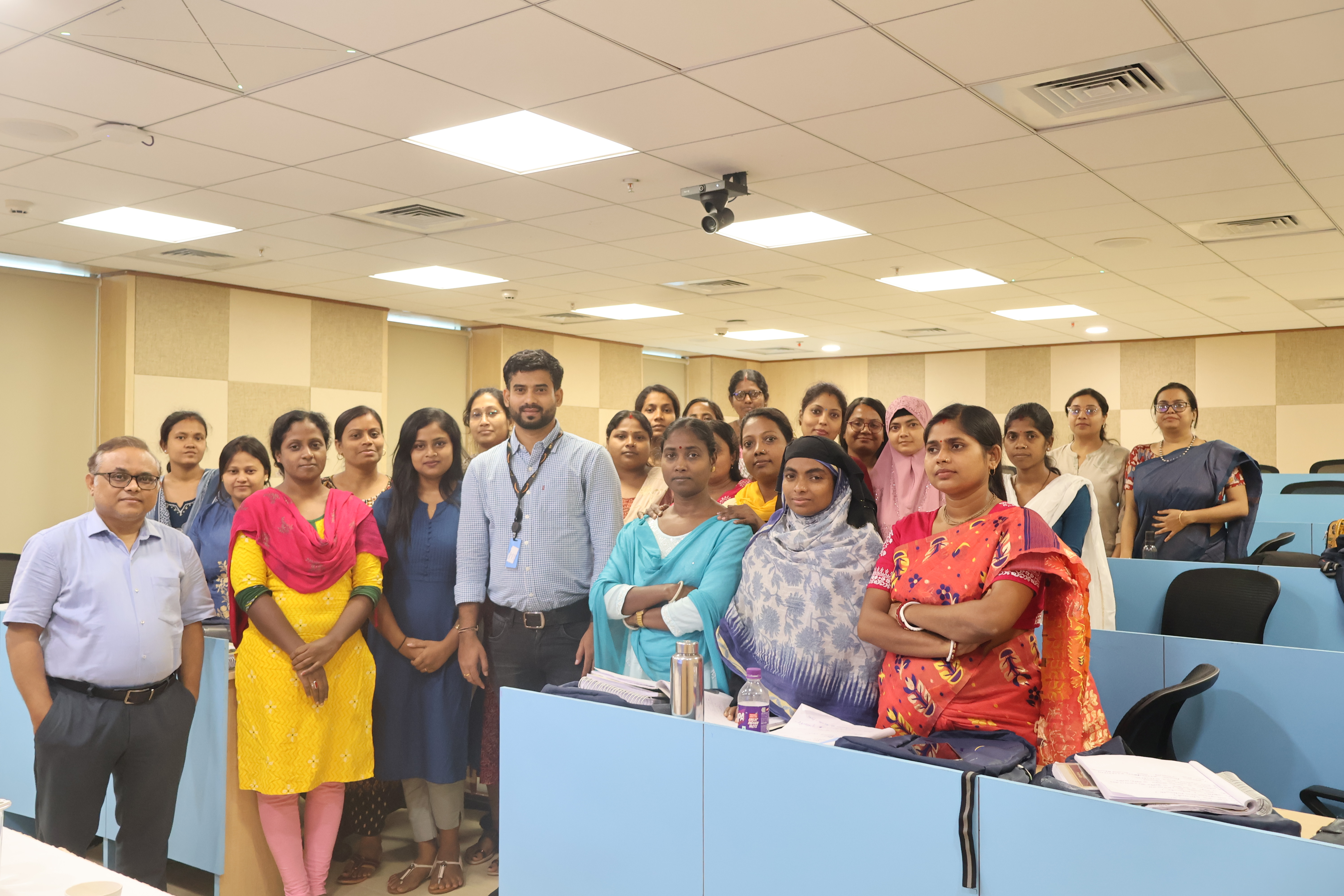
Kolkata, 1st July: West Bengal’s rural entrepreneurship sector has never lacked ambition. Across the state, women-led Self-Help Groups have consistently shown the willingness to build and grow businesses. What has been missing is access to structured training and effective support by individuals who understand grassroots realities.  IMI Kolkata, part of the RP Sanjiv Goenka Group, has partnered with the West Bengal State Rural Livelihood Mission (WBSRLM) to launch an intensive capacity building programme placing professionally trained facilitators directly inside rural communities across the state

The initiative is a deliberate choice by IMI Kolkata to direct management education towards rural livelihood economies, not just corporate boardrooms. The programme targets Business Development Service Providers (BDSPs), Community-Based Organisation representatives, and grassroots enterprise mentors. It covers 13 One Stop Facilitation Blocks spanning 8 districts of the state, under the Department of Panchayat and Rural Development, Government of West Bengal.

The 60-day residential programme at IMI Kolkata covers 44 topics across two modules, designed around the challenges rural entrepreneurs face at every stage. As rural commerce is changing fast, the curriculum prepares BDSPs to help entrepreneurs adapt. Participants gain hands-on exposure to platforms including ONDC, Amazon Karigar and Amazon Saheli, and IndiaMART for market access, alongside tools for digital bookkeeping, social media-led promotion, and artisan trade. AI-powered business planning tools, FSSAI food safety compliance, and MSME support frameworks are also woven into the curriculum. 

The Foundation Module takes up the first 35 days, grounding participants in the fundamentals of rural enterprise like financial literacy, pricing, sales, marketing, and business planning. The Growth Module follows over the remaining 25 days, equipping participants with the strategic tools to help enterprises move beyond subsistence into expansion and scale. The programme follows a hands-on learning approach. Each session begins with a real-life video case study, followed by expert-led learning, and ends with group discussions, quizzes, and workbook activities.  The programme culminates in a capstone project centred on a real business problem.

Upon completing the programme, BDSPs return to their respective districts and step directly into SHG networks. They will mentor rural women entrepreneurs, conduct business diagnostics, connect them to markets and digital commerce platforms, and support their transition from livelihood earners into growth-oriented entrepreneurs.

Dr. Mohua Banerjee, Director, IMI Kolkata, said, IMI Kolkata has always believed that management education carries a responsibility beyond the classroom. This partnership with WBSRLM is an expression of that belief. By equipping BDSPs with the tools, frameworks, and digital capabilities they need, we are not just training individuals. We are building an ecosystem that will directly shape the economic futures of thousands of women entrepreneurs across rural West Bengal.”

The vision of the model being built goes beyond the present cohort. With trained facilitators working closely within SHG networks across districts, it has been designed to be replicated and scaled over time. The larger goal is to create a rural entrepreneurship ecosystem that generates livelihoods, strengthens local economies, and creates opportunities across West Bengal and beyond. Through initiatives such as these, IMI Kolkata continues to strengthen its position as an institution that combines academic excellence with policy engagement and industry collaboration to create lasting value for society and address pressing development challenges. 

ManageEngine Launches a Developer Ecosystem to Supercharge Its Platforms

ManageEngine Launches a Developer Ecosystem to Supercharge Its Platforms

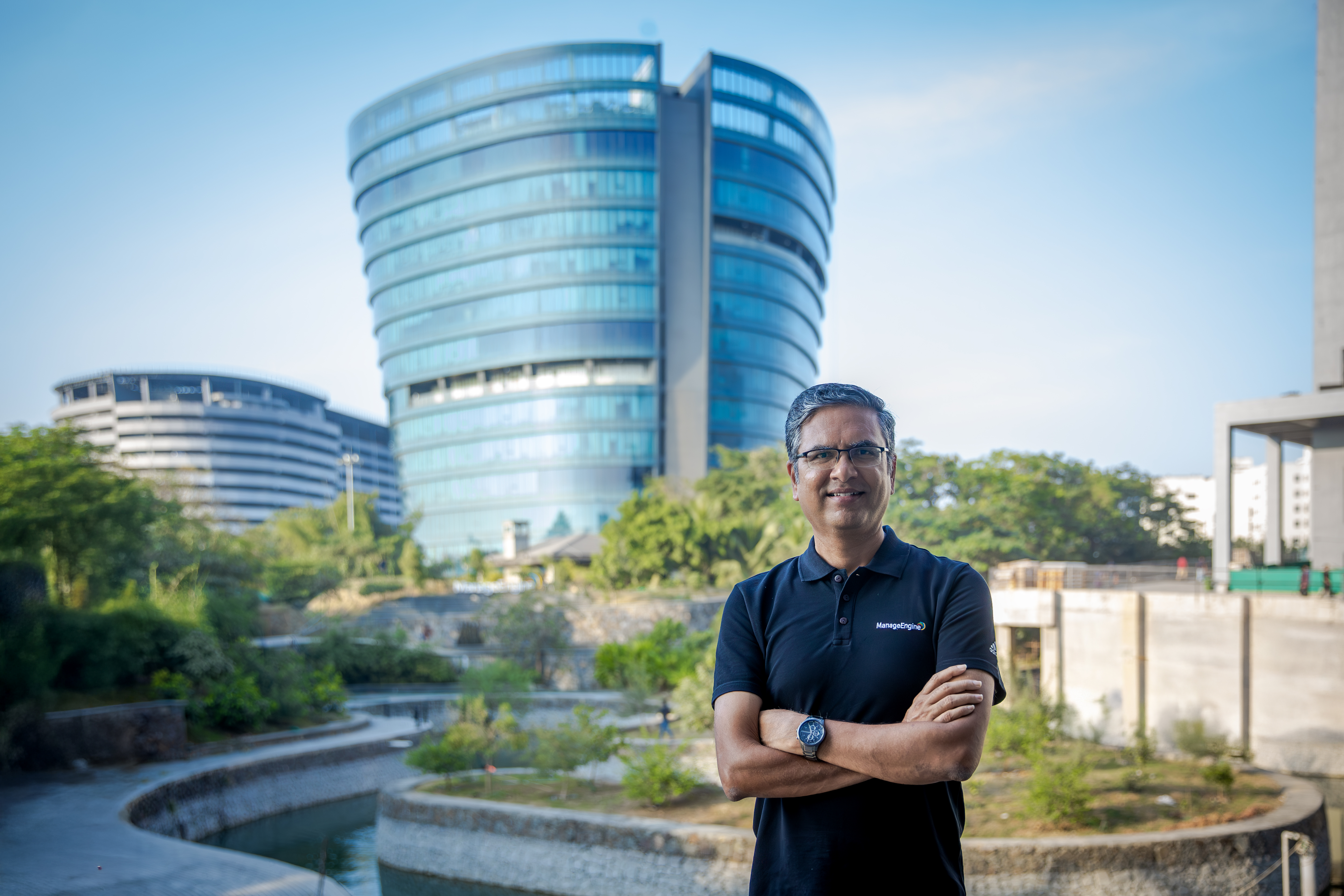
Cairo, Egypt  July 01: ManageEngine, a division of Zoho Corporation and a leading provider of enterprise IT management and security solutions, today announced the launch of a partner-developer ecosystem through its ManageEngine Marketplace, where enterprises can discover and deploy extensions for ManageEngine platforms, including integrations, add-ons, and plugins. The launch enhances ManageEngine‘s robust platform capabilities, enabling organizations to address a broader range of enterprise needs with specialized extensions from its partner ecosystem. 

“As software development becomes increasingly democratized through powerful AI tools, customers expect a secure, efficient, and agile way to extend the capabilities of their platformsManageEngine Marketplace enables developers to unlock possibilities beyond what ManageEngine builds natively while upholding the quality, security, and governance standards our customers trust us for,” said Rajesh Ganesan, CEO of ManageEngine. “We are excited to see our ecosystem of developers, partners, and customers innovate, collaborate, and grow through this initiative.” 

One-Stop Shop to Boost ManageEngine Platforms 

Enterprises today operate hundreds of IT solutions that need to work together as a unified tool chain to deliver niche business outcomes. The Marketplace brings specialized, developer-built capabilities, industry-specific functions, and custom extensions to customers on top of its purpose-built core platforms. This combination of platform strength and ecosystem-driven innovation accelerates solution development, expands customization possibilities, and helps enterprises address unique operational requirements effectively.

A Symbiotic Ecosystem 

ManageEngine Marketplace operates on a symbiotic model, where value compounds for every stakeholder.

  • ManageEngine develops enterprise-ready platform components and enhances core capabilities to handle the heavy demands of enterprises.
  • Partner-developers leverage ManageEngine‘s infrastructure, development tools, and business programs to accelerate the develop-deploy and go-to-market cycles.
  • Customers deploy specialized extensions built for their exact business challenges, turning platform capability into measurable outcomes.

ManageEngine solutions are widely used and appreciated by many of our European customers. Now, through the Marketplace program, we are a part of their platform journey. Marketplace has enabled us to transform our expertise into scalable solutions, create recurring revenue, and expand our market reach,” added Sivakumar Ramasamy, founder and CEO of ISNIA Technologies, a ManageEngine partner specializing in AI-enabled data solutions and enterprise automation.

A Build-and-Sell Framework, Designed for Security and Speed

Open by design, ManageEngine Marketplace allows partner-developers, independent software vendors, and customers to swiftly build and distribute extensions using ManageEngine‘s extension framework.

While the Marketplace is open to contributions from developers or partners, a dedicated team oversees validation, governance, and quality assurance for every submission, balancing open ecosystem innovation with enterprise-grade security and compliance. Every submission undergoes validation for functionality, security, and compliance before publication, ensuring ecosystem agility without compromising enterprise trust.
Adani Green Surpasses 20 GW Operational Capacity

Ahmedabad, July 1: Adani Green Energy has become the first renewable energy company in India to cross 20 GW of operational capacity, marking a major milestone in the country’s clean energy sector.

The achievement strengthens the company’s position as a leading player in India’s renewable energy transition, spanning large-scale solar and wind energy projects across multiple states.

The company’s expanded operational base reflects steady capacity additions over recent years, driven by rising demand for clean power and strong project execution in utility-scale renewable infrastructure.

Industry observers noted that crossing the 20 GW mark highlights the rapid scaling of India’s renewable energy ecosystem, as developers continue to invest in solar parks, wind farms, and hybrid energy projects.

With this milestone, Adani Green Energy further consolidates its role in supporting India’s long-term decarbonisation and energy transition goals.

Bus Fire After Collision on Jaipur–Bandikui Expressway in Dausa

July 1: A passenger bus caught fire following a collision on the Jaipur–Bandikui Expressway in Dausa district, Rajasthan, on Tuesday, leaving several people feared dead.

According to initial reports, at least 25 passengers managed to escape from the burning bus, while others are feared trapped inside.

Fire services and police teams rushed to the spot and are currently carrying out rescue operations. The exact number of casualties is yet to be confirmed.

Authorities have launched an investigation into the incident. Further details are awaited as rescue efforts continue.

Govt Revises Windfall Tax on Petroleum Products

New Delhi, July 1: The Government has revised the windfall tax structure on petroleum products, increasing the levy on petrol exports while reducing duties on diesel and aviation turbine fuel (ATF).

The updated rates are aimed at balancing domestic fuel supply priorities while responding to evolving global energy market conditions.

Officials said the revision reflects the need to ensure adequate availability of key fuels within the domestic market while maintaining a stable export framework for the energy sector.

The change in tax structure is expected to impact export margins for refiners, particularly in petrol shipments, while offering some relief to diesel and aviation fuel operations.

Industry stakeholders are closely monitoring the revision as it may influence refining economics and export strategies in the near term.

The government is expected to continue reviewing the windfall tax mechanism periodically in line with global crude price movements and domestic fuel demand conditions.

UPI Hits Record Daily Transactions as Growth Shifts from Volume to Value

By  Reeju Datta, Co-founder, Cashfree Payments on monthly UPI numbers.

“While the UPI volume for the month of June has decreased month-on-month, the month’s daily average of 757 million transactions is the highest ever recorded since the launch of UPI. These daily averages tell a very interesting story of how UPI has become the default mode of payment for low-value transactions.

From February to June 2026, daily UPI value has been flat, oscillating between Rs. 95,000 crore and Rs. 97,000 crore, even as daily transaction counts keep climbing. The average ticket size for UPI transactions has compressed from Rs. 1,445 in June 2024 to Rs. 1,273 in June 2026. This is because UPI has now become the default payment method for everyday small-ticket commerce across India. As a consequence, it has now saturated that segment with people preferring this method over cash. 

At this point in UPI’s growth, transaction count growth alone cannot increase transaction value going forward. Volumes growing at 23% a year with values growing at 20% is a sign of a healthy system. However, the next phase of volume growth for UPI will come from products like Credit on UPI and credit card on UPI. It introduces higher ticket sizes onto rails that currently run almost entirely on debit. When that scales, it will be visible in payment values.”

University of Wollongong India Announces Merit Scholarship for High-Achieving Students

July 1: The University of Wollongong, India, has announced the Merit Scholarship for their Bachelor of Business , offering a 50 percentage tuition fee reduction for the first year.

With organizations increasingly relying on data-driven decision-making, graduates of the Business Analytics programme will be well-positioned to pursue careers across analytics, consulting, finance, technology, and emerging digital sectors.

This scholarship reflects the University of Wollongong India’s commitment to nurturing talent in India and strengthening its long-term engagement with the country’s higher education ecosystem, and empowering high-achieving students by making global education more accessible and helping them develop the skills and international exposure needed in today’s interconnected workforce. 

Applications for the upcoming intake are now open, and prospective students are encouraged to explore the scholarship opportunities as part of their admission process, as there is no separate application needed.

The application deadline is 31st July 2026.

Scholarships available: Unlimited

Commencement: Trimester One 2026 (July 2026)

Enrolment status: Enrolled at census for the commencing session and fees for the first trimester of study fully paid by the last date to pay course tuition fees for the session. 

Degree: Bachelor of Business  ,Finance and Business Analytics

Eligibility Criteria: Students must be commencing a Bachelor’s program at UOW India in 2026, have a WAM of 75% or above, or 70% in a competitive exam with a WAM 65%.   

Applications for 2026 entry are now open. Further information on eligibility criteria and the application process is available on the University of Wollongong India website.

https://www.uow.edu.au/india/support/scholarships/merit-scholarship—undergraduate/ 

UPI Transactions Jump 23 pc in June, Hit 22.72 Billion

New Delhi, July 1: Unified Payments Interface (UPI) continued its strong growth trajectory in June, recording a 23% year-on-year increase in transaction volume, which rose to 22.72 billion transactions, according to the latest data.

The surge reflects the continued expansion of digital payments across India, driven by increasing adoption among consumers, merchants, and small businesses. UPI has further strengthened its position as the country’s most widely used real-time payment system.

The growth in transactions highlights the deepening penetration of digital payment infrastructure, particularly in urban as well as semi-urban and rural markets. Higher usage across retail payments, peer-to-peer transfers, and merchant transactions contributed to the overall rise.

Market observers noted that the consistent increase in UPI usage underscores India’s ongoing shift toward a cash-light economy, supported by fintech innovation and improved digital access.

Officials and industry stakeholders expect transaction volumes to maintain upward momentum in the coming months as more services and use-cases continue to integrate with the UPI ecosystem.