Archive: January 31, 2026

Baat Bharat Ki on Panchjanya’s 79th Foundation Year: A Deep Dialogue on India’s Unity, Development, and Culture
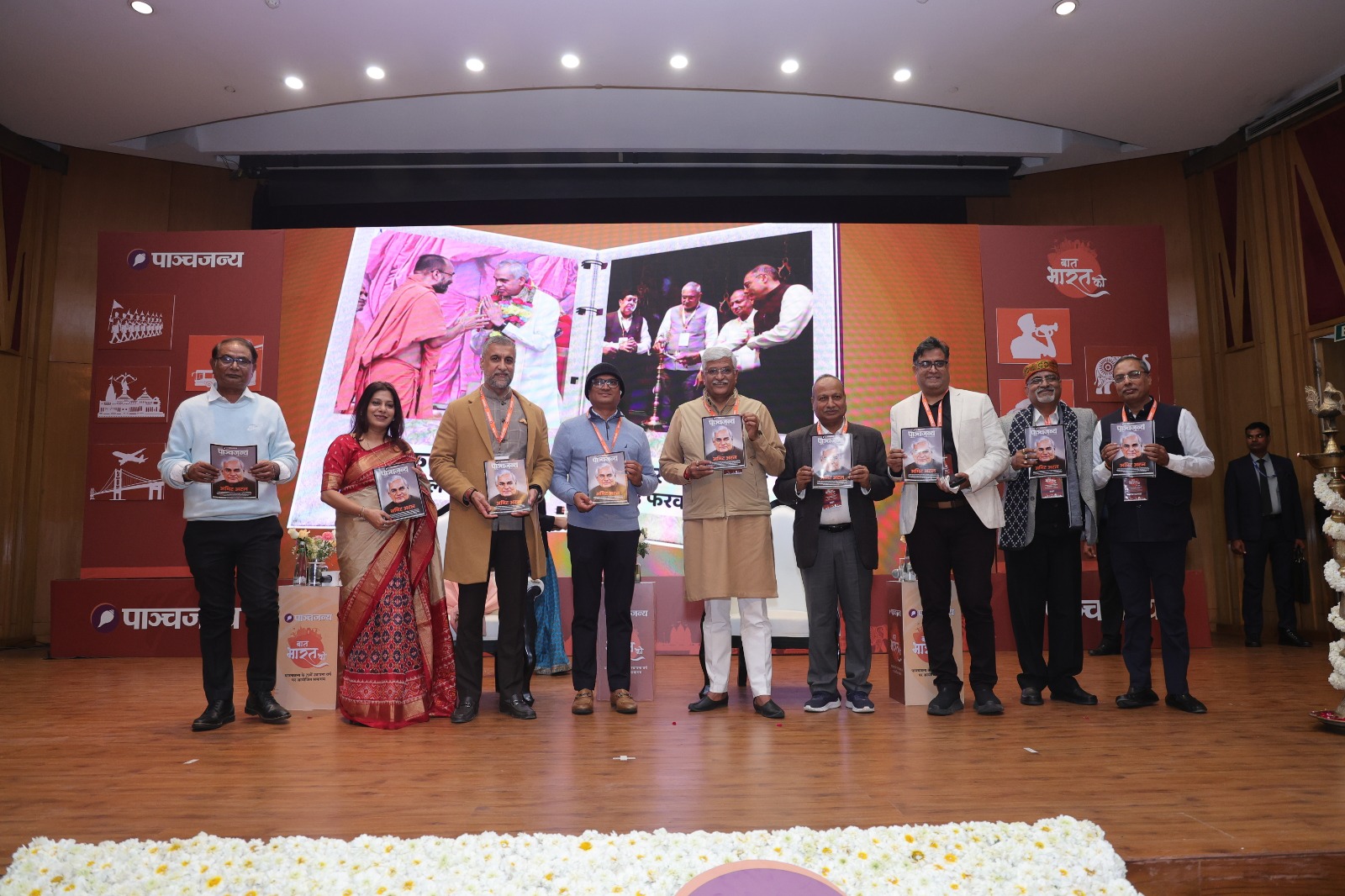
Baat Bharat Ki on Panchjanya’s 79th Foundation Year: A Deep Dialogue on India’s Unity, Development, and Culture

The event Baat Bharat Ki,” organized on the occasion of Panchjanya’s 79th foundation day, left everyone deeply reflective. It became a powerful platform where stalwarts from politics, spirituality, education, and culture spoke openly and candidly. From Union Ministers to spiritual leaders, everyone shared their perspectives on India’s challenges and possibilities. Key discussions revolved around the growth of telecommunications, the issue of casteism, the spirit of Vasudhaiva Kutumbakam, cultural resurgence, and the role of the Rashtriya Swayamsevak Sangh (RSS). The atmosphere was so inspiring that it felt as though the soul of the nation itself was speaking.

India Emerges as the World’s Connectivity Hub

The program began with an address by Union Minister for Communications Jyotiraditya Scindia. Expressing pride, he described Panchjanya as part of his own family. Speaking on telecommunications, he said that India has now become the world’s largest connectivity hub. In 2014, the country had only 25 crore internet connections; today, this number has crossed 100 crore. Broadband connections have risen from 6 crore to 100 crore, and mobile users have reached 120 crore.

Scindia credited Prime Minister Narendra Modi for making the internet accessible to the common citizen, at the most affordable rates globally. Speaking on 5G, he noted that 30 crore people are already using it, and the 6G Alliance formed in 2023 has grown to 84 members. However, he also acknowledged challenges such as online fraud. To address this, the government launched the Sanchar Saathi app, which helps prevent data theft. So far, 1 crore 92 lakh fake connections have been blocked and mobile devices worth ₹1,000 crore recovered. For banks, the Financial Fraud Risk Indicator has helped prevent fraud worth ₹500 crore. Scindia clarified that while there was debate around pre-installed apps, these measures are not an invasion of privacy but a step toward enhanced security.

Dialogue as the Solution to Casteism

Spiritual leader Swami Deepankar spoke openly on casteism, asserting that dialogue is the solution to every problem. For the past 1,165 days, he has been on a journey to unite Hindu society, with 1 crore 15 lakh people already associated with this effort. He stated, “If we are united, we are safe.”

Commenting on caste-based census, he said that it is political leaders who keep caste alive; during events like the Kumbh Mela or the Jagannath Rath Yatra, caste distinctions disappear. Referring to atrocities against Hindus in Bangladesh, he appealed for unity. His poem, “Shwet bhi main hoon, shuddh bhi main hoon…” deeply moved the audience. Swami Deepankar acknowledged that change will take time, but affirmed that society will not be allowed to fragment.

Vasudhaiva Kutumbakam: India’s Gift to the World

Following this, Prof. Srinivas Varkhedi, Vice-Chancellor of the Sanskrit University, elaborated on Vasudhaiva Kutumbakam. He emphasized that it is not merely a phrase, but India’s gift to the world. The purpose of education, he said, is to shape individuals who view the entire world as one family.

He explained the concept of “Pancha Parivartan”, transformation beginning from the self, extending to family, society, nation, and finally the world. The phrase “Mata Bhumi: Putro Aham Prithivyah” does not merely mean calling the Earth one’s mother, but also taking responsibility for her protection. Transformation begins with the self and is rooted in a sense of duty.

Emphasis on Cultural Resurgence

Union Minister for Culture Gajendra Singh Shekhawat highlighted the theme of cultural resurgence. He noted that since 2014, more than 700 ancient artifacts have been brought back to India, compared to just 13 earlier. A cultural property agreement with the United States made this process easier.

Giving examples of “development along with heritage,” he mentioned the Kashi Vishwanath Corridor, Mahakal Lok, and the new Parliament House. Talking about the change in the youth, he said, “This New Year, lakhs of youth have opted for temples instead of parties. Mahakal has seen 7 crore devotees in the last year.” Shekhawat said, “When the Prime Minister is proud of our culture, it gives a boost to the confidence of the entire nation.”

RSS: Tradition Preserved Through Change

Finally, RSS leader Mukul Kanitkar spoke about the 100-year history of the Sangh. He said that the Sangh maintains tradition and accepts change, “Nitya Nutan, Chir Puratan.” He explained that nationalism and majority-ism are European ideas and that in India, “all those who think this land their motherland are Hindus.”

Emphasizing the importance of harmony, he said that it is not uniformity, but unity in diversity. Speaking on youth and patriotism, he said that “today patriotism is not about dying for the nation, but about living and contributing to the nation.” The Sangh accepts criticism, he said, but not anti-nationalism.

This program was not merely a series of speeches, it was a powerful message: India must be a united and strong nation.
Bharat Ke Super Founders on Amazon MX Player Redefines Entrepreneurial Reality Shows

MUMBAI, India Jan 31: Amazon MX Player’s Bharat Ke Super Founders continues to redefine the entrepreneurial reality space in Bharat, turning the pitch room into a high-stakes arena where belief is tested as intensely as balance sheets, and conviction carries weight as much as capital. Across the latest set of episodes, founders brought bold ideas, faced unfiltered scrutiny, and made decisions that could define the trajectory of their businesses. What unfolded was not just deal-making, but a powerful reflection of what it truly takes to build in Bharat today.

Bharat Ke Super Founders on Amazon MX Player Redefines Entrepreneurial Reality Shows

The momentum opened with Go Swasthya, a clean-food brand built on the belief that everyday staples should nourish without compromise. Backed by a profitable, no-burn model, strong D2C traction, and a 75 percent repeat rate, the founder confidently challenged the assumption that health comes at the cost of taste. A spirited exchange with Dr. A. Velumani on whether healthy food can also be enjoyable grounded the discussion in real Indian food habits. Nitish Mittersain exercised his one-on-one card and backed the clarity of thought with a INR 2 crore investment, reinforcing that businesses rooted in fundamentals continue to command trust.

Emotion took center stage with Organiko, a brand navigating the fragile intersection of innovation, pricing, and perception. As the founder spoke about recognition from the Government of India and the challenge of making a premium product accessible, the tone in the room shifted from interrogation to empathy. Suniel Shetty stepped in to steady the moment, while Dr. Velumani offered a sharp, practical insight on pricing. What followed was a rare moment of collective belief, as a conditional ₹1 crore commitment came together from multiple tycoons and the Market, lifting both the founder’s morale and the room’s energy.

That belief scaled further with ONYC, a children’s footwear brand built around ergonomics, safety, and affordability. With a bold vision of reaching ₹500 crore in turnover, the founders faced a defining negotiation when valuation expectations were tested. Dr. Velumani’s words, “What is right to do is not easy to do,” framed a tough but honest conversation. Suniel Shetty echoed the core ethos of the show, reminding everyone that impact is created when the right minds come together. The founders agreed to a ₹60 crore valuation, closing a multi-investor deal backed by the tycoons and the Market. In another strong moment, Avni Wellness demonstrated how purpose-led businesses rooted in women’s health and rural empowerment can rally collective support, securing funding after a call for shared responsibility from the panel.

The week culminated in a standout moment with Regrip, a clean-tech startup reimagining the tyre industry through circular economy principles. With operational scale, deep industry insight, and a compelling sustainability vision, the pitch sparked immediate interest. Ankur Mittal used his one-on-one card to probe deeper, while the Market responded with unprecedented enthusiasm. Regrip closed a landmark INR 20.25 crore investment, becoming the highest-funded deal on Bharat Ke Super Founders so far and reinforcing the show’s commitment to backing scalable, impact-driven innovation.

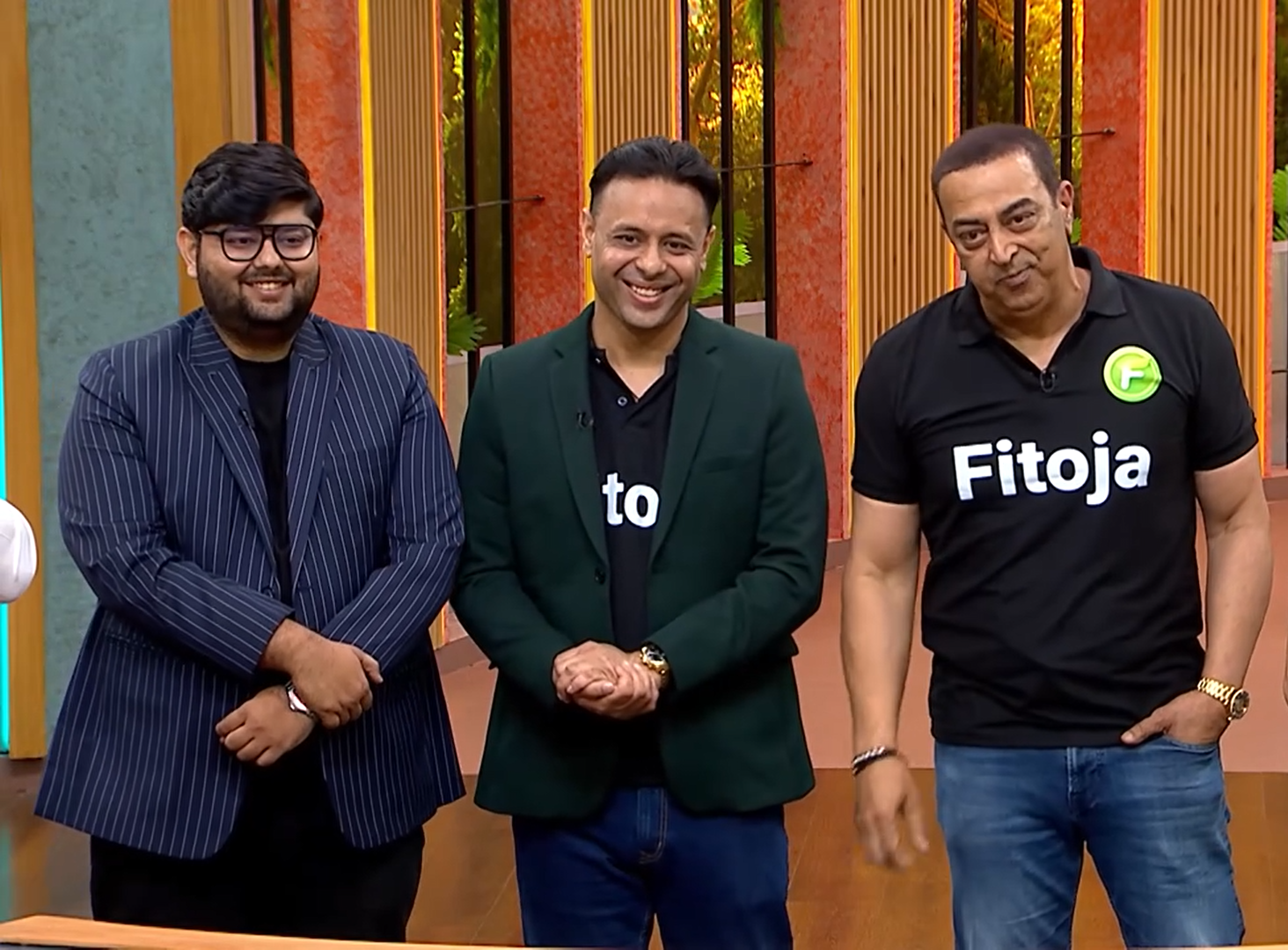
Alongside these headline moments, the pitch room featured captivating journeys from Trisu, a gender-agnostic silver jewellery brand built on advanced vermeil technology and personal legacy; Fitoja, a New Delhi-based health-tech startup blending Ayurveda and modern nutrition through an AI-powered digital wellness platform. Vindu Dara Singh (their brand ambassador) joined them; and Moodlift, an emotional support app addressing loneliness through judgment-free human connection. Together, these pitches added texture and depth, reinforcing that Bharat Ke Super Founders is as much about meaningful dialogue and long-term impact as it is about closing deals.

Hosted and mentored by the iconic Suniel Shetty and guided by a formidable panel comprising Dr. A. Velumani, Nitish Mittersain, Ankur Mittal, Dr. Aarti Gupta, Shanti Mohan, Shivam Mishra, Ahana Gautam, Srini Srinivasan, and Aditya Singh, Bharat Ke Super Founders continue to stand apart as a platform where credibility, capital, and conviction converge.

National Backwards Day: Turning January 31 Upside Down with Fun and Creativity

January 31 might seem like just another day on the calendar, but it’s a chance to break the routine and have a little fun. National Backwards Day, celebrated every year on this date, invites people to turn their world upside down—literally and figuratively—by wearing clothes backward or inside out, having dessert before breakfast, speaking backward, or even walking backward (safely, of course!). The day is all about playfulness, experimentation, and stepping away from the ordinary, serving as a lighthearted reminder that looking at life from a new angle can be both refreshing and surprisingly fun.

What Is National Backwards Day?

National Backwards Day is an unofficial but beloved holiday that celebrates doing things “the wrong way”—on purpose. The rules are simple: reverse the normal order of things and enjoy the results. There’s no need for elaborate plans, no pressure, and no limits. You could write your name backward, swap the order of your meals, or completely flip your daily routine.

The beauty of this day lies in its freedom. Everyone can celebrate it in their own style, making it inclusive for kids, adults, families, schools, and workplaces alike.

A Bit About Its Origins

Though it doesn’t have centuries-old roots, National Backwards Day is believed to have originated in the 1960s. The idea reportedly came from Sarah Nicole Miller and Megan Emily Scott, who were looking for a fun way to pass the time while milking cows on a farm. Their playful experiments with reversing routines eventually became a tradition—and a holiday that encourages creative thinking.

Over time, the concept caught on, especially among schools and children’s communities, where a little rule-breaking is encouraged for learning and entertainment.

Backward Thinking in Culture

The idea of doing things in reverse has fascinated people for centuries. Take Dr. Seuss, for example—his books are full of playful chaos, backward logic, and imaginative scenarios. Stories like The Cat in the Hat thrive on nonsense and unconventional thinking, perfectly echoing the spirit of Backwards Day.

Even history’s great minds embraced backward thinking. Leonardo da Vinci famously wrote backward—from right to left—using mirror writing. Whether for secrecy, practicality, or intellectual curiosity, his reversed writing shows that backward thinking can also be a tool for creativity and innovation.

Why Celebrate Backwards Day?

1. Break Free From Autopilot

Most of us live on autopilot, following routines day after day. Backwards Day is a chance to shake things up, even just for a few hours. Try taking a different route to work, changing the order of your morning tasks, or doing something you usually avoid. It forces your brain to engage differently—and can make the ordinary feel new.

2. Spark Creativity and Playfulness

By flipping the expected order of things, Backwards Day encourages imagination. It reminds adults to play and children to enjoy harmless rule-breaking. Even simple acts, like speaking backward or writing in reverse, can inspire creativity and laughter.

3. Connect With Others Through Fun

Backwards Day is perfect for schools, offices, and social gatherings. Group activities—like inside-out clothing contests, backward games, or reversed lesson plans—bring people together, create shared laughter, and strengthen bonds.

Fun Ways to Celebrate

Here are some ideas to get started:

Reverse Your Wardrobe

Wear your shirt, sweatshirt, or hat backward or inside out. You can even mix mismatched clothes for extra flair.

Eat Backward

Start with dessert for breakfast, have dinner in the morning, or switch the order of foods on your plate. Eating backward makes mealtime playful and unexpected.

Flip Your Language

Say “goodbye” instead of “hello” when greeting someone. Try speaking short sentences backward, or write your name in reverse.

Reverse Your Routine

Do daily tasks in a different order. Relax before responsibilities, finish work before starting, or just mix up your usual schedule.

Backward Activities

  • Read a book from the last page to the first

  • Watch a movie backward (or sections of it)

  • Write with your non-dominant hand

  • Walk backward carefully

  • Play games or sports in reverse order

Share the Fun

Take photos or videos of your backward antics and share them on social media with #NationalBackwardDay. See how others around the world are celebrating, too!

Why Everyone Loves It

Kids adore Backwards Day for its chaos, creativity, and excuse to bend the rules. But adults benefit, too. The day encourages stepping out of rigid habits, fosters lighthearted fun at work or home, and gives everyone a chance to laugh at small mistakes or try something unexpected.

The Deeper Message

While it’s undeniably playful, Backwards Day carries a subtle lesson. Reversing habits, even briefly, teaches us to see things from different perspectives. Sometimes thinking backward is exactly what we need to move forward—whether in problem-solving, creativity, or personal growth.

In today’s fast-paced, serious world, the holiday reminds us to pause, experiment, and let go of perfection—even if just for a few hours.

Conclusion

National Backwards Day is more than a silly holiday—it’s an invitation to play, laugh, and think differently. Whether you embrace backward clothes, meals, routines, or simply enjoy the idea, the day encourages spontaneity, creativity, and joy.

This January 31, why not flip the script? Turn expectations upside down, have fun with the unexpected, and let a little backward thinking brighten your day. After all, sometimes a backward step is all it takes to move forward with fresh perspective—and a smile.

Understanding Me-Dam-Me-Phi: A Living Tradition of Balance, Memory, and Ancestral Reverence

The 31st of January passes like any other date on the calendar for most people. Offices function as usual, traffic flows, and daily routines continue uninterrupted. But in the valleys of Northeast India, especially across Assam, this day carries a far deeper resonance. For the Tai-Ahom community, January 31 is not just a date—it is Me-Dam-Me-Phi, one of their most sacred and emotionally significant festivals.

More than a ritual or a religious observance, Me-Dam-Me-Phi is a living philosophy—a bridge between the past and the present, between the living and the departed, between human action and cosmic order. It is a festival that speaks of gratitude, remembrance, balance, and the enduring belief that those who came before us continue to guide and protect those who come after.

The Meaning Behind Me-Dam-Me-Phi

The term Me-Dam-Me-Phi is derived from the Tai language and is deceptively simple in structure yet profound in meaning:

  • Me means offerings

  • Dam means ancestors or the departed

  • Phi means gods or divine spirits

Together, Me-Dam-Me-Phi signifies offerings made to ancestors who have transformed into divine guardians. This belief lies at the heart of Tai-Ahom spirituality—where death is not an end, but a transformation.

According to Ahom faith, when a person dies, the soul remains as Dam (ancestor) for a brief period before evolving into Phi (a godlike protector). These ancestral spirits are believed to watch over families, bless households, and safeguard communities from misfortune.

A Conceptual Framework Rooted in Culture

Beyond its religious identity, Me-Dam-Me-Phi can also be understood as a holistic framework of balance and awareness, aligning closely with universal ideas of selfhood, responsibility, society, and higher purpose.

At its core, the philosophy reflects four interconnected dimensions:

  1. Me – The Individual Self

  2. Dam – Action, Impact, and Consequence

  3. Me – The Social Self

  4. Phi – Philosophy, Purpose, and Universal Order

These elements are not abstract theories but lived realities, expressed through ritual, memory, and collective participation.

Me – The Individual Self

The first “Me” represents self-identity and awareness. It is the understanding of one’s roots, lineage, values, and responsibilities. In Ahom culture, identity is inseparable from ancestry. Knowing who you are means knowing where you come from.

Me-Dam-Me-Phi encourages individuals to reflect inward:

  • Who am I without my ancestors?

  • What values have I inherited?

  • How do I honour those sacrifices today?

This deep sense of self is not ego-driven but humility-driven—a recognition that personal existence is part of a much larger continuum.

Dam – Action, Impact, and Consequence

“Dam” symbolizes both ancestors and action. Much like a physical dam that controls water, human actions shape the flow of life—sometimes nurturing growth, sometimes causing disruption.

The Ahoms believe that ancestors observe the actions of the living. Every decision carries weight, every action leaves a trace. This belief instills a strong sense of moral responsibility, reminding individuals that life is lived not just for oneself, but for past and future generations.

In this way, Me-Dam-Me-Phi becomes a moral compass—urging people to act with restraint, respect, and foresight.

Me – The Social Self

The second “Me” shifts focus from the individual to community and society. Me-Dam-Me-Phi is not a private ritual alone; it is a collective celebration involving families, villages, and the wider Ahom community.

People gather, wear traditional attire, organize processions, and participate in cultural programs. This communal expression reinforces bonds of brotherhood, mutual respect, and shared heritage.

It asks vital questions:

  • How do my actions affect others?

  • Am I preserving or erasing culture?

  • Am I contributing to unity or division?

Through collective remembrance, Me-Dam-Me-Phi strengthens social harmony and intergenerational understanding.

Phi – Philosophy, Purpose, and Universal Order

“Phi” represents the higher order—the belief that life follows a cosmic balance governed by spiritual laws. Ancestors who become Phi are not feared; they are revered as protectors, guides, and symbols of moral authority.

This dimension aligns closely with broader Indian philosophical ideas of the immortal soul and its union with the supreme soul. Like many ancient traditions, the Ahom belief system views life as cyclical, purposeful, and deeply interconnected with nature.

Phi reminds people that progress without purpose is hollow, and development without roots is destructive.

Historical Roots of the Festival

The origins of Me-Dam-Me-Phi date back to 1606 AD, during the reign of Swargadeo Sukaphaa, the legendary founder of the Ahom dynasty. Historical records show that Sukaphaa performed Me-Dam-Me-Phi at Charaideo, a sacred site that remains central to Tai-Ahom history.

Over centuries, Ahom kings observed the festival after victories in war, during times of crisis, and to ward off impending danger to the state. The rituals symbolized gratitude to ancestors for protection and guidance.

However, during British rule, when the Ahom kingship came to an end, the festival suffered suppression and decline. It was only in the late 20th century that Me-Dam-Me-Phi regained public recognition, when the Assam Gana Parishad government declared January 31 a public holiday, acknowledging its cultural importance.

Rituals and Ceremonies

The day begins with prayers to the heavenly deities Chaufi and Dam Chaufi, regarded as gods of heaven. Worship is conducted by traditional Ahom priests—Deodhai and Bailung—who chant mantras in the Tai language, following ancient manuscripts such as Phralung and Banfi.

A total of ten Phi (deities) are associated with Me-Dam-Me-Phi, including:

  • Khao-Kham

  • Aai Laeng-Din

  • Laengdon

  • Dam Chau Phi

  • Ra-khin and Ba-khin

Every Ahom household establishes a Damkhuta, a sacred pillar placed near the kitchen, symbolizing the presence of ancestors. Offerings such as rice, meat, fish, eggs, vegetables, and homemade rice wine are presented with devotion and respect.

Beliefs About Life, Death, and Continuity

Central to Me-Dam-Me-Phi is the belief that the soul is immortal. After death, the soul transitions from Dam to Phi, merging with the supreme cosmic order while remaining connected to the family.

This belief closely mirrors ancient Indian and East Asian philosophies, including Confucian ancestor worship, highlighting the Ahoms’ deep civilizational roots.

The rituals are not acts of fear, but of gratitude—acknowledging that life today is built upon sacrifices made yesterday.

Significance in the Modern World

In today’s fast-paced, digital world, Me-Dam-Me-Phi offers a powerful reminder to pause and remember. It teaches that progress should not erase memory, and modernization should not come at the cost of identity.

The festival helps preserve language, rituals, oral history, and collective wisdom. For younger generations, it becomes an anchor—connecting them to their roots in an age of constant change.

A Festival, A Philosophy, A Legacy

Me-Dam-Me-Phi is more than a festival. It is a philosophy of life that honours the past, guides the present, and safeguards the future. It teaches respect—for ancestors, for nature, for community, and for universal balance.

At a time when societies worldwide are rediscovering the importance of roots and sustainability, Me-Dam-Me-Phi stands as a timeless reminder: we exist not in isolation, but as part of an unbroken chain of memory, responsibility, and purpose.

So, on this sacred day, the message resonates far beyond Assam—respect your roots, honour your ancestors, and live with balance.

The Architects of 2047: India’s Future and the Unharnessed Female Potential

By 2030, India’s working-age population will surge past 98 crores, a demographic peak that offers a once-in-a-century opportunity. The Economic Survey 2025–26 makes it clear that merely having numbers is not enough; harnessing this dividend requires a decisive structural transition. Currently, only about 2.9 (≈3) out of every 100 working women in India have completed advanced higher education. To achieve the goal of transforming India into a developed nation by 2047 (Viksit Bharat 2047), this figure cannot remain an outlier, it must become the norm.

The Economic Survey indeed suggest a necessary shift in policy thinking i.e., from viewing women through the lens of welfare to positioning them as drivers of growth. Hence, the upcoming Budget is expected to prioritize the structural migration of women from low-productivity agrarian roles into high-value manufacturing and technology-driven sectors. Fiscal measures that support skilling, formalisation, and sector-specific employment absorption would be needed to reduce the cost of this transition for both workers and firms.

To bridge the skills gap necessary for this transition, the Budget may introduce a decisive push in STEM education. A new wave of targeted STEM scholarships and vocational hubs could transform today’s 2.9% into a formidable force powering high-value manufacturing and innovation. Acknowledging that empowerment is impossible without physical security, there is a strong anticipation for increased funding to scale urban housing initiatives like Tamil Nadu’s ‘Thozhi Hostels’ and the national ‘Sakhi Niwas’ program. Furthermore, the government is expected to address the need for flexible work environments. By incentivising firms that institutionalise flexible / hybrid work environment, India can unlock a massive, home-bound talent pool, especially among educated women.

Ultimately, the Union Budget must be more than a ledger of expenditures. It must signal national ambition by clearly integrating this transition into its priorities and allocations. If India is to rise to its $30-trillion destiny, it will not do so on infrastructure and innovation alone, it will have to harness the strength of its female workforce.

LinkedIn format

By 2030, India’s working-age population (age 15-59) will surge past 98 crores. The Economic Survey 2025–26 clarifies that sheer numbers are insufficient, and India requires a decisive structural transition to operationalise Viksit Bharat 2047. Currently, only 3 out of 100 working women in India hold advanced educational degrees (Post graduation or above). To achieve the goal of transforming India into a developed nation by 2047, this figure cannot remain an outlier, it must become the norm.

As we look toward Budget 2026, we anticipate a policy shift from “women welfare” to “women led growth” that is enabled through targeted interventions such as:

Sectoral Migration: Fiscal support for skilling and formalization to transition women from agrarian roles into manufacturing and tech.

The STEM Leap: Targeted scholarships and vocational hubs to bridge the skills gap and drive industrial innovation.

Urban Mobility: Expanded funding for safe, affordable housing like ‘Sakhi Niwas’ to reduce the barriers to city-based employment.

Flexible Frameworks: Incentivizing firms to institutionalize flexible work models, unlocking the vast talent pool of educated, home-bound women.

Ultimately, the Union Budget must be more than a ledger of expenditures. It must signal national ambition by clearly integrating this transition into its priorities and allocations. If India is to rise to its $30-trillion destiny, it will not do so on infrastructure and innovation alone, it will have to harness the strength of its female workforce.

Budget 2026 Industry-ready quotes from HealthTech, GCC, F&B & Startup leaders

Sharing ready-to-use Budget expectation quotes from founders across cloud infrastructure and education, highlighting key policy asks and long-term impact areas.

Scanbo

Industry: HealthTech | MedTech | Preventive Healthcare

Founder/Designation: Ashissh Raichura, Founder & CEO, Scanbo

India’s healthcare economics will only become sustainable when prevention moves to the centre of policy thinking. Today, spending is heavily skewed toward late-stage treatment, while early detection and screening remain underutilised. This Budget should prioritise digital diagnostics, non-invasive screening, and AI-led early detection through policy incentives and integration into public healthcare systems. Equally important is strong support for Made in India medical devices through targeted incentives, reduced GST, and rationalised import duties on critical components, to make advanced diagnostics affordable at scale. A preventive first, indigenous innovation approach is not just a healthcare decision; it is a long term economic imperative.

Zyoin

Industry: HR Tech | Talent Solutions | Startup

Founder/Designation: Anuj Agrawal, Founder & CEO, Zyoin Group

“Budget 2026 is India’s moment to supercharge its GCC story. With 1,900+ centres and 2 million professionals, we’re no longer the back office—we’re the brain trust. The expectation is clear: a Central GCC Policy that cuts through state-level fragmentation, bold incentives to push growth into Tier-2 cities, and serious investment in AI/ML skilling to close our 53% talent deficit. Nano GCCs are knocking—we need single-window clearances to let them in fast. The message to the world should be unmistakable: India isn’t just a destination for cost savings anymore. We’re where global innovation gets built.”

Qoot

Industry: F&B | Startup | Health & Wellness

Founder/Designation: Ravi Somani, Founder, Qoot Food

“The shift towards healthier eating in India is no longer aspirational—it’s structural. Consumers are actively moving towards clean-label, functional, and nutritionally balanced foods, but policy support has yet to fully align with this change. In the upcoming Budget, we hope to see targeted incentives for clean-label food innovation, clearer and more consistent regulations around health and nutrition claims, and stronger support for domestic food processing startups that are building responsibly from the ground up.

India has an opportunity to build a food ecosystem that prioritises nutrition, transparency, and scalability without compromising affordability. Simplifying compliance for health-focused food brands, encouraging R&D in nutrition science, and strengthening food processing infrastructure can significantly improve outcomes—not just for businesses, but for public health as a whole.

Encouraging nutrition-focused brands is not merely about expanding consumer choice; it has a direct impact on reducing long-term lifestyle-related health risks and, over time, lowering the burden on India’s healthcare system. A Budget that recognises food as a preventive health lever—rather than just a consumption category—will help create a more sustainable, health-conscious economy.”

Soumik

Industry: Business | Entrepreneurship | Startup Ecosystem

Founder/Designation: Soumik Bandyopadhyay, Founder & Director, Soumik Bandyopadhyay Advisors Pvt. Ltd.

“For entrepreneurs building long-term businesses, policy stability matters far more than short-term incentives. This Budget should reinforce ease of doing business through predictable taxation, simplified compliance, and smoother access to growth capital—especially for mid-sized and scaling enterprises.

Frequent regulatory changes increase uncertainty and divert founder attention away from innovation and execution. A confidence-driven policy environment allows entrepreneurs to invest, expand operations, and create jobs without constantly recalibrating for regulatory risk.

India’s startup and business ecosystem will thrive when policy frameworks reward consistency, transparency, and long-term thinking. A Budget that focuses on stability and execution will strengthen entrepreneurial

Cube Highways Trust Announces Proposed Acquisition of 4 Road Assets along with Q3 FY26 Results

New Delhi, Jan 31: Cube Highways Trust managed by Cube Highways Fund Advisors Pvt. Ltd.today announced its results for the quarter ended December 31, 2025. The Trust reported a total distribution of ₹ 551 crores for the quarter, including ₹ 2.00 per unit as interest, ₹ 0.77 per unit as dividend and ₹ 1.33 per unit as return of capital. The Board of Directors of the Investment Manager approved a Distribution Per Unit (DPU) of ₹ 4.10 for the quarter. Year-to-date FY26 distribution totals ₹ 1,371 crores, with a cumulative DPU of ₹ 10.20.

Pankaj Vasani, Group CFO of Cube InvIT, stated:

We continued to make strong progress in Q3 FY2026, leveraging our diversified portfolio and demonstrating effective execution and sustainable asset management. Revenue from operations rose to ₹ 30,767 Mn, up 25.01% year-on-year, while total consolidated income reached ₹ 31,696 Mn for the nine months supported by a robust 7.7% year-on- year traffic growth. EBITDA increased to ₹ 23,064 Mn, up 27.64% year-on-year, driven by operational optimization, efficiency gains, and strong cost discipline.

Liquidity remained strong with Net Debt at ₹ 169 Bn and a Net Debt/EV ratio of 46.86%, providing flexibility to pursue value-accretive opportunities. Total Assets Under Management (AUM) stood at ₹ 361 Bn. As we enter the last quarter of FY2026, we remain confident in our business strength and look forward to delivering lasting value for our unitholders.”

Vinay Sekar, CEO of Cube InvIT, stated: “Adding to the continued robust performance of our operations, we are pleased to announce the proposed strategic acquisition of four operational road assets – three toll and one annuity. The acquisition is expected to strengthen the Trust’s revenue base, enhance yield and NAV, expand debt capacity and improve portfolio diversification with the addition of predictable annuity cash flows and high-quality toll assets. These transactions are subject to, inter alia, unitholder and customary regulatory / third-party approvals.”

Cube InvIT continues to maintain AAA/Stable credit ratings from CRISIL, India Ratings, and ICRA.

The record date for the distribution is February 4, 2026, and the distribution payout will be made on or before February 11, 2026.

Pre-Budget 2026: Industry Leaders Seek Boost for Urban Connectivity and Green Manufacturing

As the countdown to the Union Budget 2026-27 begins, a sense of optimism is taking hold across India’s industrial and residential landscapes. With real GDP growth estimated at a steady 7.4% for the current fiscal year, industry leaders see this upcoming financial blueprint as a chance to synchronize the nation’s economic momentum with the practical aspirations of middle-class families and the needs of a modernizing manufacturing sector.

The Government’s focus on infrastructure is essential to improving overall economic growth. One key project is the Delhi-Panipat-Karnal Regional Rapid Transit System (RRTS), which is entering a critical stage. This 130km high-speed rail line will link Delhi to Panipat and Karnal in 90 minutes. These projects go beyond transportation, encouraging a new model of growth and turning urban corridors into busy residential and industrial areas.

While physical connectivity expands, there is a shared vision for supporting the financial health of the people moving into these new homes. The Cost Inflation Index (CII) has climbed from 240 in 2014-15 to 376 for the 2025-26 cycle. This shift suggests a natural opportunity to update home loan interest deductions under Section 24(b) to align with today’s market , effectively restoring the level of relief that families relied on a decade ago.

Supporting the Aspirations of Homeowners

Real estate and construction continue to play an outsized role in urban employment and in India’s gross value added. With the government outlining a longer-term vision of a developed economy by 2047, the sector is increasingly viewed as a bridge between infrastructure-led growth and the aspiration of home ownership for middle-income families. 

Mr Ravi Saund, Founding Director of Emperium Group, said the upcoming budget offers a chance to reinforce this link. “Budget 2026 is an opportunity to push the decongestion of major metros by incentivising investment in emerging urban corridors,” he said. “Measures such as rationalising GST or reintroducing input tax credit for under-construction homes would help early investors and support momentum in regions like Panipat and Gurugram. 

“There is also room to better align fiscal benefits with current realities. Enhancing the home loan interest deduction limit from 2 lakh to ₹5 lakh would ease pressure on salaried households and help more families move from renting to owning, which remains central to the Housing for All objective.”

Building a Competitive and Sustainable Industrial Future

Manufacturing firms are facing a related set of decisions as export markets place greater emphasis on sustainability benchmarks. For domestic producers, the challenge is increasingly one of cost and timing rather than intent alone. Solar investments have become progressively more viable, with capital requirements expected to settle around ₹3.5 crore per megawatt by 2025. For MSMEs, which account for roughly 45 % of India’s total exports, policy clarity in this area can materially influence how quickly adoption moves from planning to execution.

Commenting on the sector’s expectations, Mr. Divyam Shah, Whole-Time Director and Chief Financial Officer of Euro Panel Products Limited, said,

“The upcoming budget is an opportunity to align industrial growth with environmental responsibility. We expect a clear roadmap that supports domestic manufacturers, especially MSMEs, in shifting their production towards renewable energy. On the operational front, easing norms for domestic players and removing hurdles in GST input credits will be vital to free up working capital. By increasing depreciation benefits and simplifying tax structures, the government can provide the robust support system Indian manufacturers need to scale up and compete in international markets.”

This Union Budget is expected to be a milestone for India’s holistic growth, providing the structural support needed to sustain the current economic momentum. By addressing key areas in urban connectivity, middle-class tax relief, and sustainable manufacturing, the budget can facilitate a new chapter in India’s progressive trajectory toward becoming a $5 trillion economy by 2027.

AI Scales in India, with 75% of Enterprises Reporting Success, Yet Infrastructure Complexity Looms: New Report Finds

India, Jan 30: Indian organizations are deploying AI faster and extracting business value more aggressively than global benchmarks, but this momentum is increasingly constrained by rapidly escalating data infrastructure complexity and security pressures, according to new report by Hitachi Vantara, the data storage, infrastructure, and hybrid cloud management subsidiary of Hitachi Ltd.

The company’s 2025 State of Data Infrastructure Report, released recenty is based on a global survey of 1,244 business and IT leaders across 15 countries, including 104 respondents in India. Key findings show that:

89% of Indian organizations have either widely adopted AI or made it critical to operations, significantly exceeding the global average .

Nearly two-thirds of Indian organizations rate themselves as strong or established in achieving ROI from AI, above the global benchmark, indicating that India has largely moved beyond pilots into enterprise-scale deployment.

However, this acceleration comes with mounting pressure: 87% of Indian enterprises say their data infrastructure complexity is increasing rapidly or faster, compared with 80% globally

Indian enterprises have moved well beyond experimenting with AI and are now focused on delivering measurable business outcomes at scale,” said Hemant Tiwari, Managing Director, Hitachi Vantara, India & SAARC. “What’s becoming clear is that as adoption accelerates, infrastructure complexity is rising just as fast. The organizations that continue to pull ahead will be the ones that modernize their data foundations early, so AI momentum isn’t slowed by fragility, risk, or operational strain.”

Explosive Growth Drives Operational Strain

AI investment in India is expected to grow 75.6% over the next two years, outpacing the global projection of 70.3%. Data storage requirements will rise 73.9% versus 68.9% globally. Four in ten organizations (40%) now manage between 50 and 200 petabytes of data, compared to 31% globally, a critical growth band where infrastructure strain becomes acute.

This expansion spans increasingly fragmented environments. In India, nearly half (46%) of the organisations surveyed store operational data in public cloud, with even higher usage for general business data. This multi-environment reality creates governance, visibility, and control concerns, that intensify as AI workloads scale.

Security, A Dominant Concern

As AI adoption accelerates, security has become the dominant concern for Indian enterprises. Two-thirds (67%) cite data security as a leading challenge when implementing AI, placing India among the most security-conscious markets globally.

Indian organizations are responding with stronger governance frameworks and leadership alignment than many global peers:

81% report executive teams with clearly defined AI visions

79% have dedicated AI or machine learning teams

77% have defined KPIs and expected business outcomes for AI initiatives

Indian enterprises also lead in operational discipline. 71% rate their MLOps(Machine Learning Operations) capabilities as strong and established versus 63% globally, 63% have advanced governance models versus 49% globally, and 89% monitor AI performance versus 85% globally. Additionally, 54% have sustainability embedded in infrastructure versus 42% globally.

The survey found that 75% of Indian organizations report successful AI outcomes, with virtually no respondents reporting outright failures. The primary use cases driving this value include automating workflows generating insights , and improving productivity and decision-making (26%). Success drivers include, high-quality data robust monitoring employee adoption and skilled teams

The AI Readiness Divide: 45% of Organizations Risk Falling Behind

Beneath strong AI adoption and leadership alignment, a clear readiness gap is emerging. While 55% of Indian organizations have reached the managed or optimized data infrastructure maturity stages, the remaining 45% continue to operate with less mature foundations, making AI initiatives more resource-intensive and harder to scale reliably.

The divide becomes more pronounced at the operational level. Only 32% of organizations report having predictive, automated, and cost-efficient infrastructure scaling in place, limiting their ability to sustain AI ROI as data volumes and workloads grow.

“The real bottleneck for AI isn’t the models, it’s when the data backbone lags behind,” said Sanjay Agrawal, CTO, Head Pre-sales, India and SAARC region, Hitachi Vantara. “This report highlights that as Indian organizations operate at higher data volumes across hybrid environments, complexity and security risks increase rapidly. The organizations pulling ahead are those investing early in automation, governance, and data quality, so AI can scale predictably instead of becoming harder to control as it grows.”

Talent Gaps Drive Partner Reliance

Talent availability is emerging as one of the most significant constraints on AI growth in India. More than half (54%) cite hiring skilled workers as a top AI implementation challenge. To bridge these gaps, Indian enterprises are increasingly turning to external expertise. Seventy-six percent (76%) report working with partners or outsourcing key areas of their AI and data initiatives, higher than the global average, underscoring demand for trusted infrastructure and services partners as internal capabilities struggle to keep pace.

As Indian enterprises continue to lead in AI adoption and success, the path forward hinges on addressing infrastructure complexity, security, and talent gaps. By investing early in automation, governance, and data quality, organizations can sustain their AI momentum and unlock greater business value. With strong leadership, strategic partnerships, and a focus on modernizing data foundations, India is well-positioned to maintain its edge in the global AI race.

BRND.ME expands into Europe following strong momentum in the Middle East

BRND.ME expands into Europe following strong momentum in the Middle East

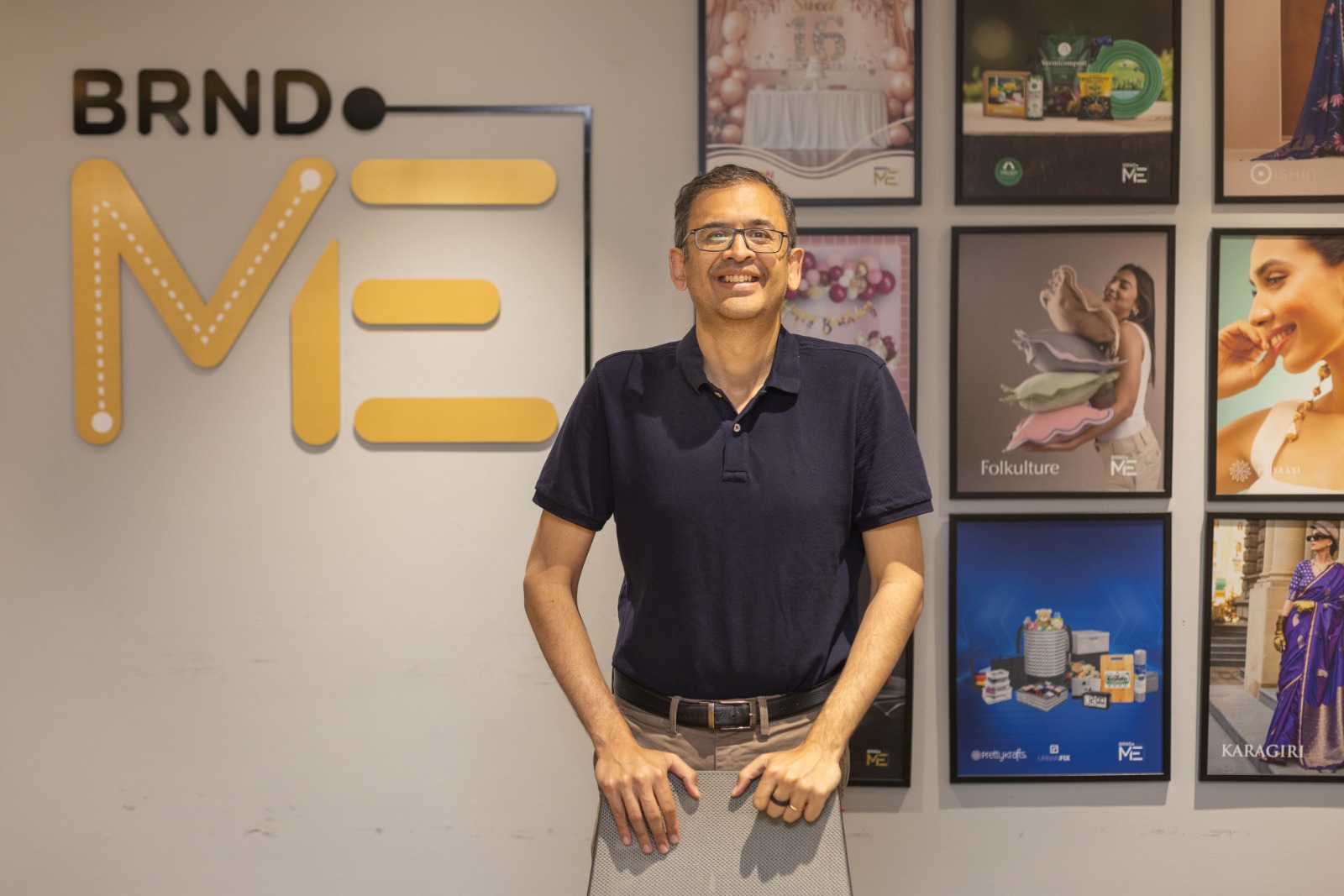
Bengaluru, Jan 31: BRND.ME (formerly Mensa Brands), a global consumer brands company building market-leading brands in India for the world, announces its foray into Europe with a presence across 7 countries, marking a major milestone in its international expansion journey. Following strong momentum in international markets such as the Middle East, US, and Canada, BRND.ME has entered the UK, Germany, France, and Spain, and will expand into Italy, the Netherlands and Poland over the next one year. The expansion is being led by the company’s haircare and aromatherapy brands, Botanic Hearth and Majestic Pure, and represents BRND.ME’s first structured entry into Europe.

Europe represents a $4B+ total addressable market (TAM) across the beauty category, spanning haircare and aromatherapy, supported by high digital adoption and strong consumer demand for effective and accessible products. In the introductory phase in Europe over the past 18 months, BRND.ME’s haircare and aroma therapy businesses have built early traction across the UK, Germany, France and Spain, through a digital-first distribution model and continues to expand into newer geographies across the continent. The haircare and aromatherapy business currently operates at approximately $6M in run rate, with Botanic Hearth and Majestic Pure currently delivering ~10% month-on-month growth, attributed to expansion and rising repeat demand across categories. BRND.ME has also appointed a General Manager, stationed in Germany to oversee the growth of the business in the region and is considering investing in a new warehouse and expand the team.

Early results from the region have been encouraging. Within weeks of launch, Botanic Hearth’s Rosemary Hair Oil ranked among the top 5 hair oils in Germany, validating strong consumer pull in one of Europe’s most competitive beauty markets.

Ananth Narayanan, Founder and CEO, BRND.ME. said, “Europe is a natural next chapter in our international expansion. Our European haircare and aromatherapy business today operates at around $6M in run rate and is poised to reach $ 10M in run rate by end of 2026. With Botanic Hearth and Majestic Pure, we see a clear opportunity to build scale through disciplined expansion, digital discovery and strong unit economics.”

BRND.ME’s Europe strategy is focused on repeat demand, efficient scaling and long-term brand building. The company is doubling down on TikTok-led discovery and D2C expansion, to drive high-intent consumer engagement, build brand equity, capture first-party data and improve margins over time.

The expansion also aligns with deepening EU–India trade engagement, strengthening long-term confidence across sourcing, supply chain and cross-border operations.

Looking ahead, Europe will play a central role in scaling BRND.ME’s international haircare and aromatherapy business to approximately $60M in annual run rate over the next 6 years, reinforcing the region’s importance within the company’s global growth roadmap.