Artificial Intelligence Takes the Spotlight at TiEcon Delhi 2024
New Delhi, March 12, 2024 – TiEcon Delhi 2024 flagship startup event by TiE Delhi-NCR was a roaring success, demonstrating the power of resilience and innovation in the startup ecosystem with the theme ‘The New Bharat: Confident | Bold | Inclusion’. The conference witnessed the celebration of entrepreneurial spirit, exclusive business networking opportunities, and the recognition of outstanding achievements through various awards.
The inaugural session commenced with a keynote address by Shri Sivasubramanian Ramann, Chairman of SIDBI. He said “The Fund of Funds for Start-ups (FFS) committed Rs 9,500 crore for the promotion of new ventures in the country. The commitment of Rs 9,500 crore has led to over 100 AIFs raising Rs 56,000 crore more. In line with the Start-up India Action Plan, the FFS aims to support development and growth of innovation-driven enterprises, including facilitating the funding needs for start- ups through participation in the capital of SEBI-registered Alternative Investment Funds.” Acknowledging the need to recognize and measure women’s contributions to the economy, he further added, “The participation rate for women in states has been constantly dropping and to look for rapid growth there is a need for women to be far more active players outside the home.”
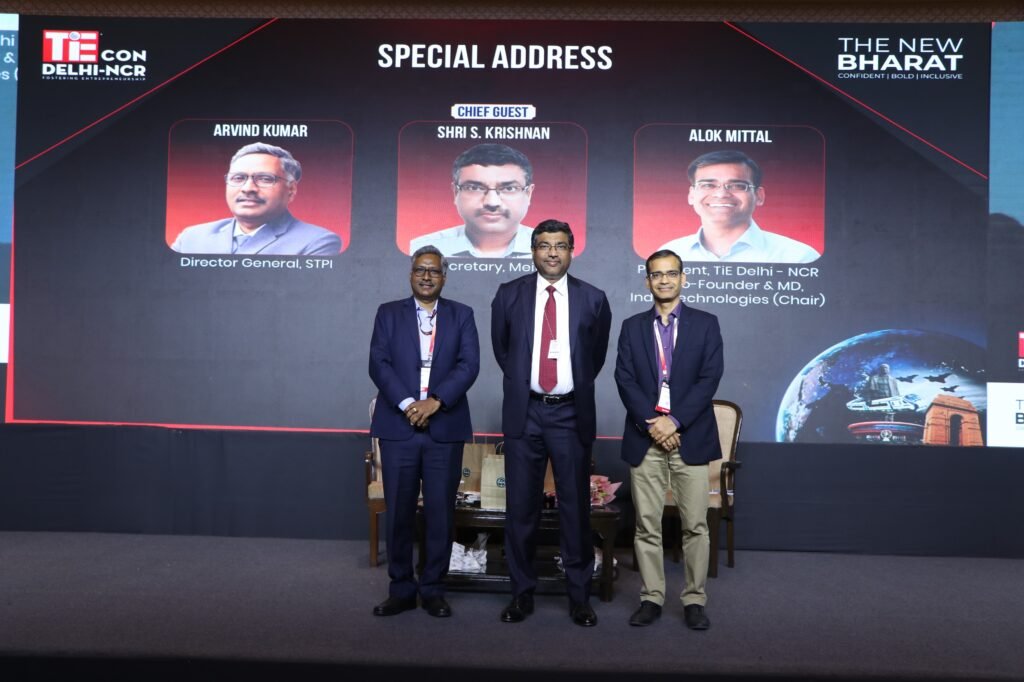
Speaking at TiEcon Delhi 2024, the esteemed Chief Guest at the event S Krishnan, Secretary of the Ministry of Electronics, and Information Technology (MeitY), highlighted the government’s commitment to fostering innovation and entrepreneurship. He said “The government’s target is that artificial intelligence graphics processing units (GPUs) under the government’s Rs 10,372 crore AI Mission will be available in the next 18-24 months. Aligned with the broader vision of the India AI Mission, these initiatives aim to bolster India’s global leadership, foster technological self-reliance, ensure ethical and responsible AI deployment, and democratize the benefits of AI across all strata of society.”
The TiEcon Delhi 2024 event, also announced its support for the– ‘Startup Mahakumbh’, the groundbreaking new initiative by Government of India scheduled to kick-off on March 18 th , 2024. It is a first-of-its-kind gathering, bringing together the key players in the startup ecosystem – from incubators and investors to accelerators.
In support of the Startup Mahakumbh initiative, Rajan Anandan, MD, PeakXV & Surge said “The Startup Mahakumbh is being brought together by the entire Indian ecosystem of startups, investors, incubators, accelerators, and industry experts across sectors. Several industry associations, such as TiE Delhi-NCR, ASSOCHAM and NASSCOM have all joined hands to put together the ‘Startup Mahakumbh’. With the aim of providing exposure to the upcoming startups, allowing them a platform to showcase their innovation.”
Vishal Dhupar, MD Asia South, NVIDIA further added to the vision of New Bharat. He said, “Let’s build the Intelligence in India and Export it. It will transform India from the Back Office of the world to ‘the Office’ of the World. India is a country of software engineers, and it is the time now for the country to start building its own AI models. The global data center industry is around USD 4 trillion which is going to double, and India has close to about 1-2 percent of the total global capacity. And we are going to take this whole world’s software into accelerated computing.”
TiEcon Delhi 2024 served as a platform for brands to share their insights with the larger ecosystem. Suchas the Report by Havas Media Network India in partnership with Klug titled ‘Echoes from Social Media Influencers: In shaping the cultural narratives in Tier 2 & 3 cities in India’. The report delves into the pivotal role of regional content creators in driving local language content, transcending mere translation to foster deep resonance and impactful communication beyond metropolitan areas. As digital media penetrates every corner of India, granting content access to all, the regional influencer economy is firmly taking root in the deeper sections of the country. With a focus on tier 2 and 3 cities, the report offers comprehensive insights into how these influencers shape cultural narratives, amplifying voices and influencing consumer behavior and preferences. Understanding these dynamics is essential for brands and marketers seeking to effectively engage with diverse audiences across India.
TiEcon Delhi 2024 also recognized the power of resilience and innovation in the startup ecosystem with three award categories. TiE Delhi-NCR & Power2SME celebrated the 10 th Season of the Spirit of Manufacturing Awards, honouring startups in the manufacturing domain for their remarkable achievements and innovations. The 16 th edition of the TiE-Lumis Entrepreneurial Excellence Awards, recognized startups who have demonstrated resilience. In addition to these, the conference marked the inaugural edition of the Startup CFO Awards in collaboration with Binary Semantics Ltd.
TiEcon Delhi 2024 was supported by acclaimed business and industry partners such as Startup India, Maruti Suzuki Innovation, Havas India, SAP, AWS, PeakXV, Microsoft, STPI, NETAPP Excellerator, and many more, reflecting the collaborative spirit driving India’s startup ecosystem forward.