Greater Noida, Feb 19: School of Medical Sciences & Research (SMSR) in collaboration with the School of Pharmacy, Sharda University has established the Centre for Drug Quantification and Therapeutic Drug Monitoring (CDQ-TDM); a specialized laboratory and first in the country, to detect and simultaneously quantify plasma levels of key second-line anti-TB drugs viz. bedaquiline, linezolid, levofloxacin, clofazimine etc. The aim is to provide advanced precision-based monitoring of anti-tuberculosis drugs used in the treatment of Multidrug-Resistant Tuberculosis (MDR-TB); to improve patient compliance and reduce the risk of developing resistance. The Centre is equipped with highly specialized analytical in strument (UPLC), and with the development of a cost-effective and reliable method, optimized treatment for MDR-TB can be made accessible to diverse patient populations across India.
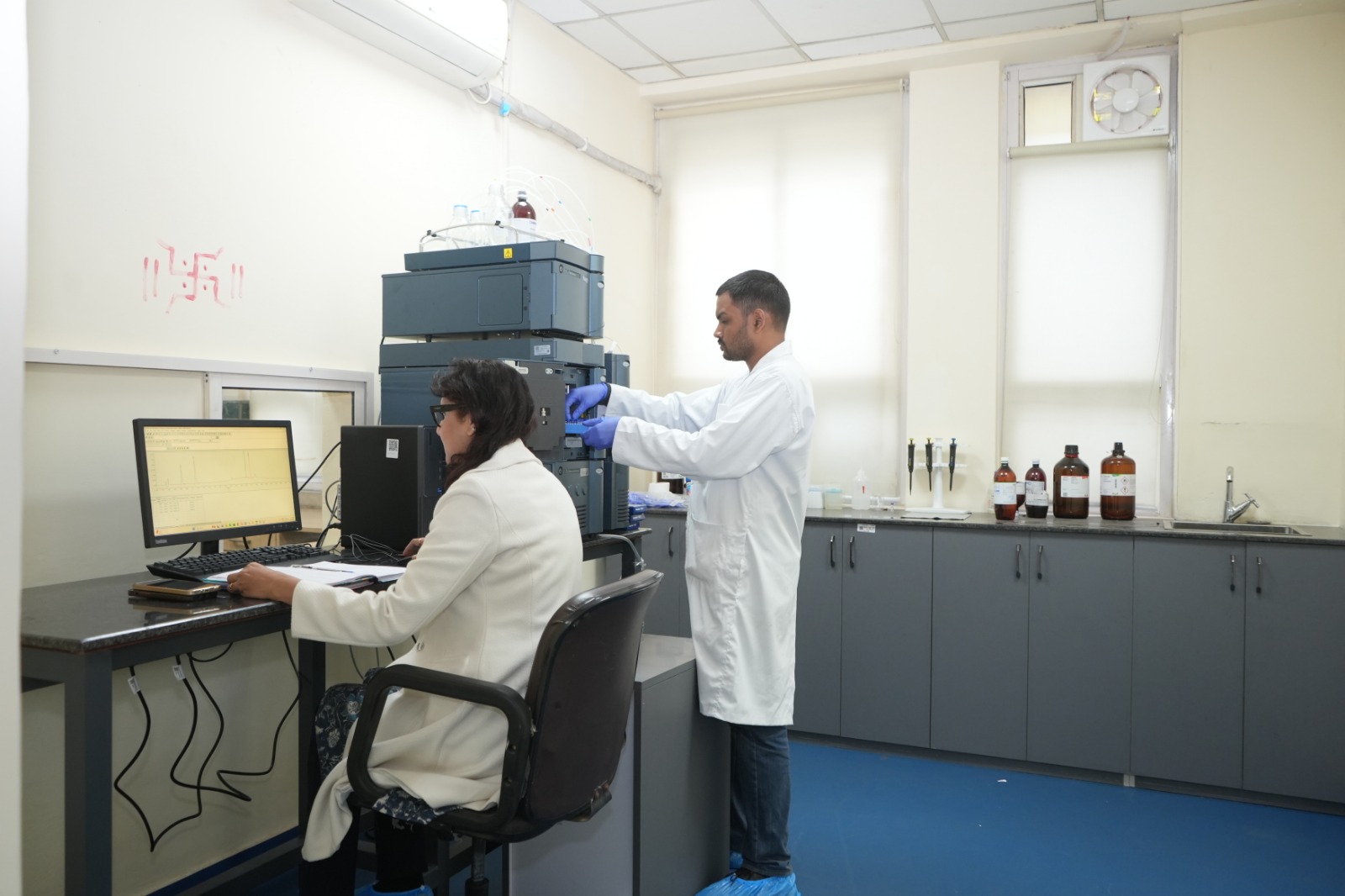
The Centre has been established with funding support from ICMR under a research project grant led by Dr. (Prof.) Shoma Mukherjee, Principal Investigator and Head, Department of Pharmacology, and Dr. (Prof.) Sandeep Kumar Shukla, Co-Principal Investigator. The initiative has been undertaken under the leadership of Shri P. K. Gupta, Hon’ble Chancellor; Shri Y. K. Gupta, Pro-Chancellor; Dr. (Prof.) Sibaram Khara, Vice Chancellor; Dr. (Prof.) Nirupma Gupta, Dean, School of Medical Sciences & Research; Dr. (Prof.) Bhuvnesh Kumar, Dean Research, Sharda University; and Dr. (Prof.) Ram Murti Sharma, Medical Superintendent.
Advanced LC-MS technology is often associated with high operational costs and difficult to use on a regular basis, the CDQ-TDM Centre uses an HPLC-based method that is accurate, reliable, and more affordable. Based on the advice of ICMR experts, SMSR have set up this laboratory with modern equipment, with the aim of developing it into a national referral centre for testing and monitoring anti-TB drug levels.
Drug-resistant tuberculosis continues to pose a major public health challenge in India, particularly in resource-constrained settings. Treating MDR-TB is often difficult because some patients experience side effects from medicines, while others may not get the right amount of the drug in their body. Too much medicine can cause harmful side effects, and too little can lead to treatment failure and make the disease even more resistant.
Dr. Shoma Mukherjee, Principal Investigator, stated ,
“From a research and clinical care perspective, the CDQ-TDM Centre represents a massive leap in how we manage TB. By quantifying the exact concentration of drugs in a patient’s blood, we move away from ‘one-size-fits-all’ dosages to evidence-based precision medicine. Our research focuses on bridging the gap between pharmacology and patient recovery, ensuring that the HPLC-based protocols we have developed provide actionable data for clinicians to save lives more effectively.”
Dr. (Prof.) Nirupma Gupta, Dean, School of Medical Sciences & Research said,
“The establishment of the Centre for Drug Quantification and Therapeutic Drug Monitoring reflects our commitment to bringing precision-driven, patient-centric care closer to those who need it most. By adopting a cost-effective and reliable HPLC-based technology, we aim to ensure that even patients in resource-constrained settings can benefit from accurate drug monitoring. This Centre is not just a laboratory, it is a step towards safer treatments, better outcomes, and stronger support for clinicians managing complex MDR-TB cases. Our vision is to develop it into a trusted national referral centre that contributes meaningfully to India’s fight against tuberculosis”.
Therapeutic Drug Monitoring helps doctors ensure that patients receive the right dose of medicine, enough to be effective, but not so much that it causes harm. With the launch of the CDQ-TDM Centre, SMSR & Sharda Hospital are taking an important step towards improving MDR-TB treatment through more accurate, patient-focused care.