Business Wire India
A Retrospective of Pioneering New York Moments
Some love stories take time. After decades of shared moments, Moncler reveals the story of its enduring relationship with New York through an expansive city-wide declaration of love.
The untold story of New York in Moncler began when snow met concrete. What could have melted instead endured, forging a love built on pioneering moments and strengthened with every chapter. They found each other, again and again. Decades later, their story is finally ready to be shared.
This press release features multimedia. View the full release here: https://www.businesswire.com/news/home/20260903072477/en/
NEW YORK IN MONCLER MIDTOWN MOUNTAINS
Revealed through one of the largest open-air public exhibitions the city has ever seen, New York in Monclerunveils the peak moments that capture the bond between New York and Moncler, transforming communal spaces across the city into a powerful retrospective gallery from September 9-13.
New York in Moncleris a very public display of affection;large-scale photographs will showcase unforgettable experiences born from more than twenty years of close collaboration and cultural exchange. Unfolding in a city-wide takeover, the exhibition culminates in a dedicated space within Grand Central Terminal’s Vanderbilt Hall.
The moments on display have shaped the brand’s evolution and helped establish the creative language that defines Moncler today: alpine-inspired design, not only celebrated as technical mountain apparel, but also as a global metropolitan symbol of style, protection, and human connection.
These landmark memories are further celebrated in a film released today, September 3, that brings to life the secret love story between Moncler and New York. Moving through special moments that have shaped the relationship over time – from shows and campaigns to the connections between the city, its people and Moncler – the film becomes a visual expression of this bond. Narrated by iconic New Yorker and close friend of the brand Alicia Keys, who passionately voices the story over her unreleased new music, it captures a relationship that continues to evolve.
Together, these milestones established New York as a Moncler muse – a city where Moncler demonstrated that fashion could deliver performance, provide a platform for creativity, and create shared cultural experiences.
A new chapter in the love affair is about to begin.
Just steps from Grand Central Terminal, Moncler will unveil its largest-ever global flagship, Moncler Fifth Avenue. The new location represents the latest in a series of highs, the ultimate expression of the love between city and brand – and a bricks-and-mortar embodiment of an incomparable connection. A space where the next decades of Moncler’s New York dreams can come true.
New York in Moncler will be on display at Grand Central Terminal’s Vanderbilt Hall and across New York City from September 9–13. Works on display include:
A Hudson Hike
Chelsea Pier, 2010
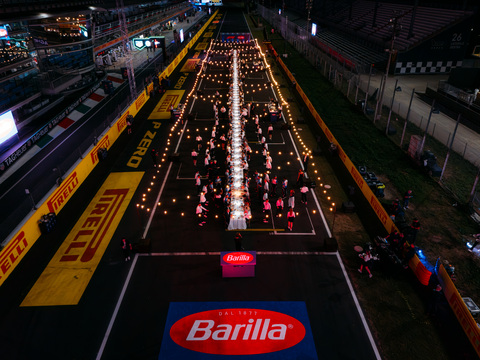
Moncler’s New York ascent began with the transformation of the iconic riverside site into an urban mountain, as 100 Moncler Grenoble-clad models scaled scaffolding in an immersive Fashion Week moment.
A Grand Groove
Grand Central Terminal, 2011
Grand Central Terminal’s Main Concourse became a surprise runway for Moncler Grenoble’s Fall/Winter New York Fashion Week presentation. 140 dancers, clad in technical alpine wear, captivated commuters with a synchronized performance.
A Central Skate
Central Park, 2012
Professional skaters, wearing red, white, and blue, took to Central Park’s Wollman Rink in a large-scale ice performance for Moncler Grenoble’s Fashion Week moment, accompanied by a live orchestra of New York musicians.
A Gotham Forest
Gotham Hall, 2013
Moncler Grenoble transformed New York’s Gotham Hall into an immersive installation, recreating a sense of the alpine outdoors in the heart of Manhattan with a tiered ‘Inner Forest’ formation of nearly 370 green-clad models.
A Ballroom Ballad
Hammerstein Ballroom, 2014
New York’s iconic music venue became a monumental performance machine, blending alpine vocal tradition with engineered choreography for the Moncler Grenoble Fall/Winter fashion show. Sixty choristers, arranged across a multi-level structure, formed the living backdrop for Swiss artists André and Michel Décosterd’s Pendulum Choir installation, performed on hydraulic platforms.
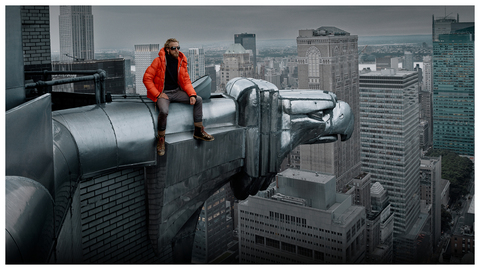
Midtown Mountains
Chrysler Building, 2014
Annie Leibovitz lensed the Moncler Collection Fall/Winter campaign, capturing model Simon Howell on top of the iconic Chrysler Building. Embodying the brand’s defining concept of a universal jacket that transcends seasons, trends, and borders, the image blurs the lines between mountain summit and the soaring skyscraper.
Art For Love
New York Public Library, 2015
Moncler’s Art For Love project, an initiative developed in support of amfAR, was presented at the New York Public Library during Fashion Week. Curated by Fabien Baron, the project invited 32 photographers to reinterpret Moncler’s iconic Maya jacket, transforming it from a functional garment into a canvas for a broader dialogue between fashion, photography, and philanthropy.
Image 1: Studiocat by American photographer Brigitte Lacombe presented an unexpected protagonist, turning the jacket into both protective cocoon and theatrical frame – a witty, character-driven interpretation of Moncler’s most recognisable silhouette.
Image 2: Camilla Åkrans’ A Surrealist Portrait with Flowers features a model enveloped by a dense floral arrangement, with the Maya jacket woven into a dreamlike composition. Known for her expressive portraiture and evocative use of natural elements, Åkrans transformed the functional garment into a poetic image that reflects her signature visual language of femininity, romance, and nature.
All Together
Lincoln Center, 2016
Moncler Grenoble’s landmark Fall/Winter New York Fashion Week presentation, staged in polar-vortex conditions, transformed the frozen plaza into a live performance stage. Eighty performers marched in step, in the extreme cold conditions Moncler’s technical outdoor dimension is designed to withstand.
Brooklyn’s Spike
Spike Lee, 2017
Seminal New York filmmaker and cultural chronicler Spike Lee attends the Moncler Grenoble Fashion Week presentation at the Hammerstein Ballroom in 2017 as a special guest.
People and Places
Vogue, 2017
In 2017, Vogue captured an array of stylish New Yorkers in their respective neighborhoods, showcasing individual expressions of personality against the city’s inspiring streets. Spotlighting an eclectic cast, the feature celebrated the versatility and effortless appeal of Moncler’s iconic puffers, presented in a range of vibrant shades and distinctive finishes.
Winter Runway
Sarah Jessica Parker, 2023
Originally co-created with Pierpaolo Piccioli for Moncler Genius in 2019, this couture-inspired puffer gown gained renewed cultural prominence in 2023. Worn by Sarah Jessica Parker, Piccioli’s design evolved from a runway experiment into a pop-culture emblem of New York winter.
A State of Mind
Alicia Keys, 2023
The cultural trailblazer and global icon’s co-created Moncler x Alicia Keys collection revisits personal memories of ‘90s New York, inspired by the possibility of the city’s concrete jungle. Oversized silhouettes, technical textures, and bold color, including Keys’ own signature purple, channel the sporty, magnetic energy of the streets that raised her.
SoHo Style
Penn Badgley, 2025
Shot on the storied streets of SoHo, the Moncler Collection Spring 2025 campaign starred acclaimed actor and New Yorker Penn Badgley, embodying a distinctly laid-back yet sophisticated take on metropolitan style.
The Red Carpet
Vittoria Ceretti, 2025
Moncler made its debut on fashion’s most fabulous stage alongside friend of the brand Edward Enninful – iconic editor, stylist, and cultural contributor. Inspired by the evening’s theme, Superfine: Tailoring Black Style, supermodel Vittoria Ceretti wore a tailored mini dress crafted from navy pinstriped wool and sculpted into a corseted silhouette with a dramatic train. An iconic Moncler down cape, crowned with an extravagant hood, completed the look.
Sun in the City
Fei Fei Sun, 2025
New York-based model Fei Fei Sun wears a look from Edward Enninful’s debut collection as a designer, Moncler x EE72 by Edward Enninful. Captured by Zhong Lin for Vogue China, the collection envisioned the wardrobe of a modern global adventurer – bold, sophisticated, and equipped to traverse every landscape, from sun-scorched dunes and windswept shores to snow-capped peaks.
Warmer Together
A Celebration of Friendship, 2025
Shot on the rooftops of New York, two chairs stood as symbols of connection before lifelong friends and cinematic legends Robert De Niro and Al Pacino took their seats. Together, they embodied love, warmth, and mutual respect in the global Warmer Together campaign.
On Stage
Rockefeller Center, 2025
Tobe Nwigwe brought an intimate yet rousing live performance to New York’s iconic Rockefeller Center in celebration of Moncler’s Warmer Together campaign. Rooted in the brand’s heritage of sharing warmth, the campaign celebrates friendship, trust, respect, and human connection – values embodied by Tobe in this emotive performance.
Monty & Monduck
Visiting New York, 2026
A pioneering second LoveFrom, Moncler collection, created with legendary designer Jony Ive’s LoveFrom collective, is unveiled as part of the launch of Moncler Fifth Avenue, the brand’s largest-ever global flagship. The two brands are embodied here in Central Park by their respective mascots Monduck and Montgomery.
To learn more about New York in Moncler visit: https://www.moncler.com/link/page/new-york-retrospective

View source version on businesswire.com: https://www.businesswire.com/news/home/20260903072477/en/