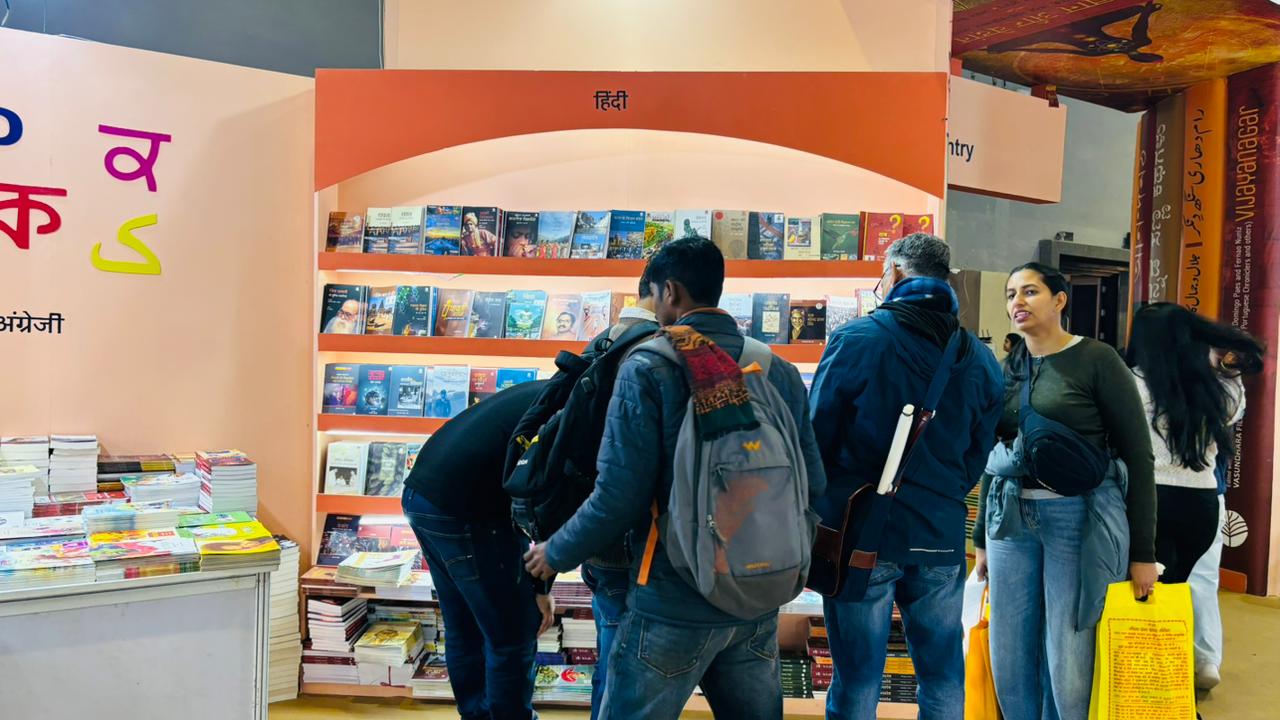
New Delhi, Jan 16: .A strong literary revival of Indian languages was visible at World Book Fair 2026. Stalls of Hindi, Assamese, Urdu, Punjabi, Kannada, Odia, Gujarati, Telugu, Bangla, Malayalam and Sindhi attracted large crowds across halls at Bharat Mandapam. Young readers and children showed keen interest in books published in their mother tongues, indicating that even in the digital age the appeal of print and Indian languages remains intact.
The spirit of Padhega India toh Badhega India gained momentum through the medium of mother tongues. Hindi stalls offered not only literature but also books on science, technology and diplomacy. With emphasis on education in mother tongue under the New Education Policy the demand for regional editions of academic books was clearly visible at the fair.
The epic of Kudopali is now available in 13 languages. The book has been released in Bengali, Assamese, Punjabi, Marathi, Malayalam, Urdu and several other Indian languages along with one international language Spanish. Earlier editions were published in Hindi, English and Odia. The book is now accessible in a total of 13 languages. This initiative honours the memory of Veer Surendra Sai ji and the martyrs of Kudopali and strengthens the tradition of multilingual dialogue in India with a global outlook.
A vivid picture of linguistic diversity could be seen throughout the fair. Stalls of 10 to 12 Indian languages stood side by side in the same hall and readers experienced a rich multilingual environment. The fair moved beyond being a space for exchange of books and emerged as a platform that strengthens language, culture and identity. The fair hosts nearly 3000 stalls and 1000 publishers from about 35 countries.
World Book Fair 2026 has made it clear that literature in Indian languages is not only alive but is also shaping enthusiasm for knowledge and culture among future generations. The International Events Corner at the fair offered a vibrant platform for global literary dialogue. Writers, poets and academicians from Europe, Asia and America participated in these sessions. Discussions covered themes such as nature, memory, displacement, translation and technology. This platform positioned literature as a medium for cultural exchange and also as a centre for contemporary discourse and global thought.
Experts said that this platform has strengthened the international role of the fair and demonstrated that an Indian platform can be an active and influential participant in world literature. Russian author and forest officer Ilya Kochergin viewed writing as a dialogue with the natural world. In reference to his book Emergency Exit which narrates his bond with an aged horse, literature was presented as a space where human and non human life meet and where language must continuously evolve to stay connected with contemporary readers.