Archive: November 21, 2026

Odisha Tribunal Cancels OSHB’s Rs 21-Lakh Flat Price Hike, Orders 10.15 pc Interest

Bhubaneswar, Nov 21: In a significant ruling in favour of a homebuyer, the Odisha Real Estate Appellate Tribunal (OREAT) has set aside an unexplained price escalation of nearly ₹21 lakh imposed by the Odisha State Housing Board (OSHB) on a four-bedroom deluxe flat at Kharavela Enclave in Jagamara, Bhubaneswar. The tribunal has also directed the Board to pay interest at 10.15 per cent per annum for the delay in handing over possession.

Odisha Tribunal Cancels OSHB's Rs 21-Lakh Flat Price Hike, Orders 10.15 pc Interest

 Representational Image 

The dispute centres on a flat whose price was initially fixed at around ₹67 lakh but was subsequently increased to approximately ₹88 lakh by the Housing Board. Finding no satisfactory justification for such a steep revision, the tribunal held that the additional financial burden imposed on the allottee was arbitrary and could not be sustained.

The order also addresses the prolonged delay in delivering the property, directing OSHB to calculate interest from June 13, 2017 — the scheduled date of possession — until the actual handover of the flat.

Tribunal Questions Unexplained Escalation in Flat Cost

The homebuyer had challenged the Housing Board’s decision to raise the price substantially without providing a convincing explanation for the additional amount.

After examining the matter, OREAT rejected the revised pricing, observing that a housing authority could not unilaterally increase the cost of an allotted property from around ₹67 lakh to ₹88 lakh without establishing valid grounds for the escalation.

The tribunal’s intervention effectively removes the disputed increase of nearly ₹21 lakh, providing considerable financial relief to the allottee.

Kharavela Enclave Project Dates Back to 2011

The dispute has its roots in the Kharavela Enclave housing project, launched by OSHB in 2011. The buyer received a provisional allotment letter in June 2014 and had paid ₹14.73 lakh towards the flat.

The project was registered under the Real Estate (Regulation and Development) Act in September 2018.

In examining the applicability of RERA, the tribunal noted that construction had not been completed when the legislation came into force in 2016. The project, therefore, fell within the ambit of the Act.

The case has once again brought attention to the responsibilities of housing authorities towards allottees, particularly regarding timely possession, transparent pricing and accountability for construction delays.

OSHB Cannot Blame Encroachment for Possession Delay

One of the important issues examined by the tribunal was the Housing Board’s argument that encroachment on the project land had contributed to the delay in construction and possession.

OSHB had sought to present the encroachment as a circumstance beyond its control. However, OREAT rejected this justification, observing that the Board was already aware of the encroachment before inviting applications and collecting money from prospective homebuyers.

The tribunal’s reasoning was that a condition known to the authority before accepting applications could not subsequently be treated as an unforeseen obstacle to escape responsibility for the delay.

The finding is particularly significant because it places responsibility on the housing agency to account for known project-related difficulties before offering properties to buyers.

10.15% Annual Interest from Scheduled Possession Date

Apart from setting aside the disputed price revision, OREAT addressed the compensation payable for the delayed delivery of the flat.

The tribunal modified an earlier direction issued by the RERA authority in June 2019 and ordered OSHB to pay interest at 10.15 per cent per annum.

The interest is to be calculated from June 13, 2017, the original scheduled date for handing over possession, until the date on which the flat is actually handed over.

The direction offers financial relief to the homebuyer for the extended wait and reinforces the importance of adhering to possession timelines in housing projects.

Airport Height Restrictions Also Affected the Project

Kharavela Enclave had previously come under scrutiny over objections raised by airport authorities concerning construction beyond prescribed height restrictions. The issue reportedly contributed to the project’s prolonged delays.

The development has now returned to the spotlight following the appellate tribunal’s decision on the pricing dispute and delayed possession.

For the affected allottee, the ruling addresses two major concerns: the substantial increase in the originally quoted flat price and the failure to deliver possession within the promised timeframe.

The decision also sends a wider message to public housing agencies that unexplained cost escalations and delays cannot be imposed on homebuyers without accountability. For buyers dealing with long-delayed housing projects, the order underlines the importance of transparent pricing, clearly defined possession commitments and the protections available under real estate regulatory law.

Global T20 Stars Set to Light Up DP World ILT20 Season 5 LIVE on Unite8 Sports

Mumbai, Nov21: Unite8 Sports, the sports network of Zee Entertainment Enterprises Ltd., will bring fans all the action from the fifth season of the DP World ILT20. The 34-match tournament will be played across the UAE’s three iconic venues, Dubai, Abu Dhabi and Sharjah, from Saturday, 21 November to Sunday, 20 December 2026, with the grand final in Dubai. Every match will be telecast LIVE on Unite8 Sports 1 and streamed on Hindi Zee 5, and on Zee Zest  in English.

Global T20 Stars Set to Light Up DP World ILT20 Season 5 LIVE on Unite8 Sports

Six franchises, five of them backed by leading Indian business groups, will compete for the title: defending champions Desert Vipers (Lancer Capital), MI Emirates (Reliance Industries), Abu Dhabi Knight Riders (Kolkata Knight Riders), Dubai Capitals (GMR), Gulf Giants (Adani Sportsline) and Sharjah Warriorz (Capri Global). Desert Vipers won their maiden title in Season 4, beating MI Emirates by 46 runs in the final at Dubai International Stadium. The two sides meet again on opening night.

Season 5 brings cricket’s biggest playing-condition overhaul. Under the new ‘Batter Zone’ wide rule, a delivery will be called wide if the entire ball passes outside the batter zone at the popping crease, on either the off side or the leg side. The rule is designed to curb negative bowling and make the contest between bat and ball fairer. The 60-second stop clock now applies to batters as well: both must be ready to start the next over within 60 seconds of the previous one ending. Teams get two warnings per innings, and from the third offence the fielding side is awarded five penalty runs. Glove changes are not exempt.

Bavesh Janavlekar, Chief Business Officer, Unite8 Sports, Zee Entertainment Enterprises Ltd., said,

“Since its launch earlier this year, Unite8 Sports has quickly grown into a home for world-class live sport, bringing fans properties such as the India’s T20I tour of Zimbabwe, FIFA World Cup 2026, Bundesliga, Serie-A, IFL(Indian Football League), WXM (Wrestling Xtreme Mania) and Professional Golf Tour of India (PGTI). The DP World ILT20 Season 5 strengthens our cricket offering further and reflects Z’s commitment to building a curated multi-sport destination that caters to the changing consumption habits of Indian sports fans. With new innovations like the Batter Zone wide rule and the two-way stop clock making the game fairer and faster, and the action available in Hindi and English across TV and Zee5, we look forward to bringing fans closer to the game..”

Watch the LIVE coverage of the DP World ILT20 Season 5 on Unite8 Sports 1 (SD & HD) in Hindi, Zee Zest (SD & HD) in English and on Hindi Zee 5, starting 21st November 2026 (Saturday), with Desert Vipers facing MI Emirates at 8.00 PM.

Modi Inaugurates First SCO Civilisational Dialogue Forum, Calls for Global Cultural Cooperation

New Delhi, Nov 21: From ancient trade routes and Buddhist learning centres to artificial intelligence and digital archives, India has called for a new chapter in cultural cooperation among Shanghai Cooperation Organisation (SCO) nations, with Prime Minister Narendra Modi asserting that shared civilisational heritage can offer a powerful foundation for global understanding and peace.

Modi Inaugurates First SCO Civilisational Dialogue Forum, Calls for Global Cultural Cooperation

 Representational Image 

Inaugurating the first SCO Civilisational Dialogue Forum at the historic Purana Qila in New Delhi on November 20, Modi said that while empires had redrawn geographical boundaries over centuries, civilisational exchanges had transformed ideas and enriched societies across the world.

He described the forum as more than a ceremonial gathering, saying it could emerge as a platform capable of giving direction to global thinking at a time when international discussions are increasingly dominated by conflict and instability.

“Our shared civilizational experiences will play an important role in uniting the world,” the Prime Minister said, highlighting the importance of cultural connections alongside cooperation in security, trade and connectivity as the SCO marks its 25th anniversary.

Ancient Connections Offer Lessons for Modern Diplomacy

Using history to underline the enduring links between Asian societies, Modi traced cultural and commercial exchanges stretching back thousands of years. He referred to trade connections between the Indus Valley Civilisation and Mesopotamia, followed by networks that linked India with China, Central Asia and other parts of Eurasia.

These routes carried far more than merchandise. Merchants, scholars, travellers and religious teachers moved across regions, taking languages, literature, philosophies and scientific knowledge with them.

The Prime Minister highlighted the journeys of Buddhist travellers and scholars such as Faxian, Xuanzang and Yijing, as well as Kumarajiva, who was born in Kucha. He also pointed to the influence of major centres of learning and cultural exchange, including Nalanda, Kucha and Dunhuang.

Such historical links, he argued, demonstrate how societies have grown through the exchange of knowledge rather than isolation.

He illustrated this cultural movement through literary and intellectual traditions. The Indian Panchatantra travelled across linguistic and geographical boundaries, becoming known in Persian and Arabic as Kalila wa Dimna. Similarly, the Ramayana found new expressions in Southeast Asian cultures, including Cambodia’s Reamker.

Modi also referred to the journey of Indian mathematical knowledge to Baghdad, where scholars such as Al-Khwarizmi contributed to the further development of mathematics.

These examples, he said, show how ideas acquire new forms as they travel between cultures while continuing to influence generations.

From Ancient Manuscripts to Artificial Intelligence

A central theme of the Prime Minister’s address was the opportunity to use modern technology to preserve and share the cultural wealth of SCO countries.

He observed that geographical distances that once required months of travel can now be bridged within seconds through digital communication. Online platforms have also made it easier to exchange knowledge, promote cultural understanding and build international research partnerships.

Modi proposed greater cooperation among SCO members in digitising ancient manuscripts, translating historical texts and undertaking joint research into shared civilisational histories.

He particularly highlighted the potential of artificial intelligence in making important literary and intellectual works available in more languages.

Many valuable texts, he noted, remain accessible only to readers familiar with a limited number of languages. AI-assisted translation could help overcome this barrier and allow younger generations across different countries to explore one another’s intellectual traditions.

The Prime Minister said that a young person in any part of the world should be able to understand the cultural heritage of another country through easier access to historical documents, manuscripts and research.

Cultural Cooperation Beyond Museums and Archives

Modi also outlined a broader vision of cultural engagement that extends beyond the preservation of historical material.

He suggested joint exhibitions involving museums and cultural institutions, exchanges between scholars and researchers, and stronger academic partnerships among universities across SCO member states.

Heritage circuits connecting Silk Route locations and Buddhist sites could create new opportunities for cultural tourism and people-to-people interaction. Joint festivals, artist exchanges and collaborative cultural programmes could further deepen public understanding of the region’s shared traditions.

He also emphasised the role of young artists, writers and filmmakers in bringing civilisational heritage to contemporary audiences through digital media and creative platforms.

The Prime Minister said that younger generations, who are comfortable with technology and increasingly interested in global cultures, should be given greater opportunities to engage with different languages, literature and artistic traditions.

Purana Qila Provides a Historic Setting

The choice of Purana Qila as the venue added a historical dimension to the inaugural gathering. The ancient fort, associated in popular tradition with the Mahabharata-era city of Indraprastha, provided a setting for a programme that brought together cultural performances, Vedic recitations and presentations reflecting India’s spiritual and artistic traditions.

The Prime Minister referred to the performances, which included elements of Vedic heritage, Buddhist philosophy and Hanuman’s journey, as expressions of cultural values that reach beyond political and geographical boundaries.

He welcomed dignitaries, ministers, ambassadors, high commissioners, scholars, artists and other participants from SCO member states, expressing hope that the inaugural forum would establish a lasting tradition of civilisational dialogue.

He also pointed to shared cultural influences in music, architecture and artistic traditions. Connections between Central Asian Maqam and Indian Raga traditions, the influence of Sufi traditions on Qawwali, and the contribution of Central Asian garden designs from Samarkand and Herat to the Charbagh style were cited as examples of centuries of interaction.

These exchanges, he said, underline the importance of keeping cultural relationships open and active.

‘Vasudhaiva Kutumbakam’ at the Heart of India’s Message

Concluding his address, Modi connected the idea of civilisational dialogue with India’s philosophical tradition of Vasudhaiva Kutumbakam — the belief that the entire world is one family.

He said the wellbeing of individual societies and nations is closely linked to global welfare, making mutual respect, goodwill and harmony essential for international stability.

Drawing on India’s experience of living with diverse languages, customs and traditions, he argued that differences need not divide societies and can instead become a source of collective strength.

The Prime Minister also invoked the Vedic message, “Sangachchhadhwam Samvadadhwam Sam Vo Manansi Janatam”, calling for people to move together, communicate together and develop a shared understanding.

The inaugural SCO Civilisational Dialogue Forum thus placed cultural cooperation at the centre of a wider conversation about international relations. Its proposed initiatives — from digital preservation and AI-enabled translation to academic exchanges and heritage tourism — offer possible avenues for turning centuries-old connections into practical cooperation for the future.

The larger message from New Delhi was that the shared history of nations need not remain confined to museums and historical records; it can also help shape a more connected, informed and cooperative world.

India Crosses 1 Crore HPV Vaccine Doses in Nine Months, Boosts Cervical Cancer Prevention

New Delhi, Nov 21: India’s campaign to shield its next generation of women from cervical cancer has crossed a major milestone, with more than one crore HPV vaccine doses administered in less than nine months. The achievement signals a significant expansion of preventive healthcare for adolescent girls and brings the country closer to its annual vaccination target.

India Crosses 1 Crore HPV Vaccine Doses in Nine Months, Boosts Cervical Cancer Prevention

 Representational Image 

The nationwide drive, launched by Prime Minister Narendra Modi in February 2026, has reached nearly 87 per cent of its estimated target cohort of 1.2 crore girls aged 14 years, according to the Union Ministry of Health and Family Welfare. The programme provides free, voluntary single-dose HPV vaccination at designated government health facilities, with parental consent.

While the one-crore mark represents a major numerical achievement, the wider significance lies in the growing reach of a preventive intervention against one of the leading cancer risks affecting women. The campaign is designed to provide protection against HPV infections that can lead to cervical cancer, years before potential exposure to the virus.

Six States Complete Identified Coverage Targets

The campaign has recorded substantial progress across the country, with six states — Gujarat, Uttar Pradesh, Andhra Pradesh, Mizoram, Madhya Pradesh and Bihar — reporting 100 per cent coverage of their identified target populations.

Among other states, Assam has achieved 95.63 per cent coverage, followed by Telangana at 95.28 per cent, Karnataka at 93.16 per cent and Uttarakhand at 90.17 per cent.

Chhattisgarh and Rajasthan have crossed 80 per cent coverage, recording 86.21 per cent and 85.23 per cent, respectively. Kerala has reported 77.02 per cent, Tamil Nadu 76.12 per cent and Odisha 74.90 per cent. Dadra and Nagar Haveli and Daman and Diu have recorded 72.99 per cent.

In absolute numbers, Uttar Pradesh has emerged as the largest contributor, with more than 29.33 lakh girls vaccinated. Bihar follows with over 13.70 lakh beneficiaries, while Gujarat has crossed 7.75 lakh.

The spread of coverage across states with different population sizes and geographical conditions points to the importance of local outreach and coordinated implementation in a nationwide public health programme.

Community Outreach at the Heart of the Drive

The vaccination campaign has relied on more than the availability of vaccines at government facilities. Its expansion has also involved district administrations, medical professionals, frontline health workers, educational institutions and local communities.

The Union Health Ministry and state governments have coordinated efforts to reach eligible girls in urban centres, rural communities and geographically difficult areas. State-level initiatives in Bihar, Tamil Nadu and Sikkim have also been integrated with the national programme.

Building parental awareness and addressing concerns about vaccine safety have remained central to the outreach strategy. Paediatricians, gynaecologists and specialists from leading medical institutions, including AIIMS, have contributed to public awareness and science-based communication.

ASHAs, Auxiliary Nurse Midwives, schoolteachers and other frontline workers have helped connect families with vaccination services, explain the purpose of the programme and counter misinformation.

This community-level engagement is particularly important for a vaccine administered during adolescence, when parental understanding and consent play a crucial role in participation.

Digital Platform Helps Identify Coverage Gaps

Technology is also supporting the campaign’s implementation. The government’s U-WIN digital platform enables beneficiary tracking, real-time monitoring and the maintenance of digital vaccination records.

Health officials can use the system to review progress at the district level, identify areas where coverage remains low and plan targeted efforts to reach girls who have not yet been vaccinated.

Parents can also use the platform to book vaccination slots and download digital certificates. The digital system is intended to make the process more accessible while improving transparency and programme monitoring.

Why HPV Vaccination Matters in the Fight Against Cancer

The Human Papillomavirus is a group of viruses, certain high-risk types of which can cause persistent infections that may eventually lead to cervical cancer. Vaccination against these types is considered one of the most effective ways to reduce the risk of HPV-related cervical disease.

The government’s decision to focus on girls aged 14 years is intended to provide protection before potential exposure to the virus. The campaign’s single-dose approach is supported by the government’s stated policy for the national programme.

According to the Ministry, more than 800 million HPV vaccine doses have been administered worldwide. Nearly two decades of scientific research and real-world experience have demonstrated the vaccine’s effectiveness in preventing targeted HPV infections and associated precancerous conditions.

The vaccination drive is therefore part of a longer-term prevention strategy: reducing the risk of infection today to help lower the future burden of cervical cancer.

Safety and Informed Consent Remain Priorities

The Ministry has emphasised that vaccination is voluntary and requires parental consent. Sessions are being conducted at designated government health facilities under the supervision of trained medical officers.

The facilities are linked to round-the-clock healthcare arrangements for the assessment and management of any rare adverse events following immunisation. Established safety protocols and trained medical personnel are in place to support the programme.

The emphasis on safety communication is also intended to build public confidence and encourage informed participation among families.

The Next Challenge: Reaching Every Eligible Girl

Crossing one crore doses is a landmark achievement, but the campaign’s broader objective remains reaching every eligible girl across the country. With nearly 87 per cent of the estimated annual target cohort covered, the remaining challenge will involve identifying gaps, sustaining public awareness and ensuring that access does not depend on where a girl lives.

The Ministry has called on parents and guardians of eligible 14-year-old girls to approach designated government health facilities or use the U-WIN platform to obtain information and book vaccination slots.

India’s HPV vaccination campaign marks an important shift towards preventing disease before it develops. Its long-term success will depend not only on the number of doses administered, but also on sustained coverage, public awareness and continued access to preventive healthcare.

The one-crore milestone is an important beginning. The larger public health goal is a future in which fewer women face the devastating consequences of cervical cancer.

Delhi Zoo to Remain Closed for Two Days Amid First SCO Civilizational Dialogue Forum

New Delhi, Nov 20: Visitors planning a trip to the National Zoological Park in New Delhi over the weekend will have to reschedule their plans, as the zoo will remain closed to the public on November 21 and 22, 2026, in view of security arrangements for an upcoming international event.

Delhi Zoo to Remain Closed for Two Days Amid First SCO Civilizational Dialogue Forum

 Representational Image 

The temporary closure comes ahead of the first Shanghai Cooperation Organisation (SCO) Civilizational Dialogue Forum, scheduled to take place at Purana Qila in the national capital.

The Ministry of Environment, Forest and Climate Change said the decision was taken with the approval of the competent authority, keeping in mind the arrangements and security requirements associated with the high-profile international gathering.

Animal care services to continue uninterrupted

Although public entry will remain suspended for two days, the zoo administration has assured that the temporary closure will not affect the animals.

All essential operations, including feeding, veterinary services, healthcare, animal welfare and routine management activities, will continue as usual.

The administration has emphasised that ensuring the safety and well-being of the animals will remain a priority throughout the closure period.

Visitors advised to reschedule their plans

The National Zoological Park has requested visitors to take note of the revised arrangements and plan their visits accordingly.

The zoo administration has also expressed regret over the inconvenience caused by the temporary suspension of public access and sought visitors’ cooperation.

The zoo is expected to resume its regular visitor services after the two-day closure, subject to any further official announcement.

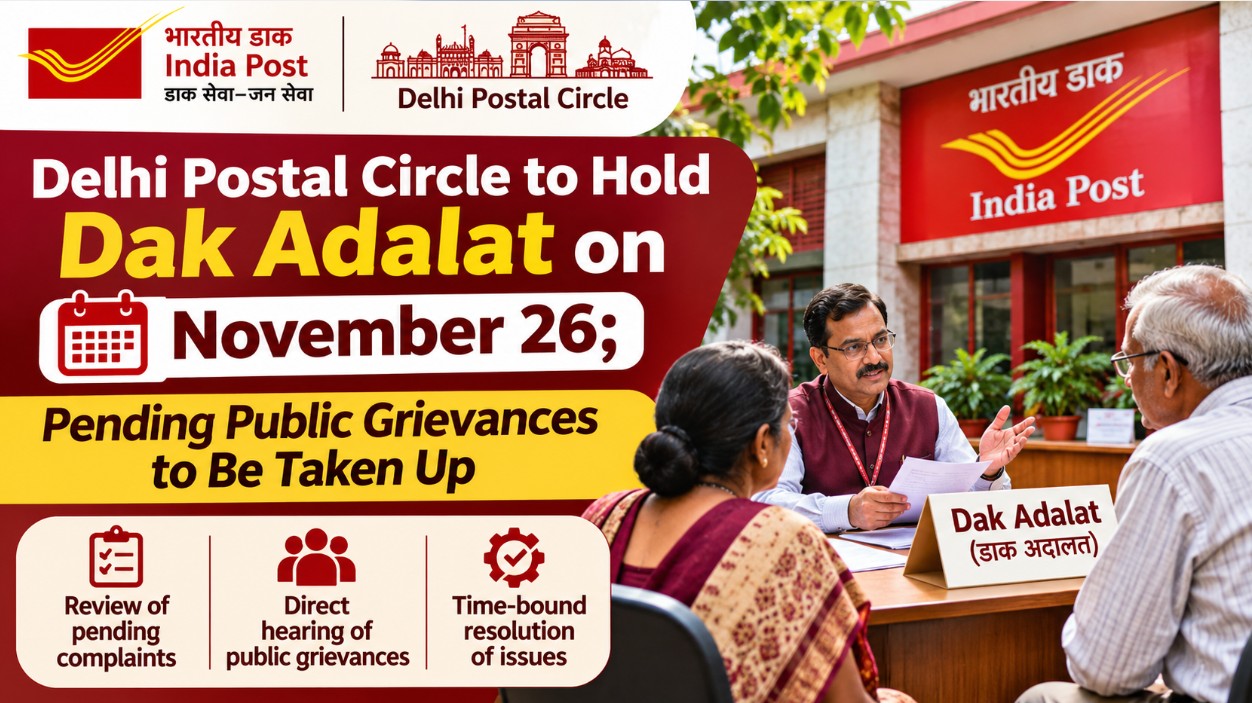
Delhi Postal Circle to Hold Dak Adalat on November 26; Pending Public Grievances to Be Taken Up

New Delhi, Nov 21: In a move to address unresolved public complaints relating to postal services, the Department of Posts, Delhi Circle, will organise a Circle-Level Dak Adalat on November 26, 2026, in the national capital.

Delhi Postal Circle to Hold Dak Adalat on November 26; Pending Public Grievances to Be Taken Up

 Representational Image

The special grievance redressal session will provide an opportunity for members of the public to raise pending issues concerning postal services under the National Capital Territory of Delhi.

The Dak Adalat will be held at 11 AM at the Office of the Chief Postmaster General, Delhi Circle, 3rd Floor, Meghdoot Bhawan, near Jhandewalan Metro Station, New Delhi-110001.

According to the Department of Posts, complaints submitted for consideration must reach the Assistant Director (CS), Office of the Chief Postmaster General, Delhi Circle, New Delhi-110001, by November 24, 2026.

Complaints received after the stipulated deadline will not be entertained.

Only unresolved divisional-level complaints eligible

The department has clarified that the Circle-Level Dak Adalat will exclusively consider grievances that were previously raised at divisional-level Dak Adalats but remain unresolved.

Each complainant will be heard individually, with the objective of addressing outstanding problems and providing appropriate relief.

Applicants have been advised to submit specific, clearly worded and concise complaints, explaining the nature of their grievances.

However, general complaints and matters involving policy decisions will not be considered during the proceedings.

The initiative is aimed at strengthening the postal department’s public grievance redressal mechanism and providing an additional platform for resolving long-pending service-related issues.

Members of the public with eligible unresolved complaints have been urged to submit their representations within the prescribed deadline to ensure consideration at the November 26 hearing.

Stop pricing facades last

By Mr. Yong Ming Soon 
Executive Director, Hitti Aluminium Sdn. Bhd. 

SELANGOR, Malaysia, Nov 21 – Walk past any construction site in the Klang Valley and you will see the concrete frame go up first. The glass and aluminium that wrap the building come much later. On many projects, that is also when the façade gets its first serious conversation. By then, most of the important decisions have already been made. 

I work in this trade, and I often see the results of this habit long after the ribbon has been cut. I believe it costs Malaysian buildings and their owners more than most people realise. 

Stop pricing facades last


Malaysia has strong sun, high humidity and rain that can arrive sideways in a storm. A façade here has to deal with all three, every day, for decades.  

A façade is the outer skin of a building. It is what keeps the rain out. It decides how much of the afternoon sun ends up inside, and so how hard the air-conditioning has to work. It has to move slightly as the building moves, stay sealed through years of storms, and be safe to clean and repair. When it is done well, nobody notices. When it is not, the owner lives with leaks, hot rooms and repair bills for a very long time. 

Yet the façade is often treated as a finishing package. The drawings are fixed, the budget is set, and the façade goes out to tender near the end, with price as the deciding factor. The specialist is then asked to make something work within limits that were drawn without them. 

I understand why this happens. Developers face real pressure on cost and time, and the façade is a large line in the budget. Trimming it late looks like a saving. 

Often, it is not. When a façade is built around a cheaper system that was never quite right for the building, the bill tends to arrive later. It comes as water stains on a ceiling after the first heavy monsoon, as glass that turns a meeting room into an oven by mid-afternoon, or as seals that give way years before they should. None of this appears in the tender price. All of it appears in the cost of owning the building. 

Our weather makes this matter more. Malaysia has strong sun, high humidity and rain that can arrive sideways in a storm. A façade here has to deal with all three, every day, for decades. Details that work well in a milder climate do not always hold up here, which is why local knowledge counts. 

Stop pricing facades last


Malaysia has skilled façade designers, fabricators and installers. We do not need to look overseas for every complex building. But skills only grow when they are used and trusted. 

What would help is simple. Bring the façade specialist in earlier. Not to take over the design, which belongs to the architect, but to sit at the table while there is still room to choose. At that stage, a small change in how a window is set, or in the type of glass used on the side that faces the afternoon sun, costs very little. The same change after construction has started can cost a great deal, or may no longer be possible at all. 

In practice, this need not be expensive or complicated. A few working sessions between the architect, the engineer and a façade specialist, held before the design is frozen, can settle most of the questions that later turn into disputes on site: how the façade meets the structure, where water goes if it gets in, and how the glass will be cleaned and replaced. These are not glamorous questions. They are the ones owners end up paying for when nobody asks them in time. 

Early involvement also helps the people who build. Façade work is done at height, often on tight schedules and in difficult weather. When the details are settled properly before anything reaches the site, installation is safer and the finish is better. The crews who do this work deserve that. 

There is a wider reason too. Malaysia has skilled façade designers, fabricators and installers. We do not need to look overseas for every complex building. But skills only grow when they are used and trusted. That happens when specialists are asked to help make real decisions, not just to quote the lowest number at the end. Every project where local specialists solve a difficult problem leaves the industry a little stronger for the next one. 

None of this needs new rules. It needs a change in habit. A developer can ask for façade advice at the design stage. An architect can invite a specialist to early workshops. A quantity surveyor can weigh the cost of a façade over twenty years, not only on the day the keys are handed over. 

The owners, and the people who live and work inside, will feel the difference long after the opening ceremony is forgotten. 

Yong Ming Soon is Executive Director of Hitti Aluminium Sdn. Bhd., a façade specialist based in Puchong, Selangor. 

Constitution Must Guide Everyday Life, Duties as Important as Rights: Vice-President C.P. Radhakrishnan

New Delhi, Nov 20: Calling for a stronger culture of responsible citizenship, Vice-President C.P. Radhakrishnan on Friday emphasised that constitutional values must extend beyond legal institutions and become an integral part of people’s everyday lives. He asserted that citizens’ duties are as important as their rights in strengthening democracy and ensuring the country’s inclusive development.

Constitution Must Guide Everyday Life, Duties as Important as Rights: Vice-President C.P. Radhakrishnan

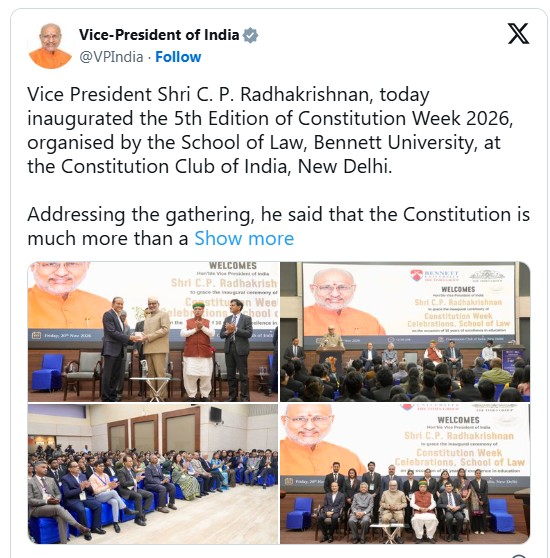
Vice President Shri C. P. Radhakrishnan, today inaugurated the 5th Edition of Constitution Week 2026, organised by the School of Law, Bennett University, at the Constitution Club of India, New Delhi. Addressing the gathering, he said that the Constitution is much more than a legal document; it is the moral compass of our Republic. He emphasised that constitutional values must become part of everyday public life and that duties are as important as rights. Highlighting India’s achievements over the last decade, he described them as a silent revolution, translating constitutional aspirations into tangible improvements in people’s lives. Union Minister Shri Arjun Ram Meghwal; Attorney General for India, Shri R. Venkataramani; Chancellor, Bennett University and MD, Times Group, Shri Vineet Jain; and Vice-Chancellor, Bennett University, Dr. Raj Singh, and other dignitaries were present on the occasion.

— Vice-President of India (@VPIndia) November 20, 2026

Inaugurating the fifth edition of Constitution Week Celebrations 2026, organised by the School of Law, Bennett University, at the Constitution Club of India in New Delhi, the Vice-President described the Constitution as much more than a legal document, calling it the moral compass of the Republic.

He stressed that democracy thrives when institutions remain accountable, dissent is respected and citizens exercise their freedoms responsibly while fulfilling their constitutional obligations.

“Responsible discharge of duties is essential to safeguarding the rights of all citizens,” he observed, urging people, particularly the younger generation, to make constitutional principles a part of their daily conduct.

Constitutional vision must translate into people’s lives

Reflecting on the vision of Dr. B.R. Ambedkar, Radhakrishnan recalled his definition of democracy as a system through which revolutionary changes in the economic and social lives of people can be achieved without bloodshed.

He said India’s development journey over the past decade has translated several constitutional aspirations into tangible improvements in people’s lives.

Citing the lifting of around 50 crore people out of poverty, the construction of four crore permanent houses for economically weaker sections and rural tap water coverage exceeding 82 per cent under the Jal Jeevan Mission, he highlighted the scale of transformation in the country.

He also pointed to the development of border villages, which were once considered remote and neglected but are now emerging as vibrant centres of development.

Describing these changes as a silent revolution, the Vice-President attributed the progress to the leadership of Prime Minister Narendra Modi.

Women’s empowerment central to India’s development journey

Highlighting the contribution of women to India’s constitutional journey, Radhakrishnan recalled the role played by 15 women members of the Constituent Assembly in shaping the country’s constitutional framework.

He said their vision continues to find expression through initiatives such as the Nari Shakti Vandan Adhiniyam.

Expressing satisfaction over the growing participation of women in different fields, he observed that India is gradually moving beyond women-centric development towards women-led development.

He described women’s increasing role in decision-making and nation-building as another significant transformation, adding that their participation will be crucial in shaping India’s future.

Article 21 and the changing meaning of constitutional rights

Emphasising the dynamic nature of the Constitution, the Vice-President referred to Article 21, which guarantees the right to life and personal liberty.

He noted that constitutional interpretation over the years has expanded its scope to encompass several dimensions of human dignity, including livelihood, health, shelter, privacy, education and environmental protection.

He called for a balanced development model that improves living standards while protecting natural resources for future generations.

Warning against excessive consumerism, he advocated responsible consumption and greater public awareness about sustainable lifestyles.

Referring to India’s contribution to environmental jurisprudence, he said environmental protection has increasingly become an integral part of the understanding of sustainable development.

He also highlighted Mission LiFE, an initiative promoted by Prime Minister Narendra Modi, as an effort to encourage individuals and communities to adopt environmentally responsible lifestyles.

Technology must remain guided by constitutional values

Addressing India’s growing capabilities in digital public infrastructure, artificial intelligence and technological innovation, Radhakrishnan emphasised that technology must ultimately serve humanity.

He said innovation should empower citizens, improve transparency and create wider access to opportunities, while remaining firmly rooted in constitutional principles.

The Vice-President also underlined the responsibility of universities and higher educational institutions in preparing young people for the country’s democratic and developmental future.

He said legal education should not be restricted to professional knowledge but must also develop constitutional sensitivity, ethical leadership, critical thinking and an understanding of social realities.

Students urged to become responsible citizens

Calling upon students to play an active role in strengthening democratic institutions, Radhakrishnan urged them to remain informed, engage in reasoned discussions and contribute constructively to public life.

As India moves towards the goal of Viksit Bharat @2047, he said, constitutional values must remain the foundation of national progress.

He concluded by reminding citizens that the strength of the Constitution lies not merely in its provisions but in the values people practise and the responsibilities they fulfil.

Union Minister of State for Law and Justice and Parliamentary Affairs Arjun Ram Meghwal, Attorney General for India R. Venkataramani, Bennett University Chancellor and Times Group Managing Director Vineet Jain, and Vice-Chancellor Dr. Raj Singh were among the dignitaries present at the event.

The Constitution Week celebrations provided an opportunity to renew discussions on democratic values, responsible citizenship and the role of young Indians in building a progressive and inclusive nation.

Panchuka: Five Sacred Days When Odisha Immerses in Devotion to Lord Jagannath

Puri, Nov 21 (UDN): As the holy month of Kartika approaches its culmination, Odisha enters one of its most spiritually significant periods — Panchuka. Marking the final five days of Kartika, this sacred occasion transforms the atmosphere across the state, as temples resonate with prayers, homes glow with earthen lamps and devotees immerse themselves in fasting, worship and acts of charity.

Panchuka: Five Sacred Days When Odisha Immerses in Devotion to Lord Jagannath

 Representational Image 

For devotees of Lord Jagannath, Panchuka is not merely a religious observance but a deeply cherished expression of faith, discipline and devotion. These five auspicious days are believed to offer a special opportunity for spiritual purification and divine blessings.

One of the major highlights of Panchuka is the Panchuka Besha of the Holy Trinity at the Shree Jagannath Temple in Puri. During these days, Lord Jagannath, Lord Balabhadra and Devi Subhadra are adorned in five distinct and magnificent attires. Each day brings a different divine appearance, attracting devotees who gather to witness the sacred decorations and seek the blessings of the deities.

Five days of prayer, fasting and spiritual discipline

Panchuka is observed with deep devotion and a range of traditional religious practices. Devotees begin their mornings with a holy bath, followed by prayers to Lord Jagannath and Lord Vishnu. Worshipping Tulasi, offering water, lighting earthen lamps and chanting the names of the Almighty form an integral part of the daily rituals.

Many devotees observe fasts or maintain a simple vegetarian diet throughout the period. Traditionally, non-vegetarian food, onion, garlic and intoxicating substances are avoided as part of the effort to maintain physical and spiritual discipline.

Reading sacred scriptures, listening to Kartika Mahatmya and visiting temples are also considered important practices during these days.

Beyond rituals: A celebration of kindness and compassion

The spiritual essence of Panchuka extends beyond temple worship and religious observances. Devotees are encouraged to cultivate purity in their thoughts, words and actions by avoiding anger, dishonesty, arguments and negative behaviour.

Charity and compassion hold special significance during this period. Feeding the poor, helping those in need, offering food and extending kindness to all living beings are regarded as auspicious acts.

The underlying message is simple yet profound: devotion is meaningful not only when expressed through prayers but also through kindness, humility and selfless service.

Kartika Purnima brings the sacred observance to a close

Panchuka culminates with Kartika Purnima, one of the most celebrated religious occasions in Odisha. The day is marked by the beautiful and centuries-old tradition of Boita Bandana, when people float miniature boats made from banana stems, paper or other materials in rivers, ponds and other water bodies.

The ritual pays tribute to Odisha’s glorious maritime heritage and commemorates the voyages of ancient Odia sailors, known as Sadhabas, who sailed across distant seas to places such as Bali, Java and Sumatra for trade and cultural exchanges.

The sight of thousands of miniature boats floating on water at dawn reflects the deep connection between Odisha’s cultural identity, history and spiritual traditions.

A timeless message of faith

Beyond its religious significance, Panchuka carries a timeless message of devotion, self-discipline, gratitude and compassion. It encourages people to pause amid their everyday responsibilities, reconnect with their spiritual roots and embrace a way of life guided by simplicity and goodness.

As Odisha observes these five sacred days with prayers, rituals and devotion, the spirit of Panchuka once again brings communities together in reverence for Lord Jagannath.

May this auspicious occasion fill every home with happiness, every heart with compassion and every life with peace and prosperity.

Jai Jagannath!

When Caregivers Clash: The Hidden Challenge of Nurse–Physician Relationships

Introduction

Healthcare is built on teamwork, trust and effective communication. Nurses and physicians are two of the most important pillars of the healthcare system, working together to ensure that patients receive safe, timely and effective medical care. While physicians are primarily responsible for diagnosing illnesses, developing treatment plans and making medical decisions, nurses play a crucial role in patient monitoring, administering treatment, coordinating care and providing continuous support to patients and their families.

Despite their shared objective, conflicts between nurses and physicians remain a persistent challenge in hospitals and healthcare institutions worldwide. Differences in professional responsibilities, communication styles, workplace pressures, hierarchical structures and decision-making approaches can sometimes create tension between these two groups.

Although disagreements are not necessarily harmful, unresolved conflicts can affect workplace relationships, employee morale, patient satisfaction and, most importantly, patient safety. Understanding the reasons behind nurse–physician conflict and developing strategies to address them is essential for building a stronger and more effective healthcare system.

Understanding Nurse–Physician Conflict

Nurse–physician conflict refers to disagreements, misunderstandings or professional tensions between nurses and physicians arising from differences in opinions, responsibilities, expectations or approaches to patient care.

These conflicts may occur during routine hospital operations, emergency situations, treatment planning, medication administration, patient handovers or discussions about clinical decisions.

For example, a nurse may observe a sudden deterioration in a patient’s condition and request an immediate medical review. If the physician does not respond promptly or dismisses the nurse’s concerns, tension may develop. Similarly, disagreements can arise when nurses question a treatment order that they believe may pose a risk to the patient.

Such situations highlight the importance of mutual respect and professional communication. Nurses and physicians bring different but complementary expertise to patient care, and their perspectives should be treated as valuable contributions rather than competing opinions.

Major Causes of Nurse–Physician Conflict

1. Communication Gaps

Poor communication is one of the most common causes of conflict between nurses and physicians. In busy healthcare environments, information may be incomplete, delayed or misunderstood.

A physician may issue instructions without providing sufficient explanations, while a nurse may struggle to communicate important patient observations during a busy shift. Inadequate handovers, unclear prescriptions and failure to acknowledge concerns can further increase misunderstandings.

Effective communication is particularly important during emergencies, when even minor information gaps can have serious consequences.

2. Professional Hierarchy and Power Imbalance

Traditional healthcare systems have often operated within a hierarchical structure in which physicians occupy positions of greater authority in clinical decision-making.

Although medical and nursing professionals have distinct scopes of practice, an excessive emphasis on hierarchy can discourage nurses from expressing concerns, questioning unclear instructions or suggesting alternative approaches.

When nurses feel that their professional judgment is undervalued, frustration and dissatisfaction may develop.

A modern healthcare environment should encourage collaborative decision-making while respecting each profession’s responsibilities and expertise.

3. Differences in Clinical Opinions

Disagreements about patient management are another significant source of conflict.

A nurse who spends considerable time observing a patient may identify subtle changes in behaviour, symptoms or vital signs. A physician may interpret the same situation differently based on diagnostic findings, laboratory reports and clinical assessments.

These differences do not necessarily indicate incompetence or professional disagreement. They may reflect different perspectives and experiences.

The challenge is to ensure that differences in clinical judgment are discussed constructively, with patient welfare remaining the highest priority.

4. Workload and Staff Shortages

Healthcare professionals frequently work under considerable pressure. Long shifts, emergency admissions, inadequate staffing, administrative responsibilities and increasing patient numbers can contribute to stress and exhaustion.

When hospitals operate with insufficient nursing or medical staff, responsibilities may become unevenly distributed.

Under such circumstances, even minor disagreements can escalate into serious workplace conflicts. Fatigue and burnout can also reduce patience, concentration and the ability to communicate effectively.

5. Lack of Role Clarity

Nurses and physicians have different professional responsibilities, but their duties often overlap in patient management and care coordination.

When expectations are not clearly defined, confusion may arise regarding treatment instructions, documentation, patient monitoring and accountability.

Clear protocols and defined responsibilities can reduce unnecessary disputes and improve coordination.

6. Lack of Mutual Respect

Professional respect is essential for successful healthcare collaboration. However, dismissive behaviour, inappropriate language, public criticism and failure to acknowledge another professional’s contribution can damage working relationships.

Nurses may feel undervalued when their observations are ignored, while physicians may feel that their clinical decisions are being unnecessarily challenged.

A workplace culture based on mutual respect can help prevent these situations from developing into long-term conflicts.

How Nurse–Physician Conflict Affects Patient Care

The consequences of unresolved conflict extend beyond workplace relationships. They can directly influence the quality and safety of healthcare delivery.

Patient Safety Risks: Delayed communication, incomplete information and reluctance to raise concerns can increase the possibility of medical errors and delays in treatment.

Delayed Clinical Decisions: Disagreements without effective resolution may slow down treatment decisions, particularly in emergency and critical care settings.

Reduced Quality of Care: Poor collaboration can affect patient monitoring, medication administration, discharge planning and continuity of care.

Patient Dissatisfaction: Patients and their families may lose confidence when healthcare professionals provide inconsistent information or display visible disagreements.

Increased Healthcare Costs: Communication failures, avoidable complications and inefficient coordination can contribute to additional hospital stays and higher treatment costs.

Ultimately, effective cooperation between nurses and physicians is not simply a matter of workplace harmony. It is an important component of patient-centred healthcare.

Psychological Impact on Healthcare Professionals

Nurse–physician conflict can also have significant psychological and professional consequences.

Repeated disagreements, lack of recognition and hostile workplace interactions may contribute to stress, anxiety, emotional exhaustion and reduced job satisfaction.

Nurses who experience persistent disrespect may become reluctant to communicate with physicians or participate actively in clinical discussions. Similarly, physicians working in highly stressful environments may experience frustration when coordination and communication break down.

Over time, these circumstances can contribute to burnout, absenteeism and staff turnover.

Healthcare institutions must therefore recognise workplace conflict as an organisational issue rather than treating every disagreement as an individual problem.

Strategies to Reduce Nurse–Physician Conflict

Addressing nurse–physician conflict requires a systematic approach involving hospital management, nursing leadership, medical professionals and human resource departments.

1. Establish Open Communication Channels

Hospitals should encourage open, timely and respectful communication between nurses and physicians.

Regular clinical meetings, structured handovers and multidisciplinary discussions can help professionals share information and resolve concerns before they escalate.

Communication tools such as SBAR (Situation, Background, Assessment and Recommendation) can improve the clarity and consistency of clinical communication.

2. Promote Interprofessional Education

Nursing and medical professionals should receive opportunities to understand each other’s roles, responsibilities, professional challenges and areas of expertise.

Joint training programmes, simulation exercises and interdisciplinary workshops can improve teamwork and reduce misconceptions.

Students should also be introduced to collaborative healthcare practices during their professional education.

3. Encourage Collaborative Decision-Making

Physicians should value the observations and clinical expertise of nurses, particularly those who spend extended periods monitoring patients.

Similarly, nurses should recognise the physician’s responsibility for medical diagnosis and treatment decisions within the applicable professional framework.

Collaborative decision-making creates an environment in which concerns can be discussed openly without undermining professional authority.

4. Develop Clear Conflict Resolution Policies

Healthcare institutions should establish transparent procedures for reporting and resolving workplace disagreements.

Conflicts should be addressed promptly, objectively and confidentially where appropriate. Hospital administrators and department heads should ensure that employees can raise concerns without fear of retaliation.

5. Strengthen Nursing and Medical Leadership

Effective leadership plays an important role in maintaining professional relationships.

Nurse managers and medical department heads should identify recurring communication problems, address inappropriate behaviour and promote a culture of accountability.

Leadership training should include conflict management, emotional intelligence, negotiation and team-building skills.

6. Improve Staffing and Workplace Conditions

Adequate staffing, reasonable working hours, supportive management and access to mental health resources can reduce workplace stress.

Hospitals should regularly assess workload distribution and ensure that healthcare professionals have the resources necessary to perform their responsibilities effectively.

The Role of Hospital Management

Hospital management has a central responsibility in creating a workplace environment where nurses and physicians can work together effectively.

A strong institutional framework should include:

  • Clearly defined professional responsibilities and reporting structures.

  • Regular multidisciplinary team meetings.

  • Fair and transparent grievance redressal mechanisms.

  • Zero tolerance for workplace bullying, harassment and intimidation.

  • Recognition of contributions made by both nursing and medical professionals.

  • Continuous training in communication and conflict resolution.

  • Periodic assessment of employee satisfaction and workplace culture.

Management should also monitor indicators such as staff turnover, patient complaints, communication-related incidents and employee engagement to identify areas requiring improvement.

Nurse–Physician Collaboration: The Future of Healthcare

The healthcare industry is becoming increasingly complex. Ageing populations, chronic diseases, technological developments, rising treatment costs and growing patient expectations are placing additional demands on healthcare professionals.

No single professional group can independently address all these challenges.

Modern healthcare requires multidisciplinary teams in which doctors, nurses, pharmacists, laboratory professionals, therapists and other specialists work towards common patient outcomes.

Technology can support this transition through integrated electronic health records, digital communication systems and coordinated clinical workflows. However, technology alone cannot replace trust, professional respect and effective human interaction.

Healthcare institutions must move away from rigid professional hierarchies towards collaborative models that recognise the distinct contributions of every healthcare professional.

Conclusion

Nurse–physician conflict is a complex workplace challenge that can affect professional relationships, employee well-being and the overall quality of healthcare services. While differences in clinical opinions and professional responsibilities are inevitable, unresolved disagreements should never become barriers to effective patient care.

The solution lies in better communication, mutual respect, clearly defined responsibilities, supportive leadership and collaborative decision-making.

Nurses and physicians may approach patient care from different professional perspectives, but their fundamental objective remains the same: protecting lives and improving health outcomes.

A successful healthcare system is not built on the authority of one profession over another. It is built on cooperation, shared responsibility and recognition of the expertise each professional brings to the patient’s bedside.

When nurses and physicians work together with trust and mutual respect, the greatest beneficiary is the patient.