Archive: September 23, 2026

Roborock Maintains Global No.1 Position in H1 2026

BEIJING, Sept. 23, 2026 /PRNewswire/ — Roborock ranked No.1 globally by both unit shipments and sales value among robotic vacuum brands in H1 2026, according to the IDC Worldwide Quarterly Smart Vacuum Robotics Tracker, 2026Q2. The result further strengthens Roborock’s sustained leadership in the category, with the company also ranking No.1 globally in cumulative sales value among robotic vacuum brands from Q1 2023 through Q2 2026, according to IDC.

Roborock Maintains Global No.1 Position in H1 2026

The latest recognition comes as the global robotic vacuum market continues to evolve, with market concentration increasing and competition shifting toward technology innovation, premium products and deeper cleaning experiences. IDC reported that the global robotic vacuum market shipped 7.885 million units in Q2 2026, while leading brands continued to strengthen their positions in the increasingly concentrated market.

Roborock’s continued leadership is underpinned by sustained investment in AI-powered perception, intelligent navigation, cleaning performance and robotic mobility. At IFA 2026, the company showcased its latest innovations across indoor and outdoor cleaning, including the Saros 20 Flow, Qrevo Edge 3 Pro, F25 Ultra Steam Gen 2 and F25 Pro Turbo Combo, alongside its expanding outdoor robotics portfolio, including the RockNeo Q2 LiDAR robotic mower and RockAqua P1 robotic pool cleaner.

“Our mission is to give time back to our customers by automating everyday tasks,” said Quan Gang, President of Roborock. “Building smarter robots is the means, not the goal. Every minute spent on housework is time taken away from family, passions, and personal well-being.”

Roborock’s global leadership is supported by continued investment in research and product development. In the first half of 2026, the company recorded RMB 10.084 billion in revenue, up 27.6% year on year, while net profit attributable to shareholders reached RMB 986 million, up 45.6% year on year. R&D investment reached RMB 720 million, representing 7.14% of revenue, supporting continued development across intelligent navigation, AI-powered environmental perception, cleaning systems and robotic mobility.

As robotic cleaning evolves from individual products toward broader, full-scenario applications, Roborock is expanding its robotics portfolio beyond robotic vacuum cleaners. Its sustained leadership in the category provides a foundation for bringing intelligent robotics into more areas of everyday life, with the goal of helping consumers spend less time on routine chores and more time on what matters to them.

Roborock ranked No.1 globally by unit shipments and sales value among robotic vacuum brands in H1 2026. Source: IDC Worldwide Quarterly Smart Vacuum Robotics Tracker, 2026Q2.

Cision View original content to download multimedia:https://www.prnewswire.co.uk/news-releases/roborock-maintains-global-no1-position-in-h1-2026-302885980.html

Roborock Maintains Global No.1 Position in H1 2026

Mayo Clinic Laboratories Invests in Pathology Asia Holdings and LifeStrands Genomics to Advance Diagnostics and Precision Medicine

SINGAPORE, Sept. 23, 2026 /PRNewswire/ — Mayo Clinic Laboratories and Pathology Asia Holdings (PAH) have announced a strategic investment and collaboration aimed at expanding access to advanced diagnostics and precision medicine across Southeast Asia, Australia and New Zealand.

Mayo Clinic Laboratories logo

Mayo Clinic Laboratories and PAH are deepening a long-term relationship that brings together Mayo’s global clinical and diagnostic expertise with the regional healthcare network, capabilities and market knowledge of PAH and its genomics subsidiary, LifeStrands Genomics. William Morice II, M.D., Ph.D., president and CEO of Mayo Clinic Laboratories, has been appointed Scientific Adviser to PAH.

Genomics is a central focus of the collaboration, delivered through LifeStrands Genomics. Mayo Clinic Laboratories and LifeStrands Genomics will work together to broaden access to advanced molecular and genomic testing across Southeast Asia, Australia and New Zealand, with applications spanning the identification of genetic conditions, disease risk assessment, diagnosis, and treatment planning, enabling healthcare providers to integrate clinically relevant genomic insights into more personalised patient care.

LifeStrands Genomics will operate as “LifeStrands in collaboration with Mayo Clinic Laboratories” in certain markets, reflecting the organisations’ shared commitment to expanding access to advanced genomic testing and precision medicine across the region.

Together, the organisations will pursue joint scientific initiatives, education and thought leadership to support the integration of genomics into patient care. “Healthcare providers across Southeast Asia, Australia and New Zealand are increasingly seeking advanced diagnostic solutions to guide patient care,” said Dr. Morice. “Our collaboration with PAH and LifeStrands Genomics reflects our commitment to a long-term strategic relationship that unites complementary strengths in laboratory diagnostics and genomics. Through this collaboration, we are bringing advanced diagnostic capabilities closer to patients and equipping healthcare providers with the insights needed to deliver personalised care.”

“Mayo Clinic Laboratories’ investment marks an important milestone in our relationship and a strong foundation for the next phase of diagnostic innovation across the region,” Christopher Ting, M.D., founder and CEO of Pathology Asia Holdings, added. “Combining Mayo Clinic Laboratories’ global clinical and scientific expertise with PAH’s regional diagnostic capabilities and network will enable us to broaden access to advanced testing and increase access to genomics and precision medicine capabilities across Southeast Asia, Australia and New Zealand.”

About Mayo Clinic Laboratories

Mayo Clinic Laboratories, the global leader in turning test results into clinical answers, provides advanced testing and pathology services for healthcare organisations worldwide in partnership with Mayo Clinic’s Department of Laboratory Medicine and Pathology. Mayo Clinic Laboratories offers more than 4,400 tests and pathology services, delivering specialised diagnostic expertise to help healthcare providers make informed decisions and improve patient care.

About Pathology Asia

Pathology Asia is a leading regional provider of pathology and laboratory diagnostics services, with operations across Singapore, Malaysia, Indonesia, Thailand, Vietnam, the Philippines and Australia. Its network encompasses established diagnostics brands including Innoquest, Singapore Diagnostics, TissuPath and Safework Health, as well as its specialist genomics businesses, LifeStrands Genomics and DNA Laboratories. Pathology Asia delivers a comprehensive range of pathology, molecular and genomic testing services to healthcare providers, hospitals and patients across the region through its network of internationally accredited laboratories.

About LifeStrands Genomics

LifeStrands Genomics is a leading Asia-Pacific clinical genomics company comprising three specialist laboratories: LifeStrands Genomics Singapore, LifeStrands Genomics Australia, and DNA Laboratories. Together, the group provides advanced molecular and genomic testing across oncology, reproductive health, inherited disorders and wellness. Operating through CAP- and ISO 15189-accredited laboratories, LifeStrands Genomics delivers clinically actionable insights that empower healthcare professionals to make informed decisions, advance personalised care and improve patient outcomes.

Mayo Clinic Laboratories Invests in Pathology Asia Holdings and LifeStrands Genomics to Advance Diagnostics and Precision Medicine

India-EU Talks Focus on EVs, Batteries and Industrial Decarbonisation

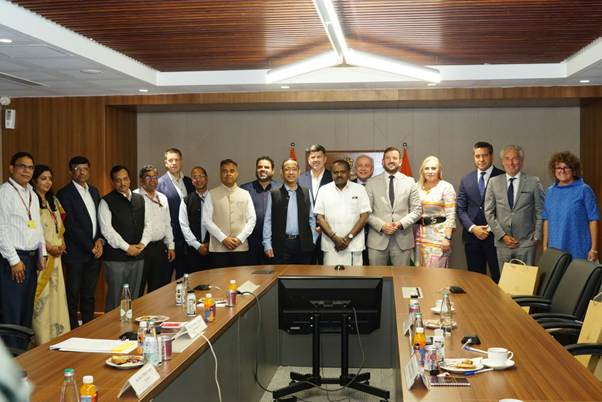
New Delhi, September 23, 2026: Union Minister for Heavy Industries and Steel H.D. Kumaraswamy held discussions with a delegation from the European Parliament’s Committee on Industry, Research and Energy (ITRE) in New Delhi, with talks centred on strengthening cooperation between India and the European Union in electric mobility, battery manufacturing, clean energy and industrial decarbonisation.

The meeting brought together Members of the European Parliament and officials from the ITRE Secretariat to discuss opportunities for deeper collaboration in industrial development, technology, investment and sustainable manufacturing.

Kumaraswamy said the visit comes at an important stage in India-EU relations following the 16th India-EU Summit held in January 2026, where FTA negotiations were concluded and the two sides adopted a Joint India-EU Comprehensive Strategic Agenda. He highlighted the scope for expanding cooperation in trade, investment, technology and global supply chains.

India-EU Talks Focus on EVs, Batteries and Industrial Decarbonisation


During the discussions, the Minister outlined several initiatives being implemented by the Ministry of Heavy Industries to strengthen India’s manufacturing capabilities and accelerate the transition towards electric mobility.

These include the Production Linked Incentive (PLI) Scheme for Automobiles and Auto Components, the PLI Scheme for Advanced Chemistry Cells (ACC) and the PM E-DRIVE scheme. According to the Ministry, these programmes are designed to support domestic manufacturing, encourage investment and strengthen India’s electric vehicle and battery ecosystem.

Kumaraswamy also invited European companies to participate in India’s ongoing global bidding process for 10 GWh of Advanced Chemistry Cell manufacturing capacity intended for stationary energy storage applications. The bidding process is open until October 13, 2026.

Industrial decarbonisation was another key area of discussion. The Minister highlighted India’s efforts to reduce emissions from industrial sectors while maintaining manufacturing growth. Among the initiatives discussed was BHEL’s indigenous gasification technology, along with measures aimed at improving resource efficiency and supporting cleaner industrial production.

The Minister also outlined India’s approach to greening the steel sector through greater use of scrap recycling, steel slag utilisation and circular economy practices. These measures are aimed at improving resource efficiency while reducing the environmental footprint associated with steel production.

Senior officials from the Ministry of Heavy Industries and Steel, including Secretary Kamran Rizvi and Additional Secretary Hanif Qureshi, participated in the discussions alongside the European Parliament delegation.

Members of the European Parliament delegation acknowledged India’s efforts to expand electric mobility, strengthen domestic manufacturing and advance industrial decarbonisation. They also expressed interest in expanding cooperation in clean technologies, sustainable transportation and advanced energy solutions.

The discussions highlighted areas where India and European industries could potentially collaborate on emerging technologies, manufacturing capabilities and energy-transition solutions. Electric vehicles, battery technologies and industrial decarbonisation are increasingly important areas of cooperation as both sides work towards more sustainable industrial systems.

Kumaraswamy said India and the European Union could combine their respective strengths to support the clean-energy transition and develop sustainable transport solutions. He also emphasised the potential for continued engagement between Indian and European stakeholders in the industrial sector.

The meeting underlined the growing scope of India-EU cooperation beyond traditional trade and investment, with clean technology, advanced manufacturing, electric mobility and sustainable industrial practices emerging as important areas for future collaboration.

Meghalaya Links Farm Income to Water Security, Releases Rs.28.60 Crore to 1.14 Lakh Households in Tura

 ₹344.4-crore MegARISE secures 39,714 hectares of the Ganol catchment; 9,070 new households added to FOCUS+

Tura, September 23, 2026: With a view to strengthening rural livelihoods through direct household-level income support while safeguarding the natural resources that sustain them, the Meghalaya Basin Management Agency (MBMA) today held the Integrated Partners’ Support and Engagement Programme at the Matchakolgre LP School Playground in New Tura, in the presence of Hon’ble Chief Minister Shri Conrad K. Sangma, Cabinet Ministers, MLAs, senior officials, community representatives and beneficiaries.

The programme marked the release of ₹28.60 crore under FOCUS+ to 1,14,400 beneficiaries, including 9,070 newly added households, while also highlighting community-led conservation under MegARISE, particularly the 39,714-hectare Ganol catchment that underpins Tura’s water security. The State’s approach brings together two complementary interventions: FOCUS+ strengthens the income of the farming household, while MegARISE protects the water, soil and forest resources on which that income depends.
Meghalaya Links Farm Income to Water Security, Releases Rs.28.60 Crore to 1.14 Lakh Households in Tura


Addressing the gathering, Shri Conrad K. Sangma, Hon’ble Chief Minister highlighted the ₹344-crore MegARISE project, stating that it focuses on conserving the Ganol and Umiew catchments while creating alternative livelihood opportunities for communities dependent on these areas. He added, “Today is therefore a historic day. Since the Act was passed in 1990, this is an important step towards putting its principles into action and strengthening the protection and preservation of our catchment areas through the involvement of our traditional institutions.”

On FOCUS+, Hon’ble Chief Minister said new beneficiaries would be registered every three months, with an aim to reach 2,50,000 to 3,00,000 households. He added, “But development is not only about infrastructure. We also need to create opportunities for our people at an individual level. For our farmers, we have FOCUS+. For our students, we have scholarships. For our Self-Help Groups, we have programmes through MSRLS.”

Hon’ble Chief Minister also stressed the need for continued partnership with traditional institutions, saying they have always played an important role in community life and that the Government remains committed to working with traditional heads towards the development of the State.

₹28.60 crore released to 1.14 lakh farming households

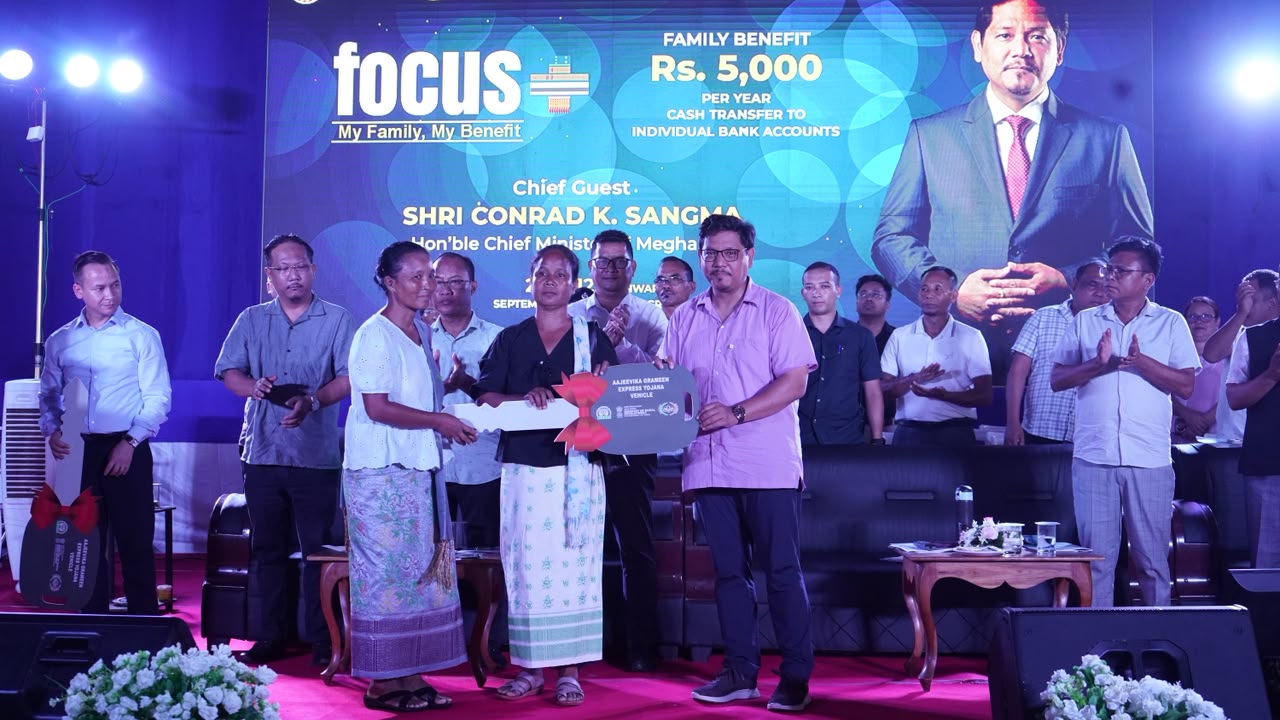
Shri Conrad K Sangma released ₹28.60 crore under FOCUS+ to 1,14,400 farming households across Meghalaya, including 9,070 newly added beneficiaries. Each eligible household receives an annual untied support of ₹5,000 in two instalments of ₹2,500 each through Direct Benefit Transfer, for farming and other production-related needs.

Of the 9,070 new beneficiaries, 7,074 (78 per cent) are from Garo Hills, which accounts for 87,959 or 76.9 per cent of the State’s total FOCUS+ beneficiaries. West Garo Hills has the highest district-level coverage with 37,330 beneficiaries, while the latest expansion has also brought 2,264 households in Demdema and 513 households in the Tura Municipal Board area under the programme

First-of-its-kind in India: Communities take first step towards protected catchments

In a first-of-its-kind initiative, the Government of Meghalaya, represented by MegARISE and the Meghalaya Basin Development Authority (MBDA), signed an MoU with the Pomlakrai Umiew Catchment and Durakalagre Ganol Catchment as the first step towards declaring the catchment areas protected under the Meghalaya Protection Act, 1990.

Communities of Pomlakrai Umiew village in Umiew Catchment and Durakalagre village in Ganol Catchment have voluntarily come forward, in partnership with the Government of Meghalaya, to initiate protected catchment declarations under the Meghalaya Protection Act, 1990, alongside plans for community-led ecotourism under MegARISE. The initiative potentially serves as a reference for other states considering similar environmental protection measures.

Notably, MegARISE, a ₹344.4-crore project funded by KfW and the Government of Meghalaya, is protecting the Ganol and Umiew catchments covering 52,198 hectares across 226 villages and nine blocks. The catchment is also critical to Tura’s future growth, with the ₹398-crore Greater Tura Water Supply Scheme drawing on the Ganol catchment, linking its protection directly to the city’s long-term water security.

Shri Arbinstone B. Marak, Hon’ble MLA, 48-Selsella Assembly Constituency, thanked Chief Minister Shri Conrad K. Sangma and other dignitaries, and said FOCUS+ and MegARISE demonstrated the State’s focus on strengthening livelihoods while protecting vital water and forest resources. He also highlighted the AGEY vehicles being provided to Producer Groups to support transportation of produce and livelihoods. He added, “For nearly 70 years under the GHADC, we had not seen many bills or amendments being introduced. But today, under the leadership of our Chief Minister, several bills and reforms have been passed and introduced in the GHADC.”

Shri Sampath Kumar, IAS, Chief Project Director, MegARISE and Additional Chief Secretary, Government of Meghalaya, said the State, under the leadership of Hon’ble Chief Minister Shri Conrad K. Sangma, is implementing a KfW-supported conservation initiative to protect the vulnerable Umiew and Ganol catchments and strengthen long-term water security for Shillong and Tura. He said the programme places local communities at the centre of catchment conservation, while supporting farmers through FOCUS and promoting sustainable livelihoods.

FOCUS+ beneficiary shares impact of direct support

Sengrak Ch. Marak, Secretary, Kangpra Producer Group, shared how FOCUS+ support had strengthened his group’s livelihoods. He said the group used ₹60,000 to purchase ginger, while the ₹5,000 individual support enabled him to start squash cultivation and sell the produce in the market. The group also invested FOCUS+ funds in pig rearing, with plans to sell the pigs in December. He thanked Hon’ble Chief Minister Shri Conrad K. Sangma for the support.

The programme also featured the flagging off AGEY vehicles for Self-Help Groups under MSRLS, aimed at strengthening rural transport, market access and women-led enterprise. 

DFPD Launches Swachhata Hi Seva 2026 Campaign to Promote Cleanliness and Public Participation

DFPD Launches Swachhata Hi Seva 2026 Campaign to Promote Cleanliness and Public Participation


New Delhi, September 23, 2026: The Department of Food and Public Distribution (DFPD), Ministry of Consumer Affairs, Food and Public Distribution, has launched the ‘Swachhata Hi Seva-2026’ campaign across the country, with a focus on cleanliness, sanitation and encouraging greater public participation in cleanliness initiatives.

The campaign is being implemented by the Department along with its Public Sector Undertakings (PSUs), attached and subordinate offices. The initiative is being carried out in accordance with guidelines issued by the Department of Urban Development and the Department of Drinking Water and Sanitation.

This year’s campaign is being conducted under the theme ‘Swachhata Mein Sahbhag, Swachh Bharat, Viksit Bharat’, emphasising participation as an important component of sustained cleanliness efforts. The campaign seeks to encourage behavioural and cultural changes that can support cleaner public spaces and improved sanitation practices.

As part of the campaign, Sanjeev Chopra, Secretary, Department of Food and Public Distribution, administered the Swachhata pledge to officials of the Department on September 17, 2026, at Krishi Bhawan in New Delhi.

The pledge ceremony was followed by a cleanliness drive across the premises. Officials and employees participated in the activity as part of the Department’s broader efforts to promote cleanliness within government workplaces.

The campaign extends beyond routine cleanliness activities, with an emphasis on developing sustained awareness and participation among employees, stakeholders and citizens. The initiative seeks to make cleanliness a shared responsibility rather than limiting it to periodic drives.

Through the participation of its offices and PSUs across the country, the Department aims to reinforce sanitation practices at institutional and workplace levels while supporting the broader objectives of the national cleanliness mission.

The Swachhata Hi Seva-2026 campaign also highlights the link between citizen participation, sanitation and the broader goal of building cleaner and more sustainable communities. The theme calls for collective involvement in maintaining cleanliness and supporting improved sanitation practices.

The DFPD’s campaign is part of the wider nationwide effort to promote cleanliness through public participation and institutional action. The Department’s activities during the campaign are expected to focus on creating greater awareness and encouraging sustained behavioural change among officials and stakeholders.

Telecom Manufacturing Zone Draws INR 5,500 Crore Investment Interest as DoT Holds Bengaluru Roundtable

Bengaluru, September 23, 2026: The Department of Telecommunications (DoT) held its third Investors’ Roundtable in Bengaluru to attract investments and strengthen India’s domestic telecom manufacturing ecosystem, with discussions centred on the proposed Telecom Manufacturing Zone (TMZ) at Gwalior, Madhya Pradesh.

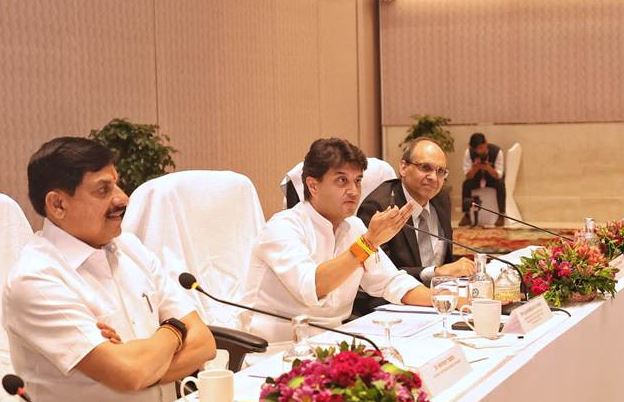
Union Minister for Communications and Development of North Eastern Region Jyotiraditya M. Scindia and Madhya Pradesh Chief Minister Mohan Yadav jointly chaired the investor interaction. The meeting brought together companies and industry leaders from the telecom, technology, semiconductor and electronics sectors to discuss manufacturing, research and development, innovation, exports and domestic value addition.

Scindia said that 24 companies are already on board and have proposed investments of around ₹5,500 crore in the Gwalior Telecom Manufacturing Zone. He said the initiative demonstrates cooperation between the Union and State governments in creating an investment environment for technology and manufacturing companies.

Telecom Manufacturing Zone Draws INR 5,500 Crore Investment Interest as DoT Holds Bengaluru Roundtable


According to the Minister, the Madhya Pradesh government has put in place incentives and subsidies estimated at around ₹8,000 crore to support investments in the State. He emphasised that coordinated government support is intended to give private-sector investors greater confidence to establish manufacturing and innovation operations.

The Bengaluru roadshow marked the completion of the first phase of the government’s investor outreach programme for the TMZ. Scindia said the government intends to respond quickly to investor concerns, with a proposed mechanism to address queries or issues related to the zone within 48 hours.

The Minister also highlighted the changing structure of India’s technology economy, pointing to the need to increase domestic value addition and develop intellectual property within the country. He said the telecom sector represents an important opportunity for India to move beyond services and expand its capabilities in designing and manufacturing products for domestic and international markets.

Chief Minister Mohan Yadav said Madhya Pradesh’s location and infrastructure provide a foundation for attracting investments across sectors. He highlighted the State government’s focus on creating an environment conducive to emerging industries, particularly technology and telecommunications, and said the TMZ could contribute to investment and employment generation.

The Telecom Manufacturing Zone project formally took shape with a Memorandum of Understanding signed on July 30, 2026, between the Department of Telecommunications and the Government of Madhya Pradesh in New Delhi. The first phase is planned as an integrated, plug-and-play industrial cluster for telecom and electronics manufacturing, research and development, innovation and allied activities.

Under the agreement, the Central Government is providing 100% funding support of ₹493 crore for Phase I of the project. The Madhya Pradesh government has allocated approximately 170 acres of land free of cost, along with incentives aimed at encouraging investors to establish facilities within the zone.

The Bengaluru meeting follows investor roundtables held earlier in Delhi and Mumbai, where companies indicated investment commitments of approximately ₹5,500 crore and the potential creation of around 18,000 employment opportunities through the TMZ initiative.

At the third roundtable, participating companies expressed interest in investing an estimated ₹700 crore to ₹800 crore, subject to internal management approvals and further evaluation. Several companies also indicated plans to conduct site visits before taking investment decisions.

The proposed Gwalior zone is intended to create an integrated ecosystem covering manufacturing, product development, innovation and supporting activities. The initiative is expected to encourage greater domestic value addition in telecom and electronics while creating opportunities for technology companies and component manufacturers.

As part of his Bengaluru engagement, Scindia also visited Qualcomm, where he met the company’s leadership and senior representatives. Discussions covered developments in telecommunications technology, semiconductor capabilities, indigenous product development, research and innovation, and opportunities for technology companies to participate more actively in India’s telecom manufacturing ecosystem.

The visit also provided an opportunity for government and industry representatives to discuss requirements relating to telecom equipment, semiconductor technologies, product design, R&D and next-generation communication systems.

The Telecom Manufacturing Zone is being positioned as a component of India’s broader efforts to expand domestic manufacturing and reduce dependence on imported technology and components. By combining industrial infrastructure with investment incentives, research capabilities and manufacturing facilities, the initiative aims to support the development of a more integrated telecom and electronics ecosystem in India.

With investor outreach now moving through its next phase, the government is expected to continue engaging companies to translate expressions of interest into manufacturing projects, investment and employment opportunities at the Gwalior Telecom Manufacturing Zone.

Coal India’s CSR Journey Expands from Community Welfare to Inclusive Growth

New Delhi, September 23, 2026: Coal India Limited (CIL) has significantly expanded the scale and scope of its Corporate Social Responsibility (CSR) initiatives, moving from traditional community welfare programmes around mining areas to a broader model focused on inclusive growth, healthcare, education, livelihoods and community development.

CIL’s commitment to communities around its mining operations predates the mandatory CSR framework introduced under the Companies Act, 2013. Under the Community Development Policy, 2005, CIL’s subsidiaries undertook welfare activities in villages located within an 8-kilometre radius of their mining operations. These initiatives included drinking water facilities, healthcare camps and basic infrastructure projects.

During FY 2011-12 to FY 2013-14, the company’s consolidated expenditure under the earlier community development framework increased from Rs. 82 crore to Rs. 409 crore. The introduction of Section 135 of the Companies Act, 2013 subsequently provided a formal statutory framework for CSR expenditure, with activities guided by Schedule VII and overseen through Board-level CSR mechanisms.

CIL subsequently developed its own CSR framework, including a focus on communities located close to its mines and establishments. At least 80% of annual CSR expenditure is directed within a 25-kilometre radius, with priority given to project-affected areas, while the remaining allocation supports state and national-level initiatives. More than 90% of CIL’s CSR expenditure is incurred in coal-bearing states, according to the company.

The company’s CSR spending has also moved substantially beyond its statutory requirement. Between FY 2014-15 and FY 2025-26, CIL spent approximately Rs. 7,276 crore on CSR, compared with a statutory requirement of Rs. 5,795 crore. Annual CSR expenditure has grown from levels of around Rs. 500 crore in earlier years to nearly Rs. 1,000 crore annually, placing CIL among India’s significant corporate CSR contributors.

A major component of CIL’s CSR portfolio has been its alignment with national development priorities. The company has supported initiatives covering sanitation, healthcare, education, emergency relief, skill development and livelihoods. Under the Swachh Vidyalaya Abhiyan, CIL became the largest CPSE contributor and supported the construction of more than 50,000 toilets in government schools.

CIL has also undertaken several healthcare and social welfare programmes. Its NIRMAN initiative has supported more than 1,300 UPSC aspirants from mining districts, while the Thalassemia Bal Sewa Yojana has enabled more than 1,000 bone marrow transplants. Through the Nanha Sa Dil programme, more than 2 lakh children have been screened, with over 1,700 children receiving treatment for congenital heart disease.

Education has emerged as another major area of intervention. CIL’s scholarship initiatives, including programmes undertaken with the Supreme Court of India, have reached more than 2,500 children. The company’s Digital Vidya initiative has also commissioned more than 2,300 smart classrooms and 500 ICT/STEM laboratories in government schools. A 5,000-seat state library is also under construction in Ranchi.

CIL’s CSR investments have additionally contributed to strengthening regional healthcare infrastructure. A 500-bed medical college and hospital at Angul and a cardiac care centre at Jharsuguda, together representing an investment of approximately Rs. 596 crore, are intended to expand access to specialised healthcare in their respective regions.

Beyond healthcare and education, the company has placed emphasis on employment-oriented programmes and livelihood generation. Initiatives such as Project PRAGATI, tribal women’s poultry programmes, plastic engineering courses and multi-skill training have benefited more than 48,000 people over the past four financial years, according to CIL.

Sports and institutional development have also formed part of the company’s CSR portfolio. The Khelgaon Sports Academy, operated in partnership with the Government of Jharkhand, has produced more than 1,800 medals, including 15 at the international level. Other projects have included support for institutions such as IIT (ISM) Dhanbad and public-interest infrastructure initiatives such as the illumination of Kolkata’s Howrah Bridge.

Collectively, CIL estimates that its CSR initiatives have reached approximately 3.56 crore people, directly and indirectly. The programmes have particularly focused on communities and vulnerable groups, including SC/ST populations, women and persons with disabilities. The initiatives also correspond with several Sustainable Development Goals, including those relating to poverty reduction, healthcare, education, gender equality, and water and sanitation.

The company has developed a structured mechanism for planning, implementing and monitoring its CSR projects. Annual Action Plans are prepared based on identified community requirements, while project agreements specify deliverables and timelines. Funds are released in stages linked to project milestones and utilisation certificates, with larger initiatives subject to third-party impact assessments.

Oversight is further supported through internal and statutory audits, along with CAG-related scrutiny. This approach is intended to strengthen transparency, accountability and measurement of outcomes rather than focusing solely on expenditure.

The broader CSR framework for the coal sector is also evolving. On September 8, 2026, the Ministry of Coal launched a sector-wide CSR framework, becoming the first Union ministry to introduce such an initiative. The framework is aimed at promoting greater consistency, convergence and accountability across CSR programmes undertaken by coal-sector public sector enterprises.

CIL’s CSR trajectory therefore reflects a broader transition from location-based community welfare towards structured programmes that combine social infrastructure, human development, livelihoods and measurable outcomes. With annual expenditure approaching Rs. 1,000 crore and programmes spanning multiple sectors, the company’s CSR model continues to evolve alongside the development needs of communities associated with India’s coal-producing regions.

11th Ayurveda Day Celebrations to Spotlight Research, Innovation and Global Vision

Nagpur, September 23, 2026: The 11th Ayurveda Day is being observed across India and internationally today, with the Ministry of Ayush focusing on the role of Ayurveda in building a healthier future through scientific evidence, research, innovation and community wellbeing.

The national-level celebrations are being held in Nagpur under the theme “Ayurveda for a Healthier Tomorrow” (स्वस्थ भविष्य के लिए आयुर्वेद). The programme brings together Ayurveda practitioners, researchers, institutions, policymakers and other stakeholders from across the Ayush ecosystem.

A major highlight of the event will be the release of the first-ever Report on the Ayush Services Sector, prepared by the Research and Information System for Developing Countries (RIS). The report is expected to provide an assessment of the sector and offer insights into the evolving landscape of Ayush services.

The celebrations will also feature the launch of Safety Dossiers on Gokshura (Tribulus terrestris) and Chandrasura (Lepidium sativum). In addition, Standard Treatment Guidelines for skin disorders will be released as part of efforts to strengthen evidence-based practices and improve the application of Ayurveda in healthcare.

Another key publication to be unveiled is “From Traditional Wisdom to Global Leadership: Ayush Vision 2030”, outlining a longer-term perspective for the development and wider recognition of Ayush systems. A Status Report on Ayush-related Inventions in India will also be launched during the programme.

The event will further introduce the CCRAS–AGNI Assessment Scale Web Portal. The initiative is associated with the Central Council for Research in Ayurvedic Sciences (CCRAS) and the Ayurveda Gyan Naipunya Initiative (AGNI), reflecting the growing emphasis on structured assessment, research and digital platforms within the Ayurveda ecosystem.

Two scientific sessions will form an important part of the celebrations. The first, “Shashwatam to Vishwas – Ayurveda for a Healthier Tomorrow and the Road to 2047,” will examine the future trajectory of Ayurveda and its potential role in India’s long-term health vision.

The second scientific session, “Integrating Therapies is Needed to Reduce NCD Burden by 2027,” will focus on the growing challenge posed by non-communicable diseases (NCDs) and discuss the potential role of integrated therapeutic approaches in addressing the burden.

Senior officials from the Ministry of Ayush, representatives of Ayush councils and institutions, practitioners, researchers and other stakeholders are participating in the celebrations. Events being held across India and overseas are expected to facilitate wider engagement and knowledge sharing.

The 11th Ayurveda Day places particular emphasis on connecting India’s traditional healthcare knowledge with contemporary research and evidence. The initiatives being launched during the celebrations are aimed at supporting research, improving standards, encouraging innovation and expanding the contribution of Ayurveda to community wellbeing.

With Ayurveda Day now being marked on a wider national and international platform, this year’s observance seeks to underline the continuing evolution of Ayurveda while highlighting the importance of evidence-based approaches, scientific collaboration and innovation in shaping its future.

World Financial Planning Day Marks 10 Years with Global Activities and New Research on AI in Financial Planning

DENVER, COLO – 23 September 2026 – As financial decisions grow more complex, Financial Planning Standards Board Ltd. (FPSB) and its global network will celebrate the 10th annual World Financial Planning Day (WFPD) on 7 October 2026 to show how financial planning with the help of a CERTIFIED FINANCIAL PLANNER professional can help individuals and families make informed decisions, reach their goals and achieve greater financial confidence. 

Held as part of the International Organization of Securities Commissions’ (IOSCO) World Investor Week (WIW) , the global campaign provides an opportunity to reinforce the value of financial planning and the role CFP professionals play in strengthening financial education and consumer protection worldwide. View video remarks from IOSCO Secretary General Rodrigo Buenaventura.

World Financial Planning Day Marks 10 Years with Global Activities and New Research on AI in Financial Planning


“World Financial Planning Day is a chance for people everywhere to see how financial planning can help them take meaningful steps toward the lives they want to live,” said FPSB CEO Dante De Gori, CFP. “As we mark the 10th year of this global initiative, FPSB and our Network are pleased to highlight the many ways CFP professionals can help people make informed decisions, improve their financial wellbeing and plan for the future.”

FPSB will mark World Financial Planning Day with the release of new global findings from its 2026 Impact of Artificial Intelligence on Financial Planning study. The research explores how artificial intelligence is shaping the way consumers engage with financial information and how financial planners are using AI to improve efficiency and better serve clients, while reinforcing the importance of professional judgment, ethical responsibility and human understanding in financial planning.

Activities around the world

Across Brazil, Canada, Chinese Taipei, Germany, Hong Kong, India, Italy, Japan, Thailand, U.S. and Vietnam, World Financial Planning Day will be celebrated through activities designed to help people better understand the benefits of financial planning, including:

  • Pro bono financial planning clinics
  • In-person and virtual financial education webinars, panel discussions and videos
  • Release of new findings from FPSB’s 2026 Impact of AI on Financial Planning global research
  • Media and social media initiatives to raise awareness of the value of financial planning

More details of these activities are available on the World Financial Planning Day website.

New videos showcase the value of financial planning

New this year, FPSB has released videos featuring CFP professionals sharing how financial planning can support people and help them recognize benefits they may overlook. The videos explore two questions: How does financial planning help people in their everyday lives? and What’s one benefit of financial planning people often overlook?

Get involved

Individuals are invited to take part in World Financial Planning Day activities and explore resources to understand how financial planning can help them achieve their goals. More information is available on worldfpday.org and worldinvestorweek.org, and by joining the #WFPD2026 and #IOSCOWIW2026 conversations on FPSB’s social media channels.

Zapata Introduces Quantum Pilot™ to Enable Systematic Discovery and Development of High-Value Quantum Applications

Drawing on Zapata’s pioneering quantum software expertise, the platform helps enterprises build a clear roadmap to commercial impact

BOSTON, Massachusetts – September 23, 2026 – Zapata Quantum, Inc. (OTCQB: ZPTA) (“Zapata,” “Zapata Quantum” or the “Company”), a leader in quantum computing algorithm and application development, today announced early access to Quantum Pilot, a hardware-agnostic, cloud-based software platform designed to close a growing gap between rapidly advancing quantum hardware capabilities and enterprises’ ability to determine where and how quantum computing can create business value.

Quantum Pilot builds a dynamic roadmap for enterprises that want to deploy quantum technology but are uncertain which applications are relevant to their business and sector, when those solutions will be practical, and what they could be worth. It gives organizations a systematic way to discover potential applications, weigh their technical and commercial potential, and focus resources on the opportunities with the strongest case for investment. Enterprises can then identify and develop applications without betting on a single quantum modality or provider, and reassess application readiness or change their approach as hardware capabilities and algorithms evolve.

“The critical on-ramp to quantum application development is the efficient and rigorous mapping of use cases to quantum computational solutions,” said Sumit Kapur, CEO of Zapata Quantum. “We built Quantum Pilot to make that on-ramp more accessible to enterprise leaders and ensure that quantum activity becomes a capability that compounds—with each experiment and development effort informing and accelerating the next.”

Delivering Quantum Application Intelligence™

Drawing on Zapata’s experience developing quantum algorithms and applications across industries and hardware architectures, Quantum Pilot combines a proprietary knowledge framework with advanced computational tools, including capabilities developed through its collaboration with NVIDIA to apply agentic AI to quantum resource estimation. The platform also builds on Zapata’s collaboration with the University of Maryland on formal methods for quantum software verification.

Together, these capabilities enable Quantum Pilot to deliver Quantum Application Intelligence (QAI)—helping enterprises identify, evaluate and develop quantum applications with scientific rigor and a clear focus on business value. The platform also continuously tracks and updates the global quantum ecosystem’s research, hardware roadmaps and software developments so that application roadmaps are current as the field advances and users are making application decisions based on the latest data.

“Most conversations about quantum readiness focus on the hardware roadmap. That is not where the real risk sits. It sits one layer up, in the applications and software that decide whether the hardware ever produces business value,” said Mark Hill, Chief Digital Information Officer at CSL Behring, a multibillion-dollar global biotech leader, and Advisor to the Company. “Quantum Pilot matters because it forces the harder question enterprises keep avoiding: which applications are worth building now, not just which processor is fastest.” 

Quantum Pilot is powered by three complementary systems:

  • Quantum Graph, a proprietary knowledge layer that connects quantum applications, algorithms, research and hardware roadmaps, providing structured context for the platform and its AI agents as the field advances.
  • Quantum Engine, a suite of computational tools and agents that supports algorithm selection, resource estimation, experiment design and hardware benchmarking, helping enterprises assess technical feasibility and guide application development.
  • Quantum Assurance, a framework that combines formal verification methods with expert review to assess technical results and guide the development process, with Zapata’s scientists helping enterprises interpret evidence and determine next steps.

“Among the things that make Quantum Pilot’s approach to application development distinct is its use of formal verification, rather than after-the-fact validation alone,” said Runzhou Tao, Assistant Professor, University of Maryland, and Fellow, Joint Center for Quantum Information and Computer Science (QuICS). “That’s the same principle we apply in our research with Zapata on verified quantum software, and it addresses a discipline quantum computing has largely developed without.”

Early Access

Quantum Pilot is initially available through an early access program for select enterprise and government customers. Organizations interested in participating can request a demo and learn more at zapataquantum.com/quantumpilot