Archive: August 22, 2026

Indian Bank organises MEGA Retail, Agri & MSME Credit Campaign in Chennai

National, August 22, 2026: Indian Bank’s Field General Manager’s Office (FGMO), Chennai, led by Smt. Padmavathy Srikant, FGM, successfully organised a Mega Retail, Agri & MSME Credit Campaign on August 21, 2026, in the gracious presence of Shri Binod Kumar, MD and CEO, along with Shri Sujay Mallik, CGM – Retail & MSME.

Indian Bank organises MEGA Retail, Agri & MSME Credit Campaign in  Chennai


As part of the campaign, Shri Binod Kumar presented sanction letters to beneficiaries across diverse sectors, reaffirming Indian Bank’s commitment to empowering customers and supporting the growth of the Retail, Agriculture and MSME segments, in line with the national vision of Viksit Bharat.

The campaign received an overwhelming response, with credit proposals mobilised amounting to ₹2,080 crore, of which ₹1,125 crore was sanctioned and ₹575 crore disbursed.

On the occasion, Shri Binod Kumar also handed over sanction letters to 46 beneficiaries, representing a total credit exposure of ₹207 crore across diverse Retail, Agriculture and MSME segments.

The campaign saw active participation of FGMO Chennai span zones Chennai North, Chennai South, Poonamallee, Kancheepuram, Puducherry, Vellore, Tiruvannamalai and Cuddalore zonal teams.

Ditch Manual Note-Taking as POVA AI Buds Pro Go on Sale Starting at Rs.12,499

Ditch Manual Note-Taking as POVA AI Buds Pro Go on Sale Starting at Rs.12,499

Business Wire India

The POVA AI Buds Pro are officially available for purchase starting today on Amazon India and Flipkart. Designed to handle the heavy lifting of note-taking quietly in the background, these earbuds take the friction out of capturing important details during fast-paced meetings, classes, and calls.

Key Features:

  • Instant Case Recording: A single button on the charging case starts recording immediately. Capture full conversations without needing to unlock a phone or fumble with an app.
  • Auto-Summaries & Action Items: Minutes after a meeting ends, the earbuds turn the entire conversation into a concise summary, a list of actionable next steps, or a full transcript.
  • Real-Time Translation: Communicate naturally across 12 Indian languages. Real-time translation works directly through the audio, allowing users to talk with vendors and clients without awkward pauses or typing on a screen.

Pricing, Offers & Availability: The POVA AI Buds Pro are priced at Rs. 14,999. For the launch day, buyers secure them at a special effective price of Rs. 12,499. The earbuds are available now across Amazon India and Flipkart, alongside No-Cost EMI options for up to 9 months.

Ditch Manual Note-Taking as POVA AI Buds Pro Go on Sale Starting at Rs.12,499

Chandigarh University Hosts Global Architectural Voices to Deliberate on Technology, Heritage and Future of Architecture

Leading Architects Deliberate Artificial Intelligence, Emerging Technologies & the Future of Architecture

CHANDIGARH, India, Aug. 22, 2026 /PRNewswire/ — Aimed at transforming industry–academia engagement from dialogue into tangible collaboration, the 4th International Conference on Trends in Architecture and Construction (ICTAC 2026) was inaugurated today at Chandigarh University, bringing leading architects, academicians, researchers, industry professionals and scholars onto a single platform to deliberate on the future of architecture and construction.

Eminent speakers sharing valuable insights on the evolving landscape of architecture at the Global Conference om Architecture at Chandigarh University.

The conference set the stage for new industry partnerships, architecture and research consultancy, professional knowledge exchange and stronger industry exposure for future architects. Organised by the University Institute of Architecture (UIA), Chandigarh University, the two-day hybrid conference is being held on August 20 and 21, 2026 at Chandigarh University.

The inaugural day brought together eminent voices from the field of architectural education, research and professional practice, including Prof. Jayshree Deshpande, Director of the Council of Architecture – Training & Research Centre (COA-TRC) as Chief Guest, Yatin Pandya, Founder & Principal Architect, Footprints EARTH, Ahmedabad, Manmohan Khanna, Founder & Principal Architect, KMA Architecture and Chairman-IIA, Chandigarh Chapter as Guest of Honours, Prof. (Dr.) Vikas Rai Bhatnagar, Group Vice Chancellor, Prof. Dr R Jagdeesh Kannan, Pro Vice Chancellor-Academic Affairs, Chandigarh University among other dignitaries.

Speaking on the occasion, Prof. Jayashree Deshpande, Director of the Council of Architecture – Training & Research Centre (COA-TRC) said, “AI and other emerging technologies are a blessing because they can help us to think and design better. Architecture today deals with projects which are immense in scale, and it is not possible for an architect to do everything single-handedly. We must therefore learn to collaborate with engineers, planners, policymakers, consultants and specialists and technology can enable us to work together more effectively.”

Deshpande added, “We are entering an extraordinary phase of technological change, with artificial intelligence, digital twins, generative design, robotics and data-driven planning transforming the way we conceive, design and construct our buildings and cities. But technology should remain a means and not become the mission. Technology must be used to improve the quality of human life, to create spaces, cities and communities that are stronger, more resilient, inclusive and connected. Technology is smart, but the human should be wiser. If we learn to use technology properly, we can create wise cities that are technologically advanced but emotionally connected. This is particularly important as we work towards the vision of Viksit Bharat. Our young professionals should engage with the various initiatives of the Government of India and utilize the opportunities available to contribute to the development of the country. Ultimately, our responsibility as architects is not simply to create iconic buildings, but to create places where people feel safe, included, inspired and at home. If technology can help us achieve that, then it has truly served society and contributed to the larger vision of a Viksit Bharat.”

Yatin Pandya, Founder & Principal Architect, Footprints EARTH, Ahmedabad said, “Architecture is not merely about buildings or forms; it is about the experience, emotion and impact we create. Trends may come and go, but what is truly appropriate and meaningful can remain timeless. As architects, we must observe, understand and foresee the implications of even the smallest design decisions, because our responsibility extends beyond an individual client to the larger community and the future of our planet.”

Manmohan Khanna, Founder & Principal Architect, KMA Architecture said, “Chandigarh University has the potential to become one of the leading institutions in the country and the world and the students here are fortunate to be part of that journey. Students are our future and together we must work towards building the finest professionals for the country.”

A key thrust of ICTAC 2026 is its emphasis on creating concrete mechanisms for sustained industry–academia engagement. The inaugural day also featured the opening of the Heritage Exhibition – ‘Pehchan 2.0’, placing India’s architectural heritage within the wider discourse on identity, conservation and contemporary architectural practice.

The programme further witnessed the unveiling of the ICTAC Inaugural Board and the release of the Abstract Book, followed by paper presentations. The research presentations provided scholars and participants with a platform to share emerging ideas, studies and perspectives in architecture and construction.

The second day of the conference will feature the Industry Colloquium, comprising plenary sessions and high-level panel discussions with distinguished experts from academia, government and industry. A major highlight will be the signing of an MoU between UIA and Walia Creative Architects, creating a formal avenue for closer engagement between academic and professional practice.

About Chandigarh University

Chandigarh University is a NAAC A+ Grade University and QS World Ranked University. This autonomous educational institution is approved by UGC and is located near Chandigarh in the state of Punjab. It is the youngest university in India and the only private university in Punjab to be honoured with A+ Grade by NAAC (National Assessment and Accreditation Council). CU offers more than 109 UG and PG programs in the field of engineering, management, pharmacy, law, architecture, journalism, animation, hotel management, commerce, and others. It has been awarded as The University with Best Placements by WCRC.

Website address: https://www.cuchd.in/

Photo: https://mmx.prnewswire.com/media/MS1973975/ICTAC_event_collage_group_top_speakers_below.jpg?id=OA2903341&token=eyJhbGciOiJkaXIiLCJlbmMiOiJBMjU2R0NNIn0..vyIt1-Qpobw4ZX4W.1QxGS5VNCjhZxaRW63yXMYGuyzRl3V5MN026BJrGy-idYn6FksvyBs_KeGyGGF7bW3cGTm1K5dNvwn7BjCyidmdcdgF5-3NcXTllKXG8B_gTzNjzLaZtpoAyvN48-dr5oIs.O8b-cgZp-R0v_7scTU0tvg

Cision View original content to download multimedia:https://www.prnewswire.com/in/news-releases/chandigarh-university-hosts-global-architectural-voices-to-deliberate-on-technology-heritage-and-future-of-architecture-302857684.html

Chandigarh University Hosts Global Architectural Voices to Deliberate on Technology, Heritage and Future of Architecture

India Put Up Brave Fight Before Going Down 0-2 to Netherlands

Aug 22: India’s women’s hockey team faced a tough challenge against defending champions Netherlands and went down 0-2 in their first second-stage match of the FIH Hockey World Cup 2026 at Wagener Stadium.

The Netherlands made an early impact, earning a penalty corner within the opening minutes. Yibbi Jansen converted the opportunity to put her team ahead.

India gradually grew into the match and created chances as the contest progressed. The Indian defence remained organised, while Bichu Devi and Savita made several important saves to keep the deficit to one goal.

India earned a penalty corner in the second quarter but could not make the opportunity count. Navneet Kaur also came close to scoring, while Savita continued to keep the Netherlands attack under control.

The Dutch side increased the pressure after the interval and found their second goal in the 38th minute. Frederique Matla converted a penalty corner to give the defending champions a 2-0 lead.

India refused to give up and continued searching for a breakthrough in the final quarter. Navneet had another promising opportunity late in the match, but Netherlands goalkeeper Anne Veenendaal made the save.

The Netherlands managed the closing stages well to secure the victory and book their place in the semi-finals.

The defeat leaves India with one point in Pool E. The team will now face Australia in a crucial final pool match, where a positive result will be vital to keeping their semi-final hopes alive.

India may have missed out on the result, but the team’s determination against the defending champions will give them confidence as they prepare for their next challenge.

Odisha’s Rooftop Solar Surge: State Jumps to 7th Spot, Powers Up Clean Energy Push

Bhubaneswar, Aug 22: Odisha is emerging as a strong performer in India’s rooftop solar sector, moving up from 13th to 7th position nationally under the PM Surya Ghar: Muft Bijli Yojana.

Odisha’s Rooftop Solar Surge: State Jumps to 7th Spot, Powers Up Clean Energy Push

The improvement reflects growing interest among households in using solar power and adopting cleaner sources of electricity. The state has recorded around 1.74 lakh rooftop solar installations, while applications have crossed 3.12 lakh, according to data from the Ministry of New and Renewable Energy.

Odisha has seen a significant increase in both applications and completed installations. Applications have grown from 1,95,513 to 3,12,527, while installations have risen from 72,538 to 1.74 lakh. The rate at which applications are being converted into installations has also improved from 37.1 per cent to 53.4 per cent.

The growing use of rooftop solar is helping households take a more active role in clean energy generation. Solar installations can enable consumers to produce electricity at home while supporting the wider shift towards renewable energy.

Financial assistance has also helped encourage adoption. Eligible households can receive support under the central PM Surya Ghar scheme along with additional assistance from the Odisha government. For a 3 kWp rooftop solar system, eligible consumers can receive financial assistance of up to Rs 1.38 lakh, subject to applicable rules.

Odisha has set a target of three lakh rooftop solar installations by 2027, signalling its focus on expanding renewable energy at the household level.

The state’s four power distribution companies — TPCODL, TPWODL, TPNODL and TPSODL — are supporting the programme through consumer awareness, site inspections, net metering, commissioning and coordination with solar vendors.

The state’s rise to seventh place marks a significant step in Odisha’s clean-energy journey. With more households turning towards solar power, the rooftop solar programme is helping build a greener, more sustainable and energy-conscious Odisha.

Bhubaneswar to Get 2.3-km Six-Lane Road Linking Guru Kelucharan Park to Patia Railway Station

Bhubaneswar, Aug. 22 (UDN): Bhubaneswar is set to get a new 2.387-km six-lane road corridor connecting Guru Kelucharan Park with Patia Railway Station, a project aimed at easing traffic congestion on the busy Jaydev Vihar–Nandankanan stretch and improving connectivity in the city’s rapidly growing northern suburbs.

Bhubaneswar to Get 2.3-km Six-Lane Road Linking Guru Kelucharan Park to Patia Railway Station

 Representational Image

Odisha Housing and Urban Development Minister and Bhubaneswar Development Authority (BDA) Chairman Krushna Chandra Mahapatra laid the foundation stone for the Rs 55.85-crore project on Friday.

The road is being developed under the Comprehensive Development Plan (CDP) as part of the Right Side Road Network (RSRN) to strengthen the city’s transport infrastructure.

Modern Urban Corridor

The 45-metre-wide corridor will pass through Patia, Chandrasekharpur and Gadakana mouzas before terminating at Patia Railway Station.

Designed as a modern urban road, the project will feature six traffic lanes, street lighting, pedestrian footpaths, stormwater drainage and a dedicated utility corridor for essential services. Officials expect the construction to be completed within 18 months.

Alternative Route to Ease Congestion

The new road is expected to provide commuters with an alternative to the congested Jaydev Vihar–Nandankanan corridor, reducing travel time during peak hours and improving access to Patia Railway Station.

Officials said the project would also enhance pedestrian safety and urban mobility through improved footpaths and drainage infrastructure.

Affordable Housing Project Reviewed

After the foundation ceremony, Mahapatra inspected the Affordable Housing Project (AHP) at Gadakana, where the BDA is constructing 680 housing units under the Engineering, Procurement and Construction (EPC) model.

The housing project is intended to expand affordable residential options for eligible beneficiaries while complementing Bhubaneswar’s broader urban infrastructure and development initiatives.

New Study Reveals How Cells Build Their Hidden Organization Hubs

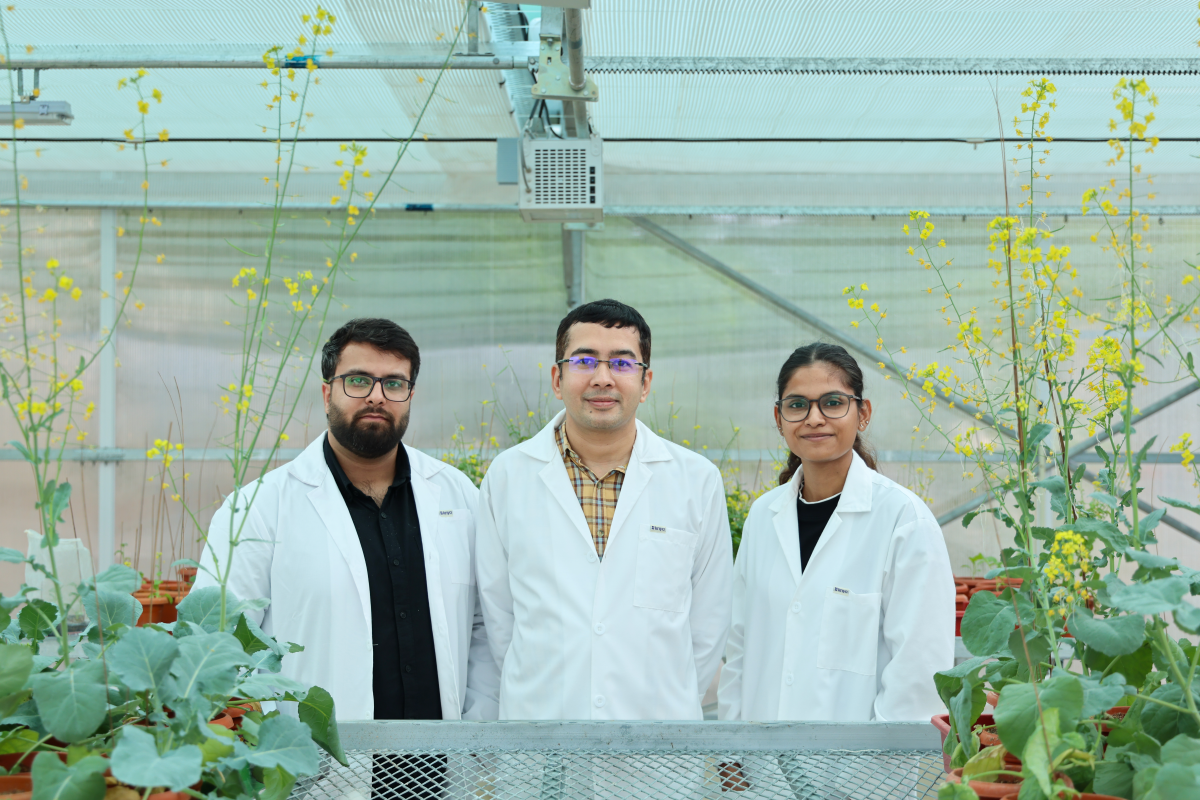
Aug 22: Inside every cell, thousands of proteins must reach the right place at the right time. Helping coordinate this complex logistics network are centriolar satellites—tiny, membrane-less organelles that play important roles in protein trafficking, cell division, and the formation of cilia.

Despite their importance and their links to developmental and neurological disorders, the molecular mechanisms through which centriolar satellites assemble and acquire their functions have remained poorly understood.

A new study led by Dr. Elif Nur Fırat-Karalar from Koç University’s Department of Molecular Biology and Genetics and School of Medicine reveals that centriolar satellites form through a highly ordered, hierarchical process rather than through the random aggregation of proteins. The findings were published in the Journal of Cell Biology.

PCM1 acts as the organelle’s central scaffold

The researchers found that centriolar satellite formation begins when a protein called pericentriolar material 1, or PCM1, assembles into a scaffold-like structure. This initial scaffold then recruits other centriolar satellite proteins, known as clients, in a defined sequence.

To observe this process, the team developed new cellular and in vitro experimental systems that allowed them to follow centriolar satellite biogenesis over time. These tools revealed distinct stages of assembly, remodeling, and maintenance.

The experiments showed that PCM1 can intrinsically form granules through multimerization—the binding of multiple PCM1 molecules to one another. This process is regulated by the cytoskeleton and by proteins associated with ciliary diseases.

The results indicate that PCM1 serves as the core organizing scaffold upon which centriolar satellites are built.

A sophisticated internal architecture

High-resolution imaging revealed that centriolar satellites are not structurally uniform. PCM1 and the proteins it recruits occupy distinct subdomains within the organelle, each with different compositions and dynamic properties.

This spatial organization suggests that centriolar satellites have a considerably more sophisticated internal architecture than previously recognized. Rather than functioning simply as passive storage sites, they appear to be active organizational hubs that coordinate the positioning, storage, and transport of proteins within the cell.

The researchers also showed that PCM1 alone was sufficient to form an internally organized scaffold, selectively recruit specific proteins, and interact with microtubules, which form part of the cell’s internal transport system.

Why centriolar satellites matter

Centriolar satellites contribute to the formation and function of cilia—microscopic projections often described as the cell’s “antennae.” Cilia enable cells to detect and respond to signals from their surroundings and are essential for the normal functioning of organs including the brain, kidneys, eyes, and skeleton.

Defects in cilia can cause a range of disorders, including vision loss, kidney disease, developmental abnormalities, and neurological conditions. Mutations in PCM1 have also been associated with schizophrenia, while alterations affecting other centriolar satellite proteins have been linked to microcephaly and ciliopathies.

By disrupting PCM1 assembly, the researchers demonstrated that the proper formation of centriolar satellites is important for key cellular signaling pathways and normal cell division.

New tools for studying membrane-less organelles

One of the study’s major contributions is the development of experimental tools that enable scientists to examine centriolar satellite formation step by step.

Studying this process has previously been difficult because centriolar satellites are continuously present in cells and constantly remodel their structures. The cellular and in vitro biogenesis assays developed by the team make it possible to measure how their properties change during assembly and maintenance.

These approaches could also provide a broader framework for investigating other membrane-less organelles—cellular compartments that lack a surrounding membrane but nevertheless assemble into organized structures with specialized functions.

By establishing PCM1 as the central scaffold of centriolar satellites and revealing the hierarchical pathway through which they form, the study provides new insight into the fundamental principles of cellular organization. The findings and experimental tools may ultimately help researchers investigate how disease-associated mutations disrupt cellular architecture and function.

The research was supported by the European Research Council, the Scientific and Technological Research Council of Türkiye, and the Istanbul Development Agency.

Odisha Braces for More Rain as Two Cyclonic Circulations Influence Weather

Bhubaneswar, Aug 22: Odisha is likely to see increased rainfall over the coming days as two cyclonic circulations remain active over and around the state, according to the India Meteorological Department (IMD).

Odisha Braces for More Rain as Two Cyclonic Circulations Influence Weather

 Pic Credit: Pexel

One of the systems is currently located over north Odisha and adjoining areas of south Gangetic West Bengal and Jharkhand, while the other lies over the west-central and adjoining northwest Bay of Bengal, extending towards the coasts of Andhra Pradesh and south Odisha.

The weather systems are expected to bring rainfall to several parts of the state. The IMD has forecast light to moderate rain in 21 districts, with Kendujhar, Mayurbhanj, Nabarangapur and Kalahandi likely to receive 7 to 11 cm of rainfall.

A yellow alert has also been issued for 17 districts, warning of thunderstorms and lightning along with rain. Residents have been advised to remain cautious during thunderstorms and follow weather updates issued by the authorities.

According to the latest forecast, rainfall activity is expected to intensify from August 24 as the cyclonic circulations continue to influence weather conditions over the region.

The wet spell is likely to continue across Odisha for the next five days, bringing widespread rainfall to different parts of the state.

The IMD has advised people, particularly those in areas likely to experience heavy rain and thunderstorms, to take necessary precautions and avoid exposed locations during lightning activity.

The continued rainfall is expected to bring relief from dry conditions in several areas, while authorities are keeping a close watch on weather developments and their possible impact on local conditions.


Odisha Clears 14 Investment Projects Worth INR 2,780 Crore, Over 14,000 Jobs Expected

Bhubaneswar, Aug. 22 (UDN): The Odisha government has approved 14 investment proposals worth Rs 2,780 crore, paving the way for industrial expansion across 10 districts and the creation of more than 14,000 employment opportunities.

Odisha Clears 14 Investment Projects Worth Rs 2,780 Crore, Over 14,000 Jobs Expected

 Representational Image 

The proposals were cleared by the State Level Single Window Clearance Authority (SLSWCA), chaired by Chief Secretary Anu Garg, covering investments in sectors ranging from food processing and chemicals to pharmaceuticals, textiles, steel and medical devices.

Major Projects Receive Approval

Among the biggest proposals is a Rs 500-crore investment by Haldiram Snacks Food Pvt. Ltd. to set up a snacks and baked products manufacturing unit in the state.

Prasol Chemicals Ltd has been cleared to establish a phosphorous-based derivatives manufacturing plant with an investment of Rs 450 crore, while Mahanadi Coalfields Ltd (MCL) has received approval for a Rs 405.35-crore private railway siding project in Angul district to strengthen industrial logistics.

Investments Across Key Sectors

The approved projects span a diverse range of industries, including textile and apparel, agro and food processing, chemicals, pharmaceuticals, medical devices, steel, iron and ferro alloys, and steel downstream manufacturing.

Projects to Span 10 Districts

The investments will be spread across Angul, Bolangir, Cuttack, Dhenkanal, Ganjam, Keonjhar, Khordha, Nayagarh, Nuapada and Sundargarh districts, reinforcing the state’s efforts to attract industrial investment beyond major urban centres.

Officials said the approved projects are expected to boost manufacturing capacity, improve industrial infrastructure and generate substantial employment across Odisha.


India, Mauritius Strengthen Energy Partnership with Five-Year IndianOil Supply Agreement

New Delhi, Aug 22: India and Mauritius have taken a significant step towards strengthening their energy partnership with a five-year agreement under which IndianOil will ensure the island nation’s long-term supply of essential petroleum products.

The agreement between IndianOil and the State Trading Corporation (STC) of Mauritius) was signed during Union Petroleum and Natural Gas Minister Hardeep Singh Puri’s visit to Mauritius. It will provide assured supplies of petrol, diesel, Marine Gas Oil and Aviation Turbine Fuel, giving Mauritius greater certainty at a time when global energy markets remain vulnerable to disruptions and price fluctuations.

The government said the arrangement will help Mauritius reduce its exposure to international price volatility and strengthen its energy security. It is also expected to support the country’s transport, aviation, maritime activity and wider economic needs by ensuring a more dependable flow of fuel.

The agreement marks an important expansion of India’s role as a reliable energy partner in the Indian Ocean region. The government said it is the first long-term petroleum products supply agreement by an Indian public sector oil marketing company outside South Asia in recent years.

The supply pact was signed alongside a Government-to-Government Memorandum of Understanding on cooperation in the oil and gas sector between India and Mauritius. The broader agreement covers petroleum products, capacity building and training for Mauritian officials, as well as cooperation in biofuels through knowledge sharing, research and training.

India’s expanding refining capacity has strengthened its ability to support energy requirements in partner countries. With 23 refineries producing around 267 million metric tonnes of refined petroleum products annually, India has emerged as a major refining hub and a net exporter of refined fuels.

The partnership also builds on a relationship that has been developing for more than two decades. IndianOil began serving the Mauritian market through IndianOil Mauritius Limited in 2001, establishing a long-term presence in the country’s energy sector.

The latest agreement also gives fresh momentum to cooperation in clean energy. Mauritius is a founding member of the Global Biofuels Alliance, and India and Mauritius are working together on knowledge exchange and policy development to explore the potential of biofuels.

For Mauritius, the five-year arrangement offers greater confidence in fuel availability and protection against sudden market disruptions. For India, it strengthens its position as a dependable energy partner and deepens a longstanding relationship with a key Indian Ocean nation.

The agreement reflects a broader India-Mauritius effort to build a more secure, resilient and sustainable energy partnership while supporting the economic growth and connectivity of both countries.