Category: Health

Growing Implants Bring New Hope to Children with Bone Cancer

Growing Implants Bring New Hope to Children with Bone Cancer

Pic Credit: Pexel

A new medical innovation called the “growing implant” is transforming the treatment of bone cancer in children. The technique allows surgeons to remove cancer-affected bone while preserving the limb and enabling it to grow normally, improving long-term mobility and quality of life.

Bone cancers such as osteosarcoma and Ewing sarcoma often affect children and adolescents. Traditional treatments sometimes required amputating the limb or resulted in permanent differences in leg length, creating long-term physical and emotional challenges. Growing implants now offer a more effective solution.

How the Growing Implant Works

The growing implant, also called an expandable prosthesis, is placed after the tumor is removed. Unlike standard implants, it can lengthen gradually as the child grows. Many modern implants use magnetic technology, allowing doctors to extend the device during routine hospital visits without additional surgery.

The gradual lengthening helps muscles, joints, and tissues adjust naturally, reducing pain and complications compared with older surgical methods.

Benefits for Patients

The implant offers several advantages:

  • Preserves the limb and improves mobility

  • Reduces the need for repeated surgeries

  • Maintains balanced limb growth

  • Supports long-term function and quality of life

Lengthening procedures usually take only 15–20 minutes, allowing children to return to normal activities quickly.

Future Developments

While implants can be costly and occasionally require revision surgeries, advances in 3D printing, imaging, and customized surgical planning are improving their precision and durability.

Growing implants are helping doctors focus on both curing cancer and ensuring children can lead active, independent lives after treatment. This innovation provides families facing bone cancer with renewed hope for survival and a better quality of life.

Researchers break decades-old bottleneck in chemotherapy drug manufacturing

 Researchers break decades-old bottleneck in chemotherapy drug manufacturing 

An international team of researchers has achieved a breakthrough in the production of doxorubicin, a vital chemotherapy agent. The study identifies and resolves molecular “bottlenecks” that have limited the natural production of this drug for over 50 years. 
 
Doxorubicin is a chemotherapy drug that was first approved for medical use in the 1970s. It is a cornerstone in treating various cancers, including breast cancer, bladder cancer, lymphomas and carcinomas, with over one million patients receiving the treatment annually. However, bacteria naturally produce this important drug very inefficiently. Consequently, the pharmaceutical industry has relied on expensive, multi-step semi-synthetic processes.

Researchers break decades-old bottleneck in chemotherapy drug manufacturing


“We have uncovered several independent factors that limit the formation of doxorubicin,” says Researcher, Keith Yamada, PhD, from the University of Turku in Finland, a lead scientist on the study. “By addressing these bottlenecks, we have harnessed rational strain engineering to pave the way for cost-effective manufacturing that can meet growing global demand”.

Researchers develop new strain of bacteria that enhances drug production
The study was the result of an extensive international collaboration involving a total of six research laboratories: the University of Turku in Finland, three laboratories in the United States, and two in Leiden, the Netherlands.

Together, the teams identified three primary constraints that prevent the high-yield production of doxorubicin.

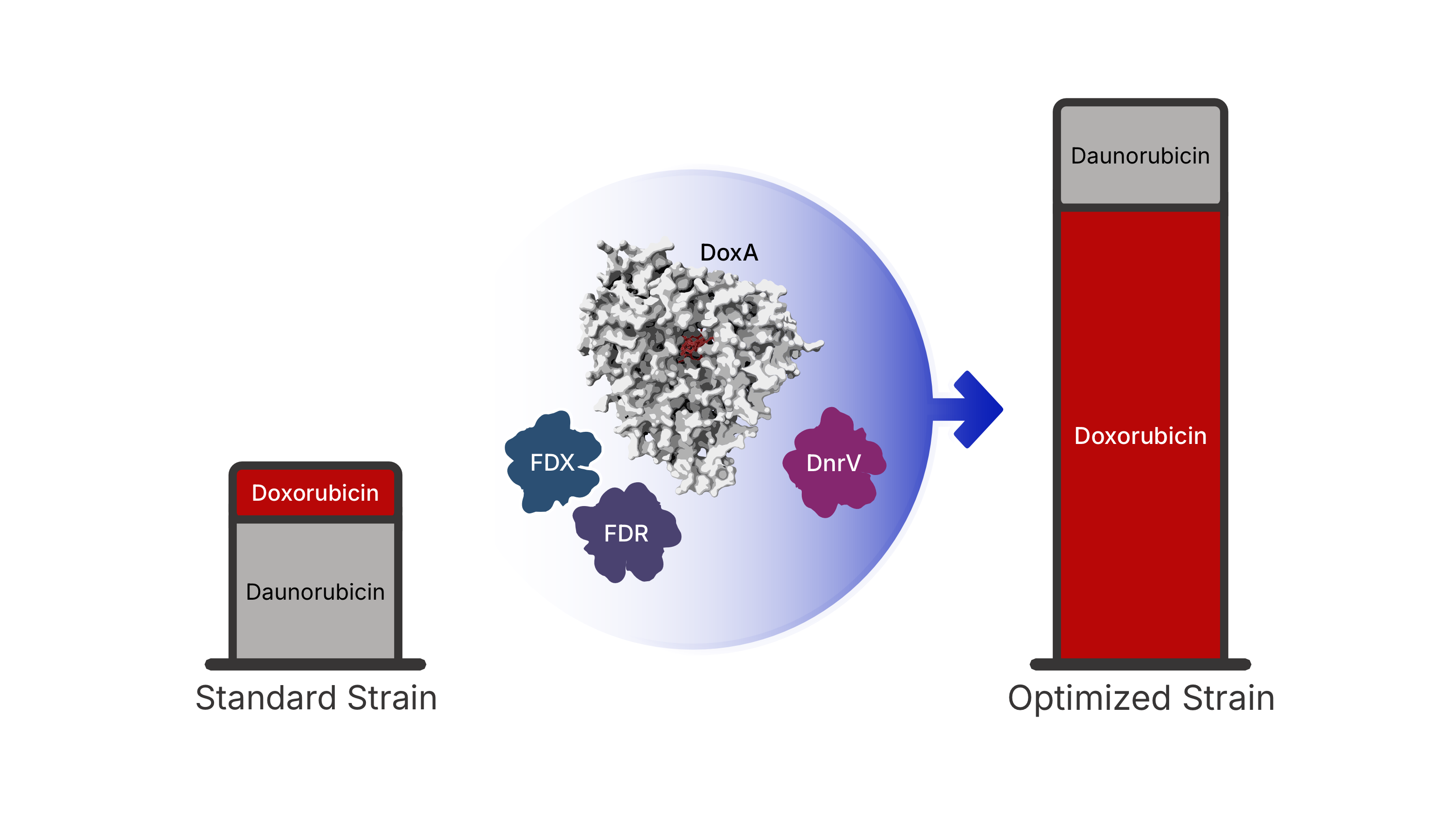
Firstly, the team identified the specific natural “biological power supply” — redox partners named Fdx4 and FdR3 — that provide the necessary electron flow to power the drug-producing enzyme.

Secondly, they discovered that a protein called DnrV acts as a drug-binding “molecular sponge”. It sequesters (binds and holds) doxorubicin so the drug does not shut down the enzyme’s own production machinery.

Last, using X-ray crystallography, the team visualized the enzyme for the first time, revealing that the drug molecule sits in an unfavorable position within the enzyme, explaining the slow reaction rate.

By combining these discoveries, the researchers engineered a new strain of bacteria that produces 180% more doxorubicin than current industrial standards.

To bring these findings to the real world, the spin-out company Meta-Cells Oy was formed last year at the University of Turku. The company aims to commercialize these advanced technologies for the sustainable manufacturing of essential antibiotics and anti-cancer agents. This shift toward fully biosynthetic production promises a cleaner, more reliable supply of life-saving medicines.

The study was published in the renowned journal Nature Communications.

> Read the research article

Lurie Autism Institute Announces Dr. Huda Zoghbi as the Inaugural Recipient of the Nancy Lurie Marks Prize for Autism Research

Mar 13 – The Lurie Autism Institute, a joint initiative of Children’s Hospital of Philadelphia (CHOP) and Penn Medicine created to drive discovery, develop new treatments, and improve the lives of individuals and families affected by autism, is proud to announce that geneticist Huda Y. Zoghbi, MD, has been selected as the inaugural recipient of the Nancy Lurie Marks Prize for Autism Research, the Institute’s highest honor recognizing transformative contributions to autism research.

 Zoghbi is a Distinguished Service Professor in the Departments of Molecular and Human Genetics, Pediatrics, Neuroscience, and Neurology at Baylor College of Medicine, and Director of Texas Children’s Duncan Neurological Research Institute (Duncan NRI). She is also an Investigator at the Howard Hughes Medical Institute. A pioneering pediatric neurologist and physician–scientist, Zoghbi has fundamentally reshaped understanding of the genetic and molecular basis of neurological disease – including autism spectrum disorder – by integrating human genetics, animal models, and systems-level neuroscience to define how disruptions in gene regulation, neuronal maturation, and circuit function drive disease.

 “When thinking of an appropriate inaugural recipient of the Nancy Lurie Marks Prize for Autism Research, we wanted to consider the pre-eminent minds whose long history of incredible work in autism research continues to have a lasting effect,” said prize committee chair Frances E. Jensen, MD, Chair of the Department of Neurology and Professor of Neurology at the Perelman School of Medicine at the University of Pennsylvania and co-director of the Penn Translational Neuroscience Center. “Dr. Zoghbi’s record speaks for itself, and we couldn’t think of a more deserving inaugural recipient who exemplifies the pioneering work in autism research that the Lurie Autism Institute wants to make possible.”

 The Prize Selection Committee recognized Zoghbi for her landmark discovery that mutations in the MECP2 gene cause Rett syndrome, an autism-related neurodevelopmental disorder. This breakthrough transformed Rett syndrome from an enigmatic clinical condition into a foundational model for understanding autism genetics and neurobiology. Her work established core principles that have guided modern autism research; these principles now underpin contemporary large-scale genomic studies of autism and have shaped how investigators conceptualize risk, penetrance, and phenotypic variability across neurodevelopmental disorders.

 “I am deeply honored to receive the inaugural Nancy Lurie Marks Prize for Autism Research,” said Zoghbi. “Nancy’s dedication to autism research and to the families she so passionately championed has left an indelible mark on our field. The Lurie Autism Institute’s continued commitment to advancing impactful autism research benefits us all.  I share this recognition with the patients and families who inspire our work every day, and with the remarkable trainees and collaborators whose insight, creativity, and dedication have advanced our understanding of how genetic disruptions alter brain function.” She continued, “I hope that continued progress in this field will lead to better insights and treatments, ultimately improving the lives of individuals with autism and their families. This honor serves as a powerful reminder of the promise rigorous science holds for truly transforming lives.”

 By demonstrating that de novo mutations underlie Rett syndrome, Dr. Zoghbi helped catalyze study designs that enrich for de novo variation. These studies served as an important basis for projects such as the Simons Simplex Collection, a core project and resource of the Simons Foundation Autism Research Initiative (SFARI) that establishes a permanent repository of genetic samples of families of children with autism. This framework was then later adopted by the Simons Foundation Powering Autism Research for Knowledge (SPARK) and the Autism Sequencing Consortium. This paradigm led to the discovery of dozens of de novo variants and hundreds of autism-related genes, many of which encode chromatin regulators, firmly establishing epigenetic and chromatin-mediated mechanisms as central pathways in autism.

 “Dr. Zoghbi’s incredible discoveries of some key biological mechanisms underlying autism are important steps in the journey we’re on with the Lurie Autism Institute to provide patients with more answers,” said Daniel Rader, MD, Interim Director, Lurie Autism Institute and Chief of Translational Medicine and Human Genetics, Penn Medicine and CHOP. “Her central role in advancing our understanding of neurobiology and translating that basic science into clinical progress makes her an extremely deserving recipient of the inaugural Nancy Lurie Marks Prize for Autism Research.”

 The Nancy Lurie Marks Prize for Autism Research honors the legacy of Nancy Lurie Marks, whose visionary philanthropy has played a pivotal role in advancing autism research and improving the lives of individuals with autism. The Prize includes a $100,000 award and recognizes a single individual whose work has made a profound and lasting impact on the field.

 “The Lurie Autism Institute was established to usher in a new era of scientific discovery in autism, and the work of extraordinary talents like Dr. Zoghbi exemplifies the kind of breakthrough discoveries we hope to make possible,” said Jeffrey Lurie, Chairman and CEO of the Philadelphia Eagles and founder of the Eagles Autism Foundation.

 Zoghbi will be formally honored at the 2026 Lurie Autism Institute Symposium, to be held on May 7, 2026, in Philadelphia, where she will deliver a featured lecture.

 The Lurie Autism Institute, which reflects the combined strength of Children’s Hospital of Philadelphia and Penn Medicine, was made possible through the generosity of the Lurie Family Foundation and the Nancy Lurie Marks Family Foundation. Launched in June, 2025, the Institute is dedicated to advancing autism science and care, while aiming to accelerate discovery, deepen understanding of autism’s complexities and improve outcomes for individuals and families.

kyron.bio Announces Strategic Partnership with Servier to Advance Precision Glycosylation in Antibody Therapeutics

Paris, 9 March, 2026 – kyron.bio, a biotechnology company pioneering precision glycoengineering for antibody therapeutic development, today announced a strategic partnership with Servier, an international pharmaceutical group governed by a Foundation.

Under the terms of the agreement, kyron.bio will use its technology to glycoengineer an antibody selected by Servier, who will fund the associated research activities. Servier will have the option to further explore antibody engineering and development opportunities based on the outcomes. Financial details are not disclosed.

kyron.bio’s proprietary glycoengineering platform can enhance therapeutic performance of antibodies by enabling precise control of the glycan structures to improve efficacy, safety, and scalability. In this partnership kyron.bio will seek to demonstrate clear glycan control on the Servier antibody of interest for a specific pre-determined N-glycoform.

To date, engineering of glycans have been under-exploited, due to technical challenges, limiting the use of glycan engineering in drug design. kyron.bio is changing that. The company has developed a scalable, proprietary method to achieve comprehensive control over glycosylation, unlocking the possibility to use precision glycosylation in next generation drug design.

Dr. Emilia McLaughlin, founder and Chief Executive Officer of kyron.bio said,

“We are delighted that Servier has chosen to explore the potential of our glycoengineering platform. Servier has deep expertise in therapeutic development and combined with our precision glycosylation technology, this partnership provides a powerful opportunity to unlock new levels of antibody performance and deliver better outcomes for patients.

“Precision glycosylation represents a transformative approach in biologics development. By engineering defined glycan profiles, therapeutic antibodies can be optimized for improved immune engagement, pharmacokinetics, and reduced variability.”

In 2024, kyron.bio was the winner of the Servier Golden Ticket award which has provided invaluable support and mentorship through the company’s early translational phase and has developed a foundation for understanding the potential of kyron.bio’s technology.

Dr. Emmanuel Nony, Director of External Innovation Europe at Servier said,

“Meeting kyron.bio as a winner of Servier’s Golden Ticket award has enabled our scientists to develop an understanding of the kyron.bio glycan engineering technology and its exciting possibilities in antibody drug design. This collaboration is opening new frontiers for antibody derivatives as well. Together, we are exploring innovative pathways to optimize drug design and production, with a shared commitment to bringing safer and more effective therapies to patients.”

kyron.bio’s strategy is to form strategic drug design partnerships with pharmaceutical and biotech companies working on next-generation antibody therapeutics, alongside in house therapeutic development programs.

A successful company creation from the French Entrepreneur First Scheme, in 2025 kyron.bio raised €5.5m in a seed round from an experienced syndicate of venture investors including HCVC, Verve Ventures, Entrepreneurs First and Saras Capital, as well as private angel investors and the European Innovation Council. It has established an R&D base at the biotech hub Paris Biotech Santé in the Cochin Hospital.

kyron.bio Announces Strategic Partnership with Servier to Advance Precision Glycosylation in Antibody Therapeutics

Innovative glycobiology platform aimed at enhancing the efficacy, safety, and scalability of next-generation antibody therapeutics across multiple disease areas

Paris, Mar 09 – kyron.bio, a biotechnology company pioneering precision glycoengineering for antibody therapeutic development, today announced a strategic partnership with Servier, an international pharmaceutical group governed by a Foundation.

Under the terms of the agreement, kyron.bio will use its technology to glycoengineer an antibody selected by Servier, who will fund the associated research activities. Servier will have the option to further explore antibody engineering and development opportunities based on the outcomes. Financial details are not disclosed.

kyron.bio’s proprietary glycoengineering platform can enhance therapeutic performance of antibodies by enabling precise control of the glycan structures to improve efficacy, safety, and scalability. In this partnership kyron.bio will seek to demonstrate clear glycan control on the Servier antibody of interest for a specific pre-determined N-glycoform.

To date, engineering of glycans have been under-exploited, due to technical challenges, limiting the use of glycan engineering in drug design. kyron.bio is changing that. The company has developed a scalable, proprietary method to achieve comprehensive control over glycosylation, unlocking the possibility to use precision glycosylation in next generation drug design.

Dr. Emilia McLaughlin, founder and Chief Executive Officer of kyron.bio said,

“We are delighted that Servier has chosen to explore the potential of our glycoengineering platform. Servier has deep expertise in therapeutic development and combined with our precision glycosylation technology, this partnership provides a powerful opportunity to unlock new levels of antibody performance and deliver better outcomes for patients.

“Precision glycosylation represents a transformative approach in biologics development. By engineering defined glycan profiles, therapeutic antibodies can be optimized for improved immune engagement, pharmacokinetics, and reduced variability.”

In 2024, kyron.bio was the winner of the Servier Golden Ticket award which has provided invaluable support and mentorship through the company’s early translational phase and has developed a foundation for understanding the potential of kyron.bio’s technology.

Dr. Emmanuel Nony, Director of External Innovation Europe at Servier said,

“Meeting kyron.bio as a winner of Servier’s Golden Ticket award has enabled our scientists to develop an understanding of the kyron.bio glycan engineering technology and its exciting possibilities in antibody drug design. This collaboration is opening new frontiers for antibody derivatives as well. Together, we are exploring innovative pathways to optimize drug design and production, with a shared commitment to bringing safer and more effective therapies to patients.”

kyron.bio’s strategy is to form strategic drug design partnerships with pharmaceutical and biotech companies working on next-generation antibody therapeutics, alongside in house therapeutic development programs.

A successful company creation from the French Entrepreneur First Scheme, in 2025 kyron.bio raised €5.5m in a seed round from an experienced syndicate of venture investors including HCVC, Verve Ventures, Entrepreneurs First and Saras Capital, as well as private angel investors and the European Innovation Council. It has established an R&D base at the biotech hub Paris Biotech Santé in the Cochin Hospital.

Fortis Gurugram Hosts ‘Shakti – A Candlelight Tribute’ Celebrating the Strength and Spirit of Womanhood

Gurugram, Mar 09: Marking International Women’s Day, Fortis Memorial Research Institute (FMRI), Gurugram hosted “Shakti – a first-of-its-kind candlelight concert by a healthcare institution, dedicated to celebrating the resilience, courage and invaluable contributions of women. The thoughtfully curated evening brought together over 500 women, along with healthcare leaders, families and members of the community, in a shared moment of gratitude and reflection.

Curated by Candlelight Concerts, the musical evening featured the evocative performance of Nabeel Khan on the Sarangi, an instrument often regarded as one of the most expressive voices in Indian classical music. Known for its deep emotional resonance and ability to mirror the nuances of the human voice, the Sarangi beautifully captured the spirit of “Shakti” strength, grace, and emotional depth that women embody across all walks of life.

Set against the gentle glow of hundreds of candles, the evening created a peaceful and immersive atmosphere where music became a medium to honour women who nurture families, lead with courage, heal with compassion and inspire change in society.

The concert featured specially curated melodies and classical raags known for their calming and restorative qualities, widely acknowledged for their emotional and psychological healing benefits. These compositions, often used in wellness and mindfulness practices, created a tranquil space for reflection and connection. By blending music, light and silence, the evening symbolically celebrated not only womanhood, but also the nurturing spirit that sustains families and communities. The music echoed the essence of Shakti – strength that is both powerful and gentle, resilient yet compassionate.

Speaking on the occasion, Yash Rawat, SBU Head & Senior Vice-President, Fortis Memorial Research Institute, Gurugram, said:

 “Shakti was envisioned as a tribute to the strength, grace, and resilience that women embody every day. Through this candlelight concert, we wanted to create a meaningful space that

honours not just achievements, but also the compassion and nurturing spirit that shape families and communities. Music has the power to heal and connect, and this evening was our way of celebrating #NaariShakti.”

Fortis Memorial Research Institute, Gurugram continues to champion initiatives that promote holistic well-being beyond clinical care. Through “Shakti – A Candlelight Tribute,” the hospital celebrated the quiet strength of women while reaffirming its commitment to supporting emotional wellness, community bonding and the invaluable role women play in shaping families and society.

Akshar Yoga Kendraa Launches PURANTHA, a Global Centre for Advanced Yogic Sciences in Bengaluru

Akshar Yoga Kendraa Launches PURANTHA, a Global Centre for Advanced Yogic Sciences in Bengaluru


The campus aims to train 100,000 yoga teachers annually through structured yogic education

Bengaluru, India | Mar 09— Akshar Yoga Kendraa has announced the launch of PURANTHA, a Himalayan-origin centre dedicated to advanced yoga and spiritual science. Conceptualised under the vision of Himalayan Siddhaa Akshar, the new campus has been developed near Kempegowda International Airport in Bengaluru. Spread across about 165,000 square feet, the facility has been designed to train 100,000 yoga teachers each year, responding to the rising global demand for structured and authentic yoga education.

PURANTHA has been established as a space for deeper engagement with Himalayan yogic sciences and Siddha traditions, combining practice, study, and research within one environment. The campus brings together several aspects of yogic learning, including advanced practice modules, teacher education programs, and applied study of traditional knowledge systems.

The design of the centre allows different disciplines to function alongside one another. Facilities have been created for yogic training, meditation, prāṇāyāma, Ayurveda, research and development, and residential learning. With its scale and layout, the campus is intended to support sustained practice and long-term study without interruption between different activities.

All training and educational programs at PURANTHA are conducted under the guidance of Himalayan Siddhaa Akshar through Akshar Yoga Kendraa, an institution recognised by the Ministry of AYUSH under the Yoga Institution category. The centre has been developed with an emphasis on disciplined learning, methodological clarity, safety, and continuity of practice.

Speaking on the launch, Himalayan Siddhaa Akshar said: “PURANTHA has been envisioned as a space where the depth of Himalayan yogic traditions can be preserved, studied and practiced through a structured institutional framework. The intention is to support practitioners and teachers from across the world who wish to explore yoga as a science of inner evolution.”

Prataprao Ganpatrao Jadhav, Union Minister of State (Independent Charge), Ministry of AYUSH; Minister of State, Ministry of Health & Family Welfare, Government of India, said on the launch: “I extend my heartfelt congratulations and best wishes to Akshar Yoga Kendraa on the launch of PURANTHA, a Himalayan-origin centre dedicated to advanced yoga and spiritual science. I commend Himalayan Siddhaa Akshar and the entire Akshar Yoga community for this inspiring initiative, which will further strengthen India’s leadership in yoga and holistic wellness across the world.”

The campus is also intended to serve as a global platform for the structured transmission of Himalayan yogic and spiritual knowledge. Through residential training programs, institutional collaborations, and international participation, PURANTHA aims to contribute to the continued study and dissemination of yogic sciences across diverse cultural and educational contexts.


Prioritising Women’s Health Key to Empowerment, Say CARE Doctors on International Women’s Day

Hyderabad, Mar 07:  On the occasion of International Women’s Day, doctors at CARE Hospitals emphasised the importance of women prioritising their health at every stage of life, noting that preventive care, timely screening, and early medical intervention are critical to improving long-term health outcomes.

Prioritising Women’s Health Key to Empowerment, Say CARE Doctors on International Women’s Day

 Medical experts highlighted that many women in India continue to face several health challenges that remain undiagnosed or untreated due to delayed medical consultations. According to government health data, India’s maternal mortality ratio stands at around 97 deaths per 100,000 live births, indicating that pregnancy-related complications remain a concern in several parts of the country.

Nutritional deficiencies also continue to impact women’s health significantly. Data from the National Family Health Survey shows that over 57% of women aged 15–49 years in India are affected by anaemia, underscoring the need for improved nutrition and greater awareness around preventive healthcare.

Doctors noted that regular health check-ups and screening tests play a vital role in detecting diseases early and improving treatment outcomes. However, many women delay seeking medical advice due to work commitments, family responsibilities, or the tendency to overlook early symptoms.

Dr. Muthineni Rajini, Senior Consultant – Obstetrician & Gynecologist, Infertility Specialist, Laparoscopic and Robotic Surgeon, CARE Hospitals, Banjara Hills, said women often prioritise the health needs of their families ahead of their own.

“Routine health check-ups, cervical cancer screening and regular gynaecological consultations are essential for early detection of potential health issues. In India, conditions such as anaemia, thyroid disorders and cervical cancer are relatively common, but they are often diagnosed at a later stage. Strong women build strong generations. This Women’s Day, take a moment to care for the most important person — yourself,” she said.

Dr. Kranthi Shilpa, Senior Consultant – High Risk Obstetrician & Gynaecologist, Laparoscopic Surgeon and Infertility Specialist at CARE Hospitals, Banjara Hills, explained that women go through several hormonal transitions during their lives.

“From adolescence to reproductive years and later during perimenopause and menopause, symptoms such as irregular menstrual cycles, persistent pelvic pain, fatigue or mood changes should not be ignored. Early medical consultation can help manage these conditions effectively and improve overall quality of life,” she said.

Highlighting the rising burden of cancer among women, Dr. Satish Pawar, Senior Consultant and Head – Surgical Oncology & Robotic Surgery at CARE Hospitals, Hitech City, said breast cancer has emerged as the most commonly diagnosed cancer among women in India, while cervical cancer continues to be a leading cause of cancer-related deaths.

“The encouraging aspect is that many of these cancers are preventable or highly treatable if detected early. Regular screening through mammography, Pap smears and awareness about HPV vaccination can significantly reduce risk and improve survival outcomes,” he said.

Doctors added that women face different health concerns at various stages of life. During adolescence, menstrual irregularities, anaemia and hormonal disorders such as Polycystic Ovary Syndrome are commonly reported. During reproductive years, issues may include fertility challenges, pregnancy-related complications and thyroid disorders. As women approach menopause, hormonal changes can increase the risk of conditions such as Osteoporosis and Cardiovascular Disease.

Doctors also noted that changing lifestyles, rising stress levels and sedentary habits in urban centres such as Hyderabad have contributed to an increase in hormonal disorders, metabolic conditions and lifestyle-related diseases among women.

They stressed that greater awareness about preventive healthcare, timely medical consultations and regular screening can help women manage different stages of life with confidence and maintain better long-term health.


Reimagining Rural Health for 86,000 People in Farakka

Reimagining Rural Health for 86,000 People in Farakka

Kolkata, Mar 06: Murshidabad district of West Bengal identified as one of India’s high-priority districts – continues to face significant public health challenges. These include high prevalence of malnutrition, elevated neonatal and infant mortality rates, early marriages, low levels of institutional delivery, a rising burden of hypertension and cardiovascular diseases and high prevalence of tobacco use, respiratory illness and recurrent infections. In response Ambuja Foundation in partnership with Narotam Sekhsaria Foundation launched a five-year integrated health initiative in 2024 to tackle the need for primary healthcare services across 47 villages in three Gram Panchayats of Farakka block, reaching over 86,000 people.

The partnership focuses on strengthening primary healthcare systems, improving last-mile service delivery, and empowering village institutions in collaboration with the Government of West Bengal. A major priority has been filling the gaps in creating grassroots health workers and building their capacity.  Since 2024, more than 165 frontline workers—including ASHAs, Anganwadi workers, Self-Help Group (SHG) women, and Sakhis—have been trained in maternal and child health, nutrition, Water, Sanitation and Hygiene (WASH) practices, non-communicable diseases (NCDs), Mental Health and early detection of illnesses, ensuring quality care across rural communities. Refresher trainings will be conducted annually to reinforce skills, update knowledge and ensure consistent quality of service delivery.

Primary areas of focus have included:

  • Maternal and Child Health – Focused efforts on adolescents with reproductive sexual health and prevention on early marriages, early conception being a critical concern have been undertaken. Ensuring early pregnancy registration, timely Antenatal Care and Post-Natal care, Behaviour Change Communication, Nutrition intervention, Iron & Folic supplementation, immunisation, institutional delivery and family planning are already indicating towards significant improvements.
  • Nutrition Improvements – To address deep-rooted nutrition gaps, Behaviour change communication interventions on nutrition awareness, nutrition demonstrations and creating kitchen gardens are being focused apart from training the frontline workers on nutrition and Anaemia interventions. 79 Anganwadi Centres were equipped with equipment’s that can scientifically measure the physical health (anthropometry systems). Kitchen gardens and household-level nutrition sessions reached 1,300+ participants.
  • NCD Prevention, Screening and lifestyle modification – Recognising the rising burden of NCDs, the project focuses on use of Community-Based Assessment Checklist (CBAC),  annual biomarker screening and conducting more awareness sessions and screening special health check-up camps. Awareness also focuses on the high-risk factors and lifestyle modifications especially with focus on High Fat, Salt, Sugar- HFSS and tobacco which is a major risk factor in the region.
  • Strengthening Health Infrastructure, WASH – 20 Anganwadi centres have been renovated with BaLA (Building as Learning Aid) paintings and more are under renovations long with clean drinking water systems. Few villages are also being focused on turning into Nirmal villages with focus on waste management efforts. Sanitary disposal systems are also being installed in schools.

Speaking about the initiative, Pearl Tiwari, CEO, Ambuja Foundation said, “Ambuja Foundation and Narotam Sekhsaria Foundation share a deep commitment to creating positive change in the lives of rural communities. Through this initiative, we aim to strengthen rural healthcare systems—key pillars for sustainable development. We are confident that this partnership will amplify our collective efforts to create healthy rural populations. Together, we aspire to drive inclusive and meaningful programs at the grassroot level.”

“The Narotam Sekhsaria Foundation is pleased to be associated with this project and to extend its support to this innovative, community-led health intervention in collaboration with the Ambuja Foundation. We are confident that this initiative will significantly enhance the quality of life of the communities it serves, while also establishing a robust model of development that fosters sustainable change. We express our sincere appreciation to all stakeholders for their committed participation and contributions to this meaningful process of positive transformation,” said Manish Joshi, CEO, Narotam Sekhsaria Foundation.

Moving forward, the partnership will strengthen health sub-centres and Anganwadi Centres, enhance coverage, and develop a Clean and Smart Village model to drive holistic rural health transformation.

Menstrual Hygiene Management programs will be scaled up and Adolescent Peer Educators will be trained as community health leaders. The next phase will focus on work towards reducing early marriages and early conceptions, reducing Infant and Maternal Mortality Rates and expanding access to family planning methods for eligible couples.

International Patient from Ghana Recovers Swiftly After Keyhole Spine Surgery at Manipal Hospital Mukundapur

Kolkata, Mar 6: Manipal Hospital Mukundapur, a unit of the Manipal Hospitals Group, successfully treated Yaw Boakey, a 60-year-old-male international patient from Ghana with a minimally invasive keyhole spine surgery under the care of Dr. Anindya Basu, Senior Consultant and Clinical Lead – Spine Surgery, with continuous monitoring and support from the nephrology team led by Dr. Upal Sengupta, Director – Team Nephrology & Consultant – Nephrology & Kidney Transplant and Dr. Avinandan Banerjee, Clinical Lead – Nephrology & Kidney Transplant at Manipal Hospital Mukundapur.

International Patient from Ghana Recovers Swiftly After Keyhole Spine Surgery at Manipal Hospital Mukundapur

 The patient who had undergone a kidney transplant at Manipal Hospital Mukundapur a few years back, had recently visited Kolkata for his routine medical checkup with his son James. During this time, he had complained of severe back pain in the lower back region, which was extending down both his legs. He was also suffering from a condition called neurogenic claudication, where the spinal nerves are compressed, causing pain and numbness in the legs during walking.

After a detailed examination and MRI scans, his medical readings determined that he was suffering from L4–L5 spondylolisthesis (where one bone of the spine slips forward over the bone below it) along with spinal canal stenosis (narrowing of the space in the spine), which was putting pressure on the nerves in his lower back and causing his symptoms.

Given his age and other major health problems, posed considerable risks. The spine surgery team at Manipal Hospital Mukundapur opted to go for minimally invasive Key -Hole spine fusion (TLIF) surgery, as it offers minimal blood loss, causes minimal post-operative pain, and allows for faster mobilisation, making it a safer procedure for elderly patients and those with severe comorbid conditions.

The surgery was successfully done without the need for transfusion of blood. The patient was mobilized the very next day of his surgery, started on physiotherapy, and put on minimum pain medication considering his kidney condition. Over the course of his hospital stay from 27 January to 4 February 2026, he showed steady improvement and was discharged in a stable condition, able to walk independently within a few days.

Speaking of this case, Dr. Anindya Basu, said, “Patients with kidney transplants and chronic kidney disease are often considered high-risk candidates for major surgeries. However, with the help of advanced minimally invasive techniques, we can now provide effective surgical interventions even to elderly patients with complex medical histories. The patient’s recovery is a perfect example of the effectiveness of modern spine surgery, not only in terms of the results but also in terms of its safety.”

James, the patient’s son, who is a businessman shared, “Considering my father’s kidney condition, we were naturally anxious about the surgery. However, the constant monitoring and coordinated care provided by the spine and nephrology teams gave us immense confidence throughout the process. Seeing him walk comfortably within just a few days was truly remarkable. We continue to stay in touch with the doctors, and he is recovering well after completing his post-surgery check-up.”

This case highlights that spinal surgery is no longer a high-risk procedure, even for elderly patients or those with existing medical conditions. With advanced minimally invasive techniques and interdisciplinary care, Manipal Hospital Mukundapur continues to build trust beyond borders while delivering safer, effective surgical outcomes for high-risk patients.