Category: Technology

AdClarity Expands CTV Ad Intelligence Across 20 Countries, Delivering the Industry’s Widest Cross-Market Coverage

NEW YORK, NY, July 8, 2026.BIScience, the company behind AdClarity, the world’s leading AI-powered ad intelligence platform, today announced the expansion of its Connected TV (CTV) ad intelligence to 19 new countries, bringing total tracked CTV ad spend to $70 billion across 20 markets. The expansion gives brands competitor benchmarking across countries, agencies a single source of truth for global CTV, and publishers demand signals by market.

CTV is becoming a central part of the TV ecosystem as linear viewing declines, evolving rapidly with more platforms, formats, and countries entering the space. It is growing faster than any other major channel and now represents 10 percent of all tracked ad spend globally. In the United States alone, CTV now represents a 16 percent share of all US ad spend tracked by AdClarity.

To help organizations make more informed decisions with global media intelligence, BIScience has added CTV coverage in Canada, the United Kingdom, Germany, Australia, Brazil, France, Indonesia, Italy, Norway, the Philippines, Singapore, South Korea, Switzerland, Thailand, Saudi Arabia, Poland, Spain, New Zealand, and Denmark. Each market includes local platform depth. For example, the United Kingdom features Channel 4 and ITV, Germany includes Joyn and Sky, and Australia covers 10 Play, 7plus, 9Now, and Stan.

With this release, BIScience’s AdClarity now combines the industry’s widest cross-market CTV coverage with AI-powered ad intelligence. Built on one consistent methodology across markets and media, including CTV, AdClarity gives teams a unified way to compare activity, uncover competitive shifts, and move from data to decisions faster. Customers report generating insights in under 10 seconds, reducing manual analysis by 85% through AI-driven automation, and saving an average of 7,980 hours annually per customer.

AdClarity’s panel of 30 million opt-in users spans 132 streaming platforms, 5 million smart TVs, and 52 countries, with 8 years of historical depth. AdClarity serves 27 percent of the Fortune 500, including Adidas, Amazon, Booking.com, Disney, Shell, Sony, and Wix. The platform is also used by four of the five top global advertising agencies and seven of the top ten global market research companies.

“Global advertisers don’t work in silos, and their intelligence tools shouldn’t either. By expanding AdClarity’s CTV coverage to 20 markets and integrating built-in AI, we’ve unified the cross-media view and bridged the gap between seeing data and taking action. One methodology, one platform. Total visibility across every screen,” said Dorit Kaplan, VP Product and Strategy at BIScience.

AdClarity CTV coverage is available now across all 20 markets as a premium add-on. Existing clients can extend immediately. To learn more, visit https://adclarity.com.

Outpost24 Raises the Bar for Adaptive Application Security with Next-Gen CyberFlex

Enhanced platform brings continuous attack surface visibility, expert-led testing, flexible budget control and improved reporting into one risk-led AppSec program

STOCKHOLM, Sweden, 7 July 2026 – Outpost24, a leading provider of cyber risk management solutions, today announced the next generation of CyberFlex, its flexible, advisory-led application security program designed to help organizations keep pace with dynamic digital environments. The launch comes as AI accelerates both digital innovation and attacker activity, increasing the need for application security approaches built for continuous risk management.

Most application security programs are still planned around annual cycles, even as the environments they protect change daily. New digital services, cloud migrations, AI initiatives, acquisitions and third-party integrations can introduce new assets and exposures long after testing scopes and budgets have been agreed. As a result, security teams are often left working from plans that no longer reflect their real-world risk.

CyberFlex helps organizations move from fixed-scope, point-in-time testing to a more continuous, adaptive and risk-driven approach. By combining external attack surface visibility, expert-led penetration testing, advisory support and flexible budget allocation, the program enables security teams to identify exposures, validate impact, prioritize remediation and shift investment as priorities evolve, all within a single program and contract.

Outpost24 Raises the Bar for Adaptive Application Security with Next-Gen CyberFlex

 “Security teams are being asked to defend dynamic environments, while many AppSec programs are still planned around fixed scopes and annual cycles,” said Omri Kletter, Chief Product Officer at Outpost24. “CyberFlex is designed to close that gap and set a new standard for modern application security. It gives organizations the visibility to understand what has changed, the expert validation to understand what matters, and the flexibility to shift investment as risk evolves.”

The next generation of CyberFlex introduces a more unified and adaptive way to manage application security across fast-changing environments. A unified platform and workflow connect discovery, automated scanning, risk prioritization, expert-led testing and validation in one place. Continuous attack surface visibility and AI-driven risk insights span known, unknown and shadow IT assets, helping teams understand how their external exposure expands over time.

Flexible budget visibility and allocation give organizations better control over how investment is used across testing, validation and advisory services. Structured tiers align to different levels of maturity, scope and operational need, and improved reporting and dashboards help teams demonstrate risk reduction, remediation progress and program value to executives, boards and auditors.

For existing CyberFlex customers, the new release builds on a proven program model for more continuous, risk-led application security. RS Group is among the customers planning to adopt the latest CyberFlex capabilities.

“CyberFlex has made it much easier to connect testing activity to real business risk,” said Rebecca Wensley, Head of Security Operations, RS Group. “We get clearer visibility into our attack surface, expert validation where it matters most, and a more practical way to prioritize remediation and demonstrate measurable security progress to stakeholders.”

CyberFlex is now available in structured tiers, allowing organizations to select the level of expert guidance, testing and advisory support that suits their needs today, and adapt over time as their program matures. Its flexible budget model allows investment to be reallocated across testing, validation and advisory services as risk priorities shift, without renegotiating the overall contract each time. Testing and advisory services are delivered by EU-based, CREST-certified penetration testers.

Supply Chain Reset Puts India in Global Manufacturing Spotlight: ASSOCHAM

New Delhi, July 7: India is emerging as a key global manufacturing destination as companies worldwide look to diversify their supply chains, according to a report by the Associated Chambers of Commerce and Industry of India (ASSOCHAM).

The report highlights that India’s expanding industrial ecosystem, skilled workforce, improving infrastructure, policy reforms, and growing domestic market are strengthening its position in the global manufacturing landscape.

With businesses increasingly adopting a “China plus one” strategy to reduce supply chain risks, India is witnessing greater interest from global manufacturers across sectors such as electronics, automobiles, pharmaceuticals, renewable energy, and advanced technologies.

ASSOCHAM noted that continued investments in infrastructure, ease of doing business reforms, innovation, and skill development will be crucial to further enhancing India’s manufacturing competitiveness.

The report emphasised that India’s integration into global value chains can create new opportunities for investment, employment generation, and sustainable industrial growth.

India’s growing manufacturing capabilities are expected to play a significant role in shaping the country’s economic expansion and strengthening its position in the global supply network.

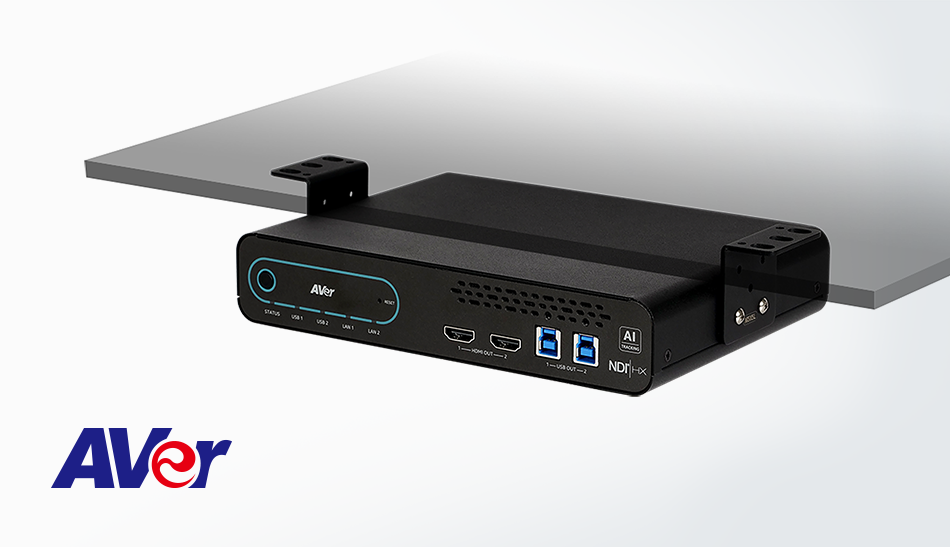
AVer Introduces NC30 NDI Converter for Seamless NDI and HDMI Signal Conversion

AVer Introduces NC30 NDI Converter for Seamless NDI and HDMI Signal Conversion

 Taipei, Taiwan – July 7: AVer Information Inc., an award-winning provider of AI audio-video solutions, today announced the AVer NC30 NDI® Converter — a compact, bi-directional device that simplifies signal conversion between NDI and HDMI® for professional video environments. AV and IT teams can bring local HDMI sources into NDI-based production and distribution workflows, or output live NDI streams to local displays and USB-C connected laptops, all without additional equipment.

Designed for flexibility across a wide range of applications — from live monitoring and meeting-room sharing to multi-room video production — the NC30 enables organizations to deploy, manage, and scale high-quality networked video with a single, consistent setup.

Key User Benefits at a Glance

  • Flexible, AV-over-IP Deployment: One device supports both encoding and decoding, so organizations can flexibly adapt rooms to different events and formats without changing hardware.
  • Built for the AVer Ecosystem: Natively works with AVer cameras, Matrix Tracking Boxes, and BYOM Matrix Switchers, simplifying the distribution of AV across rooms and keeping system setups consistent organization-wide.
  • Centralized Control on Enterprise Management: AV and IT staff can assign signals, switch sources, and monitor multi-stream previews from one intuitive interface.
  • Real-Time Live Monitoring: HDMI loop‑out enables zero‑latency live feeds.
  • Long‑term value and easier installs: PoE support reduces power adapters and cabling, and the 5‑year warranty offers long‑term peace of mind.


Payfuture Launches Local Payments Integration for Merchants on Shopify in India

London, UK – July 7; Payfuture, a global payments company helping merchants scale in high-growth regions, now integrates with Shopify to provide merchants with seamless access to local payment methods in India’s fast-growing ecommerce market.

Merchants using Shopify can now enable popular Indian payment methods, including Unified Payments Interface (UPI) and NetBanking, through a single connection with Payfuture’s payment app.

India is one of the most strategically important ecommerce markets in the world, with its online retail sector projected to reach USD 150–170 billion by 2027. Widespread mobile-first behaviour and consumer trust in domestic payment systems continue to drive growth across the Indian subcontinent and broader South Asia. As the region matures, platform readiness, payment localisation, and regulatory infrastructure are becoming key competitive differentiators for merchants seeking long-term scale.

“This integration makes digital commerce more accessible, scalable, and locally optimised for global merchants in fast-growth markets,” said Manpreet Haer, CEO and Co-Founder of Payfuture. “India is a vital market for ecommerce growth, and our infrastructure makes it easier for merchants to reach local buyers while maintaining compliance and operational efficiency.”

This integration builds on Payfuture’s broader strategy to deliver local payment connectivity through major ecommerce platforms. The company continues to invest in infrastructure and regional capabilities to help merchants expand into India and other high-growth markets.

“Our role is to help global merchants operate like locals in markets that are often difficult to access,” added Manpreet Haer. “The Shopify integration allows us to bring that vision to life in one of the most important commerce ecosystems in the world.”


Indian Companies Step Up AI Adoption as Workforce Preparedness Improves

New Delhi, July 7: Nearly one-fourth of Indian companies believe their workforce is prepared to adopt and leverage artificial intelligence (AI), as businesses across sectors accelerate the integration of AI-driven technologies into their operations.

The growing adoption of AI is encouraging organisations to invest in employee training, digital skills development, and workforce transformation initiatives. Companies are increasingly focusing on building AI capabilities to improve productivity, enhance decision-making, and drive innovation.

Industry experts said that while AI adoption is gaining momentum, organisations continue to face challenges related to skill gaps, employee readiness, and the need for continuous learning. Upskilling and reskilling programmes are emerging as key priorities for businesses seeking to maximise the benefits of AI.

Indian enterprises are exploring AI applications across areas such as automation, customer experience, data analytics, and operational efficiency. The shift reflects the broader trend of businesses adapting to a technology-driven workplace.

With AI becoming an integral part of business strategies, companies are expected to increase investments in workforce development and digital transformation efforts to remain competitive in the evolving global economy.

Blurgs AI, an IIT-Madras Alumni deep tech startup, raises Dollar 2.2 Million to go global

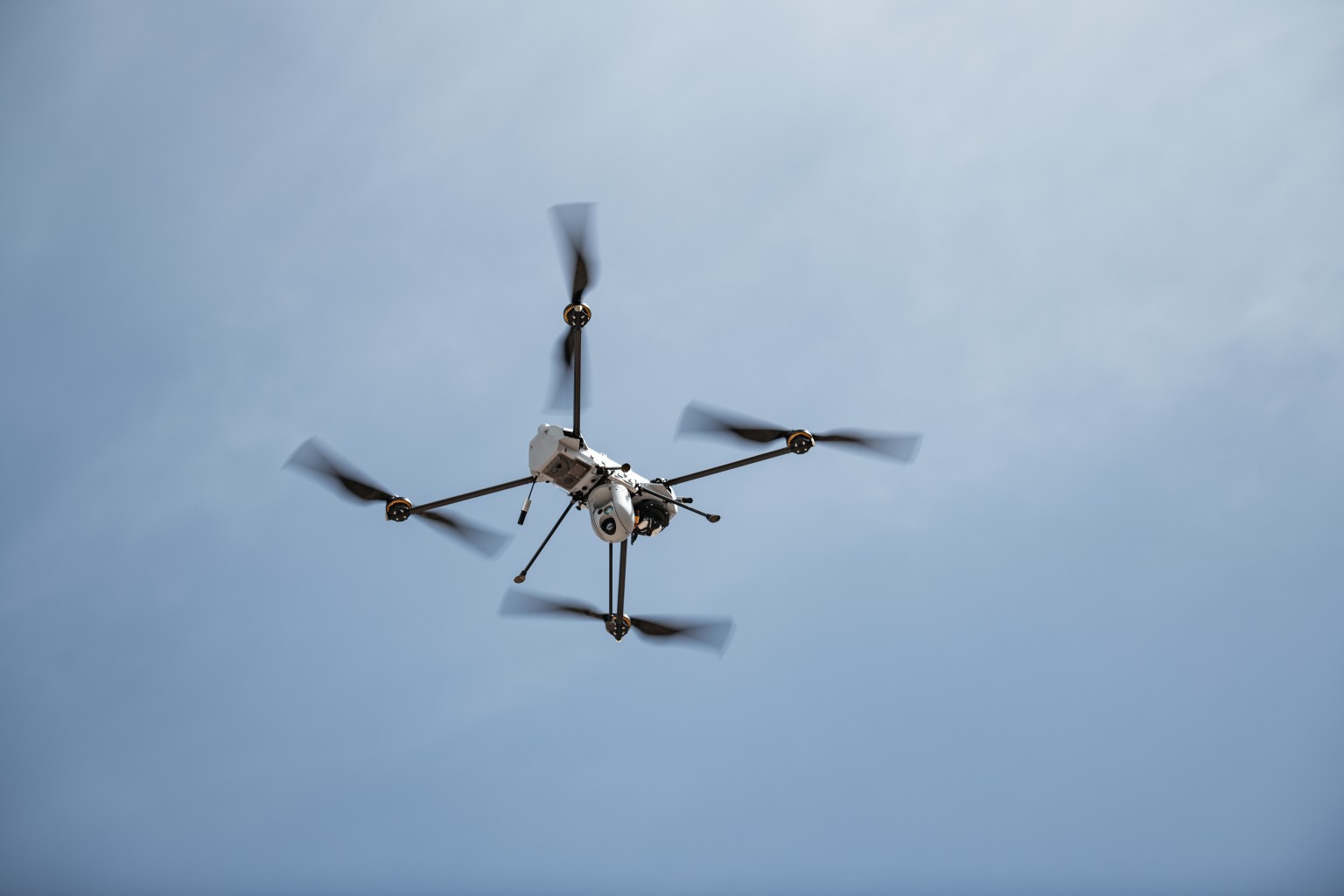
Chennai / Bangalore , July 7 : Blurgs AI has raised USD 2.2 million to accelerate global expansion of its AI-powered intelligence platforms for defence, national security and commercial maritime markets.

(ENGLISH) Blurgs AI, an IIT-Madras Alumni deep tech startup, raises $2.2 Million to go global

The round was led by Pravega Ventures and Shastra VC, with participation from angel investors Mr. Suraj Nalin, Co-founder of PlaySimple Games and Mr. Yashwanth Madhusudhan, Co-founder of Fyle.

Blurgs AI’s platforms are trusted by mission-critical organisations across defence, international maritime and conservation sectors, and India’s public sector ecosystem, including the Indian Navy, the Indian Coast Guard, Bharat Electronics, DRDO Labs, Mumbai Port Authority, Dubai Maritime City, and The Nature Conservancy Group. This client list spans sectors and geographies, and was built before the company raised any institutional funding.

Blurgs AI operates across two complementary domains. On the commercial maritime front, its platforms deliver operational intelligence for ports, fleets, shipyards and fisheries with real-time visibility, regulatory alignment and performance optimisation for the industry that underpins global trade.

On the defence and national security side, the same technical rigour powers threat detection, adversary monitoring and persistent cross-domain situational awareness.

ABOUT THE FOUNDERS

Blurgs AI is founded by Mr. Roshan Raj Mohanty and Dr. Avinash Kori, both alumni of IIT Madras. Mr. Roshan, Co-founder and CEO, is championing a bold “Make in India for the World” mission, proving that world-class deep-tech platforms for global markets can be built, scaled, and led from India.

“The oceans are becoming more connected, contested, and commercially critical than ever before,” said Mr. Roshan Raj Mohanty, thanking the investors. “At Blurgs AI, we believe the future of security and critical infrastructure will depend on trusted intelligence that is real-time, resilient, and reliable. We are building deep-tech platforms from India that help nations, enterprises, and communities see better, decide faster, and operate with greater confidence.”

Dr. Avinash Kori, Co-founder and Chief Scientist, brings world-class AI pedigree, with a PhD in Artificial Intelligence from Imperial College London. He is driving the company’s deep-tech vision of creating defensible, AI-led intellectual property for global markets.

“At its core, Blurgs AI applies scientific discipline to critical decision-making – separating signal from noise, reasoning through uncertainty, and turning complex evidence into actionable insight,” Dr. Avinash Kori added. “We help decision-makers understand what is happening, why it matters, and what actions to take next, with confidence.”

FROM INVESTORS

Sharing their investment thesis, the Spokesperson at Pravega Ventures shared,

 “India’s coastline is one of its strategic assets, shaping trade routes and national resilience all at once. Climate change and shifting geopolitics are only making maritime intelligence more critical. What excites us about Blurgs AI is that they are solving for this across the board in ports, shipyards, fisheries and defence, all at a level of depth that is rare in this domain. This is world-class technology, built in India, for a problem the world needs solved.”

Mr. Vasant Rao, Managing Partner at Shastra VC said,

“Maritime infrastructure is becoming increasingly software-defined, yet the real bottleneck remains decision intelligence rather than data availability. Blurgs AI is building the intelligence layer that transforms fragmented sensor and operational data into real-time, decision-ready insights, enabling faster, more informed responses in mission-critical environments.”

This fundraise marks a defining step for Blurgs AI as it enters its next phase of growth. The capital will strengthen core technology, expand the team and accelerate product development across commercial maritime applications, including ports, shipyards, fisheries management, and ocean conservation, while deepening defence capabilities and scaling into international markets where the demand for maritime intelligence is growing.

UN Global Dialogue opens with urgent call for safe and inclusive AI that benefits all


AI safety, accountability and human oversight among topics to be discussed

Geneva, July 06 – The United Nations today kicked off a global dialogue bringing together governments, tech companies, academia, civil society and the technical community to facilitate discussions on artificial intelligence governance.

“AI is advancing at runaway speed. The question is whether we will govern it together – or let it govern us. For the first time, the AI Dialogue gives every country a seat at the table. We must now turn global participation into global action – to make AI safer, fairer, more accessible and more ethical,” said UN Secretary-General, António Guterres.

The inaugural session of the Global Dialogue on AI Governance (AI Dialogue) seeks to ensure that governance reflects the priorities of all nations, not just the most technologically advanced, and that the benefits of AI are shared by all.

Discussions will address various themes including the opportunities and implications of this technology; how to bridge the AI divide; international cooperation on AI governance; and robust human oversight of AI systems, consistent with international law, to ensure safety and security.

“This Global Dialogue is not merely about regulating a technology. It is about defining a shared vision in which technological progress goes hand in hand with human dignity, equity, and sustainable development,” said Annalena Baerbock, President of the UN General Assembly. “If governed responsibly and collectively, AI has the potential to accelerate progress across nearly every Sustainable Development Goal, offering powerful new tools in healthcare, education, scientific research, disaster preparedness, and agriculture.

“It is about demonstrating to the people of the world that the United Nations is not lost in the past or too slow to act; that it is, in fact, able and willing to move on the most pressing and emerging issues of our time.”

Why this platform, why now

AI is already being governed — through national regulations, technical standards, procurement frameworks, and bilateral agreements — but unevenly. Governance frameworks have been shaped predominantly by countries with advanced AI sectors, while the countries most exposed to AI’s consequences have had the least say in how those frameworks are designed.

The AI Dialogue corrects that imbalance. Mandated by the UN General Assembly, it gives every government an equal seat. Developing countries and the Global South participate with full standing to shape outcomes — not as observers.

The credibility of this first Global Dialogue has been built through an open and participatory process that continues here in Geneva. Our collective success will be defined by every voice, perspective, experience, and contribution that is shaping the path forward for AI,” said Egriselda López, Permanent Representative of El Salvador to the UN and Co-Chair of the Dialogue.

Fellow Co-Chair and Permanent Representative of Estonia to the UN, Rein Tammsaar, said that “leveraging the convening power of the UN, we must start transforming artificial intelligence into a global public good that benefits all of humanity while ensuring safety by design and meaningful human oversight. For this to happen, the first Global Dialogue on AI Governance in Geneva should spark AI’s San Francisco moment.”

Six months of global consultations

Since January 2026, structured global consultations have taken place across thematic, regional, and virtual formats, drawing in governments, civil society, the private sector, academia, and the technical community. More than 1,500 written submissions were submitted from organisations and individuals across all regional groups.

The result of the written submissions revealed different priorities among the groups: For example, governments were the only stakeholder group to place capacity-building first. Most other groups ranked safety first. Other themes that ranked high in priority include transparency, accountability and human oversight, as well as social, economic, ethical, cultural and linguistic implications. One area of consensus from the consultations is that participants want to see continuity in this process: more than 500 submissions called for the process to continue beyond July.

The Dialogue takes place one week after the Independent International Scientific Panel on Artificial Intelligence launched its preliminary report handing the governments who convene there a shared evidence base to build policy from. The Panel, composed of independent scientists and experts from every region, outlines trends in AI and warns that current safeguards cannot keep pace with the growth of AI’s capabilities.

The Panel comprises 40 members serving in their personal capacity, independent of any government, company, or institution, including the United Nations. Members were selected from more than 2,600 candidates through an open call and independent review process. The Panel is co-chaired by Yoshua Bengio (Canada) and Maria Ressa (Philippines).

Doreen Bogdan-Martin, Secretary-General, ITU: “For AI to benefit all people, technology and international cooperation must move forward together. The Global Dialogue on AI Governance has sharpened the world’s focus on building an AI future that includes everyone, especially the 2.2 billion people who have yet to join the digital world.”

Khaled El-Enany, Director-General, UNESCO: “Humanity’s rich and diverse cultural and linguistic heritage is our greatest source of creativity, identity and resilience, but we must ensure Artificial Intelligence strengthens, rather than erodes this diversity. Global AI governance is essential to protect all voices, empower all cultures, and guarantee that innovation reflects the full breadth of human culture.”

Amandeep Singh Gill, Under-Secretary-General and Special Envoy for Digital and Emerging Technologies: “The Global Digital Compact gave the multilateral system two things it never had before: an independent scientific panel to assess AI’s impacts and opportunities, and a global dialogue where every government has a seat at the table. Today, for the first time, both come together. That is what makes 6 July a turning point — not just for AI governance, but for how the international community responds to transformative technology.”


Tesla launches North India’s first in-mall EV charging facility in Delhi

New Delhi, July 6: Tesla has opened its first in-mall electric vehicle (EV) charging facility in North India at a shopping complex in Delhi, marking a new step in expanding urban charging infrastructure in the region.

The facility allows EV users to charge their vehicles while visiting the mall, combining convenience with time-saving accessibility. The charging station is designed to support urban commuters who may not have dedicated home charging options or prefer fast, on-the-go charging during daily activities.

The launch reflects Tesla’s focus on strengthening its charging network in key metropolitan areas, as electric mobility continues to gain traction in India. Industry observers say such installations can help reduce range anxiety among users and encourage wider adoption of EVs in cities.

The initiative is also expected to complement India’s broader push toward clean transportation by improving the availability of public charging points in high-footfall commercial locations.


BlackRock CEO Flags Power Supply as Key Constraint for AI Expansion

July 6: The Chief Executive Officer of BlackRock has identified reliable power supply as one of the most critical challenges facing the rapid expansion of artificial intelligence (AI) globally.

He noted that while AI technology is advancing at a fast pace, the increasing scale of data centres and high-performance computing systems is driving unprecedented demand for electricity. This rising energy requirement is placing significant pressure on existing power infrastructure across many regions.

According to his remarks, the future growth of AI will depend not only on innovation in software and hardware but also on the availability of stable, scalable, and efficient energy systems. He emphasized that countries and companies capable of ensuring consistent power supply will be better positioned to lead in the AI-driven global economy.

The statement highlights growing industry concerns about the intersection of technology growth and energy capacity, as AI adoption continues to expand across sectors such as finance, healthcare, and enterprise services.

The remarks underline the need for long-term planning in energy infrastructure to support the next phase of digital transformation.